Open Call: FRESH MILK’s Primavera Residency

FMPrimavera arc

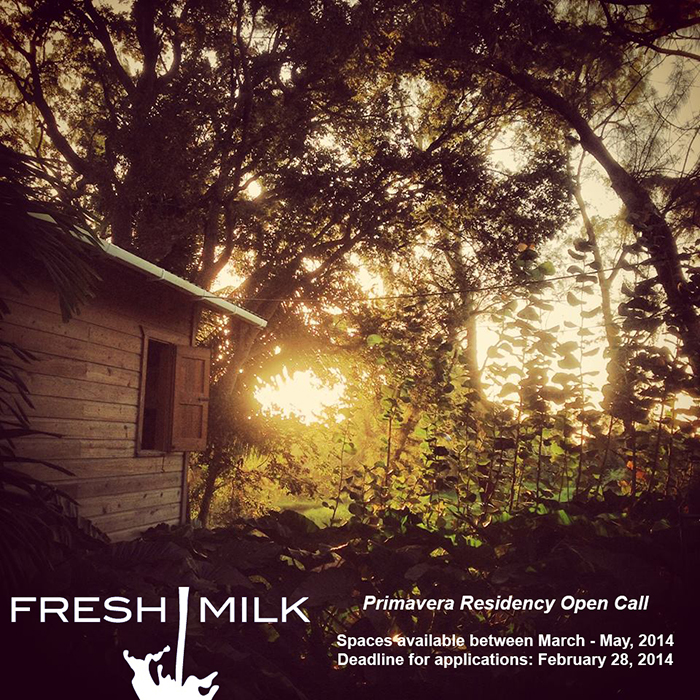
Although the later half of the year is filling up quickly, FRESH MILK still has space available between the months of March – May of our 2014 Primavera Residency period, and applications from artists worldwide are welcomed.

This residency aims to support visual artists and creatives by offering a peaceful working space for a minimum of 4 weeks, and the opportunity to interface with contemporary practitioners living and working in Barbados. For more information on the residency, application process and associated costs, please visit our International Residency Opportunity page.

The deadline for applications is February 28, 2014.

2013 in Review – Season’s Greetings from the FRESH MILK Team!

fm xmas 2013

Fresh Milk has had what we would describe as our biggest year yet – and it is thanks to the overwhelming amount of support and enthusiasm we have received from all of you that we are inspired to keep carrying out our mission, and continue to open doors for creatives in the Caribbean and beyond our shores.

We give you all our deepest gratitude and warmest wishes for the season, and invite you to take a look at our year 2013 in review.

We will be closing for the season on Friday, December 20th, and will resume regular activities towards the end of January.

Warm wishes to you all!

merry christmas-02 (1)

Unrecognised Affinities: Reflections from Videobrasil

The founding director of The Fresh Milk Art Platform Inc., Annalee Davis, was invited to participate in the 18th International Contemporary Art Festival Sesc_Videobrasil – 30 Years + Southern Panoramas in Sao Paulo, Brazil.

Videobrasil has established itself as one of the most important organizations for video and contemporary art practices in the geopolitical South and included a cross section of curators and critics from arts institutions worldwide, and artists largely from the global South. Davis presented in the 3rd Focus group of the festival’s public programming, which centered on artist residencies. The following is an edited version of her presentation ‘Unrecognised Affinities’ delivered at the panel titled ‘Hospitality and the Politics of Mobility’, originally published on ARC Magazine’s website.

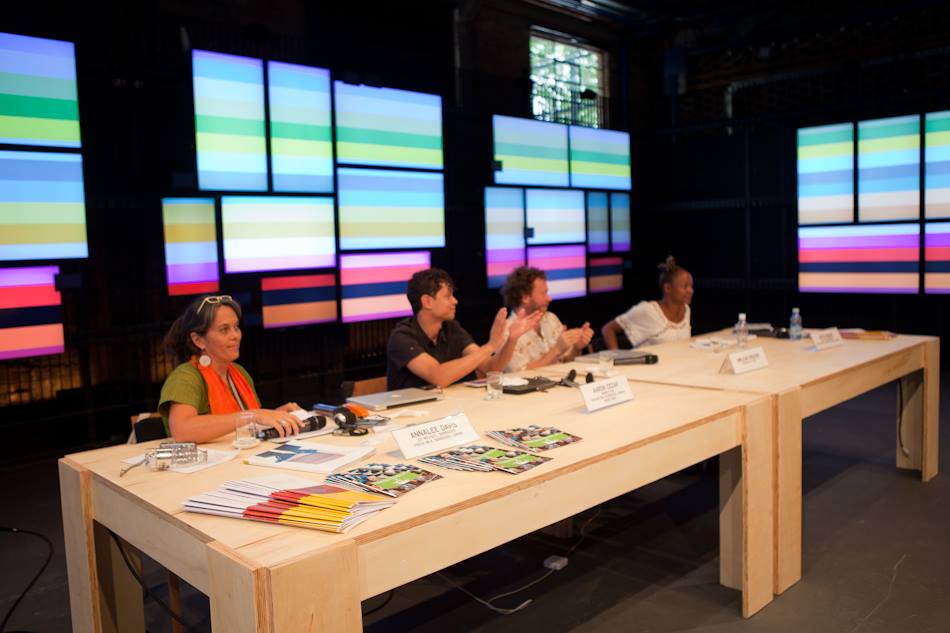
Panel on Hospitality and the Politics of Mobility. Participants from L-R: Annalee Davis, Aaron Cezar, Amilcar Packer and Koyo Kouoh. Image courtesy of Sabrina Moura.

Panel on Hospitality and the Politics of Mobility. Participants from L-R: Annalee Davis, Aaron Cezar, Amilcar Packer and Koyo Kouoh. Image courtesy of Sabrina Moura.

I was asked to speak about my work as a creative activist in Barbados and the formation of the artist led initiative called The Fresh Milk Art Platform Inc., of which I am the founding director. As a tutor at the Barbados Community College in the BFA programme, I decided some years ago to respond to the fact that none of our graduates continued making work after graduation. This is, in part, because there is not a developed creative economy that can provide a supportive space for emerging practitioners. Fresh Milk was born in 2011 to foster young talent and is named such because it is located on a dairy farm, as well as relating to the act of women turning their blood into milk to nurture their young.

The network responded to a specific local need to harness the talent of our young creatives – to be a safety net to catch artists as they fall into the real world after art school. Now, two and a half years later, graduates are continuing to make work because Fresh Milk is opening up opportunities and doors of exchange.

Fresh Milk is located on the premises of a former plantation built in the mid-1600s. It has been functioning as a dairy farm for several decades. My home and studio are located on the farm, and I have turned my studio into Fresh Milk’s headquarters. Due to the island’s brutal history rooted in indentureship and the slave trade, the physical location of Fresh Milk has raised concerns as to whether it is a legitimate or appropriate setting to carry out its work. Traditionally, the plantation was an exclusive venue, hospitable only to a white elite planter class who oversaw the inhumane treatment of an enslaved and indentured population.
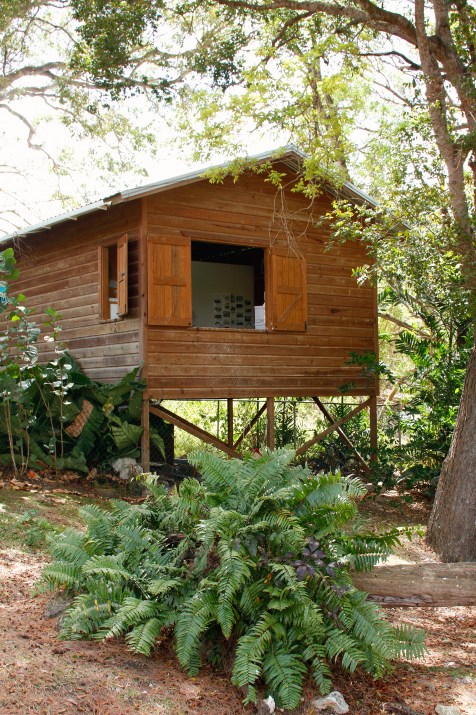
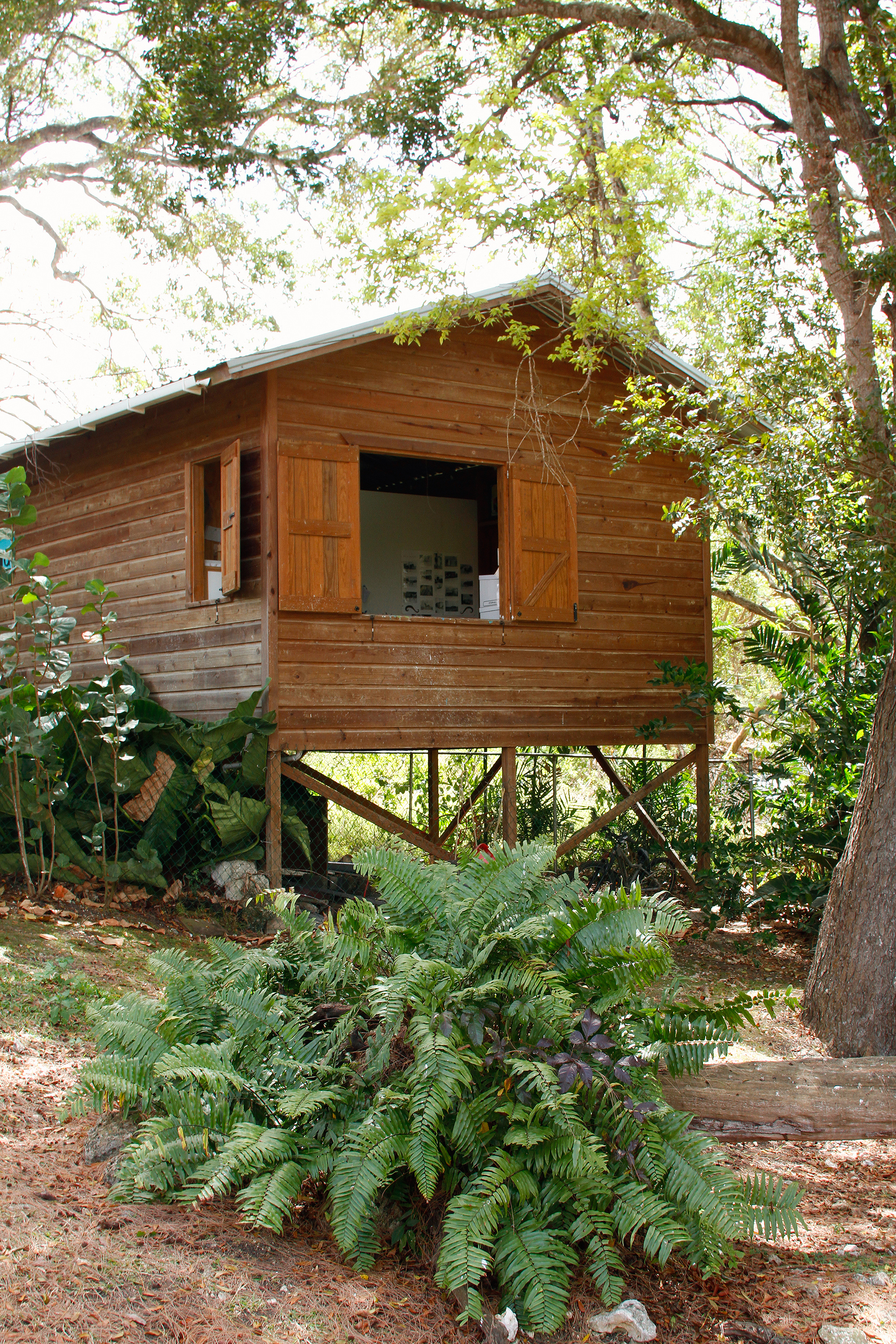
The Fresh Milk Studio. Photograph by Mark King.

The Fresh Milk Studio. Photograph by Mark King.

I am interested in this debate about the plantation as a fixed space, defined perpetually by conflict and division. I see this location as a site for investigation; an environment which I am unpacking from the ground up. By literally digging into the soil to find ceramic remains, reading through documents related to the former plantation, including conveyances, wills and deeds from the early nineteenth century, I am thinking about the potential for transformation and reconciliation. Through creative intervention via my own practice as well as the development of critical programming at Fresh Milk, the historical divisions within the plantation are reconsidered.

The idea of transformation is linked to hospitality, which originates from the Latin word ‘hospes’ meaning “guest” or “stranger’.  I am concerned about the stranger or enemy among us and within our national boundaries, the region and the wider world. Certainly, there has been much debate within the insular Caribbean about belonging and ownership, which plays itself out most disturbingly at many of our national borders. There is a precedent of xenophobia which has come to define how Caribbean people think about citizenship and the landscape. The failure of CARICOM to provide a conduit for real integration after forty years of operation attests to this. For real change to occur, we need to be hospitable to ourselves first, work to ‘to open ourselves up, share ourselves out’ with the stranger in our midst, which we can do through the arts, creating safe, critical settings for exploration, innovation, connection, excellence and production.

Fresh Milk reacts to our needs at the moment in Barbados and the wider Caribbean by building  a robust creative community within the local context. Our geographic consideration of the Caribbean is always shifting. The normative definition is the archipelago that stretches from The Bahamas in the North, to Trinidad in the South, moving on to Suriname and the Guianas. Its extension into the coastal rim of Central and South America and out to the diasporic outposts including Amsterdam, London, Toronto, Vancouver, NYC etc is evidence of the Caribbean as a broad and dynamic area.

Annalee Davis introducing the Fresh Milk Map of Caribbean Art Spaces. Image courtesy of Sabrina Moura.

Annalee Davis introducing the Fresh Milk Map of Caribbean Art Spaces. Image courtesy of Sabrina Moura.

What is radical about this notion of hospitality in our Caribbean context, is the relationship to the history of plantations. By transforming this territory once grounded in hostility and prejudice into a welcoming, creative, critical arena, Fresh Milk is indeed a defiant undertaking. Our programming works in opposition to the traumatic history of abandonment and points to new possibilities by offering harmonious acts rather than ones of obstruction. Instead of reading Fresh Milk’s presence on this site as problematic, we propose an alternative reading, and suggest that an adjustment is both necessary and possible.

I see the work I am doing as an artist, unpacking and redefining the plantation, as work which is altering the very chemistry of our own soil. This practice is rooted in scientific ideas around phytoremediation. Phytoremediation is the removal of toxins from the earth by cultivating plants whose roots have the capacity to extract toxins from the soil, thereby allowing the soil to be replenished and to grow something again.

I believe that we have the ability and the responsibility to alter the course history, contributing to a healthy cultural ecosystem by nurturing creative production and producers. By establishing the Fresh Milk platform and executing its programming, functioning locally, regionally and internationally with inclusive and open projects, we are building relationships with other human beings and offering a real connection to a known locale of isolation and privilege that has been timed out of opportunity and significance.

Being hospitable in the historical context of the Caribbean is a radical gesture. To nurture one another, to consciously reject what we were taught by the colonial past and a consumer oriented present, to choose to convert these historical sites of abuse, torture and neglect into sanctuaries that revel in the creative imagination, to take care of and look after the emerging talent; these are all revolutionary actions. I have faith in the capacity we all have as human beings to envision and manifest alternate possibilities through the forging of relationships with others which may offer something beyond perpetual conflict.

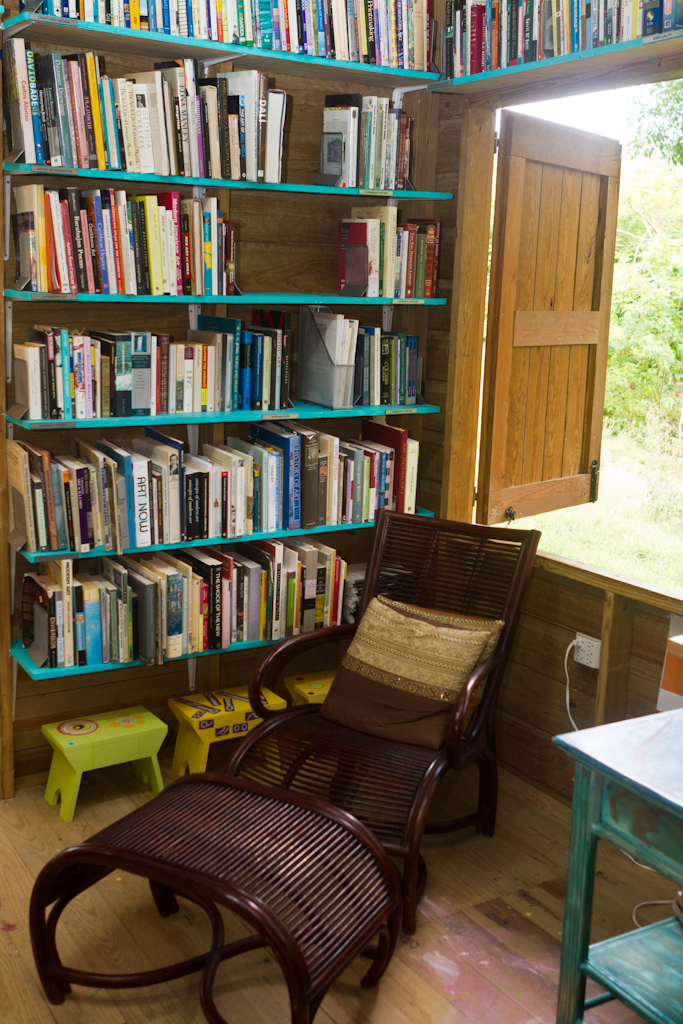
The building of the Colleen Lewis Reading Room, which provides free and accessible research material to the Barbadian public, is a critical statement in a region where reading is not always a popular activity. This is a testament to the powers of the colonial system where bars for the consumption of rum were more common on the plantation than libraries. The availability of the reading room allows a way for us to think about using knowledge and scholarship to open and challenge minds, inspiring intellect while developing new modes of thinking.

The Colleen Lewis Reading Room. Photograph by Dondré Trotman.

The Colleen Lewis Reading Room. Photograph by Dondré Trotman.

The interactive Fresh Milk Map of Caribbean Art Spaces contests the ways in which the hegemonic powers historically segmented the region linguistically and created artificial boundaries to separate us from fully understanding our similarities. This is a myth and one that should be denounced categorically from a cultural and political perspective. The construction of this virtual map reinforces linkages across linguistic and geographic divides in the region, insisting that we are indeed interconnected.

Fresh Milk is building connections with other human beings through residencies, the Colleen Lewis Reading Room, the Map of Caribbean Art Spaces and its activities, contributing to our goal of transformation – all the while believing that we can alter the chemistry of our own soil, creating new paradigms of thinking and behaving, engaging in hospitable acts, or the most radical gesture of all – loving each other.

I close with a quote from the author Theodore Zeldin which inspires what we do at Fresh Milk – “The meeting of ideas which have never come together before…the art of making life meaningful and beautiful, which involves finding connections between what seems to have no connection, linking people and place, desires and memories…discovering unrecognized affinities between humans holds out the prospect of reconciliations and adventures which have so far seemed impossible.”

See the original article on ARC Magazine.
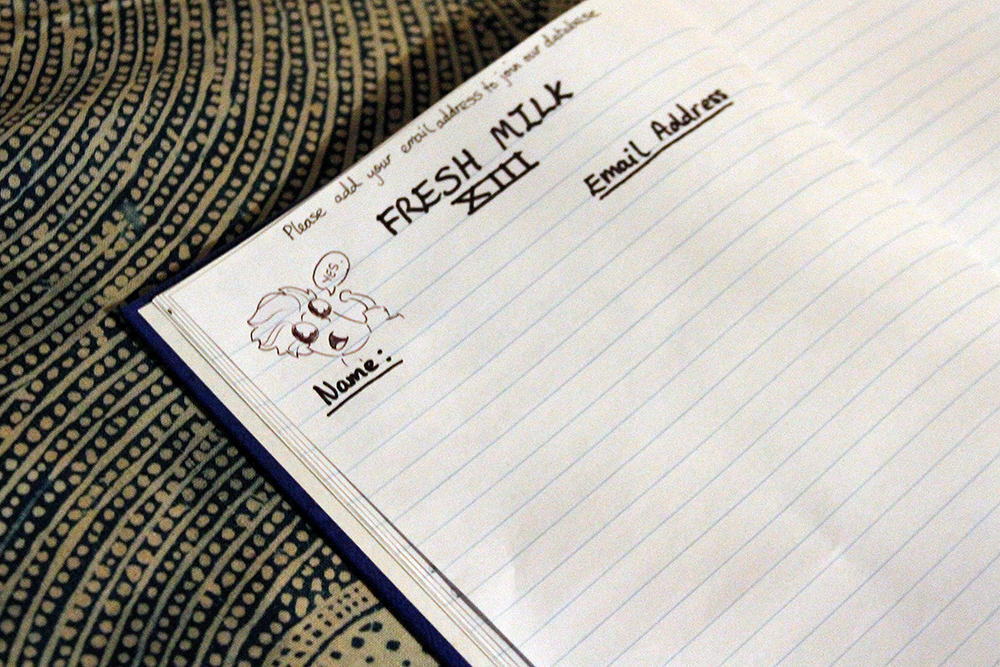
A Review of FRESH MILK XIII

Art historian and writer Jessica Taylor reviews Fresh Milk’s last event, FRESH MILK XIII, which took place October 24, 2013 at The Milking Parlour Studio.

Photograph by Mark King.

Photograph by Mark King.

The Fresh Milk Art Platform Inc. continues to provide a space for contemporary artists to develop projects and exchange ideas in a creative and engaging environment, as evidenced by the most recent public event Fresh Milk XIII, which was held at the Fresh Milk site on October 24th 2013.

While outlining a number of projects that have been ongoing at Fresh Milk, the event included a screening of a full-length documentary made by resident-artist damali abrams. damali, a New York-based Guyanese performance artist, showcased a documentary that she had produced during her joint residency at Fresh Milk and Groundation Grenada for the month of October 2013 as part of The Fresh Performance Project. The documentary featured footage from interviews that she had conducted with six Caribbean-based and six New York-based performance artists over a six-month period prior to beginning her on-site residency.

Entitled Fresh Performance: Contemporary Performance Art in New York City and the Caribbean, damali’s documentary is less about the specific performance works of the twelve artists that she interviewed but is instead more about the artists’ conceptions of performance art as a practice within the context of their work. In the first few minutes of the film we are introduced to differing considerations of what performance art is from the twelve artists, which for the viewer emphasizes the interpretive nature of performance art and its malleability as an art form. damali has paired the video interviews with still images of the live performances of each artist, which creates an intriguing juxtaposition of interview as performance, and performance as documentary.

The role of documentation in performance art is fairly ambiguous given that some artists have denied any documentation of their work (claiming that it shall not exist outside of the moment of its performance) and others rely on documentation to preserve their performance (normally for exhibition purposes). damali complicates this ambiguity even further by turning an act of documentation into a performance itself. For her, the documentary is as much a performance as the works that we see in the still images shown in the documentary. The result of this is that as viewers, we are experiencing the binary of watching a live performance art piece by one artist in which she interviews other artists about their practice and calls on them to recollect past performances. This play with documentation and temporality demonstrates that performance can be something direct but not necessarily something that is easily understood by the public.

Despite the drastic differences amongst the various pieces discussed, several common threads surfaced throughout the interviews, such as the importance of the audience, the role of spontaneity and interaction, and an appreciation of the unpredictable nature of performance art. This overarching notion of the role of the public sparks many questions for me. Can we have cross-cultural notions of performance art? Does a Barbadian audience approach damali’s work differently than a New York audience? Given that all of the artists interviewed deal with issues of identity, how do their audiences inform and interpret these issues based on their geographical location? Of course these questions remain unanswered, but I believe that is exactly what damali is trying to show us.

Ultimately, damali is offering these artists a chance to both explore and explain what performance art means to them, while forcing her audience to ask themselves the same questions. Her exploration of the medium through the words of these twelve artists initiates a much-needed discussion of the role that performance art has to play in the Caribbean, and simultaneously links it to performance art in New York. The connections that damali is making between the Caribbean and New York through the dialogue that she maintains with the twelve artists are unique, given that performance art is practiced by such a small number of Caribbean artists. Perhaps the most telling sign of this was not only in the words of the Caribbean artists on the screen, but even more so in the responses given by the audience members attending Fresh Event XIII. After the screening damali was met with questions from young art students who had either never heard of performance art or had never considered it in great detail, but who will now hopefully perpetuate this important discussion.

In addition to damali’s documentary, there was also a screening of Project 35: Volume 2, which is a travelling exhibition produced by Independent Curators International (ICI) and included a piece by Bahamian artist Heino Schmid, selected by Trinidadian artist and curator Christopher Cozier. Subsequently the director of Fresh Milk, Annalee Davis, took to the floor to present to the audience a series of other projects that had been in the works at Fresh Milk over the past few months. The first of these was the Fresh Milk Artboard, which was erected at the bottom of the road leading to the Fresh Milk site as a new public gallery from which the work of contemporary artists will be showcased. The first work to be displayed on the Artboard was designed by Barbadian artist Evan Avery, who had also previously designed a graphic work to be installed in the front window of Casa Tomada’s ‘A Casa Recebe’ in Brazil, which exhibits the work of both local and international artists.

The relationship between Fresh Milk and Casa Tomada is just one example of the cross-cultural exchange that Fresh Milk is encouraging and that we are beginning to see more and more in the arts of the region and further afield. In light of this, Annalee also presented the Fresh Milk Virtual Map of Caribbean Art Spaces. This resource is an online map indicating the existing art spaces across the region, which also includes links to the websites of these spaces. Working to circulate information regarding arts in the Caribbean, this map not only offers a regional view of how these spaces have manifested themselves across the Caribbean but will hopefully help to facilitate greater connectedness between these institutions. Finally, Annalee directed the audience’s attention to the addition of new publications to the Colleen Lewis Reading Room, located on the Fresh Milk site.

Fresh Milk XIII, which marked the platform’s final public event for 2013, fittingly brought together several of the elements integral to Fresh Milk’s mission; regional and international collaboration, experiment and exchange, knowledge of the contemporary arts, and increased visibility of Caribbean art all came into play. Moving forward, it is imperative to find the best way to activate these resources that Fresh Milk has made available, and continue to nurture the relationships built with artists such as damali and institutions such as ICI. In this way Fresh Milk will continue to evolve not only as an organization, but as an entity facilitating change by inspiring new ways of thinking, reaching new audiences and stimulating the public’s sensibility as we move towards intellectual and creative growth.

_________________________________________________

Jessica Taylor

About Jessica Taylor:

Jessica Taylor recently graduated from McGill University with an undergraduate degree in Art History and Philosophy and hopes to begin a graduate degree in Curatorial Studies in 2014. Her focus is contemporary Caribbean art.

ARC Magazine shares ‘Reporting from Sustainable Communities: Creativity and Policy in the Transnational Caribbean’

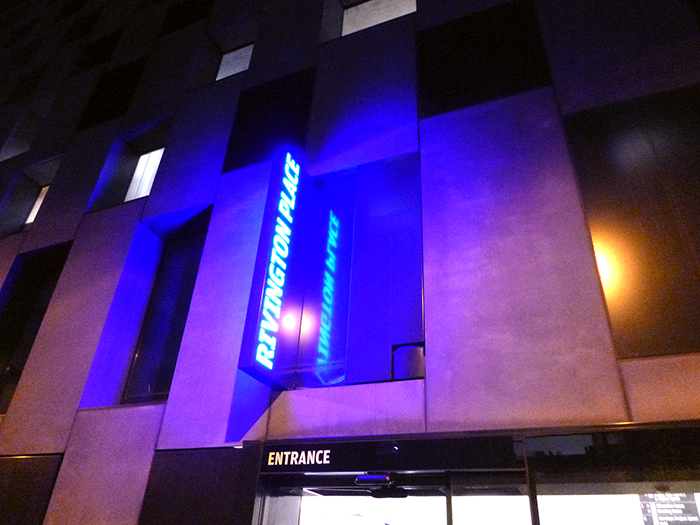
The second conference in the ‘Sustainable Communities: Creativity and Policy in the Transnational Caribbean’ series took place on December 3-4, 2013 at Iniva, London. This conference brought together participants from the Caribbean and its diaspora who are involved in the arts and influential creative initiatives, including founding director of FRESH MILK Annalee Davis, and highlighted social, historical and financial challenges that they face in trying to nurture healthy artistic communities in the region. Charl Landvreugd reports from the conference exclusively for ARC Magazine.

Sustainable Communities: Creativity and Policy in the Transnational Caribbean conference held at INIVA. Images courtesy of Annalee Davis.

Sustainable Communities: Creativity and Policy in the Transnational Caribbean conference held at INIVA. Images courtesy of Annalee Davis.

Excerpt:

As the mark of success in art seems to be related to public engagement, establishing links through existing spaces to broaden local audiences on artistic, critical and financial levels is paramount. Part of this can be achieved through carefully archiving Caribbean lived experience. As an example of this, Joy Gregory started/is starting up a residency in the former house of fashion designer Trevor Owens in Jamaica, providing a way into understanding this experience. At the same time, according to Therese Hadchity, the local and historical context is being transcended by artists like Sheena Rose, Ewan Atkinson and Alicia Alleyne, and is being picked up in other parts of the world. A new hybrid globalised subject is emerging with mixed sensibilities. Jynell Osborne made this clear by speaking about diversity in heritage and how this affects social and political issues in a country like Guyana. “We have to recognise where cultures come together and where they stay apart in Guyana, and by extension in the Caribbean. Part of building a strong society is building a strong culture that is sustainable.”  Tying back to the production of a critical discourse, this seems to be done more by writers than visual artists in smaller countries. Why is that?

One thing that the speakers and audience agreed on was Petrona Morisson’s sentiment that the Caribbean and its diaspora should not repeat patterns of exclusion in our effort to build a sustainable art community. Annalee Davis’ presentation on the initiative Fresh Milk is seen as one of the ways in which talent can be nurtured in our own geographical space. She made a case for the fourth sector model of social economy in light of the lack of funds, creating wealth by means of nurturing creative talent within the region. This, the panel agreed, is a revolutionary act. By first working within the local space and sustaining creative process, expansion to include all of the region is anticipated. The question of an understandable art language for everybody may be a consequence of this way of working. What the impact of this will be outside and inside of academia can only be imagined at this point. Who defines and critiques history, and is history in the way of the future? This was asked by Ozkan Golpinar when he explained the way decisions on funding are being made in the West.

Read the full article on ARC Magazine here.

Panelists and supporters at Sustainable Communities: Creativity and Policy in the Transnational Caribbean conference held at INIVA.

Panelists and supporters at Sustainable Communities: Creativity and Policy in the Transnational Caribbean conference held at INIVA.