Announcing the 2026 TENDER Grantees

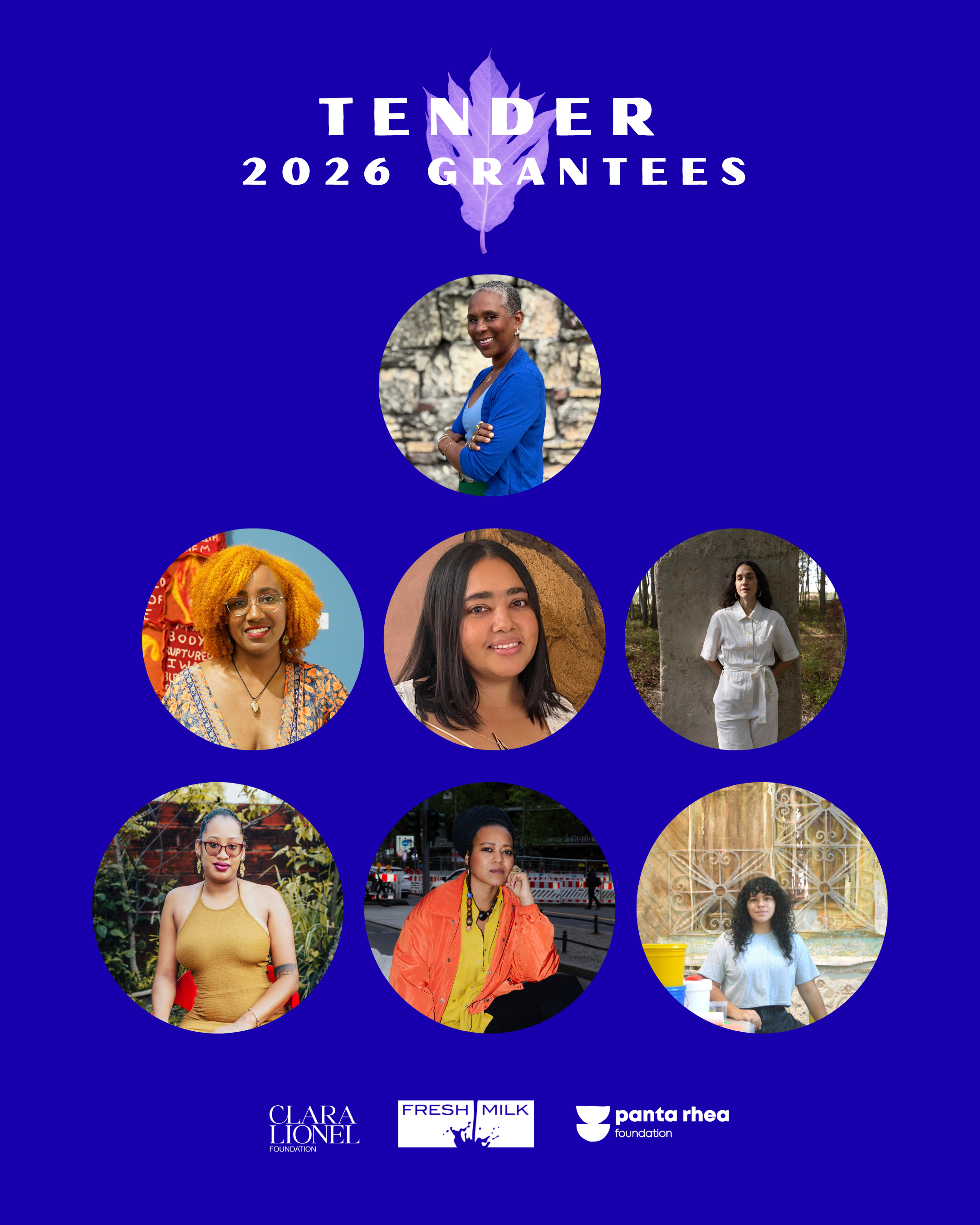
Fresh Milk is thrilled to announce our 2026 cohort of TENDER grantees! This year’s TENDER programme, supported by the Clara Lionel Foundation and the Panta Rhea Foundation, took an alternative approach to our previous editions due to both our modified budget, and the high quantity of strong aspirants in the existing pool of applications from 2024 and 2025.

We invite you to consult our Jury Report below for a full breakdown of our procedure and General Comments.

Please join us in extending a huge congratulations to our 2026 Grantees!

TENDER JURY REPORT 2026

Procedure

The third year of TENDER: A Caribbean Arts Regranting Programme, spearheaded by Fresh Milk, was supported in partnership with the Clara Lionel Foundation (CLF) and the Panta Rhea Foundation. While the first two editions of the initiative employed a Caribbean-wide open call process, out of which contemporary visual artists, curators and arts organisations were awarded a total of USD $124,500 ($65,500 in 2024 and $59,000 in 2025), a different approach was adopted this year. 

Given that the overall funding available this year was USD $28,000, and taking into account the many exceptionally strong applications we had received from the wider Caribbean out of the pool of 352 prior applicants, the decision was made by the Fresh Milk team to revisit eligible artists from past editions to be considered. Rather than having a third open call, a shortlist was compiled of the top-scoring submissions from the first two years in the three most popular, well subscribed tiers of grant funding offered: the emerging, mid-career, and established artists categories. 

This model honours the quality of previous applications, and acknowledges the fact that the scores between applicants were often extremely close, making past jurors’ decisions very difficult. It also recognises the subjective and often difficult to quantify nature of arts practices, and afforded a chance for different perspectives and gazes to be cast over the portfolios of artists that had already proven themselves as impressive practitioners.

59 applications were selected for re-evaluation based on the applicants’ statements and work samples that collectively received the 10 highest numerical scores in past years, from the following categories:

  1. Emerging Artists – 20 applicants (13 women, 4 men, 3 non-binary)
  2. Mid-Career Artists – 21 applicants (10 women, 10 men, 1 non-binary)
  3. Established Artists – 18 applicants (8 women, 9 men, 1 non-binary)

The 59 submissions spanned the following twenty countries: 

Anguilla, Antigua & Barbuda, Aruba, The Bahamas, Barbados, The Cayman Islands, Curaçao, Dominica, Dominican Republic, Grenada, Guadeloupe, Haiti, Jamaica, Martinique, Puerto Rico, The Bahamas, St. Vincent & the Grenadines, Suriname, Trinidad and Tobago, US Virgin Islands.

Our committee of jurors was composed of the following members:

  • Versia Harris, Visual artist and Tutor in the BFA Studio Art programme at Barbados Community College, Barbados
  • Ronald Rose-Antoinette, Max Stern Curator at the Leonard & Bina Ellen Gallery in Tiohtià:ke/Montréal;
  • Sarabel Santos-Negrón, Visual artist, Educator and Director of the Museo de Arte de Bayamón, Puerto Rico .

The jury comprised three former TENDER grantees. Versia Harris (TENDER grantee 2024) served as a juror for TENDER’s 2025 open call, while Ronald Rose-Antoinette (TENDER grantee 2024) and Sarabel Santos-Negrón (TENDER grantee 2025) were first time jurors, allowing for a nuanced mixture of revisiting work in some instances, while also having fresh eyes on the artists’ portfolios. The committee was asked to reflect chiefly on the strength of the work submitted in relation to the contemporary visual art sector and evaluate areas such as conceptual direction, evidence of intent to continue their practice, and potential for growth. 

The final jury meeting was chaired and moderated by Annalee Davis, Founding Director, Fresh Milk and Katherine Kennedy, Director of Programmes, Fresh Milk.

General comments on the TENDER 2026 Grant Cycle

The members of the jury were once again impressed by the overall high standard of work being produced by contemporary artists across the region. Applicants were working across a wide range of media including  animation, drawing, digital art, illustration, installation, new media, printmaking, painting, performance, photography, sculpture, sound, textiles, video and interdisciplinary practices. 

In terms of the review process, Santos-Negrón highlighted that portfolio presentation, including CV structure and visual clarity, was crucial for evaluating artists, particularly those with whom she was not familiar with, and that she was pleased with the depth and breadth of work she encountered. Harris and Rose-Antoinette agreed, and observed that the current cohort’s portfolios were easy to navigate and accessible, although it was agreed that professional documentation of work is an area in which Caribbean artists could still use additional support, so their portfolios do their practices justice when opportunities arise. As a veteran juror, Harris also noted the value of revisiting some work one year on, with fresh perspectives casting the work in a new light, reiterating the ongoing and dynamic impact of the artwork. It was also mentioned by the Fresh Milk team that a number of artists had applied to both the 2024 and 2025 open calls, and having their work ranked among the top ten highest scores consistently was noteworthy when making the final decision.

The jury further observed some of the recurring themes in the submissions, including ritual work, use of natural materials, cooking, food security, solidarity and climate urgency. These concerns seem to be indicative of not only a heightened sense of awareness around some of the Caribbean’s most pressing issues and precarious circumstances, but also an interest in alternative and reparative methods of addressing them, with an emphasis on sustainable practices, healing and community work.

Collectively, the jury considered other factors such as geographical reach across all four linguistic territories and a diversity of art forms to ensure a comprehensive selection reflecting the richness of art practices in the wider Caribbean, and enjoyed the opportunity to connect and collaborate with one another in the meeting.

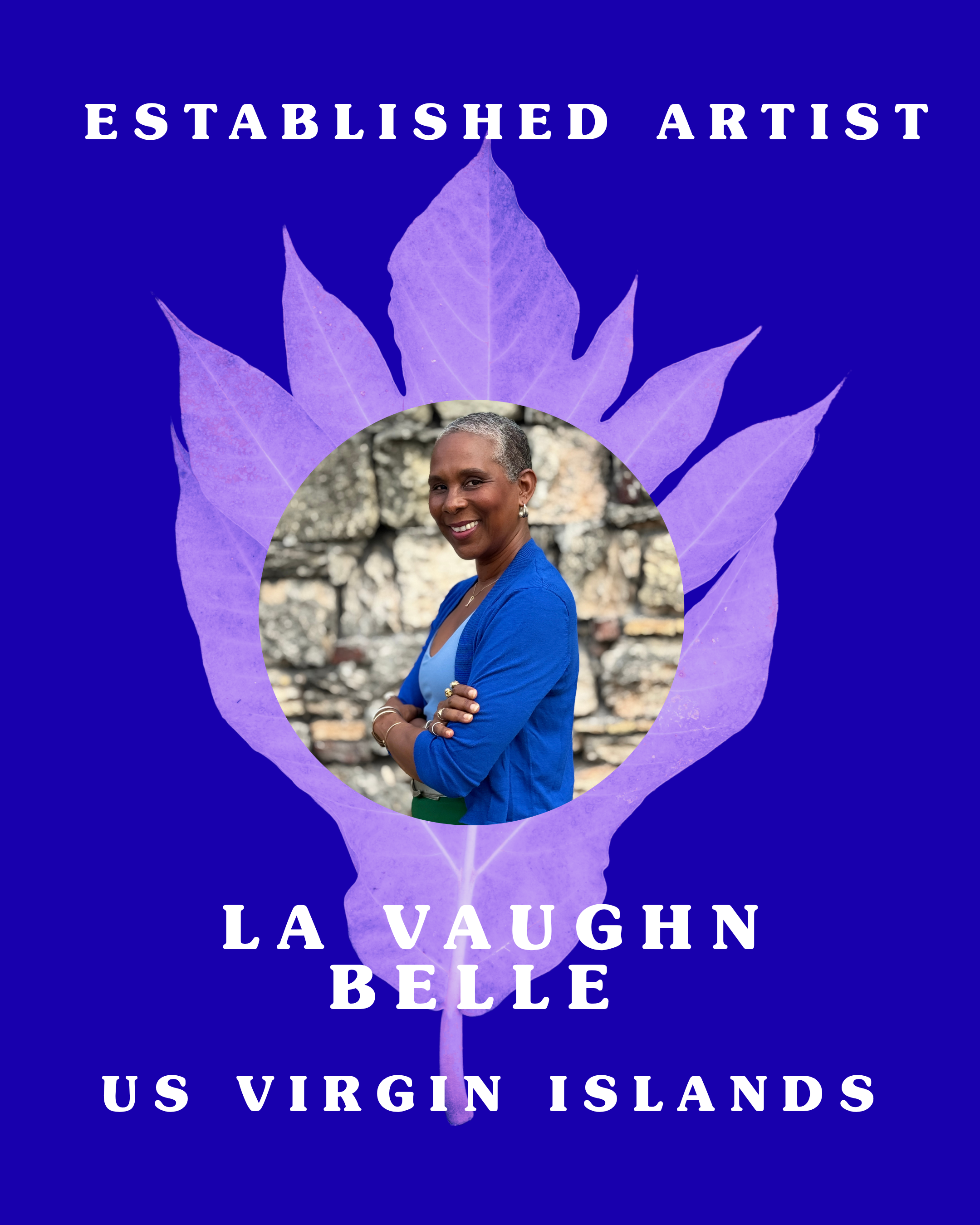
The final list of grantees includes 7 women from all linguistic parts of the Caribbean including Aruba, Guadeloupe, Jamaica, Puerto Rico, Trinidad and Tobago and the US Virgin Islands.

We are delighted to share that the seven 2026 TENDER Grantees are:

Caribbean emerging artists: USD $2,500.00 each

Caribbean mid-career artists: USD $3,500.00 each

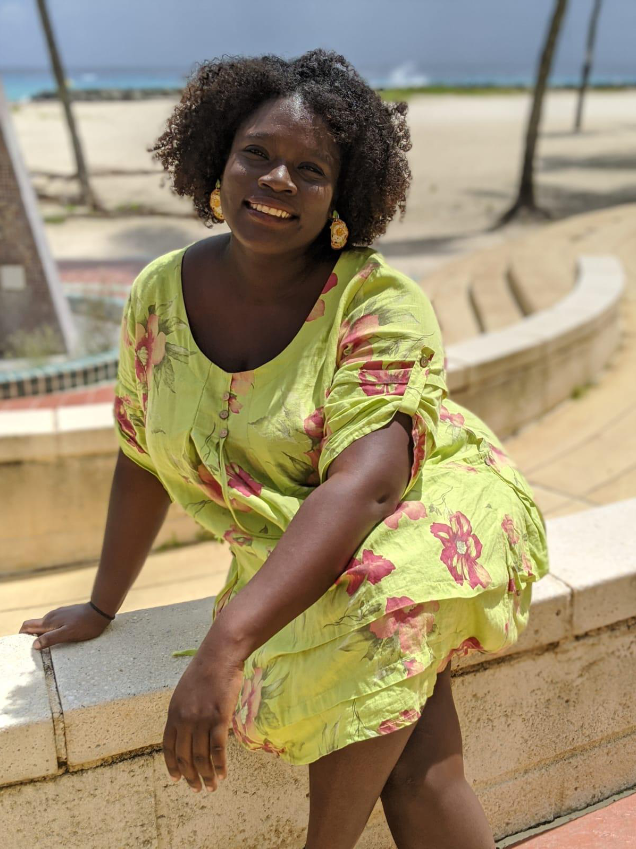
Photo credit: Toni Lance

Caribbean established artist: USD $7,500.00


About Fresh Milk:

Fresh Milk is an artist-led, non-profit organisation founded in 2011 and based in Barbados. It is a platform which supports excellence in the visual arts through residencies and programmes that provide Caribbean artists with opportunities for development, fostering a thriving art community. Fresh Milk offers professional support to artists from the Caribbean and further afield and seeks to stimulate critical thinking in contemporary visual art. Its goal is to nurture artists, raise regional awareness about contemporary arts and provide Caribbean artists with opportunities for growth, excellence and success.


About the Panta Rhea Foundation:

Mission: To catalyze a just and sustainable world through food sovereignty, community power building, and grassroots liberation around the globe.

The Panta Rhea Foundation (PRF) was established in 2001 as a private foundation devoted to researching issues and analyzing the operations, goals and potential of organizations committed to building a more just and sustainable world. The Foundation advises individual donors and other charitable entities on grantmaking strategies and specific grants.

We believe that lasting, authentic change must come from the grassroots; from the organized efforts of people and organizations to enliven the social imagination and envision a better future, to experiment with new ideas, and to hold elected leaders and corporations accountable to the communities they serve.

Our foundation name, Panta Rhea, is inspired by Ancient Greek philosopher Heraclitus. It roughly translates to “You never step into the same river twice” or “All things change, all things flow”—suggesting both inherent constancy and change as a fundamental of life itself.


About the Clara Lionel Foundation:

The Clara Lionel Foundation (CLF) was founded in 2012 by Robyn “Rihanna” Fenty in honor of her grandparents, Clara and Lionel Braithwaite. CLF supports and funds climate resilience and climate justice projects in the U.S. and Caribbean. The foundation’s five key pillars are: Climate Solutions; Women’s Entrepreneurship; Health Access and Equity; Future Generations; and Arts and Culture.

The CLF actively supports arts initiatives that preserve cultural heritage and foster community engagement in the regions we fund. We invest in community-led organizations that promote asset creation, long-term sustainability, and innovative climate solutions through arts practices.

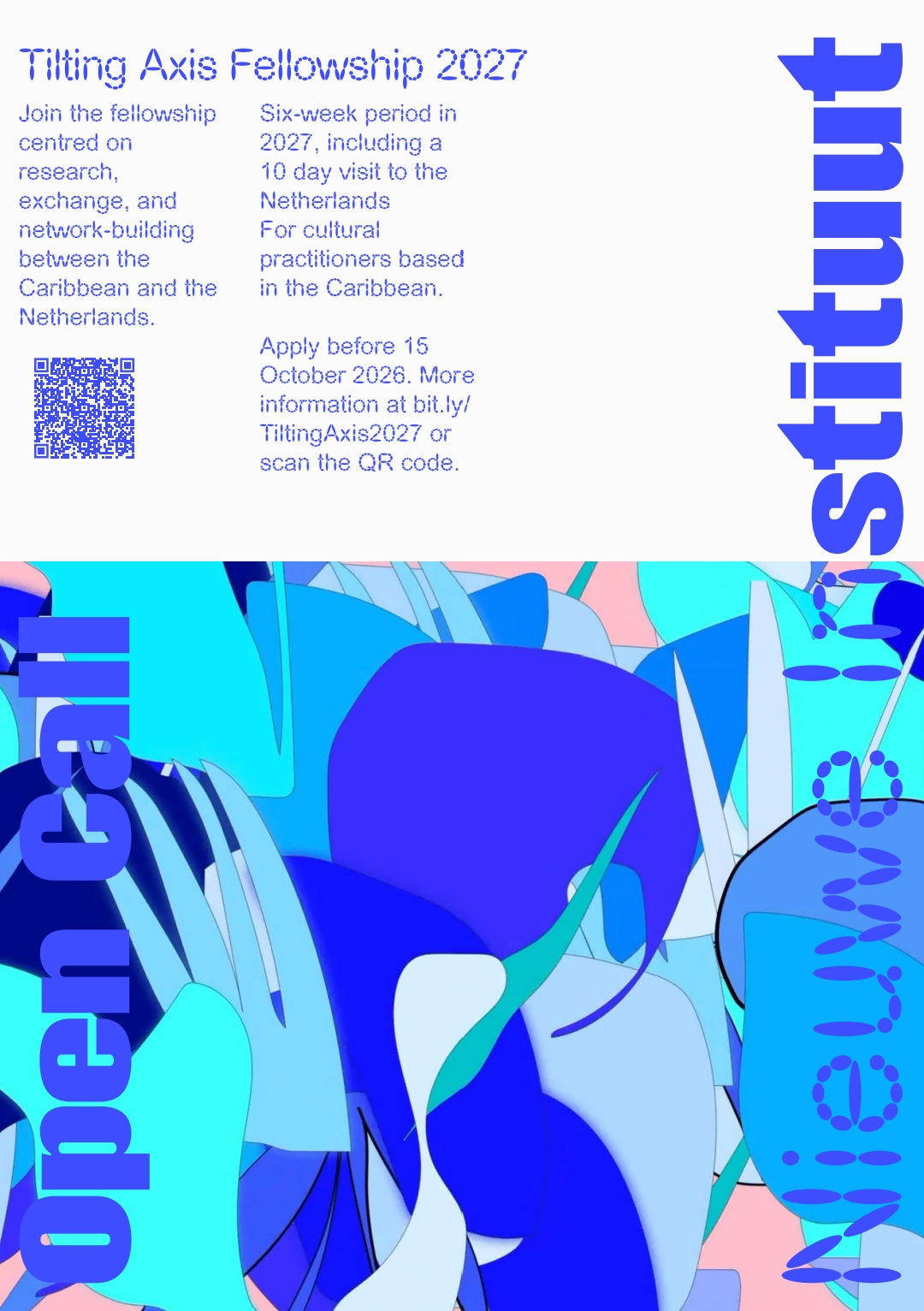
Open Call: Tilting Axis Fellowship 2027

Nieuwe Instituut and Tilting Axis are launching the sixth iteration of the Fellowship programme with an open call for applicants based in the Caribbean. The Fellowship supports research-based practices and stimulates mutual exchange between the Caribbean region and the Dutch cultural field. Together with the leading partners, Nieuwe Instituut and Tilting Axis, other cultural institutions including Stedelijk Museum Amsterdam will engage with the selected applicant during the Fellowship.

Graphic design: Moriz Oberberger

About the Fellowship

The 2027 Tilting Axis Fellowship will be supporting two fellows in a six-week programme centred on research, exchange, and network-building between the Caribbean and the Netherlands. One fellow will be selected from the Dutch Caribbean. Applicants may also apply as a pair from different regions of the Caribbean including the Dutch Caribbean; if selected, the pair will together occupy both fellowship positions. Otherwise, the selected fellows will be paired by the organisers. Within the six-week programme, Nieuwe Instituut facilitates a one-week tailor made visit to the Netherlands. This fellowship is conceived as a period for networking, research, reflection, and dialogue.

Are you interested in how knowledge is produced, preserved, and contested through archives, storytelling, digital platforms, or community practices? Do you work with themes such as memory, social or environmental change, or collective forms of knowledge-making? We welcome practitioners working across writing, film, sound, design, research, architecture, and other creative or interdisciplinary fields—especially those exploring how culture is shaped through collaboration, technology, and lived experience.

Structure of the Fellowship

The fellowship consists of a six-week period, including a 10 day visit with a 5 day tailor-made program for cultural exchange in the Netherlands. The fellowship takes place in April and May 2027. The one-week visit will be hosted within this period, with the exact timing to be determined in consultation with the two selected fellows.

During this visit, the two fellows will travel together, fostering exchange and dialogue between practitioners from across the Caribbean that supports intraregional exchange through this fellowship experience. They will participate in a programme organised through tailor-made meetings, site visits, and opportunities for dialogue with artists, cultural practitioners, researchers, and institutions. The programme is designed to facilitate meaningful encounters and intercultural exchange.

The fellowship supports an end result defined by the fellows themselves, with a clear milestone based on their project. Applicants are expected to outline this milestone in their application. Throughout the six weeks, fellows will take part in weekly check-in meetings.

Fellowship Support

Each fellow will receive a stipend of €2,500 to support the broader fellowship period. In addition to the stipend, fellows may access up to €1,000 in travel support connected to their research proposal.

This travel budget may be used for travel within the Caribbean or beyond, where relevant to the proposed research, exchange, or network-building activities. Fellows can use this support flexibly according to their needs—for example to extend their stay in the Netherlands, conduct research travel, connect with collaborators, or dedicate time to the development of new work.

During the one week visit, all travel costs to and from the Netherlands, as well as the week-long programme in the Netherlands, will be covered separately by Nieuwe Instituut Fellows may choose to extend their visit at their own expenses.

For whom?

The fellowship is open to researchers, designers, writers, curators, or cultural producers based in the Caribbean region who are interested in developing their research practice and building connections with cultural institutions in the Netherlands. Applicants may work across different cultural fields and practices, including those engaging with archives, social and ecological questions, cultural memory, spatial practices, design, architecture, or digital culture.

The fellowship is open to applicants with or without formal degrees or institutional affiliations. Equal priority will be given to those who can demonstrate creativity, critical thinking, and strong potential within their practice, regardless of educational background. There is no age limit for applicants.

Applicants must be residents of and based in one of the following Caribbean countries or territories:

Anguilla, Antigua & Barbuda, Aruba, The Bahamas, Barbados, Belize, Bermuda, Bonaire, British Virgin Islands, Cayman Islands, Cuba, Curaçao, Dominica, Dominican Republic, French Guiana, Grenada, Guadeloupe, Guyana, Haiti, Jamaica, Martinique, Montserrat, Providencia, Puerto Rico, Saba, San Andrés, St. Barthélemy, St. Eustatius, St. Lucia, St. Kitts & Nevis, St. Vincent & the Grenadines, Saint Martin, Sint Maarten, Suriname, Trinidad & Tobago, Turks & Caicos Islands, US Virgin Islands.

Application Process

The Open Call for the 2027 fellowship will open on 1st September 2026, with a submission deadline of 15th October 2026.

Proposals should be submitted via email to ta-fellowship@nieuweinstituut.nl with the subject line: Tilting Axis Fellowship 2027 – [Applicant Name]

Applicants may also apply as a pair from different regions of the Caribbean but one must include an applicant from the Dutch Caribbean; if selected, the pair will together occupy both fellowship positions. Otherwise, the selected fellows will be paired by the organisers.

Applicants may submit their proposal in written, audio, or video format, or a combination of these. We encourage applicants to choose the format that best allows them to communicate their research, ideas, and approach.

Written proposals should be a maximum of 1,000 words and include:

  • Statement of intent: Explain your research focus, key questions, and proposed methodology.

  • Relation to the fellowship themes: Describe how your proposed project engages with the themes outlined above.

  • Working calendar: Provide a proposed timeline for the fellowship period, including your availability to travel to the Netherlands between April and May 2027.

  • Previous work: Include documentation of up to five relevant previous works, with links and/or brief descriptions where useful.

For audio or video submissions, the same information should be addressed within the submission. Audio/video submissions should be a maximum of 5–7 minutes.

Previous work may be included separately as links or brief documentation, with up to five relevant works. All materials should be submitted as one PDF document where possible, with links to audio/video material embedded or clearly indicated. If the submission itself is an audio/video file, this may be submitted alongside the PDF containing the applicant’s supporting materials.

Applications must be written or recorded in English, and applicants should have a working knowledge of the language. English does not need to be the applicant’s first language; however, translation support is unfortunately not available at this time.

Applicants with specific questions or access requirements are encouraged to contact ta-fellowship@nieuweinstituut.nl to discuss the availability of support services.

Selection Process

The fellows will be selected through a jury process composed of:

  • Yesomi Umolu (Artistic Director, Nieuwe Instituut)

  • Charl Landvreugd ( Head of Research & Curatorial Practice, Stedelijk Museum)

  • Annalee Davis (Tilting Axis / Fresh Milk – Barbados)

  • Ana Maria Hernandez (RAA! – Aruba )

  • David Gumbs (Visual Artist, Educator – Martinique)

  • Tirzo Martha (Instituto Buena Bista – Curaçao)

Following the initial review of applications, five shortlisted candidates will be invited for an online interview with the 3 members of the jury. The final fellows will be selected following this interview process. The fellowship will begin in April 2027.

Key Dates

October 11, 2026, 23:59 CET / 18:59 AST: Open Call closes
November 2–3, 2026: Shortlisted applicants are invited to interviews
November 9, 2026, 14:30–18:30 CET / 09:30–13:30 AST: Interview session
November 10, 2026, 14:30–17:00 CET / 09:30–12:00 AST: Interview session

Q&A Session

We will host a one-hour Q&A session on 15 September, 10:00–11:00 AM AST (4:00–5:00 PM CET) via Google Meet. The session is an opportunity to ask questions about eligibility and the application process. No registration is required; you can join directly here.

For more information or questions, reach out to our team via ta-fellowship@nieuweinstituut.nl.

Announcing the 2026-2027 Fresh Milk Ecological Archives Fellow

The Fresh Milk Art Platform is thrilled to announce architect and designer Karla Nicholls as the recipient of our pilot Ecological Archives Fellowship!

This opportunity grants $10,580 BBD for a local independent researcher to create a mixed-media bibliography and narrative of memory dedicated to the Barbadian landscape, its transformation over time, and a genealogy of the eco-critical activism carried out to protect the integrity of our various ecosystems.

Congratulations, Karla! 

Read the full jury report below


Jury Report: The Ecological Archives Fellowship

Background

This pilot fellowship is made possible with joint funding from Peter Lewis, through the Colleen
Lewis Reading Room Slow Reading Programme, and from the Peter Moores Barbados Trust. Fresh Milk shared the Call for Applications for this pilot Fellowship on the 1st of June
2026, which received extensive engagement through our social media platforms prior to the
submission deadline of June 26th.

Eligibility of candidates was based primarily on 1) being locally based in Barbados 2)
being 21 years of age or older, and 3) being available to work eight hours a week in the Colleen
Lewis Reading Room, archival institutions or conducting field work. The Call was extended to
applicants from a variety of backgrounds, such as (but not limited to) environmental/conservation scientists; journalists; librarians; archivists; art researchers etc.

Procedure

The first stage of the application asked interested applicants to respond via Google Forms to
three questions regarding the following criteria:

Precedence of work — The Application should provide a concrete background of formal
and/or informal: studies, work, and/or activities relevant to the themes of the
Fellowship.
Criticality — The Application should demonstrate a reflexive perspective that leads
through constructive questioning, curiosity and innovative contextual understanding.
Eco-centric Creativity — The Application reflects a creative approach to the Fellowship
goals which centres experimentation and a desire to re-think the role the Archives and
storytelling can have in nurturing a relationship of stewardship to our ecosystems

In contrast to the high amount of interest and engagement with the publicity of the
Call for Applications, a total of seven applications were received.

Submissions were reviewed by the Jury, consisting of:

The Fresh Milk team (representing 1 vote);
Peter Lawrence Thompson, Fresh Milk Advisory Board member;
Dr. Robin Mahon, retired Director and Professor Emeritus at the Centre for Resource
Management and Environmental Studies (CERMES), at the University of the West Indies
(UWI), and Chair of the Executive Group of The Land Conservancy Barbados;
Dr. Carla Daniel, Director of Public Awareness and Education with the Barbados Sea
Turtle Project.

The Jury convened virtually on July 8th to discuss the results and determine the shortlist of
candidates. Four candidates from distinct professional backgrounds stood out, and were invited to the interview stage:

Justin Jeffers, Landscape Architect, Sculptor and Photographer
Shernise Mayers-Springer, Assistant Conservator within a national digitisation initiative
with a background in Environmental Science
Karla Nicholls, Architect and Designer
Fatima Patel, Geography Teacher

On July 23rd each candidate was invited to a 30-minute interview process with the Jury,
facilitated by Annalee Davis, in which they were asked to present their specific proposal more
in-depth, as well as respond to questions pertinent to the objectives of the Fellowship, such as
using mixed-media methods and avenues of research, gathering oral histories, creating the
structural legibility for the archive, and making the archive relevant to a variety of audiences.

After a thorough elaboration amongst the Jury, a consensus was reached: we are thrilled to
award our inaugural Ecological Archives Fellowship to Karla Nicholls!

Comments

Karla’s clarity and sense of purpose were especially strong during the interview stage,
complementing her written submission, which established her compelling emphasis on an
environmental justice approach. Her multidisciplinary background, spanning visual arts and
design, architectural projects, civic environmental activism, and research consultancy, makes
her a promising fit to lead the foundation of this inaugural Fellowship. The jury determined that
Karla clearly understood the Fellowship’s goal to create a mixed-media bibliography and
narrative of memory dedicated to the Barbadian landscape, its transformation over time, and a
genealogy of eco-critical activism.

Please join us in extending our heartfelt congratulations! We look forward to engaging with
Karla over the next eleven months and sharing insights into her process across our platforms.


About Karla Nicholls:

Karla Nicholls is a Barbadian born designer, writer and social entrepreneur who designs and
creates intricate, contemporary Caribbean pieces inspired by and using natural and sustainable
materials as well as utilizing new techniques such as digital fabrication.

As well as making a splash in the design space Karla is also active in the areas of sustainability,
youth engagement and community service and has volunteered at several local organizations.

Reflections from Bocas Lit Fest 2026 by Connor Harris

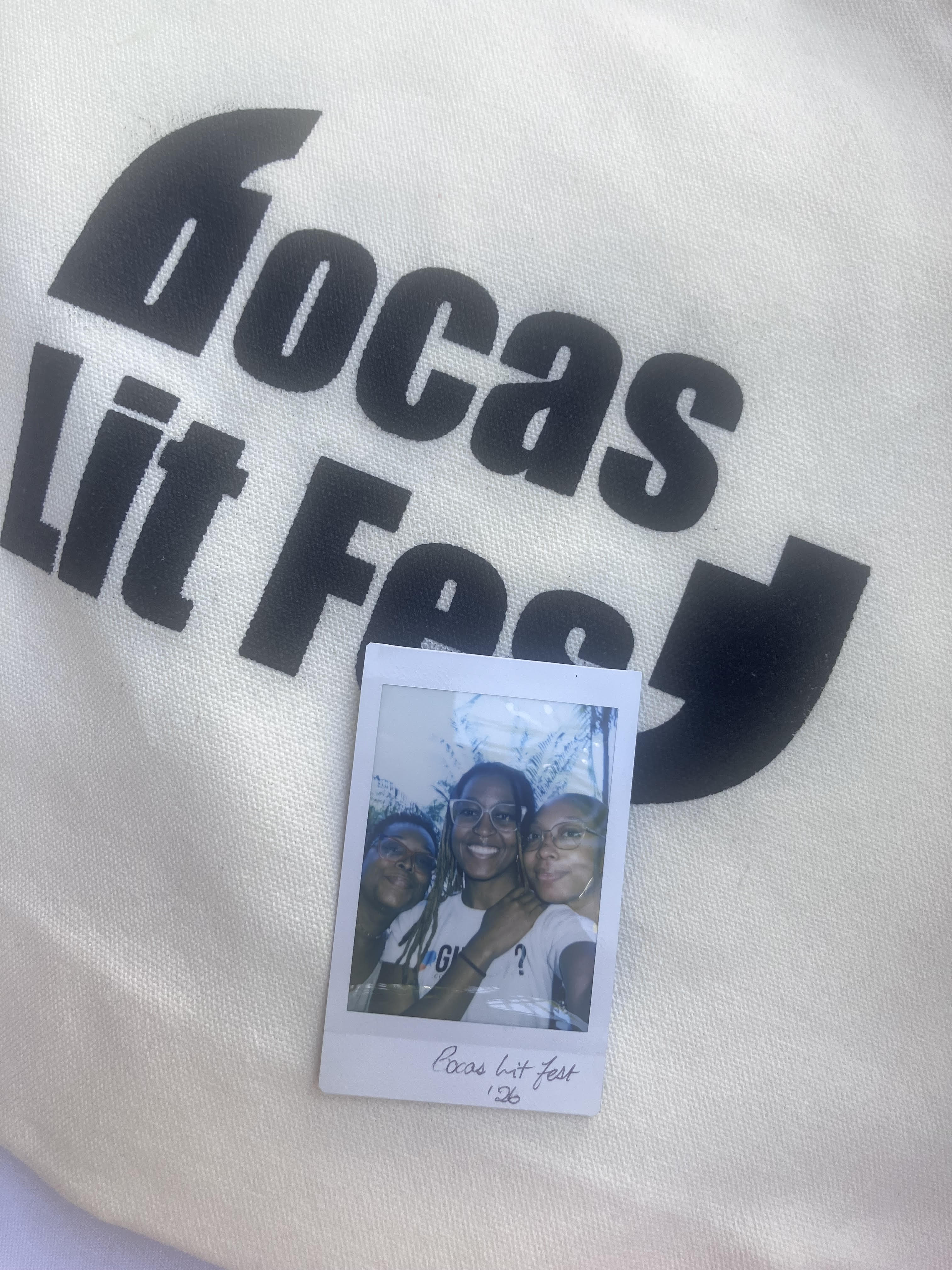
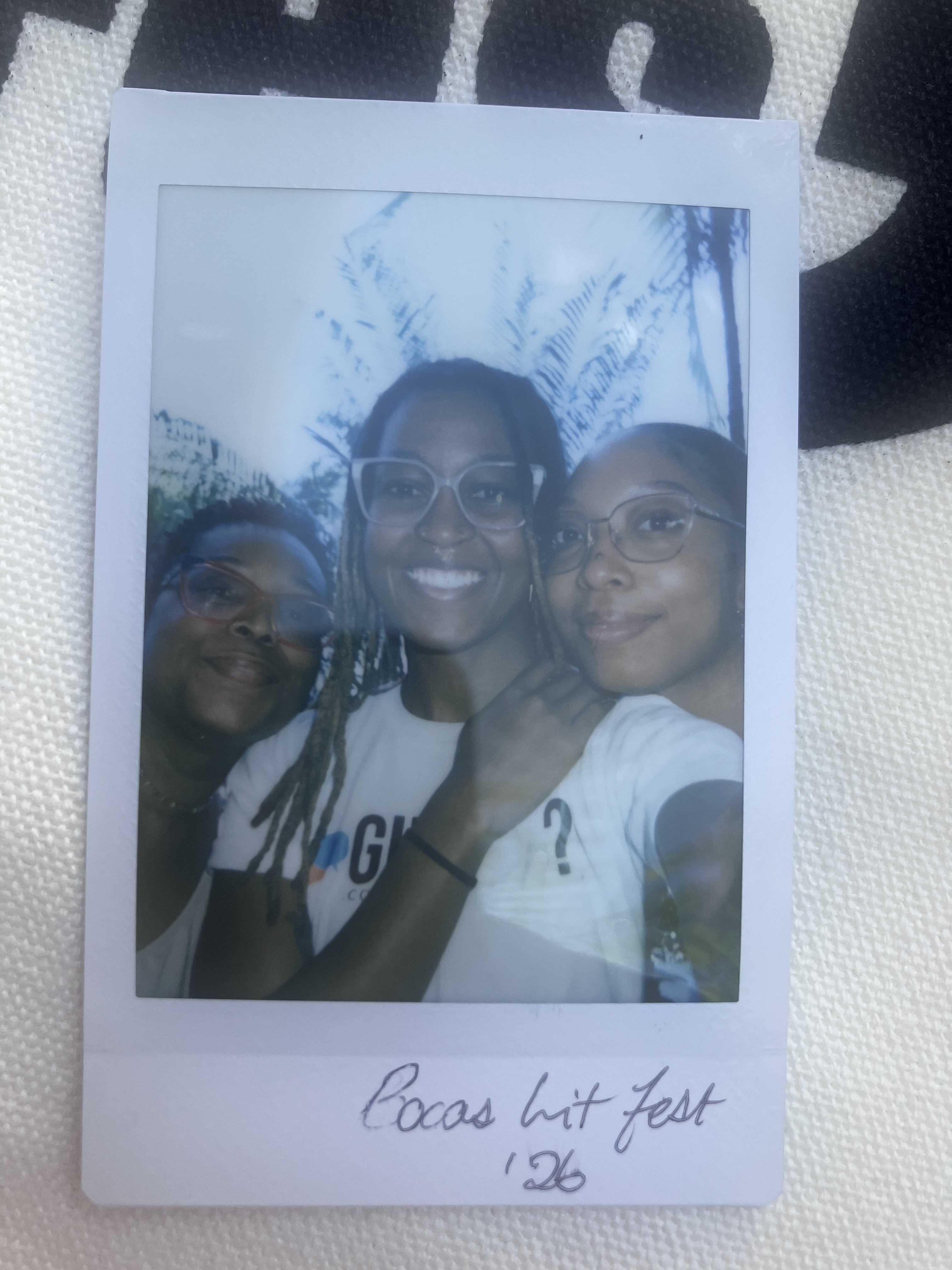
Fresh Milk is pleased to share a reflection by one of our inaugural Bocas Lit Fest Scholarship awardees, Connor Harris, who alongside fellow Barbadian writer  Cyndi Celeste attended the 2026 edition of the festival in Trinidad & Tobago from April 30th – May 3rd.

This scholarship was made possible with the generous support of Peter Lewis as part of our 2026 Slow Reading Programme. This programme serves to activate Fresh Milk’s Colleen Lewis Reading Room (CLRR), and commemorate Colleen Lewis’s legacy on the 20th anniversary of her passing.

Read Connor’s reflection below!


(Un)Moored: A Reflection on Leviathans, Hope and Bocas Literature Festival.

By Connor Harris
In times as dystopic as these, it is not hard to find oneself drifting in a sea of fear. Every day, it seems that some new leviathan rises from the deep to upset the waters and send us further adrift from hope. In the final semester of my Literature degree, I found myself unmoored from visions of a promising future for the arts and the world at large. It seemed that I could only moor myself to that which I feared, and fear is the most unsteady of anchors.

I feared that the small classroom settings I had come to find comfort in would continue to dwindle in numbers as the work of the humanities is devalued across the globe. I feared living within and graduating into a landscape where the thrill of inhuman optimisation has infected everything:

The workplace, the writing room, the war room and even the water.

I feared that as soon as I wrote and published my magnum opus, it would be siphoned into an A.I. chat box, and that my work would become fodder for what has been heralded as the end of the world as we know it.

When I received the email from the Fresh Milk team congratulating me on being selected for the Bocas Literature Festival scholarship, I was deep in this dizzying state of graduation anxiety, fear and existential dread. Being offered the scholarship signified a great many things for me. It meant that I had crossed a milestone in my career and that I would be travelling to a festival I had only dreamed of attending.

It also felt like being granted a moment of respite from the endless drift; like being given a chance to find my bearings, once again.

As we sit in the departure lounge getting to know one another, Cyndi and I talk endlessly. Our synapses fire rapidly at each other as we bounce from topic to topic, bonding over our least favourite foods, the peculiarities of our brain chemistries, and our approaches to craft. As a spoken word poet, Cyndi finds the realm of stagelight and live audiences more approachable than the nakedness of the page, and as a fiction writer, the cloak of the page soothes me.

Though Cyndi is far along in her career and I am at the beginning of mine, it is comforting to know that at our core, we are more similar than we are different.

Later that night, when we reach Trinidad and check into our rooms at the Kapok, I wave Cyndi off wistfully before she is spirited away to perform at a Festival event called Backchat. When I win the scholarship, I commit myself to living in a Jekyll-Hyde state of being for the duration of the four-day trip. Caught between the worlds of a writer-on-scholarship and a literature student in the midst of finals, I know that with the turn of each new day, I must metamorphose.

By day, I would be a budding Barbadian writer and literary academic, ready to drink in all that Bocas had to offer, and by night, I would revert to an anxious student meeting midnight deadlines and studying for exams that awaited me back home. So, I spend my first night in Trinidad alone at the desk in my dimly lit hotel room, face aglow from the light of my laptop.

At the festival welcome, the rafters of Old Fire Station are strung up with festive, technicoloured bunting. The buzzing crowd overflows from the seats to the door as Nicholas Laughlin stands on the podium, delivering his opening remarks.

“As you may know, our 2026 festival theme is ‘All Together Now’. It proclaims our belief that literature in all its forms is about community.”

This theme, printed on the festival booklets, brochures and banners, becomes a good omen and a manner of foreshadowing for my experiences at the festival. When I am not attending workshops or seminars, my time is spent basking in the presence of like-minded people. On the shuttle from the Kapok to the Library, I meet Ayesha Gibson-Gill, a fellow Barbadian who works with the Frank Collymore Literary Endowment. We talk about the importance of cultural conservation in tones of urgency and enthusiasm. When I tell her about my research interest in the conservation of Diasporic Symbols, she asks:

“Did you know that Adinkra symbols are embedded in wrought ironworks across the Caribbean?”

And just like that, I find another strain of research to consider.
This happens again and again throughout my experience at the festival. This kind of exchange and spontaneous collaborative thought. When speaking to Felesha, a festival volunteer, avid reader and a friend of a friend from back home, her eyes light up behind her glasses as she tells me:

“There’s a book about the Ti Kai’s of Dominica that I might relate to your interest in symbols!”

In the lobby of the Kapok, a guest of the festival, whom I had spoken to the day before, waves me over.

“I saw this article in the newspaper on the power of the symbol, and it reminded me of your research,” he says while pointing to a picture on his phone.

I come to see that the beauty of the Bocas lies not only in its invaluable offerings of writerly and scholarly events, but in the way it becomes an epicentre of the Anglophone Caribbean literary world. Here, like-minds across the region gather to be in community and coalesce thoughts, if only for a few blissful days.

However, these moments of bliss and respite were not without twinges of the same worries I harboured long before travelling to Trinidad. While the festival had offered me moments of repose in the presence of community, I knew better than to cast Bocas as some sort of utopia in my mind. At the Festival Welcome, I am reminded that utopia cannot exist without dystopia and that the shadow of a leviathan can stretch for miles.

“I want to be frank with you,” Nicholas Laughlin says, looking out to the crowd intently. “There were moments in the past year when we weren’t sure of what kind of festival we could stage. The arts and culture sector is under financial pressure these days and fundraising was truly an uphill battle. Yet here we are once again, performing a miracle.”

When I attend the workshops of Tessa McWatt and Justin Haynes, they distil years of wisdom into two golden hours. In their presence, concepts I have wrestled with in my work for months become untangled with sophisticated ease. I leave Tessa McWatt’s workshop, armed with notes on how to treat a setting like a character rather than a passive backdrop.

“The landscape is never neutral,” she says.

In Justin Hayne’s workshop, I create a tapestry of notes that anatomise the well-written antagonist. I transcribe his words as best I can, scribbling down on my notepad:

‘Good’ antagonists help the protagonists recognise things within themselves.’

I find use for each author’s wisdom in the worlds of my making and the world I am trying to make sense of. At night, when I return to the dark chrysalis of my hotel room, I become, once again, a student on the cusp of graduating into a landscape written as antagonist by the powers that be. I think about how fear and hopelessness are real and true in times like these, but I know that they must not be the only things I recognise within myself.

On my final night in Trinidad, I abandon my chrysalis for another dimly lit room. One that is not still and silent but murmuring and quaking in wait for the National Poetry Slam to begin. In the dark of the NAPA theatre, we, the audience, disappear into the shadows to become one breath, one deep belly laugh, one cry of delight; one entity in bated silence as the spoken word poets performed. The poets spewed metaphors, similes and scalding statistics that confronted the antagonism written into their own landscapes. Antagonism: brutal and fearsome. But anchored together by words echoing to and fro, in call and response, their fears and ours transform into catharsis.

At the end of the night, before the lights in the theatre are switched on and we return ourselves as singular bodies shuffling out of the theatre doors, Marrielle Forbes, the Programming and Hospitality Manager at Bocas, makes the night’s final remarks.

“In uncertainty, the arts continue to endure,” she says. “Culture survives when the community chooses to stand together.”

In times like these, when leviathans roam the earth and tyranny runs rampant, I am blessed with choice. As an anxious graduate of the arts, fearful and trying her best to hold onto hope, I am given the impetus to make the right choice through the encouragement and invaluable efforts of Fresh Milk’s CLRR Slow Reading Programme. Through an experience made possible by their Bocas Festival Literature Scholarship, I have found a way to moor myself, once again.
Open Call: Fresh Milk Ecological Archives Fellowship

The Fresh Milk Art Platform is launching its pilot Ecological Archives Fellowship, granting $10,580 BBD for a local independent researcher to create a mixed-media bibliography and narrative of memory dedicated to the Barbadian landscape, its transformation over time, and a genealogy of the eco-critical activism carried out to protect the integrity of our various ecosystems.

Duration: 11 months [July 2026 — June 2027]
48 weeks @ 8 hours/week

Read more below, and see the application form here.

Background

This pilot fellowship is made possible with joint funding from Peter Lewis, through the Colleen Lewis Reading Room Slow Reading Programme, and from the Peter Moores Barbados Trust.

The 2026 Slow Reading Programme serves to activate Fresh Milk’s Colleen Lewis Reading Room (CLRR), in remembrance of Colleen Lewis and her legacy on the 20th anniversary of her passing. Colleen’s research, specifically her essay Pictorial Depictions of the West Indian Landscape in the 18th century and early 19th century: the sublime, the picturesque, the romantic (Barbados Museum & Historical Society Journal, Volume 50, 2004), invites us to pay particular attention to our landscape after centuries of artistic and ideological interpretation by foreign gazes and extractive interests.

The Colleen Lewis Reading Room, located in St. George, Barbados at The Fresh Milk Art Platform, is a site outfitted for accessing, cross-referencing and discussing thousands of texts relating to the genealogy of arts, literature, art history, theory, Caribbean history and critical thought — ranging from local, regional and international spheres. It provides an avenue to interrogate the social questions and challenges of our times.

The 2026 inaugural Ecological Archives Fellowship seeks to augment the library by establishing a collection of scholarly and creative materials focussed on the environment, which will also be facilitated in part on the Fresh Milk website.

This Fellowship stems from Ariella Aïsha Azoulay’s work Potential History: Unlearning Imperialism (2019), which presents the notion of “cocitizens” as those who “care for the common world they share with (…) others and are committed to dismantling the principle of differentiality that organises it”. The political principle of differentiality is recognised as being exemplary in the Barbadian historical context — citing Hillary Beckles’ work Britain’s Black Debt (2013) — as amongst the first legally constituted “offshore outpost” territories of the New World. She explains “People started to be governed differentially from others, by other people whose rights were inscribed in the worlds that the governed were forced to build and within which they were denied the right to feel at home.” This principle enabled people living in the mainland (Europe) “not to associate themselves with forms of brutal violence… even when they directly benefited from them.” (pg. 35-36)

Azoulay’s work, which aims to “reject imperialism’s conceptual apparatus altogether” presents an unorthodox approach to the archives, positioning it not as a neutral site, but as a technology. Potential history “is a form of being with others, both living and dead, across time, against the separation of the past from the present, and history from politics.” (pg. 43) The arts, and the archives of the development of the cultural ecosystem in the Caribbean, is indispensable to the work of defining the principles of our citizenship, working within this enmeshment of imperial history and politics: “Art should be understood as a world-building set of activities irreducible to the creation of discrete objects. Through these activities, people’s place in a shared world and their right to this place are carved.” (pg. 140)

This interdisciplinary archive seeks to counteract the generalised narratives of “passivity” in the Barbadian context, by highlighting the lineage of proactive and engaged ecological activism, demonstrating resistance to the touristification of the small island, both currently and historically.

It also seeks to include resistance to overdevelopment and usurpation of our land, through the eyes of scholars, educators, journalists, musicians, artists, poets, politicians, ecologists, biologists and activists cognisant of some of the island’s most compromised physical assets including:

  • Coastal areas
  • Mangroves
  • Parks
  • Public beach access points
  • Gullies and forests

Also considering the presence in our socio-economic matrix of artificial landscapes such as:

  • Agricultural lands
  • Wind and solar farms
  • Golf courses

Fellowship Goals

 Design a research framework that generates an inspiring perspective on the intersections of science, art and culture, in order to exalt our historical and current civic relationship to our natural environment.

 Consolidate an initial compilation of archival material related to the specific theme of Barbadian ecology, and its relevant socio-cultural and political-economic intersections.

 Including, but not limited to: public and community archival materials; informal oral histories and diaries; published academic articles; visual, musical, theatrical and literary arts; archival videos and photographs.

 •  Promote awareness of our historical and current civic relationship to our environment in a way that is broadly accessible and counteracts the isolated silo effect between both different generations, and different knowledge sectors.

As this is a pilot Fellowship, a desired outcome specific to this first iteration (developed in collaboration with the Fresh Milk team) is to determine an overarching understanding of i) how to best disseminate and publicly engage an Ecological Archive, and ii) what local conditions and approaches are necessary in order to guarantee continued independent research, including encouraging contributions from a community-led, citizen science approach.


Eligibility

  • Applicants must be 21 years of age or older.
  • Applicants must be based in Barbados.
  • Applications are welcomed from a variety of backgrounds, such as (but not limited to) environmental/conservation scientists; journalists; librarians; archivists; art researchers etc.
  • Applicants must possess research skills and integrity, as well as strong communication skills and tech literacy (Google suite, internet research, Zoom; ability to record audio preferred, but not required).
  • As the Fellowship is intended to support independent investigation, Applicants cannot use Fellowship funds to conduct research on behalf of another institution, corporation or nonprofit organisation.

Review Process

  • June 1st: Applications open.
  • June 26th [26/06 Midnight AST]: Applications close
  • July 7th/8th: Shortlisted candidates notified.
  • July 28th: Final decision made.
  • July 31st: Public Announcement of selected Fellow.
  • August 1st: Fellowship commences

The applications will be reviewed by the Fresh Milk team; Fresh Milk Advisory Board member, Peter Lawrence Thompson; and two external Experts: Dr. Robin Mahon, retired Director and Professor Emeritus at the Centre for Resource Management and Environmental Studies (CERMES), at the University of the West Indies (UWI); and Dr. Carla Daniel, Director of Public Awareness and Education with the Barbados Sea Turtle Project.

The applications will be evaluated based on the following criteria:

 Precedence of workThe Application should provide a concrete background of formal and/or informal: studies, work, and/or activities relevant to the themes of the Fellowship.

 CriticalityThe Application should demonstrate a reflexive perspective that leads through constructive questioning, curiosity and innovative contextual understanding.

 Eco-centric CreativityThe Application reflects a creative approach to the Fellowship goals which centres experimentation and a desire to re-think the role the Archives and storytelling can have in nurturing a relationship of stewardship to our land.


Timeline

Phase 1 — Gathering

[July/August/September/October]

  • Establish research plan
  • Conduct site visits and online research
  • Create a database of recorded oral accounts

Phase 2 — Organising

[November/December/January/February]

  • Determine and populate the technical and narrative structure to organise the materials gathered, thinking through the practical and aesthetic needs of hosting and using a mix-media and interdisciplinary archive as technology.

Phase 3 — Sharing

[March/April/May/June]

  • Generate and carry out an accessible format and strategy that can be used to disseminate the Ecological Archive, in a way that raises awareness, engagement and relevance for the general public and practitioners across the respective disciplines.

For example, this can include a public event, a video series, a printed zine, a community workshop series etc.


Commitments of Fellow

Schedule: The Fellow is available to work either 1 full day a week, or 2 half days a week for the 11 month period.

Site-based work: The Fellow’s work hours must be undertaken in the CLRR, or when appropriate, to the archival institutions or field work.

Reporting: The Fellow will commit to provide content once a month in the form of brief reflections and videos/photographs of their process, created in collaboration with Fresh Milk’s content specialist.


Release of Funds

  • Forty percent (40%) — $4,232 — will be awarded upon mutual completion of the grant agreement.
  • Twenty percent (20%) — $2,116 — will be awarded upon completion of phase 1.
  • Twenty percent (20%) — $2,116 — will be awarded upon completion of phase 2.
  • Twenty percent (20%) — $2,116 — will be awarded upon completion of final report submission.

The Fellowship funds are intended to be used at the Fellow’s discretion, as well as to cover expenses related to local travel to the CLRR and other locations of research.


How to Apply (Form)

To apply, please fill out the Google Form application form by midnight, June 26th.

Main questions:

1.In 250-500 words, describe your background and interest as it relates to the themes and work of ecology, eco-critical activism and archival practices in the Barbadian context?

2.In 400-800 words, describe your perspective as it relates to our historical and current civic relationship to our natural environment.

3.In 500—900 words, share your ideas to pursue the Fellowship goals, and vision for how the Archives and storytelling can be experimented with in order to nurture a relationship of stewardship to our land.