Studio Conversations with Annalee Davis, Mariam Zulfiqar and Christina Millare

Fresh Milk is pleased to share the archive of a conversation which took place on August 15th 2013 between UK based Christina Millare, visiting curator, Mariam Zulfiqar and Founding Director of Fresh Milk, Annalee Davis.

Studio Conversations caught up with curator and Curating Contemporary Art Inspire graduate, Mariam Zulfiqar to discuss her research residency in Barbados, which will culminate into a forthcoming exhibition that explores the impact of plant migration on the Barbadian visual and social landscape.

They also spoke with Visual Artist, Annalee Davis, the founder of The Fresh Milk Art Platform Inc., an artist led initiative that contributes to the discourse surrounding creative production within the informal networks of the Caribbean and its diaspora by offering a platform for exchanges among contemporary practitioners.

Curator, Christina Millare, a graduate of the Curating Contemporary Art Inspire MA (2010/2012) has programmed Studio Conversations and chaired the event.

Studio Conversations is a series of live video linked studio visits with artists and curators. These events aim to give audiences an opportunity to engage in a dialogue with internationally based artists and curators to explore how their practice might be translated within transglobal contexts.

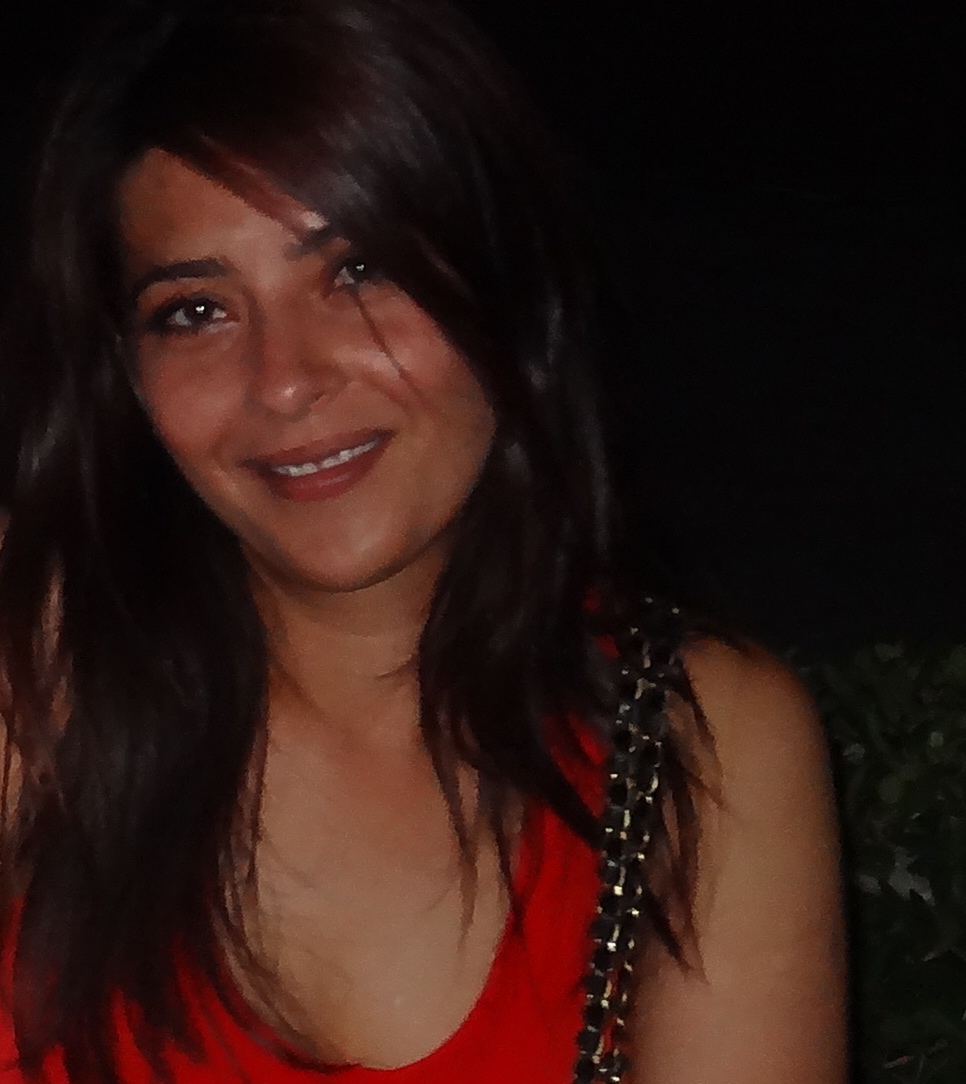
 About Mariam Zulfiqar:
DSC00074_2

Mariam Zulfiqar graduated from the Curating Contemporary Art Inspire MA in 2012 during which time she was based at Art on the Underground where she continues to work in a curatorial capacity. Mariam recently curated the online Kurt Schwitters inspired project, MerzBank with Steven Bode for Film and Video Umbrella and is currently on a research residency in Barbados. Her research will culminate into a forthcoming exhibition that explores the impact of plant migration on the Barbadian visual and social landscape.

About Annalee Davis:
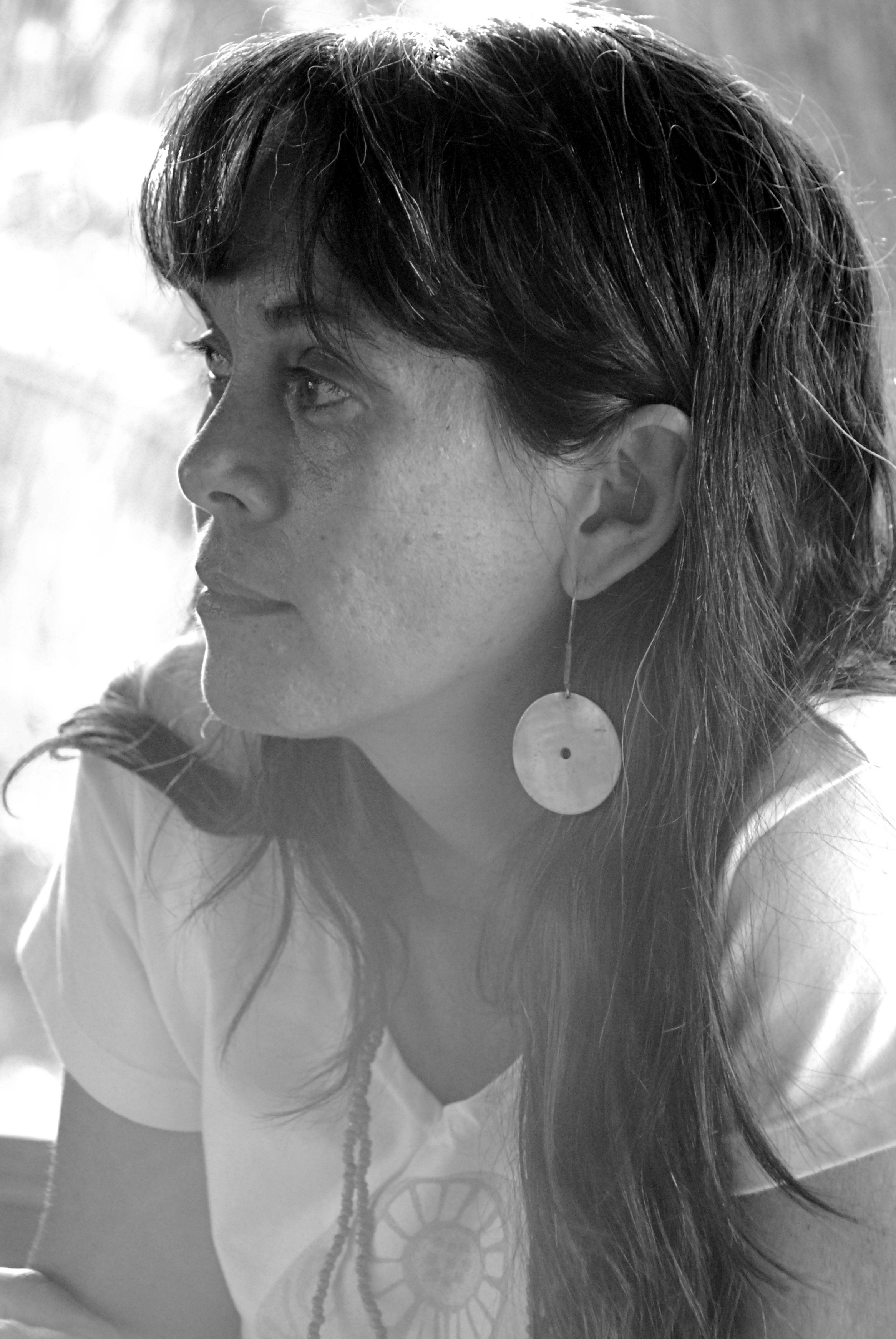
Founder of Fresh Milk Art Platform Inc.

Founder of Fresh Milk Art Platform

Annalee Davis is a Visual Artist.  She has been making and showing her work regionally and internationally since returning to the Caribbean in 1989.  She is the founder of The Fresh Milk Art Platform Inc., an artist led initiative for exchanges among contemporary creatives supporting interactions across disciplines and contributing to an increasingly rich discourse surrounding creative production within the informal networks of the Caribbean and its diaspora. She is a part-time tutor in the BFA programme at the Barbados Community College.  For more on her practice, visit her website.

About Christina Millare

Christina Millare

Christina Millare is a curator based in London, UK. She is interested in considering alternative venues as locations for unique presentations of artists’ moving image, performance, sound and digital work. Christina’s projects have a strong collaborative approach with host venues, enabling her to draw upon pre-existing audiences as well as offer alternative experiences of a familiar location. In 2013 she was awarded Grants for the Arts, Arts Council England funding to explore this notion further and worked with established artists including, Janek Schaefer, The Bohman Brothers and Fabienne Audeoud.

Currently, Christina is developing; ‘The Cross Continent Vloging Project’, an ambitious international exhibition and live public programme featuring live art, sound, performance and moving image exploring the trans-global and migratory behaviour of online video blogging.

A graduate of the Royal College of Art’s MA in Curating Contemporary Art, Christina previously held curatorial and programme coordinator positions at Abandon Normal Devices Festival and Cornerhouse, where she produced the group exhibition ‘New Cartographies: Algeria – France – UK’ (featuring Kader Attia and Zineb Sedira) and produced various aspects of both organisations’ public programming.

Link to two of Christina Millare’s projects can be found below:

“Machines by Other Means” – http://vimeo.com/51430133
“Pleasure Box” – http://vimeo.com/80374088
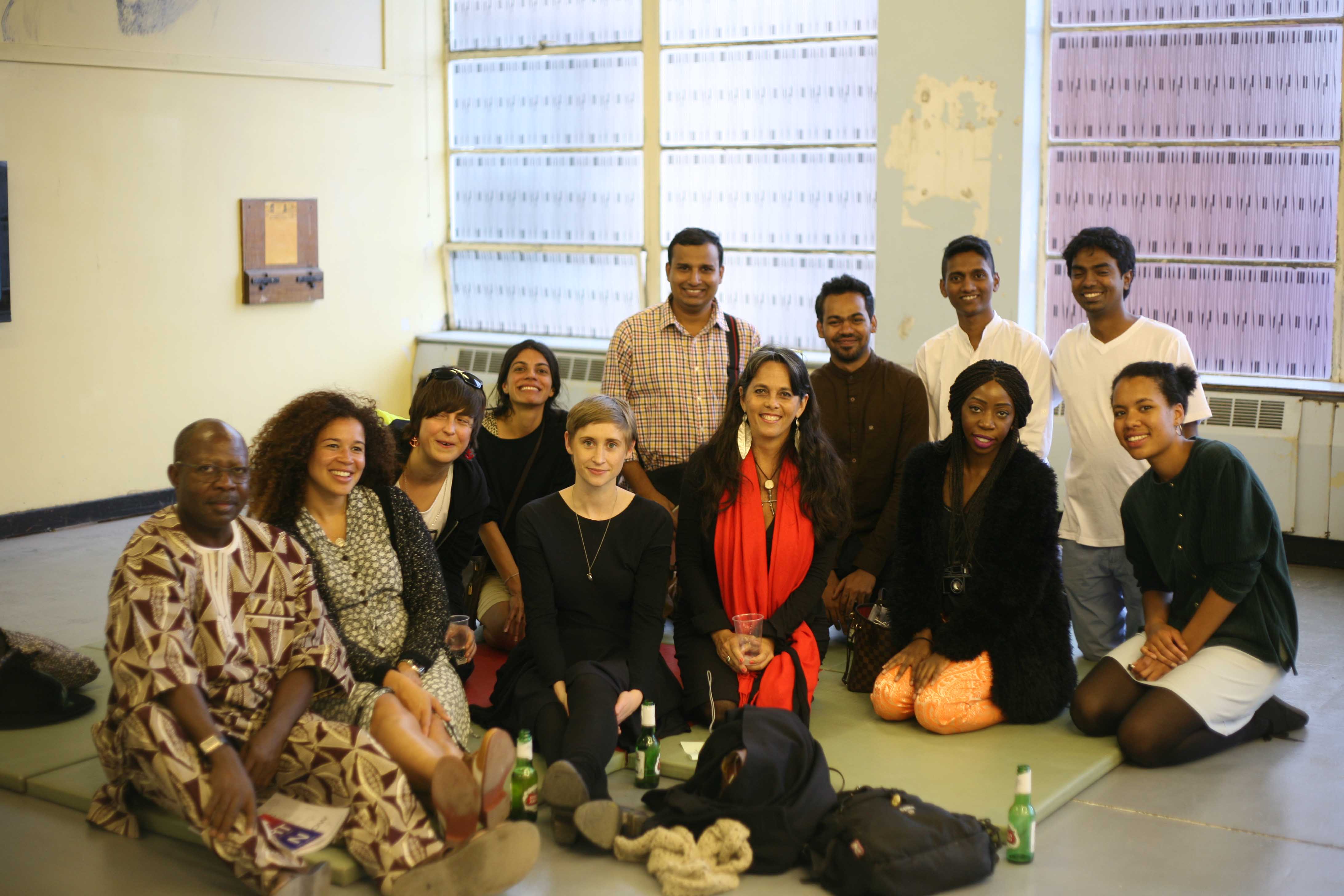
Mapping the Commonwealth with “Glasgow’s Finest”

Alberta Whittle shares her thoughts on the recent International Artist Initiated (IAI) project in Glasgow, presented by the David Dale Gallery & Studios as part of The Glasgow 2014 Cultural Programme which took place alongside this year’s Commonwealth Games. Read more below:

Photograph by Rayanne Bushell

Representatives of Clark House Initiative, RM, Video Network Lagos, Fresh Milk; Alberta Whittle and Rayanne Bushell

 “In 1884 the Earl of Rosebery visits Australia and asks, ”Does the fact of your being a nation… imply separation from the Empire? God forbid! There is no need for any new nation, however great, leaving the Empire, because the Empire is a Commonwealth of Nations“.”[1]

In the summer of 2014, the Commonwealth Games arrived in Glasgow. Much like any travelling circus, the Games brought believers, performers, participants and an audience. Like any participant, I came to Glasgow with my own expectations. Having lived in the city for many years, but failing to assimilate completely, I still feigned the confidence that comes so easily for those who know the area. Sharing a taxi ride, with the self-proclaimed “Glasgow’s Finest”, the driver quizzed me on my knowledge of the city’s geography, asking me where roads connected, easily highlighting my failure to truly belong to Glasgow. The driver insisted on informing me that Glasgow’s taxi drivers were always known as “Glasgow’s Finest”, and I was not allowed to forget it.

During this trip, over many conversations with “Glasgow’s Finest”, a discourse of belonging and not belonging readily emerged. The drivers often assumed Barbadian artist, Annalee Davis and I were Americans, our accents blurring into a vague sense of foreign-ness. They asked why we were here, and when we explained about our project as part of the Commonwealth Games, they in turn spoke of how the Games were not for Glaswegians. The Games’ faux presentation of multiculturalism and the promotion of the idea that we are all in this together confronts the reality that, for many Glaswegians, there is a disconnect between their participation on home soil and the participation of the athletes and visitors flown in to contribute to the spectacle of imagined unity. The notion of unity between us, members of a former British colony, and Glaswegians, a nation grappling with securing their own independence, came from an unlikely direction. Driving through the Merchant City we passed roads such as St. Vincent Street and Jamaica Street; easy reminders of Glasgow’s active role within the slave trade as members of the plantocracy and as indentured servants. However, “Glasgow’s Finest” posited the belief that Caribbean and Scottish nations must be united against the English, advocating the belief that Scots also faced “oppression” from England. This supposition did not entirely surprise me, given the political climate surrounding the upcoming Scottish Referendum.

From the banners, traffic diversions and the odd, green mascot called Clyde dotted across the city, the aura of the Commonwealth seeped into Glasgow’s public spaces. As part of the celebrations, the David Dale Gallery in Glasgow’s East End invited artist-run spaces from across the Commonwealth:  Fillip (Canada),  RM (New Zealand), Cyprus Dossier (Cyprus), Fresh Milk (Barbados), Video Art Network Lagos (Nigeria) and Clark House Initiative (India) to participate in their International Artist Initiated programme.

As part of the Fresh Milk platform, Mark King, Ronald Williams and myself presented a series of interventions. Responding to the commercial nature of the area, we crafted three individual presentations. The location of the David Dale Gallery within the heart of the East End of Glasgow – once a thriving industrial boomtown – seems peculiarly apt, mirroring the substantial role of production Britain’s former colonies assumed, laying the foundation for the industrial revolution. These same former colonies are now re-positioned as independent nations, members of the Commonwealth, exhibiting artwork in their own image. The recent deterioration of Glasgow’s prominence in manufacturing, where production is now outsourced to these former colonies, lends symmetry to the proceedings.

 “Internet ultimately offers both the seductions and subductions of a postmodern “world.”’ [2]

Continue reading

The Art Of Loving Google #CCF

Recently, some friends and I kept joking about how the answer to everything can be found by Google. Typing: ‘How to code a website’, ‘How to make alfredo sauce’, ‘I fell and now my tail bone hurts’ and, with this review in mind, I Googled ‘how to love’.  A 30 step guide—with pictures—was one of the first solutions the search engine provided. Resisting the urge to roll my eyes too much, I browsed the guide. Step by step, I increasingly noticed similarities between this ‘how to love’ and The Art of Loving.

The Art of Loving is a small book about love written by Erich Fromm in the 1950s. A social philosopher and psychoanalyst, he discusses types and effects of love and goes so far as to identify ‘real love’ and even how to put it into action.

The above excerpt is from Versia Harris’ review of Erich Fromm’s The Art of Loving, this week’s addition to the Fresh Milk Books Tumblr – the online space inviting interaction with our collection in the Colleen Lewis Reading Room.

For new Critical. Creative. Fresh reviews every week, look out for our #CCF Weekly posts and see the great material we have available at Fresh Milk!

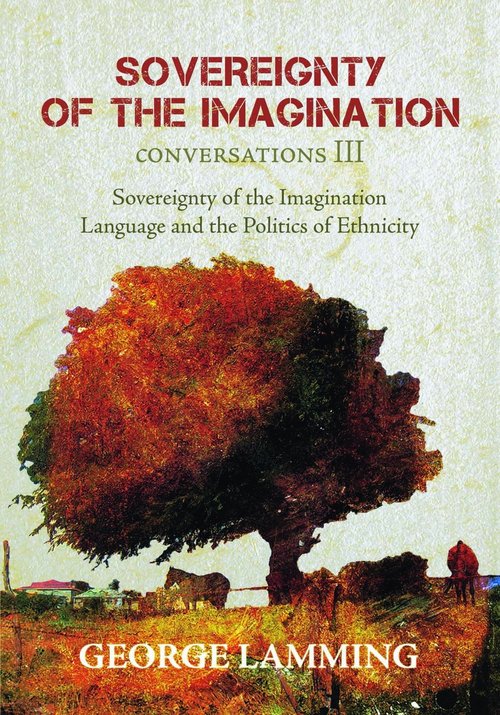
Sovereignty of the Imagination: Conversations III #CCF

Sovereignty of the Imagination

George Lamming’s Sovereignty of the Imagination: Conversations III is an interesting dialogue. It explores how European imperialism and colonialism has influenced the cultural identity of the Caribbean. Separated into the essaysSovereignty of the Imagination and Language and the Politics of Ethnicity, the novel addresses the way social institutions are founded in imperialism, and the way this shapes the social constructs of race, class, nationalism and popular ideas about language. It is this latter essay, and in particular Lamming’s discussion on the race relations between the Afro and Indo-Caribbean populations, which resonates with me the most.

The above excerpt is from Ronald Williams review of George Lamming’s Sovereignty of the Imagination: Conversations III, this week’s addition to the Fresh Milk Books Tumblr – the online space inviting interaction with our collection in the Colleen Lewis Reading Room.

For new Critical. Creative. Fresh reviews every week, look out for our #CCF Weekly posts and see the great material we have available at Fresh Milk!

Announcing the release of Talamak: Dessa Darling’s Memoir

Frist draft cover page

We are very pleased to announce the launch of Talamak: Dessa Darling’s Memoir, the e-publication written and directed by Fresh Milk Books Team Leader Amanda Domalene Haynes. The story offers a glimpse at the underbelly of many mood disorders, mental illnesses and mysterious health issues: emotional/psychological trauma.

Talamak: Dessa Darling’s Memoir features illustrations by Fresh Milk Books Member Versia Abeda Harris and book design by Kimberley St. Hill. The book is divided into four narratives: Purple Flower, Talamak, Sunsets with Gran-gran and Blood Sisters. Here’s the back cover description:

“DESSA DARLING is a young woman from Barbados, the Caribbean. When a painful memory wakes her from a stoned slumber, she must confront emotions she has been repressing for a very long time.  A mix of words and images, Dessa Darling’s Memoir shares her journey through these surreal and subtly hopeful reflections.”

Read/Download the book here.

__________________

me 1

About Amanda:

Amanda Domalene Haynes is the Project Leader of Fresh Milk Books at the Fresh Milk Art Platform Inc. An editor and emerging YA publisher, her postgraduate research interests include media literacy, popular culture and publishing in relation to the socioeconomic development of the Caribbean region. She currently manages the recently launched blog The Odyssey of Carib Lit, which will document her research about contemporary Caribbean book publishing and its sociological implications. Amanda graduated from the University of the West Indies with a BA Literatures in English (First Class Hons.) in 2013.