With the ongoing surge of contemporary art in the region, hosting artists in residence is imperative to the expansion of a new sense of Caribbean Art. This is due to the creative, economic, and social advantages a residency programme offers to both the artists experiencing them and the institution hosting them. So why isn’t there more of an initiative for them in Barbados?A residency program consists of an art institution or informal network inviting an artist to live, create and share in a different environment. There usually is an Open Day showcasing the artist’s work at the close of the residency, depending on the nature of that programme. The notion of having an artist in residence is one that started roughly 100 years ago with artist colonies in the European and American countryside, based around the theory that as a collective artists could expand their creative ideas. It was an exciting time for art then, as style was shifting and the Modern Art movements were emerging. Equally, now is an inspiring time in Caribbean Art, and residency models can only help strengthen the collaborations in the region and shape the future of our artists.
Barbadian based, Cuban artist Leandro Soto has completed a vast number of residencies in his career so far, and is a strong advocate for recreating that atmosphere for other artists through his classes. He described in a recent interview that interacting with new environments and building alliances with other artists from around the world is invaluable to the development of an artist and the venue: “For an artist, being in an art residence is an open window for themes, for materials, to have new friends (to meet other artists), to have new collectors…in the art residence, you see the artist’s work but you also (get to) know the artist, so you have a better picture of who is doing the art, how they are doing the art, what is the connection that this artist has…it’s extremely important.”

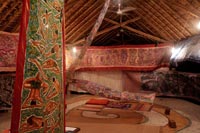
- Leandro Soto’s installation during his residency in New Dehli. Photograph compliments http://www.leandrosoto.com
What better way for Barbados to integrate with the Caribbean art world as a whole than to host artists from the region on a regular basis, injecting fresh ideas into the circulation? It could also work on an international level, as seen in the residency programme at Eden Rock in St. Barts. They host various artists from all over the world who contribute to the thriving arts culture, and it has become an important aspect of their tourist industry. So not only is their population exposed to a vast amount of international art, but tourists see it as part of the reason to visit.
Alice Yard in Trinidad had it’s 5th Anniversary this year, which was a national and regional event, attracting creatives from all over the Caribbean. This is no doubt partly due to their extensive practice of hosting artists in residency there, exposing themselves to networks outside of Trinidad while expanding their own critical space.

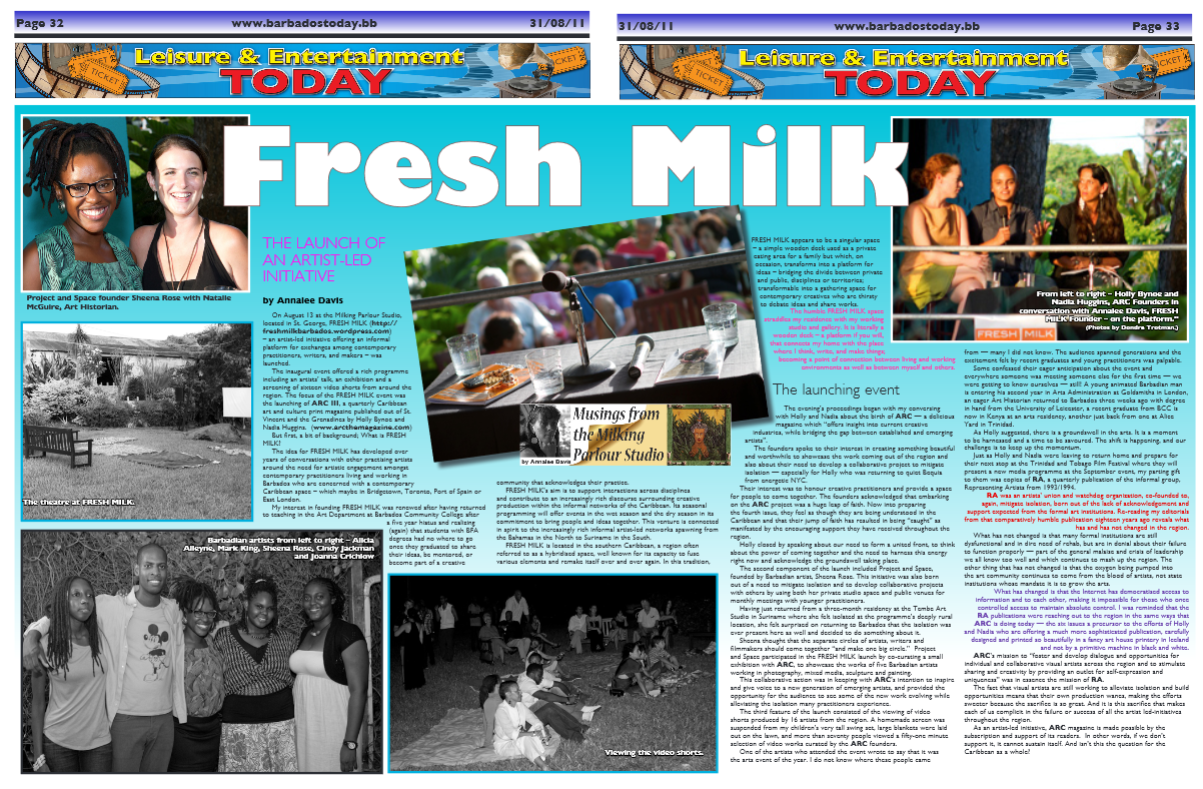
The advantages of being exposed directly to other art atmospheres can be seen in the ambition of the artists who experienced it. Sheena Rose, Mark King, Joanna Crichlow, Ewan Atkinson, to name a few, have all done residencies and are all active catalysts and participants in the movement of contemporary art in Barbados and will be on the FRESH MILK platform in November to share their residency experiences. Sheena runs a number of events with her group Projects and Spaces, Joanna has been exploring the language of her artwork in her articles. There are no real previous models on the island of the things they are involved with, so the question has to be raised- would they have the motivation or knowledge to carry these things out if they had not been exposed to similar things through their residency experience? Not to mention the encouragement to create more experimental works, exhibit their works outside of the commercial gallery sphere, from gaining support of their work by outside institutions.

Both Sheena and Annalee Davis have also made movements towards hosting artists in residency, such as Sheena’s 24 Hour Residency at her studio as part of Projects and Space and FRESH MILK’s own upcoming weekend event to be held next month when Dominica based, Venezuela born Performance Artist, Sandra Vivas will be in residence to perform and offer a workshop experience in Performance Art. But why does it have to be just the informal networks and individuals striving towards the expansion of the residency community? When Leandro was listing places outside of the Caribbean he had completed residencies at, most of them were programmes tied to schools or Universities. Imagine the wealth of exposure for the institutions and the students if this were to happen on a continuous basis here at the Barbados Community College or the UWI. Currently Popup Studios in the Bahamas, Tembe Art studio in Suriname, the IBB in Curacao, Ateliers ’89 in Aruba and Alice Yard in Trinidad offer Caribbean residency opportunities. One international opportunity for artists to carry out residencies overseas and one which several Caribbean artists have participated is the Triangle Network (http://www.trianglearts.org/), which integrates artists of all backgrounds, enabling them to compare initiatives. However, when the artists return to Barbados, there are no formal institutions to support the experience they gained overseas. And so the number of informal spaces grows, trying to fill the void, sustaining the art community, keeping it from fragmentation.
A thriving creative culture should not be something that scrambles to find a place in a community, it should be a nurtured and prominent aspect of society. Incorporating artist residencies is one of the ways to ensure this.
Natalie McGuire


 fresh milk barbados