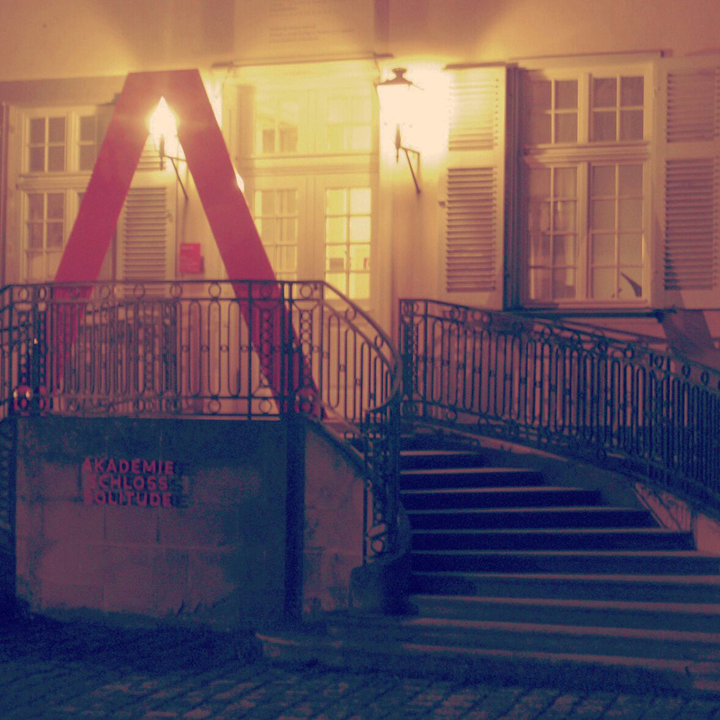
The call for applications to undertake a residency at Akademie Schloss Solitude in Stuttgart, Germany is open until October 31, 2014. Read an interview here between Katherine Kennedy – current fellow in the ResSupport programme supported by Res Artis, representing the Fresh Milk Art Platform at the Akademie – and the programme’s founding and artistic director, Jean-Baptiste Joly. The conversation reveals more about the Akademie’s mandate, the relationships built between the institution and the residents, and interest in cultivating ties with the Caribbean arts community.
Read the interview originally conducted for ARC Magazine below:
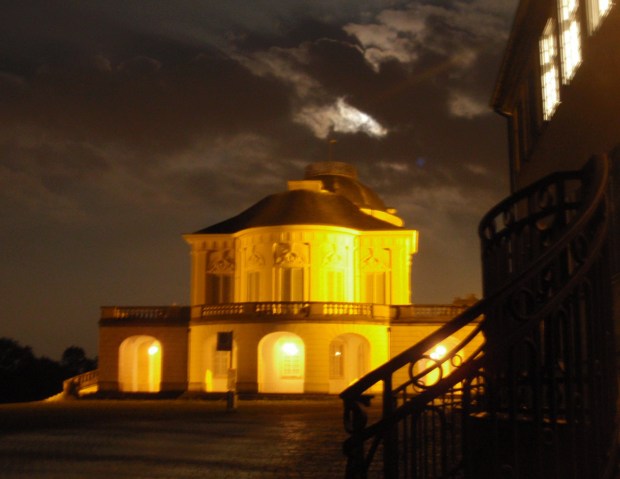
Katherine Kennedy: Founded in 1990, Akademie Schloss Solitude will celebrate its 25th anniversary next year. Can you share with us the original mission of the Akademie, and in what ways it has been realized, grown and adapted over this time?
Jean-Baptiste Joly: The Akademie was established, so say our statutes “in order to promote art and culture…in particular by awarding residence fellowships to emerging artists and organizing artistic encounters, seminars and conferences, performances, readings, concerts and exhibitions by fellows and guests…” When it was opened to artists in July 1990, the former prime minister of Baden-Württemberg that initiated the project said he wanted a black box for artistic research, hidden in a Baroque castle. This is still what Akademie Schloss Solitude is doing, but many things have changed in our practice since: In 1996, we created the new fellowship program for art coordination; young people working in the field of culture as managers, being brought on as both staff members and regular fellows in the house. This totally transformed the dynamic between staff and fellows, making them more fluent, less frontal. With their daily contribution, these fellows cover the grey zone that is always growing between the everyday life of artists and the administration.
In 2002, we founded the new program art, science & business, promoting dialogue between these three not necessarily connected domains of human activities. Since that time, the Akademie can really affirm its interdisciplinary thoughts and practices. I couldn’t put a precise date to another major change, but in the last couples of years we had to react more flexibly to the planning of Solitude’s studios, accepting that artists split the time of their residencies, coming twice or three times for shorter periods. People, especially artists, want to be simultaneously in different places, constantly having to move – they become nervous when they stay at the same place too long. This is a sign of our times, and has its downside. The best thing we can offer to our guests is a time that belongs to them, not to the institution, a time at your disposal, not stolen by urgent and often not so important necessities. In general, artists finally understand this, sometimes just too late…
KK: Residencies exist as critical cultural institutions, set apart from museums or galleries mainly due to instances of encounter and possibility taking precedence over preservation or output. Tell us about the space provided by the Akademie, and how it is conducive to these flexible journeys of discovery, reflection and creation.
JBJ: Museums and Libraries have the task of conserving cultural goods; schools ensure the transmission of knowledge through teaching; theatres make public (or should make public) the crucial problems of our civilisation. These are, since the time of the ancient Greeks, the different modes of transmitting culture. Residencies take over parts of what theatres, schools and museums do, but they have another task that is publicly less immediate: selecting artists (yes, residencies decide who is an artist and who is not!) and supporting them, giving them time, space, material, facilities and contacts. By doing so, they contribute largely to the individual life of artists. They also make the art scene they are located in more international, more permeable to otherness and difference.
Residencies also have an open way of re-thinking the contract between artists and institutions. Besides the necessity of staying at the Schloss two thirds of the time of the fellowship (and accepting an invitation for dinner every month), Solitude-fellows have no other obligation. This generous approach gives the Akademie the possibility of permanently re-inventing the relations between artist and institution, redefining it to accommodate a flexible exchange between the two sides, alternatively giving and taking.
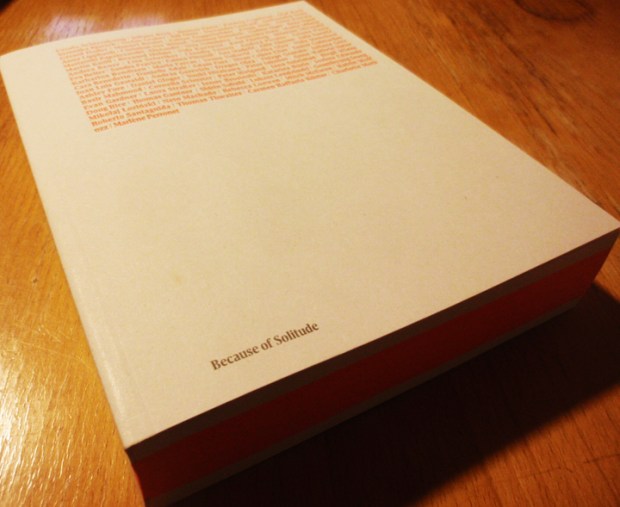
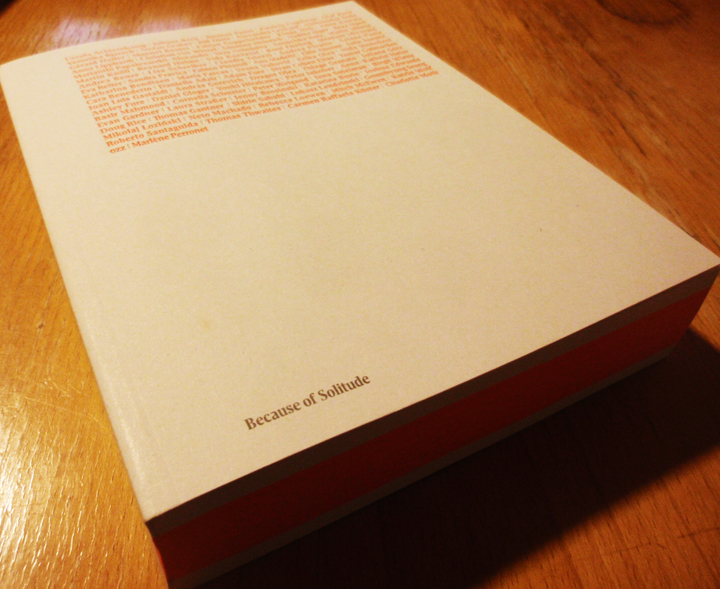
The Akademie Schloss Solitude Yearbook 12 – Because of Solitude
KK: The Akademie’s residency programme is open to applicants worldwide – not only to visual artists, performers and writers but also to scholars, scientists, economists etc.; anyone who is thinking laterally about their practice and wishes to engage with other like (or unlike) minded individuals, programmes or environments. How important is diversity, both culturally and disciplinary, in shaping the residency experience at Solitude? Are these connections maintained after the fellowship period is over?
JBJ: At the end of the nineties, I observed how new artist fellows arriving at Solitude could localize or even classify another artist in a matter of minutes: where did you study, where did you exhibit or perform, which biennale etc? Too fast, too easy… This was one of the reasons why we founded the art, science & business program. When artists, scientists, engineers or managers are speaking together, they have to integrate the differences that oblige them to explain from the very basics how they work and think. In such an exchange, nothing is taken for granted. The notion of diversity is also related to the presence of fellows from all over the world having very different conditions of life and artistic production. In that manner, Solitude is really international and aware of cultural diversity.
The question of the connections between the fellows is another one, and for us a crucial point: the best way to evaluate the quality of the work done by an artist residency is to check what happened afterwards. Are the former Solitude-fellows successful? Are they in contact with each other? Are they in contact with the institution? In the internal newsletters addressed to our board members or to the local government, this part of the report is one of the most important because its legitimizes our work from an external, objective perspective. Indeed, we receive many mails of former fellows mentioning that Solitude not only provided good material support, but also offered new possibilities of cooperation and friendship.
KK: Have there been many fellows or applicants to the Akademie hailing from the Caribbean? In recent years, many creative platforms have emerged in the region, prioritizing the cultivation of relationships and networks that comprise forward thinkers and progressive institutions. Is there interest on the part of the Akademie to deepen engagement with the Caribbean, and perhaps take part in these exchanges and collaborations?
JBJ: Not so many fellows, I remember four from Cuba and from Jamaica, living at the time in Mexico, in New York and in Europe. Few artists apply from the Caribbean, probably because we are not yet well known over there. But remember this too: We are not a big machine like a ministry or like Goethe Institute with a worldwide network of employees and organizations. We just try to embrace the world with a staff of 11 people, working on 3,500 square meters in a castle nearby Stuttgart! But in short: yes, we are always interested in forming new connections and contacts, including in the Caribbean! Sometimes, not always, these contacts will grow to a real exchange and partnership. Isn’t it the very reason we invited you, Katherine Kennedy, as a fellow of Akademie Schloss Solitude?
Read the original interview on ARC Magazine here, and see more information about Akademie Schloss Solitude’s open call for applications below:

Call for Applications: Akademie Schloss Solitude
For the fifteenth time, Akademie Schloss Solitude is granting approx. 70 residency fellowships of three to twelve months in duration. More than 1,200 artists from more than 100 countries have developed and advanced projects at the Akademie since its opening in 1990, creating a close-knit, global network of Solitude alumni that expands from year to year. The Akademie persues an intense exchange between artistic and scientific disciplines. With the art, science & business program the transfer of knowledge and experience between these fields can be deepened to create new synergies of creativity, inventiveness and management.
International artists are invited to apply from the following disciplines: Architecture (design, landscape architecture, urban planning), Visual Arts (including performance art), Performing Arts (stage design, dramatic texts, dramaturgy, musical theater, performance, direction, drama, dance), Design (fashion, costume, product and furniture design, visual communication), Literature (essay, criticism, poetry, prose, translation), Music/Sound (interpretation, sound installation, sound performance, composition) and Video/Film/New Media (including video installation, fiction and documentary).
Furthermore, scholars, scientists and professionals from the disciplines of the Humanities, Social Sciences (with a focus on culture and the politics of space), Economy/Economics (with a focus on urban policy), and Culture & Law (with a focus on authorship) are invited to apply.
At the beginning of a new application round, the Akademie stipulates a new central topic within the context of its art, science & business program which is designed to include not only fellows from all disciplines, but external specialists too. The Akademie views art, science and business as complementary rather than separate activities, which interact dynamically and encourage mutual productivity. To this end, fellows are selected in the fields of art, science & business, internal and public events are organized and publications are released. All fellows – artists, scientists and economists – are free to participate in projects related to the central topic.
Following a suggestion by the current jury chairman, Kaiwan Mehta, the Akademie will be organizing its art, science & business program around the central topic Biography and the Production of Space. With this central topic, the Akademie would like to initiate a comprehensive interdisciplinary discussion about the production of spaces – which can be physical, virtual or imaginary– as an individual as well as social phenomena with implications in economy, art, literature, and sciences.
Persons up to 35 or if older who have completed a university or college degree within the past five years are welcome to apply. Currently enrolled university or college students (at the time of application) will not be considered for selection. Each fellowship recipient is granted Euro 1,100 per month, in addition to free lodging.
For additional information on the residency programme, application process and selection jury members, see the Akademie Schloss Solitude website here. Application deadline is Friday, October 31, 2014 (Postmark/End of Online Application).
As of July 1, applicants will find all information, be able to register and download the application form or apply online on the application website.


 fresh milk barbados