
Musings from the Milking Parlour column in Barbados Today by Annalee Davis – check out pages 40 – 41 to read the article “Parallel conversations in a time of crisis – Debating the Cultural Industries Bill”.
Musings from the Milking Parlour column in Barbados Today by Annalee Davis – check out pages 40 – 41 to read the article “Parallel conversations in a time of crisis – Debating the Cultural Industries Bill”.
INTERNSHIP OPPORTUNITY AT FRESH MILK
Open Call for Graphic Designer
Fresh Milk is offering a summer internship opportunity to commence in June 2012. The internship will end in August 2012. The most eligible applicant will be responsible for creating and posting promotional material for Fresh Milk events and the blog.
This is an excellent opportunity for those with interests in some or all of the following:
-marketing/PR
-non-profit organizations
-arts advocacy
Interested applicants should submit the following to freshmilkbarbados@gmail.com by June 2, 2012.
-3 to 5 examples of previous work in graphic design
-Cover Letter (1 page, double spaced)
-Curriculum Vitae/Resume
-propose a flyer template for the next Fresh Milk event: Fresh Milk VI.
The successful internship candidate will have access to the vast resources of the Fresh Milk network. We’re excited to have a new member on the Fresh Milk team. Contact us at freshmilkbarbados@gmail.com if you have any questions.


KATHERINE KENNEDY:
From the first time I learnt about artist residencies, I became keen to participate in them one day. This desire increased the more I heard other artists share their experiences, and talk about how inspirational and unique each one was, causing their practices to grow and adapt to different surroundings. A visiting artist who came to speak to my class at Lancaster University said that after your first residency, you can’t wait to do another, and my involvement in Fresh Milk’s inaugural residency has definitely confirmed that for me.
After graduating and returning to Barbados, I confess that my art practice came to more of a standstill than I would have liked. Although I was happy to be home, I was caught up in wondering what my next step should be, and the uncertainty led to a mental block where my creativity was concerned. I was struggling to familiarize myself with the art scene locally and regionally, while coming to terms with how to move forward without the studio environment that had become such a huge part of my life while studying. When I learned about Fresh Milk, and that it was offering a residency, it sparked my interest and in a way reawakened my drive to make art again, giving me a platform for the ideas that had been playing in the back of my mind to manifest.
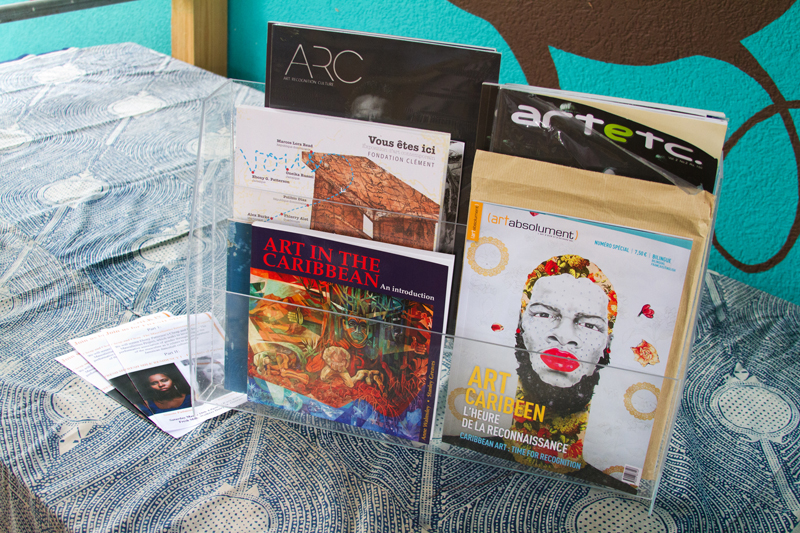
One of my favourite aspects was the ambiance, inside the studio and out. Although it was local, the countryside setting was still so different from where I live, and I found the scenic, peaceful atmosphere to be very stimulating. The studio was spacious and set out with lots of adequate work surfaces, as well as access to resources such as tools, materials, and a small but comprehensive library of art books, journals, biographies, magazines etc. for our perusal. Having this access and a place to call a work environment was instrumental in getting myself back into gear.
It was also great to not only have the studio setting again, but to share it with someone as talented and fun as Simone. We did not know each other prior to the residency, which I think worked to our benefit because it added another level of freshness to the experience as we got to discover each other’s aims and styles, and gain new perspectives on our work. I loved having that back and forth of ideas and information from another artist again, and I feel that our coexisting in the same space improved our work ethic and motivated us to be more productive than either of us thought possible at the beginning of the week. The thought of creating resolved pieces in just five days intimidated both of us, but we surprised ourselves, Simone finishing not one, but two full pieces, and the scale of my work became much larger than I had anticipated. I think we found a balance of enjoying ourselves and getting along really well, while still maintaining our focus, and it was a pleasure to work alongside her; I hope to do so again in the future.
Overall, I could not be happier with my introduction to artist residencies, and I would like to thank Annalee for everything she has done and the support she has given. She was more than accommodating, and willing to provide us with or help us source anything we needed – art related or otherwise. She gave us helpful advice, including telling me about the value of promoting work through exhibiting as well as in a virtual realm in this technological age, which she also did for us by working hard to give our work exposure in many ways, and hosting our exhibition at the end of the week. I feel a renewed sense of purpose, spurred on to keep this momentum going, and I am extremely grateful for being given this opportunity to reconnect with my artistic side.
SIMONE PADMORE:
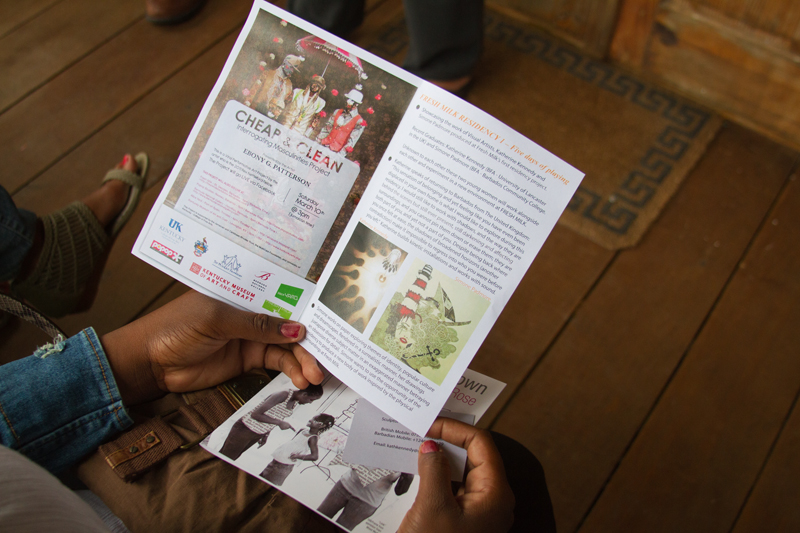
The Fresh Milk Platform hosted a five day residency called ‘Five days of Playing’, which was held from the 5th to the 9th of March, 2012. Along with myself-Simone Padmore, another young artist- Katherine Kennedy, a sculptor, participated in the residency. During those five days we had to produce work to be showcased on the 10th, March, 2012.
The experience was great and I found it so exciting that I was oblivious with whom I was participating. Katherine expresses her work in sculpture and installation, while I express mine by drawing. The studio at Fresh Milk was spacious, the necessary facilities were provided – such as a library with a lot of artistic material to choose from and access to the internet from where we could gather inspiration.
Katherine and I gelled well. Our media contrasted well and together with Annalee Davis we had great artistic conversations. The energy between us was very productive; we inspired each other and respected each other’s space and practice.
The residency was beneficial because it helped me break the habit of solely working at night. I refer to myself as a ‘nocturnal artist’ and I usually have a lot if difficulty producing art during the daytime. I also noted that my production speed increased and the direction of my work shifted in a great way and made me realized I can apply this variation to my current work.
I think the Fresh Milk platform is providing great opportunities for young artists in Barbados. I say this because after leaving school, we have difficulty continuing to produce our personal work. There is a lack of motivation to produce work because we are outside of the school studio and we no longer experience the same creative flow or energy generated amongst our colleagues. The sense of loneliness also plays in connection to this, because having someone who is in the same field to accompany you makes it easier to produce. Space is another factor because some or most of us do not have the adequate space for our art. In Barbados, there is a stigma that revolves around art, where art is not taken as a serious practice. The country focuses more on the commercial art, which results in the lack of exhibition spaces for contemporary or non commercial art. That creates the lack of motivation because if we do not have somewhere to look forward to showcasing our work, we may not feel the need to do work.
The experience at Fresh Milk provides all of these things to help young artists to continue their practices. It is a space we can be involved in and gives us a sense of hope. I think the platform should continue providing opportunities like the five day residency because it is a positive step to help upcoming artists and recent graduates to continue or get back in to the groove of producing work.
All Photographs copyright Mark King 2012




 fresh milk barbados