Fresh Milk welcomes Ayesha Hameed to the Platform

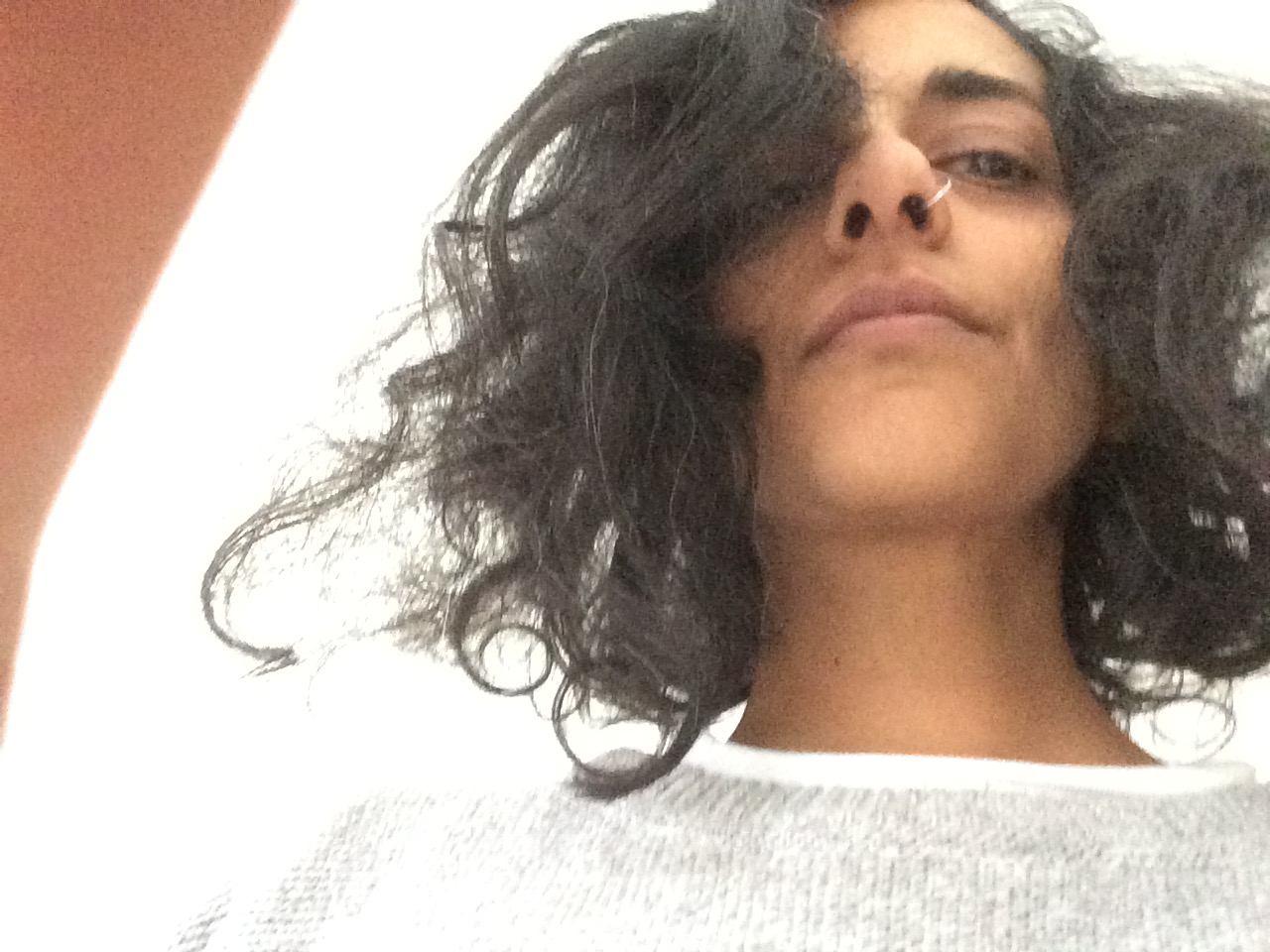
Fresh Milk is pleased to welcome UK-based artist Dr. Ayesha Hameed to the platform from December 8-23, 2016.

img_2200

While in Barbados, Ayesha will be working on and conducting research for her ongoing project Black Atlantis. Black Atlantis is a live audio-visual essay that looks at possible afterlives of the Black Atlantic: in contemporary illegalized migration at sea, in oceanic environments, through Afrofuturistic dancefloors and soundsystems, and in outer space.

Black Atlantis combines two conversations – afrofuturism and the anthropocene. It takes as point of departure Drexciya, the late 20th century electronic music duo from Detroit, and their creation of a sonic, fictional world. Through liner notes and track titles, Drexciya take the Black Atlantic below the water with their imaginary of an Atlantis comprised of former slaves who have adapted to living underwater.

___________________

About Ayesha:

Ayesha Hameed’s work explores contemporary borders and migration, critical race theory, Walter Benjamin, and visual cultures of the Black Atlantic.  Her work has been performed or exhibited at ICA London (2015), Haus der Kulturen der Welt, Berlin (2014), at The Chimurenga Library at the Showroom, London (2015), Oxford Programme for the Future of Cities, Oxford (2015), Edinburgh College of Art (2015), Kunstraum Niederoesterreich Vienna (2015), Pavillion, Leeds in 2015 and at Homeworks Space Program, Beirut in 2016.

Her publications include contributions to Forensis: The Architecture of Public Truth (Sternberg Press 2014), We Travelled The Spaceways (Duke University Press forthcoming 2017), Unsound/Undead (Univocal, Forthcoming 2017); and books including Visual Cultures as Time Travel (with Henriette Gunkel Sternberg, forthcoming 2017), Futures and Fictions (co-edited with Simon O’Sullivan and Henriette Gunkel forthcoming 2017). She is currently the Joint Programme Leader in Fine Art and History of Art and formerly a Research Fellow with Forensic Architecture at the Centre for Research Architecture at Goldsmiths University, London.
Danilo Oliveira’s Residency – Week 4 Blog Post

Brazilian artist Danilo Oliveira shares a blog post about the final week of his Fresh Milk residency. Danilo documented his experiences through a visual diary, sharing images and sketches that capture impressions of his time here in a series he has dubbed ‘The Bajan Chronicles’. See more below:

_____________________

‘The Bajan Chronicles’ consists of images generated during my residency at Fresh Milk, looking at Barbados’ history, everyday life and culture. Of course, one month is not enough to create any kind of deep reflection, but it’s time enough to realize some historical coincidences and explore some cultural and social issues, even in a superficial way. It’s about a foreign view, for a short time, touching on some restrictive issues, and trying to generate questions and reflections out of these.

Danilo Oliveira’s Residency – Week 2.5 Blog Post

Brazilian artist Danilo Oliveira shares a blog post about the floor mural he is producing during his Fresh Milk residency this November: “Utopian Geology Services” – The Cultural Geology of the Caribbean. See more below:

___________________

“Utopian Geology Services” – The Cultural Geology of the Caribbean.

When I arrived in Barbados for my Fresh Milk residency, my proposal was to research and study the borders and identity relations present in Barbados and in the Caribbean. It is my first time in this part of the world, and so it’s been great to learn from each person that I meet. Some things surprised me, some things had a huge impact on my visions around ideas of belonging, colonialism and ancestral identity. At some point, I began to see the geology of Barbados as an important aspect of its development (as it is in any country). And so, in spite of the fact that Barbados and Brazil endured slavery for centuries, the post-colonial periods are very distinct. Maybe some of that could be related to the geological differences. Here in the Caribbean, I have been looking for traces of identity: Bajan? Caribbean? Part of the Americas? Afro-Caribbean? British? Little England?

I began to wonder how it would be if we changed something that is unchangeable, like geological aspects of the region. I’m calling this “Utopian Geology Services” – The Cultural Geology of the Caribbean. How would it be if the Caribbean islands were closer? How would it affect the history, if it had always been like this? What are the real distances in a world controlled by routes?