Cherise Ward is now at Falmouth University, England

Artwork by Cheris Ward

In May 2014, Cherise Ward undertook a residency at Fresh Milk for a month developing her illustrations and puppet making. We are pleased to share the good news that Cherise has just begun a postgraduate program at Falmouth University in England where she will spend the next year in their MA Illustration program. Read more below from Cherise:

The Falmouth School of Art Post graduate Centre
I made the decision to study MA Illustration: Authorial Practice at Falmouth University because I wanted a different experience than that of studying in New York City, which was where I got my undergraduate degree at the School of Visual Arts in Manhattan. Falmouth university is located in Cornwall, England and I am attracted to the diverse, one year, Illustration programme. This is my first time in England, and I’m looking forward to doing a lot of exploring and experimenting, expanding on ideas I developed during my residency at Fresh Milk, as well as new ideas inspired by this new environment. So far, I have experienced orientation trips to Eden Project as well as St.Ives, explored the beautiful little shops in Falmouth town and seen the beach on both a clear day and a heavily foggy day. I’m excited to get started and for what this coming year will bring.

Studio Conversations with Annalee Davis, Mariam Zulfiqar and Christina Millare

Fresh Milk is pleased to share the archive of a conversation which took place on August 15th 2013 between UK based Christina Millare, visiting curator, Mariam Zulfiqar and Founding Director of Fresh Milk, Annalee Davis.

Studio Conversations caught up with curator and Curating Contemporary Art Inspire graduate, Mariam Zulfiqar to discuss her research residency in Barbados, which will culminate into a forthcoming exhibition that explores the impact of plant migration on the Barbadian visual and social landscape.

They also spoke with Visual Artist, Annalee Davis, the founder of The Fresh Milk Art Platform Inc., an artist led initiative that contributes to the discourse surrounding creative production within the informal networks of the Caribbean and its diaspora by offering a platform for exchanges among contemporary practitioners.

Curator, Christina Millare, a graduate of the Curating Contemporary Art Inspire MA (2010/2012) has programmed Studio Conversations and chaired the event.

Studio Conversations is a series of live video linked studio visits with artists and curators. These events aim to give audiences an opportunity to engage in a dialogue with internationally based artists and curators to explore how their practice might be translated within transglobal contexts.

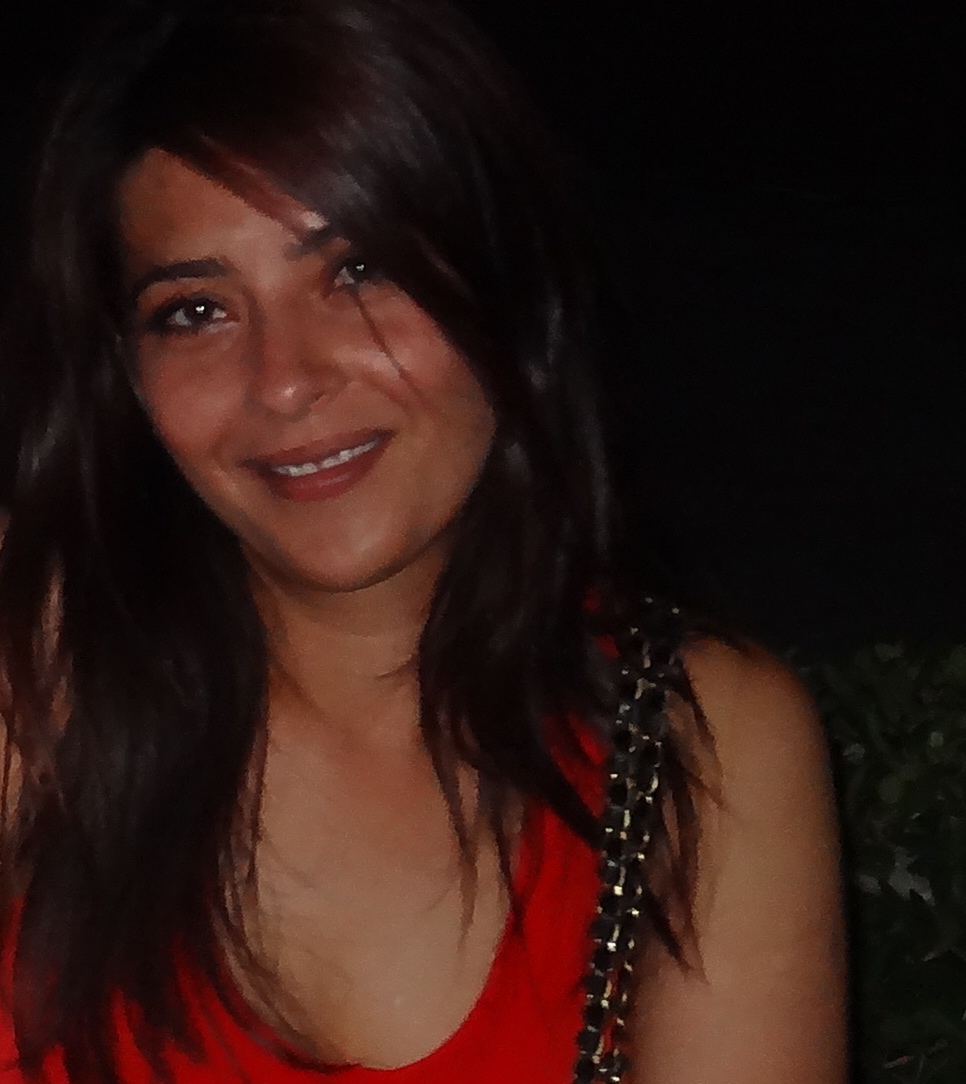
 About Mariam Zulfiqar:

DSC00074_2

Mariam Zulfiqar graduated from the Curating Contemporary Art Inspire MA in 2012 during which time she was based at Art on the Underground where she continues to work in a curatorial capacity. Mariam recently curated the online Kurt Schwitters inspired project, MerzBank with Steven Bode for Film and Video Umbrella and is currently on a research residency in Barbados. Her research will culminate into a forthcoming exhibition that explores the impact of plant migration on the Barbadian visual and social landscape.

About Annalee Davis:

Founder of Fresh Milk Art Platform Inc.

Founder of Fresh Milk Art Platform

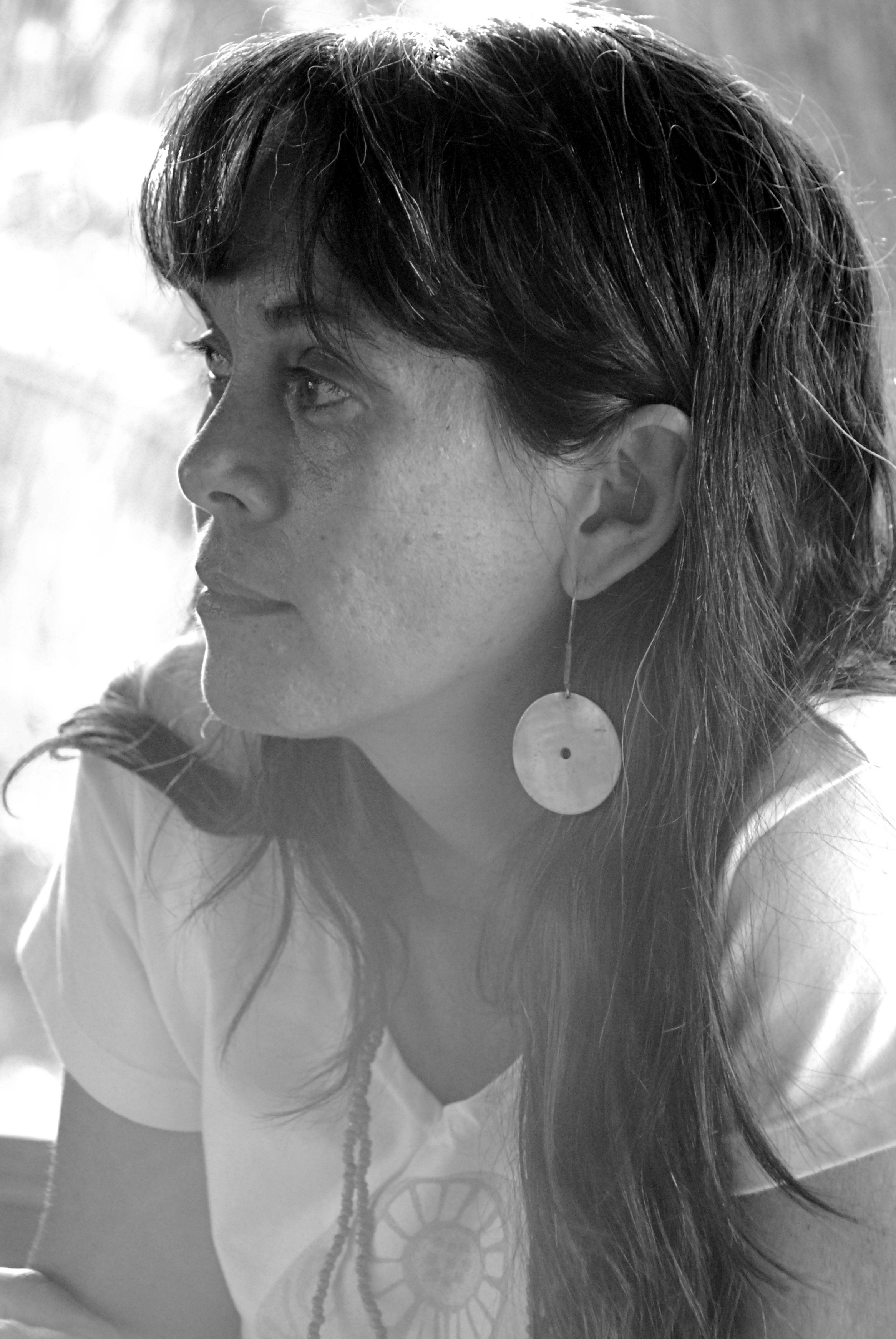
Annalee Davis is a Visual Artist.  She has been making and showing her work regionally and internationally since returning to the Caribbean in 1989.  She is the founder of The Fresh Milk Art Platform Inc., an artist led initiative for exchanges among contemporary creatives supporting interactions across disciplines and contributing to an increasingly rich discourse surrounding creative production within the informal networks of the Caribbean and its diaspora. She is a part-time tutor in the BFA programme at the Barbados Community College.  For more on her practice, visit her website.

About Christina Millare

Christina Millare

Christina Millare is a curator based in London, UK. She is interested in considering alternative venues as locations for unique presentations of artists’ moving image, performance, sound and digital work. Christina’s projects have a strong collaborative approach with host venues, enabling her to draw upon pre-existing audiences as well as offer alternative experiences of a familiar location. In 2013 she was awarded Grants for the Arts, Arts Council England funding to explore this notion further and worked with established artists including, Janek Schaefer, The Bohman Brothers and Fabienne Audeoud.

Currently, Christina is developing; ‘The Cross Continent Vloging Project’, an ambitious international exhibition and live public programme featuring live art, sound, performance and moving image exploring the trans-global and migratory behaviour of online video blogging.

A graduate of the Royal College of Art’s MA in Curating Contemporary Art, Christina previously held curatorial and programme coordinator positions at Abandon Normal Devices Festival and Cornerhouse, where she produced the group exhibition ‘New Cartographies: Algeria – France – UK’ (featuring Kader Attia and Zineb Sedira) and produced various aspects of both organisations’ public programming.

Link to two of Christina Millare’s projects can be found below:

“Machines by Other Means” – http://vimeo.com/51430133
“Pleasure Box” – http://vimeo.com/80374088

Mapping the Commonwealth with “Glasgow’s Finest”

Alberta Whittle shares her thoughts on the recent International Artist Initiated (IAI) project in Glasgow, presented by the David Dale Gallery & Studios as part of The Glasgow 2014 Cultural Programme which took place alongside this year’s Commonwealth Games. Read more below:

Photograph by Rayanne Bushell

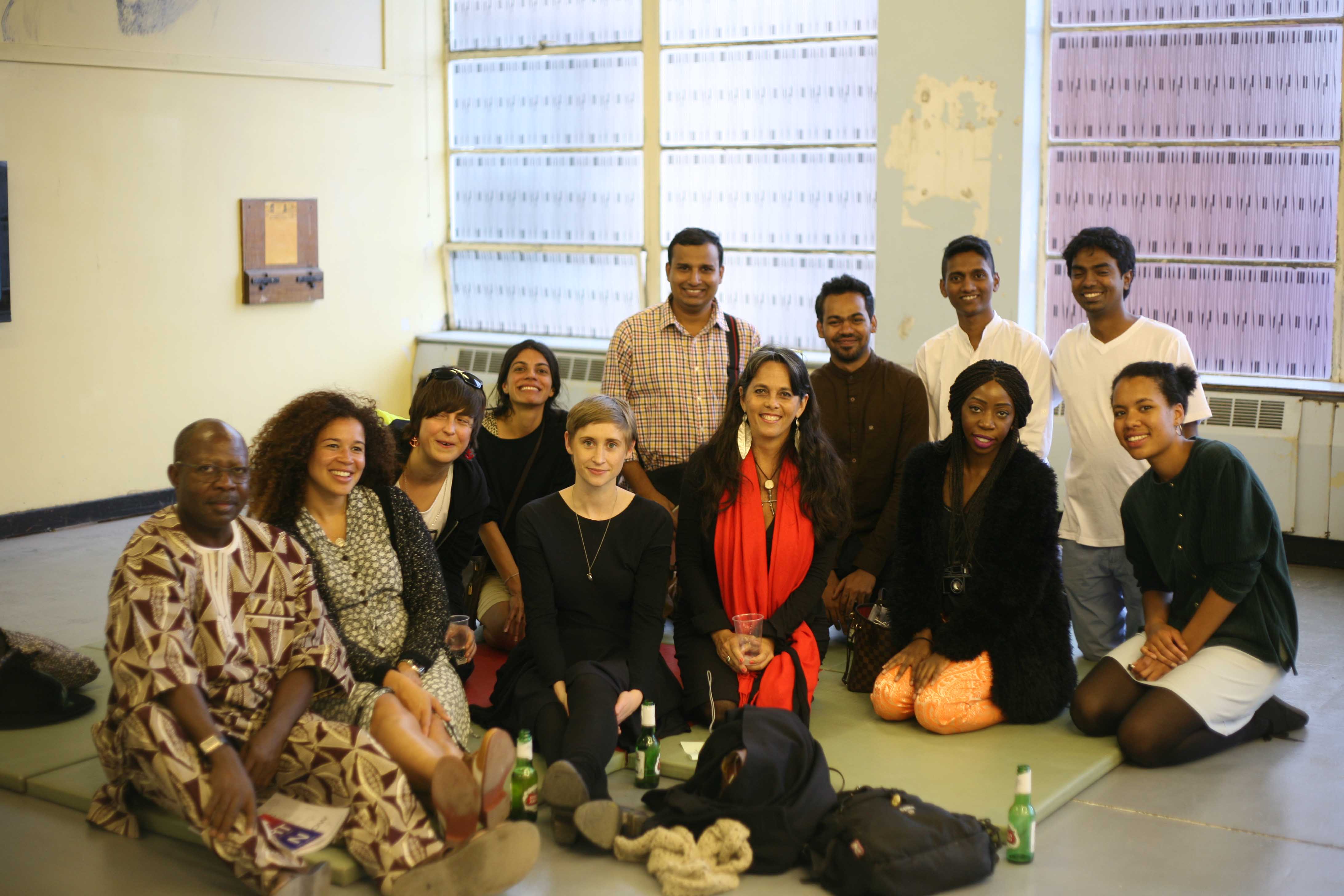
Representatives of Clark House Initiative, RM, Video Network Lagos, Fresh Milk; Alberta Whittle and Rayanne Bushell

 “In 1884 the Earl of Rosebery visits Australia and asks, ”Does the fact of your being a nation… imply separation from the Empire? God forbid! There is no need for any new nation, however great, leaving the Empire, because the Empire is a Commonwealth of Nations“.”[1]

In the summer of 2014, the Commonwealth Games arrived in Glasgow. Much like any travelling circus, the Games brought believers, performers, participants and an audience. Like any participant, I came to Glasgow with my own expectations. Having lived in the city for many years, but failing to assimilate completely, I still feigned the confidence that comes so easily for those who know the area. Sharing a taxi ride, with the self-proclaimed “Glasgow’s Finest”, the driver quizzed me on my knowledge of the city’s geography, asking me where roads connected, easily highlighting my failure to truly belong to Glasgow. The driver insisted on informing me that Glasgow’s taxi drivers were always known as “Glasgow’s Finest”, and I was not allowed to forget it.

During this trip, over many conversations with “Glasgow’s Finest”, a discourse of belonging and not belonging readily emerged. The drivers often assumed Barbadian artist, Annalee Davis and I were Americans, our accents blurring into a vague sense of foreign-ness. They asked why we were here, and when we explained about our project as part of the Commonwealth Games, they in turn spoke of how the Games were not for Glaswegians. The Games’ faux presentation of multiculturalism and the promotion of the idea that we are all in this together confronts the reality that, for many Glaswegians, there is a disconnect between their participation on home soil and the participation of the athletes and visitors flown in to contribute to the spectacle of imagined unity. The notion of unity between us, members of a former British colony, and Glaswegians, a nation grappling with securing their own independence, came from an unlikely direction. Driving through the Merchant City we passed roads such as St. Vincent Street and Jamaica Street; easy reminders of Glasgow’s active role within the slave trade as members of the plantocracy and as indentured servants. However, “Glasgow’s Finest” posited the belief that Caribbean and Scottish nations must be united against the English, advocating the belief that Scots also faced “oppression” from England. This supposition did not entirely surprise me, given the political climate surrounding the upcoming Scottish Referendum.

From the banners, traffic diversions and the odd, green mascot called Clyde dotted across the city, the aura of the Commonwealth seeped into Glasgow’s public spaces. As part of the celebrations, the David Dale Gallery in Glasgow’s East End invited artist-run spaces from across the Commonwealth:  Fillip (Canada),  RM (New Zealand), Cyprus Dossier (Cyprus), Fresh Milk (Barbados), Video Art Network Lagos (Nigeria) and Clark House Initiative (India) to participate in their International Artist Initiated programme.

As part of the Fresh Milk platform, Mark King, Ronald Williams and myself presented a series of interventions. Responding to the commercial nature of the area, we crafted three individual presentations. The location of the David Dale Gallery within the heart of the East End of Glasgow – once a thriving industrial boomtown – seems peculiarly apt, mirroring the substantial role of production Britain’s former colonies assumed, laying the foundation for the industrial revolution. These same former colonies are now re-positioned as independent nations, members of the Commonwealth, exhibiting artwork in their own image. The recent deterioration of Glasgow’s prominence in manufacturing, where production is now outsourced to these former colonies, lends symmetry to the proceedings.

 “Internet ultimately offers both the seductions and subductions of a postmodern “world.”’ [2]

Continue reading

Fresh Performance Chapter 4: Performing Love

FRESH MILK in collaboration with Damali Abrams presents Chapter 4 in the Fresh Performance Project: Performing Love

Is there anything left to be said about love that hasn’t already been said? Poets and songwriters have been trying to pin down an apt way to describe love for centuries. Yet that doesn’t stop each generation from making an attempt. Some see love as hokey, trite or cliche and may think that it has no place in contemporary art.

Shanika Grimes and Shani Peters address love in their work in somewhat different ways. Shanika’s work explores familial love from the point of view of a young wife and mother, while Shani’s work is more about her love of Black people and communal progress.

Though Shanika had a wonky internet connection , we had an engaging conversation where she described becoming a wife and mother at age 20. Rather than merely sinking under the weight of these hefty roles, Shanika transformed her circumstances into transcendent art. I think that this demonstrates a great self-love as well. As artists many times our practice is what helps us to cope with situations in our lives that we may not feel equipped to handle otherwise.

Shanika beautifully articulates the pressures of a woman in the Caribbean who chooses to marry and have children. She makes important connections between patriarchy, misogyny, corporal punishment and spousal abuse. Shanika makes it easy to see that when women are viewed as merely food dispensers or the property of their family, it creates an environment where men feel comfortable abusing them (as well as their children).

I chose Shani for this chapter of the documentary because of her amazing project called ‘We Promote Knowledge and Love.’ For this interventionist performance, Shani  and her enlisted volunteers don sandwich boards with the words “We Promote Knowledge and Love” emblazoned on them and hand out fliers with inspirational quotes from legendary thought leaders like Harriet Tubman and Malcolm X. I have participated in this performance in Brooklyn as well as in Harlem for the African American Day Parade and I must say that it is truly a labor of love. Many NYC residents are familiar with the sandwich board flier distributors with fliers that read “We Buy Gold and Diamonds” who work for local pawn brokers. Shani remixed this idea with her own sandwich board performance. During our candid conversation in her Harlem studio, Shani spoke about social justice and activism as acts of love.

It was interesting editing these two artists together and seeing the connections between romantic love, maternal love and love of community. 

Damali Abrams

About Shanika Grimes:

Shanika Grimes completed her Bachelor of Fine Arts at the Barbados Community college, while juggling the birth of her now two year old son. She displayed a proficiency in the arts from a very young age despite the pull of the business oriented society in which she lives. Shanika works in a variety of two dimensional formats and has more recently extended her practice to the realm of performance art, which is documented and presented through video or photography. She focuses on an examination of self, which she uses as a catalyst for a barrage of ideas including, but not limited to, gender, culture and relationships.

About Shani Peters:

Shani Peters is a New York based artist (born in Lansing, MI) working in video, collage, printmaking, and social practice public projects. Her work reflects interests in activism histories, cultural record keeping, media culture, and community building. Peters completed her B.A. at Michigan State University and her M.F.A. at The City College of New York. She has exhibited, screened and/or presented her work in the US and broad, including exhibitions at the Schomburg Center for Black Culture and Research, Bronx Museum of Art, Rush Arts Gallery, the Brooklyn Academy of Music (BAM), The Savannah College of Art & Design, The Contact Theatre (UK), and Seoul Art Space Geumcheon (SK).

She has participated in multiple residencies including programs hosted by The Center for Book Arts, The Lower Manhattan Cultural Counsel, the Lower East Side Printshop, the Bronx Museum of Art’s Artist in the Marketplace program, and apexart’s Outbound Residency to Seoul S. Korea. Peters has taught extensively throughout her Harlem community as an educator and program designer working in New York Public Schools, Harlem Textile Works, Casita Maria Arts Education Inc., The Laundromat Project, and as a social justice arts education adjunct lecturer at The City College of New York.

Matthew Kupakwashe Murrell’s Residency: Week 1 Report

matthew res pic

Greetings and Blessings in the name of the most high, no matter how you see or revere him or her, my name is Matthew De Vere Andre Murrell, also known as Kupakwashe, but you can call me Kupa for short. I am young playwright, director, actor and the founder and Creative Director of Yardie Boy Theatre.

For my first entry, I would like to show respect of two men today as I write this blog (May 11th). R.I.P to the honorable Robert Nesta Marley, who passed on this day in 1981. I read a few days ago that the kind of music a child grows up listening to, determines his taste, my mother against her father’s wishes was an avid reggae music fan, and so am I. Listening to Bob’s words and music has influenced me in my art and ideologies. R.I.P. to the Father of Reggae and a powerful Caribbean cultural icon. R.I.P. to I’Akobi Tacuma Hembadoon Maloney, a young prodigy of the Rastafarian faith whose life was cut short and whose spirit cries out for justice. I have never met you, but I feel as if I’ve known you all my life. RASTAFARI LIVE!

Just my first week in Fresh Milk was a humbling experience. Living on the south coast of Hastings, trying to write without hearing ZRs, a stray gunshot, loud music and whatever noises that fumigate the air makes it a task to concentrate. But being in the clean air of St. George, seeing the abundance of foliage, hearing birds, cows and the lyrics of Bob in my ear was the prescription I needed.

My first day, I had no idea how to start, many ideas came into my head about this play. I just didn’t know how and where to start. I wanted to write a piece, yes about I’Akobi, his life to his unfortunate crossing, but I want a deeper message. My message to people is that this situation is NOT just a Rasta ting! It is human ting! We have seen how the system claimed many of our people, from Emmitt Till, Trayvon Martin, Walter Rodney, I’Akobi Maloney and many more. So hence my stance ‘I AM I’AKOBI’. After posting the above picture on Facebook, I received so many great responses. Herbal Specialist Everton ‘Heru’ Holligan, did two videos of his kids with the same stance, Margurita Maloney, mother of I’Akobi Maloney said “GIVE THANKS for ALL of your support my SUN Matthew Kupakwashe Murrell, ‘BY ANY MEANS NECESSARY’!!! May WE ‘eventually’ get the legislative reform WE seek”  and “You know, there are times when I ‘feel sooo alone’ and THEN……THIS…GIVE THANKS for ALL of my comrades who ‘CARE’!!!”. The picture garnered over 12 shares from Barbados and across the region to the USA.

So far my research comes the literature of Marcus Garvey, ‘The Philosophies and Opinions of Marcus Garvey’, ‘How Europe Underdeveloped Africa’ by Walter Rodney, ‘Rastarian Theology: From Garvey to Marley’ and the DVD ‘The I’Akobi Maloney Conspiracies: A Mother’s Perspective’. I’ve already meet Maggie, I’Akobi’s mum, and I plan to meet her again, along with Mandela, his younger brother. My great friend and “twin sister” Ayesha NuRa, already has her foot on board to help me with anything I need in my research and development in this piece. Ayesha knew I’Akobi personally and they were the best of friends.

So far in the script, the piece has taken many different shapes and forms as I am still trying to formulate the script. I’ve tinkered with the mode of ‘totality theatre’. The most commonly known play I can think of right now which emulates that idea is ‘For Coloured Girls’. I’ve done it before in other plays like ‘JAHovah Witnesses’, ‘De Angry Black Boy Tantrums’ & ‘Demons in Me’. I’m incorporating poetry, as I’Akobi was interested in poetry, as well as the music of Bob Marley.

I chose this topic because it spoke to me. I’Akobi Maloney and I are both born the same year, 6 months apart. Two weeks after his crossing, I remembered being stopped and harassed by a policeman for no reason. At the time I had an afro which I wore wild and drove a car many wouldn’t be proud seeing. But like I’Akobi, I was an intelligent young man scrutinized not for what is in my head but what is on top of my head. I do believe in the work of ICAR, The Justice Committee and the Maloney Family to fight for justice. This could happen to anyone’s son and anyone’s daughter. Many Barbadians, I noticed, didn’t join in actively or speak out about it, because of the feeling that it was a Rastafarian affair with the police. Then so, what about Trayvon Martin and Emmitt Till? Was that only an African American thing? What about Brenda Belle? Is that only a female thing? Anne Frank? Only a Jewish thing? It is ALLAWE!!!!

“…until the philosophy which holds one race superior and another inferior is finally and permanently discredited and abandoned. That until there are no longer first-class and second class citizens of any nation; that until the color of a man’s skin is of no more significance than the color of his eyes; that until the basic human rights are equally guaranteed to all without regard to race; That until that day, the dream of lasting peace and world citizenship and the rule of international morality will remain but a fleeting illusion, to be pursued but never attained..”

Emperor Haile Selassie I