Musing from the Milking Parlour – Sustainability and the Visual Arts

March 2011 Article for Barbados Today

Annalee Davis

Is living and working in the Caribbean as a contemporary visual artist a viable aspiration?  How is it possible to maintain the integrity of your practice while being economically viable?  Although not unfeasible, it’s quite an accomplishment if you can. And although this is a challenge for most contemporary artists all over the world, it is a small wonder that we still have practitioners in the Anglophone Caribbean who continue to make their work despite the difficult terrain. More importantly, why is this the case?

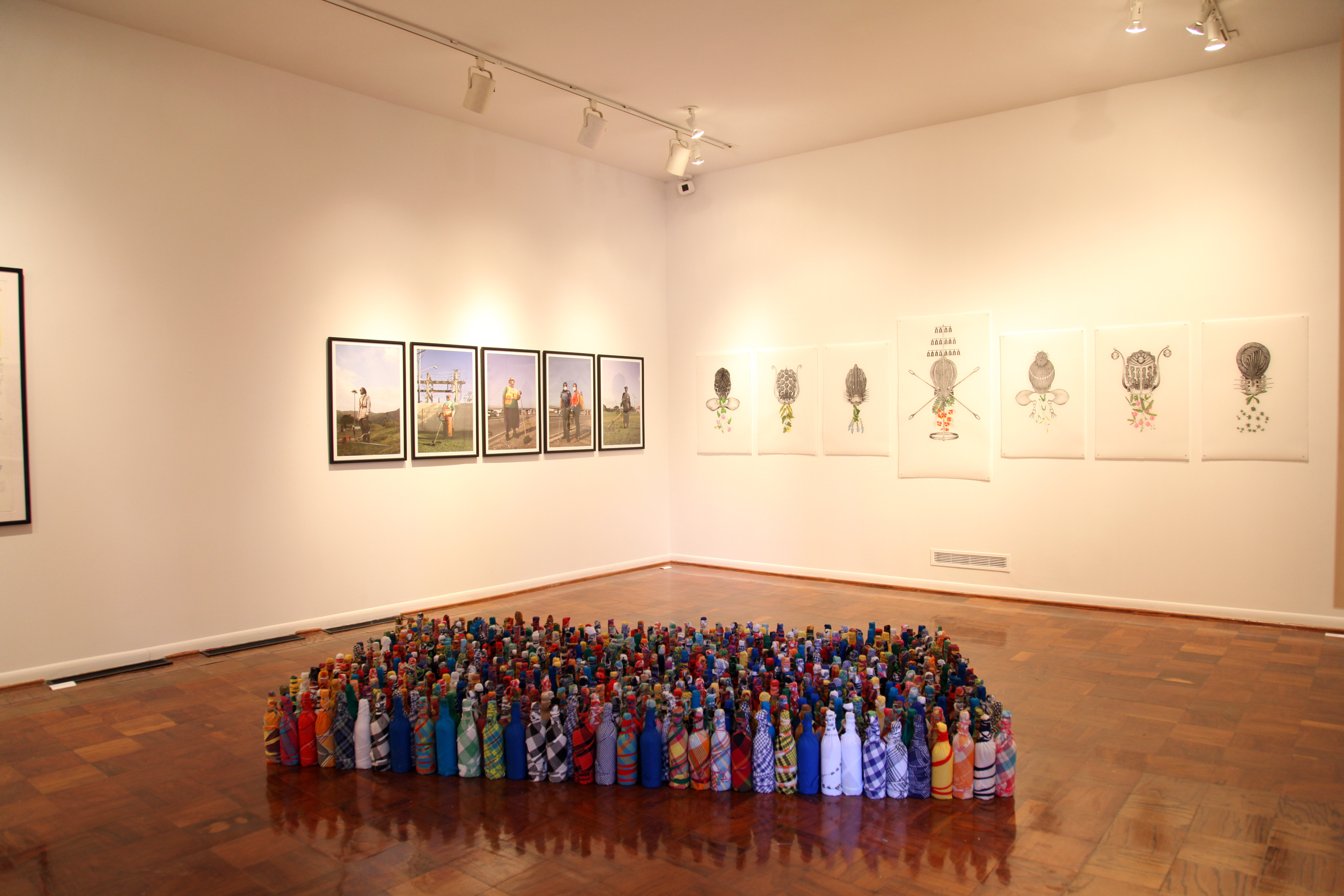
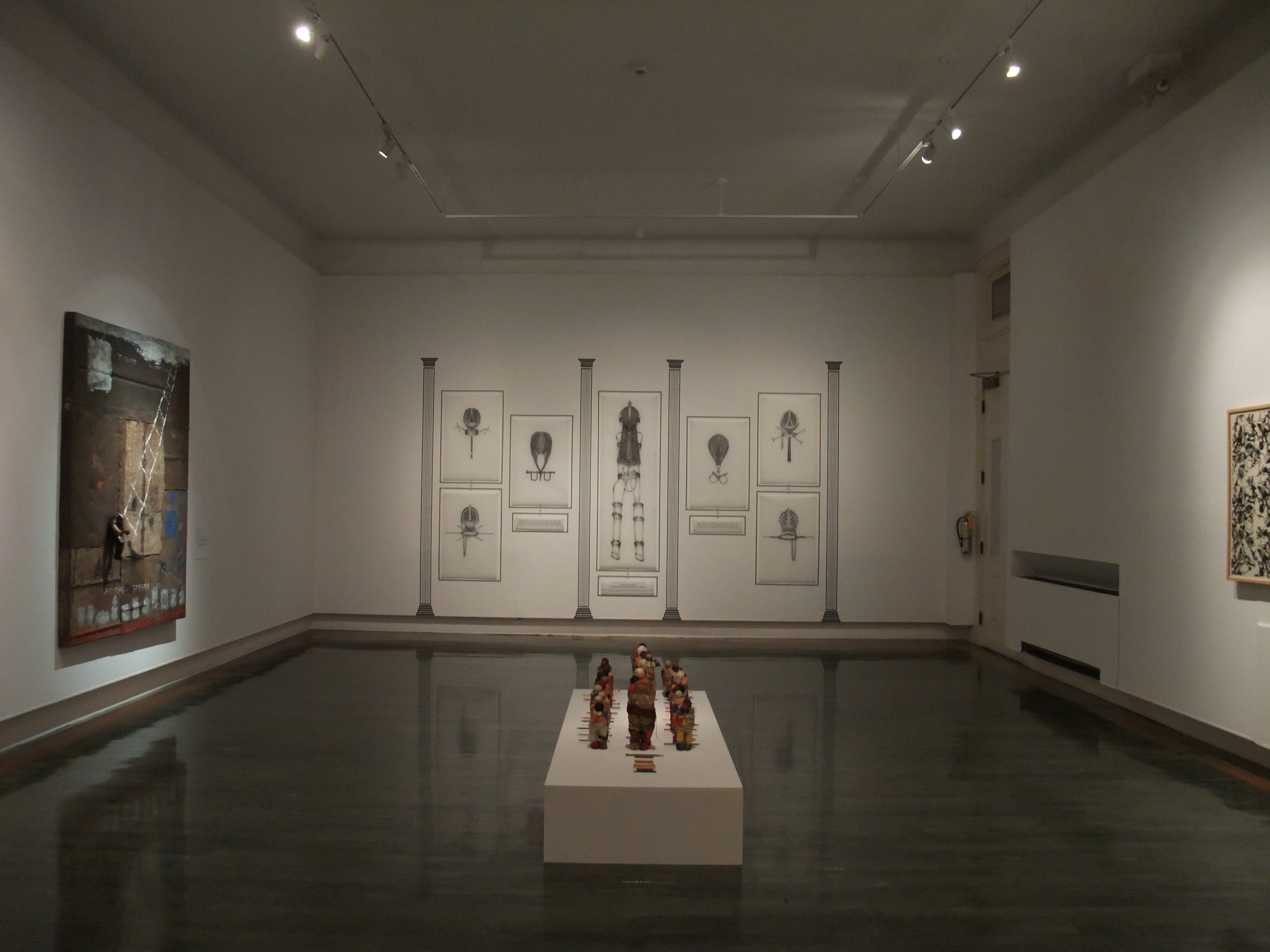
Charles Avery, Facets of Infinity

Contemporary visual artists who live in cities where there is an infrastructure to nurture the arts can access networks which make it possible to sustain production, find support in intellectual circles and earn a living.  It’s not easy anywhere to function exclusively as a Visual Artist, and more often than not, it’s fiercely competitive.  Comparatively, it’s very difficult in the Anglophone Caribbean because we don’t have branded (i) galleries, (ii) dealers, (iii) collectors (iv) prizes (v) fairs (vi) MFA or PhD degree programmes in the Visual Arts (vii) curators (viii) critics (ix) residencies, or (x) auction houses.

There are stamps of approval or markers that denote value in every field.  For example, a Mercedes Benz car or Luis Vuitton bag denotes worth. It’s the same in the world of contemporary art.  There is recognition, respect and added financial value for your work, if, for example, you’ve won a Guggenheim Grant, the Turner Prize or if your work is in a major private or corporate collection, such as the Charles Saatchi or JPMorgan Chase corporate collection.

Imagine if Rihanna, the global icon as we know her, stayed in Barbados.  How successful would she have been?  Her name would not be the household word it is today.  We have chosen not to develop or support excellence…we are more interested in maintaining a democratic approach towards the arts…Crop Over keeps us happy.  But if you’ve won Pic o’de Crop nine times…where do you go next?  You’ve hit the glass ceiling.

Rihanna on the Red Carpet at the Grammys in 2010

I draw these references because the readership will be more familiar with Red Plastic Bag and Rihanna than they will be with the world of contemporary visual art…but I want to draw a comparison with the ‘glass ceiling’ problem.  The National Cultural Foundation is interested in development – to a certain level – and the Festival experience.  But there is no existing state institution with the vision to take the talent any further and put it on the world stage.  Many of my colleagues in the region have been building impressive resumes over the past two decades and showing work internationally, but ask them if their work sells?

Dr. Keith Nurse spoke about “Cultural Policy and Cultural Industries” at a forum held on February 25th at UWI, Cave Hill campus.  He outlined that even though the world has changed, the Caribbean still functions as though it’s in the industrial era.  He gave the example of the sugar industry – the conceptualization and development of which happened in Europe, leaving us to provide the labour.  But the world has changed and now, for the first time, we are supposed to develop our concepts and take them to market.  This requires a paradigmatic shift for which the region has not been prepared – to manage our own company, on every level, and to go global is a daunting task.  The alternative, he suggests, is underdevelopment.

It is not that we lack the raw material, the intelligence, or the ability.  We simply have not been coached throughout our history to be anything other than labourers in the agricultural field and more recently how to work in the service industry in hotels. We are not taught to build our own chain of hotels, but to make up the bed in someone else’s hotel chain.

It’s the same in the contemporary visual arts arena.  There is endless talent and out put, nourished largely by an active regional informal network.  Sadly, the formal institutions function, as Dr. Nurse says, in an outdated way and have not kept abreast of the needs of the practitioners. I have become interested in figuring out what needs to be done to change the landscape.  What if a regional entity like the Caribbean Development Bank hired a curator and developed an outstanding regional collection of work?  Or corporate Caribbean bodies chose to build collections. Even the Embassy of the USA has a collection of work by artists from the Caribbean.  This is not a new idea. Deutsche Bank began acquiring work since 1978 and has one of the most comprehensive corporate art collections in the world boasting 55,000 photographs, drawings and prints worldwide.  The bank’s aim is” to support living artists, benefit local communities and create an energized work environment.”  The Deutsche Bank’s mandate is not about acquiring art for investment purposes, “rather, the primary objective is to display quality works that embrace and reflect their time.” 1.

 Now that’s refreshing!

End notes

  1. http://www.db.com/us/content/en/1097.html

“Musings from the Milking Parlour Studio” for Barbados Today

Annalee Davis.  February 2011

Tonya Wiles and Ebony Patterson (Jamaica/USA) Wrestling with the Image (Photographer – Nadia Huggins)

This monthly column will look at the practice of contemporary art from the Caribbean and examine issues surrounding the production and projection of the work into a wider arena. When considering the Caribbean, I think not only of the archipelago situated in the belly of the Americas but my mind travels across the Atlantic Ocean to other Caribbean spaces in Miami, Brooklyn, Toronto, Brixton, Amsterdam and further afar – the result of globalisation which began here centuries ago when the world came to shape plantation economies.

The link between the Internet and Artist Led Initiatives

Now, we experience globalization virtually.  The internet has opened up worlds of possibilities – significant for visual artists by facilitating the building of artist associations, allowing artists to access opportunities and function independently, and expanding awareness of work from the Caribbean.  This virtual gateway has become crucial since the feeble nature of the region’s formal art institutions has given rise to artist led initiatives orchestrated by very active visual artists who are reshaping the face of our art world.  Weary of a lack of acknowledgement or the formal institutional support required to take the visual arts into the 21st century, Caribbean practitioners have been renovating from the ground up by making refreshing work with breadth, depth and vitality while inventing constructive critical spaces to buttress their production.  Importantly, researchers are increasingly studying and writing about contemporary practice

Sheena Rose & Pauline Marcelle (Dominica/Austria) – Wrestling with the Image (Photographer – Nadia Huggins)

enriching the analysis of the work being produced.

These artist-led initiatives are exposing contemporary art to a wider domain. At this time, several Barbadians are participating in regional and international pursuits, expanding the latitude of contemporary art production nurtured by a south-south circuitry, vitally sustained by the informal networks.  For this first entry of Musings, I have chosen to highlight the current projection of Bajan artists.

The Reach of  Barbadian Artists

Global Caribbean began in Miami at Art Basel in December 2009 and in March 2010 was supported with the conference “Global Caribbean: Interrogating the Politics of Location in Literature and Culture”.  The exhibition was curated by Miami based Haitian artist, Edouard Duval-Carrie. http://theglobalcaribbean.org/about.php The three-day symposium included artists, writers, curators and academics discussing the Caribbean and its diaspora in relation to political, social and cultural issues. Canadian based, Barbadian, Joscelyn Gardner, (www.joscelyngardner.com) exhibited her work and was a keynote speaker in the symposium. The exhibition then moved to France and is now at the Museo de Arte Contemporaneo de Puerto Rico.  Joscelyn also has a solo exhibition at Adhoc Galleria in Spain, called “Tending to an “unspeakable” past”.   She recently collaborated on the Art Connections Residency Programme that brought together emerging Canadian and Barbadian artists who worked in Barbados throughout January.  Noteworthy, her print work was included in British author, Richard Noyce’s newly published book, “Critical Mass: Printmaking Beyond the Edge”.

Joscelyn Gardner , Marcel Pinas (Suriname) & Rodell Warner (Trinidad) – Wrestling with the Image (Photographer – Nadia Huggins)

Along with Gardner, three other Barbadian artists are currently showing work in an exhibition which opened in late January at the Art Museum of the Americas in Washington DC and includes works by Ewan Atkinson, www.ewanatkinson.com  Tonya Wiles and Sheena Rose.  Curated by Trinidad based visual artist and writer, Christopher Cozier, and art historian, Tatiana Flores; “Wrestling with the Image” exposes pieces by artists from twelve Caribbean countries.  The exhibition catalogue can be downloaded here at: http://www.artzpub.com/content/special-publications/wrestling-image

Shortly after “Wrestling” opened, Sheena Rose http://sroseart.tumblr.com/ travelled to Suriname to start her three-month residency at the Tembe Art Studio to work alongside two other artists from New York and The Netherlands.  Brainchild of Surinamese artist Marcel Pinas, the residency is part of his recently founded Kibii Foundation which includes an art park and art education centre housed in an old hospital building.   Tembe Art Studio advances the use of art and culture to positively influence the life and future of the local Maroon people.  Resident artists are required to build an installation for the park situated in the rural town, Moengo.  Sheena’s is a billboard project inspired by how local stores paint items for sale on the shop walls.  An article on Sheena’s work has been included in the current, inaugural issue of ARC – a quarterly Caribbean Art and Culture print and e-magazine, published by artists Holly Bynoe (St. Vincent/New York) and Nadia Huggins (St. Vincent/St. Lucia).  ARC was recently launched in New York, St. Lucia and St. Vincent and will soon become available in Barbados. http://www .arcthemag azine.com

The south-south web that has shaped the informal artist network continues to be successful because it has along-term vision based on solid, local foundations of inter-personal relationships among many practitioners.  These are dynamic times.  Stay tuned.

Annalee Davis is a visual artist who lives and works in Barbados.

Joscelyn Gardner – Global Caribbean, Puerto Rico – Image courtesy of the artist

Ewan Atkinson – Wrestling with the Image, (Photographer – Nadia Huggins)

Artists in Residence and Barbados

With the ongoing surge of contemporary art in the region, hosting artists in residence is imperative to the expansion of a new sense of Caribbean Art. This is due to the creative, economic, and social advantages a residency programme offers to both the artists experiencing them and the institution hosting them. So why isn’t there more of an initiative for them in Barbados?A residency program consists of an art institution or informal network inviting an artist to live, create and share in a different environment. There usually is an Open Day showcasing the artist’s work at the close of the residency, depending on the nature of that programme. The notion of having an artist in residence is one that started roughly 100 years ago with artist colonies in the European and American countryside, based around the theory that as a collective artists could expand their creative ideas. It was an exciting time for art then, as style was shifting and the Modern Art movements were emerging. Equally, now is an inspiring time in Caribbean Art, and residency models can only help strengthen the collaborations in the region and shape the future of our artists.

Barbadian based, Cuban artist Leandro Soto has completed a vast number of residencies in his career so far, and is a strong advocate for recreating that atmosphere for other artists through his classes. He described in a recent interview that interacting with new environments and building alliances with other artists from around the world is invaluable to the development of an artist and the venue:    “For an artist, being in an art residence is an open window for themes, for materials, to have new friends (to meet other artists), to have new collectors…in the art residence, you see the artist’s work but you also (get to) know the artist, so you have a better picture of who is doing the art, how they are doing the art, what is the connection that this artist has…it’s extremely important.”

Leandro Soto’s installation during his residency in New Dehli. Photograph compliments http://www.leandrosoto.com

What better way for Barbados to integrate with the Caribbean art world as a whole than to host artists from the region on a regular basis, injecting fresh ideas into the circulation? It could also work on an international level, as seen in the residency programme at Eden Rock in St. Barts. They host various artists from all over the world who contribute to the thriving arts culture, and it has become an important aspect of their tourist industry. So not only is their population exposed to a vast amount of international art, but tourists see it as part of the reason to visit.

Alice Yard in Trinidad had it’s 5th Anniversary this year, which was a national and regional event, attracting creatives from all over the Caribbean. This is no doubt partly due to their extensive practice of hosting artists in residency there, exposing themselves to networks outside of Trinidad while expanding their own critical space. 

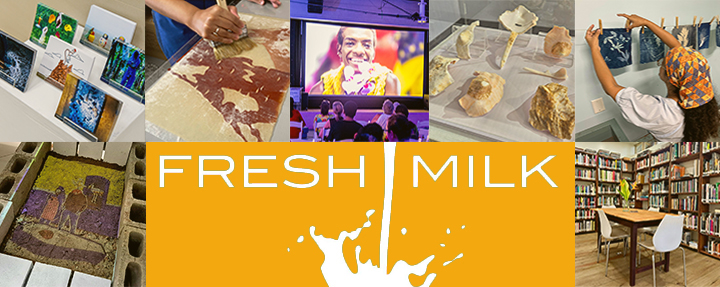
The advantages of being exposed directly to other art atmospheres can be seen in the ambition of the artists who experienced it. Sheena Rose, Mark King, Joanna Crichlow, Ewan Atkinson, to name a few, have all done residencies and are all active catalysts and participants in the movement of contemporary art in Barbados and will be on the FRESH MILK platform in November to share their residency experiences. Sheena runs a number of events with her group Projects and Spaces, Joanna has been exploring the language of her artwork in her articles. There are no real previous models on the island of the things they are involved with, so the question has to be raised- would they have the motivation or knowledge to carry these things out if they had not been exposed to similar things through their residency experience? Not to mention the encouragement to create more experimental works, exhibit their works outside of the commercial gallery sphere, from gaining support of their work by outside institutions.

Both Sheena and Annalee Davis have also made movements towards hosting artists in residency, such as Sheena’s 24 Hour Residency at her studio as part of Projects and Space and FRESH MILK’s own upcoming weekend event to be held next month when Dominica based, Venezuela born Performance Artist, Sandra Vivas will be in residence to perform and offer a workshop experience in Performance Art. But why does it have to be just the informal networks and individuals striving towards the expansion of the residency community? When Leandro was listing places outside of the Caribbean he had completed residencies at, most of them were programmes tied to schools or Universities. Imagine the wealth of exposure for the institutions and the students if this were to happen on a continuous basis here at the Barbados Community College or the UWI. Currently Popup Studios in the Bahamas, Tembe Art studio in Suriname, the IBB in Curacao, Ateliers ’89 in Aruba and Alice Yard in Trinidad offer Caribbean residency opportunities. One international opportunity for artists to carry out residencies overseas and one which several Caribbean artists have participated is the Triangle Network (http://www.trianglearts.org/), which  integrates artists of all backgrounds, enabling them to compare initiatives.  However, when the artists return to Barbados, there are no formal institutions to support the experience they gained overseas. And so the number of informal spaces grows, trying to fill the void, sustaining the art community, keeping it from fragmentation.


A thriving creative culture should not be something that scrambles to find a place in a community, it should be a nurtured and prominent aspect of society. Incorporating artist residencies is one of the ways to ensure this.

Natalie McGuire


ARC III and FRESH MILK Launch Review

“Nobody is no longer controlling your narrative”

Those were the powerful words of one half of ARC’s founders, Holly Bynoe, as she addressed the creative network which had descended on a Bajan dairy farm last saturday for the launch of ARC III and FRESH MILK. The former is an extensively expressive regional art magazine highlighting sometimes otherwise overlooked contemporary artists in the Caribbean. The latter, a new open platform for generating creative discussions and presentations of new and established artists. These, combined with a 2D/Video exhibition co-curated by Projects and Space, comprised the stunning and groundbreaking event, to mark how contemporary art in the Caribbean is shifting, and how so too the comprehension of the viewer must also shift.

The evening started with viewers being guided through the select 2D works of five local artists: Alicia Alleyne, Joanna Crichlow, Ireka Jelani, Mark King and Sheena Rose.

Alicia’s splash of bold coloured shapes in her three works seemed to reflect the atmosphere of the evening: why stay in the boundaries of a shape when you can go outside the lines and be something so much more creative? The pieces made abstract art relevant to young Caribbean artists.

Joanna’s reflections on finding familiarity in anomalous surroundings even just within the Caribbean through her Blackbirds series subtly highlighted the need for more unity in the region within the creative realm. The Blackbird aspiring to engage with the mountainous regions of Trinidad was the most striking in this way.

Ireka’s rattan cane and wire sculptures provided an aspect of cultural commentary, whereas a traditional Caribbean craft method has evolved from being something to use, to being something to view. In some ways it is positive to interchange practice with aesthetics, but to how much extent is it making the practice irrelevant?

Mark’s photographs provided a new way to approach imagery in the Caribbean. If there is one area where there is a glut of certain stereotypical iconography, photography is it, but Mark’s prints shattered the stereotypes and presented viewers with a fresh and completely contemporary perspective of our surroundings. Not only that, the agitated colours on a muted plain created a spectacular visual that would be comfortable displayed anywhere.

Sheena’s outlook in life can be seen as absolutely emulated in her pieces Fashion Police: finding bursts of colour in the everyday mundane. What was distinct was the twists on daily interaction by confronting the fashion prejudice and showing the beauty in uniqueness. The viewer is walked through the artist’s experience and reaction to situations such as going into Town dressed somewhat unorthodoxly. Side notes of finding identity through fashion were also explored through these works.

The next aspect of the evening was a conversation between FRESH MILK founder Annalee Davis and ARC founders Holly Bynoe and Nadia Huggins, as well as the present stimulated audience. Issues such as the creation of ARC, it’s relevance towards the metamorphosis of art in the Caribbean, and it’s impact on the founders as creative professionals themselves was covered. The atmosphere was electric and those present could feel the restraints of Caribbean Art being released in an attempt to free itself from the stigma of the past and the commercial suppression of the present. No one could deny the passion and determination of the speakers, just as they could not deny this was just the beginning, and to push forward the collective would have to keep those qualities.

After the intellectual work out, everyone was treated to refreshments and then the presentation of the video aspect of the exhibition. The open air setting under an abundant moon, the projection onto a converted swingset, the blankets and the bugs. It was just all so appropriate for the viewing of 16 video art pieces from 13 Caribbean artists, and suddenly the traditional ‘white cube’ installation spaces seen internationally seemed outdated. The 70 plus congregation were delighted with an un-interrupted slew of what our region has to offer in the way of contemporary video art: from Nile Saulter’s romanticism in The Young Sea to Russell Watson’s neo-realism through his Dust Bodies: Fatima series, to Annalee Davis’ political confrontations in The Hatchling (A Requiem). With each work the emphasis of talent and understanding of how to convey video art became more powerful, and by the completion it was hard to ignore that this medium may be the strongest to voice the shift in this region’s art. And, when studied, this seems logical: Video Art itself is a fairly current category in the art world, and has little history within a Caribbean context. Also, it is not an easily sellable commodity and therefore is not bound by the cultural-tourism-commercial ropes that has other art mediums under wraps. As Holly said there is nothing “controlling your narrative”.

To conclude, the 13th August 2011 is a date that will be etched in the invisible timeline of shifting perception in Caribbean Art. The reaction of viewers, the topics raised, and the positive atmosphere is one that must have been relative to when Duchamp displayed a urinal in a gallery, Degas blurred his painted reality, or Kosuth stuck a couple chairs in a room. In other words, get ready, because things are going to change ’bout hay .


– NATALIE MCGUIRE