Mother Tongue selected as winners in the apexart Franchise Program 2015-16

apexart has announced the four winning proposals for its Franchise Program 2015-16, which accepts ideas for group exhibitions to be presented anywhere in the world. Among this year’s winners is Mother Tongue, the curatorial duo of Tiffany Boyle & Jessica Carden, who undertook a residency at Fresh Milk in January-February 2015. The four winning proposals receive a budget and administrative support to bring their projects to life in locations outside of New York City. 

fp2015-winners

Mother Tongue’s Submitted Proposal:

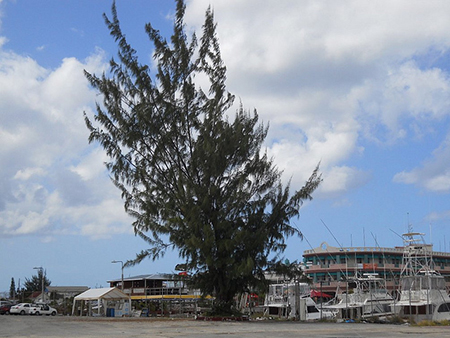
In July 1996, an archaeological team were called to a construction site at Pierhead docks, in Bridgetown, Barbados. Clearing the ground for the planned expansion of a shopping mall, a mass grave of human remains were uncovered. Tests concluded that the site was a burial ground for African slaves; those who had either died in the final stages of the Middle Passage, too close to shore to be thrown overboard, or those brought to Barbados for ‘seasoning’ – to be broken into the life of the plantocracy, before being moved onto other Caribbean islands. Following a deliberately short period of time for the archaeological dig, the site was covered in concrete, to be used as a car park, with no commemorations or signage to mark the importance of the area.

The hurry to cover over and conceal the site speaks of the continued dominance of the ruling classes’ economic interests over the island’s black population. As locals gathered around the archaeological dig, demands were made for libations of rum to be poured to the ghosts of the deceased and to ‘duppies,’ bad and malicious spirits. That rum was to be poured is laced with irony; since the slaves were brought across in the ships to farm the sugar from which such rum is distilled, but also because the car park is bordered by two empty customs warehouses, where rum would have previously been stored before global export.

This is not the only site of significance for the island’s slave history to be unidentified. This amnesia or selective memory is in many ways mirrored by the local art history and community; unmarked by the absence of a national art gallery and state support. Past activity, developments and successes are lost between generations, with most major Caribbean surveys taking place in the West and links between each generation broken as artists move abroad for opportunities not available on home territory. There are currently only four small and ill-equipped exhibition spaces on the island: two housed within the art college and university, the remainder commercial spaces.
pierhead

The Pierhead site and old customs warehouses are today disused. This proposal is made for an exhibition and performance, to be held on the Pierhead site in 2016, the year of the fiftieth anniversary of Barbados’ independence and host nation for the second time to the Caribbean-wide annual festival, Carifesta. ‘Rum Retort’ will purposefully run parallel to these official, state-sponsored events. A large group exhibition will be housed inside one of the customs warehouses, concerned with making visible the history of Pierhead within its locality, with works from artists including Nick Whittle; Annalee Davis; Ewan Atkinson; Sheena Rose and Holly Bynoe. A patterned installation print will be commissioned from artist Mark King to be produced directly onto the concrete car park, temporarily acknowledging what lies below. For the opening and closing of the exhibition, a dance performance will be commissioned from dancer and choreographer Yanique Hume, to take place outside the warehouse, on the concrete car park surface.

Read more about the other selected projects here

Please note: Proposals are ideas for exhibitions. No details, including artist participation, have been confirmed. The apexart Franchise Program is supported in part by The Andy Warhol Foundation for the Visual Arts and The Foundation for Contemporary Arts.

——————————————————————
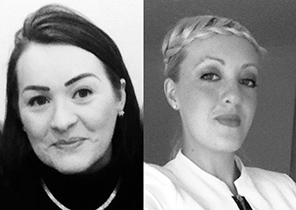
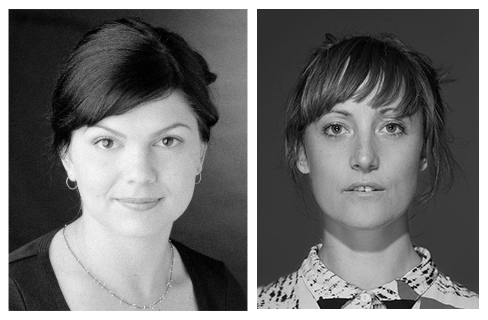
Tiffany Boyle and Jessica Carden.

Tiffany Boyle and Jessica Carden.

About Mother Tongue:

Mother Tongue is a research-led curatorial project formed by Tiffany Boyle and Jessica Carden, in response to individual periods of investigation in northern Scandinavia and West Africa. Our practice in exhibition-making intersects with research interests – including, but not limited to – (post)colonialism, language, heritage, ethnicity, whiteness, indigenousness, migration, movement, sexuality, and technology.

Since 2009, we have produced exhibitions, film programmes, discursive events, essays and publications in partnership with organisations such as the CCA: Centre for Contemporary Art Glasgow; Stills: Scotland’s Centre for Photography; Transmission Gallery; Africa-in-Motion Film Festival; Malmö Konsthall; and Konsthall C Stockholm, and undertaken residencies with HIAP in Helsinki, the Nordic Africa Institute in Uppsala, and CreativeLab at CCA Glasgow. ­Mother Tongue participated on the 2011/12 CuratorLab programme at Konstfack, and we are currently both undertaking individual PhD’s – Tiffany at Birkbeck and Jessica at TrAIN: Research Centre for Transnational Art, Identity and Nation, University of the Arts London. In 2015, Mother Tongue will continue to collaborate with Variant magazine, Framework Scotland and the Creative Futures Institute at UWS on the ongoing discussion series, ‘Curating Europes’ Futures.’

Fresh Milk welcomes Willoh S. Weiland and Halcyon Macleod

Fresh Milk is excited to welcome our fifth set of residents for 2015, Australian interdisciplinary artists of Caribbean extraction, Willoh S. Weiland and Halcyon Macleod. They will be with us between April 20 – May 23, 2015 working on their collaborative project ‘Crawl Me Blood’, a sound installation inspired by the works of Dominican writer Jean Rhys and her masterpiece Wide Sargasso Sea. Read more below:

APAM_Crawl Me Blood_8_1

Willoh S. Weiland and Halcyon Macleod are two artists from Australia who are currently in-residency at the Fresh Milk Platform. During their stay, they are writing and creating a performance and sound work called Crawl Me Blood. As part of their research for the project, they will be conducting a series of interviews with a number of women in Australia and in the Caribbean.

Crawl Me Blood is inspired by the work of Dominican author Jean Rhys, especially her famous book Wide Sargasso Sea, the artists’ own family histories in the Caribbean Region and a feminist reading of the biblical story of Eden.

They are starting their research by focusing on the idea of ‘paradise’; what causes us to long for particular landscapes and how women imagine paradise through creating or visiting gardens,  cooking and eating delicious food. They are especially interested in the way food connects us to memories of people and places.

The artists are inviting members of the public to meet with them and talk about these ideas.  An audio recording of these conversations will be made. Interviews can be anonymous.

Interviewees will be paid a modest stipend. The artists will be in residence from April 20th and open to arranging meetings on Mondays, Tuesdays and Wednesdays between 10am and 5pm.

The artists would like to engage in dialogue with a variety of women, including:

  • Academic/Writer
  • Radio host
  • Performer/ Actor/ Artist
  • Older woman (60 +)
  • Middle aged woman (40+)
  • Younger woman (in her 20s)

If you are interested in participating in this project, please email willoh@aphids.net and halcyonmacleod@gmail.com.

halcyon and willoh

Halcyon Macleod and Willoh S. Weiland.

About the artists:

Willoh S. Weiland (Artistic Director, Aphids) and Halcyon Macleod (Co-Director, My Darling Patricia) are interdisciplinary artists and directors of the independent arts organisations Aphids and My Darling Patricia.

Their mutual interests are in writing and creating contemporary performance works that respond to the site in which they are created and the result of extensive research and development.

They have created works for major Australian Festivals including the Sydney and Darwin International Arts Festivals as well as for prolific presenters such as Performance Space, Carriageworks, Cambelltown Arts Centre, Sydney and the Arts Centre, Arts House and Malthouse Theatre Melbourne.

This residency is supported in part by the Australian Broadcasting CorporationThe Alcorso Foundation and Arts Tasmania.

Malaika Brooks-Smith-Lowe shares her reflection on Tilting Axis: Showing up as Caribbean creatives

Malaika Brooks-Smith-Lowe, artist, activist and co-founder of Groundation Grenada, shares her reflections on the conference Tilting Axis: Within and Beyond the Caribbean – Shifting Models of Sustainability and Connectivity which took place at Fresh Milk on February 27-28, 2015. Read an excerpt from her report below:

Malaika TA report2

‘I think it’s an act of rebellion to be a whole person… It’s an act of rebellion to show up as your whole self, and especially the parts that are complex, that are unfinished, that are vulnerable.’ – Courtney Martin

Two weeks before traveling to Tilting Axis: Within and Beyond the Caribbean – Shifting Models of Sustainability and Connectivity at the Fresh Milk Art Platform in Barbados, I listened to a podcast titled The Inner Life of Rebellion, a conversation which included Courtney Martin. During my presentation at Tilting Axis, about the vision and work of Groundation Grenada, I shared the above quote by Martin. Her reflections on the power of being able to make progress even with full recognition that we are imperfect and always in-the-making resonated with me deeply. It is this kind of ‘showing up’ as a whole complex person that Groundation Grenada seeks to support. As an organization our aim is to create safe spaces for people in our communities to explore the fullness of their experiences and express themselves in an environment that honors our differences. Tilting Axis was a unique moment to connect with founders and directors of initiatives that similarly work to support and enhance the growth of the Caribbean’s vast array of voices & creative visions.

Tilting Axis, held from February 27-28, 2015 aimed to promote greater conversations and engagement between artists and professionals working within artist-led initiatives across the wider Caribbean region, build and redefine historical relationships with those in the North, and establish open dialogue with active networks emerging in the Global South.

The space that the organizers Fresh Milk Art Platform Inc., ARC Inc., Res Artis and Pérez Art Museum Miami were able to create was a rich opportunity for discussing challenges and envisioning collaborative solutions.  They brought together several of the region’s arts initiatives to engage in face to face conversations. Also present were a number of professionals from outside the region interested in working with Caribbean-based initiatives such as Solange Farkas, founder and director of Videobrasil (Brazil), and N’Goné Fall, a founding member of the Dakar-based collective GawLab (Senegal). For a complete participant list and other details read the official post-conference press release (here).

There were many existing relationships and partnerships in the room and many possibilities for new collaborations discussed in formal sessions and during tea breaks. Technology has been an invaluable tool in facilitating the growth of what feels to me like a tangible movement in the region via the visual arts. Being in the same physical space as such a dynamic group of artists, curators, writers and organizers, and being able to have real conversations, was an invigorating experience. We all showed up as our full selves, open to discussing the complexities we are working with and through. It was an intergenerational setting with cross-pollination between organizations that were founded decades ago and seedling organizations that are now taking root and beginning to bloom.

Read the full report on Malaika’s website here.

Cooking Sections’ Residency Blog Post

Cooking Sections, the London-based duo of Daniel Fernández Pascual and Alon Schwabe, share their blog post about their short-term residency at Fresh Milk, where they conducted a number of interviews and meetings with both artists and professionals working across the agricultural sector to inform their research based practice and their ongoing project The Empire Remains. Read more below:

Cooking Sections_cane harvest4

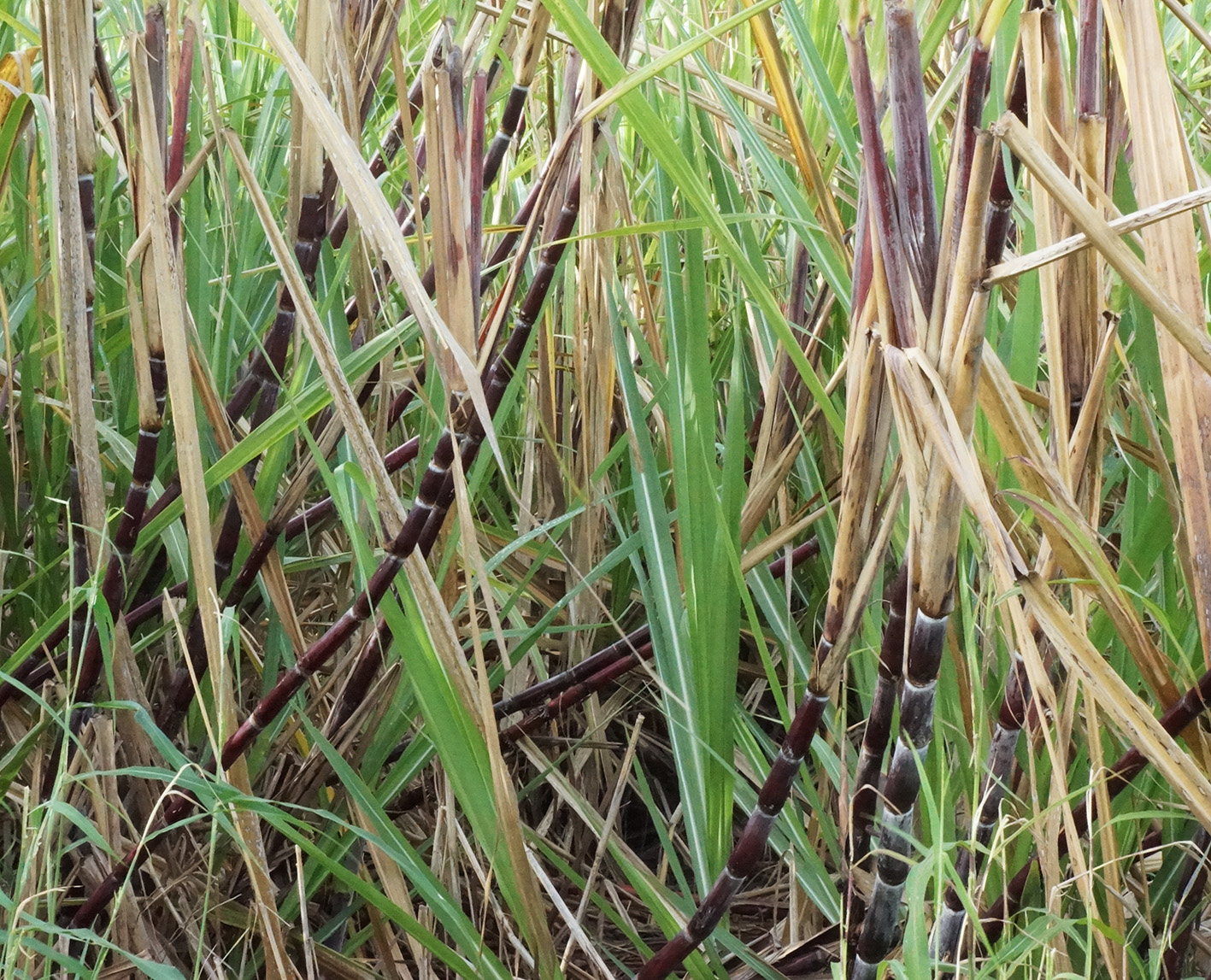
Is this the end of a sugar era? In past years the sugar crop harvest has been delayed further and further into spring. Refusing to start the crop before the government paid farmers for last year’s yields, harvest was postponed this time for about three months, starting during our visit to Barbados on April 7th. Never before had sugar cane harvest started so late, a sign of the great challenges the industry is undergoing. The possibility of a 400 year-history of cane disappearing seems to float around people’s minds, given that there is only one sugar factory remaining operative on the island (Portvale). At the local Massy Supermarket, we encountered on the shelf a box of sugar cubes from an array of sugars all made in the USA, as well as from UK-based Tate&Lyle, a sugar empire that later constituted Tate Britain. More than ever, sugars travel along and back and forth from one side of the Atlantic to the other, changing colour, shape, texture, volume and physical states with every journey: raw, bulk, brown, white, brownish, whitish, golden, bagged, dyed, molassified, syrupised, caramelised, brownified

We learned that Barbados has an average of merely 12 inch deep soil. That extremely thin layer of agricultural ground is not only made out of sediments that the sea once eroded from surrounding volcanic islands and washed forward onto the Barbadian plateau. The soil is made of the remnants of the sugar cane that, unlike the majority of sugar plantations worldwide, are not burnt but accumulated on-site as layers that enhance the quality of the soil through their rotting, while protecting it from heavy rains. The reduction in tonnage of sugar extracted (not produced) from cane also opens new challenges, not only for the sustainable geology of the island, but for tightly related industries such as tourism and Barbadian rum. For the former, visitors need to keep being attracted by the image of undulating Caribbean landscapes covered in cane. For the latter, rum is running out of the local molasses that absorbs all the specific nutrients and minerals from the Barbadian subsoil, raising the question of Barbadianness in a rum more and more made out of foreign sugars. However, is it the molasses that really affects the finished rum product when it is distilled and cleaned from its biological and chemical components in the process of becoming alcohol? Or is it rather the diverse mechanisms of adding value that Barbados, like many other island nation states, tries to establish in order to shift from a historic role of commodity providers to become product owners?

At stake is also a controversial construction of an additional sugar factory. The new $42,000,000 project, promoted by the Barbados Government, aims to transform the no longer operational Andrews Sugar Cane Factory into a multipurpose processing plant. It is not to revive the island’s history but rather to envision a different future. If sugar once replaced the alcohol ration for soldiers in order to extend their operation hours, sugar cane has slowly become a biofuel to provide renewable sources of energy. Time will tell whether the new plant will truly help the national economy or be another example of mismanaging international development aid through needless pharaonic infrastructures that only benefit a few.

Cooking Sections_cane harvest3

Over 10 days of interviews, meetings, conversations and field visits with farmers, researchers, visual arts practitioners, factory managers, and policy-makers, we learnt about the difficulties of post-plantation Caribbeanness and the relationship of a region of island states, more or less disconnected from each other, that are facing similar challenges at planetary scales. That Barbados has only 2 endemic species out of its 650 different plants and that the island is suffering from seaweed invasion cycles coming from the Equator are just two facts that made us reflect on the economy of extraction and the value of nature from a global perspective. Almost 200 years after the abolition of slavery in all territories of British rule, conflicts about race, speculative flows and food sovereignty seem not to be yet fully reconciled with their past.

Fundraising for Versia Harris’ Residency at Casa Tomada

strange-encounters-4-5-left

Barbadian artist Versia Harris will be going to Sao Paulo, Brasil for a two-month residency with Casa Tomada beginning June 1, 2015.

To raise funds to help cover the living costs of this collaborative programme organized between Fresh Milk and Casa Tomada, Versia will be selling reproductions of stills from her original animations leading up to the residency.

To view available pieces for sale, click here.

Please email Versia at versia.abeda@gmail.com for payment methods and shipping fees.