Barbadian artist Leann Edghill writes about the first week of her Fresh Milk residency, where she has been adjusting to the space alongside her fellow residents Raquel Marshall and Matthew ‘Kupakwashe’ Murrell. Despite coming to Fresh Milk with a particular plan in mind, Leann hopes to be open to what the space and its resources can offer, while experimenting with different mediums in her work. This residency is generously supported by the Central Bank of Barbados. Read more here:
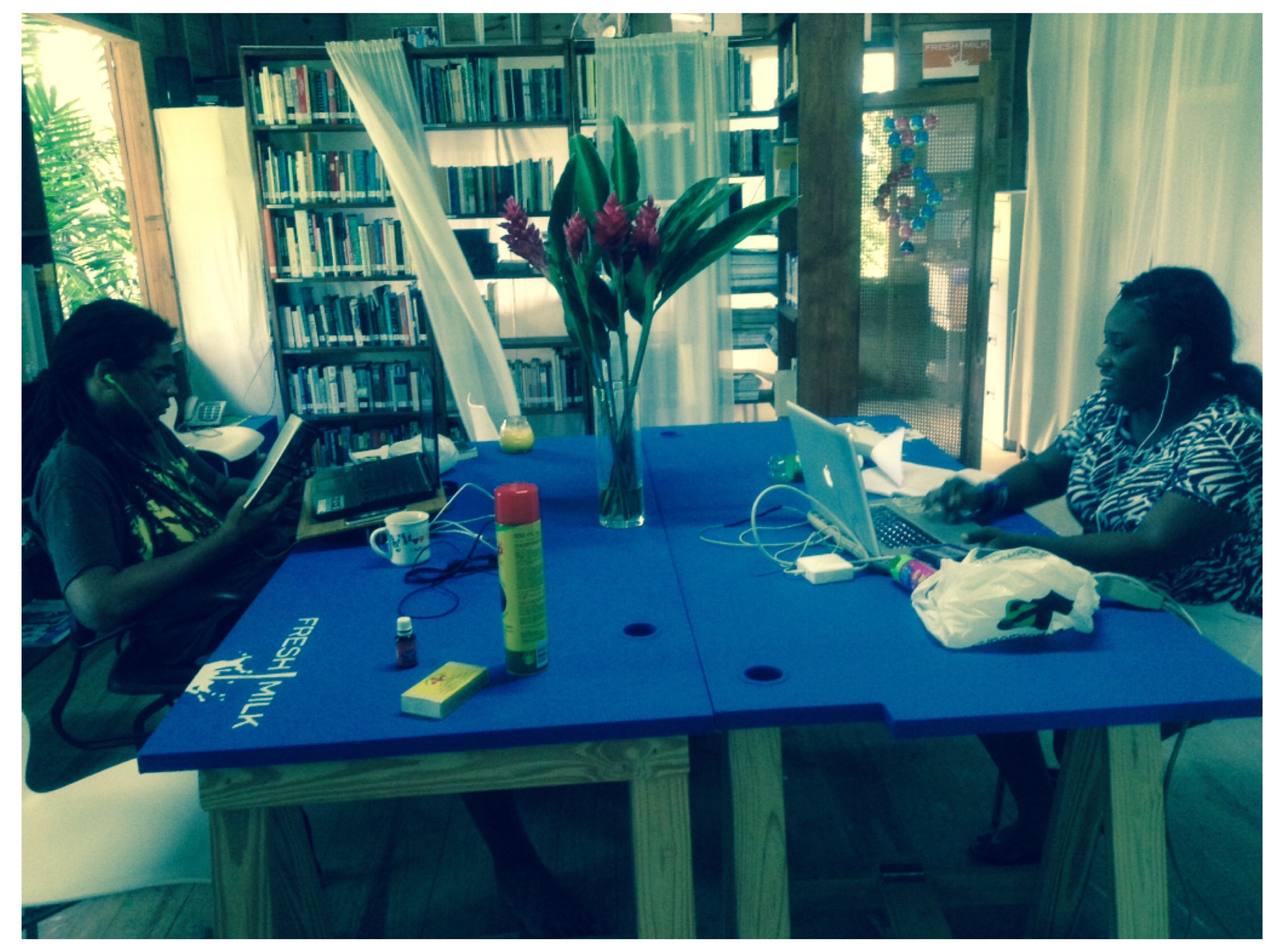
My first week here at Fresh Milk has been very welcoming. The space, the environment and the landscape has quite a refreshing feeling, but I also feel nostalgic about being in the country – except for the smell of nature, which hasn’t been my friend! I am currently sharing my experience with another local artist, Raquel C. Marshall, who is very excited about this journey we are on together. Raquel is very energetic and active, which I find helps me to keep just as active and driven as she is. Even though Raquel has more ideas than I do, we are both touching on similar issues and challenging ourselves in our work. I also met another resident on the farm, theatre artist Matthew ‘Kupakwashe’ Murrell. He is completing an Emerging Director Residency. Matthew is more tranquil than Raquel and I, but also a very interesting individual, and I am keen to understand the ways in which he views his art.
I came to Fresh Milk with a plan, knowing the types of mediums I wanted to explore. My idea is to continue conducting research on the iconic Barbie figure and historical events that occurred in Barbados, as well as how Barbie is deteriorating today due to modern technology.
Typically, I prefer to paint with a very bold and monochromatic colour scheme in the style of Pop Art. I am considering exploring watercolours, but I have mixed feelings about this approach although I am familiar with the medium. I think I need to allow the medium itself to dictate the artwork, rather than exercising full control over the process.
_____________________
This residency is sponsored by the Central Bank of Barbados
Barbadian visual artist Raquel Marshall writes about the first week of her Fresh Milk residency. Eager to get started, Raquel has been using her time to explore new ideas, take in the creative environment with her fellow resident artists and utilize the material in the Colleen Lewis Reading Room for research, as she considers the context of her work in this space. This residency is generously supported by the Central Bank of Barbados. Read more here:
The first week of my residency at Fresh Milk went by in a swoosh. I quickly felt at home here, and was able to settle and take advantage of “my time.” Coming into the residency, I already had some concepts in mind and was eager to develop them. I decided to start working on an installation using clay. While creating this, I’ve been pondering denial and the human survival instinct of hiding truths, either from each other or from ourselves. I managed 6 small pieces so far and am feeling accomplished.
I am blessed to be sharing this creative space with Matthew ‘Kupakwashe’ Murrell and Leann Edghill. Mathew and I engaged in a long, interesting conversation about Caribbean music, Barbadian music, calypso, soca and bashment soca on a long drive to drop him home one day. Consider me now more “edumacated.” He is passionate about cultural studies. Leann’s work intrigues me, as I find common threads between our practices, and yet our work is so different. I can’t wait to see what comes out of HER residency!
In between the interaction, the creating and the trying to source a variety of things, the Colleen Lewis reading room occupied the rest of my attention. Contemporary artists, Richard Bellingham and Rehema Chachage, caught my attention this week and I am currently watching the ART21 DVD series about art in the 21 st century.
Onward and upward.
_____________________
This residency is sponsored by the Central Bank of Barbados
Matthew ‘Kupakwashe’ Murrell is on the Fresh Milk platform this month as the second candidate in the inaugural Emerging Directors Residency, hosted in collaboration with the National Cultural Foundation (NCF). Despite working within a short time-frame and noting that two weeks is not enough to fully flesh out a residency of this kind, Matthew is making the most of the time and resources he has been afforded by having fruitful discussions with his assigned mentor, renowned St. Lucian poet, playwright and director Kendel Hippolyte, and doing research for his chosen play ‘Shakespeare’s Nigga’. Read more from Matthew below:
For the first week, I’ve experienced some ups and downs as it’s the first of its kind and some kinks have to be dealt with along the way to make future participants happy. Given two weeks to do research and then give a presentation of findings is really not enough. Talking to my assigned mentor, St. Lucian playwright and director Kendel Hippolyte, he agreed as well. One week for researching and another for rehearsals as I divided it, still meant little time for proper conceptualisation, rehearsals, scheduling etc. As a director’s residency, I would expect more time to be given for proper research and rehearsals, but it seemed more like a tight window for academic purposes of research and a small presentation of findings. I also expected not to do the whole piece as intended, but even a scene or two in this small window isn’t enough in my opinion. Time is necessary.
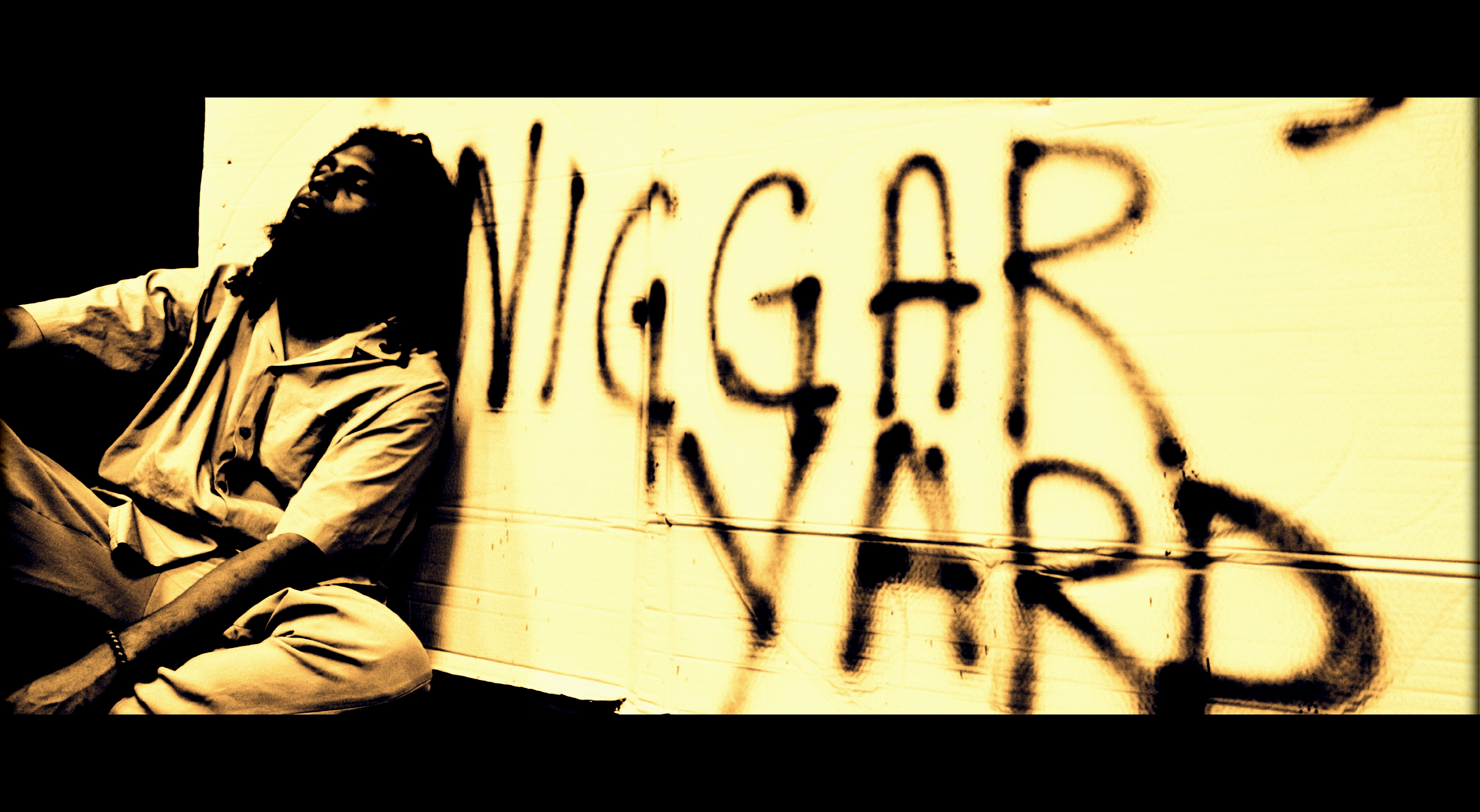
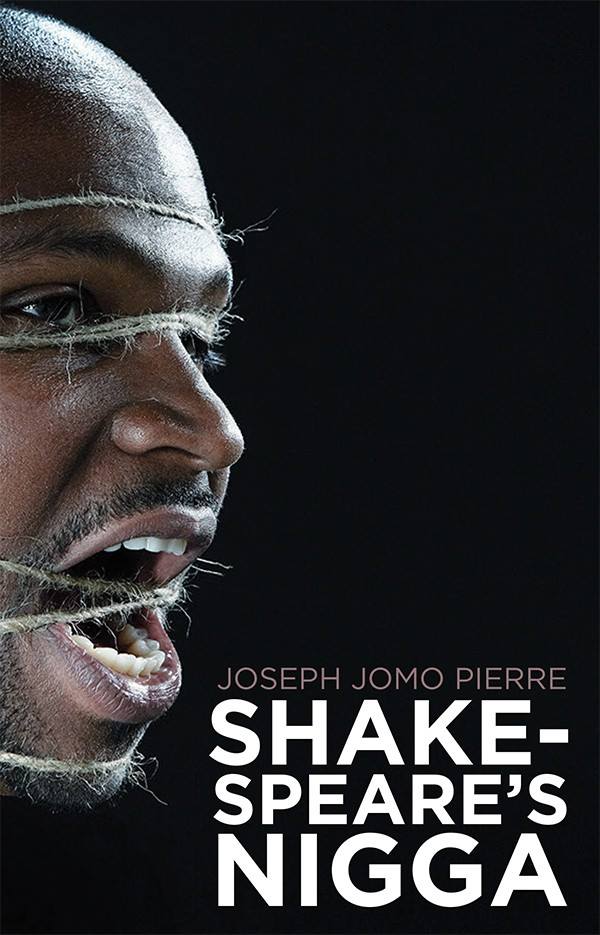
So for my residency I’m working on ‘Shakespeare’s Nigga’ written by Trinidadian born and Toronto based playwright and actor Joseph Jomo Pierre. I was first introduced to Joseph’s work years ago as a student at the Errol Barrow Centre for Creative Imagination (EBCCI). At that time, Alison Sealy-Smith was teaching there fresh off the boat. I always found his work to be daring and unapologetic, and it influenced my writing a lot, especially when our works focused largely on masculinity. Later, Joseph and I became good friends when I travelled to Toronto and spoke about this particular project. ‘Shakespeare’s Nigga’ enters into the dream world of Shakespeare where he is confronted by his black/Moor characters. His rebellious slave Aaron (Titus Andronicus), his obedient ‘slaves’ Othello (Othello) and Tyrus (Titus Andronicus). Shakespeare also deals with his rebellious daughter Judith, who has an ongoing relationship with Aaron. I chose this play for the themes presented and what they meant for me. Shakespeare represents a part of the patriarchy; 50 years of Independence is being celebrating all throughout the Caribbean this year, and our literary giants still hold a back seat to Shakespeare.
His works in our space are considered ‘classics’ and used as a tool for classicism in our classrooms in the days of ‘growing up stupid under the union jack’. Reading the text, as a Caribbean ‘yute’, I saw the proverbial whip being handed down on Aaron’s back by Othello, who was ordered by Shakespeare to do so, as a constant reminder not only of physical but also mental slavery. Aaron’s response to uprise and to denounce Shakespeare as not his ‘negro’ but his ‘nigga’, turning around that hateful word and putting power and purpose to it, and also Othello’s realisation of Shakespeare’s separatism of he and Aaron to cause divide is nothing short of revolutionary for black literary consciousness.
“I am not Shakespeare’s negro. My palate is not so refine. My coarse hair knows not the acquaintance of a brush…”
– Aaron
As research goes, I’ve brushed up on my Shakespeare knowledge on Titus Andronicus and Othello. To be very fair, I am not a Shakespeare fan (except Hamlet), so personal feelings aside, it’s quite interesting to see the playwright’s use of characterisations of the hated Moorish slave in one piece and a hated Moorish commander in other. Both did what they could do to muster respect and a proper way of life, instead…
“…For the paper, look how low we’a stoop/
even if you in a Benz, you still a nigga in a coup/coup…”
– Kanye West
I’ve also done a lot of reading in Augusto Boal’s ‘Theatre of the Oppressed’ which I may add is one of the hardest rangate books on theatre and performance I’ve ever read. So theatre kids in college and university reading this blog, invest in it. Many a times while reading it, I’ve been constantly reminded of what I love about the theatre, and what I think has been missing from our scene for some time. Another part of my research was looking at Spike Lee’s ‘Chi-Raq’. As a Spike Lee fan all my life, I totally enjoyed what he did in taking Lysistrata and making it a contemporary film surrounding the tragedies happening in Chicago’s inner city. Taking a Greek tragedy and showing the purpose and strength of #BlackLivesMatter was especially something I wanted to focus on within my research.
Along with the research, my mentor Kendel and I had great conversations about theatre, the drama and the direction of the piece. The dream of Shakespeare opens countless ideas of how to manipulate the space. The use of language, sound and lights presented endless ideas and great discussions. Next week I work with my actors in the space. Right now, instead of using all the characters, I will only be using three. The legendary Patrick Foster as Shakespeare, the enigmatic Nala as Aaron and the feminist powerhouse Luci Hammans as Judith…I love my cast as you can see from their superpowers.
And as I end this report…
“what light over yonder breaks?
….oh shite, is de ra**hole police!”
– Kupa
___________________
This project is a collaborative initiative, funded by the NCF Barbados
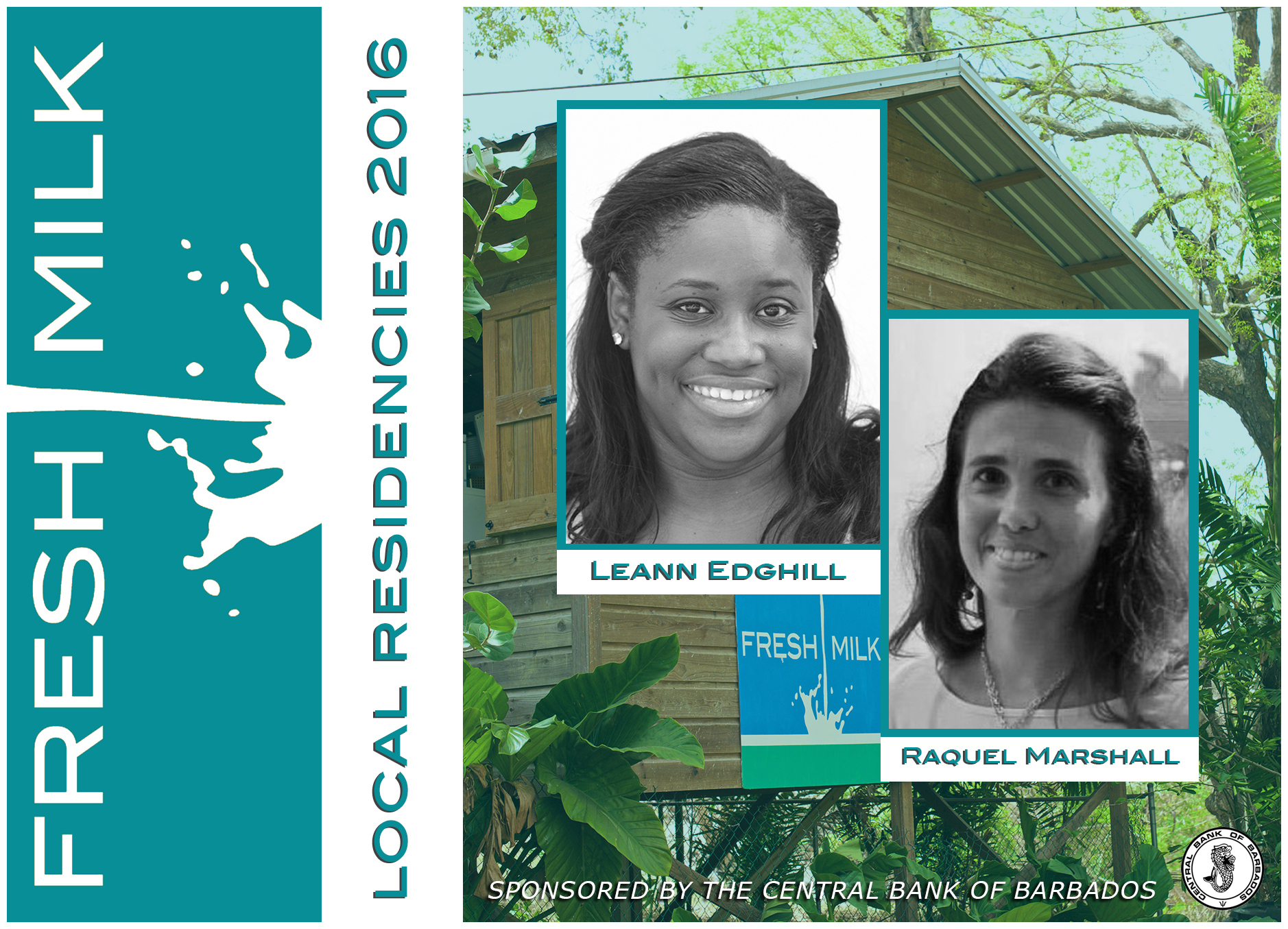
Fresh Milk is excited to welcome our next two local residents for 2016, Barbadian artists Leann Edghill and Raquel Marshall, who will be on the platform between September 5 – 30, 2016. Their residency is generously supported by the Central Bank of Barbados.
During the one-month residency, Leann will continue her series of work which explores the naivety of ‘Barbie and her friends’, whose perfect fantasy world she has previously collided with historical, real-world events, this time using a more local Barbadian context. Raquel’s work will be exploring the effects of alcoholism and addictive behaviours, particularly the denial that is often encountered in relation to these issues, which are sometimes accepted or even celebrated.
About Leann:
Leann Edghill is a twenty-three year old Barbadian artist working predominantly with painting. She completed her Bachelor of Fine Arts at the Barbados Community College in 2015. Edghill is currently a member of two art communities in Barbados: ‘Strokes’, a group of artists that hosts annual art exhibitions, and the Barbados Arts Council. Edghill’s artwork uses monochromatic colour schemes, minimal pop art structures, simplistic shapes and symmetry, breaking down images to minimalist forms.
Her current body of work uses imagery of Barbie dolls, making reference to her childhood, which she inserts into visual representations of major events that have occurred over the years from 1959 (the year Barbie was first introduced) to present day . Although a number of significant historical events have taken place, whether positive or negative, the character of ‘Barbie’ remained unaffected, living her own fantasy with no regard for the world around her or her impact on young girls.
Edghill also has a love for makeup artistry, and has combined this with her skills as a painter to create designs through body-painting, which is another aspect of her artistic practice.
About Raquel:
Barbadian born Raquel Marshall is an artist who is slowly returning to the national arena. For the past decade or so she has dedicated her time to her family while also working as an office administrator and private art tutor. Marshall is a mother of two boys and shares her love of art with her husband, Nicky Marshall.
Marshall prefers to use images rather than words to express her experiences and feelings, and much of her work is an overflow of situations, thoughts, and concerns, both past and present. Her pet themes deal with racial issues, women’s issues, spirituality, alcoholism and escapism. Although serious topics, she portrays them in playful ways.
Since graduating from the Barbados Community College in 1998 with a Bachelors in Fine Arts (First Class Honours), she has had the privilege of exhibiting locally and internationally, including in London, France, Cuba and Belgium, mainly working in assemblages and printmaking. In college she discovered the work of Robert Rauschenberg and Joseph Cornell, who inspired her and set the foundation for her work at an early stage. Marshall also paints, and is currently experimenting with video, sound and photography. She draws on any technique that will help her achieve her vision and is not afraid to adapt, learn something new or collaborate.
_____________________
This residency is sponsored by the Central Bank of Barbados
Fijian-Australian artist Torika Bolatagici shares her final blog post looking back at her Fresh Milk residency which took place during the month of June. The final week was full of activity, ranging from the public event FRESH MILK XIX, a presentation to delegates in a UNESCO workshop and continuing to meet with artists and members of the creative community, while still finding time to work on her photographic series The Camouflage Act developed in Barbados. Read more from Torika below:
Week 4 began with mine and Anisah’s public presentation on the evening of Monday 27 June. I prepared a presentation to introduce the Barbadian audience to the arts practices of Australian-based artists of the Fijian, Papua New Guinean and Autonomous Region of Bougainville diaspora. My presentation was titled ‘Seeing the Black Pacific’ and focused on drawing out particular themes that emerge from Australian-based artists of Melanesian and Indian-Fijian ancestry. Specifically, Cultural Heritage, Revival and Redress; Julia Mage’au Gray(Papua New Guinea); Lisa Hilli (Papua New Guinea); Dulcie Stewart (Fiji). Performing Contemporary Oceanic Identities: Salote Tawale (Fiji); Eric Bridgeman (Papua New Guinea). Positioning the (Geo)political Pacific: Taloi Havini (Autonomous Region of Bougainville); Mohini Chandra (Fiji); Torika Bolatagici (Fiji). It’s a huge task to condense the work of such diverse artists with significant bodies of work into such a short amount of time, but I hope that those who were able to attend will be able to follow-up on individual artists.
It was a pleasure to chat about Anisah’s work in more depth, in relation to the concepts, motivations and processes behind her previous work, as well as the way she has been developing these ideas further through the residency. Working alongside Anisah has been one of the most rewarding and memorable experiences of my residency and I hope that our paths will cross again in the future.
On the Tuesday of week 4, I led the final session of Anisah’s Quid Pro Quo exchange session, in which I covered some basics about web content and layout for artists. We looked at some fundamentals of information architecture and compared and reviewed some of the various platforms available, before taking a look at the backend of a Squarespace site.
On Wednesday 29 June, we were lucky enough to participate in Katherine Kennedy’s presentation to a group of Caribbean delegates attending a UNESCO workshop that was taking place in Barbados that week. While I was aware of some of the work that the Fresh Milk organisation does, I was amazed at the multiple levels that they are involved in building and supporting the arts and culture industry in Barbados. It was truly amazing to see the grassroots through to international reach of the organisation and the delegates were visibly in awe of the breadth of work being achieved. There were audible gasps and ‘wows’ in the audience. It was an honour to be invited to speak about my residency experience as a part of Katherine’s presentation.
My two final days on the island were packed with multiple (and overlapping) appointments as I hopped from parish to parish trying to squeeze everything in, including photographing friends for my series The Camouflage Act. I was really glad to receive an email from Barbados-based attorney Lalu Hanuman, who wanted to pass on a copy of his publication Reality Check about “the mendacity of those in power in the days of European Colonialism – who propagated cannibal myths (and similar superiority notions), the better to facilitate their plundering activities.” (Hanuman, 2005). Not only was I grateful to Lalu for reaching out and gifting a copy of his book, but I was also pleased to learn about his work as an environmentalist and with the Barbados Marine Trust. I regret not being able to meet Lalu in-person, but was thrilled to learn that on the day he met with my husband to give him the book, he was in court and winning the case against the government’s proposal to introduce fingerprinting at all ports of entry, including for Barbadian nationals entering and leaving the country (more information in the online newspaper Barbados Today here.)
Another highlight of my final week, was meeting Russell Watson and visiting his studio to learn more about his practice. Russell really helped me to understand more about Barbadian history, culture, politics, topography and marine life. I was really struck by his photographic series Phylum, featuring disembodied figures framed by layers of luminous coral that reminded me of Byzantine mosaics.
After a final photoshoot with Sheena Weekes at Fresh Milk on my last day, I took one final drive up to Gallery NuEdge to take a sneak peek at the installation of Quaternary, curated by Natalie McGuire, featuring the work of Sheena Rose, Versia Harris, Llanor Alleyne and Katherine Kennedy. It was wonderful to finally meet Sheena Rose (whose work I have been following for some time) and take a walk through the gallery with each of the artists. The gallery is lovely and the works looked beautiful in the space; ranging from sculpture to digital print, and mixed-media assemblage. An exquisite show!
As we drove back from Holetown to Worthing in the rain with the windows open, the smell of roti filling the mini van and the sound of Skip Marley on the radio, my heart was sad to be leaving, but full of gratitude for all the learning, experiences and friendships formed. Each day as I entered the dairy I passed a sign that read ‘Manipura’ – the solar plexus, the centre of vitality. Symbolised by a downward pointing triangle indicating “the spreading of energy, growth and development.”
Thank you Fresh Milk for providing the space for growth, renewal of energy and development.
_______________________
This project has been assisted by the Australian Government through the Australia Council, its arts funding and advisory body.


 This residency is sponsored by the Central Bank of Barbados






 fresh milk barbados