Torika Bolatagici’s Residency – Week 3 Blog Post

Fijian-Australian artist Torika Bolatagici writes about the third week of her Fresh Milk residency. Things become increasingly busy as her time in Barbados goes on, with a number of studio visits, presentations and general research of the island’s history and environment providing her with a wealth of information – but leaving her with the feeling there will be much more to discover beyond the residency period! Read more below:

The pace really started to intensify last week and I started to feel the pressure of being half way through the residency as I juggled writing, presentation preparation meetings with artists and other appointments around the island.. I am really feeling like I will be leaving with unfinished business…

Monday was a full day that started with a press launch for the ‘Emerging Directors Programme’ which is an initiative between the National Cultural Foundation Barbados and Fresh Milk. It was wonderful to see all Barbadian print and TV media covering the launch and to hear the inaugural recipients, Matthew Murrell and Renelde Headley discussing their projects. I also loved meeting Andrea Wells (Chief Cultural Officer, NCF) and Amanda Cumberbatch (Cultural Officer, Theatre Arts, NCF). I have loved getting to know Renelde this week and look forward to seeing her project unfold.

Following the NCF launch, I met with Barbadian curator and scholar Natalie McGuire to discuss a forthcoming collaborative project and to visit the Barbados Museum. At the museum I was interested to discover more about Barbados history and botany and was surprised to see that Fiji was mentioned in the section about Sea Island cotton. This visit sparked my interest in visiting the last remaining sugar factory here, but I hear that visiting hours can be a bit haphazard, so we’ll see how we go.

Monday afternoon was perhaps one of the most surreal experiences I have had so far, as we were lucky enough to visit Frank Rickwood’s collection of Papua New Guinean artifacts at his Colleton Estate. I am still processing the breadth and significance of his collection and what it means to find such culturally important items so hidden away and so far from Papua New Guinea. The impact of visiting the Colleton Great House has not yet left me, especially having learned of John Colleton’s role in the movement of African slaves from Barbados to Carolina in the 17th Century.

The remainder of week 3 was filled with inspiring meetings with Barbadian artists and scholars Versia Harris, Katherine Kennedy, Llanor Alleyne, Mark King and Therese Hadchity – each of them giving me an insight into their research, practice and artistic journey and the broader creative culture of Barbados. An enriching way to finish my third week here.

_______________________

AusCo

This project has been assisted by the Australian Government through the Australia Council, its arts funding and advisory body.

Fresh Milk and the NCF launch Emerging Directors Residency Programme

Fresh Milk is very pleased to announce the launch of the Emerging Directors Residency Programme, our collaborative initiative with the National Cultural Foundation Barbados (NCF) in support of up-and-coming local theatre directors.

This programme, which officially began on June 20, 2016, will see two young Barbadian creatives undertake residencies based at Fresh Milk which will provide them with an opportunity to conduct much needed research into Caribbean theatre heritage and to explore and create through theatre form and style.

ncf launch

L-R: Matthew Murrell (participant in the Emerging Directors Residency), Andrea Wells (Chief Cultural Officer, NCF), Renelde Headley (participant in the Emerging Directors Residency), Amanda Cumberbatch (Cultural Officer, Theatre Arts, NCF) and Annalee Davis (Founding Director, Fresh Milk)

The launch at the Fresh Milk studio was attended by representatives from Fresh Milk and the NCF, and created a platform to announce the two successful candidates for this first edition of the programme: Renelde Headley and Matthew ‘Kupakwashe’ Murrell. Renelde will be taking part in the first residency period, which runs from June 20 – July 1, 2016 and Matthew’s residency will be held from September 5 – 16, 2016.

As part of the critical development aspect of this residency, the participants will be mentored by established theatre professionals, beginning with Trinidadian playwright and teacher Rawle Gibbons who will interact with and give feedback to Renelde during the course of her residency.

____________

About the Residents & their Projects:
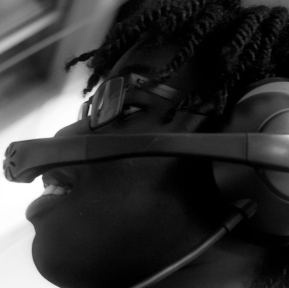
Renelde Headley

Renelde Headley

RESIDENCY PROJECT: ‘YELLOWMAN’

The proposed play is Yellowman by African-American playwright Dael Olandersmith, a two-hander. Yellowman is to be explored and developed through postmodern and experimental techniques. This approach would allow for symbolic parallels to be drawn and explored between the Southern American and Barbadian experiences of race, class and identity as well as explore a contemporary Barbadian aesthetic. To do this, the director seeks to explore and develop elements that are distinctly Barbadian despite the juxtaposition of the source material’s origins. Simultaneously, the director seeks to investigate and cultivate her own creative and aesthetic identity through this piece.

RENELDE HEADLEY BIO:

Confident, 6ft 2, 175 pounds, Renelde Headley is set on world domination, with the power of Love and Creativity. Through singing, acting, dancing, directing and any other art form she chooses to master, she is determined to spread her message of empowerment and freedom worldwide. She cautions that “Freedom comes with the responsibility of being aware of others and their right/desire to be free. – Mankind must not lose his compassion.” She hopes that through her self-expression and work, she can share concepts that encourage others to embrace and unify their multifaceted selves.

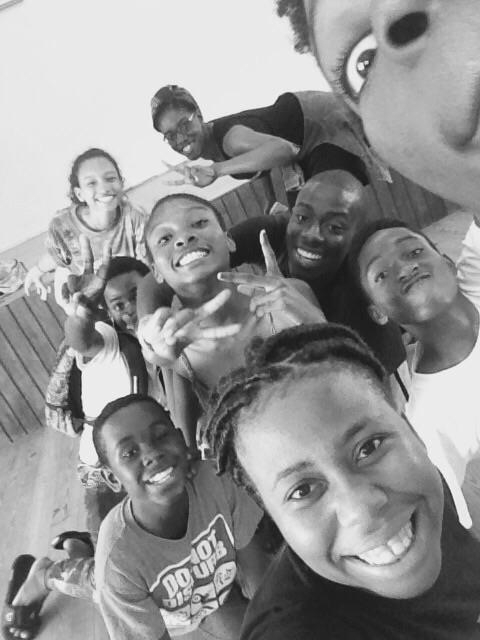
‘Maco’s Revenge’ Selfie break during Mustardseed ensemble rehearsal Mustardseed Productions, 2016 Dir. Renelde Headley

‘Maco’s Revenge’, Selfie break during Mustardseed ensemble rehearsal. Mustardseed Productions, 2016. Dir. Renelde Headley

“It is possible to be strong, no nonsense and sensitive all at once.” To this end she is often drawn to work that explores Identity – be it cultural, social, racial or personal. This because the various concepts of identity that exist, though constantly evolving or perhaps sharing similar elements, offer unique perspectives that inform the way the world functions: this, in turn, allows constant investigation and experimentation.

With her positive attitude, critical eye and arsenal of talents, Renelde will prove by example that being tough and sensitive don’t have to be juxtapositions. You can enjoy every minute of life just being yourself, once you “…know who you are and strive to be the best of who that is.”
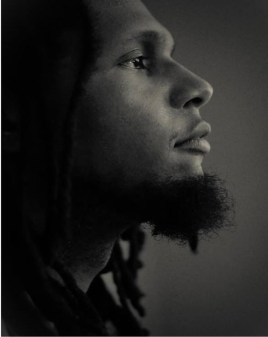
Matthew 'Kupakwashe' Murrell

Matthew ‘Kupakwashe’ Murrell

RESIDENCY PROJECT: ‘BARBADOSED’

In this project, I would like to explore the concept once known as being Barbadosed. When the island’s existence was based on a punishment by the crown and neighbouring Caribbean islands. Through our modern history, we have been told that Barbadians are passive, but has our history shown that, or is that something current? Our history has shown we have had a bloody history more than most English speaking islands, torture devices have been invented here, land disputes have caused death, political prisoners were sent to be punished here and not to mention human trafficking. Our Barbadian historians and cultural activists have disputed the notion of Bajans being docile. Barbadosed will expose many true events of the atrocities that occurred on This Island in the Sun, the Gem of the Caribbean Sea. This project will utilize elements of acting, dancing, singing and performance poetry.

MATTHEW MURRELL BIO:

Through my company, Yardie Boy Theatre, we like to explore social themes that affect young Caribbean voices.  Some may perceive us to be controversial for tackling such themes as religion, gender and sexuality and socio political. Many concepts of directing have been explored such as divisive theatre, use of music, dance and performance poetry.  A young people’s theatre company that is highly inspired by everything culturally Caribbean.

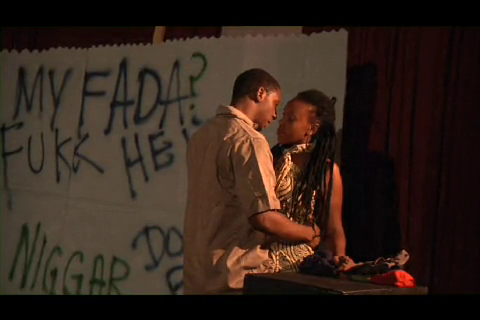
‘De Angry Black Boy Tantrums’ Scene: ‘My Judical Family - Dre & Sista’ Actors: Deevon Clinton (‘Dre’), Ayesha NuRa Delpeche (‘Sista’) Dir. Matthew Kupakwashe Murrell

‘De Angry Black Boy Tantrums’. Scene: ‘My Judical Family – Dre & Sista’. Actors: Deevon Clinton (‘Dre’), Ayesha NuRa Delpeche (‘Sista’). Dir. Matthew Kupakwashe Murrell

Such works include ‘De Angry Black Boy Tantrums’ (pictured above) which delves into the oppression of the Caribbean black man in the 21st Century. ‘Demons in Me’, when four young people battle inner demons while under scrutiny of the society. ‘The Brightest Red’ a piece dedicated to the memory of young intellectual Rastafarian, I’Akobi Maloney.

__________________

About the Mentor:

Rawle Gibbons

Rawle Gibbons

Rawle Gibbons is a playwright and a teacher.  Born in Belmont, Trinidad in 1950, between 1970 and 1984 he lived mostly in Jamaica, attending UWI and teaching at the Jamaica School of Drama. He returned to Trinidad and in 1986 was appointed to the newly established Creative and Festival Arts Centre at UWI, St. Augustine. He has written A Calypso Trilogy. Most of my recent productions have been collectively devised with my students at UWI. Since retiring from the UWI, I’m a director of Caribbean Yard Campus, a network for the development of Caribbean indigenous knowledges.

___________________

ncf mark rgb2This project is a collaborative initiative, supported by the NCF Barbados
FRESH MILK XIX

The Fresh Milk Art Platform is pleased to present FRESH MILK XIX, taking place on Monday, June 27, 2016 from 6-8 pm. The event will feature Fijian-Australian artist Torika Bolatagici and Barbadian artist Anisah Wood, who are in residence at Fresh Milk for the month of June.

Torika will be speaking about both her own work and that of a selection of Pacific artists in a talk titled ‘Seeing the Black Pacific’. Anisah – the winner of the 2016 ‘My Time’ Local Artist Residency – will make a presentation about her practice and residency experience so far, as well as have an open discussion with Torika about her work.

This event is free and open to the public. Directions to Fresh Milk can be found on the About Page of our website here.

FM XIX flyer final

Seeing the Black Pacific

During her residency in Barbados, Fijian-Australian artist Torika Bolatagici has been exploring the historical, cultural and biotic similarities of the island cultures of Fiji and Barbados. With shared histories of British colonization, cannibal mythology, indentured labour, tourism and a declining sugar industry, there are as many parallels between the two countries as there are differences. Torika is interested in how contemporary artists from these respective regions respond to, reflect and represent the island cultures of Melanesia and the Caribbean.

In this presentation, Torika will give an overview of the diverse practices emerging from Australian-based artists of Melanesian and Indian-Fijian heritage.

Cultural Heritage, Revival and Redress
Julia Mage’au Gray (Papua New Guinea)
Lisa Hilli (Papua New Guinea)
Dulcie Stewart (Fiji)

Performing Contemporary Oceanic Identities
Salote Tawale (Fiji)
Eric Bridgeman (Papua New Guinea)

Positioning the (Geo)political Pacific
Taloi Havini (Autonomous Region of Bougainville);
Mohini Chandra (Fiji)
Torika Bolatagici (Fiji)

___________________

About the featured speakers:

Torika-Bolatagici-Profile

Torika Bolatagici

Torika Bolatagici was born in Tasmania and spent the early years of her life living between Hobart, Sydney and her father’s village – Suvavou, Fiji.

Torika works across a range of media, including photography, video and mixed media site-specific installation.  Her interdisciplinary practice investigates the relationship between visual culture, human ecology, postcolonial counter narrative and visual historiography of the Black Pacific. She is interested in exploring the tensions and intersections between gender, embodied knowledge, commodification, migration and globalization.

Torika’s work has been exhibited in New York, San Francisco, Mexico City, Yogyakarta and throughout Aotearoa, New Zealand and Australia. She has published in peer-reviewed journals and presented at local and international conferences and symposia about the representation of mixed-race identity; Pacific arts practice in Australia and Fiji; representations of teachers and teaching in cinema; and gender and militarism in the Pacific.

In her role as Symposium coordinator for the Contemporary Pacific Arts Festival in 2013 and 2014, Torika curated multiple panels to extend the discourse around contemporary Pacific arts practice in Australia and invited speakers to reflect on themes such as art and activism, museums, collecting and curating, cultural appropriation and contemporary practice. She also produced the symposium publication Mana Motu.

As well as 11 years experience teaching at tertiary level, Torika also has experience facilitating youth arts workshops for the local Pacific community, most recently the Pacific Photobook Project in Melbourne and Sydney.

Torika also presents the Community Reading Room – a pop-up destination for research, community discussion and engagement around international visual arts and culture, with a particular focus on contemporary art and theory from Oceania, Africa and the Americas. The Community Reading Room has appeared at Colour Box Studio (2013) and the Footscray Community Arts Centre (2014).

Torika is a photography lecturer in the School of Communication and Creative Arts at Deakin University, Melbourne where she teaches contemporary theory and practice. She is currently undertaking a PhD at the School of Art and Design, University of New South Wales.

DSC_0012

Anisah Wood

Anisah Wood is a visual artist based in Barbados. She is in the process of completing a Bachelor of Fine Arts from the Barbados Community College with a major in Studio Art. Her practice involves video art, digital photography, and installation. She has had the privilege of exhibiting the results of her practice at the Punch Creative Arena, The National Arts Council Barbados and at various national arts competitions.

_______________________

AusCo

Torika Bolatagici’s project has been assisted by the Australian Government through the Australia Council, its arts funding and advisory body.

Anisah Wood’s Residency – Week 2 Blog Post

Barbadian artist Anisah Wood writes about the second week of her Fresh Milk ‘My Time’ Local Residency. The community outreach component of her residency, the Quid Pro Quo skills exchange programme, continues to be a highlight of her experience, as well as interacting and sharing knowledge with fellow resident Torika Bolatagici and reconsidering perceptions of the Caribbean space. Read more below.

13417555_10153689261938499_8399003833907728347_n

Quid Pro Quo was indeed one of the highlights of the week. This particular session was hosted by Sheena Weekes, who enlightened us on the process of a medical examination.  As we in the audience keenly listened and participated in the session, we also witnessed Sheena’s visible eagerness to extend her knowledge of the medical field to us. It was that enthusiasm shown by both parties coupled with the feeling of satisfaction having learned something new and practical, that convinced me that Quid Pro Quo was indeed a great idea that will benefit all involved.

13435551_10153687527618499_6103612845447588998_n

I also had my first Hasselblad experience thanks to Torika Bolatagici. That was a heavy piece of equipment, but the experience of peering into the view finder at a flipped frame dwarfs the digital live view any day. However, I eventually returned to the digital world as my means of production. I’ve started editing another video to add to my body of work. As I engaged in this process, I found myself frequently contemplating on how my work can better address the peculiarities of the Caribbean space, and the various relationships as well as tensions that exist within it. What really is the Caribbean space? How is it on one hand interconnected and on the other hand fragmented? Inviting yet hostile? And how can my observations of these enquiries be represented? … I am still turning these thoughts over in my head and with each turn I unearth a new possibility.

Torika Bolatagici’s Residency – Week 2 Blog Post

Pacific artist Torika Bolatagici shares her second blog post reflecting on her Fresh Milk residency. Highlights of the week included attending a lecture by Dr. Matthew C. Reilly at the Barbados Museum and Historical Society and discovering more about both the arts ecology and environmental ecology of the island through fruitful conversations, and by exploring the island armed with her new understanding of the space. Read more below:

One of the highlights of my 2nd week was attending Dr. Matthew C. Reilly’s lecture at the Barbados Museum and Historical Society titled “Contesting the ‘White Slavery’ Narrative:  Repositioning the “Redlegs” in Barbadian History and Society.” While I was aware of the history of African slavery in Barbados, I was not aware of the simultaneous history of white indentured servants, and the legacy that this has left for their descendants. I get the impression that the evidence-based research that Matthew presents is not convenient for those who cling to the Barbadian ‘white slave’ mythology that has become a reference point for many right-wing movements outside of Barbados.

Matthew’s subjectivity as an Irish-American is important and I found his work to be incredibly complex and nuanced, but presented in a clear and fascinating format. His lecture really opened my eyes to seeing the Barbadian landscape in a different way, and is helping me to understand this idea of ‘territoriality’ that Anisah Wood addresses in her work. I was particularly intrigued by the research he has been conducting in the area referred to as “Below Cliff” in the parish of St John on the rugged east coast of the island and I was humbled by the way Matthew’s work has reconnected communities that had been estranged for many years. I look forward to reading Matthew’s forthcoming publication and following his research as it unfolds.

The other highlight of Week 2 was sitting down with the Founder and Director of Fresh Milk, Annalee Davis and finding out more about the origins of the arts ecology here in Barbados, from tertiary arts education, to artist spaces, the positioning of contemporary Barbadian art within the Caribbean, to the reason she set up Fresh Milk and the Colleen Lewis Reading Room. Most importantly we were able to chat about her practice, which with all her competing responsibilities, I’m amazed she has time to nurture.

Unlike Jamaica, the Bahamas and Bermuda – Barbados does not have a National Gallery. So it’s clear that spaces like Fresh Milk are crucial for providing the physical space and intellectual context for critical thinking about contemporary art and building the capacity for local art writers. Fresh Milk is a space where socially engaged practice and connection to the community is welcomed and the role of art in society is valued. But it’s also very outward looking, and a lot of work has gone in to connecting with institutions like Videobrasil and the Pérez Art Museum Miami for their Tilting Axis conference. I look at a space like Fresh Milk and I wish that someone would be able to set up a space like this in Fiji (I’m looking at you Ema Tavola).

During my weekend downtime, I continue to explore the island, and after a week of thinking about race, plantations, slavery and identity – the politics of space, visibility and invisibility are becoming more evident. The contrast between the chattels and fenced resorts remind me of the village/resort dichotomy of the Pacific. And as I look at the imported flora of the island, I’m thinking about what it means to explant botanical matter and what it means for a space to ex-plantation.

As I sat on the boardwalk in Bridgetown one evening and watched planes pass overhead, I was reminded of the proximity of Barbados to the other Islands in the Caribbean, South America, Europe and the United States – and I really felt the geographic isolation of Australia. Next week I’m looking forward to meeting with some local artist and curators!
_______________________

AusCo

This project has been assisted by the Australian Government through the Australia Council, its arts funding and advisory body.