Open Call: Fresh Milk International Residencies October/November 2016

FRESH MILK is seeking proposals from artists working outside of Barbados to apply for our international residency programme in October and November 2016. Available dates for the residencies to take place are between October 3 – 28, 2016 and October 31 – November 25, 2016.

FM Open Call Oct-Nov 2016

This residency aims to support visual artists working in a variety of media, writers and curators by offering a peaceful working space for a minimum of 4 weeks for creative production, the opportunity to interface with contemporary practitioners living and working in Barbados, access to the on-site Colleen Lewis Reading Room, the chance to broaden understanding of the work being produced locally and regionally in the Caribbean, and to strengthen international networks and relationships.

For more information on the residency, application process and associated costs, please visit our International Residency Opportunity page.

The deadline for applications is June 30, 2016.

To see the blogs kept by our past International resident artists, click here.

Alex Kelly’s Residency – Week 3 Blog Post

Trinbagonian artist Alex Kelly shares a third blog post about his Fresh Milk residency, which took place earlier this year in March. Looking at his last night in Barbados, spent liming with some of the people he encountered while in the island, Alex reflects on some of the collective aspects of the Caribbean experience he has noticed, and the fine line between comforting familiarity and complacency around regional issues. Read more below:

It’s the last lime before I leave Barbados. I’m having a chat with my Bahamian flatmate and her friend, a fellow Bahamian who’s lived in Barbados since she was a child. There is a bowl of chips and two bowls of dip on the coffee table in front of us. A fly lands on one of the chips and begins to survey the bowl. We continue having our conversation.

Someone gets up and, paying no attention to the fly, takes a chip out of the bowl, scoops up some dip and returns to their seat to enjoy. The fly has of course exited the conversation at this point, but that just happened, and we all let it. In that moment, I once again felt strangely at home in Barbados.

It’s not that we’re particularly fond of flies in TT, in fact I’m sure that the average person, including myself on another day, would have hastily gotten rid of the fly before it could ever desecrate the surface of a single chip; we love we belly. But there was something so unpretentious and confident about the imagined Caribbean that I learned to appreciate, and while on an average day I feel that I am constantly surrounded by actors playing out a role or as Chang might have said, artists more interested in their title than in the work, in that moment I saw an image of that Caribbean. No one pretended to be offended by the presence of that fly.

I am aware that this is an odd and, perhaps for some, off putting example, but I went to Barbados hoping to find a way that my own Caribbean experience could connect to others. I found it yet again in those moments. In that interaction, I was reminded of all the tension that I experience in my work; a practice that examines a way of life that is deeply troublesome and often dangerous, but one that is full of little subversions that make life so much more beautifully subtle and complex.

The frightening question that I am now comforted by, after having been reminded that it is our breaking of the rules that often makes life so nice, is how does a people manage to keep their beautiful conversation going, with that fly still in the bowl, and yet avoid all of the horrors associated with its kind. I believe that we can find a better way, but I’m not sure that I ever want that way to include fussing over a bowl of imported chips. What doh kill does fatten.

________________________

Tridium

This residency is supported by Tridium Caribbean Limited

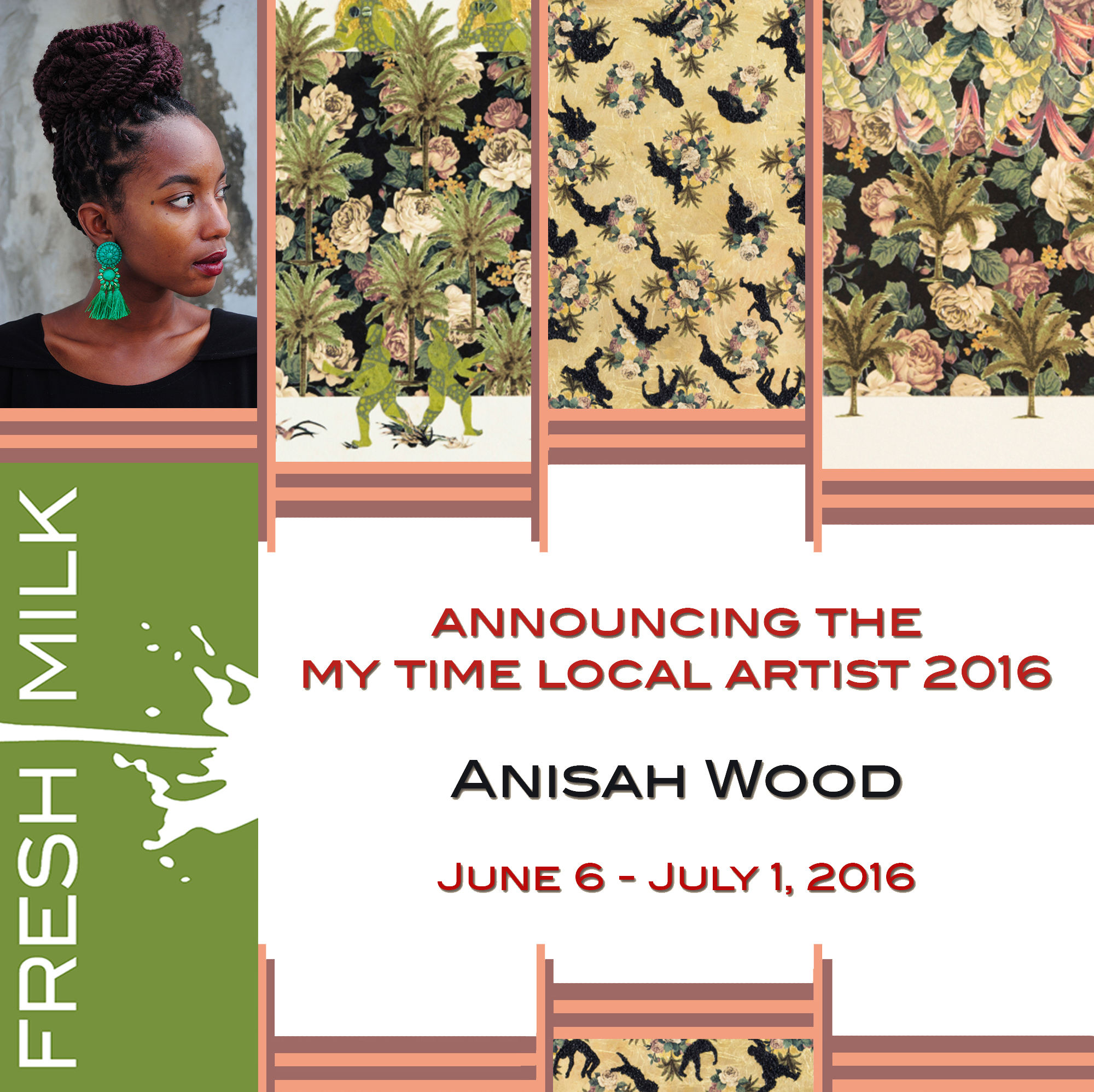
Announcing the Fresh Milk ‘My Time’ Local Resident Artist 2016 – Anisah Wood

Anisah Flyer

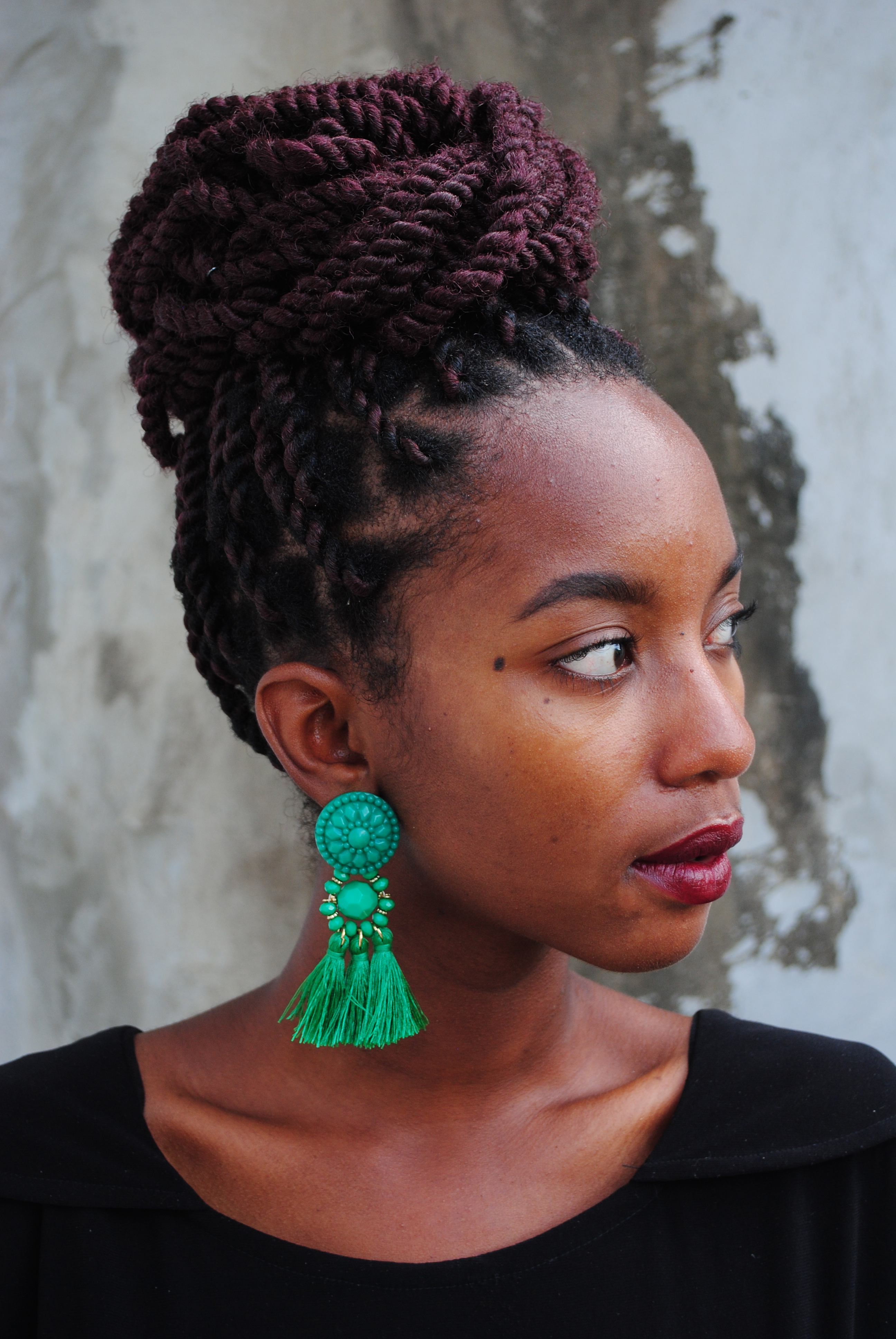
Fresh Milk is very pleased to announce Barbadian artist Anisah Wood as the winner of the Fresh Milk ‘My Time’ Local Residency prize for 2016. Congratulations Anisah!

Anisah’s one-month residency runs from Monday June 6 – Friday July 1, 2016.  Her work deals predominantly with the Caribbean landscape and the process of colonialism, particularly the desire to lay claim to and control space. During her residency, she will continue her investigations into the perceptions of her immediate environment and the influence of territoriality on how it is negotiated. She will use this engagement with a fresh environment to stimulate new conceptual ideas.

DSC_0012

About Anisah Wood:

Anisah Wood is a visual artist based in Barbados. She is in the process of completing a Bachelor of Fine Arts from the Barbados Community College with a major in Studio Art. Her practice involves video art, digital photography, and installation. She has had the privilege of exhibiting the results of her practice at the Punch Creative Arena, The National Arts Council Barbados and at various national arts competitions.

Artist Statement:

My current body of work maps the transformative effects of territoriality on a physical landscape and the society that engages with such a space. These explorations stem from my immediate environment, the Caribbean region. This region has consistently been labelled a paradise, a description that can be considered an impetus for expressions of territoriality. Therefore, through a multidisciplinary approach, this body of work examines the resultant complex relationships between space and society, and between various societal groups in connection to that space. In addition, while seeking to understand the desire to control a delineated space, the work also questions the authority to lay claim to an area. The work can therefore be considered an alternative vision of the space I occupy.

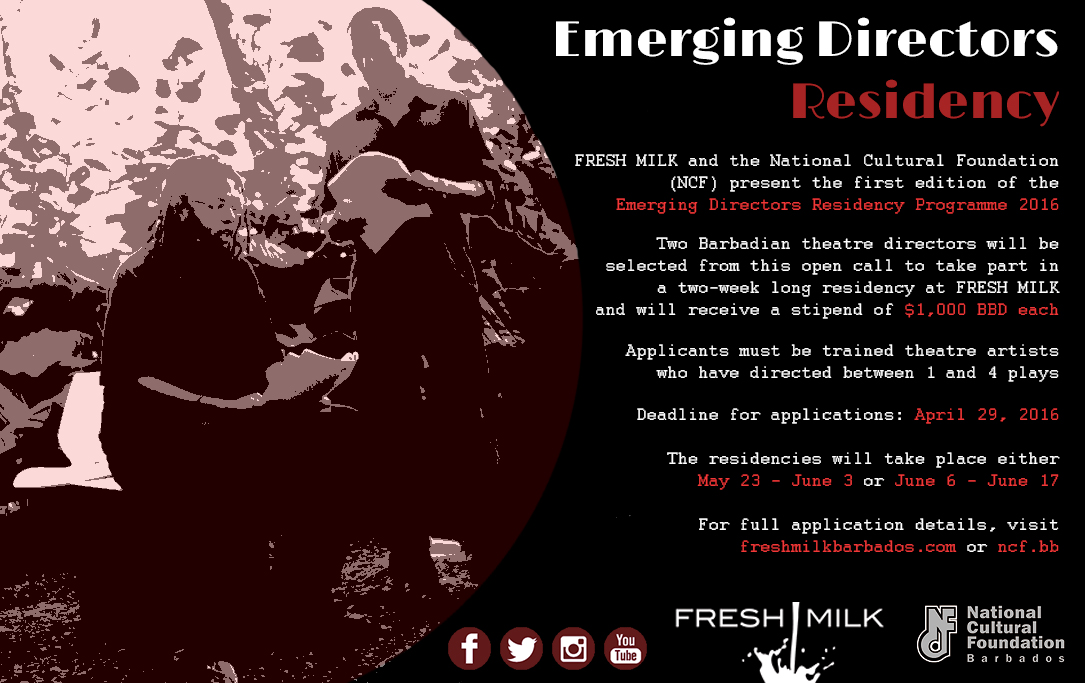
Open Call: Fresh Milk and the NCF announce Emerging Directors Residency

The Fresh Milk Art Platform and the National Cultural Foundation (NCF) are pleased to share an open call for their first collaborative Emerging Directors Residency 2016. This exciting new partnership is a paid artist residency for early career theatre directors, which will provide them with an opportunity to conduct much needed research into Caribbean theatre heritage and to explore and create through theatre form and style.
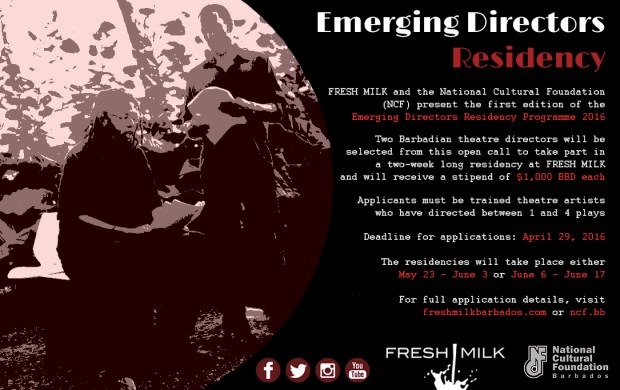
FM-NCF Emerging Director Residency Flyer

Two residencies will be offered, for two emerging Barbadian directors who will receive a stipend of $1,000.00 BBD each. Each residency, which will be based at the Fresh Milk studio in Walkers, St. George, will run for a 50 hour period which the resident must complete over two weeks. There are two fortnightly time-frames scheduled between May 23 – June 3 or June 6 – June 17, and each candidate may choose which time-frame is suitable for them. The deadline for applications is April 29, 2016.

Residents will be mentored over the course of the programme by a noted Barbadian/Caribbean Director and, at the close of the period, each will present, by way of a small showcase with actors, aspects of the work they have been exploring.

Rationale:

Residency programmes afford professionals time and space away from the demands of daily work life to carry out much needed professional development. Outside of traditional longer term training, a paid residency allows artists time, however short, for contemplative study and exploration. In the Barbadian context, there is much focus on the training of performers, however there are considerably fewer opportunities for those theatre artists with a special interest in directing to hone and develop their skills. Highly skilled, culturally aware and visionary directors are needed, as we move nationally to advance our cultural industries sector, and to enrich the quality of small and large scale staged events, whether drama, music, dance, or indeed multimedia events.

Greater awareness of Barbadian/Caribbean theatre form and style will serve to enhance the ideological and interpretive output of those up and coming directors on the local theatre scene, and equip them to create work that consciously and profoundly engages with Barbadian tradition. ‘Emerging Directors Residency’ offers an opportunity to design and apply staging concepts for ‘alternative spaces’, i.e. the “site-specific”, and otherwise environmental concept. It offers mentorship, access to archival material, and affords time for creativity.

Objectives:

– Partner with local and regional arts platforms to offer developmental opportunities for artists;

– Provide a forum for emerging directors to research their craft through mentorship, and through access to documented and archived material;

– Provide emerging directors with a secure and rigorous environment for practice, and the resources with which he or she may develop emerging work, and/or experiment with new ideas;

– Provide opportunities for actors to work with emerging directors in a developmental and experimental workshop setting.

Eligibility:

The ideal candidate should be a trained Barbadian theatre artist, who has directed between 1 and 4 plays.

Duration of Programme:

1 Session per Resident: 50 hours to be undertaken over EITHER May 23 – June 3, 2016, OR June 6 – 17, 2016.

Application process:

Prospective candidates can apply with the completed application form (which includes a bio/artist statement and project proposal, and can be downloaded here), full CV and portfolio, writing samples from your director’s notebook and 2-3 critical (newspaper, peer or academic) reviews of recent work to the National Cultural Foundation, Theatre Arts Office at the email address ncftheatrearts@gmail.com or lisa-cumberbatch@ncf.bb before midnight on Friday, April 29, 2016. They will be interviewed by a panel comprising NCF and Fresh Milk officials.

Successful candidates for the residency will be offered a stipend of $1,000.00. The resident is required to spend 50 hours at Fresh Milk in Walkers, St. George and should indicate a potential schedule of days and times they might be available during the interview process. The mentor will spend 10 hours in total with each resident over each 50 hour session. Each resident will have access to two actors for 15 hours to experiment and/or create work. At the end of each period, there will be a short showcase where the residents share aspects of the work they have been contemplating.

Expectations:

In addition to the 50 hours spent at Fresh Milk, each resident will be required to keep a weekly blog of text and images documenting their thoughts and processes which will be shared on the Fresh Milk website. At the close of the residency, each resident will also be required to submit a report according to Fresh Milk and the NCF’s guidelines.
Sonia Farmer’s Residency – Week 4 Blog Post

Bahamian artist and writer Sonia Farmer shares her fourth and final blog post about her residency at Fresh Milk, which took place during March. Continuing her creative journey after the residency – which marked the beginning of a series of new adventures, including a recent workshop hosted by San Diego Book Arts – Sonia looks back on her time in Barbados, realizing that the ideas planted here will continue to grow organically; not tied to a physical space, but to an ongoing process of discovery and dismantling of experiences. Read more here:

1

Just as my time flew by in Barbados, so has the time on my journey post-Barbados. Being my first residency, I was not sure what to expect, but I did believe I had a lot of time at my disposal…which wasn’t entirely true. That is the lesson I’ll carry to any future residencies: you don’t have all the time you think you do while you are there. But—at least in this instance—the piece doesn’t exactly have to live within the confines of the residency itself.

I am barely halfway through my erasure project of Ligon’s A True and Exact History of the Island of Barbadoes. I harbored some anxiety about finishing the entire erasure within the environment of its origin, but I also knew the desire was unrealistic, given my major commitment to teach a four part workshop during my time there, which took up half of my studio time overall.

But this desire to start and finish the text within Barbados was unrealistic in another way too, which has been revealed to me as I continue to visit the text on trains and buses moving through landscapes just as unknown to me as the island: the poem I am culling from this text so concerned with establishing a sense of place in fact removes that recognizable place. Or perhaps, more accurately, its underlying anxiety to locate place drives an obsessive challenge to interrogate that very idea, dismantling it not necessarily for reconstruction but rather for dismantling’s sake, the very unsettling result the actual desired result:

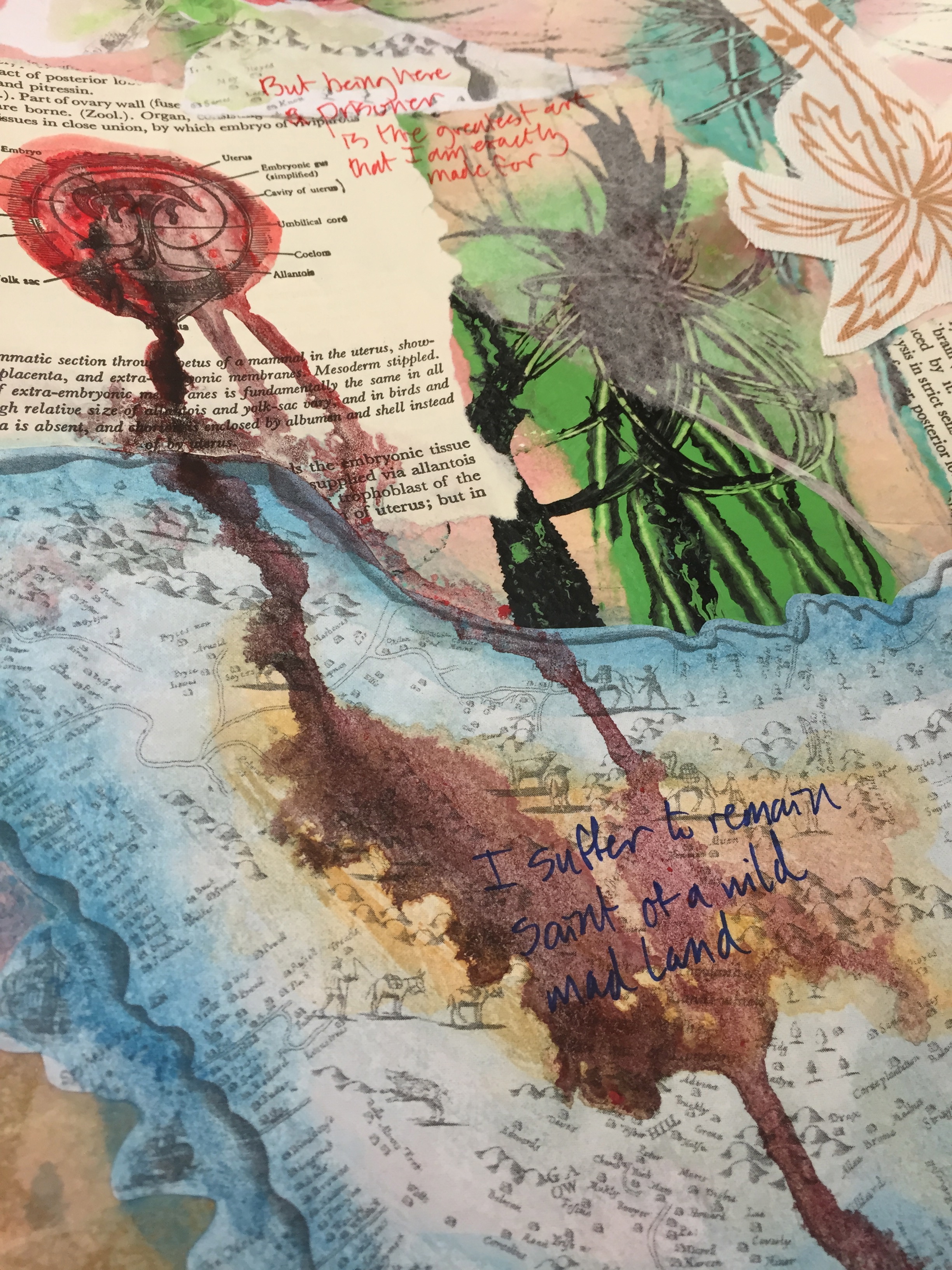
“But being here a prisoner
is the greatest art
that I am exactly made for”

There is a loose narrative, a voice that belongs sometimes to a traveller, sometimes with a companion, and other times belongs to a collective. Place, time and body collapse and expand, melt away and come into focus, but remain always in an abstract, deconstructed and unsettled state. I’m enjoying the little insights this provides into our historical foundation and current realities in the Caribbean space. It makes me think about what I said it week one, that visiting other Caribbean spaces is like an exercise in magical realism—this text is the written experience of that feeling, a constant rush of déjà vu.

I think it is appropriate to continue this exploration as I myself remain an explorer for these next few months, finding refuge in the strange but also exciting nature of this act even outside of the Caribbean. Because I’m still captivated by this idea, the in-progress poem and its imagery became my subject during a three day workshop in San Diego, ‘Sketch Book Stitch’, taught by Cas Holmes and hosted by San Diego Book Arts.

Less about creating a finished product and more about encouraging experimentation, the class helped to break open my obsessions with Ligon’s text and the themes I’m exploring in the erasure. I brought together decorative papers, found imagery, maps, and Ligon’s own drawings to create mixed media collages that respond to the poem. Just like the poem, these pieces are in no way finished, but they have allowed me to keep dig deeper into this project began at Fresh Milk. I think I’m gaining clarity on another theme that interests me while I deconstruct this text and also visit other spaces, which is how violence plays into the physical and social formation of landscape, and how violence inflicted upon one ties into the other. That definitely came out in the imagery, and I’m still turning it over in my head. We will have to see how it plays out.

I’d like to take this last opportunity to thank Fresh Milk for such a life changing experience. This residency has helped me tap back into my creativity with confidence and playfulness. I have been so fortunate to meet some incredible creative thinkers while there and also light a fire for book arts through my class. After our last class together, many of my students seemed pleased with the course. They walked away with many book structures to explore through their own creative practices, and we left three collaborative books in the Colleen Lewis Reading Room as a tribute to our time together. I’m so proud of them and I hope they continue to explore the craft! Thank you, Fresh Milk, for giving me the opportunity to teach again.

I’m at a rare rest moment in a months-long nomadic journey, but soon I’ll pack my bag and head to the next city on a train or bus, discovering new landscapes and their strange histories, carrying the voice of the narrator inside of me:

“I suffer to remain

Saint of a wild
mad land”

16