Helen Cammock’s Residency – Week 2 Blog Post

Fresh Milk resident artist Helen Cammock shares her second blog post about her time in Barbados, which has uncovered a wealth of information and material for her practice. This week included an artist talk at Barbados Community College, a photography workshop at Workmans Primary School, visits to the Barbados Museum, St Nicholas Abbey and Morgan Lewis Windmill, revisiting Animal Flower Cave and even witnessing the moments immediately following the birth of a foal. Read more about the impact of these experiences below:
3

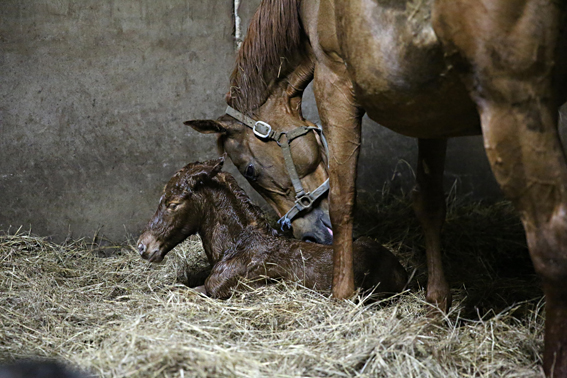
Knock, crash, trip, battery, tripod, shoes
in our lumber you had arrived
An hour of licking and falling, licking and falling again
we saw you experience the world you had rushed to be a part of

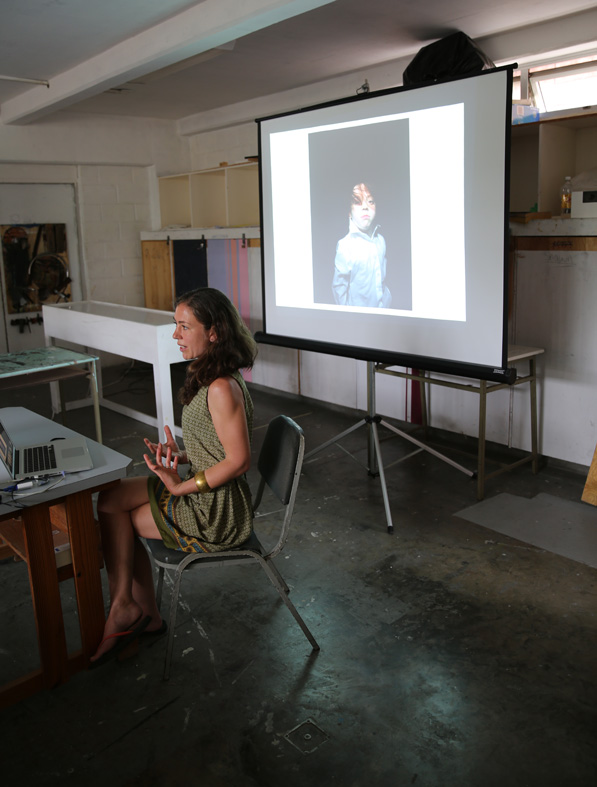
Then there was the artist talk at Barbados Community College – focus, questions and trying to share something of what I want to say with my work.

Then there was the Workman’s Primary School photography workshop – two groups of excited and charming class 3 students. A whistle- stop on portraits, communicating with images and unrivalled enthusiasm finished off with two short dances to Beyoncé to conclude. The school was welcoming and very open to working with artists – a refreshing experience.

Next I walked in the torrential rain to the Barbados Museum Library where I nearly succumbed to an onset of hypothermia due to the highly emphatic air conditioning.

Books, letters, newspaper cuttings, more books and a conversation with a Canadian trying to track someone from his home town from the 17th Century. I am now a member of the historical society there and will return as much as I can before I leave – jumper firmly in hand.

10

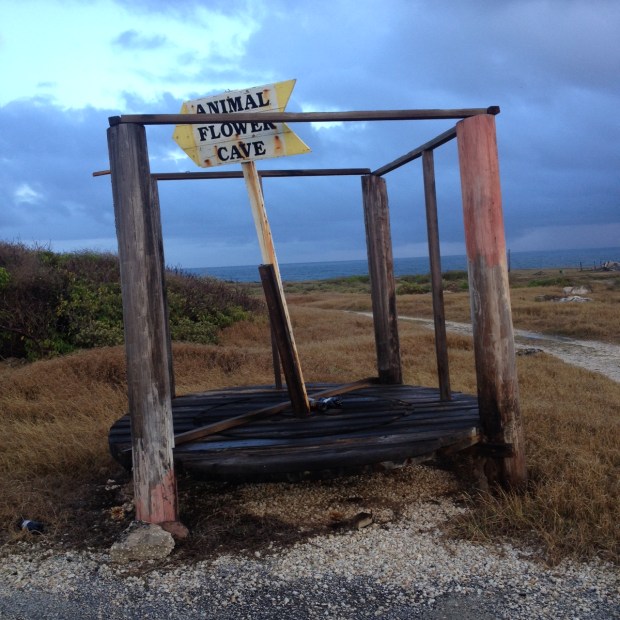
Then there was a return to Animal Flower Cave – down inside the cave again and with a coastal shoot up high on the windy windy cliff tops of the North Point which taxed my bending tripod to its limits.

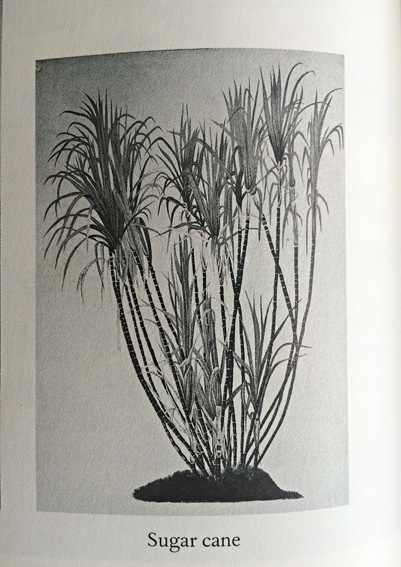
And then I focussed on Sugar – the journey had begun in the library and led me to St Nicholas Abbey Grind, Morgan Lewis Windmill and the old disused mill here on Walkers Plantation. I photographed and filmed, machinery, architecture, process, and details. I met a mill operator who had been a mental health social worker in Hackney where I live and we chatted about London and the life change required to move back to Barbados, the place of his birth. With another mill worker I discussed the throwing of Mahogany and Sycamore seeds as helicopters when children – different trees, different countries, same concept. He lamented the creativity and simplicity of such games and wondered whether his children even knew what the mahogany seeds looked like…

Then I have sat all week – in my room, in the studio, on the beach with the books from the Colleen Lewis Reading Room that have triggered my thoughts about Sugar, The Panama Canal and Legacy.
18

On Thursday I’ll film Bulkeley sugar factory and on Friday, Portvale Factory and museum.

Then I’ll begin to consider how to develop a conversation with all this imagery. Where it will lead I don’t know yet, but I know that my head is full of smells, thoughts, conversations and newness that will begin to find a juncture with all the practice, cultural, personal and theoretical concerns I have brought with me here.
Emma Critchley’s Residency – Week 1 Blog Post

British, London-based artist Emma Critchley shares a post about her first week in residence at Fresh Milk. A mixture of familiar and unfamiliar experiences have coloured the start of her residency, as she has returned to an old love of diving and the ocean, but doing so in Barbados, which is new territory for her. She has been exploring shores and wrecks, collecting film and photographic material above and below the sea’s surface which she will continue to develop over the coming weeks. Read more below:

The Bajan Queen

This week has been a week of acquainting and reacquainting
Acquainting myself with this beautiful island
Recceing on land and in the sea
Finding places that inspire me, where I will return to make work and finding people who will get me there:
Divers

Reacquainting myself with the sea; a place where I feel at home, happy
Although I’ve not dived Bajan waters before there is something about being in the ocean that’s like an old familiar friend, a place I already know, have always known

Twice to Carlisle Bay – a walk off the beach into the blue where wrecks await us. Cement, wood, steel. Un-wanted vessels, chambers of histories that have been laid to rest; Barge (16 years), Corn Wallis (16 years), The Bajan Queen (14 years), Ellion (20 years), Ce -Trek (40 years), Berwyn (87 years)

Another shore dive off the coast of Speightstown to trim the weighting for my new underwater film equipment. A test that turned into a dive … for 70 minutes … in search of a wreck that we never found …

Sunday’s ‘two wreck challenge’ with “Badass’n”, the Barbados Dive Association. An opportunity to recce two more wrecks

Off the side of the boat 18 divers descended over a small wreck like predators picking over a carcass. Photographing, catching, probing …

Together we headed out into the blue in search of the Pamir – a sunken 170ft freighter that was to be our destination. After 30 minutes swimming headlong into the current its majestic figure finally emerged out of the darkness. But we had reached the end of air. Our time was up and we had to return to the surface. A wreck to be explored again

Animal Flower Cave, a beautiful coastal cave with sea pool over looking the rugged north coast. A natural limestone chamber carved out by the Atlantic elements … another place to return to

Helen Cammock’s Residency – Week 1 Blog Post

British interdisciplinary artist of Caribbean heritage, Helen Cammock, shares her first blog post about her Fresh Milk residency. Starting by exploring the island and being introduced to the physical and cultural climate in Barbados, Helen has been using her time so far to take in the details of a new place, appreciate the openness of the experience, and embrace the beginnings of ideas as she starts to collect material to work with as things unfold. Read more below:

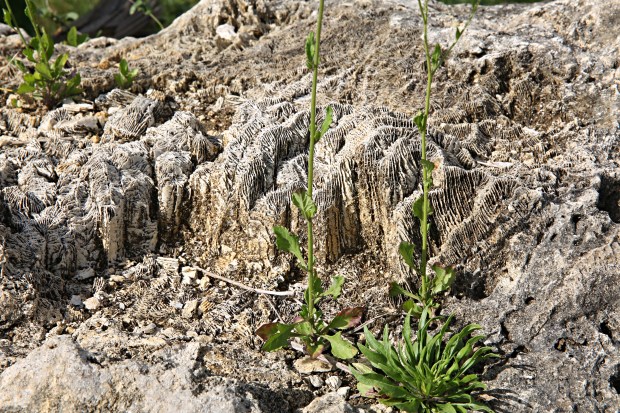
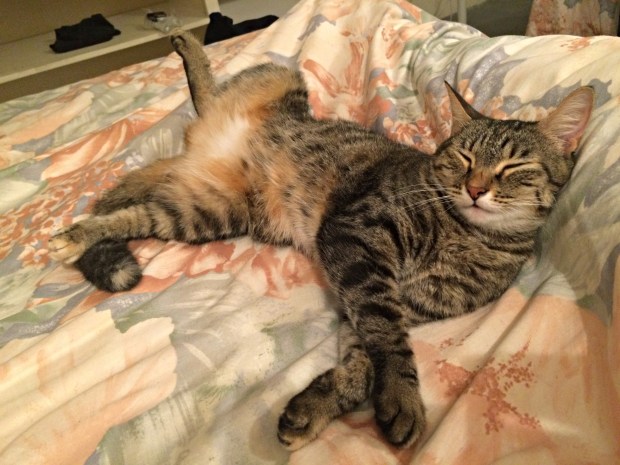
There’s been an Animal Flower Cave, the crashing waves and precariously poised rocks at Bathsheba, coral, sugar cane fields, potholes, sunshine, rain, buffeting wind, cows, geckos, an affectionate cat, dogs accompanying (well shepherding) us, swimming with a turtle, the impending birth of a foal…

There’s been meeting representatives from the office of the Cultural Industries Development Act and the National Cultural Foundation, and understanding a little more about the cultural landscape in Barbados….And there’s been Annalee, her family and colleagues at Fresh Milk giving us the most wonderful welcome.

I have spent this week trying to concentrate on detail – what I see and hear around me – making space for thoughts, questions, ideas and stories to emerge.

This is the beauty and the basis of this residency – it is an opening, an aperture, an opportunity to develop these new ideas and thoughts – somewhere new, different, alien – somehow reassuringly unknown – and to find space to be in my own head.

On the second day I began filming – extracts, fragments – and by the fourth day I began to write – just the beginnings of something – but that’s the point. It really feels like the beginning of something – and this is why I’m here – for these very beginnings of something.

Next week I’ll visit the museum and its library – I’m not sure what I’m looking for or what I’ll find but I’m starting with the production of sugar on the island. I’ll shoot a closed sugar factory and the tempestuous coast at North Point. I’ll deliver a photography workshop in a local primary school and give an artist talk at Barbados Community College. It’s busy yet at the end of this first week, the feeling that the beginnings of something are with me…and that I have been offered the space to do something yet unknown with these beginnings, is palpable as I await the imminent birth of a foal here on Prendoma Stud.


Maj Hasager & Ask Kæreby – Week 4 Blog Post

Danish artists Maj Hasager and Ask Kæreby who undertook a residency at Fresh Milk during the month of November share their fourth blog post about a very busy final week in Barbados. The end of their trip included everything from research, sound recordings, a catamaran cruise, an exhibition opening, a workshop and our last public event for 2015, FRESH MILK XVIII. Read more about their packed last days below:

It seems now like a distant memory of being warm and sweaty night and day. We have returned to Copenhagen after a detour via London and Cologne, and suddenly the days are even shorter and the evenings and nights seem darker and colder. Winter in Copenhagen is a challenge. It always feels strange to have to reflect back on recent events when shifting location, and it sounds like a voiceover in my mind when trying to reconstruct the pieces and images that go with it.

Our fourth and final week begins in the library of the Barbados Museum and Historical Society, which seems to have chosen cryonics as their method for preserving their material. Maj meets with historian Miguel Pena while Ask reads on the formation of workers’ unions and migration to the Canal Zone – until the chatter of his teeth becomes so disturbing that we leave to defrost in the tropical sun. Even this didn’t prepare us fully for the Danish winter though…

We also pay a visit to Government Information Service, located in an unassuming building in the outskirts of town, and seeming to operate with a landline and the phone book as the primary resources. They are the sole distributor of the documentary Diggers, which is the only locally accessible source of footage from the construction of the Panama Canal. As it’s right after lunch, and our contact person is not around, we meet and greet seemingly all employees in the office, as a prolonged discussion over the spelling of the title takes place until we finally leave with DVD and receipt in hand.

Tuesday afternoon we are picked up by a driver, who is struggling to find our location hidden away in the centre of the Island – we are in fact “out of range” according to his company’s definition, and it does feel that way sometimes, which seems curious in such a small place.

We take the hydrophone sailing off the west coast, capturing some wonderful eerie sounds when anchored or wind powered – though any engine active in the entire bay can be heard clearly. As the sun sets, the visual beauty of the surroundings rivals the sonic seascape.

On Wednesday morning Maj meets Annalee to have a studio visit on her work. Exciting conversations unfold before we head off to meet Allison Thompson, the director of the fine arts department at Barbados Community College (BCC), where exchanges on pedagogy, teaching methods and structures are shared. In the evening we are attending the opening of This Quagmire, an exhibition by Versia Harris at the Punch Creative Arena in the Morningside Gallery at BCC.

Wednesday is also the final session of the sound workshop, and everyone chips in with fascinating yet very different compositions. We are also busy preparing for FRESH MILK XXVIII, which is quite a packed evening with both of us presenting work, Maj in conversation with Therese Hadchity, and the Beyond Publishing collective presenting their activities as well.

A packed final week, that somehow sums up the intensity of a month’s residency at Fresh Milk. Our suitcases are loaded with reading material and textile works by Mark King when we leave Walkers in St. George. A huge thank you to the wonderful Fresh Milk team: Annalee Davis, Katherine Kennedy, Natalie McGuire and of course also Barbara and Vere Davis. One thing is for sure: We can’t wait to return.

_____________________________

DanishArtsFound_LOGO_CMYK

This residency is supported in part by the Danish Arts Foundation

Immanuel Hunte shares his experience with Ask Kæreby’s experimental sound workshops

During the month of November, Fresh Milk resident artist Ask Kæreby held a series of three workshops looking at experimental ways of working with sound. One of the participants, Immanuel Hunte, wrote about his experience with the workshops, as well as sharing two of the pieces he created based on what was discussed in the sessions. Read more below:

I attended a 3 day workshop, which was held by Fresh Milk via their Artist Residency Programme. Ask Kæreby, a Danish composer and sound designer was the chief facilitator of this particular project, being that it was about sound and sound design. I have to say that in my opinion, even though only a few people attended the workshop, it was AWESOME. Ask helped me to open my eyes to how sound can be used in unconventional ways to express one’s self creatively.

Over the course of 3 days we looked at the technical aspects of sound and talked about the the artistic and philosophical aspects of it as well. During that time, I gained an understanding about sound and sound design; ie. that sound does not only come from musical instruments, or an orchestra, or notes and pitches. Sound is present in our everyday surroundings and in our everyday lives, whether it is natural ( eg. wind, water, trees, animals) or generated/man-made (eg. engines, machines, traffic, interaction of objects). To sum it all up, I was informally introduced to the world of sound art: Sound art is a contemporary art form in which sound (natural or artificial) is utilised as a medium or a form of expression. Sound art comprises of different elements that are often intertwined eg. audio media, electronic synthesizers, noise music, acoustic or psychoacoustic art, to name a few. Sound art tends to be experimental in that it gives the artist a chance to stretch his/her imagination. I got to learn about the people who were pioneers in this sound art movement, such as Luigi Russolo, who composed for noise machines (which he created) and had members of a London-based orchestra play them, …….which did NOT go down too well with the traditional audience! Russolo at that time wanted to escape the confines of what his generation called traditional music.

There was also Pierre Schaeffer, who was into experimental sound in the 1940s and developed musique concrète. We listened to one of his manipulated recordings of trains. My favourite part was learning about Delia Derbyshire, a woman who was instrumental in the early days of the BBC in London in the BBC Radiophonic Workshop. She has been revered for being a pioneer in electronic music. This unique workshop consisted only of oscillators and various analogue machines. Music for radio and television was scored using only these machines, including sound effects. One famous example is her electronic rendition of Ron Grainer’s theme to Doctor Who, one of the first television themes to be created and produced by entirely electronic means.

Immanuel Hunte’s Soundscape

Also, during this time, the group was given assignments to record our environments, and to manipulate them in an artistic manner. The sounds I used were recordings of my toilet flushing, the washing machine, doors, a spray-can and my voice. Using what I learned in the workshop, plus my experience in making music on computers, I got some satisfyingly interesting results. I edited parts of the audio from my raw recordings and I applied some delay and reverb effects, as well as vocoder effects. The recordings were made using my phone, and the finishing touches were done in digital audio workstations called Propellerhead Reason and FL studio.

Immanuel Hunte’s Desert  Scape

_________________

Thanks to all of those who participated in the sessions, including Annalee Davis, Adrian Green, Immanuel Hunte, Katherine Kennedy, Jesse Phillips, Melanie Springer and Andre Woodvine.