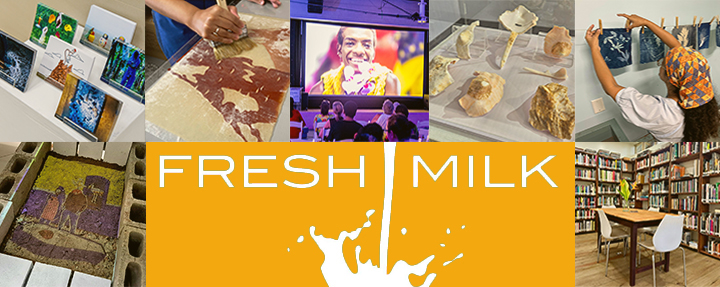

Fresh Milk is pleased to announce the recipients of its inaugural contemporary visual arts Fellowship programme, made possible with support from the Clara Lionel Foundation (CLF). This initiative provides four unrestricted grants of $20,000 USD, along with a $5,000 USD travel grant for each Fellow. The Barbadian-based Fellows, Anna Gibson, Simone Asia, Russell Watson and Ronald Williams, have demonstrated commitment to their practices, working across painting, sculpture, drawing, moving image, and digital media. Each Fellow was presented at a public event at the Caribbean Brushstrokes Gallery on August 9th and will benefit from sustained support during this 10-month programme from September 2025 until June 2026, culminating in a 2026 exhibition curated by Dr. Natalie McGuire.
On May 21st, 2025, the Fresh Milk team including Annalee Davis & Katherine Kennedy, hosted a roundtable session bringing together diverse participants to discuss critical issues in Barbados relating to the CLF’s core pillars, including contemporary visual arts, health care access and equity, gender-based issues, environmental concerns, and the impact of technology on society. The insights provided, informed the four nominators with expertise in contemporary creative practices, in their selection of the Fellows. The roundtable included Dr. Jo-Anne Brathwaite-Drummond, Dr. Clyde Cave, Carla Daniel, Amina Doherty, Dr. Robin Mahon, Patrick Moufarrige, Dr. Shayna Parris, Rae Skinner, and Leigh-Ann Worrell, while the nominators included Jason Fitzroy Jeffers, Dr. Therese Hadchity, Mark King, and Dr. Natalie McGuire.
The exhibition, Where are the Tendernesses?, is celebrating the launch of the Fellowship and showcasing the Fellows work which runs until August 30th, 2025 at the Caribbean Brushstrokes Gallery. Read the full curatorial text here.
Video of ‘The Ripple Effect’, which launched the Fresh Milk / CLF Fellowship programme, by The Snap Happy Collective
All photos by Dondré Trotman
About the Fellows:
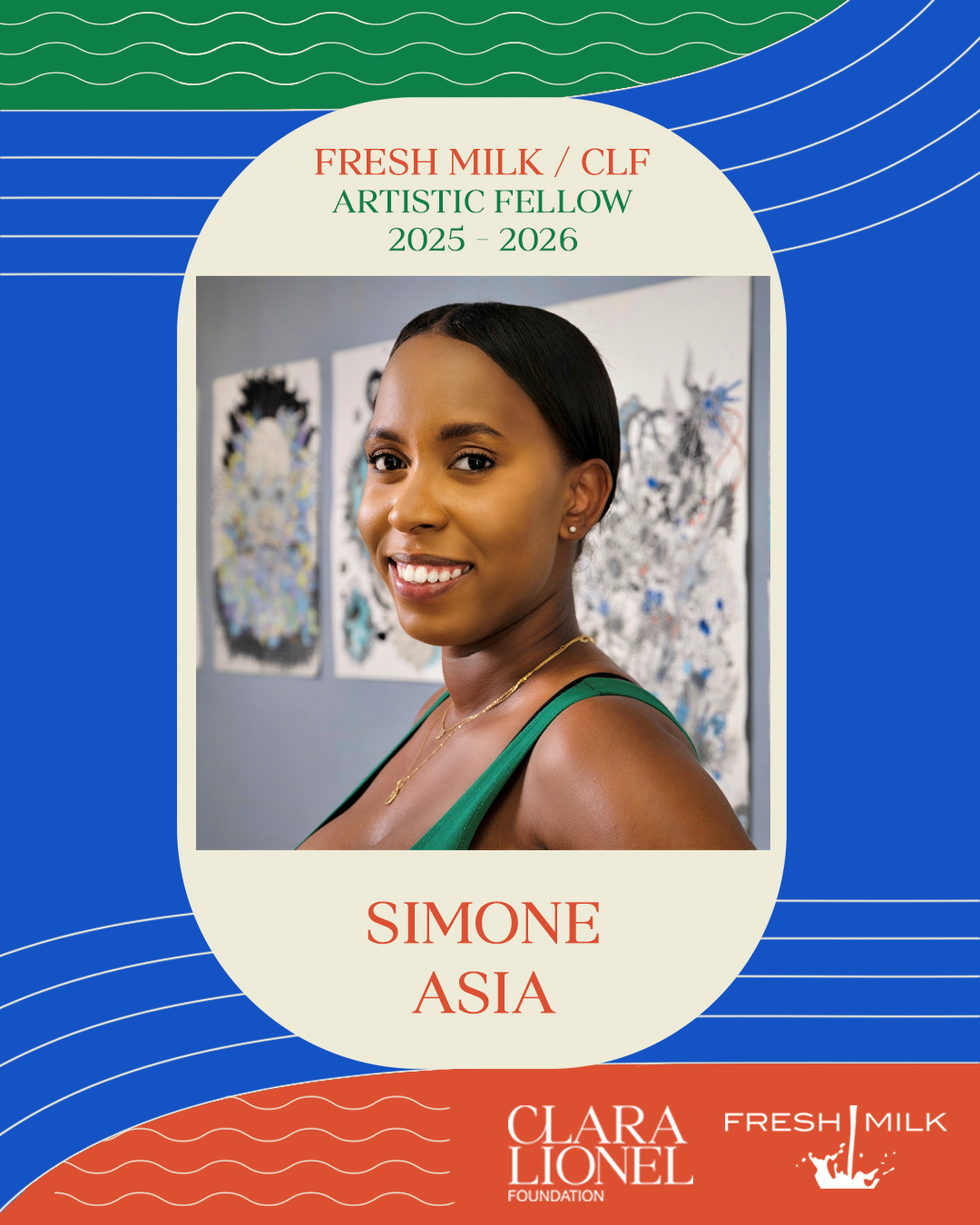


Simone Asia is a Barbadian-born illustrator recognized for her intricate penmanship and attention to detail. Her artistic influences span from local,regional and international figures, including Ewan Atkinson, Christopher Cozier, installation artist Tomoko Shioyasu, and illustrator James Jean.
Originally specializing in pen and ink, Simone has recently embraced mixed media, expanding her artistic exploration. Her work is deeply rooted in portraiture and journaling, often delving into themes of the human condition, botany, science, and metaphysics.
She holds an Associate Degree in Visual Arts and a Bachelor of Fine Arts (BFA, Hons) in Studio Arts. Throughout her career, Simone has participated in numerous local and regional residencies that have significantly shaped her artistic direction. These include Alice Yard (Trinidad and Tobago), Ateliers ’89 (Aruba), Projects and Space, Fresh Milk, and Punch Creative Arena (Barbados).
In 2016, she was awarded the Central Bank Governor’s Award and later that year held her first solo exhibition, Grey Matters, at Punch Creative Arena, Barbados Community College. Her work has since been featured in various projects, exhibitions, magazines and books internationally.
Beyond her personal practice, Simone works with Punch Creative Arena, where she helps facilitate exhibitions and events. She is also a part-time tutor in the Associate’s Degree Programme at Barbados Community College, teaching Drawing, 2D Visual Language, and Graphic Design: Illustration.
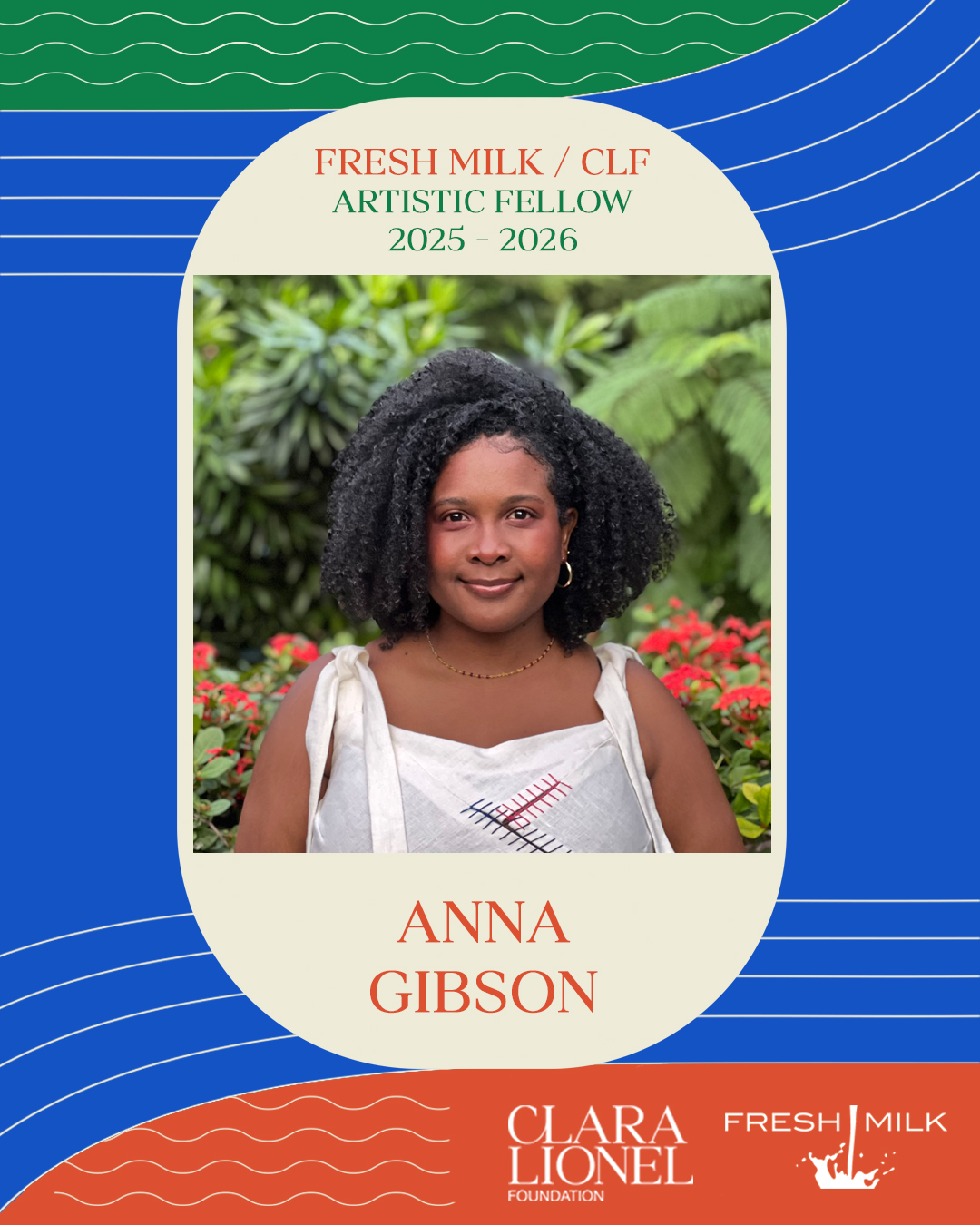


Anna Gibson is a Barbadian contemporary artist who explores women’s relationship with their bodies and its connection to cultural and social environments. Crafting images of body manipulation through realism and expressionism. She has been practicing for over 9 years and attended the Barbados Community College, completing her Bachelor of Fine Arts in 2017.
Anna has participated in some Barbadian local group exhibitions at UN Women 1in3 Art Exhibition at the UN House Barbados, ‘Young Artist’ at The Barbados Arts Council Art Gallery, Reimagined: Unspoken Bodies and Spaces at The Frame & Art Co. and more. She also has experience painting murals with artist collective A3 Design, most notably for the Hilton Barbados, the Barbados Grantley Adams International Airport and the Barbados Post Office.
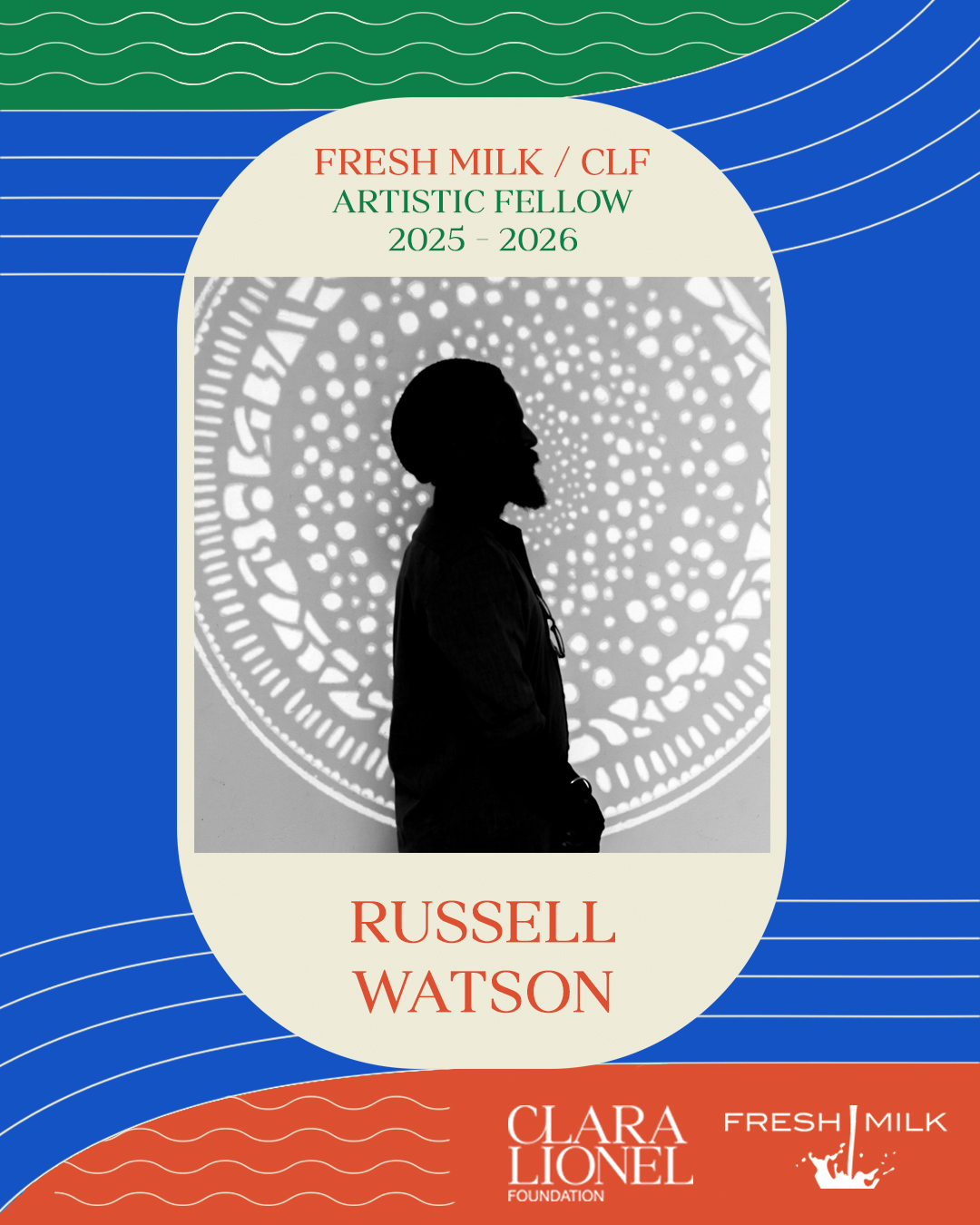


Russell Watson is a Barbadian artist and arts educator specializing in digital media and theatre. He completed studies in Drama in Education and Theatre Arts at the Edna Manley College of the Visual and Performing Arts in Jamaica and studies in Film Video, and New Media at the School of the Art Institute of Chicago at both the BFA and MFA level.
Currently residing in Barbados, Watson lectures in film at the University of the West Indies, Cave Hill campus and is the lead artist at the multimedia workshop RSTUDIO.
His current creative work involves combining drawing, photography and animation for multimedia projection. The works present an ecosystem of beings and landscapes existing simultaneously across various scales and epochs, reflecting his contemplation of time and environmental fragility in the Anthropocene.
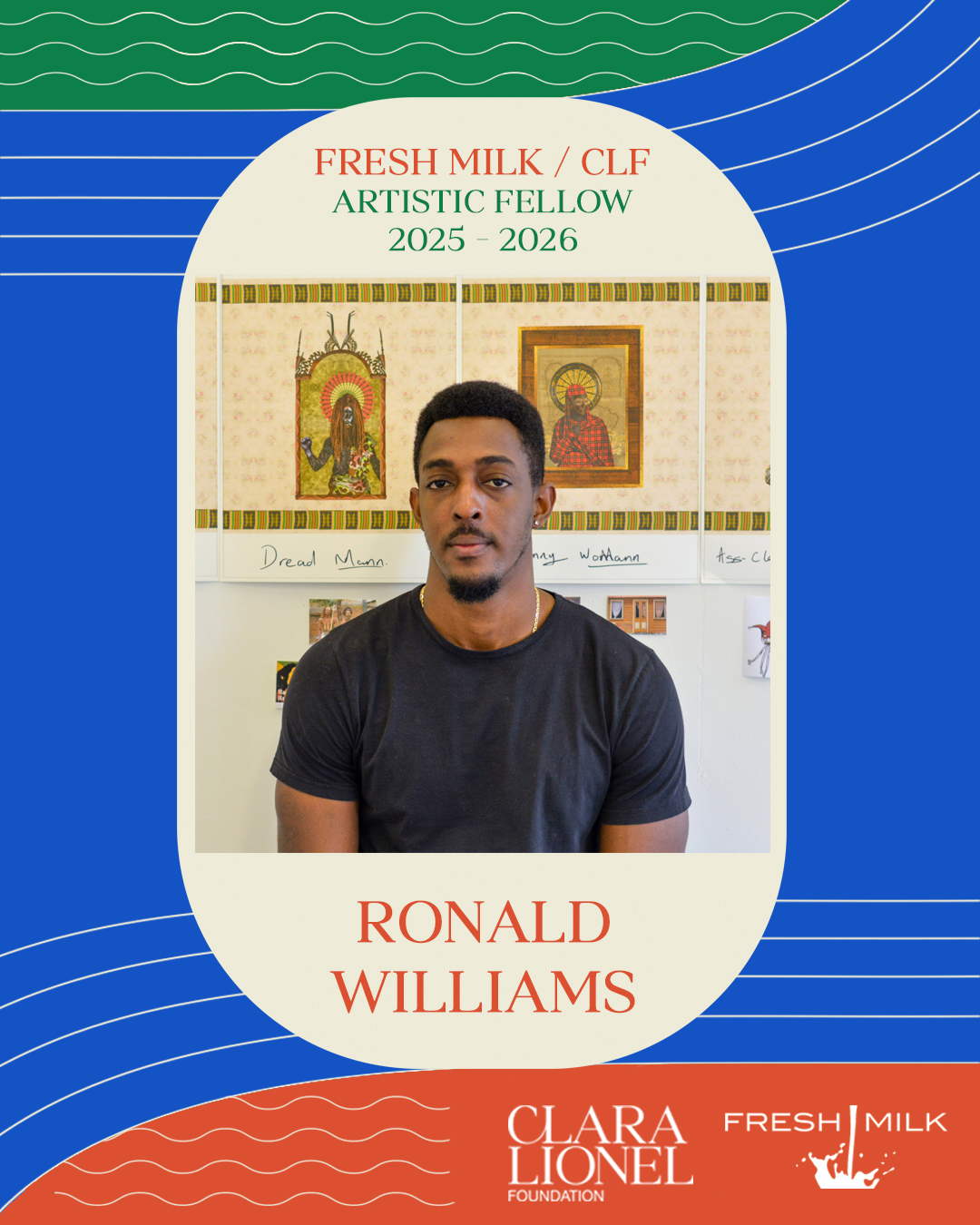


Ronald Williams is a visual artist who primarily works in digital media. While earning his BFA in Fine Arts from The Barbados Community College (BCC), he began experimenting with digital collage which he has since gone on to refine and develop into his individual style.
Since earning his BFA in Fine Arts from The Barbados Community College, Williams has gone on to work on multiple commissions and participate in various local, regional and international group exhibitions including exhibiting in Jamaica, Venezuela, Scotland and the USA. After following up a maiden local residency by accepting a Fellowship award to be a Vermont Studio Center resident in 2019, he participated in the Visible Man exhibition in 2021 held at the Bowling Green State University in Ohio and notably, and was featured in part of the Dak’Art 2024 program.
Roundtable Report on the Nomination of the Four Inaugural Fellows in the Fresh Milk/CLF Fellowship Programme 2025
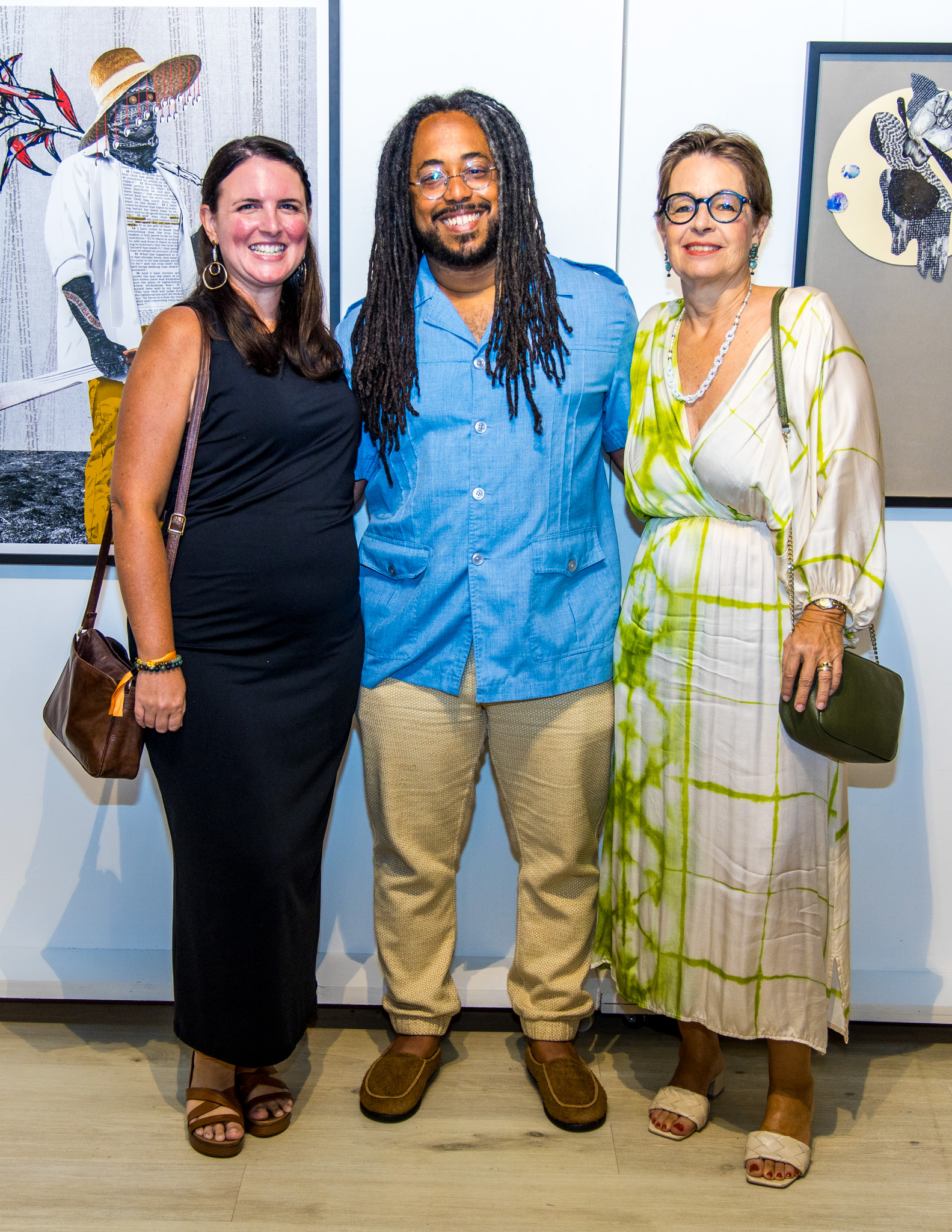
FM/CLF Fellowship Nominators: (L-R) Dr. Natalie McGuire, Jason Fitzroy-Jeffers and Dr. Therese Hadchity (missing: Mark King). Photo credit: Dondré Trotman
On May 21st, 2025, Fresh Milk hosted a national roundtable bringing together thirteen participants through an online session. Lasting more than two hours and moderated by the Fresh Milk team, Annalee Davis & Katherine Kennedy. The roundtable included Dr. Jo-Anne Brathwaite-Drummond (Consultant Psychiatrist), Dr. Clyde Cave (Consultant Paediatrician and member of the Barbados National Art Gallery Board), Carla Daniel (Field Director for the Barbados Sea Turtle Project), Amina Doherty (Head of Programs and Impact for the Clara Lionel Foundation), Dr. Robin Mahon (Professor Emeritus, Marine Affairs at the University of the West Indies (UWI) Cave Hill Campus), Patrick Moufarrige (Technology Entrepreneur and Founder of I Love This Rock Media Platform), Dr. Shayna Parris (Consultant, Geriatric Hospital), Rae Skinner (Gallery owner at Caribbean Brushstrokes), and Leigh-Ann Worrell (Temporary Project Coordinator at the Institute for Gender and Development Studies at UWI Cave Hill Campus). The nominators included Jason Fitzroy Jeffers (Filmmaker and co-founder of Third Horizon Film Festival), Dr. Therese Hadchity (Art Historian and Lecturer at UWI Cave Hill Campus), Mark King (Interdisciplinary Visual Artist), and Dr. Natalie McGuire (Social History Curator at the Barbados Museum and Historical Society).
BACKGROUND
In 2024, Fresh Milk began discussions with the Clara Lionel Foundation (CLF) around their desire to expand their support for Barbadian creative practitioners, leading to the formalising of a partnership between the artist-led-initiative and the CLF, which aligned with the inclusion of Art and Culture as the Foundation’s core pillars in early 2025. In support of art programming here in Barbados, Fresh Milk has designed its inaugural contemporary visual arts Fellowship programme, and will be working with four Barbadian artists who will each receive an unrestricted grant of $20,000 USD, further bolstered by a $5,000 USD travel grant. The Barbadian-based Fellows are working across painting, sculpture, drawing, moving image, and digital media. The four Fellows, Simone Asia, Anna Gibson, Russell Watson and Ronald Williams, were presented at a public event at the Caribbean Brushstrokes Gallery where they are exhibiting work in an exhibition titled Where are the Tendernesses? which runs until August 30th, 2025. The Fellows will benefit from sustained support during this 10-month programme between September 2025 and June 2026, culminating in an exhibition of content produced during this period, curated by Dr. Natalie McGuire.
THE NOMINATION PROCESS
The nomination process included a diverse group of participants working across varied sectors, who discussed critical issues in Barbados relating to the CLF’s core pillars including: Climate Solutions, Health Access & Equity, Future Generations, and Gender-based Concerns. An invigorating, frank and robust conversation unfolded from the cross-disciplinary meeting with this group of professionals hailing from fields such as medicine, contemporary art, technology, environmental studies, and conservation, with many expressing interest in exploring intersections between these sectors. The knowledge shared provided insights into the participants’ respective fields, informing the four nominators working in contemporary creative practices in their nomination of the Fellows.
Barbados Art: Evolution and Identity
In relation to the contemporary visual arts in Barbados, Dr. Therese Hadchity noted a shift from nation-building to self-enabled artists seeking alternative visibility through spaces like Fresh Milk and small collectives, as well as online or social media platforms. Dr. Natalie McGuire observed that while nationhood themes persist, artists are increasingly conflating notions of past, present and future, with the exploration of diaspora, futurism and imagined trajectories becoming more popular.
Jason Fitzroy Jeffers expressed that while technical ability is growing among Barbadian filmmakers, there is a concern around finding an original voice and connecting with cultural roots, as they often mimic Hollywood styles rather than developing distinct Caribbean narratives. Conversely, in visual arts and new media, conceptual and thematic concerns tend to be strong, however access to technology or equipment is an obstacle that can result in more rudimentary execution based on limited resources.
Gallerist Rae Skinner discussed the challenges faced by young artists in Barbados, including limited opportunities for showcasing their work and the need for greater regional connectivity within the Caribbean. This part of the discussion concluded with the need to view different art forms and industries more holistically, touching on the importance of engaging with art regardless of expertise or medium as a reflection on the society and culture we are immersed in.
Barbados Health Access and Challenges, Including Age and Gender
Those working in medical fields discussed health care challenges in Barbados, focusing on barriers to equitable access and mental health issues. Dr. Clyde Cave highlighted concerns about young people’s identities, security, and exposure to anxiety-inducing digital content saying “…healthcare can be widely defined, and I think we have moved or are moving, beyond broken bones and infectious diseases to more quality of life and mental health issues. And those are the concerns mostly that I’m seeing.”
Dr. Shayna Parris emphasised the importance of trauma-informed care and the need to address ageism in health services: “… in our society, from the very roots of our stories before we were born, there was a lot of trauma. Then, as you navigate life in a small island state and through hardship, you start to acquire more traumas, and those don’t leave you when you become an adult, or when you become an elder. But there isn’t really much to address that. I wonder if art can’t bridge some of those gaps, or even document and embrace these stories.”
Dr. Jo-Anne Brathwaite-Drummond discussed the role of the arts in raising awareness and fostering intergenerational dialogue on health issues, including climate change and gender-based concerns, by introducing alternative strategies that employ visual and literary outlets to patients, or incorporating indigenous knowledge in wider practices: “Artistic endeavors can be used to do very good work in terms of awareness, in terms of enlightenment, in terms of allowing persons who may not necessarily have a voice to express themselves.”
Leigh-Ann Worrell spoke about her work running a mentorship programme for incarcerated youth and conducting gender-based violence interventions in schools. She flagged concerns about intimate partner violence among teenagers and the dangers of toxic masculinity, noting “…we still see boys saying things and doing things that reproduce patriarchal norms around relationships.”
The impact of technology on relationships, not only through the ease of spreading explicit material, but also the use of social media for surveillance and a means of exerting control and manipulation was also raised as an area that must be addressed from an early stage in age-appropriate ways, rather than waiting until teenaged or young adult years when the problems have already taken root.
Barbados’ Environmental Challenges and Solutions
Dr. Robin Mahon addressed the pressing environmental challenges in Barbados, highlighting the need for increased awareness and community involvement in protecting natural habitats: “And now, as climate change is coming along, we’re seeing that our environment, our habitats, don’t really have the health to to be resilient and to cope with what is coming.” This creates an interesting parallel between the human mental health crises alluded to earlier and the environment, with both struggling to cope with the repercussions of modern life.
He was followed by Carla Daniel who shared insights on the impact of climate change on local culture and livelihoods, and the enormity of the burden faced by those presently working in conservation. Daniel noted the disconnect caused by technological advancements and the potential role of art in rebuilding connections, promoting sustainable solutions. “I think we have created in some ways this unbridgeable distance between the experiencing of life and the living of life and people, and that distance has created a desensitization … there’s this myth that caring about the environment is a luxury.”
Finally, she emphasised the importance of involving all age groups in environmental efforts, harkening back to earlier points about ageism, knowledge transfer and building stronger communities founded on solidarity, (bio)diversity and shared purpose, as opposed to single-mindedness.
Technology’s Impact on Creativity and Arts
The meeting also focused on the impact of technology on society, particularly its effects on creativity, youth, and the arts. Patrick Moufarrige expressed concerns about technology’s role in creating a “world of consumers, not producers,” leaning into a culture of consumption rather than creation. He highlighted the need for better balance in its use, and wariness that the rise in AI will only exacerbate this move away from original thought if not mitigated through conscious stewardship around the critical issues raised throughout the roundtable.
The discussants agreed on the importance of fostering creativity and supporting artists in addressing social issues as well as the potential for fellows to engage with the experts who participated in the roundtable discussion.
Nomination Process and Nominators’ comments about the Fellows:
Informed by the insights gleaned from this rich convening, each of the four nominators selected two Barbadian artists for consideration to create a pool of eight. Out of this shortlist, four were selected with the aim of supporting artists who demonstrate commitment to their practice, are engaging with the programme’s themes in their work, and who the nominators believed would benefit from sustained support.
Below are some excerpts from the nominator’s rationales for the successful Fellows:
Simone Asia
“[Simone’s] visual cosmologies, born of journal entries, dreams, and a fascination with science and the universe, create a bridge between internal psychology and collective consciousness, offering insight into mental landscapes shaped by both personal and social pressures … This kind of visual language also connects intimately with discussions raised in the roundtable around mental health and environmental degradation. In particular, her work resonated with Dr. Shayna Parris’ and Dr. Jo-Anne Brathwaite-Drummond’s calls for trauma-informed and therapeutic approaches in community-based care, as well as with Leigh-Ann Worrell’s use of art for social healing and gender equity.”
Russell Watson
“Russell came to mind as a potential candidate for this fellowship during Dr. Robin Mahon and Carla Daniels’ presentations on climate and the environment, and a need to foster more engaging dialogue on the precarity of our ecological situation on the island … I think as a more mature artist, one who is revitalizing his practice largely in response to his concern to both the intertwined social and ecological crises the island is facing, it would not only boost his ability to produce timely work in alignment with the matters discussed at the roundtable, but would also send a message about the importance of supporting living artists beyond the excitement of their first emergence onto the scene.”
Anna Gibson
“Informed by her time as a young schoolgirl in Barbados, Anna’s work is deeply rooted in the impact that societal beauty norms had on her and her peers during these formative years … The timing of the Fresh Milk Fellowship grant could offer Anna a great way to drill down into under-examined themes that rest at the intersection of women’s health, gender violence, environmental solutions, and technology’s impact on society. It could also be of great interest [for Anna to have] the opportunity to engage with gender researcher Leigh-Ann Worrell and tech entrepreneur Patrick Moufarrige, in addition to connecting with current school girls in Barbados through conversations that explore issues around technology and how they view themselves.”
Ronald Williams
“Williams’ protagonists often appear to be imprisoned by ancient ‘scripts’ which live on in a post-colonial present infused by competitive rather than civic virtues and a frightening resurgence of anti-black violence. [His] work has already proven its potential to be a timely and significant catalyst for urgently needed conversations on black masculinity by black men – indeed he takes up conversations that have often been issued from feminist scholarship from a lived, male perspective … In many ways his work complements Anna Gibson’s focus on race and social mobility, while incisively exploring the identity construction and encoding of values that underpin the performance of black masculinity.”
Conclusion
The roundtable discussion provided an important framework with varied perspectives mirroring Barbadian contemporary society, which the nominators reflected on while considering which Barbadian artists would benefit from the Fellowship programme. The discussants’ moving testimonies shone a spotlight on the immense challenges faced by healthcare workers, the shifting healthcare needs of our population and barriers to receiving and accepting treatment, the precarity of working with the climate, and the influence of technology on vulnerable youth. The professionalism and dedication of Barbadian professionals was discernible, and the articulate interdisciplinary discussion underscored many urgent themes that the island’s artists are engaging in tangible ways.
The exhibition at Caribbean Brushstrokes Gallery is free and open to the public from August 12th until the 30th, 2025. The gallery is open from Tuesday till Fri from 10 am – 5:30 pm and on Saturday from 10 am – 2:30 pm.
 fresh milk barbados