IN ENGLISH:
Please introduce yourself, tell us a little bit about where in the region you are based, and share some of the major ideas and themes you engage with in your practice.
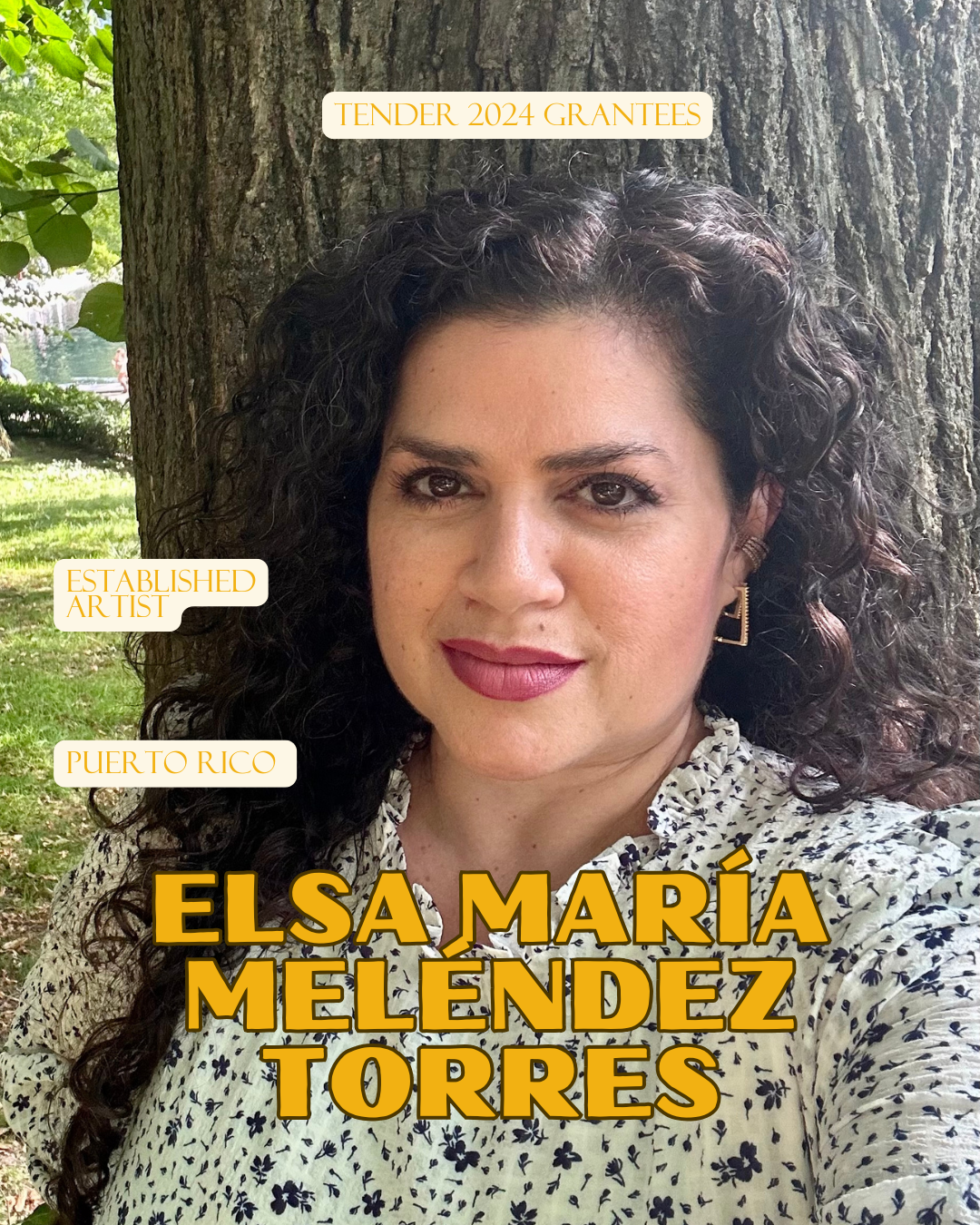
I am Elsa María Meléndez, born in Caguas, Puerto Rico, where I live and work. I have my studio in the traditional urban center of the city, where historical buildings and thematic museums are located, steps away from the public square and the Dulce Nombre de Jesús Cathedral.
In my work, I tell stories of the country and the human condition. The material I use to build my pieces makes the plot more complicated. I attribute this to the context and idiosyncrasies of my surroundings that constantly inform my work. Tensions coexist In the geographic, economic, social, and political borders of Puerto Rico, influencing the way we think and see ourselves as a collective.
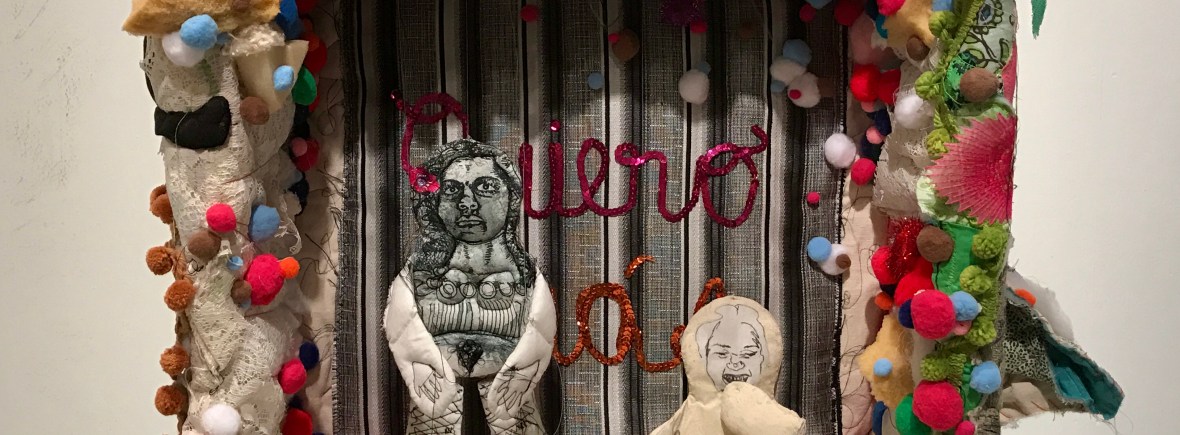
These collective tensions serve as inspiration for my work, as well as the demonstrations and struggles to defend human rights, the decolonization of the body, and the conflicts between the intimate and the public concerning women’s issues and their autonomy. The insubordinate bodies in my production challenge the tradition of needlework by establishing a dialogue between women’s history and the colonial condition of Puerto Rico. I use textiles to create organic forms that become political statements, challenging power relations and constructed representations with which I develop an antithesis to judgments about the body and politically correct behaviour.
The traditionalist nude strengthens the woman’s figure as matron and pillar of the family, and offers multiple plot possibilities that twist the symbolic order and challenge the docility of both the embroidery and the woman. The meticulous thread drawing in the embroidery, and the incorporation of second-hand material propitiate the creation of scenarios in which power structures collapse.


Your body of work reflects a spirit akin to the flamboyant and kaleidoscopic character of Carnival activities celebrated throughout the Caribbean. How does the aesthetic of this socio-cultural phenomenon, along with your exploration of the feminine, relate to what you describe as the “right to doubt,” and having participated in and attended the 15th Havana Biennial in November 2024 after receiving a TENDER grant, do you have any other observations or revelations about the region’s shared cultural aesthetics?
My work is rooted in the essence of identity. I draw from traditions, culture, colloquial phrases, and popular sayings. The work reflects the range of colors and dynamics of the Caribbean. However, the rich coloring and soft and seductive textiles that recall skirts used by bomba and plena dancers contrast with texts that unmask realities and conformism. I use Contrast to question the diversity of layers that we can unearth in a fundamental exercise to understand the violent situations we are going through. Puerto Rico has been a colony of the United States since 1898. Colonized, as I am, ambiguity and doubt persist in my production. I broaden perspectives so that irony and multiple positions can find asylum. I take the pulse of the evolution of women’s image in the liberation from the imposed social-behavioral role, while liberating sewing from the domestic and docile space. My work reflects fury and beauty; stormy waves and hurricane-force impact my formats. I embroider flowers and naked breasts as symbols of strength in various contexts that reclaim one’s body and territory.
The urgency to tell stories of our collectivities was evident in the selection of Caribbean artists with whom I had the privilege of exhibiting at the National Museum of Fine Arts during the 15th Havana Biennial. The works challenge traditional narratives to dismantle the dominant discourse that oppresses the Caribbean. The perception of paradisiacal islands is transformed into works that expose socio-political realities in ancestral histories, testimonies of survival and migration, framed in an aesthetic that reimagines futures from a compassionate and reparative perspective. The aesthetic incorporates an imaginary that alludes to nature, mountains, water movements, and high esteem for manual labor, the construction or compilation of everyday objects representing colonial symbols and collective memories.


In addition to initiatives like TENDER, what other kinds of support or programming geared towards the needs of contemporary creative practitioners would you like to see implemented in the Caribbean?
TENDER’s initiative is commendable because we are currently facing significant external challenges in working with the works of art, challenges which are added to those already existing in each individual artist’s practice. TENDER represents a tool that encourages artists to continue producing work, growing, and consolidating our proposals. Among the emerging challenges are those caused by climate change, which directly affect cultural workers. More powerful hurricanes, and major floods that have caused not only loss of life, but also loss of spaces and historic buildings traditionally used for culture and the development of art. The problem with electricity currently faced by regions in Cuba and Puerto Rico, to mention a few, represents a problem of vital importance as it requires a budget to acquire equipment to provide electricity during routine blackouts. We should consider acquiring solar panels for workshops or shared creative workspaces. Consistent power outages represent a real and current problem. We could also think of a residency program for Caribbean artists where, in addition to encouraging cultural exchange, it could serve as a laboratory where artists can work and conduct research for 2 to 3 months.
Read more from our 2024 TENDER Grantees here!
En Español
Favor de presentarte, cuéntanos un poco sobre donde vives en la región, y compartenos algunas de las ideas y temáticas principales que has explorado en tu práctica artística.
Soy Elsa María Meléndez, nacida en Caguas, Puerto Rico, donde vivo y trabajo. Tengo mi estudio en el centro tradicional urbano de la ciudad, donde ubican edificios históricos, museos temáticos, a pasos de la plaza pública y de la Catedral Dulce Nombre de Jesús.
En mi trabajo cuento historias del país y de la condición humana, el material que utilizo para construir mis piezas posibilita que la trama se complique. Es así como la narración se torna contenciosa, esto se lo atribuyo al contexto y a la idiosincrasia de mi entorno que constantemente informan mi trabajo. En las fronteras geográficas, económicas, sociales y políticas de Puerto Rico cohabitan tensiones que influyen en la forma de pensarnos y vernos como colectividad. Esas tensiones colectivas, así como las manifestaciones y luchas por defender los derechos humanos, la descolonización del cuerpo y los conflictos entre lo íntimo y lo público con respecto a los asuntos inherentes a la mujer y su autonomía, son referentes en mi trabajo. Los cuerpos insubordinados en mi producción retan la tradición de la labor de la aguja, al establecer un diálogo entre la historia de las mujeres y la condición colonial de Puerto Rico. Utilizo textiles para crear formas orgánicas que se convierten en declaraciones políticas que desafían las relaciones de poder, además de construir representaciones con las que desarrollo una antítesis a los juicios sobre el cuerpo y comportamiento políticamente correcto.
El desnudo tradicionalista fortalece la figura de la mujer como matrona y pilar de la familia, ofrece múltiples posibilidades de argumento que tuercen el orden simbólico y retan la docilidad, tanto del bordado como de la mujer. El dibujo de hilo meticuloso en el bordado y la incorporación de material de segunda mano propician la creación de escenarios en los que las estructuras de poder colapsan.
Tu obra refleja un espíritu semejante al carácter colorido y caleidoscópico de las actividades de Carnaval celebrado en todo el Caribe. ¿Cómo se relaciona la estética de este fenómeno socio-cultural, junto con tu exploración de lo femenino, con lo que describes como “el derecho de dudar”? Además, ya que has asistido como participante en el 15 bienal de Habana en Noviembre de 2024 después de recibir la beca de TENDER ¿a partir de esta experiencia tienes algunas otras observaciones o revelaciones sobre la estética cultural compartida de la región?
Mi trabajo se enraiza en la esencia identitaria. Me nutro de tradiciones, cultura, frases coloquiales y refranes populares. La obra recoge la gama de colores y dinámicas caribeñas. Sin embargo, el rico colorido, textiles suaves y seductores que recuerdan faldas y refajos utilizados por bailadoras de bomba y plena, contrastan con textos que desenmascaran realidades y conformismos. Contrastar me sirve para cuestionar la diversidad de capas que podemos levantar en un ejercicio fundamental para entender situaciones violentas que atravesamos.
Puerto Rico es colonia de los Estados Unidos desde 1898. Colonizada, como también soy, la ambigüedad y la duda persisten en mi producción. Amplío perspectivas para lograr que ironías y múltiples posturas encuentren asilo. Tomo el pulso de la evolución de la imagen de la mujer en la liberación del rol social-conductual impuesto, a la vez que libero a la costura del espacio doméstico y dócil. Mi obra también refleja furia y belleza, olas tempestuosas y la fuerza huracanada tienen impacto en mis formatos. Bordo flores y pechos desnudos como símbolo de fuerza en amplia gama de contextos que reclaman el cuerpo propio y el territorio.
En la selección de artistas caribeñas con las que tuve el privilegio de exponer en el Museo Nacional de Bellas Artes en la 15 Bienal de La Habana, quedó constatada la urgencia por contar historias de nuestras colectividades. Las obras desafían narrativas tradicionales para desmontar el discurso dominante que oprime al Caribe. La percepción de islas paradisíacas es transformada en obras que exponen realidades socio-políticas en historias ancestrales, testimonios de sobrevivencia y migración, enmarcados en una estética que reimagina futuros desde una óptica compasiva y reparadora. La estética incorpora un imaginario que alude a la naturaleza, montañas, movimientos de agua y, alta estima a la manualidad, a la construcción o recopilación de objetos cotidianos que representan símbolos coloniales y memorias colectivas.
Además de iniciativas como TENDER, que otros tipos de recursos o programas dirigidos a apoyar las necesidades de profesionales creativos contemporáneos te gustaría que se implementara en el Caribe?
La iniciativa de TENDER es encomiable porque actualmente atravesamos grandes retos externos para trabajar la obra, retos que se suman a los que cada artista individualmente lidia. TENDER representa una herramienta que incentiva a que los artistas podamos continuar produciendo obra, creciendo y consolidando nuestras propuestas. Entre los retos que se han sumado figuran algunos ocasionados por el cambio climático que afectan directamente a los trabajadores culturales, huracanes más potentes y grandes inundaciones que han ocasionado además de pérdidas de vida, pérdidas de espacios y edificaciones históricas que tradicionalmente estaban destinadas a la cultura y al desarrollo del arte. El problema con la energía eléctrica con el que lidian en la actualidad regiones en Cuba y Puerto Rico, por mencionar algunas, representa un problema de vital importancia al necesitarse presupuesto para la adquisición de equipo para contar con energía eléctrica durante apagones rutinarios. Debemos pensar en la posibilidad de adquisición de placas solares para los talleres o espacios comunes de trabajo creativo. Los apagones consistentes representan una dificultad real actual. Podría pensar también en un programa de residencias para artistas del Caribe donde además de incentivar el intercambio cultural pueda servir como laboratorio en el que los artistas puedan trabajar y adelantar investigaciones por un término de 2 a 3 meses.
 fresh milk barbados