IN ENGLISH:
Please introduce yourself, tell us a little bit about where in the region you are based, and share some of the major ideas and themes you engage with in your practice.
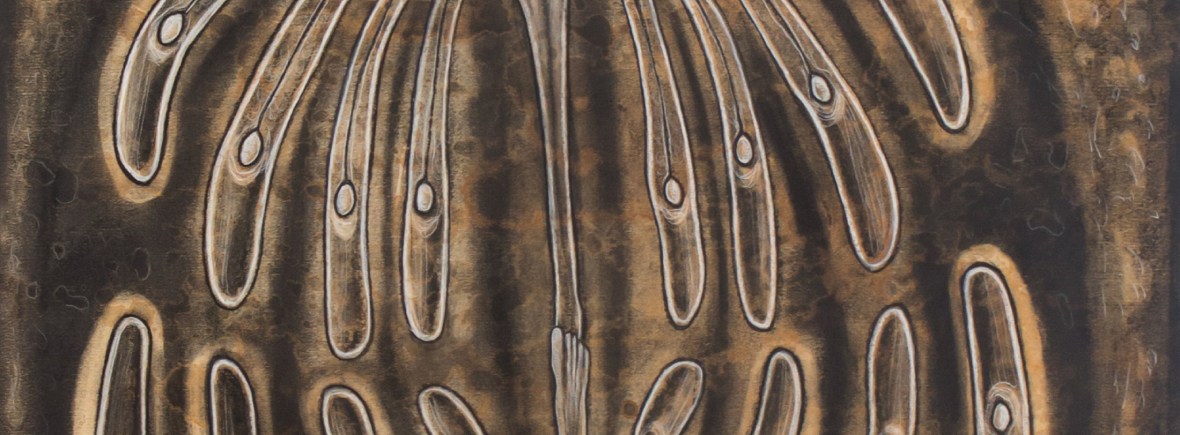
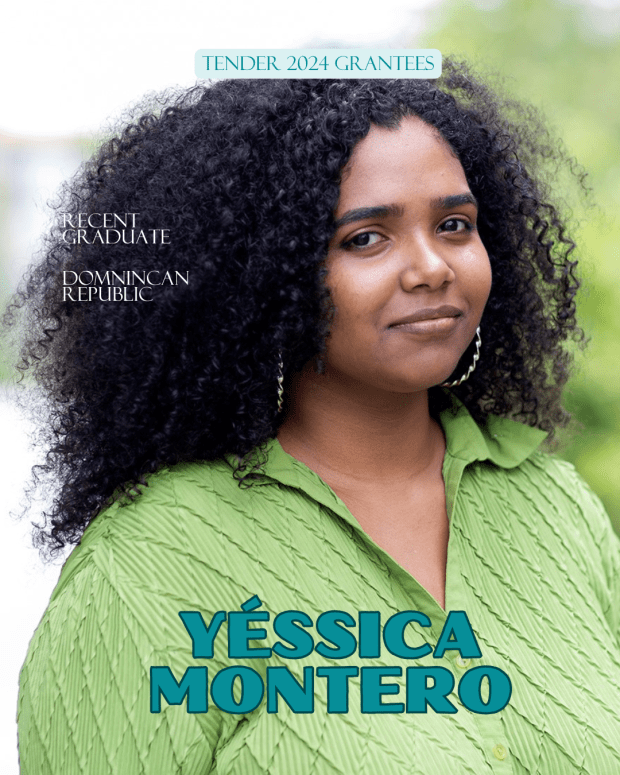
My name is Yessica Montero. I am a visual artist from Bonao, Dominican Republic, currently living between Bonao and Santo Domingo. Being born here in Bonao — a town in the Cibao region full of nature and, unfortunately, mining activity — has greatly influenced the themes that interest me. My work transmits cavities, the primitive, and the night. I create images based on the materiality present in nature, personal memories, and poetic gestures. I seek to create a personal mythology with a body of work composed of drawings, paintings, and sculptures that together suggest other ways of being and existing in the world.


Your drawings reflect a strong synergy between the use of earthy materials and poetic imagery that blurs the supposed divide between human and nature, fertility and decomposition…what are the particular tenets of your politics around gender and decoloniality that inform this synergy?
Rather than divisions between the animal, plant, and human forms, I see our similarities and how we depend on nature, rather than holding onto a false sense of control over it. I don’t distinguish between the fertile and the decomposed, because both participate in the same vital process; what “decomposes” has the potential to create new forms. In nature, I don’t perceive fixed categories; they are fluid and express themselves in shapes, textures, and cycles that, for me, break with binary logic.
I’m interested in returning to the primitive, not as an idealized spiritual return, but as an exploration of other forms of knowledge: those that come from mud, silence, charcoal, myths, and gestures.
I think a lot about the importance of decentralizing hegemonic discourses about nature, art, and Blackness.


In addition to initiatives like TENDER, what other kinds of support or programming geared towards the needs of contemporary creative practitioners would you like to see implemented in the Caribbean?
I would like to see more partnerships, artist residencies, and exchange programs implemented among Caribbean creatives. Although we are geographically close and share many cultural experiences, it can sometimes be difficult to travel, connect, and learn from one another within the Caribbean. Strengthening these ties could significantly enrich our practices and foster greater collaboration and a sense of Caribbean creative community.
Read more from our 2024 TENDER Grantees here!
En Español
Favor de presentarte, cuéntanos un poco sobre donde vives en la región, y compartenos algunas de las ideas y temáticas principales que has explorado en tu práctica artística.
Mi nombre es Yessica Montero. Soy una artista visual de Bonao, República Dominicana, y actualmente vivo entre Bonao y Santo Domingo. Bonao, un pueblo del Cibao lleno de naturaleza y por desgracia también actividad minera, haber nacido aquí ha sido una gran influencia en las temáticas que me interesan. Mi trabajo remite a las cavidades, lo primitivo y la noche. Creo imágenes a partir de la materialidad presente en la naturaleza, las memorias personales y los gestos poéticos. Busco crear una mitología personal con un cuerpo de obras compuesto de dibujos, pinturas y esculturas que en conjunto sugieren otras formas de ser y de estar en el mundo.
A través del uso de materiales terrosos y imaginario poético tus dibujos reflejan una fuerte sinergia que se vuelve borrosa la supuesta división entre lo humano y la naturaleza, la fertilidad y la descomposición… ¿Cuáles son los particulares principios de tu política alrededor del género y decolonialidad que forman esta sinergia?
En vez de divisiones entre cuerpo animal, vegetal y humano, veo nuestras similitudes y como dependemos de la naturaleza, más que sostener una idea de falso control sobre ella. No distingo entre lo fértil y lo descompuesto, porque ambos participan del mismo proceso vital, aquello que se “descompone” tiene potencial de crear nuevas formas. En la naturaleza no percibo categorías fijas, son fluidas y se expresan en formas, texturas y ciclos que para mí rompen con la lógica binaria.
Me interesa volver a lo primitivo, no como un regreso espiritual idealizado, sino como una exploración de otras formas de conocimiento: las que vienen del barro, del silencio, del carbón, de los mitos y del gesto.
Pienso mucho en la importancia de descentralizar los discursos hegemónicos sobre naturaleza, arte y negritud.
Además de iniciativas como TENDER, que otros tipos de recursos o programas dirigidos a apoyar las necesidades de profesionales creativos contemporáneos te gustaría que se implementara en el Caribe?
Me gustaría que se implementaran más alianzas, residencias artísticas y programas de intercambio entre creativos del Caribe. Aunque estamos cerca geográficamente y compartimos muchas experiencias culturales, a veces se vuelve difícil viajar, conectar y aprender unos de otros dentro del mismo Caribe. Fortalecer estos vínculos podría enriquecer significativamente nuestras prácticas y fomentar una mayor colaboración y sentido de comunidad creativa caribeña.
 fresh milk barbados