Please introduce yourself, tell us a little bit about where in the region you are based, and share some of the major ideas and themes you engage with in your practice.
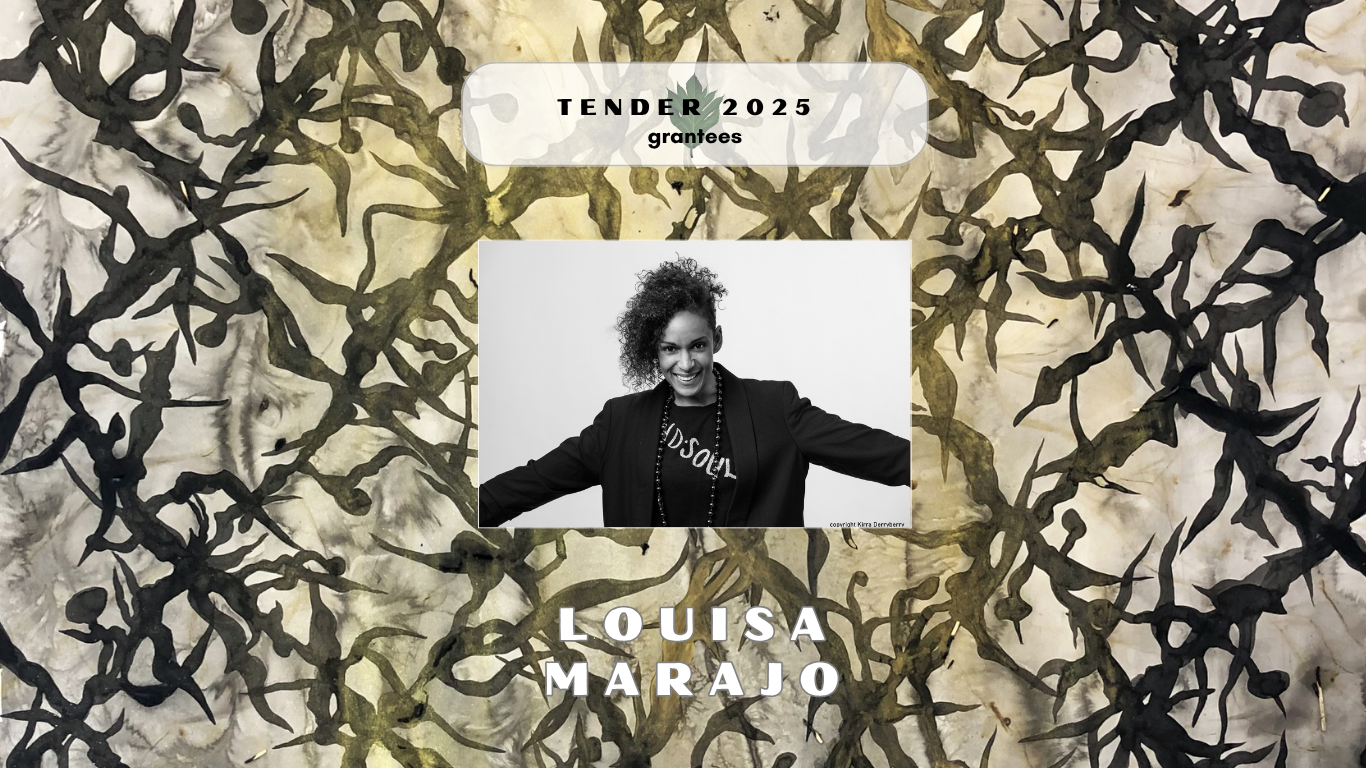
I’m Louisa Marajo, an artist born in Martinique. I live in Martinique and Paris. Somewhere in between, like the ocean.
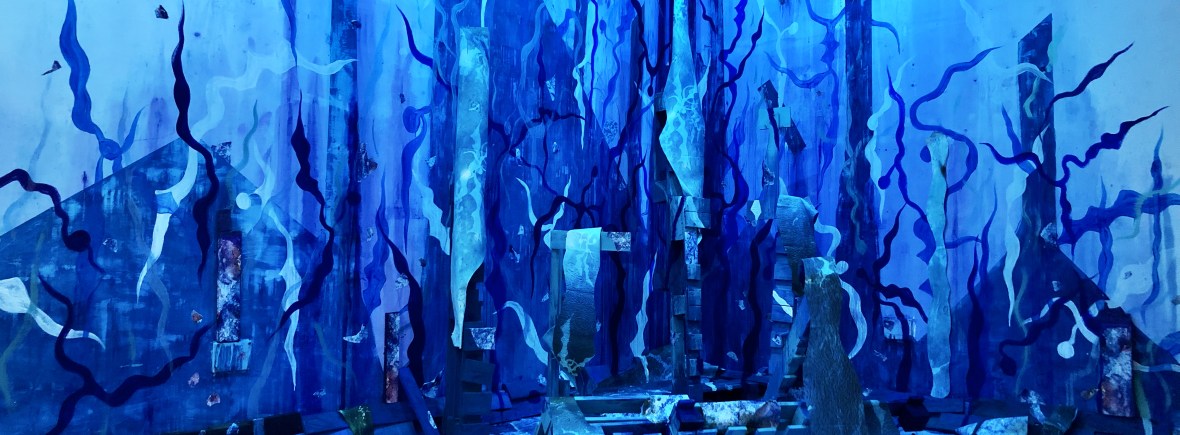
My work revolves around issues related to the sea as a fluid space for the movement of goods, pollution, and bodies, carrying diverse memories to be explored. In particular, I create installations that present these issues in a fictional and forward-looking way. Sargassum, pallets, and containers are the current protagonists of my new fluid narratives.


The ecological aspect of your work and the impact of sargassum invading Caribbean islands is compelling, and also intersects with historical and current social concerns. Can you elaborate on the various contexts in which sargassum becomes a “warning from the sea,” how you express and challenge that notion in your work, and whether your research since receiving the TENDER grant has taken you in any new or unexpected directions?
To explain why I consider Sargassum to be a “warning from the sea,” I will quote excerpts from a text written by the philosopher Dénètem Touam Bona, a text written for an exhibition we organized together in 2023 in Martinique (Tropiques Atrium – Scène Nationale):
“Sargassum sets the seashores ablaze with its golden yellow to cure us of our blindness. (…) We must heed the call of the fiery seaweed and learn from it. (…) The FIRE of sargassum is revolutionary fervor. (…) FIRE, agent of metamorphosis and insurrection.”
FIRE is a warning; it signals both present and impending danger.
Remember, we are all captivated by the FIRE in the fireplace; it is a beauty beyond words and universal: yet, while one may not like fire, no one finds it ugly—no doubt because it is captivating, sublime. Contemplating the fire in front of the fireplace is to feel that SUBLIME, that which surpasses us and transcends beauty.
Sargassum is therefore the FIRE of the sea. It overwhelms us; it surpasses us. It stirs paradoxical emotions within us, and in that sense, it is sublime.
The overwhelming presence of Sargassum on our beaches could therefore be seen as an outpouring of the sublime, an outpouring of something beyond our grasp, an outpouring of a certain beauty that, over time, turns upside down and falls back into the confined reality once we fully grasp its scale and smell.
They then become an outpouring of ugliness because they become stinking and suffocating. And does this outpouring of ugliness prevent us from taking a step back, from gaining the distance necessary to see the scale and complexity of the Sargassum problem?
Through my installations, I offer an experience that breaks free from this stagnant reality and presents “exorcism rituals” (Dénètem Touam Bona) for this Sargassum problem. An exorcism ritual is like a magic spell designed to drive out demons.
Thus, my installations arrange visual elements that allow viewers to experience “dreamlike states of immersion and critical awakening” and to feel “the call of the fire algae and learn from it” (Dénètem Touam Bona).
What are we to make of their liquid insurrection rising from the sea? “Can we raise the alarm without setting it ablaze?” (Dénètem Touam Bona).


Through my installations, as well as my paintings, photographs, and videos—each with their own visual language that addresses this major issue of Sargassum—I bring into art spaces, places dedicated to the “beautiful,” a different kind of excessive beauty that is unsettling. A beauty that people do not want to “feel,” or to see in a different light.
And to see them differently, perhaps I am trying to make this Sargassum overload even more sublime and violent, mirroring the real violence it inflicts on local populations and on the beloved postcard—which is, in itself, the fabrication of a colonial installation that is anything but sublime.
Since receiving the TENDER Grant, I have continued my research on this subversion of the postcard, the behind-the-scenes reality that must be reconfigured to draw lessons for the future we wish to pursue.
I want to travel throughout the Caribbean to encounter this sargassum and the other stories it may unfold across other Caribbean territories. I’ve already started in Guadeloupe, where I was invited for an artist residency. The story is similar with Martinique, but working on-site in Guadeloupe and with the people of Guadeloupe is very important to me, because it creates bonds and solidarity—things we need in times of crisis that we must overcome. I hope to continue this work on other Caribbean islands.


In addition to initiatives like TENDER, what other kinds of support or programming geared towards the needs of contemporary creative practitioners would you like to see implemented in the Caribbean?
We need bridges between our islands. Bridges that transcend language barriers. I would like to see more exchanges between the islands take the form of cross-residencies in the territories and a Caribbean platform bringing together all artists, like a library that connects generations, heritages, and different sensibilities. A free online platform for artists and people working in the cultural sector.

