Please introduce yourself, tell us a little bit about where in the region you are based, and share some of the major ideas and themes you engage with in your practice.
My name is Shannon Alonzo, I’m an interdisciplinary artist based in St. Joseph, Trinidad. I’ve worked in several creative sectors including fashion and film, throughout my career, but now focus solely on my artistic practice. My work engages with ideas of collective belonging and attachment to place. During my formative years, I moved between London and Trinidad, which heightened my awareness of what constitutes home and how/ why one may feel tethered to a particular landscape or environment. Much of my work has stemmed from these questions, exploring in one form or another, what it means to be rooted, in a physical and metaphorical sense. My practice has meandered through these ideas, oftentimes probing absences in archives, in order to make sense of what has been lost.
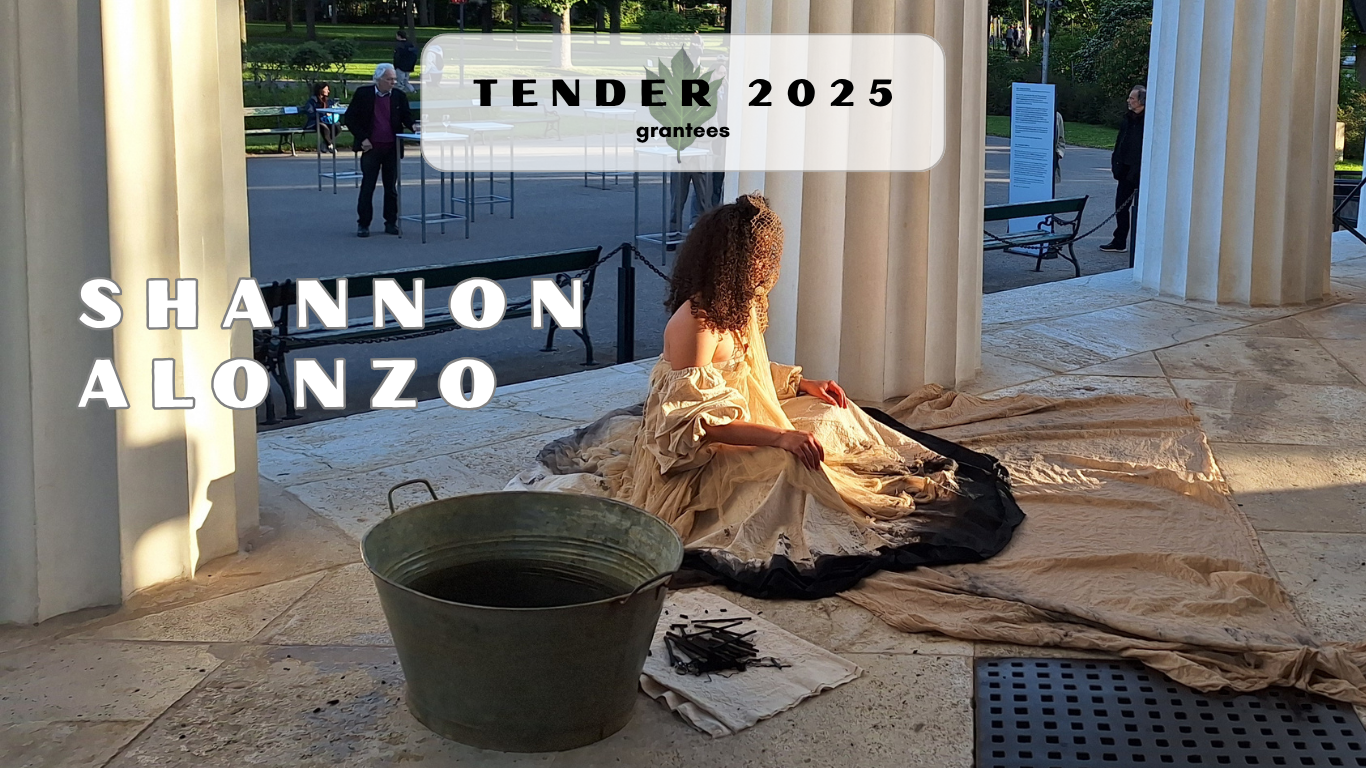
Parallel to these investigations, my practice has focused on female labour and specifically, the contributions of those ancestors whose work remains unseen and unappreciated, as well as the notion of garments as everyday armour. I am fascinated by the intimacy of textiles as an extension of the body which adorns while (literally) absorbing our personal narratives.


The new work you have been developing including your soft sculptures and eco-printed fabrics explores themes of female labour and ecofeminism. Can you share how these projects have been expanding in recent months and also tell us about the ways in which you employ erasure as an artistic methodology?
Recently I have been focusing on the needle: an object which is seen as delicate, fine and, in contemporary contexts, often associated with the feminine. Stitching, darning, embroidery; to envision these tasks is to see women’s work and as such, a ‘soft’ labour, quietly undertaken and (in many instances) deemed unremarkable. But the history of the needle belies an entirely different story, which I find fascinating. This technology made it possible for homo sapiens to shield themselves from various climes, thus paving the way to migrate and assert dominion over the varied ecologies of the globe. The needle, though small and seemingly insignificant, is and has been a powerful tool in the development of civilization. In many ways, it can be a metaphor for the contributions of women to society; often unappreciated, but mighty in their impact. I’ve been experimenting with these ideas, through textiles, drawing and performance. The final shape of the project is yet to unfold, but I’m excited by the direction it may take. The Tender Grant has certainly contributed to giving this project the time and space its needs to develop, thank you!
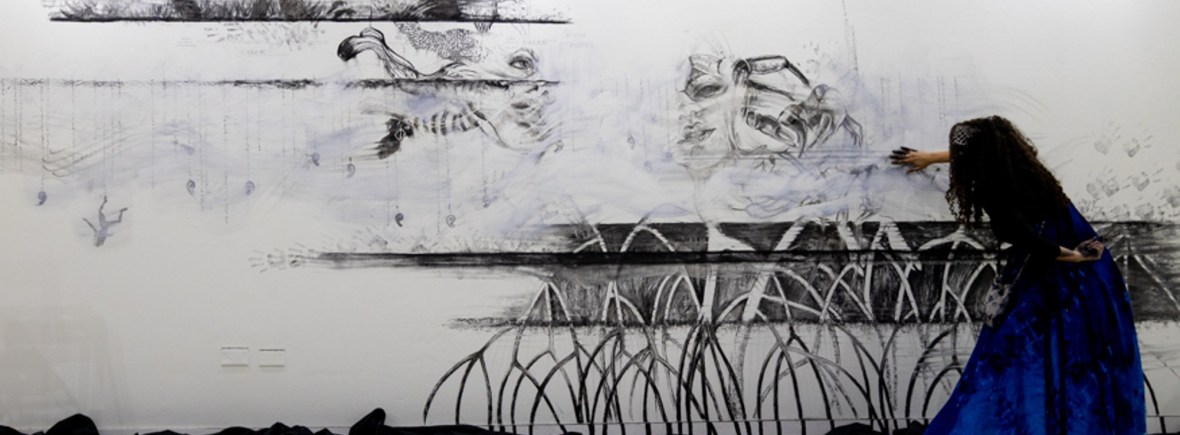
In terms of erasure as methodology, I’ve focused on creating, through my charcoal murals and transformation performances, a space to meditate on non-traditional archives that are dynamic in nature. In this instance, each mural has engaged with the Trinidad Carnival and its role as a vessel of belonging and reconciliation to the land. Through the ephemeral nature of the artwork and the spontaneity of the performance, I hope to engage with the spirit that is shared amongst participants on the Carnival road, as we undertake this annual pilgrimage of rhythm and movement.


In addition to initiatives like TENDER, what other kinds of support or programming geared towards the needs of contemporary creative practitioners would you like to see implemented in the Caribbean?
I would love to see more fully-funded residencies which allow for greater exchange between islands and art spaces. Local studio spaces where the rent is partially subsidised would also contribute to greater flexibility to execute projects and cohesion amongst artists. Additionally, It has been great to see the strides being made towards increasing visibility of artists through regional exhibitions, such as FUZE, and I hope that these opportunities continue to develop and expand.

