Tag: Art
Pictures from Tatiana Flores’ Seminar on Latin American Art from the 1990s – Present


FRESH MILK was privileged to have visiting curator and art history professor from Rutgers University Tatiana Flores on the platform on Sunday August 19th, holding two seminars on Latin American Art from the 1990s – Present.
FRESH MILK’s First Off-Site Performance Artist in Residence – Shanika Grimes
FRESH MILK is happy to be supporting our first off-site performance artist in residence, Shanika Grimes. Shanika is a 2012 graduate of the Barbados Community College’s BFA Fine Art Programme. She is keen to develop her work as a Performance Artist, and because there is little happening here in that field, we would like to offer her a critical space to support her continued development in this area.
Shanika is working to produce one performance every month over a six month period, and will be receiving feedback from an esteemed review panel, using their guidance to further her practice and build a solid body of work. The panel consists of Barbadian artist Ewan Atkinson, curator and art history professor from Rutgers University Tatiana Flores, Trinidadian artist Michelle Isava, and Venezuelan artist Sandra Vivas, all of whom have extensive experience either critically or practically with performance art.
Below are some still shots from the first two performances of her residency.


Shanika Grimes’ Artist Statement:
The stories of other women have become a part of my understanding of the
world; they fuse with my experience, creating a hybrid that seeks to outline the
struggles of womanhood physically and emotionally. For a long time my work
was best articulated in any two dimensional format (printmaking, drawing and
painting); however as of late, it has evolved into the use of my own body and
personality as tools of expression, documented through photography, video and
at times poetry. Through the act of performing, I am able to use personal
inflection as a lens for pieces on gender relations. I enjoy questioning the
categorisation of women from a social standpoint through portraits of women with
animal characteristics. I splice the complex personality of a woman, with the
physical and behavioral characteristics of an instinctive animal. This is done to
outline the absurdity of the unrealistic expectations patriarchal society places on
women. I believe that religion and the law have been manipulated through male
dominance to suppress and ultimately control women. I have begun my
exploration using the multilayered personality of a cat. A black cat symbolizes
both good and evil, both god and demon. It is this duality that outlines the power
and powerlessness and mystery of womanhood.
Review of FRESH MILK VII in Barbados Today – The Colleen Lewis Reading Room and ‘A Negation of Preconceptions’
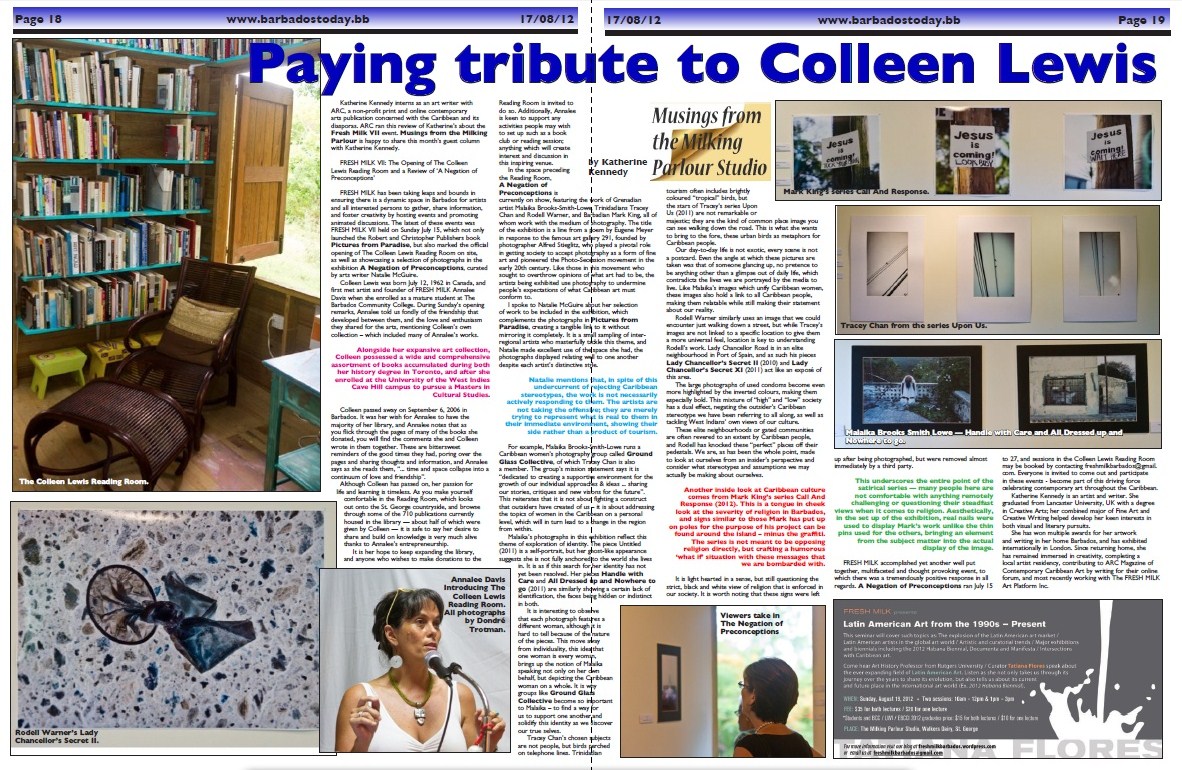
Musings from the Milk Parlour Studio in Barbados Today, August 17th 2012 – Guest Columnist Katherine Kennedy
The Friday August 17th edition of the online newspaper Barbados Today featured an article in the Musings from the Milk Parlour Studio segment by guest columnist and member of the FRESH MILK Team, Katherine Kennedy. The article first appeared on ARC Magazine’s online forum.
The piece focuses on two sections of FRESH MILK VII, held on Sunday July 15th – The official opening of The Colleen Lewis Reading Room, and the exhibition ‘A Negation of Preconceptions,’ curated by Natalie McGuire and featuring the work of Malaika Brooks-Smith-Lowe, Mark King, Rodell Warner and Tracey Chan.
Click here to read the PDF of the article: FRESH MILK VII in Barbados Today – Paying Tribute to Colleen Lewis
Musings from the Milking Parlour Studio: What does Barbados need to create a more dynamic cultural arena? Some thoughts in response to the recent Budget Speech.
for Barbados Today September 2011
Annalee Davis
There’s been lots of chat about the expansion of the cultural industries in Barbados. The Honourable
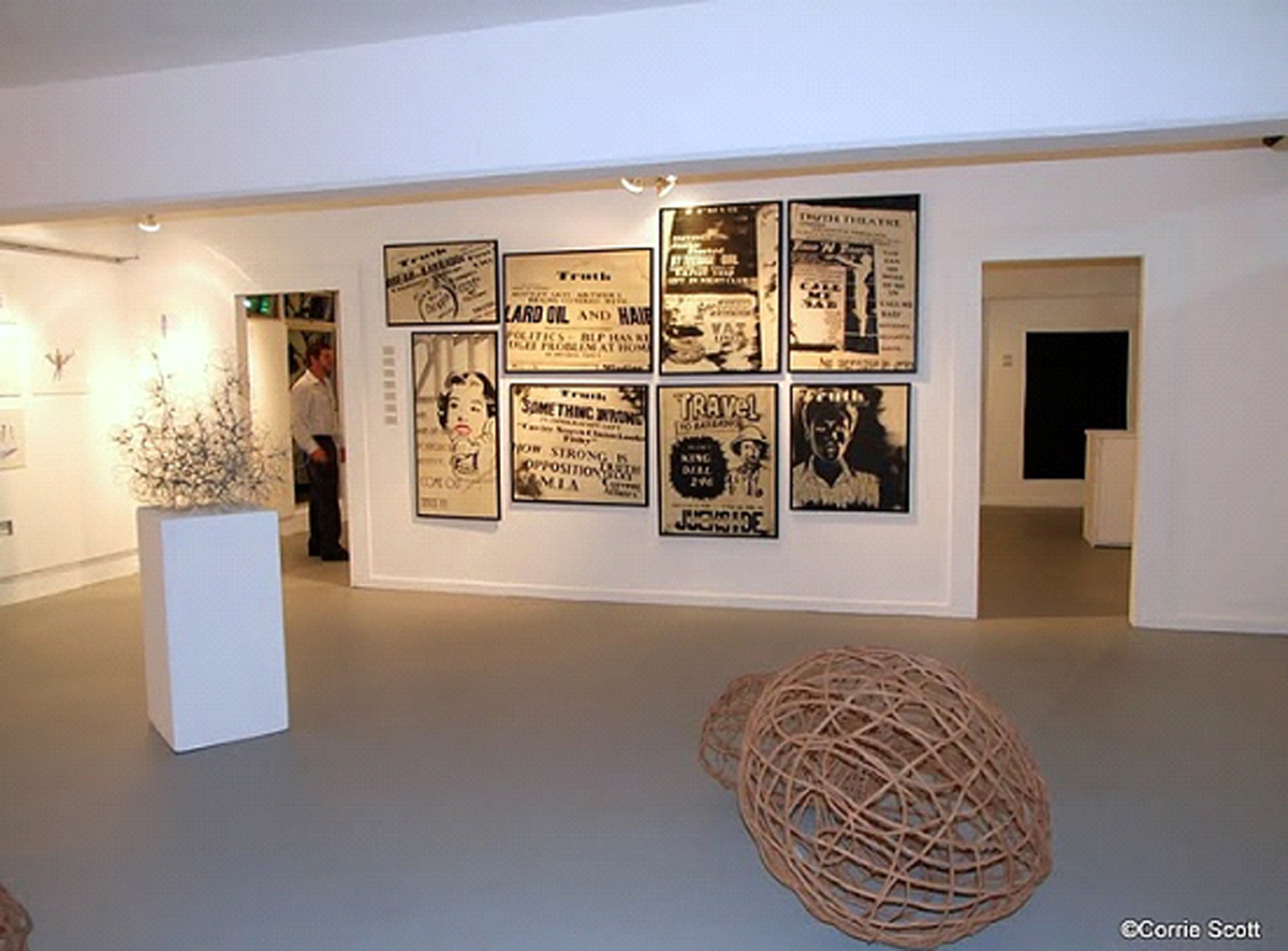
Art Gallery, Morningside, Barbados Community College, 2011. Photo by Corrie Scott
Minister Christopher Sinckler in the 2011 Budget Speech said “that the creative economy ought to be one of the pillars on which our future economic growth must be premised”, The Honourable Minister went on to say that we should move from “being a net importer to becoming a net exporter of cultural services to the World”.[i] To become a net exporter, the government will provide a facility for the borrowing of fifty million dollars to promote, market and distribute the efforts of artists. He also said that the Chinese are keen to develop a home in Barbados for the performing arts. (One can only hope that Barbados will not make the same mistakes that were made in Trinidad re the controversial Chinese built National Academy for the Performing Arts (NAPA) – about which a prominent Trinidadian dancer said, re the quality of the dance floor, “you could snap a toe” while Mas Man, Peter Minshall said it looked like copulating caterpillars.)
Trinidadian journalist and blogger, Andre Bagoo [ii] wrote of the many technical blunders in the NAPA

Cover of recently published Art In The Caribbean – An Introduction.
building and said that the estimated budget of TT$500 million might need to be augmented with an additional TT$80 million dollars to correct the structural flaws. Trinidadians want to know why their government spent so much money without consulting stakeholders on the ground about what they actually need.
I was reminded of this Trini controversy when Bajans recently started to question the wisdom in building a Caribbean Wax Museum at Pelican Village to showcase full sized distinguished Caribbean persons in wax. The wax museum idea made me think about the students who graduate with Bachelor of Fine Art degrees from the Barbados Community College, and who wonder about post-graduation sustainability – both intellectually and economically. They wonder what infrastructure exists in the larger society to make room for artists who want to show cutting edge work and engage critically with the wider national and regional society and by extension, the world. The question really is about sustainability.

Opening of Tonya Wiles’ exhibition at Zemicon Gallery, Barbados
While the whole world is discussing sustainability we too in the Caribbean need to speak about how cultural practice can be sustainable and think carefully about the kinds of policies we craft. For example, do our ministers who formulate policies about culture, engage with culture? Do they have an art collection, attend theatre, read Caribbean literature? Do they know what they are talking about in relation to the economics of culture? Do our Ministers understand the cultural industries…do the decision makers know how to shape a dynamic cultural environment? How many people in the cultural industries are making a comfortable living in Barbados today? What will a wax museum and a performing hall do to expand the critical space and to increase sustainability for the practitioners? How can we plan for the expansion of an industry that we don’t understand? And how can we become a net exporter of culture globally when we don’t even have a sustainable industry locally, far less regionally and globally?
We cannot even get CARIFESTA right!
An extensive strategic plan titled “Reinventing CARIFESTA” was prepared for the CARICOM taskforce on
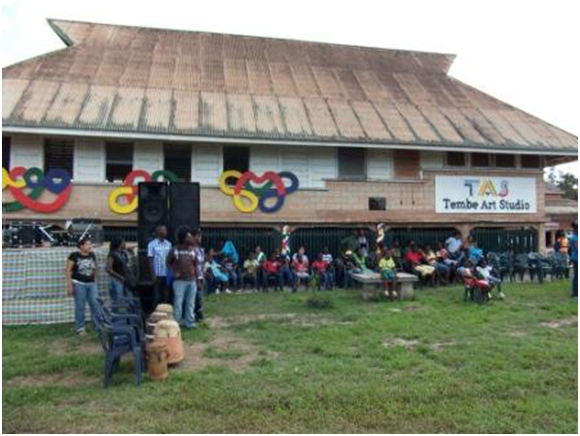
Tembe Art Studio, Moengo, Suriname
CARIFESTA in 2004. It was suggested that CARIFESTA was ripe for change and needed to become a more competitive festival.[iii] Recommended changes have not been implemented and the report is probably collecting dust on some CARICOM shelf in Georgetown. Why solicit the research in the first place if there is no intention to use it?
I attended CARIFESTA X in Guyana in 2008 and witnessed Nobel Laureate, Derek Walcott engage in a heated exchange with the President of Guyana about the futility of CARIFESTA and the disgraceful ways in which Caribbean governments treat their artists most of the time and that it was unacceptable for the state to pretend to support art at a regional festival for one month every several years and then completely abandon their artists the rest of the time. Why, he asked, should our actors and actresses have to wait tables in restaurants for two years and then participate in a regional arts festival so that Caribbean governments can feel they are doing something great for culture every couple of years?
So what do we need?
It’s not like we don’t have a history. We have a history. I recently read the publication, “Art in the Caribbean – An Introduction” by Anne Walmsley and Stanley Greaves (2010 New Beacon Books, UK) which offers a useful time line highlighting notable art activity across the entire region from the seventeenth century – showing the art history in the Caribbean. In relation to Barbados some of the salient moments include the following: in 1948 Golde White set up the Barbados Arts and Crafts Council; in 1933 the Barbados Museum and Historical Society opened; in 1949, the Barbados Museum Art Gallery opened with Neville Connell as curator; in 1965, the Pelican Art Gallery was opened by the Barbados Arts Council, in 1977 the BCC opened a Division of Fine Arts and a few years later, in 1977, DePam was founded. Barbados hosted CARIFESTA in 1981 and the NCF was born in 1983 which then opened the Queens Park Gallery two years later in 1985. Representing Artists was formed in 1992, the Art Foundry in 1997, Zemicon Gallery opened in 1999 and the EBCCI in 2006. So there’s been institutional activity, yet many of them no longer exist and the ones that do, don’t have the capacity to take the visual arts where it needs to go.
In addition to the above list, many international exhibitions have been organised, often outside of the region, curated by people also from outside of the Caribbean. The exceptions to this rule were some of the first regional shows including the Biennial of Caribbean and Central America in the Dominican Republic at the Museo de Arte Moderno in 1992, 1994 and 1996 – which then became a Triennial in 2010; Carib Art which happened in Curacao in 1994 and Lips, Sticks and Marks at the Art Foundry in Barbados and in Trinidad at CCA7 in 1998. These were followed by a suite of externally driven exercises such as Karibische Kunst Heute, Kassel, Germany, 1994; Caribbean Visions, USA and Exclusion, Fragmentation and Paradise – The Insular Caribbean, Madrid, Spain – both in 1998; Identities – Artists of Latin America and the Caribbean, France, Mastering the Millennium: Art of the Americas, Argentina and Washington DC in the USA, ARTE di nos e ta, Rotterdam, the Netherlands, all in 2002; Caribbean Realities II – Roots and Routes, South Carolina, USA, 2003; Infinite Island – Contemporary Caribbean Art, Brooklyn Museum, NYC, 2008; Global Caribbean, Miami, USA, Sete, France and Puerto Rico, 2010/2011; Rockstone and Bootheel – Contemporary West Indian Art, at Real Art Ways in Hartford, Connecticut, USA and Wrestling with the Image, Washington DC, USA, 2011, among others.
Some of the difficulties with this amount of external activity is that (i) the most current work being produced by Caribbean practitioners is rarely seen in the region, creating a drag effect, a chasm if you will, between the cultural producers who continue to produce, often for an international audience, and their local audience who are ignorant of that production (ii) we don’t control how we are seen, read, and understood in the international arena, – and it’s not always done on our terms (iii) the local space is often not expanded as a result of these external activities – long term relationships are not born out of them.
Externally driven approaches in relation to the region are nothing new. Conversations about the Caribbean have been taking place outside of the Caribbean for centuries. We came into being because Europe chose to ‘born us’ and as Lloyd Best wrote, we are the first place where the economy preceded the society….so if things seem a little upside down, it’s because they are.
My concern is, how can we as post-independent states, ie. as owners of this region; shape and nurture dynamic centres of cultural activity nationally and throughout the archipelago in sustainable ways.
To my mind, artist led initiatives have been blazing the trail and allowing us to know ourselves better, bonding via the internet, erasing the boundaries in its wake. We saw the birth of several platforms that evolved (i) in direct response to the lack of properly functioning formal national structures (ii) out of a need to mitigate isolation and (iii) to build bonds across linguistic divides in the region and across the ponds to a wider Caribbean that exists in increasingly substantial numbers in the cities of North America, the UK and Europe. The artist led initiatives that I am aware of include the Image Factory in Belize (1990’s), and in the noughties, Popup Studios and The Hub in the Bahamas, the Ghetto Biennial in Haiti, Headphunk in St. Lucia, Groundation in Grenada, Alice Yard in Trinidad, Tembe Art Studio in Suriname, Representing Artists (RA in 1992) and more recently, Projects and Space and FRESH MILK in Barbados.
The reason these spaces matter is because they shape a more dynamic environment, they facilitate a greater awareness of who we are and they build a critical environment. Even though they are doing important work, there are still a lot of blanks to be filled in and the informal sector cannot address all of our needs on their own steam, such as turning us into net exporters of culture to the world. Major Caribbean writers have been successful because they left the region and moved to a country where the infrastructure was in place to support their craft including publishers, editors, critics, bookshops and readers – a complete functional environment that allows them to live off of their writing. We cannot export our cultural products when none of the architectural framework is in place to allow us to be viable on a local level first and when our cultural products don’t have an established value in the global arena.
So the question to be asked at this moment, or the conversation to be had, before we build the wax museum and the big Chinese building on Spring Garden is, what do the arts need in Barbados to flourish? How can we build an environment that will nurture a culturally dynamic space and how can artists become sustainable? If I cannot put food on my table and pay my bills, I cannot afford to make my art or craft, write my book, sing my song or act in my play. This is a wonderful moment in the region, there is a lot of exciting work being made. But in many ways, we are still at step one when it comes to the required architectural support and cannot, as the Trini dancer said, afford to ‘break a toe” when we still learning how to walk. So tread carefully, Ministers.
[ii] http://www.trinidadandtobagonews.com/blog/?p=2698
[iii] Reinventing CARIFESTA: A Strategic Plan, Keith Nurse 2004
[iii] Reinventing CARIFESTA: A Strategic Plan, Keith Nurse 2004
 fresh milk barbados