Article featured in the Cyprus Dossier: Notions of common/wealth versus single/wealth

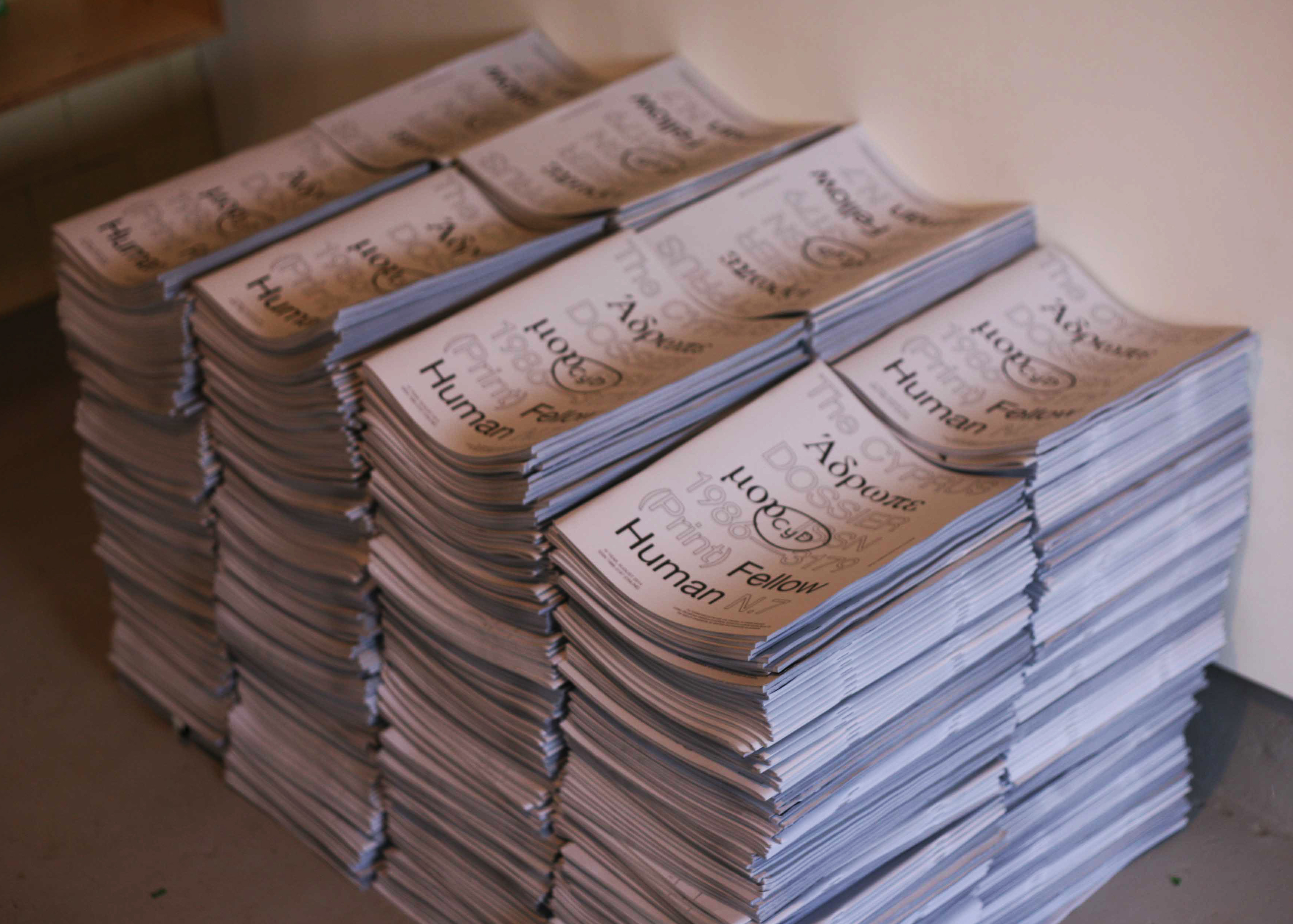
The 7th edition of the Cyprus Dossier, launched this summer during the International Artist Initiated project hosted by the David Dale Gallery in Glasgow, Scotland, featured an article titled ‘Notions of common/wealth versus single/wealth‘ written by Fresh Milk‘s founding director Annalee Davis. Read the piece below:
CD crop

“Global art is not only polycentric as a practice, but also demands a polyphonic discourse. Art history has divided the world, whereas the global age tends to restore unity on another level. Not only is the game different: it is also open to new participants who speak in many tongues and who differ in how they conceive of art in a local perspective. We are watching a new mapping of art worlds in the plural which claim geographic and cultural difference.”[1]

The Fresh Milk Art Platform Inc., founded in 2011, is located on a dairy farm on the island of Barbados in the Southern Caribbean. We are one of several artist-led initiatives continually emerging across the archipelago supporting contemporary art production and the shaping of critical communities in the region. The local contexts these Caribbean artist networks respond to is the lack of formal institutions to meet artists’ needs, such as a national art gallery or a museum of contemporary art with a mandate to support the production, discussion and visibility of contemporary practice.

Artists in the region are functioning in an arena with relatively small local audiences, underdeveloped primary art markets and, in most cases, non-existent secondary markets for contemporary art works with very few spaces to exhibit. A challenge this poses is that much of the artwork produced in the region is exhibited, appreciated and valued outside of the region where more developed creative environments function, creating a gap between artists and their domestic audiences. Artist-led initiatives have been working to bridge this gap by creating opportunities for creatives to engage with local audiences.

Fresh Milk responds by (i) offering residencies for local artists to produce work and nurture critical thinking, (ii) expanding the reading room to acquire material focusing on contemporary practice from within the region and around the world, not available anywhere else on the island, (iii) activating the reading material through establishing mentoring opportunities for young people who write critical reviews of the book collection shared through the Tumblr page – Fresh Milk Books – The books that make us scream!, and (iv) staging public events providing local audiences and artists moments to engage with each other, along with other activities.

CD1

While recognizing the importance of nurturing the local environment, Fresh Milk is equally committed to participating in larger and more diverse conversations regionally. Common obstacles rippling throughout the region’s creative sectors act as unifiers, giving rise to geographical connections among artists across the Caribbean who share in these frustrations and resulting in the formation of many of these artist-led initiatives and collaborations.

Fresh Milk’s online interactive mapping project reconfirms our regional identity and functions as a transnational exercise demonstrating the presence of a myriad of arts entities across the Caribbean from the nineteenth century till now – refuting the fact that we are a divided space as determined by former colonizers who used dominant languages to separate the region linguistically. Consolidating regional art spaces into one, the readily accessible online map also acts as a crucial educational and research tool for locating historical and current data about Caribbean art, broadening both local and international knowledge, awareness and collaboration. Mapping becomes an act of resistance as we become our own cartographers, insisting on connection rather than division and relationship as opposed to discord. The map also resists the notion that there is a central and singular art world of which we are peripheral.

While it maybe true that, as Amanda Coulson wrote in the Frieze April issue, ‘The idea that anything intellectual happens here is anathema to the brand we have projected to the outside world’,[2] this map opposes the reductive way in which the Caribbean has been branded repeatedly as an exotic playground for people from elsewhere.

Fresh Milk has worked with partners in the region to establish a regional residency project called Caribbean Linked.[3] This project brings artists throughout the region to make and exhibit art, engage in critical dialogue and build relationships, while using the arts to foster a more unified Caribbean.

As our relationships spread beyond the insular Caribbean, our programming expands to reflect the shifting dynamics of our engagements. Nurturing our core foundation in the Caribbean equips us to build robust, meaningful connections internationally – not seeking validation, but rather mutually enriching cultural exchanges. Fresh Milk is continually fostering critical conversations with entities throughout the Caribbean, in the Global South and traversing the North/South axis of the world to holistically realize a healthy cultural ecosystem.
Continue reading

FRESH MILK XIV: Tobias Ostrander’s Presentation

Chief curator at the Pérez Art Museum Miami, Tobias Ostrander, giving his presentation. Photo by Dondré Trotman.

Chief curator at the Pérez Art Museum Miami, Tobias Ostrander, giving his presentation. Photo by Dondré Trotman.

Fresh Milk invites you to view this four part documentation of the presentation by Chief Curator at the Pérez Art Museum Miami, Tobias Ostrander, who spoke at our public event FRESH MILK XIV, which took place March 20, 2014.

Tobias addressed the new Miami museum’s design, current and upcoming exhibitions, and research and programming related to the Caribbean, including the upcoming presentation of the exhibition “Caribbean: Crossroads of the World.”

Tobias also discussed his interests in developing future collaborations with art institutions across the Caribbean region as part of his thinking on a “Strategic Regionalism” which seeks to create increased dialogue between the Southern United States, Caribbean basin and Central and South America.

Take a look at the videos below:

Fresh Performance Chapter 3: Performance & Power

FRESH MILK in collaboration with Damali Abrams presents Chapter 3 in the Fresh Performance Project: Performance & Power

Power is a complex notion. There are so many systems of power that seem to control our destinies with so many groups feeling oppressed for various reasons.  In American society, which cultural critic bell hooks describes as ‘white supremacist capitalist patriarchy’, power is held foremost by wealthy straight white men. The quality of the institutions we have access to such as healthcare, education, and employment are dependent upon our ability to appeal to those in power for whatever scraps they choose to share with the rest of us.

Thankfully there are many groups and individuals who continue to insist upon quality of life for all people, as there have been throughout history. Many artists utilize performance as a means to confront these systems and speak truth to power. However I think that Ewan Atkinson and Seyhan Musaoglu‘s work challenges systems of power in more subtle ways.

Ewan Atkinson’s work plays on the Caribbean tradition of masquerade. As in the custom of playing mas, Ewan intends to challenge the viewer to step out from the comfort zones of our day-to-day personas. Though he does not view this as a subversive act, I think that challenging our comfort zones is often a great catalyst for personal and collective transformation. Since Ewan’s use of performance is mostly in performative photographs, he is hesitant to call it performance art. Definitions and classifications can be very slippery as we saw in Chapter One of this documentary, Defining Performance. But for the purposes of The Fresh Performance Project, I am interested in art that includes performance of any kind.

Seyhan Musaoglu’s work explores the radical possibilities of sound art performance. I met Seyhan years ago when we both showed our work at Synthetic Zero events at Bronx Art Space. Later she included my work in SØNiK Fest,  a festival of sound, video, interactive media, and live performance that she curates.

Seyhan and I were scheduled to meet up for her interview during the beginning of the Occupy Gezi protests in Turkey. When she told me that we had to reschedule because she was attending daily solidarity protests outside of the Turkish consulate in midtown Manhattan, I decided to film her at a protest. It seemed like the perfect opportunity to document the performance of the power of the people. Though Seyhan is quick to point out that her art is separate from her activism, her work is rooted in feminism and deconstructing elitist art world ideas. She is also a classically trained guitarist who emphasizes the importance of learning the structure of music before experimenting with creating new sounds or noise art. It was especially exciting to be able to include two examples of Seyhan’s sound art as the soundtrack for this chapter of the documentary.

Damali Abrams

About Seyhan Musaoglu:

Seyhan Musaoglu is a multi-media artist whose work spans the fields of live performance, sound art, film and video, and 2-D media. Drawing inspiration from diverse sources ranging from science fiction imagery, to fashion, to modern dance choreography, her work investigates the gap between sound production and music composition, contemporary feminist theory, and the history of avant-garde filmmaking. She has been performing widely with collaborations celebrated internationally in genres of sound and experimental noise. She is also an innovative independent curator, and is the founder of the sound, new media & peformance festival {SØNiK}Fest. Seyhan holds an MFA from Parsons the New School for Design. Some of the venues her work has been presented at are: The Kitchen (NYC), New York Studio Gallery (NYC), Lit Lounge (NYC), Curta 8 Film Festival (Brazil), and Istanbul’s famed venue, Babylon. To see some of her work: http://www.seyhanmusaoglu.com/

About Ewan Atkinson:

Ewan Atkinson was born in Barbados in 1975. He received a BFA from the Atlanta College of Art in 1998 and is currently pursuing an MA in Cultural Studies at the University of the West Indies, Cave Hill.  He has exhibited in regional and international exhibitions of Caribbean contemporary art, including most recently the 2010 Liverpool Biennial, “Wrestling with the image: Caribbean Interventions” at the Art Museum of the Americas in Washington DC, and “Infinite Islands” at the Brooklyn Museum in New York.  Atkinson has taught in the BFA program at the Barbados Community College for over a decade. He also works as a freelance illustrator and designer.

Videobrasil Meeting | Caribbean: Archipelagos for Thought

brazilpanel

Caribbean: Archipelagos for Thought, May 14 2013, at 8:00 pm São Paulo time

To the Martiniquais writer Édouard Glissant, the geography of Antillean archipelagos represents a template for thinking a “creole world” whose dealings with the others are no longer outlined by instances of multiculturalism and compartmentalized identities, but rather by coexistence and dissolution processes. Glissant builds on the Antilles’ insular multitude to propose a model of “archipelago-thinking” as opposed to “continental thinking,” whose nature is hegemonic or homogeneity-inducing.

Annalee Davis, director of Barbados’ Fresh Milk independent center for art practices; Andrés Hernandez, a Cuban-born, Brazilian-based curator; and Mirtes Oliveira, a member of the G27 study group will convene at São Paulo’s Ateliê 397 to relate the notion of “archipelago thinking,” coined by Glissant, with their own contemporary art practices.

This initiative will usher in a new phase in Videobrasil’s audience interface, featuring horizontal, collaborative, investigative, and debate-oriented platforms.

Featuring: Andrés Hernandez, Mirtes Oliveira, Annalee Davis. Mediated by Sabrina Moura. English and Portuguese will be spoken. No simultaneous translation available. On the occasion, issues of ARC Magazine dedicated to Caribbean art, will be available to public consulting.

 About the guests

Andrés I. M. Hernández is a curator and independent producer who holds a master’s in Visual Arts. He was coordinator of the exhibition department at Wilfredo Lam Contemporary Art Center (which hosts the Havana Biennial); the executive coordinator of the curating department at the São Paulo Museum of Modern Art; and recently the production and institutional relations coordinator at Luciana Brito Galeria.

Annalee Davis is a Barbadian visual artist whose work addresses the Caribbean’s postcolonial heritage. She was the founder of Fresh Milk, an independent Barbados-based association that supports research exchange initiatives and fosters productions by contemporary creators. She is a part-time professor at the Barbados Community College’s baccalaureate program. As an artist, she has featured in the São Paulo and Havana biennials (both in 1994), among other shows.

Mirtes Marins de Oliveira was the coordinator of the Baccalaureate in Fine Arts (1997-2006) at Faculdade Santa Marcelina (Fasm), and the implementer and coordinator, from 2003 to 2013, of the master’s program in visual arts at the same institution. Presently, she is a professor at the masters and doctoral courses in Design at Universidade Anhembi-Morumbi. The G27 group, of which she is a member alongside Ana Maria Maia (Tomie Ohtake Institute), Regina Parra (FAAP) and Tainá Azeredo (Casa Tomada), studies the manifold aspects of curating processes and practices, by means of historical research on art and design shows held since the emergence of 20th century vanguards.

About Ateliê 397

Founded in 2003 by a group of visual artists (Bruna Costa, Rafael Campos Rocha and Sílvia Jábali), Ateliê 397 promotes the diffusion, production and exhibition of contemporary art. It holds art shows and interdisciplinary events involving video art sessions, performances, happenings, music concerts, publication of artist books, and other forms of contemporary art experimentation. Currently coordinated by Marcelo Amorim and Thais Rivitti, the facility plays the role of spreading debate, creating opportunities for artwork to be shown, and presenting productions by young artists from across Brazil.

About Associação Cultural Videobrasil

Associação Cultural Videobrasil is an international reference center on art from the Southern hemisphere. Created by curator Solange Oliveira Farkas, the former director of the Museum of Modern Art of Bahia, Associação maintains a partnership with SESC. The two institutions have jointly promoted a biennial International Contemporary Art Festival, focused on the geopolitical South circuit, and exhibitions such as Isaac Julien: Geopoetics (São Paulo, 2012), Joseph Beuys – We are the revolution (São Paulo and Salvador, 2010/2011), and Sophie Calle – Take care of yourself (São Paulo and Salvador, 2009). Other ongoing productions of the partnership include the Videobrasil Residency Program; Videobrasil Authors Collection, a series of documentaries; and Caderno SESC_Videobrasil, an annual contemporary art publication. Devised as a platform for production, dissemination and discussion of contemporary art from the Southern hemisphere, by means of partnerships and dialogue with curators, artists and other institutions, Associação also maintains a network of residency partners and educational actions aligned with the Festivals and exhibitions it conceives.

This meeting is an opening activity of a series from the Public Programming segment, a new Videobrasil’s front, dedicated to foster platforms for widening of access and research on contemporary arts and culture.

Fresh Performance Chapter 1: Defining Performance

FRESH MILK in collaboration with Damali Abrams presents Chapter 1 in the Fresh Performance Project: Defining Performance

Fresh Performance is an experimental documentary that I am working on through a seven-month off-site residency with Fresh Milk. Each month I will interview one artist in New York City and one in the Caribbean concerning different aspects of performance in their respective practices and post the videos online. I will then edit them all into a full-length documentary. My intention is that as artists we can connect with and learn from each other through our work. In my own practice, I use my art as my therapy, my school, my playground and also my surrogate when I need to communicate things that I do not know how to communicate otherwise. Through this project I am studying performance via conversations with a group of exceptional contemporary artists. I am extremely grateful for this opportunity to collaborate with Fresh Milk and all of these talented makers.

Art itself is a nebulous concept that eludes definition. Performance art is that much more precarious. I am drawn to performance because it can encapsulate just about anything else from any medium or discipline. It seems to be somewhat lawless and anarchic. But that is my own personal definition. In chapter one of Fresh Performance, artists Sandra Vivas, originally from Venezuela, currently living in Dominica, and Nyugen E. Smith from Jersey City, share their own definitions.

I met with Nyugen at 59th and Columbus in New York City on a very chilly early Spring day. It was far windier than expected and we scouted around for a location that would not provide too many audio challenges.  We tried inside of a mall, a hotel lobby and finally Nyugen suggested a tunnel at Central Park. It turned out to be perfect.

Sandra Vivas and I met on Google Hangout. Despite many technical difficulties, she and I had a very warm conversation. It was more like speaking with a friend I had known for years rather than someone I was meeting for the first time online. Sandra shared that while she enjoys living in Dominica, she feels very isolated creatively and has not done any performance art there.

This project is a work-in-progress and as stated above, Fresh Performance is intended to remain an open discussion so please feel free to share any questions, comments and critiques.

Damali Abrams

About Nyugen Smith:

With a fearless approach, multi-media artist Nyugen Smith embraces the role of cultural informer and champion of social justice. Drawing heavily on his West Indian heritage, Smith is interested in raising consciousness of past and present political struggles through his work which consists of sculpture, installation, video and performance. Growing up in Trinidad, Smith was profoundly influenced by the conflation of African cultural practices and the residue of British colonial rule encountered in his daily life on the island. Responding to this unique cultural environment, Smith’s art is a reaction to imperialist practices of oppression, violence and ideological misnomers.

About Sandra Vivas:

Sandra Vivas was born in Caracas, Venezuela in 1969 and is currently living in Dominica West. Sandra has developed a body of work that has performance as a permanent thread through her paintings and videos. Irony and humour play a fundamental role in her work and she is considered a feminist performance pioneer in Venezuela. From 1997-2008, Sandra taught at the Universidad Central de Venezuela, in the Undergrad and Graduate Programs of the Escuela de Artes, teaching Contemporary Art History. Sandra studied painting and ballet and has a Bachelors Degree in Art History from the Universidad Central de Venezuela and a Masters Degree in New Genres from the San Francisco Art Institute, California, USA.