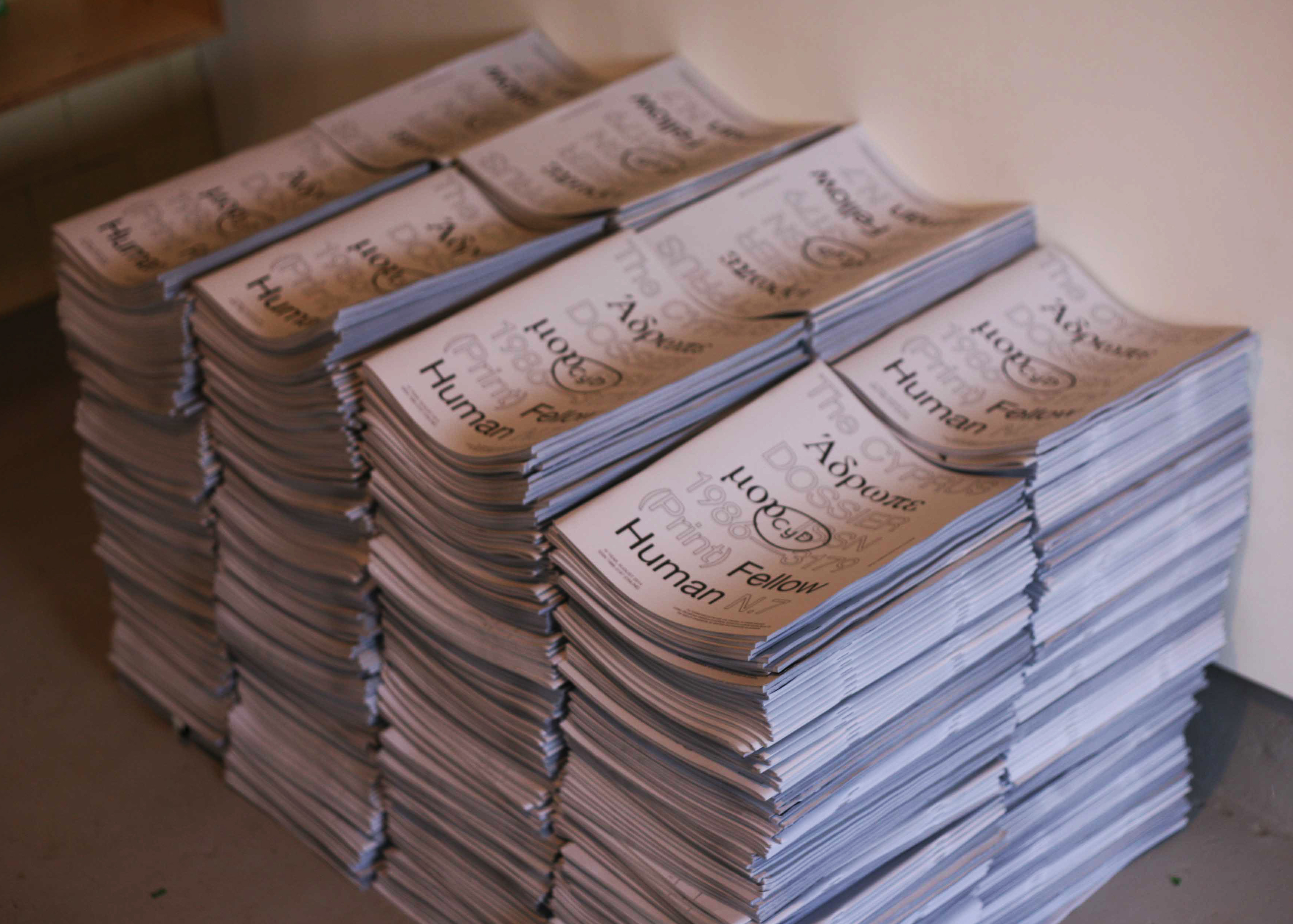
The 7th edition of the Cyprus Dossier, launched this summer during the International Artist Initiated project hosted by the David Dale Gallery in Glasgow, Scotland, featured an article titled ‘Notions of common/wealth versus single/wealth‘ written by Fresh Milk‘s founding director Annalee Davis. Read the piece below:
“Global art is not only polycentric as a practice, but also demands a polyphonic discourse. Art history has divided the world, whereas the global age tends to restore unity on another level. Not only is the game different: it is also open to new participants who speak in many tongues and who differ in how they conceive of art in a local perspective. We are watching a new mapping of art worlds in the plural which claim geographic and cultural difference.”[1]
The Fresh Milk Art Platform Inc., founded in 2011, is located on a dairy farm on the island of Barbados in the Southern Caribbean. We are one of several artist-led initiatives continually emerging across the archipelago supporting contemporary art production and the shaping of critical communities in the region. The local contexts these Caribbean artist networks respond to is the lack of formal institutions to meet artists’ needs, such as a national art gallery or a museum of contemporary art with a mandate to support the production, discussion and visibility of contemporary practice.
Artists in the region are functioning in an arena with relatively small local audiences, underdeveloped primary art markets and, in most cases, non-existent secondary markets for contemporary art works with very few spaces to exhibit. A challenge this poses is that much of the artwork produced in the region is exhibited, appreciated and valued outside of the region where more developed creative environments function, creating a gap between artists and their domestic audiences. Artist-led initiatives have been working to bridge this gap by creating opportunities for creatives to engage with local audiences.
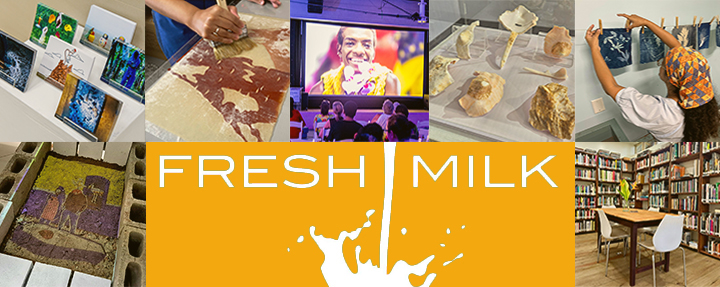
Fresh Milk responds by (i) offering residencies for local artists to produce work and nurture critical thinking, (ii) expanding the reading room to acquire material focusing on contemporary practice from within the region and around the world, not available anywhere else on the island, (iii) activating the reading material through establishing mentoring opportunities for young people who write critical reviews of the book collection shared through the Tumblr page – Fresh Milk Books – The books that make us scream!, and (iv) staging public events providing local audiences and artists moments to engage with each other, along with other activities.

While recognizing the importance of nurturing the local environment, Fresh Milk is equally committed to participating in larger and more diverse conversations regionally. Common obstacles rippling throughout the region’s creative sectors act as unifiers, giving rise to geographical connections among artists across the Caribbean who share in these frustrations and resulting in the formation of many of these artist-led initiatives and collaborations.
Fresh Milk’s online interactive mapping project reconfirms our regional identity and functions as a transnational exercise demonstrating the presence of a myriad of arts entities across the Caribbean from the nineteenth century till now – refuting the fact that we are a divided space as determined by former colonizers who used dominant languages to separate the region linguistically. Consolidating regional art spaces into one, the readily accessible online map also acts as a crucial educational and research tool for locating historical and current data about Caribbean art, broadening both local and international knowledge, awareness and collaboration. Mapping becomes an act of resistance as we become our own cartographers, insisting on connection rather than division and relationship as opposed to discord. The map also resists the notion that there is a central and singular art world of which we are peripheral.
While it maybe true that, as Amanda Coulson wrote in the Frieze April issue, ‘The idea that anything intellectual happens here is anathema to the brand we have projected to the outside world’,[2] this map opposes the reductive way in which the Caribbean has been branded repeatedly as an exotic playground for people from elsewhere.
Fresh Milk has worked with partners in the region to establish a regional residency project called Caribbean Linked.[3] This project brings artists throughout the region to make and exhibit art, engage in critical dialogue and build relationships, while using the arts to foster a more unified Caribbean.
As our relationships spread beyond the insular Caribbean, our programming expands to reflect the shifting dynamics of our engagements. Nurturing our core foundation in the Caribbean equips us to build robust, meaningful connections internationally – not seeking validation, but rather mutually enriching cultural exchanges. Fresh Milk is continually fostering critical conversations with entities throughout the Caribbean, in the Global South and traversing the North/South axis of the world to holistically realize a healthy cultural ecosystem.
Continue reading


 fresh milk barbados