Announcing the 2026-2027 Fresh Milk Ecological Archives Fellow

The Fresh Milk Art Platform is thrilled to announce architect and designer Karla Nicholls as the recipient of our pilot Ecological Archives Fellowship!

This opportunity grants $10,580 BBD for a local independent researcher to create a mixed-media bibliography and narrative of memory dedicated to the Barbadian landscape, its transformation over time, and a genealogy of the eco-critical activism carried out to protect the integrity of our various ecosystems.

Congratulations, Karla! 

Read the full jury report below


Jury Report: The Ecological Archives Fellowship

Background

This pilot fellowship is made possible with joint funding from Peter Lewis, through the Colleen
Lewis Reading Room Slow Reading Programme, and from the Peter Moores Barbados Trust. Fresh Milk shared the Call for Applications for this pilot Fellowship on the 1st of June
2026, which received extensive engagement through our social media platforms prior to the
submission deadline of June 26th.

Eligibility of candidates was based primarily on 1) being locally based in Barbados 2)
being 21 years of age or older, and 3) being available to work eight hours a week in the Colleen
Lewis Reading Room, archival institutions or conducting field work. The Call was extended to
applicants from a variety of backgrounds, such as (but not limited to) environmental/conservation scientists; journalists; librarians; archivists; art researchers etc.

Procedure

The first stage of the application asked interested applicants to respond via Google Forms to
three questions regarding the following criteria:

Precedence of work — The Application should provide a concrete background of formal
and/or informal: studies, work, and/or activities relevant to the themes of the
Fellowship.
Criticality — The Application should demonstrate a reflexive perspective that leads
through constructive questioning, curiosity and innovative contextual understanding.
Eco-centric Creativity — The Application reflects a creative approach to the Fellowship
goals which centres experimentation and a desire to re-think the role the Archives and
storytelling can have in nurturing a relationship of stewardship to our ecosystems

In contrast to the high amount of interest and engagement with the publicity of the
Call for Applications, a total of seven applications were received.

Submissions were reviewed by the Jury, consisting of:

The Fresh Milk team (representing 1 vote);
Peter Lawrence Thompson, Fresh Milk Advisory Board member;
Dr. Robin Mahon, retired Director and Professor Emeritus at the Centre for Resource
Management and Environmental Studies (CERMES), at the University of the West Indies
(UWI), and Chair of the Executive Group of The Land Conservancy Barbados;
Dr. Carla Daniel, Director of Public Awareness and Education with the Barbados Sea
Turtle Project.

The Jury convened virtually on July 8th to discuss the results and determine the shortlist of
candidates. Four candidates from distinct professional backgrounds stood out, and were invited to the interview stage:

Justin Jeffers, Landscape Architect, Sculptor and Photographer
Shernise Mayers-Springer, Assistant Conservator within a national digitisation initiative
with a background in Environmental Science
Karla Nicholls, Architect and Designer
Fatima Patel, Geography Teacher

On July 23rd each candidate was invited to a 30-minute interview process with the Jury,
facilitated by Annalee Davis, in which they were asked to present their specific proposal more
in-depth, as well as respond to questions pertinent to the objectives of the Fellowship, such as
using mixed-media methods and avenues of research, gathering oral histories, creating the
structural legibility for the archive, and making the archive relevant to a variety of audiences.

After a thorough elaboration amongst the Jury, a consensus was reached: we are thrilled to
award our inaugural Ecological Archives Fellowship to Karla Nicholls!

Comments

Karla’s clarity and sense of purpose were especially strong during the interview stage,
complementing her written submission, which established her compelling emphasis on an
environmental justice approach. Her multidisciplinary background, spanning visual arts and
design, architectural projects, civic environmental activism, and research consultancy, makes
her a promising fit to lead the foundation of this inaugural Fellowship. The jury determined that
Karla clearly understood the Fellowship’s goal to create a mixed-media bibliography and
narrative of memory dedicated to the Barbadian landscape, its transformation over time, and a
genealogy of eco-critical activism.

Please join us in extending our heartfelt congratulations! We look forward to engaging with
Karla over the next eleven months and sharing insights into her process across our platforms.


About Karla Nicholls:
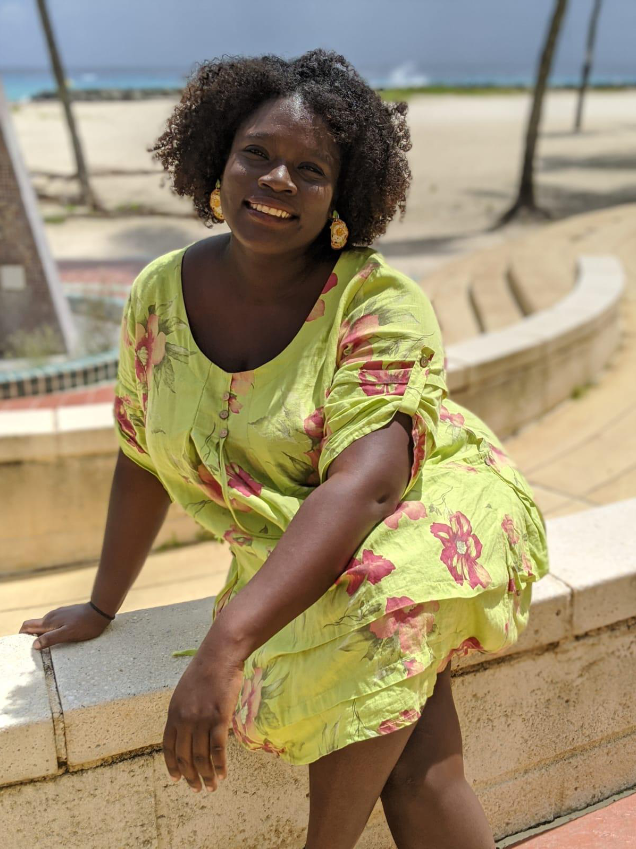
Karla Nicholls is a Barbadian born designer, writer and social entrepreneur who designs and
creates intricate, contemporary Caribbean pieces inspired by and using natural and sustainable
materials as well as utilizing new techniques such as digital fabrication.

As well as making a splash in the design space Karla is also active in the areas of sustainability,
youth engagement and community service and has volunteered at several local organizations.
Open Call: Fresh Milk Ecological Archives Fellowship

The Fresh Milk Art Platform is launching its pilot Ecological Archives Fellowship, granting $10,580 BBD for a local independent researcher to create a mixed-media bibliography and narrative of memory dedicated to the Barbadian landscape, its transformation over time, and a genealogy of the eco-critical activism carried out to protect the integrity of our various ecosystems.

Duration: 11 months [July 2026 — June 2027]
48 weeks @ 8 hours/week

Read more below, and see the application form here.

Background

This pilot fellowship is made possible with joint funding from Peter Lewis, through the Colleen Lewis Reading Room Slow Reading Programme, and from the Peter Moores Barbados Trust.

The 2026 Slow Reading Programme serves to activate Fresh Milk’s Colleen Lewis Reading Room (CLRR), in remembrance of Colleen Lewis and her legacy on the 20th anniversary of her passing. Colleen’s research, specifically her essay Pictorial Depictions of the West Indian Landscape in the 18th century and early 19th century: the sublime, the picturesque, the romantic (Barbados Museum & Historical Society Journal, Volume 50, 2004), invites us to pay particular attention to our landscape after centuries of artistic and ideological interpretation by foreign gazes and extractive interests.

The Colleen Lewis Reading Room, located in St. George, Barbados at The Fresh Milk Art Platform, is a site outfitted for accessing, cross-referencing and discussing thousands of texts relating to the genealogy of arts, literature, art history, theory, Caribbean history and critical thought — ranging from local, regional and international spheres. It provides an avenue to interrogate the social questions and challenges of our times.

The 2026 inaugural Ecological Archives Fellowship seeks to augment the library by establishing a collection of scholarly and creative materials focussed on the environment, which will also be facilitated in part on the Fresh Milk website.

This Fellowship stems from Ariella Aïsha Azoulay’s work Potential History: Unlearning Imperialism (2019), which presents the notion of “cocitizens” as those who “care for the common world they share with (…) others and are committed to dismantling the principle of differentiality that organises it”. The political principle of differentiality is recognised as being exemplary in the Barbadian historical context — citing Hillary Beckles’ work Britain’s Black Debt (2013) — as amongst the first legally constituted “offshore outpost” territories of the New World. She explains “People started to be governed differentially from others, by other people whose rights were inscribed in the worlds that the governed were forced to build and within which they were denied the right to feel at home.” This principle enabled people living in the mainland (Europe) “not to associate themselves with forms of brutal violence… even when they directly benefited from them.” (pg. 35-36)

Azoulay’s work, which aims to “reject imperialism’s conceptual apparatus altogether” presents an unorthodox approach to the archives, positioning it not as a neutral site, but as a technology. Potential history “is a form of being with others, both living and dead, across time, against the separation of the past from the present, and history from politics.” (pg. 43) The arts, and the archives of the development of the cultural ecosystem in the Caribbean, is indispensable to the work of defining the principles of our citizenship, working within this enmeshment of imperial history and politics: “Art should be understood as a world-building set of activities irreducible to the creation of discrete objects. Through these activities, people’s place in a shared world and their right to this place are carved.” (pg. 140)

This interdisciplinary archive seeks to counteract the generalised narratives of “passivity” in the Barbadian context, by highlighting the lineage of proactive and engaged ecological activism, demonstrating resistance to the touristification of the small island, both currently and historically.

It also seeks to include resistance to overdevelopment and usurpation of our land, through the eyes of scholars, educators, journalists, musicians, artists, poets, politicians, ecologists, biologists and activists cognisant of some of the island’s most compromised physical assets including:

  • Coastal areas
  • Mangroves
  • Parks
  • Public beach access points
  • Gullies and forests

Also considering the presence in our socio-economic matrix of artificial landscapes such as:

  • Agricultural lands
  • Wind and solar farms
  • Golf courses

Fellowship Goals

 Design a research framework that generates an inspiring perspective on the intersections of science, art and culture, in order to exalt our historical and current civic relationship to our natural environment.

 Consolidate an initial compilation of archival material related to the specific theme of Barbadian ecology, and its relevant socio-cultural and political-economic intersections.

 Including, but not limited to: public and community archival materials; informal oral histories and diaries; published academic articles; visual, musical, theatrical and literary arts; archival videos and photographs.

 •  Promote awareness of our historical and current civic relationship to our environment in a way that is broadly accessible and counteracts the isolated silo effect between both different generations, and different knowledge sectors.

As this is a pilot Fellowship, a desired outcome specific to this first iteration (developed in collaboration with the Fresh Milk team) is to determine an overarching understanding of i) how to best disseminate and publicly engage an Ecological Archive, and ii) what local conditions and approaches are necessary in order to guarantee continued independent research, including encouraging contributions from a community-led, citizen science approach.


Eligibility

  • Applicants must be 21 years of age or older.
  • Applicants must be based in Barbados.
  • Applications are welcomed from a variety of backgrounds, such as (but not limited to) environmental/conservation scientists; journalists; librarians; archivists; art researchers etc.
  • Applicants must possess research skills and integrity, as well as strong communication skills and tech literacy (Google suite, internet research, Zoom; ability to record audio preferred, but not required).
  • As the Fellowship is intended to support independent investigation, Applicants cannot use Fellowship funds to conduct research on behalf of another institution, corporation or nonprofit organisation.

Review Process

  • June 1st: Applications open.
  • June 26th [26/06 Midnight AST]: Applications close
  • July 7th/8th: Shortlisted candidates notified.
  • July 28th: Final decision made.
  • July 31st: Public Announcement of selected Fellow.
  • August 1st: Fellowship commences

The applications will be reviewed by the Fresh Milk team; Fresh Milk Advisory Board member, Peter Lawrence Thompson; and two external Experts: Dr. Robin Mahon, retired Director and Professor Emeritus at the Centre for Resource Management and Environmental Studies (CERMES), at the University of the West Indies (UWI); and Dr. Carla Daniel, Director of Public Awareness and Education with the Barbados Sea Turtle Project.

The applications will be evaluated based on the following criteria:

 Precedence of workThe Application should provide a concrete background of formal and/or informal: studies, work, and/or activities relevant to the themes of the Fellowship.

 CriticalityThe Application should demonstrate a reflexive perspective that leads through constructive questioning, curiosity and innovative contextual understanding.

 Eco-centric CreativityThe Application reflects a creative approach to the Fellowship goals which centres experimentation and a desire to re-think the role the Archives and storytelling can have in nurturing a relationship of stewardship to our land.


Timeline

Phase 1 — Gathering

[July/August/September/October]

  • Establish research plan
  • Conduct site visits and online research
  • Create a database of recorded oral accounts

Phase 2 — Organising

[November/December/January/February]

  • Determine and populate the technical and narrative structure to organise the materials gathered, thinking through the practical and aesthetic needs of hosting and using a mix-media and interdisciplinary archive as technology.

Phase 3 — Sharing

[March/April/May/June]

  • Generate and carry out an accessible format and strategy that can be used to disseminate the Ecological Archive, in a way that raises awareness, engagement and relevance for the general public and practitioners across the respective disciplines.

For example, this can include a public event, a video series, a printed zine, a community workshop series etc.


Commitments of Fellow

Schedule: The Fellow is available to work either 1 full day a week, or 2 half days a week for the 11 month period.

Site-based work: The Fellow’s work hours must be undertaken in the CLRR, or when appropriate, to the archival institutions or field work.

Reporting: The Fellow will commit to provide content once a month in the form of brief reflections and videos/photographs of their process, created in collaboration with Fresh Milk’s content specialist.


Release of Funds

  • Forty percent (40%) — $4,232 — will be awarded upon mutual completion of the grant agreement.
  • Twenty percent (20%) — $2,116 — will be awarded upon completion of phase 1.
  • Twenty percent (20%) — $2,116 — will be awarded upon completion of phase 2.
  • Twenty percent (20%) — $2,116 — will be awarded upon completion of final report submission.

The Fellowship funds are intended to be used at the Fellow’s discretion, as well as to cover expenses related to local travel to the CLRR and other locations of research.


How to Apply (Form)

To apply, please fill out the Google Form application form by midnight, June 26th.

Main questions:

1.In 250-500 words, describe your background and interest as it relates to the themes and work of ecology, eco-critical activism and archival practices in the Barbadian context?

2.In 400-800 words, describe your perspective as it relates to our historical and current civic relationship to our natural environment.

3.In 500—900 words, share your ideas to pursue the Fellowship goals, and vision for how the Archives and storytelling can be experimented with in order to nurture a relationship of stewardship to our land.