drea brown’s Residency – Week 2 Blog Post

US-based poet drea brown shares her second blog post about her Fresh Milk residency, which is part of a new partnership between  Fresh Milk  and the John L. Warfield Center for African and African American Studies at the University of Texas in Austin. This week, despite coming with a plan for her residency, she has found herself responding in unexpected ways to the space, and has been compelled to continue writing about Phillis Wheatley – responding to the gaps in history and giving way to the ‘ghosts’ that haunt her poems. Read more below:

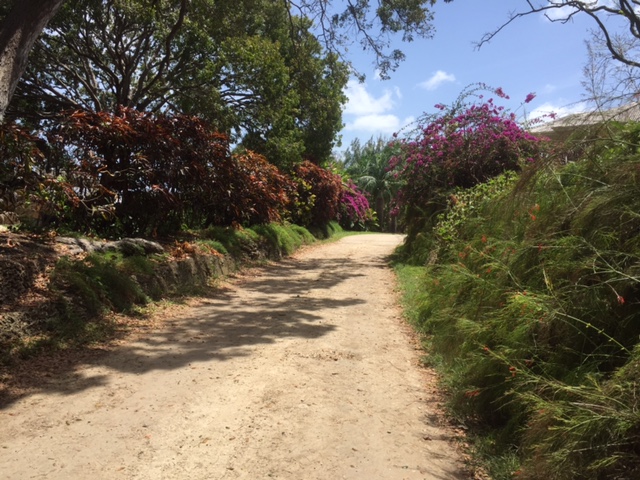
The walk to the studio

I came here with a plan. But, the poems that have come since my arrival are not the poems I intended. Each morning I make my way to the studio listening to leaves murmuring in the early breeze, I sit at a blue desk facing windows wide open to a winding hillside, and the poems come. Sometimes they are unwelcome visitors knocking for entry, sometimes to write them is comfort, but at all times they feel necessary, like work I am continually called to do. They are long—pages and pages of unfurling stanzas, raw and full of secrets, ragged line breaks; they are not the poems I imagined. But poems, like the ghosts that live in this ink, want what they want, and who am I not to oblige.

Phillis Wheatley

Dear reader, Phillis Wheatley will not let me be. I have made peace with this, and realize in some ways to write these poems is to work toward my own healing. The blues of the studio, its tables and doors and corner rocking chair, the blues of Bathsheba in the east, of Accra in the south, they remind me of this. And so I write and read incessantly, at the studio, in my flat, with my feet in the sand near lapping water, as if it is the only way to breathe. Perhaps in this second week, that is what it has been—a way to let go and take in again and again.

What Audre Lorde said remains true: poetry is not a luxury. It is a tool of survival, a means to find some kind of freedom.

__________________

This residency is supported by the John L. Warfield Center for African and African American Studies

Fresh Milk welcomes drea brown to the platform in partnership with the Warfield Center

Fresh Milk in collaboration with the John L. Warfield Center for African and African American Studies at the University of Texas at Austin is pleased to launch their first international residency partnership, and welcomes US-based poet drea brown to the platform between April 19 – May 10, 2017.

About drea brown:

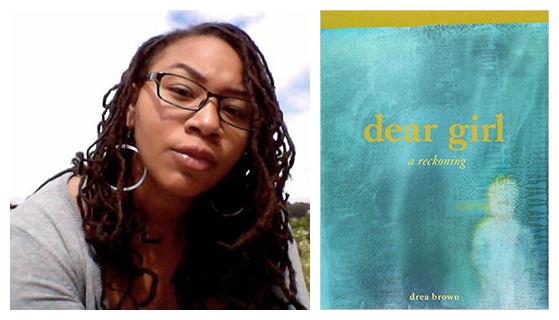
Originally from St.Louis, drea brown is currently a PhD candidate in African and African Diaspora Studies at UT Austin. Her work has appeared in a variety of literary journals most recently Stand Our Ground: Poems for Trayvon Martin and Marissa Alexander and Southern Indiana Review. drea is also the winner of the 2014 Gold Line Press poetry chapbook competition judged by Douglas Kearney. Her chapbook dear girl: a reckoning was released in 2015.

Excerpt from research statement:

My research explores Black women poets’ use of grief and memory as devices to reconstruct cultural histories and subjectivity. I posit this remembering often calls for other ways of knowing that defy Western logic and linearity and instead privilege ideas of the sacred, collapsed notions of time, and lifted veils between worlds of the living and dead. I offer that to take up the task of remembering and revision, black women poets must confront hauntings of a racial and sexualized past that continually imprint on the present. Using a black feminist methodology I apply close readings and formal analysis that take into account lived experience and social, emotional and spiritual climates as conditions of lyric construction. Through this I demonstrate how ghosts in this poetic lineage are not just deceased or missing persons; they represent evidence of injustice and unrest, serving as erasures or reminders of what is not there but should be. Though haunting is frightening, ghosts are not always malicious, and at times are evidence of divine manifestation or future possibility. I position black women’s poetry as sites of haunting that bear indelible markings of grief in memory, arguing that they make a unique contribution to the genre of elegy.

__________________

This residency is supported by the John L. Warfield Center for African and African American Studies

Dorothea Smartt’s Residency – Week 3 Blog Post

Barbadian-British poet and live artist Dorothea Smartt shares her third blog post about her Fresh Milk residency. Highlights of the week included hearing US artist Ellen Gallagher deliver an artist talk at the Barbados Community College and managing to hold a ‘Community Constellations’ workshop facilitated by Sonya Welch Moring, despite its postponement due to serious flooding afflicting Barbados on the eve of its 50th Independence celebrations. Read more below:

My week started with my first ever visit to Barbados Community College, a place so many Bajan artists and creatives have passed through. I was excited, arriving just in time to hear Ellen Gallagher begin her talk. Before I came on this residency, I’d thought of my poems, still in draft form, written in response to pieces in her retrospective exhibition AxME [Tate Modern, 2013]. I’d been engrossed by her imagery and the collage and layering she so often employs. I was particularly taken with Monster one of her collaborative 16mm projections from the sequence Murmur ; the Watery Estatic series; and the large Bird In Hand portrait. I was drawn back again and again to sit with and explore her work.

I listened to Ellen speak about the making of, and process that birthed her Oh Susannah painting. One of the first things that resonated, was her saying she’d had no intention of being an artist – because she hadn’t known then that it was something you could become. She went to Oberlin College, studied the history of sailing and oceanography. This led to her being on a sail ship travelling the Caribbean sea – the US Virgin Isles. It was only after this she enrolled in art school. She found community off-campus, with poets and writers like Sharan Strange, a co-founder of The Dark Room collective. The only non-writer in the group, Ellen put up her work during their Salon events, with readings from authors like Samuel R. Delaney and Ntozake Shange. I was startled – these are all writers I have some kind of connections to. They and/or their works have made a pivotal impact on my journey to becoming a poet-artist.

I find myself wondering if the seemingly abstract pieces I’ve written, drawing on her imagery, aren’t in some way connected with my more obvious ‘Panama poems’. Perhaps if I were to re-visit them now, they could be edited to say something about the very watery world of Canal construction: the torrential rainy season that drenched everything in Panama?; creating Gatun Lake (the size of Barbados)?; the flooding of the valley and the subsequent underwater world?; the two-week voyage from Barbados to Colon, that some did not survive; and of course the two oceans that kissed when the canal opened.

Ellen quoted Delaney, History is not a single file stutter, explaining that history is not a fixed thing, but rather it’s like a net over the world, with closures and openings. Being here at the culmination of Independence celebrations you can’t help thinking of history. Of the gaps and silences of Bajan history. I posted Prof. Sir Hilary Beckles anniversary lecture Cuffee’s Stool to my Facebook page, for the sense he talked, and the insights he offered – not least how to be engaging when delivering a history lecture!

The rain. Caan talk bout dis week an’ not talk bout de rain! ‘Bout how much floodin went on. How half a’ Cin-Cin front door did drown out! How roads turn t’rivers, and new potholes get gouge out by water. How in d’midsts of Independence, St Joseph (issa year now?) still ain’t got nuh water! And CBC put on ah advert from B’dos Water Authority, straight after The Reveal dun! An advert of smiling BWA staff, wishing we ‘Happy Independence!’ – widout a care in de worl’! So my planned Tuesday workshop, get postpone to Friday, at WKD Beach Lofts up pon d’big roof patio. It was small but mighty!

Sonya and her peer facilitator Katherine, expertly guided Danilo Oliviera, Yvonne Weekes, Sonia Williams, and myself through the techniques of mapping relations; that is, Constellations work. After we all introduced ourselves, Sonya said a little on the history of Constellations. Then she straight away got us into things by asking us to pair-up and invite our partner to ‘represent’ someone in our lives we had a question or difficulty with. I invited my partner to ‘represent’ Jay, an ex-lover and friend who after a long period of silence had phoned unexpectedly a few days before. Guiding “Jay” by the shoulders, I placed them in a physical position on the roof, relative to me, that I thought suited our situation. My partner, representing “Jay” then began to intuitively move and speak as they felt to. It was interesting how spot-on much of what “Jay” said was, and some of what was said, and where they re-positioned themselves, was surprising based on my knowledge of them.

We all finally ended up working on a constellation suggested by my research and Panama poems. Someone represented ‘men who went to Panama and never came back’, another ‘my father’ and the third ‘my project’ – I observed. With Sonya guiding everyone, asking the right questions and picking up on aspects of the dynamic unfolding between these ‘characters/elements/things’ and myself, an amazing pattern emerged. I was reminded, for example, how my creative practice is never purely abstract or removed from me/my experiences. That the juice in this Panama project of mine, is in exploring, imagining and re-imagining my life and personal family history – that is how I will achieve something universal, something that speaks to our humanity.

The following day I had a wonderful Skype dialogue with members of Fundacion Casa Matria in Panama City. Despite my almost non-existent Spanish, and thanks to Valentina’s able English and translating, we ended a two-hour Skype excited by the role re-working the lyrics popular songs can play in grassroots resistance and street protests.

I shared the back-stories of two of the transgender and cross-dressing characters in my Panama poems – Miss John/Senorita Juan, who left her Bajan village a butch woman and worked in Panama as a man. And Carmelita, a trans-woman, prostitute, and beloved of Canada – a man who loved her for who she was. After his death, in a terrible accident, she learns to sew and re-invents herself as a maker of ladies intimate apparel. Fundacion Casa Matria shared memories of their modest Abuelas, covering with a sheet, any underwear they hung out to dry. We all felt that in this act, we’d found an ideal metaphor for the hidden, unseen (and therefore presumed non-existent) lives of same-gender loving and trans-persons in days gone by.

Maferefun Egun. Maferefun Orisha.
Fresh Milk welcomes Ayesha Hameed to the Platform

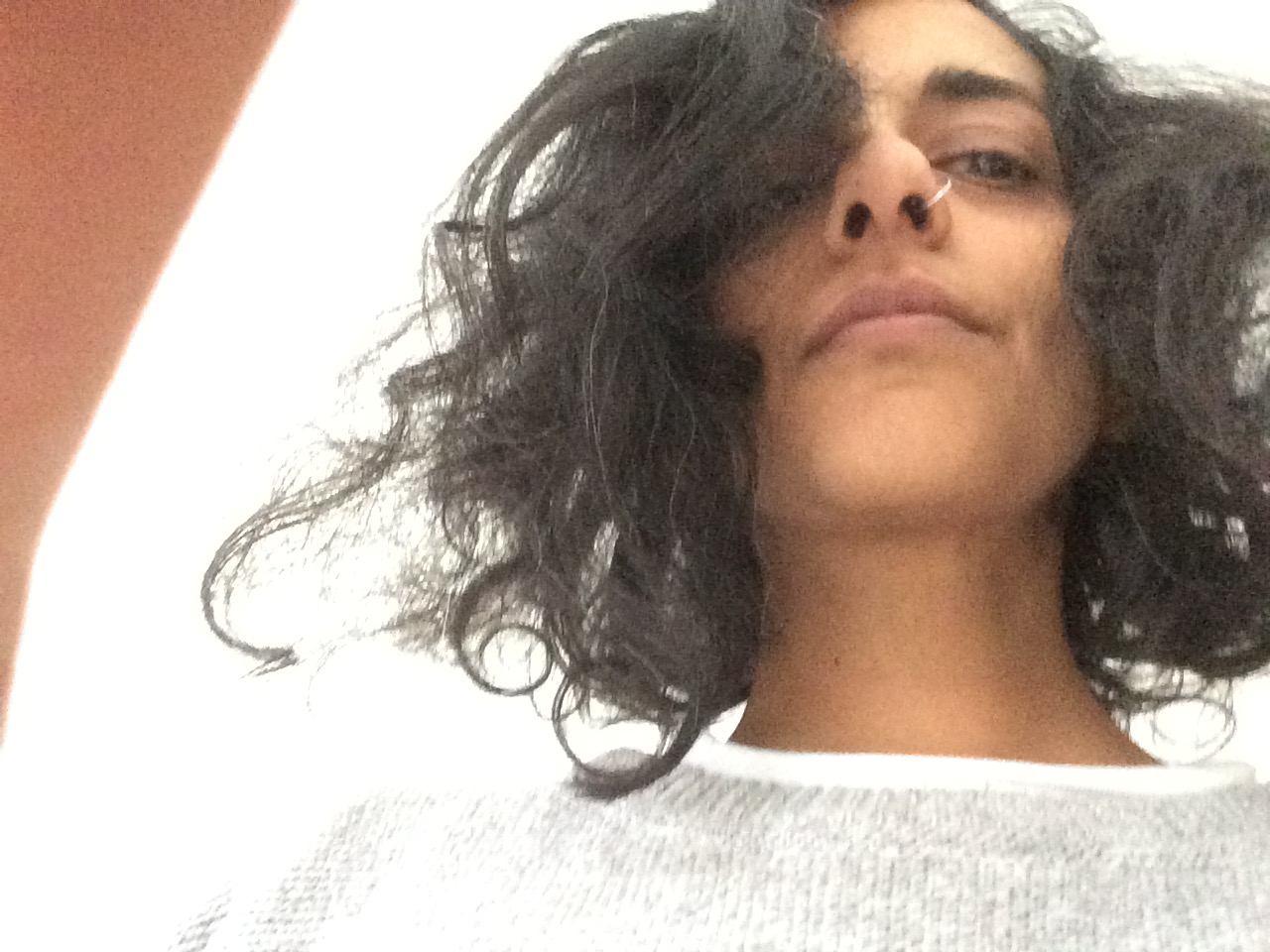
Fresh Milk is pleased to welcome UK-based artist Dr. Ayesha Hameed to the platform from December 8-23, 2016.

img_2200

While in Barbados, Ayesha will be working on and conducting research for her ongoing project Black Atlantis. Black Atlantis is a live audio-visual essay that looks at possible afterlives of the Black Atlantic: in contemporary illegalized migration at sea, in oceanic environments, through Afrofuturistic dancefloors and soundsystems, and in outer space.

Black Atlantis combines two conversations – afrofuturism and the anthropocene. It takes as point of departure Drexciya, the late 20th century electronic music duo from Detroit, and their creation of a sonic, fictional world. Through liner notes and track titles, Drexciya take the Black Atlantic below the water with their imaginary of an Atlantis comprised of former slaves who have adapted to living underwater.

___________________

About Ayesha:

Ayesha Hameed’s work explores contemporary borders and migration, critical race theory, Walter Benjamin, and visual cultures of the Black Atlantic.  Her work has been performed or exhibited at ICA London (2015), Haus der Kulturen der Welt, Berlin (2014), at The Chimurenga Library at the Showroom, London (2015), Oxford Programme for the Future of Cities, Oxford (2015), Edinburgh College of Art (2015), Kunstraum Niederoesterreich Vienna (2015), Pavillion, Leeds in 2015 and at Homeworks Space Program, Beirut in 2016.

Her publications include contributions to Forensis: The Architecture of Public Truth (Sternberg Press 2014), We Travelled The Spaceways (Duke University Press forthcoming 2017), Unsound/Undead (Univocal, Forthcoming 2017); and books including Visual Cultures as Time Travel (with Henriette Gunkel Sternberg, forthcoming 2017), Futures and Fictions (co-edited with Simon O’Sullivan and Henriette Gunkel forthcoming 2017). She is currently the Joint Programme Leader in Fine Art and History of Art and formerly a Research Fellow with Forensic Architecture at the Centre for Research Architecture at Goldsmiths University, London.

Danilo Oliveira’s Residency – Week 4 Blog Post

Brazilian artist Danilo Oliveira shares a blog post about the final week of his Fresh Milk residency. Danilo documented his experiences through a visual diary, sharing images and sketches that capture impressions of his time here in a series he has dubbed ‘The Bajan Chronicles’. See more below:

_____________________

‘The Bajan Chronicles’ consists of images generated during my residency at Fresh Milk, looking at Barbados’ history, everyday life and culture. Of course, one month is not enough to create any kind of deep reflection, but it’s time enough to realize some historical coincidences and explore some cultural and social issues, even in a superficial way. It’s about a foreign view, for a short time, touching on some restrictive issues, and trying to generate questions and reflections out of these.