FRESH MILK XVII Video

Check out our video from FRESH MILK XVII, which took place on December 19, 2014 at The Fresh Milk Art Platform, Barbados.

FRESH MILK XVII was our last public event for 2014, and featured visual artist Kara Springer and poet / critical writer Christian Campbell speaking about their residency experiences, Katherine Kennedy sharing news about her three month fellowship at Akadamie Schloss Solitude in Stuttgart, Germany and Natalie McGuire addressing TVE – a Transoceanic Visual Exchange between Barbados, Nigeria and New Zealand.

Thanks to Sammy Davis for shooting and editing this video!

WINDOW HORSES: Interview with Ann Marie Fleming and Sandra Oh

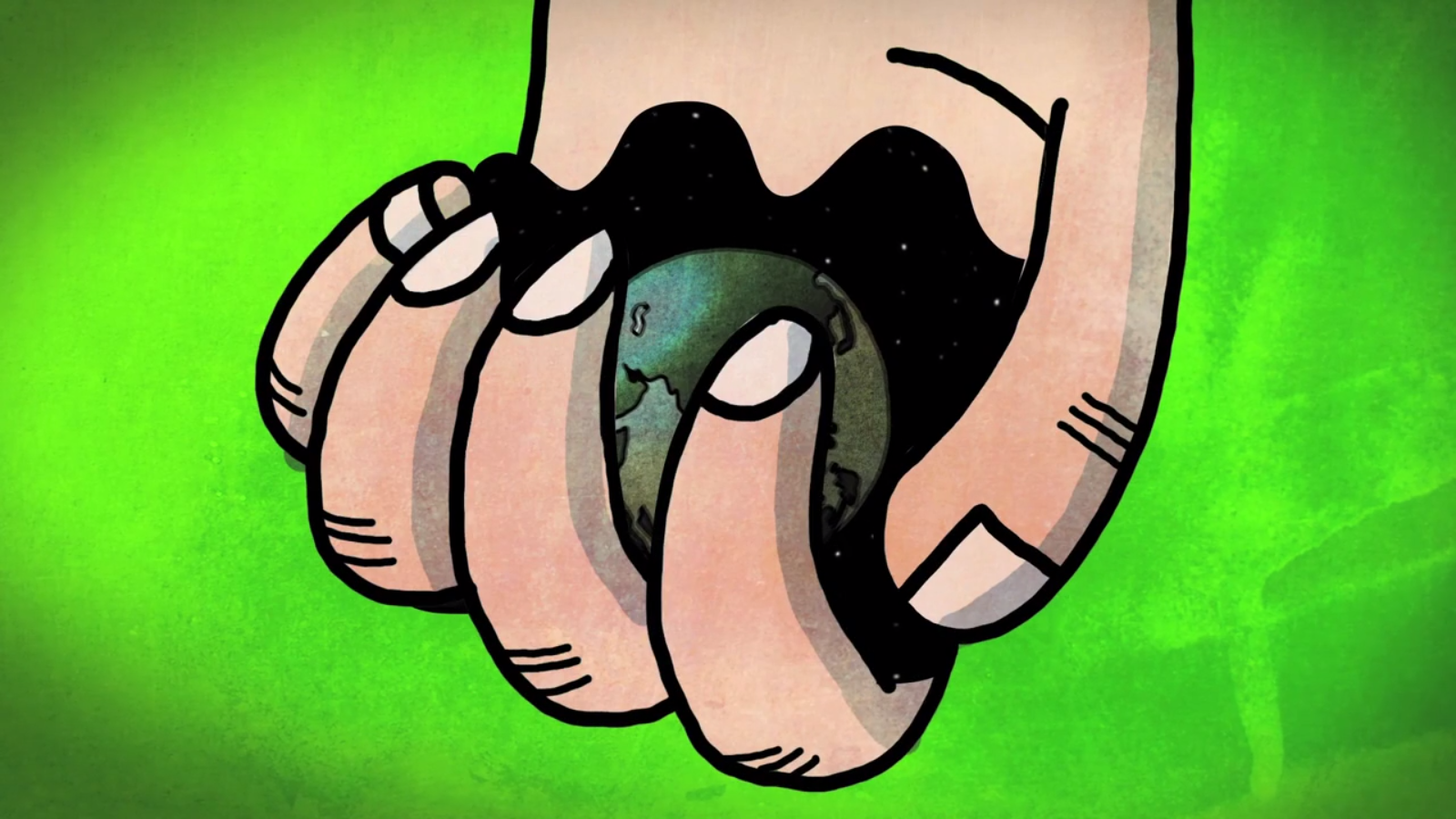
While in residence as a ResSupport Fellow at Akademie Schloss Solitude, Katherine Kennedy interviewed former fellow of the Akademie, Ann Marie Fleming, and actress Sandra Oh about their upcoming feature length animation WINDOW HORSES. Created by Fleming and starring/co-produced by Oh, the story follows Rosie Ming – a Canadian poet of Chinese and Persian heritage – as she journeys to Iran to take part in a poetry festival. This culturally rich film celebrates the beauty of diversity, and how it can be used to bring people together and affirm communities that are often under-represented.

WINDOW HORSES is seeking support through an Indiegogo campaign, which runs until December 20, 2014. Click here to donate to this worthwhile project.

Katherine Kennedy: WINDOW HORSES was originally conceptualized during your fellowship at Akademie Schloss Solitude. What did this residency do for your creative process, and how did your stay inspire the story?

Ann Marie Fleming: When I was in Solitude, it was a difficult time for me. I felt very isolated. I was one of the only residents not to be living in Europe, and would find myself alone for days at a time in the winter. I was there as a filmmaker, but I was in the writer’s wing – I met an exiled poet from China, a film festival director who had parents from different countries that both spoke different languages, another poet who would only speak his own language; and here I was, trying desperately to learn German. I truly understood how much language is culture. It was also in Germany that I was introduced to the poetry of Rumi through adaptations by the American poet Coleman Barks.

window horses 3

As an immigrant to Canada, I had always felt like an outsider, but when I lived in Germany, I felt truly Canadian for the first time. Suffice to say, why people leave and why people come was heavy on my mind. [The founding director of Akademie Schloss Solitude] Herr Joly, himself, spoke of the Jewish diaspora in Germany growing, especially through the arrival of Russian, Ukrainian or Belorussian Jews. Around the time of my fellowship, there was also discussion surrounding the returning of the German Jewish diaspora. This idea of belonging had an impact on me, and I actually base a character in WINDOW HORSES on Herr Joly.

I have been working with these same themes for almost two decades since then. I did two installations in Solitude about the unspoken stories of women, particularly mixed race immigrants, and about the metaphysics of Sufi poetry juxataposed against the rituals of womanhood: woman as daughter, lover, bride, wife, ex-wife and mother. That being said, the original script forWINDOW HORSES was conceived as a live action film: a father-son relationship(!) about the German diaspora, particularly to North America after the Second World War, and the alienation of families.

I wrote the song WINDOW HORSES while at Solitude – it is in the book I also wrote during my fellowship, Breathless: the book of Anne, which is about my oldest friend who had killed herself. I performed it with my guitar out by the horses one magical candlelit night. I wish I had a picture. I spent a lot of time looking out the window at those horses. Literally.

K.K.: In addition to the intersection of cultures, Solitude can foster openness to collaboration and working with kindred spirits, even beyond the fellowship period. Can you and Sandra please tell me how you came to work together, and for Sandra, what about this particular project struck a chord with you?

A.M.F.: I first met Sandra back in the early/mid 90’s, when we were supposed to make a feature film together, Dog Days, which was a kind of ghost story about a Chinese immigrant family in the wilds of British Columbia… coincidentally, with a missing father and a dead mother. That project fell through, and I was invited to attend Akademie Schloss Solitude. It’s what I did instead of the feature, I guess. Sandra and I kept in contact over the years, but she went on to a very successful and busy career in the U.S. and, after many years of development, I reached out recently to see if she was available and interested in playing the role of Rosie Ming, and she said yes. More than that, she loved the project and wanted to come on board as a producer.

Sandra Oh: There are several reasons why I fell in love with this project – firstly, I’ve known Ann Marie for years now, and we’ve been trying to work together off and on for all that time. I love [Ann Marie’s avatar] Stickgirl and all she represents, and to voice her in such a heartfelt and deep emotional story was something I knew I had to do. WINDOW HORSES hits all the things that are important to me – it’s pro girl, pro tolerance, pro diversity and PRO ART!

K.K.: The style and animation that we have seen so far is fantastic, and I think Stickgirl is perfectly positioned as the leading lady because she has the ability to be autobiographical yet universal through her simplicity and charm. Tell me more about how Ann Marie, Sandra and Stickgirl as creator, actress and avatar will bring the film’s protagonist Rosie Ming to life.

A.M.F.: It’s a big step for me. Stickgirl (who plays Rosie Ming) has been my avatar since the 80’s and she has always had my voice. So giving her to Sandra to play is an act of trust and respect. It’s like a Bunraku, really, there are three people bringing Rosie Ming to life… me, through my words and original character, Kevin Langdale through his drawings, and Sandra Oh through her voice.

K.K.: Something else I find compelling and relatable about WINDOW HORSES is that the narrative transcends specific cultures. For example, I don’t have personal ties to China, Canada or Iran, but as a multi-racial woman from the Caribbean – an intrinsically hybrid and culturally complex region – the protagonist Rosie Ming’s journey of discovery, exchange and understanding still resounds with me. Can you both share your thoughts about the cathartic effect a film like this could have across the world’s many cultures and diasporas?

A.M.F.: Omigod, Katherine. This is exactly what you are supposed to take from the story. In its specificity is its universality. This is a story that takes place in Iran, and is steeped in that culture, but is about everybody’s stories.

S.O.: My nieces are mixed race, and it’s very important to me that they see themselves represented in this society. It cannot be understated how important it is for people who do not see themselves reflected, either at all or negatively on a regular basis, to know that there is a place for them to exist, truthfully and in a whole, complex way.

A.M.F.: WINDOW HORSES speaks from the place of all people: immigrants, people who are of mixed heritage, people who know nothing about their culture, people who have never left their village and are deeply embedded in their histories. It’s about what we share, and how important it IS to share. It’s about listening to each other’s stories. In WINDOW HORSES, it is poetry that bridges those gaps between generations and cultures. It is the same moon in the Tang Dynasty poem Quiet Night Thought by Li Bai that we see when we look up at the sky and miss our own home.

K.K.: “Distances and differences keep us apart, and we forget to remind each other of our own stories.”

This is a line from the beautiful graphic memoir The Magical Life of Long Tack Sam, an epic, cross-cultural tale you unearthed about your great-grandfather. This statement stood out to me in relation to WINDOW HORSES because of the emphasis on hearing the stories of others, and using memories and experiences as cultural unifiers rather than dividers. The Indiegogo campaign offers forums for us to share our stories, poetry and music, creating a sense of community among those invested in the project. How has the public reaction been to this participatory approach?

A.M.F.: The most amazing thing about the Indiegogo campaign has been the response we have received from the public… all over the world. They say exactly what you say…that the story IS them, or the story TOUCHES them. And there have been people who just want to support us, who have been doing outreach in their communities, trying to spread the word, looking forward to the film. It’s amazing. Of course, we still are trying to raise more money, that’s the goal, but we’ve been rewarded in so many ways. There is another line fromThe Magical Life of Long Tack Sam which is continued in WINDOW HORSES: “history is relatives.” You know that it’s true.

Support the WINDOW HORSES campaign on Indiegogo here. Read the original post on the Akademie Schloss Solitude Blog.

window horses 8

FRESH MILK XVII

Fresh Milk XVII

Join us on December 19th, 2014, from 6:30 to 8pm for FRESH MILK XVII. Visual artist Kara Springer and poet / critical writer Christian Campbell will speak about their residency experiences; Katherine Kennedy will share news about her recently completed three month Fellowship at Akadamie Schloss Solitude in Stuttgart, Germany while Natalie McGuire will join us by Skype to speak about TVE – a Transoceanic Visual Exchange between Barbados, Nigeria and New Zealand.

It’s the last Fresh Milk event for 2014. We’ll close out the year with a Pot Luck. Bring food, drink and good cheer!

This event is free and open to the public.

Visit https://freshmilkbarbados.com/about/ for directions to Fresh Milk

Kara Springer

Kara Springer

Kara Springer is an industrial designer and visual artist.  Born in Bridgetown, Barbados, she currently lives and works between Toronto and Detroit.  Her interdisciplinary practice explores the intersections of the body and industrial modes of production through sculpture, photography and designed objects. Kara completed an Hon.B.Sc. in Life Sciences from the University of Toronto concurrent to a B.Des. in Industrial Design from the Ontario College of Art & Design.  She received her M.A. in New Media and Contemporary Technology from ENSCI Les Ateliers in Paris in 2007. Her work has been exhibited at the Frankfurt Museum of Applied Arts in Germany, the Politecnico di Torino in Italy, the Cultural Center of Belem in Portugal, and is currently included in the 2014 Jamaica Biennial.

Christian Campbell

Christian Campbell

Christian Campbell is a Trinidadian-Bahamian poet and cultural critic. His widely acclaimed first book, Running the Dusk (Peepal Tree Press, 2010), won the Aldeburgh First Collection Prize and was a finalist for the Forward Prize for the Best First Collection, among many other awards. Running the Dusk was also named one of the best books of 2010 by the Caribbean Review of Books,Horizon Review and Poetry International. In 2015 Running the Dusk will be translated into Spanish and published as Correr el Crepúsculo by Ediciones Santiago in Cuba. His poetry and essays have been published widely in journals and newspapers such as Callaloo, The Financial Times, The Guardian, Small Axe and Wasafiri.  He studied at Oxford as a Rhodes Scholar and currently teaches at the University of Toronto.

Katherine Kennedy

Katherine Kennedy

Katherine Kennedy (Born April 4, 1990, Barbados) graduated from Lancaster University, UK with a degree in Creative Arts (2008-2011) after winning a Barbados Government Scholarship for tertiary education. Her combined major of Fine Art and Creative Writing developed her interests in visual and literary pursuits. She has won awards for her artwork and writing in her home Barbados, and exhibited locally and internationally. She currently works as the Assistant to Director with both The Fresh Milk Art Platform, an artist-led initiative and residency programme, and ARC Magazine for contemporary Caribbean art. Her visual practice is heavily tied to a sense of place, and uses interplay between found organic and inorganic objects to assert cultural identity in different environments.

Katherine travelled to the Instituto Buena Bista (IBB), Curaçao in November 2012 to conduct ‘Creatives in Conversation’, a collaboration between the IBB and Fresh Milk. She received a full fellowship from the Reed Foundation for a residency at The Vermont Studio Center in May 2013. In September 2013, she took part in ‘fresh casa’, a short, intensive mentorship programme at Casa Tomada, São Paulo, Brazil.

Natalie McGuire

Photograph by Dondre Trotman

Photograph by Dondre Trotman

Natalie McGuire is a Barbadian Art Writer who has recently completed her MA at The University of Auckland, NZ, with a thesis deconstructing Caribbean diasporic representation in museums. She is on the board of the Fresh Milk Arts Platform in Barbados, the committee of the West Indian Society in Auckland, and has contributed to publications such as ARC Magazine and AICA Southern Caribbean. Recently she has given papers on Caribbean visual language in digital art mediums at the Small Axe Caribbean Digital Conference and Otago University’s Space Race and Bodies conference.

»Redefining Practice« Reflections with Maj Hasager

During her ongoing residency at Akademie Schloss Solitude, Katherine Kennedy – current fellow in the ResSupport programme supported by Res Artis, representing the Fresh Milk Art Platform at the Akademie – had a conversation with Danish artist and Solitude fellow Maj Hasager reflecting on integrated & socially aware ways of looking at artistic practice. Read the article, originally published on the Akademie Schloss Solitude Blog, below:

Maj's studio at Akademie Schloss Solitude.

Maj’s studio at Akademie Schloss Solitude.

When we speak about art, we often use the word »practice« as a multipurpose term to cover the thinking, the making, the product…all the processes that build towards something such as an exhibition or a clearly defined project. But what about the moments that occur in between, not necessarily linked to a finished piece? Where do ‘non artistic’ tasks fall in the realm of this all encompassing »practice«, and how do our actions influence or become part of our artistic work? These questions led to a discussion between Katherine Kennedy and Maj Hasager, both fellows at Akademie Schloss Solitude. Read more about their talk below:

I began my exchange with Maj by introducing the Fresh Milk Art Platform, a Barbadian cultural arts centre and residency programme, and ARC Magazine of contemporary Caribbean art, the two spaces I work for; speaking about these organizations has become almost second nature to me.

It was when Maj asked about my own art »practice« that I suddenly felt unsure…I wondered, as I showed her my artist website, is this reaction backwards? The balance between making work and my other roles is something I continue to struggle with, and there are a number of doubts that arise when I confront it; am I still an artist? Will I produce work again? Have I given up my »practice«? I’m not unique in these crises…these are common questions faced by many artists whose lives teeter between other jobs and responsibilities.

Maj's studio at Akademie Schloss Solitude.

Maj’s studio at Akademie Schloss Solitude.

Maj and I spoke about these anxieties, which had interesting associations to the MA programme she leads at Malmö Art Academy, Sweden, called Critical & Pedagogical Studies. This degree crosses the supposed boundaries between art, theory and pedagogy, framing relationships between production, teaching, administration and curatorship as »integrated practice« rather than distinct disciplines. While the stretch between one actual creation to the next may be long, that doesn’t negate the importance of what happens in those gaps, or the larger impact of knowledge transfer to personal and public creative growth.

I could already see how the importance of circulating information and operating in intermediary ways was applicable to the work of Fresh Milk and ARC; the foundations we are trying to lay for contemporary art in the Caribbean can very much be read as »social practice«, and affect the wider context I work within, along with my individual outlook. We spoke about whether there was a chance to marry this social »practice« with my visual one; the interconnectivity of art and life means that things are rarely as separate or stagnant as they may seem, and dormant seeds of production may just need the opportunity to flourish. We were both in agreement that Solitude can be considered fertile soil, with the freedom afforded to map out and nourish these connections.

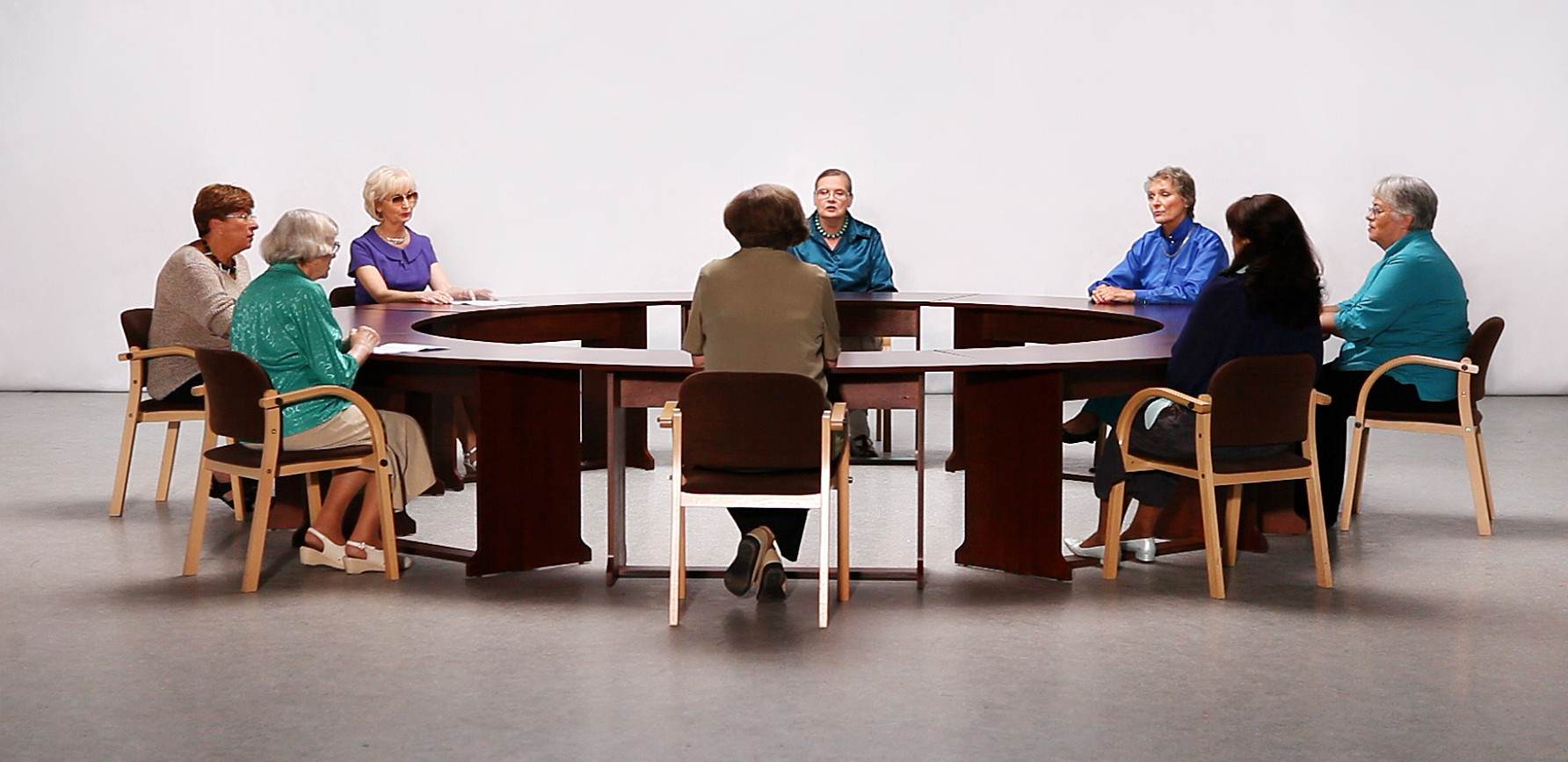
Maj Hasager, Decembers – performing a past, 2013. Courtesy of the artist.

Maj Hasager, Decembers – performing a past, 2013. Courtesy of the artist.

Maj’s personal »practice« also exemplifies hybridity. In addition to her academic pursuits, she negotiates delineations between history/lived reality; archive/interpretation; geopolitical North/South; utopia/dystopia. She took me through some of her multimedia work, which is heavily driven by communities and their geographical and socio-political positions in the environments they inhabit. Displacement is a common theme in her »practice«; she has conducted socially charged projects where she speaks and works with immigrant or underrepresented populations, such as the Filipino community in Italy, or documenting the perspective of Polish women during the solidarity movements of the 70s and 80s. The space she explores is a limbo of sorts; neither dwelling explicitly on the past nor idolizing the future, but the somehow honing in on the forgotten present, and how these communities function – or »practice« – in daily life, which inherently retains the weight of history and the possibility of tomorrow.

Relational »practice« is the core of her work, taking into account and being organically informed the multiple cultures she encounters. The drastically different points of view between herself and the societies she engages are not lost on her; she acknowledges that she is coming from a position of privilege, and does not try to overshadow the voice of the community. As a citizen of an island that is often defined from the outside rather than within, I appreciated this concession, and the genuine interest Maj takes in authenticity when treading this fine, complex line. For example, in her work Decembers – performing a past, 2013 there is no translation from Polish of the exchange between women of a certain generation sharing their stories – this is not done to exclude viewers, but to allow them to enter the moment and feel the dynamic without being distracted by divisive constructs such as language:

Spilled in the language’s veins
A militant regards
When will words be
A tool for something other

– Thom Donovan

Film still: Contemporary dancer Maria Concetta Borgese in ‘Bifurcating Futures’, directed by Maj Hasager.

Film still: Contemporary dancer Maria Concetta Borgese in ‘Bifurcating Futures’, directed by Maj Hasager.

This excerpt is taken from a poem by American poet Thom Donovan, whose work Maj used in a recent project that she directed and was editing while at Solitude. A departure from the usual way in which she works, the piece titled Bifurcating Futures is more abstract; it features a performance by a contemporary dancer interspersed with moving shots of an empty city and stanzas from Donovan’s poem, all overlaid with a haunting track of urban sounds, warped into a futuristic, ominous refrain that echoes the dystopic landscape. The dancer, deliberately chosen for the experience and maturity her body brought to the role, performs a series of gestures in the space, always inaudible but never truly silent. The piece straddles new media and documentary filmmaking, challenging Maj’s usual »practice«, but still referencing themes such as feminism, futurism and creating a platform for the unheard.

What remained with me after our meeting is that we have the artistic license to define »practice« as we see fit; we can use residencies as creative incubators for our work, but »practice« comes from lived experience. Even if not specifically deemed »social practice«, it still absorbs our thoughts, actions and interactions with others, and in the end, cannot be predicted, relegated or compartmentalized – only manifested, one way or another, in the direction we channel it.

Read the original article on the Akademie Schloss Solitude Blog here.

ARC Magazine shares Akademie Schloss Solitude’s Call for Applications and Q&A with the Director

The call for applications to undertake a residency at Akademie Schloss Solitude in Stuttgart, Germany is open until October 31, 2014. Read an interview here between Katherine Kennedy – current fellow in the ResSupport programme supported by Res Artis, representing the Fresh Milk Art Platform at the Akademie – and the programme’s founding and artistic director, Jean-Baptiste Joly. The conversation reveals more about the Akademie’s mandate, the relationships built between the institution and the residents, and interest in cultivating ties with the Caribbean arts community. 

Read the interview originally conducted for ARC Magazine below:
OLYMPUS DIGITAL CAMERA

Katherine Kennedy: Founded in 1990, Akademie Schloss Solitude will celebrate its 25th anniversary next year. Can you share with us the original mission of the Akademie, and in what ways it has been realized, grown and adapted over this time?

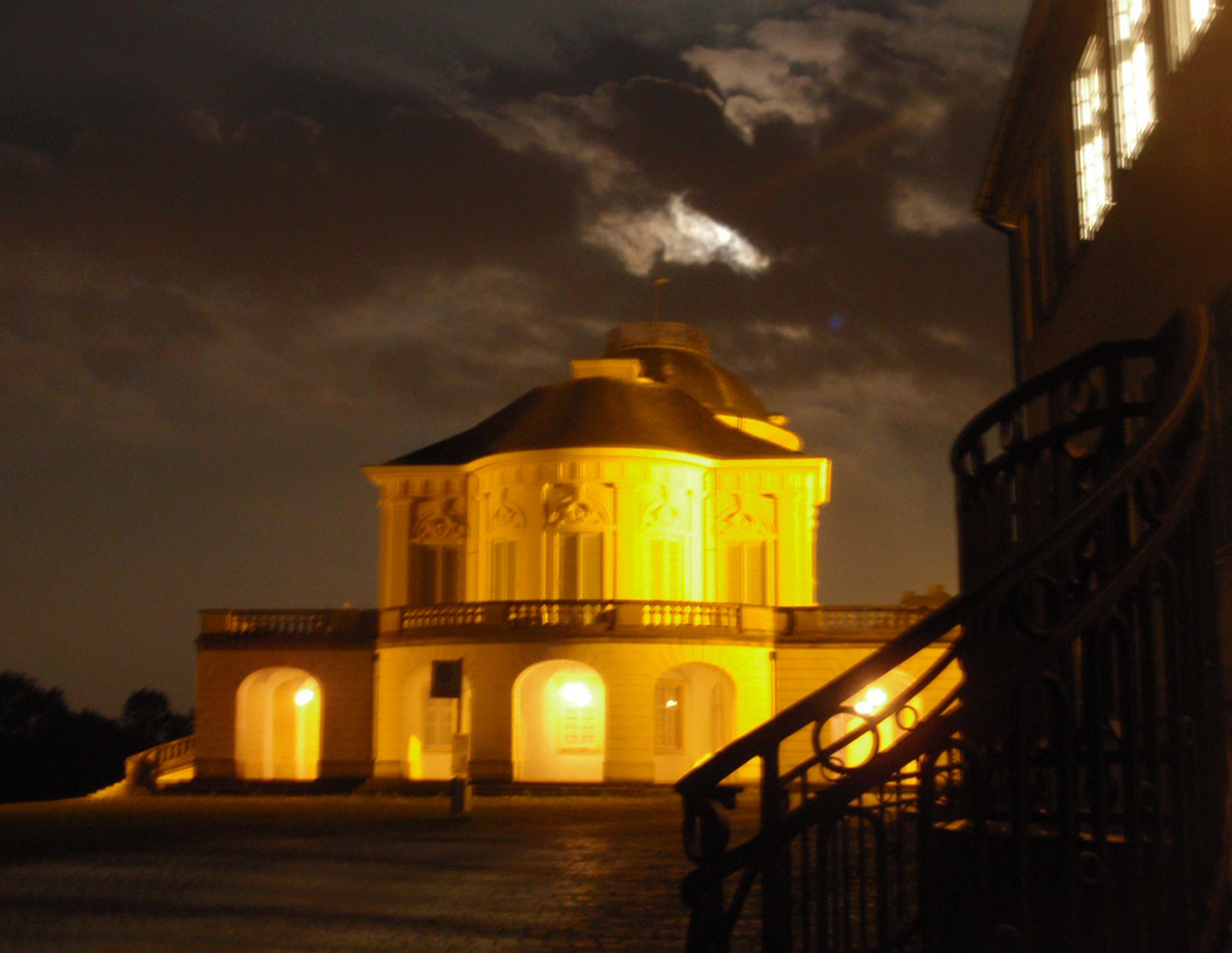
Jean-Baptiste Joly: The Akademie was established, so say our statutes “in order to promote art and culture…in particular by awarding residence fellowships to emerging artists and organizing artistic encounters, seminars and conferences, performances, readings, concerts and exhibitions by fellows and guests…” When it was opened to artists in July 1990, the former prime minister of Baden-Württemberg that initiated the project said he wanted a black box for artistic research, hidden in a Baroque castle. This is still what Akademie Schloss Solitude is doing, but many things have changed in our practice since: In 1996, we created the new fellowship program for art coordination; young people working in the field of culture as managers, being brought on as both staff members and regular fellows in the house. This totally transformed the dynamic between staff and fellows, making them more fluent, less frontal. With their daily contribution, these fellows cover the grey zone that is always growing between the everyday life of artists and the administration.

In 2002, we founded the new program art, science & business, promoting dialogue between these three not necessarily connected domains of human activities. Since that time, the Akademie can really affirm its interdisciplinary thoughts and practices. I couldn’t put a precise date to another major change, but in the last couples of years we had to react more flexibly to the planning of Solitude’s studios, accepting that artists split the time of their residencies, coming twice or three times for shorter periods. People, especially artists, want to be simultaneously in different places, constantly having to move – they become nervous when they stay at the same place too long. This is a sign of our times, and has its downside. The best thing we can offer to our guests is a time that belongs to them, not to the institution, a time at your disposal, not stolen by urgent and often not so important necessities. In general, artists finally understand this, sometimes just too late…

KK: Residencies exist as critical cultural institutions, set apart from museums or galleries mainly due to instances of encounter and possibility taking precedence over preservation or output. Tell us about the space provided by the Akademie, and how it is conducive to these flexible journeys of discovery, reflection and creation.

JBJ: Museums and Libraries have the task of conserving cultural goods; schools ensure the transmission of knowledge through teaching; theatres make public (or should make public) the crucial problems of our civilisation. These are, since the time of the ancient Greeks, the different modes of transmitting culture. Residencies take over parts of what theatres, schools and museums do, but they have another task that is publicly less immediate: selecting artists (yes, residencies decide who is an artist and who is not!) and supporting them, giving them time, space, material, facilities and contacts. By doing so, they contribute largely to the individual life of artists. They also make the art scene they are located in more international, more permeable to otherness and difference.

Residencies also have an open way of re-thinking the contract between artists and institutions. Besides the necessity of staying at the Schloss two thirds of the time of the fellowship (and accepting an invitation for dinner every month), Solitude-fellows have no other obligation. This generous approach gives the Akademie the possibility of permanently re-inventing the relations between artist and institution, redefining it to accommodate a flexible exchange between the two sides, alternatively giving and taking.
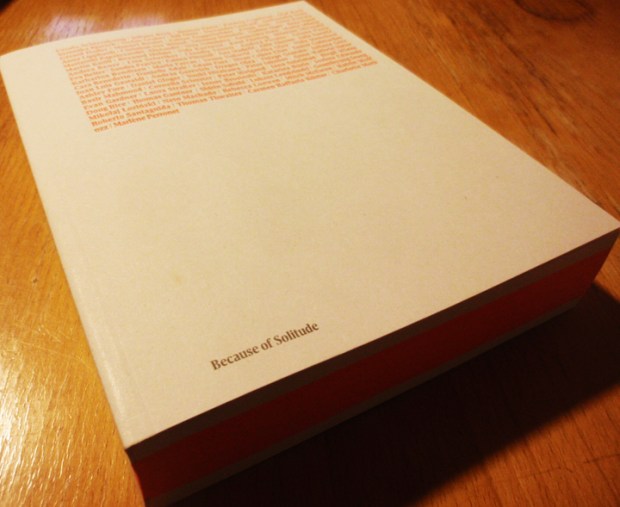
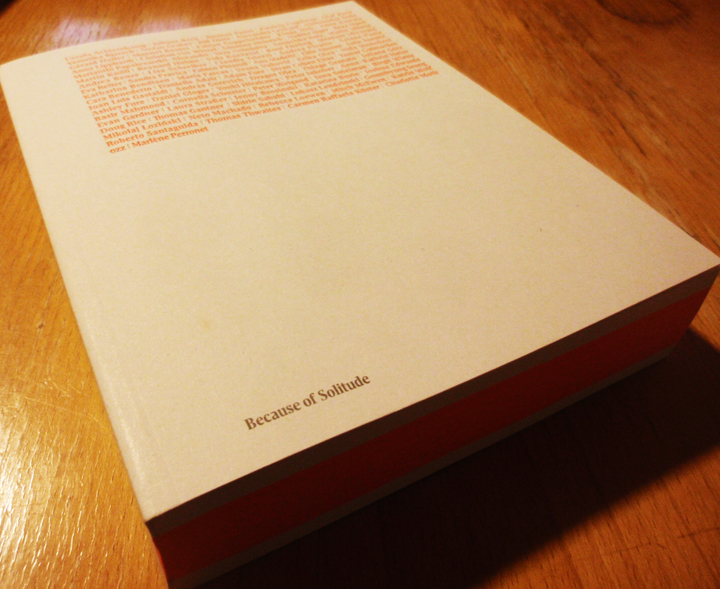
The Akademie Schloss Solitude Yearbook 12 – Because of Solitude

The Akademie Schloss Solitude Yearbook 12 – Because of Solitude

KK: The Akademie’s residency programme is open to applicants worldwide – not only to visual artists, performers and writers but also to scholars, scientists, economists etc.; anyone who is thinking laterally about their practice and wishes to engage with other like (or unlike) minded individuals, programmes or environments. How important is diversity, both culturally and disciplinary, in shaping the residency experience at Solitude? Are these connections maintained after the fellowship period is over?

JBJ: At the end of the nineties, I observed how new artist fellows arriving at Solitude could localize or even classify another artist in a matter of minutes: where did you study, where did you exhibit or perform, which biennale etc? Too fast, too easy… This was one of the reasons why we founded the art, science & business program. When artists, scientists, engineers or managers are speaking together, they have to integrate the differences that oblige them to explain from the very basics how they work and think. In such an exchange, nothing is taken for granted. The notion of diversity is also related to the presence of fellows from all over the world having very different conditions of life and artistic production. In that manner, Solitude is really international and aware of cultural diversity.

The question of the connections between the fellows is another one, and for us a crucial point: the best way to evaluate the quality of the work done by an artist residency is to check what happened afterwards. Are the former Solitude-fellows successful? Are they in contact with each other? Are they in contact with the institution? In the internal newsletters addressed to our board members or to the local government, this part of the report is one of the most important because its legitimizes our work from an external, objective perspective. Indeed, we receive many mails of former fellows mentioning that Solitude not only provided good material support, but also offered new possibilities of cooperation and friendship.

KK: Have there been many fellows or applicants to the Akademie hailing from the Caribbean? In recent years, many creative platforms have emerged in the region, prioritizing the cultivation of relationships and networks that comprise forward thinkers and progressive institutions. Is there interest on the part of the Akademie to deepen engagement with the Caribbean, and perhaps take part in these exchanges and collaborations?

JBJ: Not so many fellows, I remember four from Cuba and from Jamaica, living at the time in Mexico, in New York and in Europe. Few artists apply from the Caribbean, probably because we are not yet well known over there. But remember this too: We are not a big machine like a ministry or like Goethe Institute with a worldwide network of employees and organizations. We just try to embrace the world with a staff of 11 people, working on 3,500 square meters in a castle nearby Stuttgart! But in short: yes, we are always interested in forming new connections and contacts, including in the Caribbean! Sometimes, not always, these contacts will grow to a real exchange and partnership. Isn’t it the very reason we invited you, Katherine Kennedy, as a fellow of Akademie Schloss Solitude?

Read the original interview on ARC Magazine here, and see more information about Akademie Schloss Solitude’s open call for applications below:

IMG-20140908-WA0008

Call for Applications: Akademie Schloss Solitude

For the fifteenth time, Akademie Schloss Solitude is granting approx. 70 residency fellowships of three to twelve months in duration. More than 1,200 artists from more than 100 countries have developed and advanced projects at the Akademie since its opening in 1990, creating a close-knit, global network of Solitude alumni that expands from year to year. The Akademie persues an intense exchange between artistic and scientific disciplines. With the art, science & business program the transfer of knowledge and experience between these fields can be deepened to create new synergies of creativity, inventiveness and management.

International artists are invited to apply from the following disciplines: Architecture (design, landscape architecture, urban planning), Visual Arts (including performance art), Performing Arts (stage design, dramatic texts, dramaturgy, musical theater, performance, direction, drama, dance), Design (fashion, costume, product and furniture design, visual communication), Literature (essay, criticism, poetry, prose, translation), Music/Sound (interpretation, sound installation, sound performance, composition) and Video/Film/New Media (including video installation, fiction and documentary).

Furthermore, scholars, scientists and professionals from the disciplines of the HumanitiesSocial Sciences (with a focus on culture and the politics of space), Economy/Economics (with a focus on urban policy), and Culture & Law (with a focus on authorship) are invited to apply.

At the beginning of a new application round, the Akademie stipulates a new central topic within the context of its art, science & business program which is designed to include not only fellows from all disciplines, but external specialists too. The Akademie views art, science and business as complementary rather than separate activities, which interact dynamically and encourage mutual productivity. To this end, fellows are selected in the fields of art, science & business, internal and public events are organized and publications are released. All fellows – artists, scientists and economists – are free to participate in projects related to the central topic.

Following a suggestion by the current jury chairman, Kaiwan Mehta, the Akademie will be organizing its art, science & business program around the central topic Biography and the Production of Space. With this central topic, the Akademie would like to initiate a comprehensive interdisciplinary discussion about the production of spaces – which can be physical, virtual or imaginary– as an individual as well as social phenomena with implications in economy, art, literature, and sciences.

Persons up to 35 or if older who have completed a university or college degree within the past five years are welcome to apply. Currently enrolled university or college students (at the time of application) will not be considered for selection. Each fellowship recipient is granted Euro 1,100 per month, in addition to free lodging.

For additional information on the residency programme, application process and selection jury members, see the Akademie Schloss Solitude website here. Application deadline is Friday, October 31, 2014 (Postmark/End of Online Application).

​As of July 1, applicants will find all information, be able to register and download the application form or apply online on the application website.