Amanda T. McIntyre selected for Tilting Axis Fellowship 2025

In 2019 Nieuwe Instituut joined forces with Tilting Axis to offer a Fellowship to an applicant based in the Caribbean. We are delighted to announce that Amanda T. McIntyre (Trinidad and Tobago) has been selected as the fifth Tilting Axis / Nieuwe Instituut Fellow. Amanda will begin her Fellowship at the Nieuwe Instituut in Rotterdam starting February 2025 and continuing research and activities through July 2025.

Read this announcement on the Tilting Axis website here.
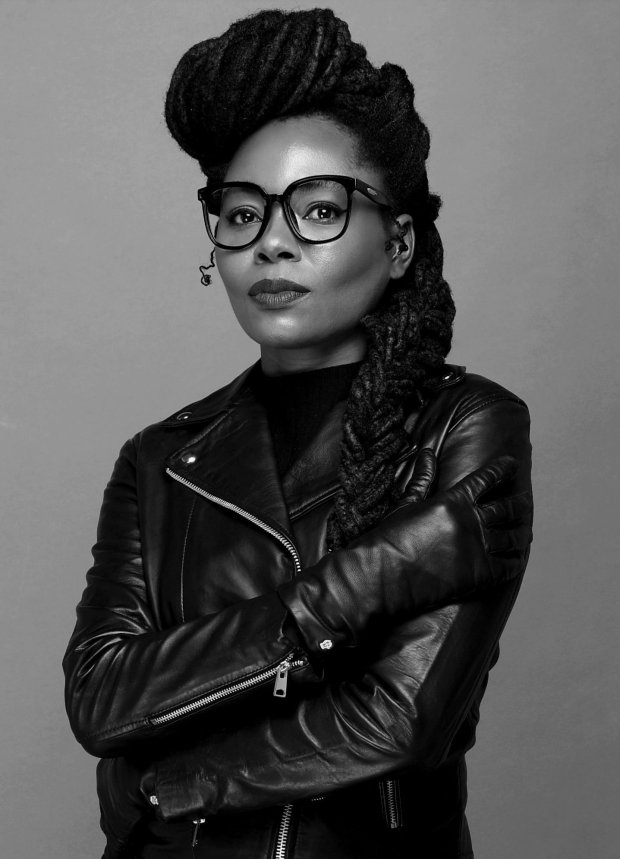
Amanda T. McIntyre is a Trinidadian writer and artist. She is Creative Director and Lead Designer at Dolly Mas Visual and Performing Arts Company. Her work experiments with harmonising architectural and textile cultures of the Caribbean. She was previously an Art Administrator at New Local Space (NLS), an art studio and gallery based in Kingston, Jamaica. In 2020 McIntyre was part of the faculty for La Pràctica Artists Residency, Puerto Rico, and an advisor for the NLS, Curatorial, and Art Writing Fellowship. In 2021, she was awarded a Futuress Coding Resistance Fellowship for her project Mapping Queer Carnival. In 2023 she was longlisted for the prestigious Queen Mary Wasafiri New Writing Prize.

Project Brief

Present Continuous is a practice-based research project that applies digital intervention towards archiving the materiality and intellectual properties of contemporary Caribbean masquerade cultures, with corresponding designs including architectural elements from the nineteenth and twentieth centuries when masquerade emerged in the Caribbean. The project also assesses non-extractive material considerations in this era of climate emergency attempting to answer the question: Can Caribbean Carnivals be sustained materially? And if so, what are the ways that would best serve the planet and the communities that exist within Caribbean Carnival ecosystems?

Comments on the Selected Proposal

Amanda’s project Present Continuous brings new and fresh ideas, presented in her application with an inviting approach that pulls you into the project, addressing urgent themes. Amanda’s project, centered on festival culture and waste, specifically through the lens of Dolly Mass, offers innovative solutions for archiving costumes. Her research on the Baby Doll, focusing on its representation and parody of women in early Caribbean masquerades historically performed by men, is particularly compelling. The jury felt the proposal which linked architecture, mas, queer studies, and climate justice further raised critical questions about the future of these costumes with an emphasis on non-extractive material focuses.

The jury was compelled by Amanda’s ambitious submission concentrating on urgent themes approached with sensitivity, seriousness, and interdisciplinary approaches. Amanda’s ability to think through carnival culture and the determination to archive these traditions and practices by future-proofing them highlights the importance of documenting the fluid migrations and influences within this culture including its evolution in two other Caribbean islands. Although the proposal had a clear focus, the jury was also impressed by Amanda’s willingness to remain curious, flexible, and open to exchange with partners on ways of archiving. Moving into the fellowship period, the jury suggested further research into deadstock materials from Jamaica and Martinique to enhance her project.

General Comments

Members of the jury were impressed by the wide range of themes approached by the projects, as well as the relevance and timeliness. Fifteen applicants submitted a wide cross-section of projects from all four linguistic territories of the Caribbean. This year’s submissions were strong, competitive, and transgressive, indicative of the Fellowship’s growing profile over the past eight-year period. Proposals were concerned with topical themes such as new pedagogies, maroonage, anti-colonialism, embodied and ancestral knowledge, speculative fiction, myth-making, the circular economy, climate justice, cartographies, vernacular architectures, marine, and spiritual ecosystems, ceremony, and shared rituals of masquerade. The projects demonstrate the creativity and power of practitioners living and working across the Caribbean, highlighting the importance of continued collaborations with those in the region.

Procedure

This Fellowship is supported by lead host partner, Nieuwe Instituut and its collaborators including the Amsterdam Museum, De Appel, Stedelijk Museum Amsterdam, and Kunstinstituut Melly. Between the announcement of the open call on May 30th, 2024, and the deadline on June 30th, 2024, Nieuwe Instituut and Tilting Axis received 15 eligible entries in response to the open call from eight countries across the Anglophone, Francophone, Hispanophone, and Dutch Caribbean region including Barbados, Cuba, Curacao, Haiti, Jamaica, Puerto Rico, Trinidad and Tobago and St. Vincent and the Grenadines.

The proposals were reviewed by a committee composed of the following members:

  • Tijn van de Wijdeven, program manager, Nieuwe Instituut

  • Holly Bynoe, ARC Magazine, Sour Grass and Tilting Axis co-founder

  • Annalee Davis, Visual Artist, Founding Director of Fresh Milk, Sour Grass, and Tilting Axis co-founder

  • Jessy Koeiman, Curator of Collective Learning, Kunstinstituut Melly

  • Mark Raymond, Director of the Graduate School of Architecture at the University of Johannesburg in South Africa

  • Lara Khaldi, Director at De Appel

  • Imara Limon, Curator, Amsterdam Museum & Silke Kamp, Curator-in-Training, Amsterdam Museum

  • Charl Landvreugd, Head of Research and Curatorial Practice, Stedelijk Museum Amsterdam

The meeting was chaired and moderated by Nieuwe Instituut researcher Federica Notari.

Proposals were evaluated based on their research proposal, methodological approach and connection to the disciplines of architecture, design, or digital culture; and their interest in working with the hosting partners. Four candidates were shortlisted and invited to an online interview with members of the selection committee on July 11th, 2024. Following the interviews, the committee selected Amanda T. McIntyre (Trinidad and Tobago)  as the recipient of the Fellowship. The other shortlisted candidates were Lucia Piedra Galarraga (Cuba), Alex Martínez Suaréz (Dominican Republic ), and Johanna Castillo (Dominican Republic).

Alex Kelly’s Residency – Week 3 Blog Post

Trinbagonian artist Alex Kelly shares a third blog post about his Fresh Milk residency, which took place earlier this year in March. Looking at his last night in Barbados, spent liming with some of the people he encountered while in the island, Alex reflects on some of the collective aspects of the Caribbean experience he has noticed, and the fine line between comforting familiarity and complacency around regional issues. Read more below:

It’s the last lime before I leave Barbados. I’m having a chat with my Bahamian flatmate and her friend, a fellow Bahamian who’s lived in Barbados since she was a child. There is a bowl of chips and two bowls of dip on the coffee table in front of us. A fly lands on one of the chips and begins to survey the bowl. We continue having our conversation.

Someone gets up and, paying no attention to the fly, takes a chip out of the bowl, scoops up some dip and returns to their seat to enjoy. The fly has of course exited the conversation at this point, but that just happened, and we all let it. In that moment, I once again felt strangely at home in Barbados.

It’s not that we’re particularly fond of flies in TT, in fact I’m sure that the average person, including myself on another day, would have hastily gotten rid of the fly before it could ever desecrate the surface of a single chip; we love we belly. But there was something so unpretentious and confident about the imagined Caribbean that I learned to appreciate, and while on an average day I feel that I am constantly surrounded by actors playing out a role or as Chang might have said, artists more interested in their title than in the work, in that moment I saw an image of that Caribbean. No one pretended to be offended by the presence of that fly.

I am aware that this is an odd and, perhaps for some, off putting example, but I went to Barbados hoping to find a way that my own Caribbean experience could connect to others. I found it yet again in those moments. In that interaction, I was reminded of all the tension that I experience in my work; a practice that examines a way of life that is deeply troublesome and often dangerous, but one that is full of little subversions that make life so much more beautifully subtle and complex.

The frightening question that I am now comforted by, after having been reminded that it is our breaking of the rules that often makes life so nice, is how does a people manage to keep their beautiful conversation going, with that fly still in the bowl, and yet avoid all of the horrors associated with its kind. I believe that we can find a better way, but I’m not sure that I ever want that way to include fussing over a bowl of imported chips. What doh kill does fatten.

________________________

Tridium

This residency is supported by Tridium Caribbean Limited

Alex Kelly’s Residency – Week 2 Blog Post

Fresh Milk resident artist Alex Kelly shares some reflections from his second week in Barbados. In looking at some of the connections and common threads he has noticed in the region, he has revisited his use of a shipping pallet as a symbol of our reliance on imported goods. He has also been looking at the similarities and issues within the Caribbean’s educational systems, and the importance of encouraging critical thinking to avoid perpetuating unproductive cycles of action and thought. Read more here:

Image (3)

I’ve discovered for the second time how a change of environment can help to refocus my thoughts about work and about the space that I am discussing. I suppose the conscious act of applying for and participating in a residency is a way of surrendering myself to possibility. I become more in tune to the elements that potentially connect to define Caribbean people and their environment.

Within the boundaries of this particular space, where you can find water from Jamaica, films from the USA, dried seasonings from Puerto Rico and I shop in a supermarket chain from Trinidad and Tobago, the wooden shipping pallet that I had been working with since last August becomes significant yet again. It is a symbol of dependence on imported goods and cultural influences. In a moment of economic and political uncertainty, the lack of self reliance suggested by the pallet is noteworthy. It is quite striking that this symbol would be the one to connect my practice in three separate Caribbean territories.

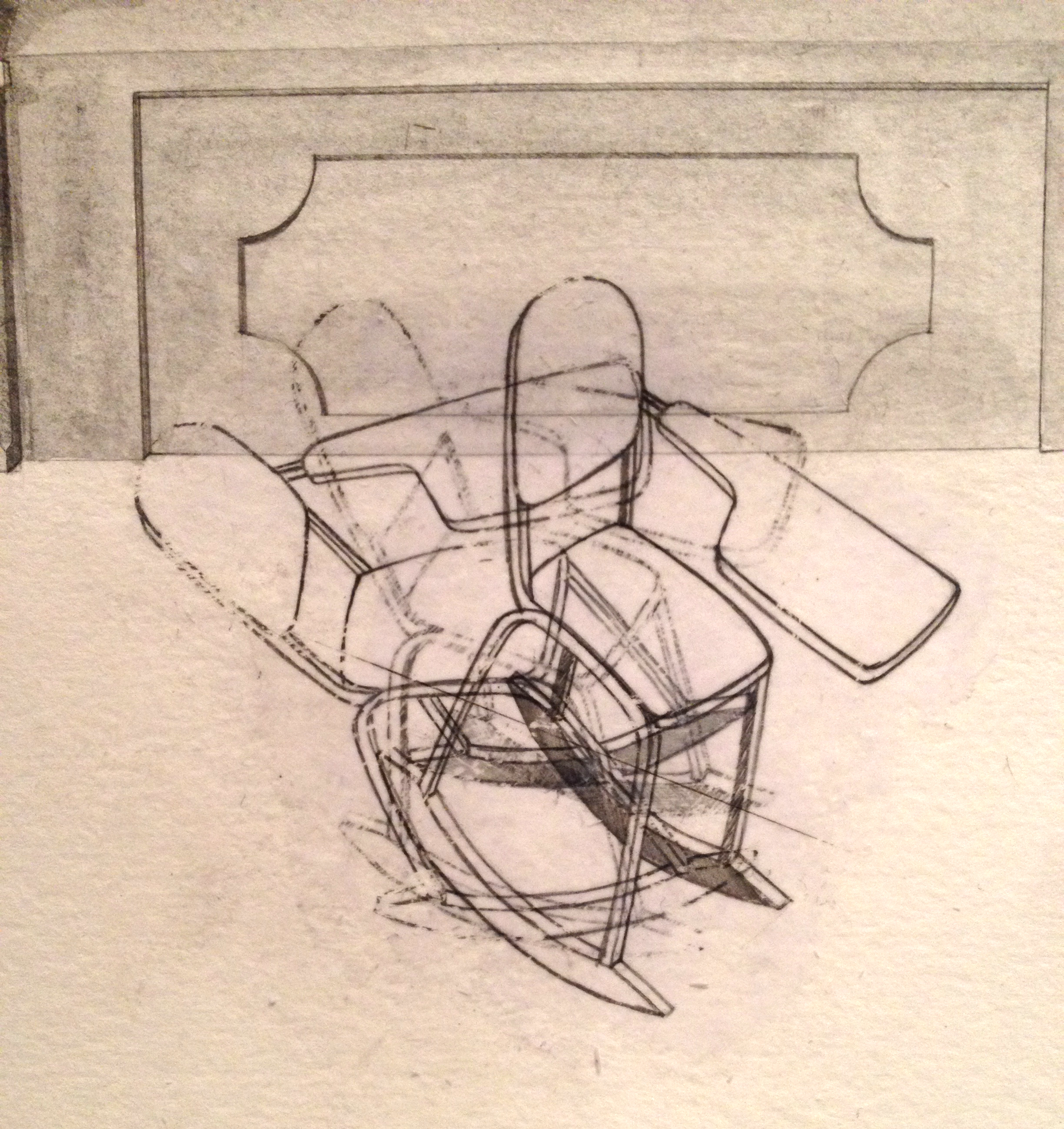
What has also struck me as significant is the shared education system and the role it plays in shaping the kind of citizens that individuals become. A conversation I recently had has  reminded me that the education systems of many Anglophone Caribbean islands are ultimately geared towards the same goal. So that each of the countries are equally influenced by a curriculum that was not designed to foster critical and creative thought or to nurture citizens capable of shaping the kind of environment that they desire. We are sitting in a rocking chair, moving vigorously back and forth, but making no progress. It begs the question, what effect might decades of this kind of action have on a people and their culture.

chair

Still, in spite of these and other similarities I have discovered, I find that my work represents a reality of life that seems frightfully specific to Trinidad and Tobago. In questioning how this work might be relevant in a wider Caribbean context I can only hope that a possible answer is, that it acts as an account of how we made it to where we are and as such provides a means by which other territories might avoid such a fate.

________________________

Tridium

This residency is supported by Tridium Caribbean Limited

Fresh Milk welcomes Sonia Farmer and Alex Kelly to the Platform

Fresh Milk is pleased to welcome Bahamian artist and writer Sonia Farmer and Trinbagonian artist Alex Kelly to the platform for the month of March, 2016.

Sonia will spend her time at Fresh Milk working on two main projects—one a personal creative project, and the second a wider community endeavour.

The personal writing project will be a series of experimental poems with the working title ‘The Best Estimation in the World’. Sonia will work with transcriptions gathered from interviews conducted during her work in the art department at Baha Mar, the mutli-million resort development in Nassau. Using a voice recognition software, she has collected dense blocks of mostly indistinguishable text rife with errors from these interactions. Part erasure and part found text, she will comb through the material to identify phrases and words, and separate and re-structure them into poetry. Though completely void of all content and subject matter from the original interview, the poems based on the mistranslations would nonetheless develop around an unsettling alternate reality of the tourism model in The Bahamas.

Additionally, she will establish a relationship between Fresh Milk and her larger creative endeavour, Poinciana Paper Press, by conducting a series of workshops on book-binding and design entitled The Art of the Book.

Alex’s work explores the “how come” of life in Trinidad and Tobago. By applying an understanding of human nature, considering the population as both a community and as an individual in a larger global community and by utilising images from the past and the present that act as culturally specific ideograms, he examines cultural, social and historical circumstances that have lead to the development of the present realities of life in Trinidad and Tobago.

His work intends to engage the public by providing familiar points of reference while calling into question prevailing assumptions about Caribbean life that often serve as cushioning from harsh realities. The intention is to confront the audience with a more honest discourse about Trinbagonian culture.

Alex’s aim is that this residency will facilitate the expansion of the scope of his work, building on links established during his participation in the Caribbean Linked III residency in Aruba. This experience reignited a desire to participate in solving problems surrounding Caribbean life and Caribbean connectivity.

_______________________

IMG_9023

About Sonia Farmer:

A Bahamian writer who uses the crafts of book binding, letterpress printing, hand papermaking and printmaking, Sonia’s work is intimately tied to the Caribbean landscape and identity. Often her work engages with contemporary Bahamian society through the lens of history and mythology, specifically in the realms of feminism and the tourism industry. She is the founder of Poinciana Paper Press, a small and independent press located in Nassau, The Bahamas, which produces handmade and limited edition chapbooks of Caribbean literature and promotes the crafts of book arts through workshops and creative collaborations. Her artwork has been exhibited throughout Nassau including at the National Art Gallery of The Bahamas, Doongalik Studios, The Hub, & the Central Bank Art Gallery. Her poetry has won the 2011 Prize in the Small Axe Literary Competition and has appeared in tongues of the ocean, The Caribbean Writer, Poui, The WomanSpeak Journal, and Moko Magazine. She holds a BFA in Writing from Pratt institute. Visit poincianapaperpress.com to learn more.

_______________________

Alex Kelly

About Alex Kelly:

Alex Kelly is a contemporary artist living and working in Trinidad and Tobago. Kelly recently graduated from The University of the West Indies, St Augustine with a Bachelor of Arts degree in Visual Arts. Over the period of his study at the university Kelly participated in several public art projects. Among them are the mural “Hope” at the Family Development and Children’s Research Centre, St Augustine, for which he acted as co-facilitator; an art outreach program at Mayaro Government Primary School, Trinidad and Tobago, which formed part of a collaboration between The University of the West Indies and the Bridge Foundation; and a collaboration with the College of Science Technology and Applied Arts of Trinidad and Tobago designing a fundraising campaign for the creation of new student bursaries at the institution. Kelly has exhibited in three group shows with The University of the West Indies and in 2012 produced the mural “Slave” at the Night Gallery in Woodbrook, Port of Spain.

In 2015 he began occupying a studio space at Granderson Lab, a project of Alice Yard. In August of that year Kelly participated in the Caribbean Linked III artist residency and exhibition in Aruba, where he spent three weeks producing original works and participating in engagements that have expanded the scope of his practice from a national focus to a regional one. In September of 2015 he began working with the University of The West Indies, St Augustine as a guest lecturer and visual arts demonstrator. Kelly is currently interested in facilitating further integration of contemporary art into the national consciousness and public policy, and in providing opportunities for greater connectivity between art communities in the Caribbean.