Malaika Brooks-Smith-Lowe shares her reflection on Tilting Axis: Showing up as Caribbean creatives

Malaika Brooks-Smith-Lowe, artist, activist and co-founder of Groundation Grenada, shares her reflections on the conference Tilting Axis: Within and Beyond the Caribbean – Shifting Models of Sustainability and Connectivity which took place at Fresh Milk on February 27-28, 2015. Read an excerpt from her report below:

Malaika TA report2

‘I think it’s an act of rebellion to be a whole person… It’s an act of rebellion to show up as your whole self, and especially the parts that are complex, that are unfinished, that are vulnerable.’ – Courtney Martin

Two weeks before traveling to Tilting Axis: Within and Beyond the Caribbean – Shifting Models of Sustainability and Connectivity at the Fresh Milk Art Platform in Barbados, I listened to a podcast titled The Inner Life of Rebellion, a conversation which included Courtney Martin. During my presentation at Tilting Axis, about the vision and work of Groundation Grenada, I shared the above quote by Martin. Her reflections on the power of being able to make progress even with full recognition that we are imperfect and always in-the-making resonated with me deeply. It is this kind of ‘showing up’ as a whole complex person that Groundation Grenada seeks to support. As an organization our aim is to create safe spaces for people in our communities to explore the fullness of their experiences and express themselves in an environment that honors our differences. Tilting Axis was a unique moment to connect with founders and directors of initiatives that similarly work to support and enhance the growth of the Caribbean’s vast array of voices & creative visions.

Tilting Axis, held from February 27-28, 2015 aimed to promote greater conversations and engagement between artists and professionals working within artist-led initiatives across the wider Caribbean region, build and redefine historical relationships with those in the North, and establish open dialogue with active networks emerging in the Global South.

The space that the organizers Fresh Milk Art Platform Inc., ARC Inc., Res Artis and Pérez Art Museum Miami were able to create was a rich opportunity for discussing challenges and envisioning collaborative solutions.  They brought together several of the region’s arts initiatives to engage in face to face conversations. Also present were a number of professionals from outside the region interested in working with Caribbean-based initiatives such as Solange Farkas, founder and director of Videobrasil (Brazil), and N’Goné Fall, a founding member of the Dakar-based collective GawLab (Senegal). For a complete participant list and other details read the official post-conference press release (here).

There were many existing relationships and partnerships in the room and many possibilities for new collaborations discussed in formal sessions and during tea breaks. Technology has been an invaluable tool in facilitating the growth of what feels to me like a tangible movement in the region via the visual arts. Being in the same physical space as such a dynamic group of artists, curators, writers and organizers, and being able to have real conversations, was an invigorating experience. We all showed up as our full selves, open to discussing the complexities we are working with and through. It was an intergenerational setting with cross-pollination between organizations that were founded decades ago and seedling organizations that are now taking root and beginning to bloom.

Read the full report on Malaika’s website here.

Jordan Clarke’s Residency – Week 3 Blog Post

Barbadian-Canadian painter Jordan Clarke shares her third blog post about her Fresh Milk residency, continuing to use self-portraiture and exploration of her surroundings for self-discovery and both personal and artistic growth, reckoning with the multiple facets and cultures that comprise her identity. Read more below:

IMG_0488

While at Fresh Milk, I have been working through self-portraiture, landscapes, photography and journaling as a means to document my first visit to Barbados. Born in Canada, I am the daughter of a Canadian mother with Scottish and English roots and a Barbadian father who has now spent 75% of his life in Canada. As a result, I possess multiple identities. I see myself as mixed-race, Black and Canadian.

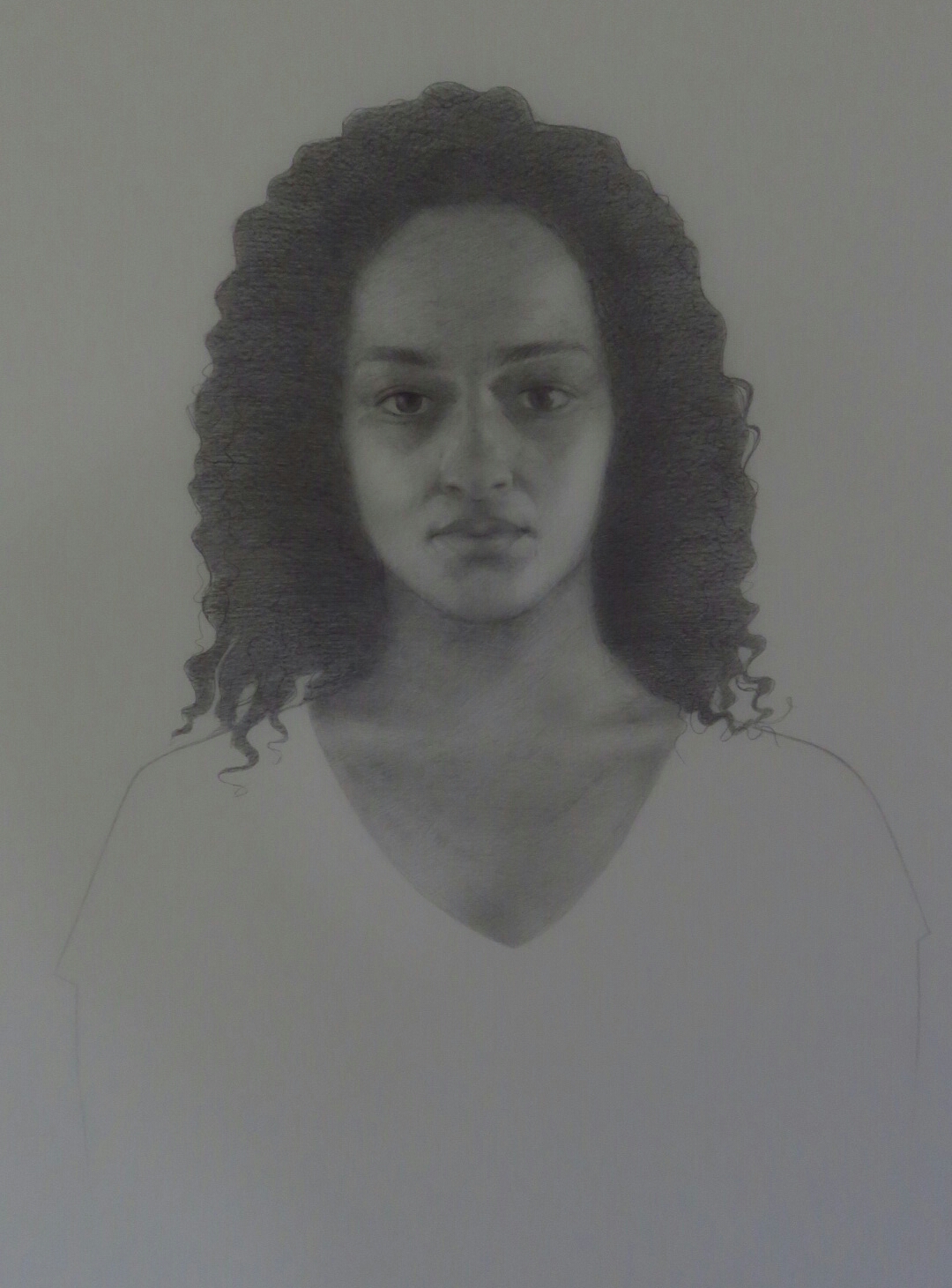
In Barbados, where I have no family members, I feel disconnected and exposed. I am an outsider in my father’s homeland where I had hoped to feel a sense of homecoming and belonging. Not surprisingly, the work I have been producing here is introspective, exploring the theme of self-perception. My double self-portrait in graphite really expresses the sense of vulnerability and sadness I felt soon after my arrival in Barbados.

I have also been looking outwards, exploring landscapes in my work, specifically sky and cloudscapes. I’m attracted to clouds because they are always in movement and constantly changing, creating new formations that never repeat. I also find them to be majestic and beautiful. For me, clouds represent a universal space rather than a specific place, a space that is similar in both Toronto and Barbados.

At the moment, I see landscapes and portraits as two different practices. I had originally intended to insert myself into the landscape to create a connection with the land and Barbados. Interestingly enough, this joining of my body and a still unfamiliar landscape isn’t happening.

This residency is a special opportunity for self-discovery and evolution. I am realizing that change is not always comfortable, but is an essential part of my growth as a woman and as an artist. What is most painful is the feeling that I am missing a large part of my cultural roots and identity.

_______________________________________

2014 OAC logo RGB JPG

This residency is supported by the Ontario Arts Council.

Intervention IBB Magazine shares Tilting Axis

Instituto Buena Bista (IBB), Curacao shares an article through their Intervention IBB Magazine about the 2015 Tilting Axis conference, which took place on February 27-28 and brought together a number of contemporary arts initiatives from around the Caribbean along with a few international entities to devise an action plan for advancing the region’s creative sector. Read an excerpt from IBB co-founders Tirzo Martha and David Bade below:

tiltingaxisbarbados07

First impression

David: To be honest, at first I had a prejudice of what the conference was going to be. Because of my past experiences, I grew accustomed to the fact that most of the time there was a lot of talking, less actions and very few tangible results. But within this short time of 2 days, this was not the case at all. The whole approach and the focus was to come to concrete and clear results. I think this was a good thing and I am positive about this. We had to take steps to get somewhere. They gave us cases we had to work on and present and come up with some real proposals. “Collaboration” and “exchange” are all very nice funding words, but they have been used so much that now they’re becoming empty words. I have every confidence that something will happen this time around.

Tirzo: Two things I find very important about the Tilting Axis conference:

The old guard and the usual faces were absent, and there was fresh blood there. That was refreshing, to have that fresh blood who are open to new ways, perspectives and visions. Another thing I found interesting was that it wasn’t about the artist as individual but about art itself. About the society, the added value of art for the society and how you can contribute to the development of art education and formation through social cultural art projects.

David: we sat in work groups or sub groups and got the questions: Are we just here to meet each other or will we do something from now on? They proposed to me too, now that next year we will have existed for 10 years, to let our art collection travel within the Caribbean region. Now our network has expanded with these new people, the idea to have our art travel in the region visiting all the different art platforms sounds very appealing.

Tirzo: Collaboration is not necessarily in one form only. It can also be to assist or to support. For example: a lot of art initiatives say they have a lack of financial means. They don’t have money for a website for example. To let some company make a website can costs thousands of dollars, but if for example we at IBB can make a website for another art initiative we can support each other in this way. We can exchange our services, knowledge and capacities to one another, as everyone is good at one thing. It’s much cheaper and by doing this we can also generate funds.

It was of great satisfaction to meet and speak with people from the French speaking islands, Martinique, and also to acknowledge the presence of a representative from the Dominican Republic.

Read the full article on Intervention IBB Magazine here.

Jordan Clarke’s Residency – Week 2 Blog Post

Barbadian-Canadian painter Jordan Clarke shares her second blog post about her Fresh Milk residency. She addresses the direction her work is taking, focusing on self-portraiture and developing the background of her pieces to suggest a sense of space, and has continued to explore the island alongside fellow resident artists Daniel Fernández Pascual and Alon Schwabe of Cooking Sections. Read more below:

Self portait

Two weeks into the residency and it feels like I just arrived.

I’ve been spending the majority of my time in the studio creating, reflecting and taking everything in. I’m sensing this as a time for gathering images, ideas and information that will find expression in my future creations.

It seems that I have gravitated towards self-portraiture as a way to access how I am feeling and thinking about myself in relation to this new place, Barbados. In addition to working from images, I have taken on the challenge of drawing myself from life each day. To assist me, Annalee set up a large mirror in the studio space. What I’ve found interesting is that none of the portraits drawn from life look completely like me.

Over the past week, I have been thinking about identity and how it is shaped. I realize now that my sense of identity is not linked directly to Barbados, despite my father’s Bajan roots.  This is the perfect opportunity for me to think about how I would like to identify, how I see myself, as well as how my life experiences have shaped me.

Mid week I met Barbadian artist Simone Padmore who addresses themes of identity in her work.  Some of her illustrations can be found in ARC magazine issue #5.

Towards the end of the week I began to think about the landscape, and how I could paint myself into one. The figure and landscape have always been separate for me. In my work the background suggests a sense of space rather than a specific place or location. I’m not sure where this will go, but it is something I am working on.

It was Easter weekend, and on Good Friday Annalee made a delicious gluten free quiche for our lunch. I am definitely being spoiled here!

An exciting event for me was finding out that early Saturday morning a horse was born on the family farm.

West coast beach

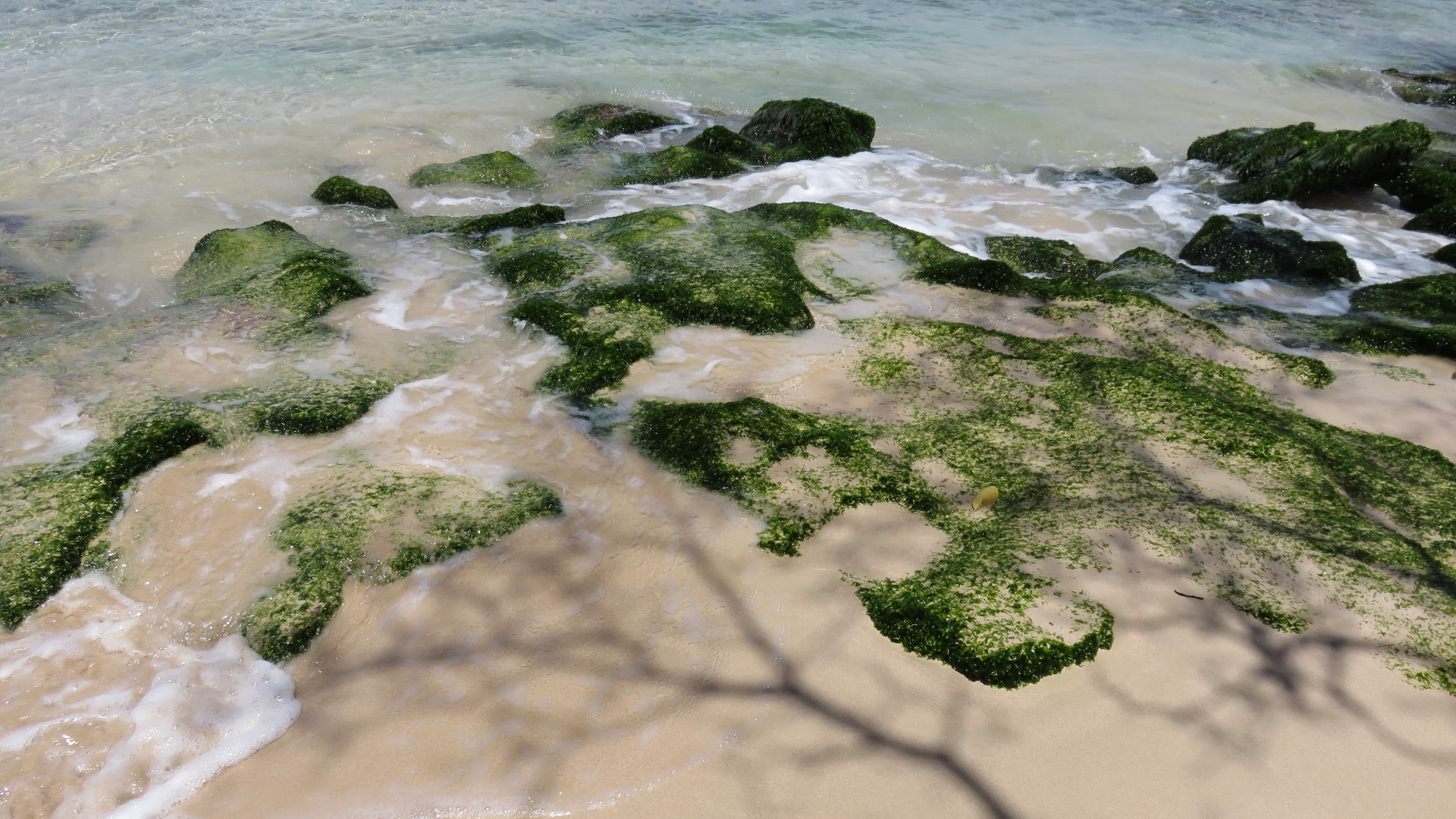
I ended the week traveling part of the West Coast with Alon and Daniel of Cooking Sections, who are also doing a residency here at Fresh Milk. We started at a lively market in Bridgetown. It was a completely different experience from the quiet and serene studio in St. George. I enjoyed the liveliness and dancehall music on the mini buses. We also took some time to enjoy ourselves on the beach. The West Coast is ideal for swimming, in contrast to the rugged picturesque East Coast. Our day ended with food and music at the Oistins Fish Fry on the South Coast.

Looking forward to the week ahead.

_______________________________________

2014 OAC logo RGB JPG

This residency is supported by the Ontario Arts Council.

Fresh Milk welcomes Cooking Sections to the platform

Fresh Milk is happy to announce that between March 30 – April 10, 2015, we will host Cooking Sections, the London-based duo of Daniel Fernández Pascual and Alon Schwabe. Read more about their research-based practice that explores the overlapping boundaries between visual arts, architecture, geopolitics and food:

Empire Remains Christmas Pudding__ Cooking Sections 2013, Delfina Foundation, London.

Empire Remains Christmas Pudding, Cooking Sections 2013, Delfina Foundation, London.

Cooking Sections is a London based duo of spatial practitioners with a research based practice that is focused on the organisations of the world through food. For the past two years our work has been mainly devoted to the Empire Remains. The project explores the infrastructure and cultural imaginaries that were set up by the British Empire to promote the food and agricultural industry between home and overseas territories at the beginning of the 20th century. The Empire Remains attests the ways global food networks have evolved until today. The work traces the contemporary history of imperial bananas, sugar, tobacco, cacao, fruits, spices, condiments as well as the new economies and visions that emerged out of them. During the course of the project they are developing a series of objects and products reflecting on the legacy of such trade networks and how they affect the world we live in. The project will culminate in 2016 with The Empire Remains Shop in London, a project space exhibiting the process and research.

The Empire Remains project is developed through various research trips and residencies around the world in collaboration with a number of cultural institutions. Thanks to the support of Fundación Jumex Arte Contemporáneo, Cooking Sections will spend the month of April in the Caribbean, taking on the Fresh Milk Residency. This trip will investigate the sharp decline in the Caribbean food crops and the critical reinvention of the landscape through agricultural innovation, tourism and offshore activities. In June, Cooking Sections will participate in a residency at Artport, Jaffa-Tel Aviv, dedicated to researching the Jaffa brand in oranges since its establishment during the British Mandate until its current state, when it has been mostly outsourced to groves in Spain and Morocco. Currently several more research trips are being developed towards fieldwork in New Zealand, Hong Kong, Montreal, Mumbai and South Africa.

Daniel Fernández Pascual and Alon Schwabe. Image by Victor Staaf.

 Daniel Fernández Pascual and Alon Schwabe. Image by Victor Staaf.

About Cooking Sections:

Cooking Sections is Daniel Fernández Pascual & Alon Schwabe. They are a duo of spatial practitioners based out of London that emerged out of Goldsmiths University. Using installation, performance, mapping and video, their research-based practice explores the overlapping boundaries between visual arts, architecture, geopolitics and food. Cooking Sections was selected for OFFICEUS, the exhibition at the U.S. Pavilion, 2014 Venice Architecture Biennale commissioned by Storefront for Art and Architecture, New York. Their work has also been exhibited at the Festival of Future Nows, Institut Für Raumexperimente, Neue Nationalgalerie Berlin; dOCUMENTA(13); Peggy Guggenheim Collection, Venice; CA2M, Madrid; TEDxTalks, Madrid; Fiorucci Art Trust, London; xACC Weimar; SOS 4.8, Murcia; Haus der Kulturen der Welt, Berlin; Storefront for Art & Architecture New York; 2014 Biennale INTERIEUR, Kortrijk; and have been 2014 residents in The Politics of Food at Delfina Foundation, London. They have recently been recipients of the 2015 Jumex Fundación de Arte Contemporáneo research grants. Their work has been published by Sternberg Press, Lars Müller, Punctum Books, and several international magazines and journals, like Volume, Domus, 2G, The State, Zawia and Utopia amongst others.

The development of The Empire Remains project in The Caribbean was made possible with the supported of the 2015 research travel grant from Fundación Jumex Arte Contemporáneo, Mexico.