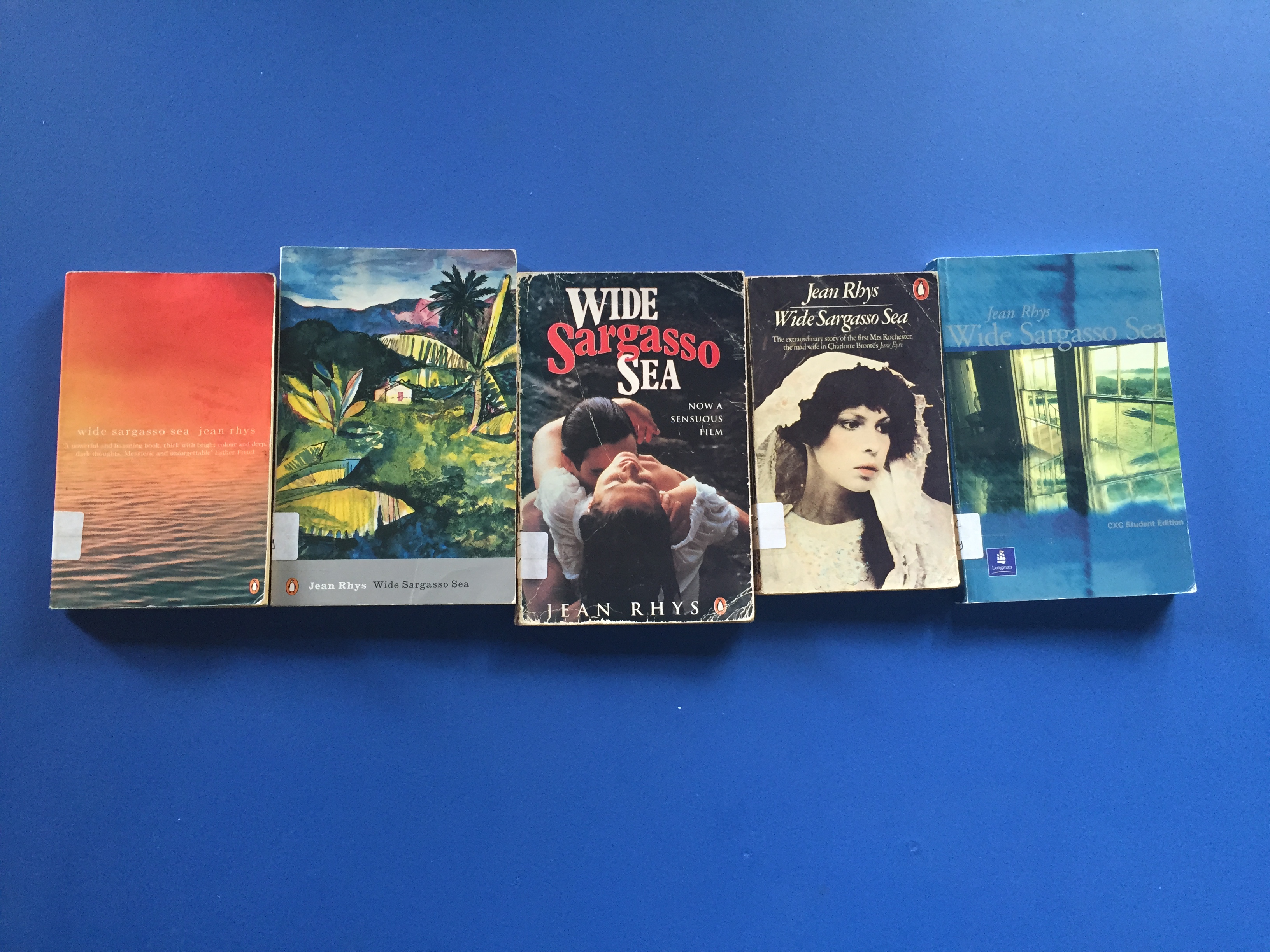
Wide Sargasso Sea: Can you be insane if you are alone? – #CCF

wss

…Antoinette’s childhood directly informed her troubles later in life, whether it was the rejection by her cold-hearted mother who was only attached to her brother, the constant abandonment by her close friends and family (most of whom used her for personal gain) or the anger of the local people and her status as a pariah. This exclusion only led to further isolation in her mind.

In many ways, Rhys has shaped loneliness within these characters as a ‘getaway’ from reality, so much so that Antoinette would ignore the surrounding world and became intolerant towards people. This alienation, compounded by acts of betrayal, causes Antoinette’s personality to twist. Her issues followed her to her stay at the convent, continuing to chip away at her sanity…

The above excerpt is from Tristan Alleyne’s review of Wide Sargasso Sea by Jean Rhysthis week’s addition to the Fresh Milk Books Tumblr – the online space inviting interaction with our collection in the Colleen Lewis Reading Room.

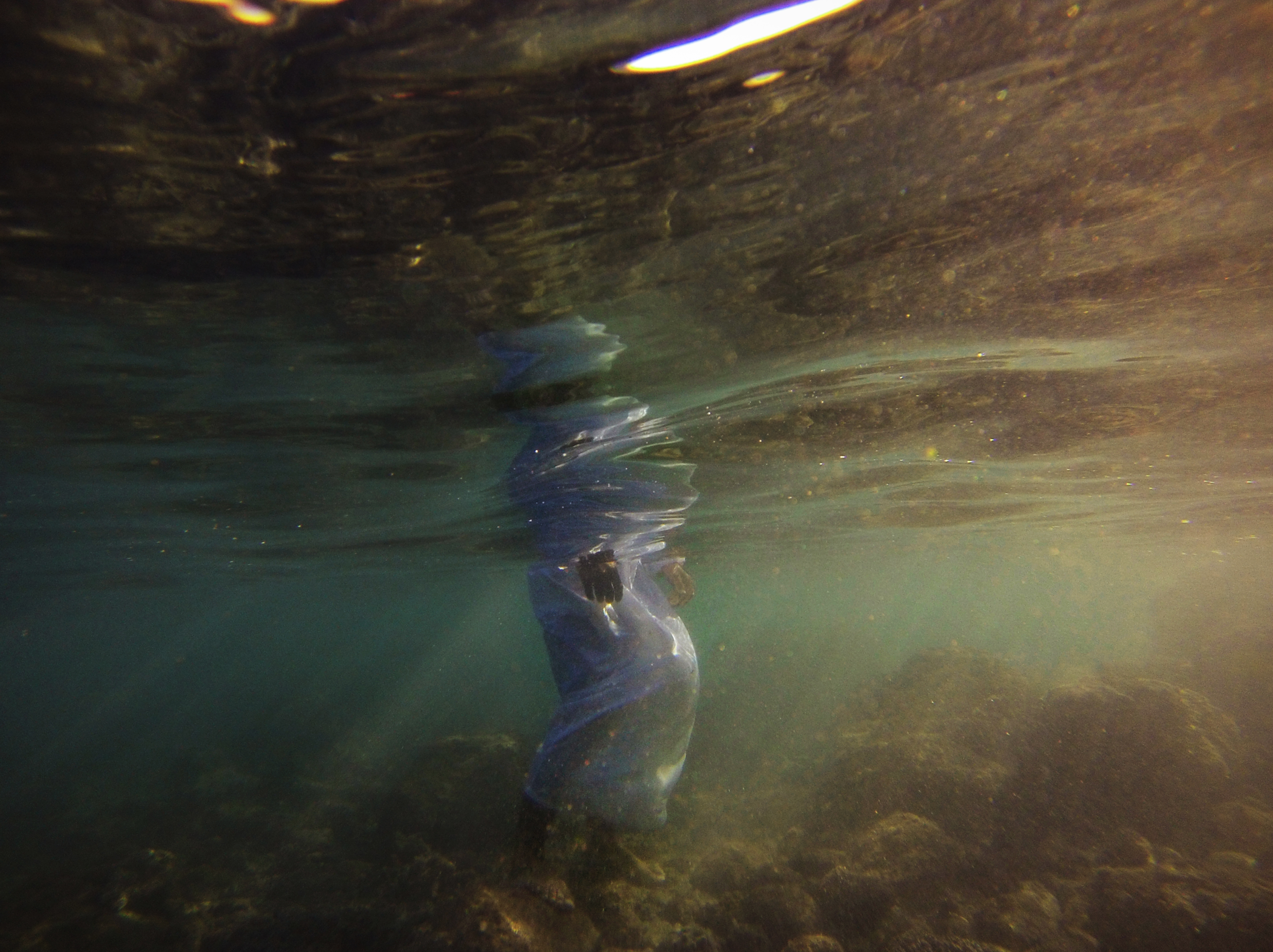
Fresh Milk is also currently hosting Australian resident artists of Caribbean extraction Willoh S. Weiland and Halcyon Macleod. They will be with us between April 20 – May 23, 2015 working on their collaborative project ‘Crawl Me Blood’, a sound installation inspired by Wide Sargasso Sea. For more information about their project, click here.

For new Critical. Creative. Fresh reviews, look out for our #CCF responses and see the great material we have available at Fresh Milk!

Jordan Clarke’s Residency – Week 4 Blog Post

Barbadian-Canadian painter Jordan Clarke shares her fourth blog post about her Fresh Milk residency. In her final week, Jordan confronts some of the underlying reasons for her disconnect with the Barbadian side of her identity, and sees her experience in the island as a starting point to build on as she investigates this part of her culture and herself. Read more below:

IMG_0977-1

“As is common to most transnational communities, the extended family – as network and site of memory – is the critical conduit between the two locations.” (Stuart Hall, ‘Thinking the Diaspora: Home – Thoughts from Abroad’, Caribbean Political Thought)

It is typically through family that Caribbean migrants are able to maintain a sense of connection to their Caribbean culture. What happens, however, when there isn’t a sense of cultural sharing through family? How does this affect one’s sense of cultural identity?

IMG_0978

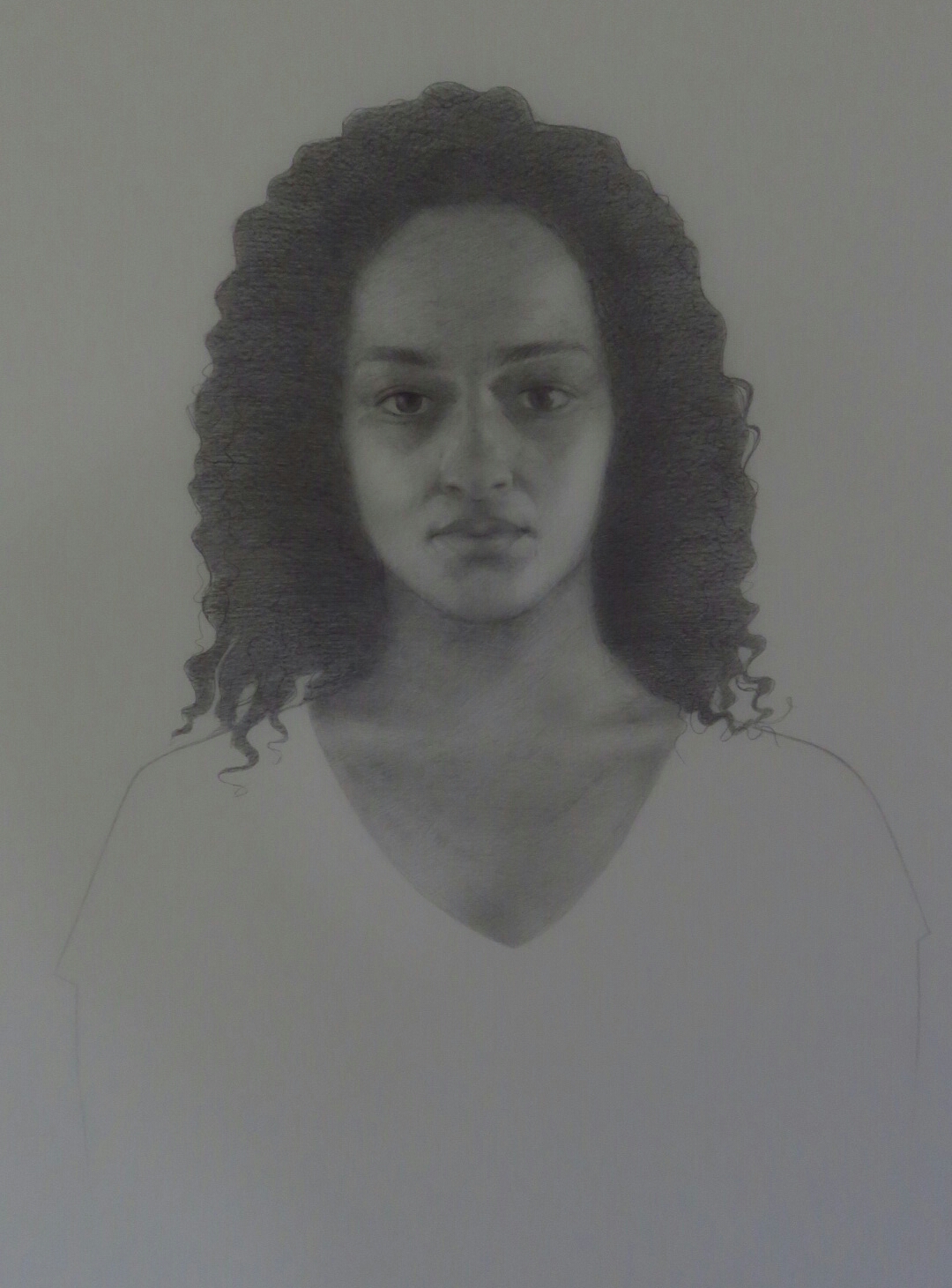
In my fourth week at Fresh Milk, I confronted the fact that my father has never been solidly present to share his cultural identity and family with me. I drew a self-portrait in response, with the intention of representing a conversation I would have with my father. A more confident me stares out, confronting.

I realize that the work I have created here during my residency represents a starting point for further investigation of the theme of self-perception, as well as self-discovery. It will act as a guide for future work once I’m home.

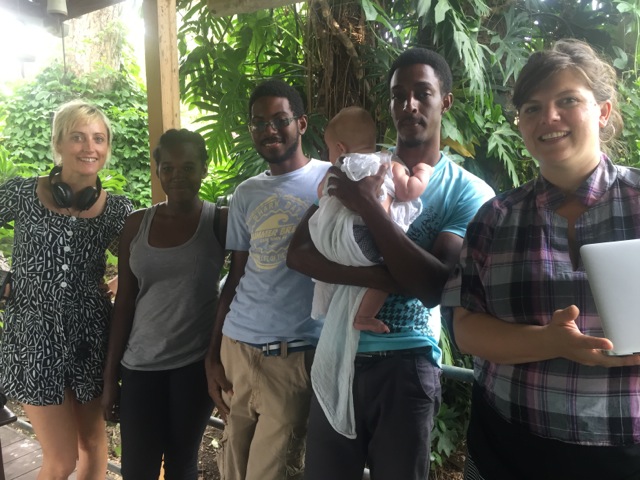
In thinking about the four weeks I’ve been here, I couldn’t be more grateful for this rewarding experience. Having such a wonderful studio to work in, without the usual daily distractions, has been refreshing and inspirational. Fresh Milk’s extensive library, full of contemporary Caribbean literature and art publications, has been an invaluable tool for informing my work here. I can’t thank both Annalee Davis and Katherine Kennedy enough for all their help and support. Annalee is full of knowledge and has been able to point me in directions I showed interest in, while leaving me space to navigate my art practice. I would also like to thank Aaron Kamugisha for his help and good company.

It has been so stimulating to connect with all the artists who have visited Fresh Milk during my residency. I see my time here as a starting point, a spark that will encourage further exploration and dialogue in my art practice.

_______________________________________

2014 OAC logo RGB JPG

This residency is supported by the Ontario Arts Council.

Malaika Brooks-Smith-Lowe shares her reflection on Tilting Axis: Showing up as Caribbean creatives

Malaika Brooks-Smith-Lowe, artist, activist and co-founder of Groundation Grenada, shares her reflections on the conference Tilting Axis: Within and Beyond the Caribbean – Shifting Models of Sustainability and Connectivity which took place at Fresh Milk on February 27-28, 2015. Read an excerpt from her report below:

Malaika TA report2

‘I think it’s an act of rebellion to be a whole person… It’s an act of rebellion to show up as your whole self, and especially the parts that are complex, that are unfinished, that are vulnerable.’ – Courtney Martin

Two weeks before traveling to Tilting Axis: Within and Beyond the Caribbean – Shifting Models of Sustainability and Connectivity at the Fresh Milk Art Platform in Barbados, I listened to a podcast titled The Inner Life of Rebellion, a conversation which included Courtney Martin. During my presentation at Tilting Axis, about the vision and work of Groundation Grenada, I shared the above quote by Martin. Her reflections on the power of being able to make progress even with full recognition that we are imperfect and always in-the-making resonated with me deeply. It is this kind of ‘showing up’ as a whole complex person that Groundation Grenada seeks to support. As an organization our aim is to create safe spaces for people in our communities to explore the fullness of their experiences and express themselves in an environment that honors our differences. Tilting Axis was a unique moment to connect with founders and directors of initiatives that similarly work to support and enhance the growth of the Caribbean’s vast array of voices & creative visions.

Tilting Axis, held from February 27-28, 2015 aimed to promote greater conversations and engagement between artists and professionals working within artist-led initiatives across the wider Caribbean region, build and redefine historical relationships with those in the North, and establish open dialogue with active networks emerging in the Global South.

The space that the organizers Fresh Milk Art Platform Inc., ARC Inc., Res Artis and Pérez Art Museum Miami were able to create was a rich opportunity for discussing challenges and envisioning collaborative solutions.  They brought together several of the region’s arts initiatives to engage in face to face conversations. Also present were a number of professionals from outside the region interested in working with Caribbean-based initiatives such as Solange Farkas, founder and director of Videobrasil (Brazil), and N’Goné Fall, a founding member of the Dakar-based collective GawLab (Senegal). For a complete participant list and other details read the official post-conference press release (here).

There were many existing relationships and partnerships in the room and many possibilities for new collaborations discussed in formal sessions and during tea breaks. Technology has been an invaluable tool in facilitating the growth of what feels to me like a tangible movement in the region via the visual arts. Being in the same physical space as such a dynamic group of artists, curators, writers and organizers, and being able to have real conversations, was an invigorating experience. We all showed up as our full selves, open to discussing the complexities we are working with and through. It was an intergenerational setting with cross-pollination between organizations that were founded decades ago and seedling organizations that are now taking root and beginning to bloom.

Read the full report on Malaika’s website here.

Jordan Clarke’s Residency – Week 3 Blog Post

Barbadian-Canadian painter Jordan Clarke shares her third blog post about her Fresh Milk residency, continuing to use self-portraiture and exploration of her surroundings for self-discovery and both personal and artistic growth, reckoning with the multiple facets and cultures that comprise her identity. Read more below:

IMG_0488

While at Fresh Milk, I have been working through self-portraiture, landscapes, photography and journaling as a means to document my first visit to Barbados. Born in Canada, I am the daughter of a Canadian mother with Scottish and English roots and a Barbadian father who has now spent 75% of his life in Canada. As a result, I possess multiple identities. I see myself as mixed-race, Black and Canadian.

In Barbados, where I have no family members, I feel disconnected and exposed. I am an outsider in my father’s homeland where I had hoped to feel a sense of homecoming and belonging. Not surprisingly, the work I have been producing here is introspective, exploring the theme of self-perception. My double self-portrait in graphite really expresses the sense of vulnerability and sadness I felt soon after my arrival in Barbados.

I have also been looking outwards, exploring landscapes in my work, specifically sky and cloudscapes. I’m attracted to clouds because they are always in movement and constantly changing, creating new formations that never repeat. I also find them to be majestic and beautiful. For me, clouds represent a universal space rather than a specific place, a space that is similar in both Toronto and Barbados.

At the moment, I see landscapes and portraits as two different practices. I had originally intended to insert myself into the landscape to create a connection with the land and Barbados. Interestingly enough, this joining of my body and a still unfamiliar landscape isn’t happening.

This residency is a special opportunity for self-discovery and evolution. I am realizing that change is not always comfortable, but is an essential part of my growth as a woman and as an artist. What is most painful is the feeling that I am missing a large part of my cultural roots and identity.

_______________________________________

2014 OAC logo RGB JPG

This residency is supported by the Ontario Arts Council.

Intervention IBB Magazine shares Tilting Axis

Instituto Buena Bista (IBB), Curacao shares an article through their Intervention IBB Magazine about the 2015 Tilting Axis conference, which took place on February 27-28 and brought together a number of contemporary arts initiatives from around the Caribbean along with a few international entities to devise an action plan for advancing the region’s creative sector. Read an excerpt from IBB co-founders Tirzo Martha and David Bade below:

tiltingaxisbarbados07

First impression

David: To be honest, at first I had a prejudice of what the conference was going to be. Because of my past experiences, I grew accustomed to the fact that most of the time there was a lot of talking, less actions and very few tangible results. But within this short time of 2 days, this was not the case at all. The whole approach and the focus was to come to concrete and clear results. I think this was a good thing and I am positive about this. We had to take steps to get somewhere. They gave us cases we had to work on and present and come up with some real proposals. “Collaboration” and “exchange” are all very nice funding words, but they have been used so much that now they’re becoming empty words. I have every confidence that something will happen this time around.

Tirzo: Two things I find very important about the Tilting Axis conference:

The old guard and the usual faces were absent, and there was fresh blood there. That was refreshing, to have that fresh blood who are open to new ways, perspectives and visions. Another thing I found interesting was that it wasn’t about the artist as individual but about art itself. About the society, the added value of art for the society and how you can contribute to the development of art education and formation through social cultural art projects.

David: we sat in work groups or sub groups and got the questions: Are we just here to meet each other or will we do something from now on? They proposed to me too, now that next year we will have existed for 10 years, to let our art collection travel within the Caribbean region. Now our network has expanded with these new people, the idea to have our art travel in the region visiting all the different art platforms sounds very appealing.

Tirzo: Collaboration is not necessarily in one form only. It can also be to assist or to support. For example: a lot of art initiatives say they have a lack of financial means. They don’t have money for a website for example. To let some company make a website can costs thousands of dollars, but if for example we at IBB can make a website for another art initiative we can support each other in this way. We can exchange our services, knowledge and capacities to one another, as everyone is good at one thing. It’s much cheaper and by doing this we can also generate funds.

It was of great satisfaction to meet and speak with people from the French speaking islands, Martinique, and also to acknowledge the presence of a representative from the Dominican Republic.

Read the full article on Intervention IBB Magazine here.