Announcing the 2026 TENDER Grantees

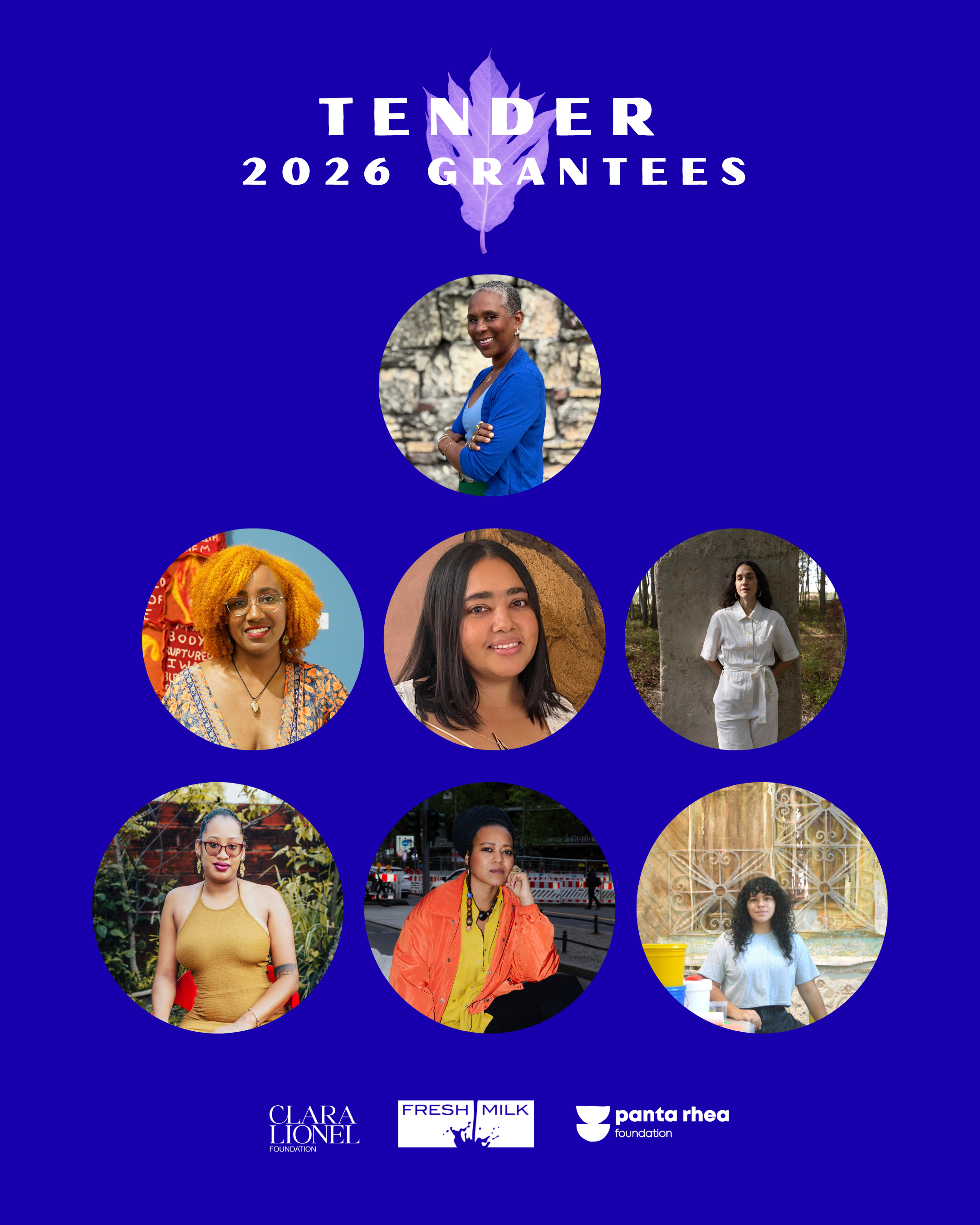
Fresh Milk is thrilled to announce our 2026 cohort of TENDER grantees! This year’s TENDER programme, supported by the Clara Lionel Foundation and the Panta Rhea Foundation, took an alternative approach to our previous editions due to both our modified budget, and the high quantity of strong aspirants in the existing pool of applications from 2024 and 2025.

We invite you to consult our Jury Report below for a full breakdown of our procedure and General Comments.

Please join us in extending a huge congratulations to our 2026 Grantees!
TENDER JURY REPORT 2026

Procedure

The third year of TENDER: A Caribbean Arts Regranting Programme, spearheaded by Fresh Milk, was supported in partnership with the Clara Lionel Foundation (CLF) and the Panta Rhea Foundation. While the first two editions of the initiative employed a Caribbean-wide open call process, out of which contemporary visual artists, curators and arts organisations were awarded a total of USD $124,500 ($65,500 in 2024 and $59,000 in 2025), a different approach was adopted this year. 

Given that the overall funding available this year was USD $28,000, and taking into account the many exceptionally strong applications we had received from the wider Caribbean out of the pool of 352 prior applicants, the decision was made by the Fresh Milk team to revisit eligible artists from past editions to be considered. Rather than having a third open call, a shortlist was compiled of the top-scoring submissions from the first two years in the three most popular, well subscribed tiers of grant funding offered: the emerging, mid-career, and established artists categories. 

This model honours the quality of previous applications, and acknowledges the fact that the scores between applicants were often extremely close, making past jurors’ decisions very difficult. It also recognises the subjective and often difficult to quantify nature of arts practices, and afforded a chance for different perspectives and gazes to be cast over the portfolios of artists that had already proven themselves as impressive practitioners.

59 applications were selected for re-evaluation based on the applicants’ statements and work samples that collectively received the 10 highest numerical scores in past years, from the following categories:

  1. Emerging Artists – 20 applicants (13 women, 4 men, 3 non-binary)
  2. Mid-Career Artists – 21 applicants (10 women, 10 men, 1 non-binary)
  3. Established Artists – 18 applicants (8 women, 9 men, 1 non-binary)

The 59 submissions spanned the following twenty countries: 

Anguilla, Antigua & Barbuda, Aruba, The Bahamas, Barbados, The Cayman Islands, Curaçao, Dominica, Dominican Republic, Grenada, Guadeloupe, Haiti, Jamaica, Martinique, Puerto Rico, The Bahamas, St. Vincent & the Grenadines, Suriname, Trinidad and Tobago, US Virgin Islands.

Our committee of jurors was composed of the following members:

  • Versia Harris, Visual artist and Tutor in the BFA Studio Art programme at Barbados Community College, Barbados
  • Ronald Rose-Antoinette, Max Stern Curator at the Leonard & Bina Ellen Gallery in Tiohtià:ke/Montréal;
  • Sarabel Santos-Negrón, Visual artist, Educator and Director of the Museo de Arte de Bayamón, Puerto Rico .

The jury comprised three former TENDER grantees. Versia Harris (TENDER grantee 2024) served as a juror for TENDER’s 2025 open call, while Ronald Rose-Antoinette (TENDER grantee 2024) and Sarabel Santos-Negrón (TENDER grantee 2025) were first time jurors, allowing for a nuanced mixture of revisiting work in some instances, while also having fresh eyes on the artists’ portfolios. The committee was asked to reflect chiefly on the strength of the work submitted in relation to the contemporary visual art sector and evaluate areas such as conceptual direction, evidence of intent to continue their practice, and potential for growth. 

The final jury meeting was chaired and moderated by Annalee Davis, Founding Director, Fresh Milk and Katherine Kennedy, Director of Programmes, Fresh Milk.

General comments on the TENDER 2026 Grant Cycle

The members of the jury were once again impressed by the overall high standard of work being produced by contemporary artists across the region. Applicants were working across a wide range of media including  animation, drawing, digital art, illustration, installation, new media, printmaking, painting, performance, photography, sculpture, sound, textiles, video and interdisciplinary practices. 

In terms of the review process, Santos-Negrón highlighted that portfolio presentation, including CV structure and visual clarity, was crucial for evaluating artists, particularly those with whom she was not familiar with, and that she was pleased with the depth and breadth of work she encountered. Harris and Rose-Antoinette agreed, and observed that the current cohort’s portfolios were easy to navigate and accessible, although it was agreed that professional documentation of work is an area in which Caribbean artists could still use additional support, so their portfolios do their practices justice when opportunities arise. As a veteran juror, Harris also noted the value of revisiting some work one year on, with fresh perspectives casting the work in a new light, reiterating the ongoing and dynamic impact of the artwork. It was also mentioned by the Fresh Milk team that a number of artists had applied to both the 2024 and 2025 open calls, and having their work ranked among the top ten highest scores consistently was noteworthy when making the final decision.

The jury further observed some of the recurring themes in the submissions, including ritual work, use of natural materials, cooking, food security, solidarity and climate urgency. These concerns seem to be indicative of not only a heightened sense of awareness around some of the Caribbean’s most pressing issues and precarious circumstances, but also an interest in alternative and reparative methods of addressing them, with an emphasis on sustainable practices, healing and community work.

Collectively, the jury considered other factors such as geographical reach across all four linguistic territories and a diversity of art forms to ensure a comprehensive selection reflecting the richness of art practices in the wider Caribbean, and enjoyed the opportunity to connect and collaborate with one another in the meeting.

The final list of grantees includes 7 women from all linguistic parts of the Caribbean including Aruba, Guadeloupe, Jamaica, Puerto Rico, Trinidad and Tobago and the US Virgin Islands.

We are delighted to share that the seven 2026 TENDER Grantees are:

Caribbean emerging artists: USD $2,500.00 each

Caribbean mid-career artists: USD $3,500.00 each
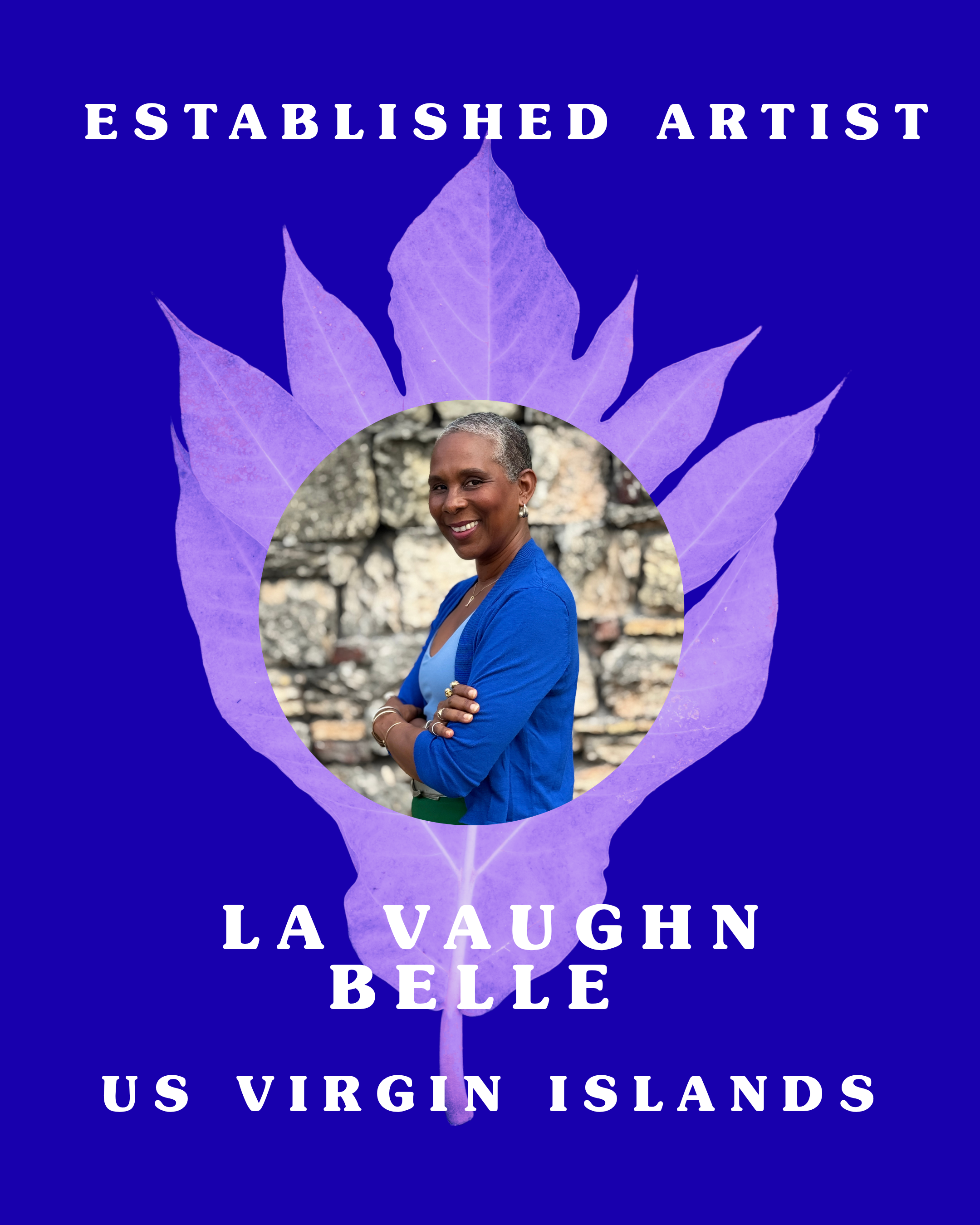
Photo credit: Toni Lance

Caribbean established artist: USD $7,500.00

About Fresh Milk:

Fresh Milk is an artist-led, non-profit organisation founded in 2011 and based in Barbados. It is a platform which supports excellence in the visual arts through residencies and programmes that provide Caribbean artists with opportunities for development, fostering a thriving art community. Fresh Milk offers professional support to artists from the Caribbean and further afield and seeks to stimulate critical thinking in contemporary visual art. Its goal is to nurture artists, raise regional awareness about contemporary arts and provide Caribbean artists with opportunities for growth, excellence and success.


About the Panta Rhea Foundation:

Mission: To catalyze a just and sustainable world through food sovereignty, community power building, and grassroots liberation around the globe.

The Panta Rhea Foundation (PRF) was established in 2001 as a private foundation devoted to researching issues and analyzing the operations, goals and potential of organizations committed to building a more just and sustainable world. The Foundation advises individual donors and other charitable entities on grantmaking strategies and specific grants.

We believe that lasting, authentic change must come from the grassroots; from the organized efforts of people and organizations to enliven the social imagination and envision a better future, to experiment with new ideas, and to hold elected leaders and corporations accountable to the communities they serve.

Our foundation name, Panta Rhea, is inspired by Ancient Greek philosopher Heraclitus. It roughly translates to “You never step into the same river twice” or “All things change, all things flow”—suggesting both inherent constancy and change as a fundamental of life itself.


About the Clara Lionel Foundation:

The Clara Lionel Foundation (CLF) was founded in 2012 by Robyn “Rihanna” Fenty in honor of her grandparents, Clara and Lionel Braithwaite. CLF supports and funds climate resilience and climate justice projects in the U.S. and Caribbean. The foundation’s five key pillars are: Climate Solutions; Women’s Entrepreneurship; Health Access and Equity; Future Generations; and Arts and Culture.

The CLF actively supports arts initiatives that preserve cultural heritage and foster community engagement in the regions we fund. We invest in community-led organizations that promote asset creation, long-term sustainability, and innovative climate solutions through arts practices.
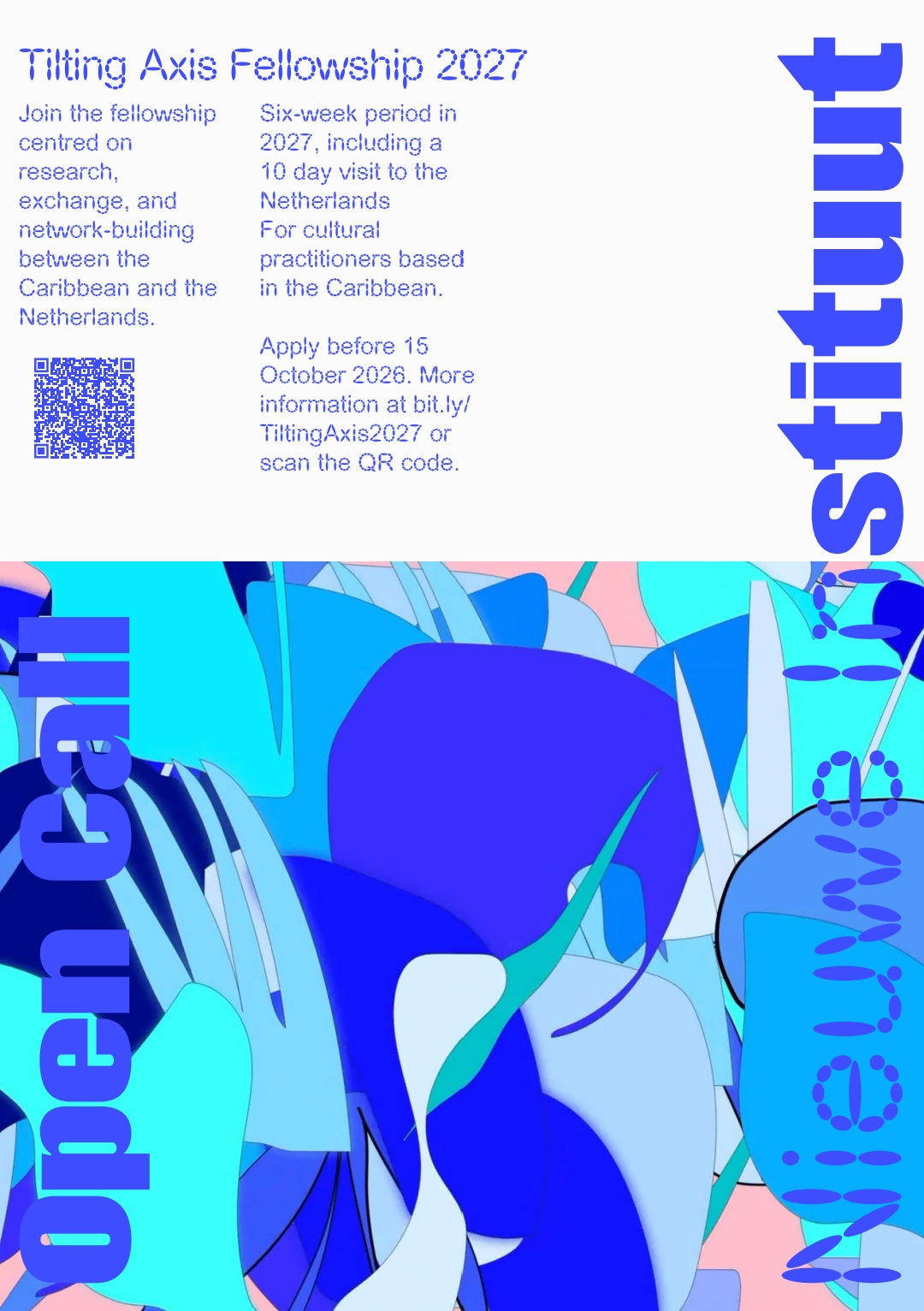
Open Call: Tilting Axis Fellowship 2027

Nieuwe Instituut and Tilting Axis are launching the sixth iteration of the Fellowship programme with an open call for applicants based in the Caribbean. The Fellowship supports research-based practices and stimulates mutual exchange between the Caribbean region and the Dutch cultural field. Together with the leading partners, Nieuwe Instituut and Tilting Axis, other cultural institutions including Stedelijk Museum Amsterdam will engage with the selected applicant during the Fellowship.

Graphic design: Moriz Oberberger

About the Fellowship

The 2027 Tilting Axis Fellowship will be supporting two fellows in a six-week programme centred on research, exchange, and network-building between the Caribbean and the Netherlands. One fellow will be selected from the Dutch Caribbean. Applicants may also apply as a pair from different regions of the Caribbean including the Dutch Caribbean; if selected, the pair will together occupy both fellowship positions. Otherwise, the selected fellows will be paired by the organisers. Within the six-week programme, Nieuwe Instituut facilitates a one-week tailor made visit to the Netherlands. This fellowship is conceived as a period for networking, research, reflection, and dialogue.

Are you interested in how knowledge is produced, preserved, and contested through archives, storytelling, digital platforms, or community practices? Do you work with themes such as memory, social or environmental change, or collective forms of knowledge-making? We welcome practitioners working across writing, film, sound, design, research, architecture, and other creative or interdisciplinary fields—especially those exploring how culture is shaped through collaboration, technology, and lived experience.

Structure of the Fellowship

The fellowship consists of a six-week period, including a 10 day visit with a 5 day tailor-made program for cultural exchange in the Netherlands. The fellowship takes place in April and May 2027. The one-week visit will be hosted within this period, with the exact timing to be determined in consultation with the two selected fellows.

During this visit, the two fellows will travel together, fostering exchange and dialogue between practitioners from across the Caribbean that supports intraregional exchange through this fellowship experience. They will participate in a programme organised through tailor-made meetings, site visits, and opportunities for dialogue with artists, cultural practitioners, researchers, and institutions. The programme is designed to facilitate meaningful encounters and intercultural exchange.

The fellowship supports an end result defined by the fellows themselves, with a clear milestone based on their project. Applicants are expected to outline this milestone in their application. Throughout the six weeks, fellows will take part in weekly check-in meetings.

Fellowship Support

Each fellow will receive a stipend of €2,500 to support the broader fellowship period. In addition to the stipend, fellows may access up to €1,000 in travel support connected to their research proposal.

This travel budget may be used for travel within the Caribbean or beyond, where relevant to the proposed research, exchange, or network-building activities. Fellows can use this support flexibly according to their needs—for example to extend their stay in the Netherlands, conduct research travel, connect with collaborators, or dedicate time to the development of new work.

During the one week visit, all travel costs to and from the Netherlands, as well as the week-long programme in the Netherlands, will be covered separately by Nieuwe Instituut Fellows may choose to extend their visit at their own expenses.

For whom?

The fellowship is open to researchers, designers, writers, curators, or cultural producers based in the Caribbean region who are interested in developing their research practice and building connections with cultural institutions in the Netherlands. Applicants may work across different cultural fields and practices, including those engaging with archives, social and ecological questions, cultural memory, spatial practices, design, architecture, or digital culture.

The fellowship is open to applicants with or without formal degrees or institutional affiliations. Equal priority will be given to those who can demonstrate creativity, critical thinking, and strong potential within their practice, regardless of educational background. There is no age limit for applicants.

Applicants must be residents of and based in one of the following Caribbean countries or territories:

Anguilla, Antigua & Barbuda, Aruba, The Bahamas, Barbados, Belize, Bermuda, Bonaire, British Virgin Islands, Cayman Islands, Cuba, Curaçao, Dominica, Dominican Republic, French Guiana, Grenada, Guadeloupe, Guyana, Haiti, Jamaica, Martinique, Montserrat, Providencia, Puerto Rico, Saba, San Andrés, St. Barthélemy, St. Eustatius, St. Lucia, St. Kitts & Nevis, St. Vincent & the Grenadines, Saint Martin, Sint Maarten, Suriname, Trinidad & Tobago, Turks & Caicos Islands, US Virgin Islands.

Application Process

The Open Call for the 2027 fellowship will open on 1st September 2026, with a submission deadline of 15th October 2026.

Proposals should be submitted via email to ta-fellowship@nieuweinstituut.nl with the subject line: Tilting Axis Fellowship 2027 – [Applicant Name]

Applicants may also apply as a pair from different regions of the Caribbean but one must include an applicant from the Dutch Caribbean; if selected, the pair will together occupy both fellowship positions. Otherwise, the selected fellows will be paired by the organisers.

Applicants may submit their proposal in written, audio, or video format, or a combination of these. We encourage applicants to choose the format that best allows them to communicate their research, ideas, and approach.

Written proposals should be a maximum of 1,000 words and include:

  • Statement of intent: Explain your research focus, key questions, and proposed methodology.

  • Relation to the fellowship themes: Describe how your proposed project engages with the themes outlined above.

  • Working calendar: Provide a proposed timeline for the fellowship period, including your availability to travel to the Netherlands between April and May 2027.

  • Previous work: Include documentation of up to five relevant previous works, with links and/or brief descriptions where useful.

For audio or video submissions, the same information should be addressed within the submission. Audio/video submissions should be a maximum of 5–7 minutes.

Previous work may be included separately as links or brief documentation, with up to five relevant works. All materials should be submitted as one PDF document where possible, with links to audio/video material embedded or clearly indicated. If the submission itself is an audio/video file, this may be submitted alongside the PDF containing the applicant’s supporting materials.

Applications must be written or recorded in English, and applicants should have a working knowledge of the language. English does not need to be the applicant’s first language; however, translation support is unfortunately not available at this time.

Applicants with specific questions or access requirements are encouraged to contact ta-fellowship@nieuweinstituut.nl to discuss the availability of support services.

Selection Process

The fellows will be selected through a jury process composed of:

  • Yesomi Umolu (Artistic Director, Nieuwe Instituut)

  • Charl Landvreugd ( Head of Research & Curatorial Practice, Stedelijk Museum)

  • Annalee Davis (Tilting Axis / Fresh Milk – Barbados)

  • Ana Maria Hernandez (RAA! – Aruba )

  • David Gumbs (Visual Artist, Educator – Martinique)

  • Tirzo Martha (Instituto Buena Bista – Curaçao)

Following the initial review of applications, five shortlisted candidates will be invited for an online interview with the 3 members of the jury. The final fellows will be selected following this interview process. The fellowship will begin in April 2027.

Key Dates

October 11, 2026, 23:59 CET / 18:59 AST: Open Call closes
November 2–3, 2026: Shortlisted applicants are invited to interviews
November 9, 2026, 14:30–18:30 CET / 09:30–13:30 AST: Interview session
November 10, 2026, 14:30–17:00 CET / 09:30–12:00 AST: Interview session

Q&A Session

We will host a one-hour Q&A session on 15 September, 10:00–11:00 AM AST (4:00–5:00 PM CET) via Google Meet. The session is an opportunity to ask questions about eligibility and the application process. No registration is required; you can join directly here.

For more information or questions, reach out to our team via ta-fellowship@nieuweinstituut.nl.

Fresh Milk’s Call & Response Programme – FAQ

The Fresh Milk Art Platform is embarking on a region-wide research initiative catered to Caribbean-based contemporary visual artists with a goal of establishing a deeper understanding of what is required for the visual art sector to be established and to flourish.

This collective Call & Response Programme aims to reflect a sense of unity by inviting inter-generational artists living and working in Barbados and the wider linguistic region to actively participate in the information gathering phase. Fresh Milk will gather this research between 2025 and 2027, which will shape a tailor-made Response programme addressing some of the urgent needs expressed by cultural workers in a more targeted way.

The form will take approximately 20-30 minutes of your time, depending on your level of interest and engagement with each section. You are welcome to share this form with your peers nationally and regionally or coordinate a group session within your artist-led initiative, museum, gallery or art organisation as shared activity.

Thank you for your time!

CLICK HERE TO COMPLETE THE SURVEY!

Fresh Milk’s Call & Response Programme for Caribbean-based Contemporary Visual Artists – Phase 1

The Fresh Milk Art Platform is embarking on a region-wide research initiative catered to Caribbean-based contemporary visual artists with a goal of establishing a deeper understanding of what is required for the visual art sector to be established and to flourish.

This collective Call & Response Programme aims to reflect a sense of unity by inviting inter-generational artists living and working in Barbados and the wider linguistic region to actively participate in the information gathering phase. Fresh Milk will gather this research between 2025 and 2027, which will shape a tailor-made Response programme addressing some of the urgent needs expressed by cultural workers in a more targeted way.

The form will take approximately 20-30 minutes of your time, depending on your level of interest and engagement with each section. You are welcome to share this form with your peers nationally and regionally or coordinate a group session within your artist-led initiative, museum, gallery or art organisation as shared activity.

Thank you for your time!

CLICK HERE TO COMPLETE THE SURVEY!

Announcing the 2nd Edition of the Lucayan Archipelago Residency

Fresh Milk in partnership with Poinciana Paper Press and supported by the Panta Rhea Foundation are delighted to announce our second edition of the Lucayan Archipelago Residency which will commence in The Bahamas in January 2026.

In response to the critical need for exchange across creative and environmental ecosystems, this residency brings together creatives from the Caribbean to imagine and co-create a critical cultural dialogue with the environment and resources in The Bahamas through art and writing. Our two residents are Tracy Assing (Trinidad & Tobago) and Carol Sorhaindo (Dominica).

Tracy Assing is a writer, editor, filmmaker. She has spent several years working in various forms of media, and as a communications strategist. As a member of Trinidad’s indigenous community, working mainly in non-fiction, her work is aligned with sustainable ways of living and green strategies for survival. Assing produced, wrote and directed the first film on the subject of indigenous survival in the English speaking Caribbean, The Amerindians. Her essay, Unaccounted for, was the only non-fiction essay included in the Commonwealth Writers anthology, So Many Islands. 

Assing has a passion for magazine and zine culture and has been involved in the development of several publications. She is also a poet, who uses photography in her work.


Carol Sorhaindo is a freelance visual artist with an MA in Creative Practice from Leeds College of Art, UK. Her diverse portfolio career includes interior design, community education and project development. The success of her art practice is built on a strong belief in the value of creative expression, nature and heritage awareness on mental wellbeing.

Inspiration is drawn from landscapes with a focus on Caribbean plants of economic and ethnobotanical interest. Carol lives in Dominica after many years of residing in the UK. Her migration story and entangled roots inform her reflective Art practice. Research is centrally contextualized through mindful exploration of natural plant-based dyes and earth pigments on textiles, drawing, painting, print making, installation and  journaling.   


Together, Tracy and Carol while based in Nassau will explore some of the family islands of this 700-coral island archipelago, meet with contemporary visual artists and writers, ecologists, and environmentalists to understand the ecological reality of the Lucayan Archipelago that sits within the Atlantic Ocean. We can hardly wait to see what emerges from this collaboration!


About Fresh Milk:

Fresh Milk is an artist-led, non-profit organisation founded in 2011 and based in Barbados. It is a platform which supports excellence in the visual arts through residencies and programmes that provide Caribbean artists with opportunities for development, fostering a thriving art community. Fresh Milk offers professional support to artists from the Caribbean and further afield and seeks to stimulate critical thinking in contemporary visual art. Its goal is to nurture artists, raise regional awareness about contemporary arts and provide Caribbean artists with opportunities for growth, excellence and success.


About Poinciana Paper Press:

Located in the capital of the archipelagic nation of The Bahamas, Poinciana Paper Press provides opportunities to engage with books and their allied crafts to empower people to share their narratives in a region that has historically erased, marginalized, and exploited the culture and lived experiences of its inhabitants.

Bahamian writer and artist Sonia Farmer created Poinciana Paper Press as an independent book publisher in 2010, releasing handmade limited-edition chapbooks and artists’ books of Caribbean poetry, short stories, and experimental writing. Her vision is to advance the diversity of narratives and publishing modalities in The Caribbean.

In 2022, she established Poinciana Paper Press as the first Center for Writing, Book Arts & Publishing in The Bahamas—arguably, in the wider Caribbean—to expand this vision, developing visibility in the literary and book arts from within the Caribbean cultural ecosystem.

A major collaborator in the literary and visual arts communities in the region, Poinciana Paper Press facilitates programming aligned with its mission by providing opportunities to engage with the form of the book and its allied crafts of writing, bookbinding, letterpress printing, handmade paper, printmaking, book design, and calligraphy. This includes workshops, community outreach and engagement, exhibitions, publications, and residencies.


About Panta Rhea Foundation:

Mission: To catalyze a just and sustainable world through food sovereignty, community power building, and grassroots liberation around the globe.

The Panta Rhea Foundation (PRF) was established in 2001 as a private foundation devoted to researching issues and analyzing the operations, goals and potential of organizations committed to building a more just and sustainable world. The Foundation advises individual donors and other charitable entities on grantmaking strategies and specific grants.

We believe that lasting, authentic change must come from the grassroots; from the organized efforts of people and organizations to enliven the social imagination and envision a better future, to experiment with new ideas, and to hold elected leaders and corporations accountable to the communities they serve.

Our foundation name, Panta Rhea, is inspired by Ancient Greek philosopher Heraclitus. It roughly translates to “You never step into the same river twice” or “All things change, all things flow”—suggesting both inherent constancy and change as a fundamental of life itself.