Maj Hasager & Ask Kæreby – Week 2 Blog Post

Fresh Milk resident artists Maj Hasager and Ask Kæreby share the second blog post about their time in Barbados, outlining their busy week that saw them continuing to learn about the island through research in the Barbados National Archives and by traversing the physical landscape. Both artists also began their community outreach, which included Maj’s first session with BFA students at Barbados Community College and day one of Ask’s experimental sound workshops being held at Fresh Milk. Read more below:

The blessed rain pours down massively. After a dry wet season the plants, trees and animals feel energized and revitalized. Monday is spent in the studio and the rain creates a perfect soundscape on the metal roof, where the sound is intensifying and suddenly loosens its loud grip to make the wind and the surrounding sounds audible. The studio is quiet and we are planning the South Coast trip later in the week. Our plan is to see the majority of the island by local buses and it demands a bit of logistics, good walking shoes and some determination to make this happen – as time is a luxury that many visitors to the island seem short of. Insisting on taking our time is indeed in stark contrast to the past year of activities, and it is highly appreciated.

Annalee is waiting in her car outside the apartment – I (Maj) can hear her beeping and grab my things before closing the door behind me. We move down the hill towards Barbados Community College (BCC) where half an hour later I will give a lecture on my work to a group of students from the fine arts department. Hours later, I am enriched by the level of conversation and questions raised amongst the students, and I can’t wait for the next session where we will go more in depth in terms of a close reading of a text, and thinking through social practice together. As we are leaving the BCC, Annalee takes me to the top of the campus to show me an old derelict building – despite it falling apart you can sense the grandeur of the structure. She tells me that it is a former sugar plantation house and it sits fairly dislocated or perhaps amputated at the edge of campus. Here the generic campus buildings seem to be rejecting a contested past, and the neglect of the house (or perhaps its symbolic meaning of colonial power) seems to be a way to suppress a past by letting it dissolve slowly by time. Though perhaps forgetting, as Annalee mentions, that the first black Chief Justice on the island Sir Conrad Reeves lived in this house too.

History spills out of wooden drawers in the chilled archival hall of the Barbados National Archives where we arrive Wednesday morning. We are slowly chewing our way through archival documents – via neatly organized index cards in perfectly fitted drawers tracing migration movements after the emancipation in the 1830’s – in particular looking at the massive exodus of young Barbadian men leaving for work in Panama either constructing the railway or later digging the Panama Canal. We are following the trail of the “Panama money”, the encouragement – and later restriction ­– of migration, the riots in 1937 and the formation of trade unions. One thing leads to the next as the hours vanish in the archive. The archive itself is somehow stuck in the past, and the sounds of heavy books being dropped on tables echo in the vast space. At 4 pm the archive is slowly shutting down, and we leave the air-conditioned hall with a chill. Outside the archive at 4 pm on the dot, the art historian Therese Hadchity picks us up. She left Denmark 25 years ago, and we spend hours over coffee discussing contemporary art in the Caribbean, social practice and the potential pitfalls of this type of practice – to mention a few of the many topics covered over three hours in good company – definitely a conversation to be continued.

Thursday morning begins with some more work on the hydrophone (underwater microphone) – Ask is still attempting to secure the cable so water is kept out when immersed. Thanks to the Colleen Lewis Soldering Iron, Annalee’s extended family and local hardware and music stores, an improvised solution begins to materialise. The plan is to test it over the weekend when we are walking along the South Coast. Thursday is also the first session of the sound workshop that Ask is teaching. Six people turn up at Fresh Milk for the first dose of soundscape recording and composition – some have a bit of a shell shock. It is a rocky ride through Musique concrète, Pierre Schaeffer, soundscape, acoustic ecology, Murray Schafer and the physics and technology behind it all. As the dust settles, questions arise and a most interesting debate takes form – I am very much looking forward to the continuation.

We head out early Friday morning, and as we leave the apartment at dawn, Annalee’s lovely father offers us a ride to St. Lawrence Gap at the South Coast, and thereby cuts our journey shorter by an hour or more. St. Lawrence Gap is the first place where we immerse the hydrophone fully in seawater, and thank goodness it is water proof despite its very homemade look. Maj has volunteered to be the assistant in the sea (what a dreadful task) and Ask is at shore with the recorder and headphones. Suddenly sounds of sand on the sea bottom are coming through and it is very exciting. The recordings continue throughout the weekend in different locations and both in the Caribbean Sea and Atlantic Ocean.

We end the weekend trip at the Good Life Café near Accra Beach, where we meet the multitalented artist Mark King, who quickly turns out to be a stimulating conversation on both art and global politics.

_____________________________

DanishArtsFound_LOGO_CMYK

This residency is supported in part by the Danish Arts Foundation

Fresh Milk welcomes Maj Hasager and Ask Kæreby to the platform

From November 1 – 27, 2015, Fresh Milk is pleased to welcome Danish artists Maj Hasager and Ask Kæreby as our next artists in residence.

Maj, an artist, and Ask, an electronic composer, will spend their month undertaking a research residency in Barbados, engaging with the local arts and music community to explore ways of thinking about materials and practices through conversations and workshops.

Maj will instigate discussions focusing on notions of praxis, materiality and the act of producing. There will be a mix of individual studio visits and workshops on practice, hybridity and oral history interview techniques as an artistic method.  Ask will conduct a series of experimental sound workshops, exploring sound as a medium of intrinsic value and its own source of information, using it as a way of aurally mapping our environment.

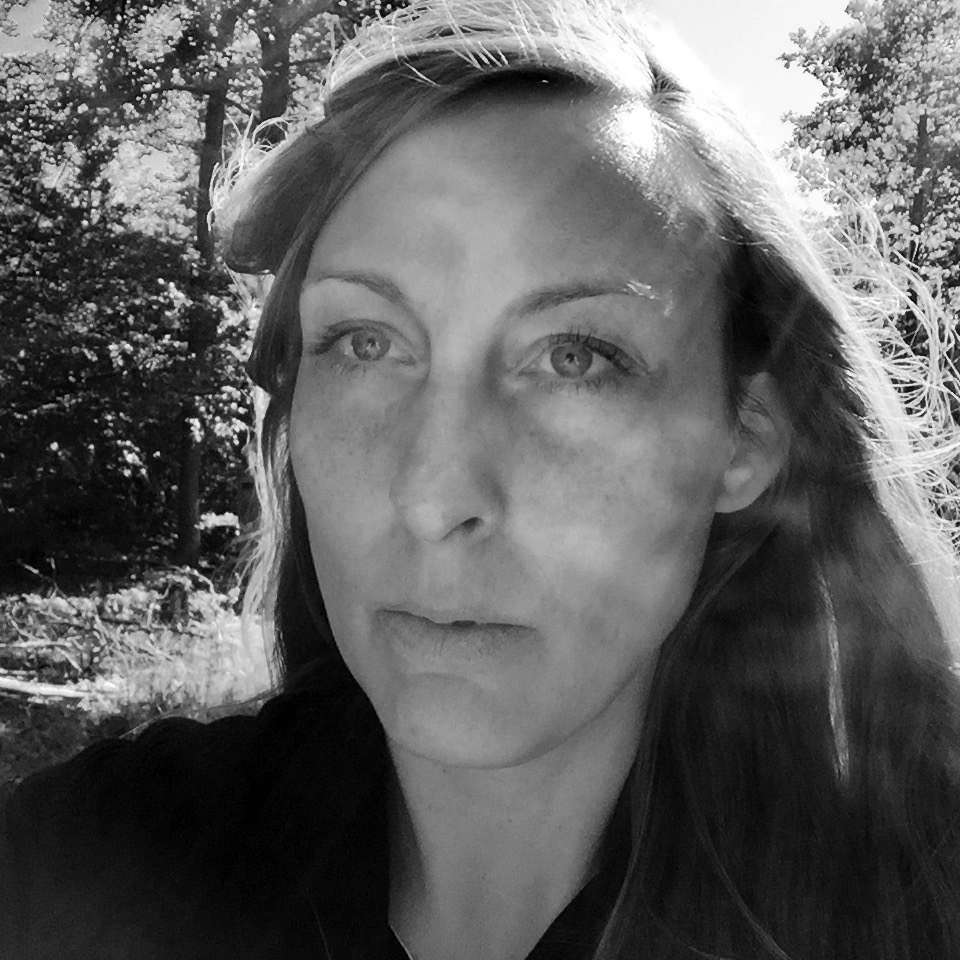
Portrait_Hasager_2015

About Maj:

Maj Hasager is a Danish artist and filmmaker based in Copenhagen, Denmark. She studied photography and fine art in Denmark, Sweden and the UK, earning an MFA from Malmö Art Academy, Sweden. Her work deals with power structures, identity, memory, the construction of history, and architecture, looking at how these interlinked phenomena are interpreted and represented culturally and spatially. Her artistic approach is research-based and interdisciplinary, and she works predominantly with text, sound, video and photography. The recent years Hasager has used oral history interview techniques as a method for accumulating information relating to personal stories, a site, and historical or political matters. It allows the material to unfold itself through different voices and from different perspectives and functions as a way of mapping an area or a context. Often these interviews lay the ground for the way she makes use of narrative forms and fictional writing as a tool to address personal stories in the context of socio-political matters.

She has exhibited her work internationally in events and institutions such as; Society Acts, Moderna Museet Malmö (2014), A voice of ones own, Malmö Konstmuseum (2014), Community works, Cleveland Institute of Art, 2014; Past Upon Past, Red Barn Photo Gallery, Belfast, Ireland (2013), Decembers, LAZNIA Centre for Contemporary Art, Gdańsk, Poland (2012), Liverpool Biennial, UK (2010). She has been awarded grants in support of her work from the Danish ArtsCouncil, The Danish Arts Foundation, Arab Fund for Arts and Culture (Beirut, Lebanon), ArtSchool Palestine, Danish Centre for Culture and Development and the Danish Arts Agency. She is the programme director of Critical and Pedagogical studies at Malmö Art Academy, and is a guest lecturer at the International Academy of Art – Palestine, Dar al-Kalima College, Bethlehem and University of Ulster, Belfast.

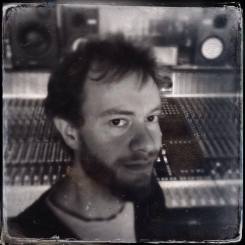
Ask studie foto

About Ask:

Ask Kæreby is a Danish composer. He studied music production in Copenhagen, earning a MMus degree from The Royal Danish Academy of Music.

Kæreby’s artistic practice is interdisciplinary and research-based, including elements of experimental composition, sound design and electroacoustic music. He is interested in the presentation of narratives by means of sound – not through traditional musical gestures, but using different approaches such as musique concrète or the futurists’ bruitism. Working in the intersection between known formats, Kæreby wishes to challenge our ways of listening – to music (live as well as recorded), to our surroundings and to (sonic) art.

He has been awarded grants in support of his work from The Danish Arts Foundation,

Danish Musicians’ Union, Wilhelm Hansen Foundation, Familien Hede Nielsen Foundation, Dansk Artist Association, Ellen & Erik Valdemar Jensen Music Grant, Anders Månsson & wife Memorial Grant and Karen Margrethe Torp-Pedersen & husband Foundation.

_____________________________

Fresh Milk’s first connection with the artists was made through our participation in a ResSupport fellowship at Akademie Schloss Solitude in 2014; to read a piece by Katherine Kennedy in conversation with Maj Hasager during this fellowship, click here.

_____________________________

DanishArtsFound_LOGO_CMYK

This residency is supported in part by the Danish Arts Foundation

Tilting Axis 1.5 to take place in collaboration with the 19th Contemporary Art Festival Sesc_Videobrasil

The Tilting Axis 1.5 conversation, in collaboration with Southern Panoramas, 19th Contemporary Art Festival, Sesc_Videobrasil takes place at 11am on October 8th with Holly Bynoe from ARC MagazineMaría Elena Ortiz from the Pérez Art Museum Miami (PAMM), Mario Caro from Res Artis and Annalee Davis from Fresh Milk. The conversation will be moderated by N’Goné Fall from GAWLab.

TA_1point5_FB_FINAL

Tilting Axis aims to promote greater conversations and engagement between professionals working within artist-led initiatives and institutions across the wider Caribbean region, build and redefine historical relationships with those in the North, and establish open dialogue with strong networks emerging globally in the South.

The first meeting was hosted by Fresh Milk in Barbados in February 2015 and Tilting Axis 2.0 will take place at the Pérez Art Museum Miami in February 2016.

Fresh Milk welcomes Rayanne Bushell and Nadijah Robinson to the platform

Fresh Milk is excited to welcome Rayanne Bushell and Nadijah Robinson to the platform as our next artists in residence from October 5 – 30, 2015.

Rayanne, who we first connected with in Glasgow while participating in the International Artist Initiated project in 2014, will be volunteering at Fresh Milk and working with our growing archive of images, while Nadijah, a Canadian artist of Barbadian heritage, will be reconnecting with her extended family to explore her roots and the notion of ‘home’ in Barbados through her artistic practice, including using mixed media collage and fabric work.

Rayanne

About Rayanne:

Rayanne Bushell is a Black British visual artist currently based in Glasgow. Bushell’s work uses photography, text and various printing techniques to reconstruct her family history, using this as a prism through which to investigate post-colonial identities, christianity and community. Research into the history of Black arts in Britain and the lack of representation of Black artists underpins Bushell’s practice; in November 2014 she founded Motherlands a zine for POC artists and writers and in August 2015 she started a pop-up POC Zine Library.

Motherlands was recently included in Visions of the Future: Women, Publishing & Autonomy, Islamic Human Rights Centre, London 2015. In 2015 Bushell collaborated with artist Isaac Kariuki on Shft+Ctrl+Save exploring how marginalised people utilise the internet and social medias as means of creating safe spaces and communities,Shft+Ctrl+Save was shown at Meta Gallery, Miami in May 2015.

Nadijah Robinson

About Nadijah:

Nadijah Robinson is an artist and educator based in Toronto, currently working in the media of Collage, Painting, Performance and Installation. She received her BFA from the University of Ottawa and a BEd from OISE University of Toronto. Working with skills developed from practices such as sewing, silkscreen printing, batik making, filmmaking, collage, painting, and graphic design, her work combines what is needed to construct a particular affecting image, object or experience. A refusal of the premise of a white canvas, or a blank slate, the use of found fabrics, images and other materials acknowledges that no thing comes from nothing. The history, cultural references, and sensory implications of the materials, and sources of the stories she tells all lend their particular significance to the larger artwork.

Nadijah Robinson’s work aims to reflect and archive the stories of communities in which she is strongly rooted, and which are not often represented in conventional art spaces. Through the practice of conducting interviews with community members, Nadijah is able to identify important themes, to highlight significant stories, and to learn directly from community members what they would like to see in artwork that presents itself as being for and about them.

Recent projects include a The Mourning Dress for Trans Black Women featured in Pride in Toronto 2015, a mural completed a mural as part of the Church Street Mural Project in preparation for World Pride 2014, and the curation of a photographic archive of Black musicians and entertainers from the 1930s-70s for the Archie Alleyne Scholarship Fund. She has shown work with the Art Gallery of York University, Gladstone Hotel, Daniels Spectrum, with Nia Centre for the Arts, and as part of the Mayworks Festival for Working People and the Arts.

Ronald Williams shares a statement about ‘Alpha’

There has been some recent media coverage in the Nation Newspaper in Barbados surrounding a public art piece by local artist Ronald Williams, which was commissioned by Fresh Milk and Adopt A Stop as part of their collaborative Fresh Stops project.

Fresh Milk is very pleased to be able to share a comprehensive statement by Ronald about his artwork entitled Alpha, which can be seen on a bench in Independence Square, Bridgetown. Alpha combines imagery and references from contemporary black culture, based on the artist’s own observations from everyday life, with classic figures from Greek mythology to challenge Western standards of beauty.

We are proud to be supporting Ronald’s thought provoking work, and hope that the attention it is receiving will lead to further dialogue and understanding about contemporary art, its role in society and its value for our culture and environment.

Ronald Williams with his bench entitled 'Alpha'

Ronald Williams with his bench entitled ‘Alpha’

Alpha attempts to question traditionally dominant Western beauty standards. It injects a black consciousness alongside, and at times instead of, the established images found in Classical Greek, Renaissance and Baroque eras.

In appropriating the revered iconography from these eras, I sought to challenge the Western ideals which are so dominant in our culture and mind-sets. The characters are based on five of the Olympians from Greek Mythology (tales which were dominant in my own psyche as those were the first stories I remember really liking as a child).

While I removed the mythical Greek icons from their pedestals, the aim was to also critically investigate black culture and present a Barbadian/Caribbean existence in a new light. Therefore, I used ordinary people and mundane personalities as my inspiration. As a result the five characters take the form of the pretty boy, the party animal, the conscious one, the bad boy and the trickster.

The work, viewed as a collective, reflects African, European and East Asian influences, highlighting that even though we are a predominantly black county/region, it is the intermingling of these various cultures which has caused the Caribbean to be a unique space.

Apollo - Detail of 'Alpha' by Ronald Williams

Apollo – Detail of ‘Alpha’ by Ronald Williams

Apollo, described as the most beautiful Olympian and a ‘God’ of the arts, becomes the pretty boy. He is the personification of modern male fashion, which often goes beyond metrosexual and into effeminate/homosexual realms. The character sports a white face on a black body, highlighting the skin bleaching phenomenon (seen as a beautification process), which is prevalent in the black population in the Caribbean.

Dionysus - Detail of 'Alpha' by Ronald Williams

Dionysus – Detail of ‘Alpha’ by Ronald Williams

Dionysus, the ‘God’ of alcohol, drunken revelry and ecstasy is the party animal. Dressed as a Kadooment/Carnival masquerader holding a bottle of brandy and set against a smoky marijuana background, the character appears intoxicated and moody. The piece as a whole aims to underline the use of controlled substances when we ‘play mas’ or celebrate, while it simultaneously hints at the darker mood swings which can be a side effect of drug abuse.

Zeus - Detail of 'Alpha' by Ronald Williams

Zeus – Detail of ‘Alpha’ by Ronald Williams

Zeus, the supreme Olympian, takes the role of the conscious/spiritual one. He represents a state of serenity and oneness (an ideal level of consciousness many religious/spiritual teachings uphold that one should strive for). His modest natural wood frame (in comparison to the other metallic embellished frames) symbolizes a sense of purity and an immaterial view of the world.

Ares - Detail of 'Alpha' by Ronald Williams

Ares – Detail of ‘Alpha’ by Ronald Williams

‘God’ of war Ares naturally becomes the ‘bad’ boy. The aim of this piece is to exude an aggressive, violent vibe. The character’s ‘tattoos’, made from graffiti, his skull scarf and his horned mask all help to paint the picture of a sinister ‘gangsta’, while the red scarf background and the frame made from bullets sell the idea of a dangerous yet strangely glamorous lifestyle many from poor ‘ghettos’ seem to aspire to.

Hermes - Detail of 'Alpha' by Ronald Williams

Hermes – Detail of ‘Alpha’ by Ronald Williams

Hermes, the mischievous ‘God’ of trade, thieves and wanderers is the trickster. He has a clownish appearance, but the background of optical illusions and card suits indicate that there is some level of deception and gamesmanship involved. While Apollo haughtily wears his white mask, Hermes insincerely revels in his. He is the personification of a role many in the black population (Caribbean and worldwide) feel is necessary to play; a conformity to a dominant white culture.

Ronald Williams, Alpha, 2015

Ronald Williams, Alpha, 2015

Thank you to Ronald for sharing his work, to Adopt A Stop for entering into this partnership with us, and to all of the artists participating in the Fresh Stops project. You can learn more about their pieces here.