drea brown’s Residency – Week 2 Blog Post

US-based poet drea brown shares her second blog post about her Fresh Milk residency, which is part of a new partnership between  Fresh Milk  and the John L. Warfield Center for African and African American Studies at the University of Texas in Austin. This week, despite coming with a plan for her residency, she has found herself responding in unexpected ways to the space, and has been compelled to continue writing about Phillis Wheatley – responding to the gaps in history and giving way to the ‘ghosts’ that haunt her poems. Read more below:

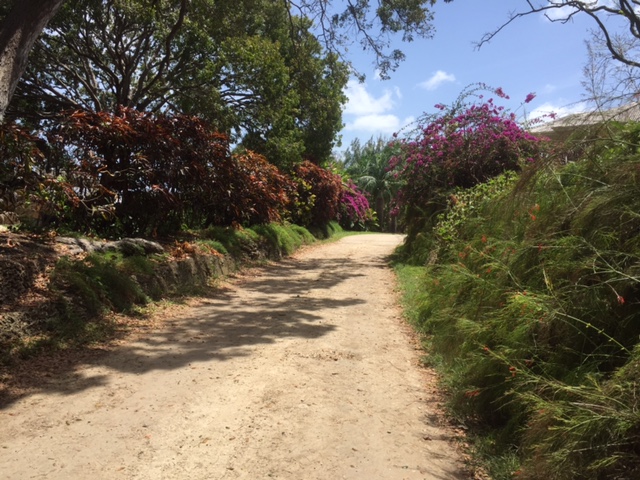
The walk to the studio

I came here with a plan. But, the poems that have come since my arrival are not the poems I intended. Each morning I make my way to the studio listening to leaves murmuring in the early breeze, I sit at a blue desk facing windows wide open to a winding hillside, and the poems come. Sometimes they are unwelcome visitors knocking for entry, sometimes to write them is comfort, but at all times they feel necessary, like work I am continually called to do. They are long—pages and pages of unfurling stanzas, raw and full of secrets, ragged line breaks; they are not the poems I imagined. But poems, like the ghosts that live in this ink, want what they want, and who am I not to oblige.

Phillis Wheatley

Dear reader, Phillis Wheatley will not let me be. I have made peace with this, and realize in some ways to write these poems is to work toward my own healing. The blues of the studio, its tables and doors and corner rocking chair, the blues of Bathsheba in the east, of Accra in the south, they remind me of this. And so I write and read incessantly, at the studio, in my flat, with my feet in the sand near lapping water, as if it is the only way to breathe. Perhaps in this second week, that is what it has been—a way to let go and take in again and again.

What Audre Lorde said remains true: poetry is not a luxury. It is a tool of survival, a means to find some kind of freedom.

__________________

This residency is supported by the John L. Warfield Center for African and African American Studies

FRESH MILK XX

The Fresh Milk Art Platform is pleased to invite you to FRESH MILK XX, taking place on Tuesday, May 9th, 2017 from 7-9 pm at Fresh Milk, Walkers Dairy, St. George.

This event will feature a showcase of recent work by Barbadian artist Kraig Yearwood, the 2017 Fresh Milk ‘My Time’ Resident Artist, who was on the platform during the month of March.

Responding to Kraig’s work will be Pamela Lee, an international curator and gallery manager who has worked at the Dominik Mersch Gallery in Sydney, Australia, who will also make a presentation about the connections and potential for collaborations between the areas of art and science.

Finally drea brown, a US-based poet and Fresh Milk’s current resident artist in partnership with the John L. Warfield Center for African and African American Studies at the University of Texas in Austin, will speak about her residency, the context behind her work, and close the evening with a poetry reading.

This event is free and open to the public.

Directions to Fresh Milk can be found on the ‘About Page’ of our website here.

_________________

About Kraig:

Kraig Yearwood is a Barbadian artist and designer. Yearwood studied graphic design at Barbados Community College. He has worked as a freelance graphic designer, and has also worked as lead designer for his self-owned clothing label where he has showcased at some of the region’s biggest fashion weeks. He mainly uses mixed media in his visual art practice and to date he has exhibited in numerous local and international group shows, as well as having 5 solo exhibitions.

Yearwood says his approach to his work is partially intuitive while often informed by minimalist sensibilities, and lists eclectic influences such as introspection, relationships, nature and local and global current affairs for much of his production. Many compositions certainly feature a sense of structure and order that we often associate with graphic design, yet these elements are often broken and interrupted by marks that suggest another layer of idiosyncratic reasoning.

_______________________

About Pamela:

Pamela Lee is a skilled arts industry and communications manager with over 5 years of experience working in high profile arts organisations, the not-for-profit sector and corporate companies in Europe and Australia. She has a Master’s of Curating Contemporary Design from Kingston University London in partnership with the Design Museum, London, where she also worked as a curatorial and digital media development assistant. Most recently, Pamela has worked as the gallery manager for the Dominik Mersch Gallery, one of Sydney’s leading international, commercial galleries.

______________________

About drea:

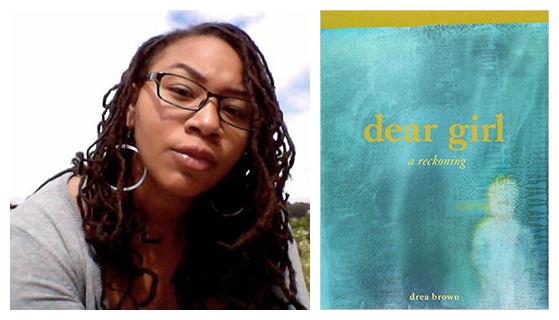
Originally from St.Louis, drea brown recently completed her PhD in African and African Diaspora Studies at the University of Texas in Austin. Her work has appeared in a variety of literary journals most recently Stand Our Ground: Poems for Trayvon Martin and Marissa Alexander and Southern Indiana Review. drea is also the winner of the 2014 Gold Line Press poetry chapbook competition judged by Douglas Kearney. Her chapbook dear girl: a reckoning was released in 2015.

_______________________

drea’s residency is supported by the
John L. Warfield Center for
African & African American Studies

drea brown’s Residency – Week 1 Blog Post

US-based poet drea brown shares her first blog post about her Fresh Milk residency, which is part of a new partnership between  Fresh Milk  and the John L. Warfield Center for African and African American Studies at the University of Texas in Austin. drea’s first week has been a chance for her to exhale, coming directly from the rigours of academia, and allowing her to reconnect with her creative self while delving into Caribbean literature, ancestry and spirituality. Read more below:

When I was awarded this residency at Fresh Milk, there was a thrill that ran through me that there are not yet words to fully describe. But I can tell you about the rush of colours that came with it. There was gold in my chest, flecks of it covering my hands, a red in my palm that was too brilliant to look away from; for days I dreamt of blues I had never seen. And then, a whirlwind of days, an early morning flight, and somehow I walked right out of the halls of academia and back into my poet self, off the plane and into a welcomed rainstorm. Ready or not. It is still all settling in.

This is the end of my first week at Fresh Milk and already it is moving too fast. Each day I have been writing and working to devour a stack of carefully selected books: Caribbean short stories and poems, books about tracing ancestry, about leaning into the spirit, about shadows and ghosts, and making space to hold it all. At night when the sky is black and the cat has crept in and the fireflies are the only outside light, I listen to the deep sigh of horses and give thanks for this opportunity to breathe salt air and spread out in stanzas.

I am grateful. An immense thank you to the John L. Warfield Center for African and African American Studies at the University of Texas in Austin, for the continued push, uplift and support in my scholarship and in my art. Thank you Fresh Milk Team, Katherine and Annalee who quietly add to my corner stack of books, who continue to help me open and relax and let go of worry. I am grateful for the Orisha and my Egun, who each day helps me survive and shine.

__________________

This residency is supported by the John L. Warfield Center for African and African American Studies

Fresh Milk welcomes drea brown to the platform in partnership with the Warfield Center

Fresh Milk in collaboration with the John L. Warfield Center for African and African American Studies at the University of Texas at Austin is pleased to launch their first international residency partnership, and welcomes US-based poet drea brown to the platform between April 19 – May 10, 2017.

About drea brown:

Originally from St.Louis, drea brown is currently a PhD candidate in African and African Diaspora Studies at UT Austin. Her work has appeared in a variety of literary journals most recently Stand Our Ground: Poems for Trayvon Martin and Marissa Alexander and Southern Indiana Review. drea is also the winner of the 2014 Gold Line Press poetry chapbook competition judged by Douglas Kearney. Her chapbook dear girl: a reckoning was released in 2015.

Excerpt from research statement:

My research explores Black women poets’ use of grief and memory as devices to reconstruct cultural histories and subjectivity. I posit this remembering often calls for other ways of knowing that defy Western logic and linearity and instead privilege ideas of the sacred, collapsed notions of time, and lifted veils between worlds of the living and dead. I offer that to take up the task of remembering and revision, black women poets must confront hauntings of a racial and sexualized past that continually imprint on the present. Using a black feminist methodology I apply close readings and formal analysis that take into account lived experience and social, emotional and spiritual climates as conditions of lyric construction. Through this I demonstrate how ghosts in this poetic lineage are not just deceased or missing persons; they represent evidence of injustice and unrest, serving as erasures or reminders of what is not there but should be. Though haunting is frightening, ghosts are not always malicious, and at times are evidence of divine manifestation or future possibility. I position black women’s poetry as sites of haunting that bear indelible markings of grief in memory, arguing that they make a unique contribution to the genre of elegy.

__________________

This residency is supported by the John L. Warfield Center for African and African American Studies

Ayesha Hameed’s Blog Post – Black Atlantis// The Plantationocene

In December 2016, UK-based artist Dr. Ayesha Hameed undertook a 2-week residency at Fresh Milk, where she conducted research for her ongoing project Black Atlantis. Ayesha shares an excerpt from a longer piece about her residency experience, and her exploration of the ‘plantationocene’ – a term which looks at the relationship between agriculture and our current geological era. Read more below:
Black Atlantis// The Plantationocene[1]

*

Speed

This is my first evening at Walkers, once a sugar plantation and now a dairy.  It is dusk.

I step outside of the flat, climb the slightly mossy stairs and turn right into the purpling light. To my left are horse stables, behind me is the house and in front of me are fields of grass.

The sound of the frogs begins at dusk and it gets louder. The paved drive I am walking on ends at the field, and I turn right onto a dirt path.  The grass is long on either side of the path.  When I reach a lone tree to my left, the path dips down a small hill and continues to a line of trees in the distance.  To the right is the South and there are some twinkling lights in the distance.  A small bat swoops over my head.

Underneath the alien and screechy whir of the frogs there is a silence. A black dog runs up to me from the big house and then turns around and goes back, looking back at me as if trying to get me to follow it.  I walk away from it and into the long grass and listen.

The frogs get louder.  The sky turns black.

What is the relationship between climate change and plantation economies?  This is an exploration of many things – the beginnings of a fourth chapter of an ongoing performance called Black Atlantis, visiting the heartland of one of the three stops of the triangular trade, and taking seriously Donna Haraway’s and Anna Tsing’s use of the term ‘plantationocene’ which connects the development of a plantation form of production to the beginning of the current geological era that we are in.

The ‘plantationocene’ is a placeholder for the relationship between agriculture and the new geological era we find ourselves in called the anthropocene.  But the kind of agriculture they are thinking about is the violent replacement of diverse farming tactics, of forests and of pastures by the factory-like extractive structure of plantations – the cultivation of single crops like sugar and cotton for export, produced by enslaved and indentured laboring bodies forcibly transported across vast distances.  Plantations eradicate the diversity of what is cultivated, devastating the land, violently exploiting and expropriating the bodies working on the land and destroying any possible autonomy for self sustenance for those living in these areas.

[we use the term] Plantationocene for the devastating transformation of diverse kinds of human-tended farms, pastures, and forests into extractive and enclosed plantations, relying on slave labor and other forms of exploited, alienated, and usually spatially transported labor… Moving material semiotic generativity around the world for capital accumulation and profit—the rapid displacement and reformulation of germ plasm, genomes, cuttings, and all other names and forms of part organisms and of deracinated plants, animals, and people—is one defining operation of the Plantationocene, Capitalocene, and Anthropocene taken together (Haraway 162).

The plantationocene suggests that the geological force of humans on the planet’s ecosystem had its roots in plantation slavery, its instrumentalisation of the soil for a singular kind of production and its violent enslavement of bodies to be used as machines to cultivate and harvest the cane, and to ideally reproduce and sustain itself.  As Anna Tsing says, the plantationocene is formed of “machines of replication” or “simplified ecologies, such as plantations, in which life worlds are remade as future assets” – in other words it highlights the aftermath of a radical and violent incursion and its effects on lifeworlds that intertwine the human and the natural.

It is a nearly impossible endeavour to read an over three hundred year old history of plantations and their continually evolving social relations in the wake the oldest instance of plantation slavery, and in the continued presence of descendants of slaves and plantation owners and overseers, against the slow temporal swings that mark climate change.  Reading a still living and present history against a slowly unravelling future of increasing frequencies of natural disaster, the warming of the ocean, the jeopardisation of sea life is incommensurable and probably pointless as they operate on such different registers, and the possibility of finding common ground at ground level is nearly nil.

*

Another beginning: It is half past two and I’ve been waiting in the parking lot outside Harrison’s Cave for about thirty minutes. Tour buses and hired taxis efficiently pull in and out of the parking spaces, loading and unloading their American passengers.

Two men are chatting beside me, one of them offers the other one a lift and they walk over to a brightly painted bus.  I figure I have 20 minutes more to wait.

I hear a loud noise and look up from my book to see a diesel powered mini bus hurtling through the lot like a getaway car for a heist. It abruptly stops at a hasty angle near the bus stop where I am sitting.  The sign on the bus just says ‘city’. People climb out quickly with the diesel engine rumbling.

As I climb the stairs the bus speeds up again so fast I trip onto a seat. I pull myself up holding out my 2 Barbadian dollars to the driver with an apologetic ‘excuse me?’ and the man in the passenger seat waves impatiently at me to sit down.

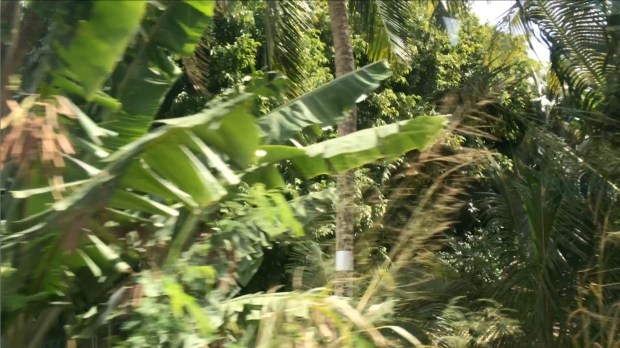
I look out the window as the bus hurtles down dirt roads hewn through fields of cane speckled with sun and dust.  We screech to another stop and the engine grumbles and roars.

Outside are the fields of cane and men and women waiting on the side of the road.
*

*

[1] This is an excerpt from a longer chapter forthcoming in MAP Office’s Catalogue “My Ocean Guide published by Lightbox” (2017).  Research for this work was made possible by a Travel Grant awarded by the Canada Council for the Arts to attend residencies at Alice Yard (Trinidad) and Fresh Milk (Barbados).

_____________________

This residency was supported by the Canada Council for the Arts