Simone Asia’s Residency – Week 1 Blog Post

Simone Asia, current artist in Fresh Milk’s 2015 ‘My Time’ Local Residency programme, shares her first blog post about her time on the platform. Simone speaks about re-acclimatizing to a familiar space, exploring the environment more thoroughly and how unexpected obstacles can push you to act on ideas that have been lying under the surface. Read more below: 
IMG_20150417_124556 (1024x576)

My first week here at Fresh Milk was bittersweet. The space itself is a familiar one, but I had not explored it as thoroughly as I have in the last few days.

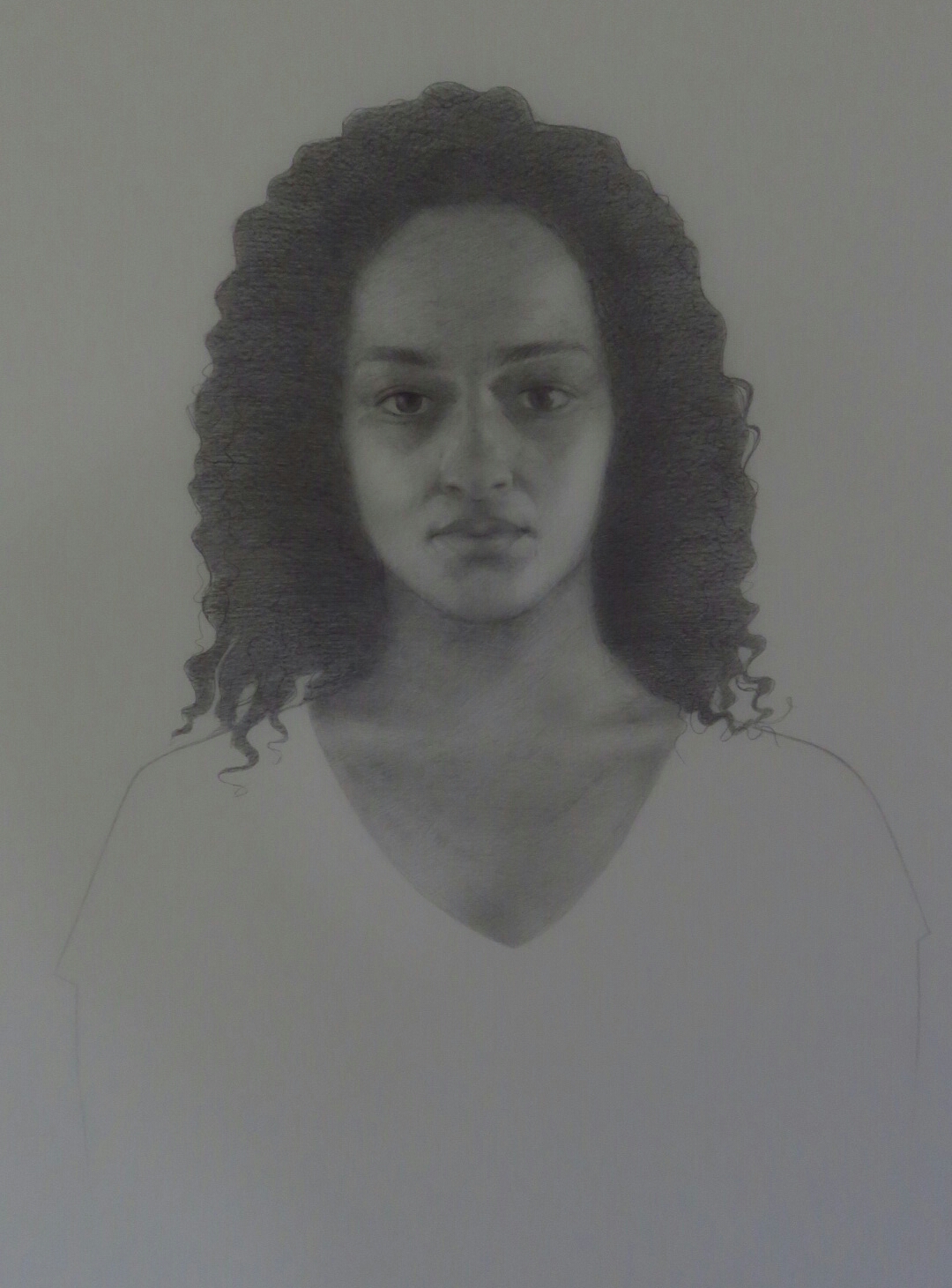
I was sharing the space with international resident artist, Jordan Clarke, whom I found to be delightful. She was very quiet – in contrast to me – but that helped to balance of the energy within the space. Jordan was on the final week of her residency, and I found that she and her work was an inspiration for me. She did very beautiful self portraiture drawings and paintings. I would offer my feedback on her drawings whenever I could. She also sketched a lot – something I wish I did more. Additionally, there was great material in the Colleen Lewis Reading Room to source inspiration from.

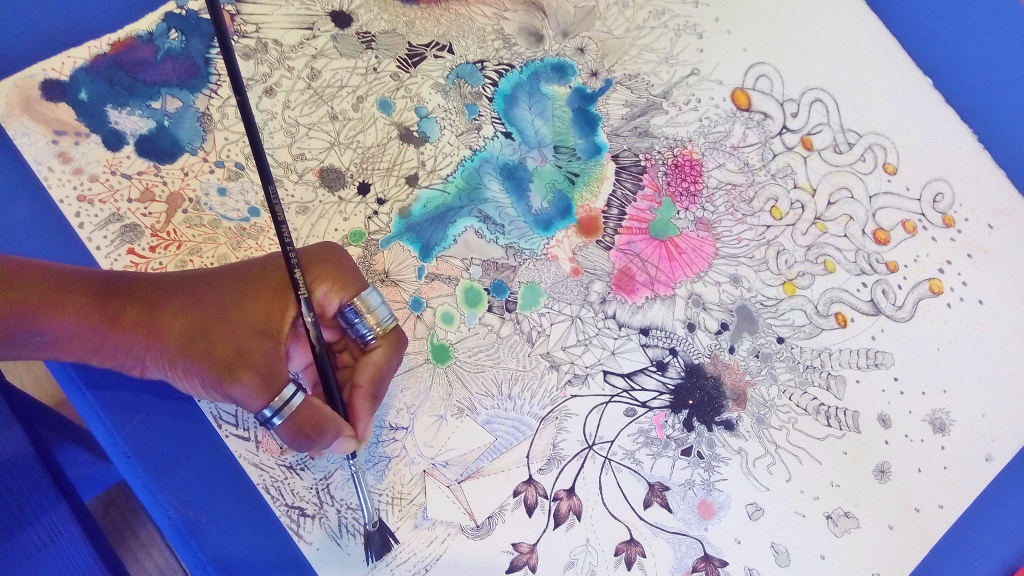
I did not have a solid plan for my work on the farm, but I knew I wanted to do some experimental drawings. I usually do portraiture as well, but I wanted to put my energy toward creating strictly abstract drawings. I surveyed the land, observing patterns, textures, colour and layering. The various types of plants, animals and sounds made me feel more connected to my nature-loving side. I was particularly drawn to the layering on vines upon tree trunks and fallen leaves and twigs piled on the grass, as well as the patterns and vibrant colours that certain plants possessed. From these observations I was compelled to work with colour.

Working with colour is not totally foreign to me, but it is something I am insecure about. I am accustomed to creating monochromatic abstract drawings so I knew that using colour would be out of my comfort zone. Spilling the first two colours of ink and trying to manipulate them made my anxiety and self-doubt kick in. I even tried drawing on top of red paper with black ink, but it still felt weird. I remembered what I had learnt from my last two residencies and open studio at Projects and Space, Alice Yard and Punch Creative Arena, respectively – I need to trust the process, let the concept come afterwards and play.

My first day went well until close to the end of that evening, when all of my devices were submerged in water. It was a tragic start to my week, causing only stress and anxiety. Despite all the drama, the rest of the week went along smoothly – exchanging stories with Jordan and members from the Fresh Milk Books team and visitors – Aieron, Jordan’s husband, and Australian resident artists Willoh, James and baby Equa, who I found to be a very musical child.

I have claimed a cow on the farm as my own; she does not know it yet. Her ear tag is number 503. I call her ‘Bambee’. She got that name because Jordan and I were discussing how beautiful and deer-like she was so I named her to suit.

I got to reflect while being there. I found it ironic how much I loved nature, yet I was very dependent on electronic devices to record my findings. I totally neglected the process of sketching. For months I had been telling myself I would like to sketch more. I got my wish. Sadly, I still used Jordan’s camera and did minimal sketching, but I found myself storing images in my memory. I think for me it takes a while to get into the groove of sketching.

On Friday I spent a couple hours with Jordan and her husband. It was Jordan’s last day in residence at Fresh Milk and Annalee was very busy that day. I found myself alone in the afternoon. The rain poured as if to complement my mood. I will miss Jordan’s presence in the space. While sitting alone looking in the mirror, reflecting on the week as the rain poured in St. George, something came to me. I think I am going to do a portrait even though I wanted to avoid doing one. An idea is brewing.

Jordan Clarke’s Residency – Week 4 Blog Post

Barbadian-Canadian painter Jordan Clarke shares her fourth blog post about her Fresh Milk residency. In her final week, Jordan confronts some of the underlying reasons for her disconnect with the Barbadian side of her identity, and sees her experience in the island as a starting point to build on as she investigates this part of her culture and herself. Read more below:

IMG_0977-1

“As is common to most transnational communities, the extended family – as network and site of memory – is the critical conduit between the two locations.” (Stuart Hall, ‘Thinking the Diaspora: Home – Thoughts from Abroad’, Caribbean Political Thought)

It is typically through family that Caribbean migrants are able to maintain a sense of connection to their Caribbean culture. What happens, however, when there isn’t a sense of cultural sharing through family? How does this affect one’s sense of cultural identity?

IMG_0978

In my fourth week at Fresh Milk, I confronted the fact that my father has never been solidly present to share his cultural identity and family with me. I drew a self-portrait in response, with the intention of representing a conversation I would have with my father. A more confident me stares out, confronting.

I realize that the work I have created here during my residency represents a starting point for further investigation of the theme of self-perception, as well as self-discovery. It will act as a guide for future work once I’m home.

In thinking about the four weeks I’ve been here, I couldn’t be more grateful for this rewarding experience. Having such a wonderful studio to work in, without the usual daily distractions, has been refreshing and inspirational. Fresh Milk’s extensive library, full of contemporary Caribbean literature and art publications, has been an invaluable tool for informing my work here. I can’t thank both Annalee Davis and Katherine Kennedy enough for all their help and support. Annalee is full of knowledge and has been able to point me in directions I showed interest in, while leaving me space to navigate my art practice. I would also like to thank Aaron Kamugisha for his help and good company.

It has been so stimulating to connect with all the artists who have visited Fresh Milk during my residency. I see my time here as a starting point, a spark that will encourage further exploration and dialogue in my art practice.

_______________________________________

2014 OAC logo RGB JPG

This residency is supported by the Ontario Arts Council.

Fresh Milk welcomes Willoh S. Weiland and Halcyon Macleod

Fresh Milk is excited to welcome our fifth set of residents for 2015, Australian interdisciplinary artists of Caribbean extraction, Willoh S. Weiland and Halcyon Macleod. They will be with us between April 20 – May 23, 2015 working on their collaborative project ‘Crawl Me Blood’, a sound installation inspired by the works of Dominican writer Jean Rhys and her masterpiece Wide Sargasso Sea. Read more below:

APAM_Crawl Me Blood_8_1

Willoh S. Weiland and Halcyon Macleod are two artists from Australia who are currently in-residency at the Fresh Milk Platform. During their stay, they are writing and creating a performance and sound work called Crawl Me Blood. As part of their research for the project, they will be conducting a series of interviews with a number of women in Australia and in the Caribbean.

Crawl Me Blood is inspired by the work of Dominican author Jean Rhys, especially her famous book Wide Sargasso Sea, the artists’ own family histories in the Caribbean Region and a feminist reading of the biblical story of Eden.

They are starting their research by focusing on the idea of ‘paradise’; what causes us to long for particular landscapes and how women imagine paradise through creating or visiting gardens,  cooking and eating delicious food. They are especially interested in the way food connects us to memories of people and places.

The artists are inviting members of the public to meet with them and talk about these ideas.  An audio recording of these conversations will be made. Interviews can be anonymous.

Interviewees will be paid a modest stipend. The artists will be in residence from April 20th and open to arranging meetings on Mondays, Tuesdays and Wednesdays between 10am and 5pm.

The artists would like to engage in dialogue with a variety of women, including:

  • Academic/Writer
  • Radio host
  • Performer/ Actor/ Artist
  • Older woman (60 +)
  • Middle aged woman (40+)
  • Younger woman (in her 20s)

If you are interested in participating in this project, please email willoh@aphids.net and halcyonmacleod@gmail.com.

halcyon and willoh

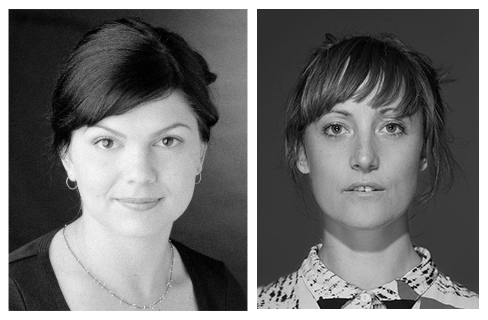
Halcyon Macleod and Willoh S. Weiland.

About the artists:

Willoh S. Weiland (Artistic Director, Aphids) and Halcyon Macleod (Co-Director, My Darling Patricia) are interdisciplinary artists and directors of the independent arts organisations Aphids and My Darling Patricia.

Their mutual interests are in writing and creating contemporary performance works that respond to the site in which they are created and the result of extensive research and development.

They have created works for major Australian Festivals including the Sydney and Darwin International Arts Festivals as well as for prolific presenters such as Performance Space, Carriageworks, Cambelltown Arts Centre, Sydney and the Arts Centre, Arts House and Malthouse Theatre Melbourne.

This residency is supported in part by the Australian Broadcasting CorporationThe Alcorso Foundation and Arts Tasmania.

Cooking Sections’ Residency Blog Post

Cooking Sections, the London-based duo of Daniel Fernández Pascual and Alon Schwabe, share their blog post about their short-term residency at Fresh Milk, where they conducted a number of interviews and meetings with both artists and professionals working across the agricultural sector to inform their research based practice and their ongoing project The Empire Remains. Read more below:

Cooking Sections_cane harvest4

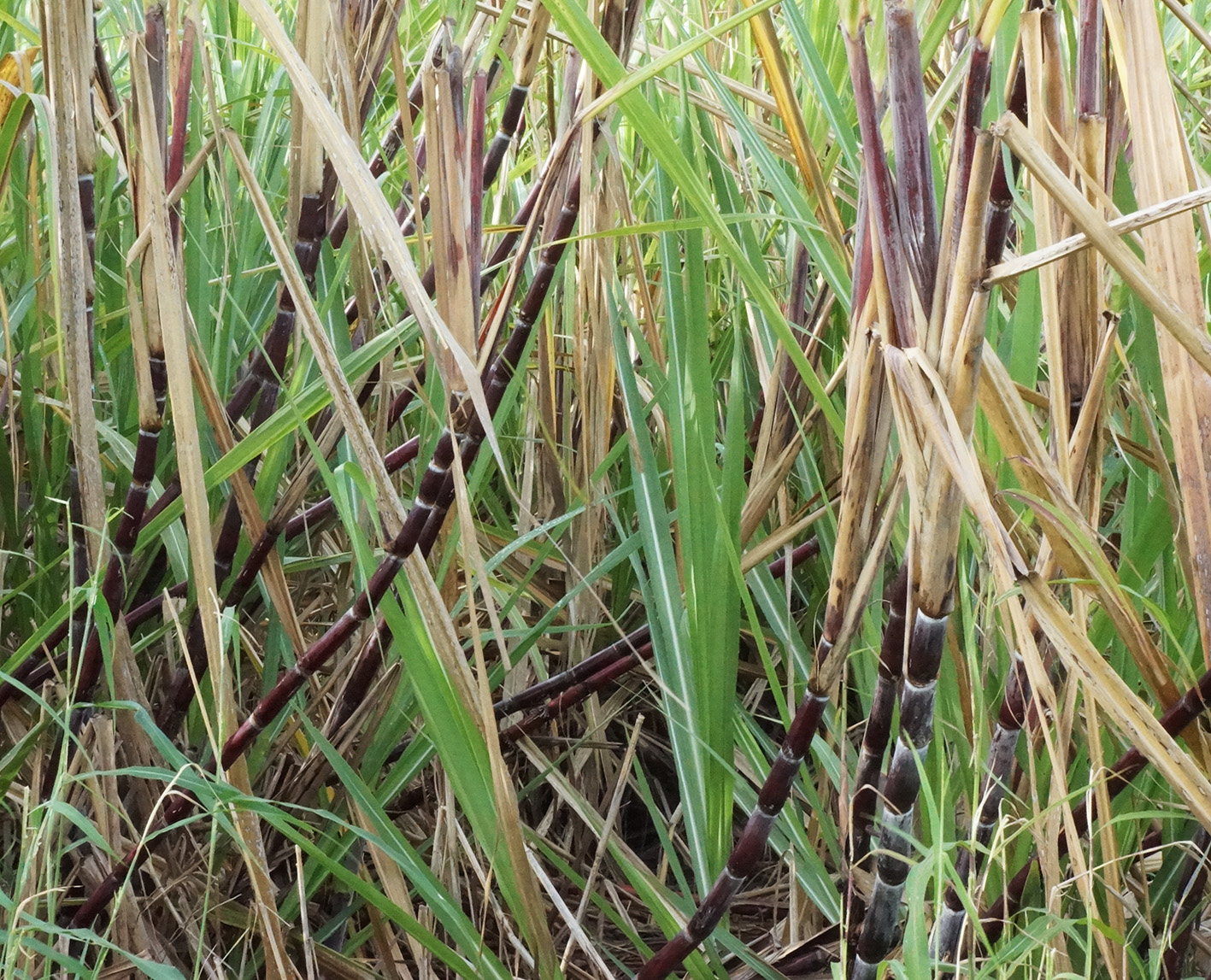
Is this the end of a sugar era? In past years the sugar crop harvest has been delayed further and further into spring. Refusing to start the crop before the government paid farmers for last year’s yields, harvest was postponed this time for about three months, starting during our visit to Barbados on April 7th. Never before had sugar cane harvest started so late, a sign of the great challenges the industry is undergoing. The possibility of a 400 year-history of cane disappearing seems to float around people’s minds, given that there is only one sugar factory remaining operative on the island (Portvale). At the local Massy Supermarket, we encountered on the shelf a box of sugar cubes from an array of sugars all made in the USA, as well as from UK-based Tate&Lyle, a sugar empire that later constituted Tate Britain. More than ever, sugars travel along and back and forth from one side of the Atlantic to the other, changing colour, shape, texture, volume and physical states with every journey: raw, bulk, brown, white, brownish, whitish, golden, bagged, dyed, molassified, syrupised, caramelised, brownified

We learned that Barbados has an average of merely 12 inch deep soil. That extremely thin layer of agricultural ground is not only made out of sediments that the sea once eroded from surrounding volcanic islands and washed forward onto the Barbadian plateau. The soil is made of the remnants of the sugar cane that, unlike the majority of sugar plantations worldwide, are not burnt but accumulated on-site as layers that enhance the quality of the soil through their rotting, while protecting it from heavy rains. The reduction in tonnage of sugar extracted (not produced) from cane also opens new challenges, not only for the sustainable geology of the island, but for tightly related industries such as tourism and Barbadian rum. For the former, visitors need to keep being attracted by the image of undulating Caribbean landscapes covered in cane. For the latter, rum is running out of the local molasses that absorbs all the specific nutrients and minerals from the Barbadian subsoil, raising the question of Barbadianness in a rum more and more made out of foreign sugars. However, is it the molasses that really affects the finished rum product when it is distilled and cleaned from its biological and chemical components in the process of becoming alcohol? Or is it rather the diverse mechanisms of adding value that Barbados, like many other island nation states, tries to establish in order to shift from a historic role of commodity providers to become product owners?

At stake is also a controversial construction of an additional sugar factory. The new $42,000,000 project, promoted by the Barbados Government, aims to transform the no longer operational Andrews Sugar Cane Factory into a multipurpose processing plant. It is not to revive the island’s history but rather to envision a different future. If sugar once replaced the alcohol ration for soldiers in order to extend their operation hours, sugar cane has slowly become a biofuel to provide renewable sources of energy. Time will tell whether the new plant will truly help the national economy or be another example of mismanaging international development aid through needless pharaonic infrastructures that only benefit a few.

Cooking Sections_cane harvest3

Over 10 days of interviews, meetings, conversations and field visits with farmers, researchers, visual arts practitioners, factory managers, and policy-makers, we learnt about the difficulties of post-plantation Caribbeanness and the relationship of a region of island states, more or less disconnected from each other, that are facing similar challenges at planetary scales. That Barbados has only 2 endemic species out of its 650 different plants and that the island is suffering from seaweed invasion cycles coming from the Equator are just two facts that made us reflect on the economy of extraction and the value of nature from a global perspective. Almost 200 years after the abolition of slavery in all territories of British rule, conflicts about race, speculative flows and food sovereignty seem not to be yet fully reconciled with their past.

Announcing the FRESH MILK ‘My Time’ Local Resident Artist 2015 – Simone Asia

Simone My Time 2015

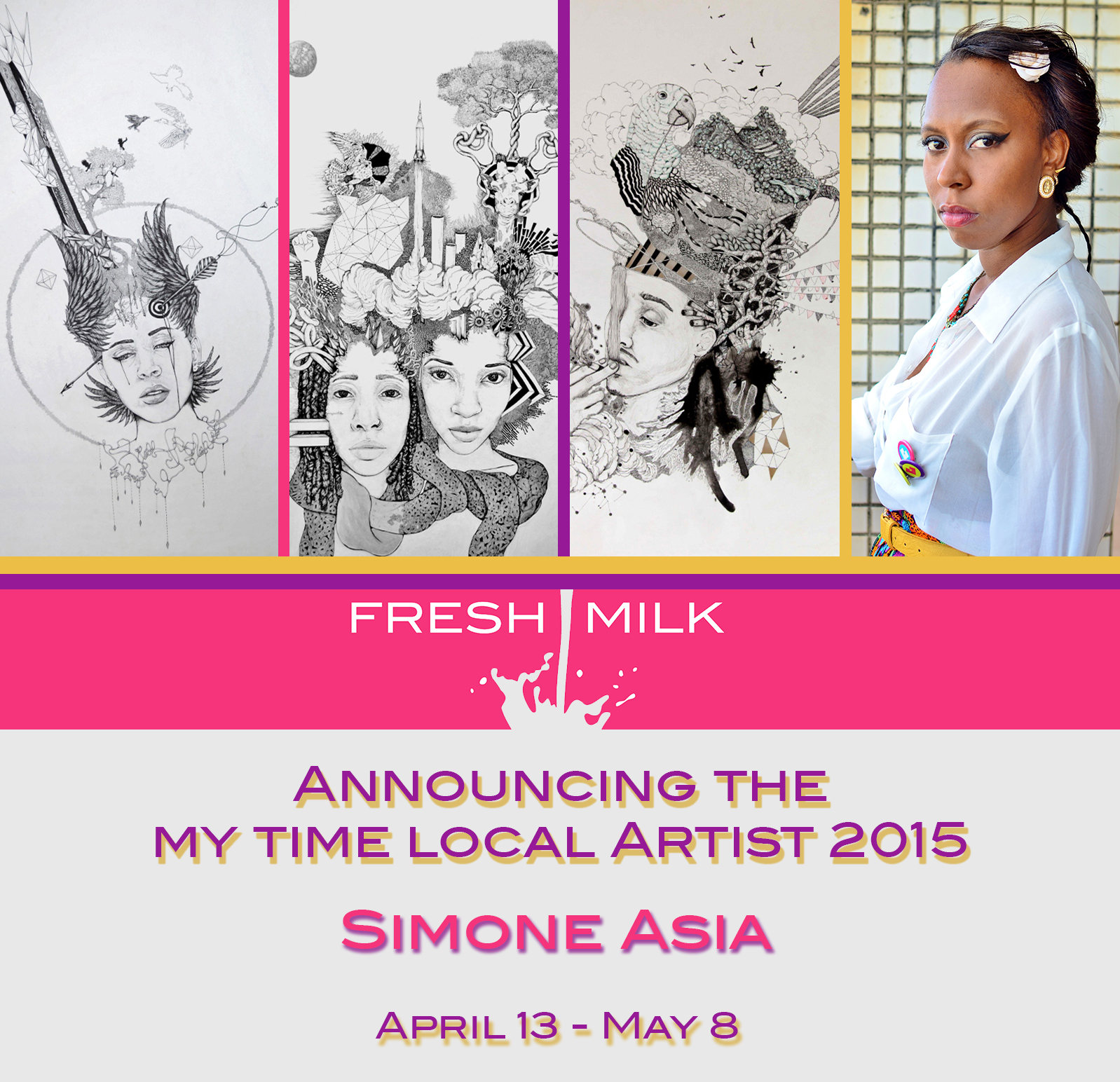
Fresh Milk is very pleased to announce Barbadian artist Simone Asia as the winner of the Fresh Milk ‘My Time’ Local Residency prize for 2015. Congratulations Simone!

Simone’s one-month residency runs from Monday April 13 – Friday May 8, 2015. She sees this period as a “playground for opportunities,” a chance to experiment with surface, scale and technique. She will explore and respond organically to the environment at Fresh Milk to feed the current series of work she has been producing, which is inspired by dreams and reinterpretations of personal experiences.

About Simone Padmore:

Simone Padmore, also known as Simone Asia, is an illustrator who was born on May 2nd, 1990 in Bridgetown, Barbados. From 2006-2011, Simone attended the Barbados Community College (BCC) where she received her Associate’s Degree in Visual Arts and her Bachelor’s of Fine Art. Attending BCC exposed Simone to many different art forms, techniques and experimentation where she developed a stronger sensibility for drawing and a love for pen and ink.

After college, Simone continued her independent practice and has exhibited in art shows, including The Place Between Here and Therean exhibition of contemporary Barbadian art taking place at The Frame & Art Co. between April 17 – May 16, 2015. She won an incentive award at NIFCA in 2011 and was featured in ARC Magazine, FuriaMag and Caribbean Beat, along with a few online fanzines.

Simone has participated in three residencies to date: a one week residency at Fresh Milk (Barbados) in 2012, one with Projects & Space (Barbados) and one with Alice Yard (Trinidad) in 2014.

simone-padmore

Artist Statement:

As an artist, I want to have an honest connection with my work. I gravitate towards ideas about science, the universe, dreams, the mind and experiences. I seek to explore these ideas from a personal perspective, expressing them through very detailed, abstract drawings rendered by pen and ink. With these, I create an alternate reality; my hybrids within my own universe.

My use of detail is based on my belief that I have some type of Obsessive Compulsive Disorder (OCD). My thoughts consume me and I also write a lot, often repetitively. I am very particular in my ways and at times I can be a bit of a perfectionist. The use of detail, however, is not specifically linked to any one series, but to the notion of being disciplined.

I illustrate this way because, even though it can be time consuming, it is a stress reliever. It puts me in a trance-like state where it eludes the concept of time. It also distracts me from my racing thoughts; it is my therapy.