Nyugen Smith’s Residency – Second Blog Post

US-based interdisciplinary artist Nyugen Smith shares a second blog post about his time at Fresh Milk. Continuing to respond to the environment, a trip to the beach and an encounter with the power of the ocean inspired awe and reflection from Nyugen. He has also begun to make work around the history of the plantation, paying respect to the enslaved Africans that once lived and suffered on these grounds. Read more below:

Day 4

Thinking about the trip to the sea on Sunday and what it taught me. The water was warm and the sun was out but it wasn’t incredibly hot. I learned more Barbados history, learned about the plant life that is beginning to emerge in former cane fields and learned that “The sea has no back door.”

The wave was on on its way. I was alerted with a calm, “watch out.” I saw it coming and did what I could to prepare. It wasn’t enough. With little effort, the element enveloped my waist and shared with me a taste of its power and might. I can swim, but at that time was glad I was close to the shore. “You will respect me,” I think I heard it say. I am carrying that with me for the rest of my days.

POWER and MIGHT.
All around
from the sound of the wind
to the vibes in the ground
what’s that sound
heard over my heart pound?

Ficus call I
and I say,
Hey, Natty Natty
Cosmic Candomblé.

No play play
called here.
Come,
leh we reason,
in moonlight
and broad day
basket full
open season.

——————————


Last night I worked, making images on the area of the property where the AIR flat is situated. The series is a reflection on the enslaved Africans and their descendants who once lived, labored, and died on this land. As I worked under moonlight, many magical moments happened, most of which occurred when I incorporated the light I carried with me. The way the light spread across my performance garments and covered a small area surrounding my body added unexpected layers of meaning to the work of which I am still unpacking. Here is one image from the series.

A larger selection can be found here…

____________________________

This residency is supported by the Leonore Annenberg Fellowship Fund for the Performing and Visual Arts

Nyugen Smith’s Residency – First Blog Post

US-based interdisciplinary artist Nyugen Smith shares his first blog post about his Fresh Milk residency. Nyugen has begun his experience by actively engaging with the site of Fresh Milk, which is located on a former plantation – now a working dairy farm –  and learning the history of this space and Barbados on the whole through conversations with Annalee Davis, exploring the grounds and conducting research in the Colleen Lewis Reading Room. Read more below:

*This blog post may contain language and content that may be unsuitable for children and the prudish. Discretion is advised. 

Day 1 of my residency at Fresh Milk International Artist Residency in St. George, Barbados.

Just prior to leaving home in the USA for this, my third Caribbean island as part of my Leonore Annenberg Arts fellowship, I was struck by the words, actions and accomplishments of peers/contemporaries/family.

It is because of them, I am inspired to approach this month-long residency with a deeper level of introspection, transparency, courage and audacity as it relates to process and reflection on time and work. Thank you.

I don’t know much about Barbados. I spoke with confidence correcting someone back home that Barbados was a larger island than Martinique. I was wrong. The former is 166.4 miles squared, while the latter is 436 miles squared. I was laughed at by a Bajan woman next to me on the plane on the way here when I asked her about the mountains on the island. “Barbados flat!” she said. Prior to coming, I wanted to know a more about the site where the Fresh Milk residency exists and about its founder, Annalee Davis.  Annalee (Fresh Milk) is also a co-creator (together with ARC Magazine) of Tilting Axis, a roving project with a goal of negotiating strategic regional and international alliances for the further development of infrastructure, production and markets for the Caribbean’s visual arts sector. I had followed her 2016 social media posts of her (bush) Tea Services project at the Empire Remains Shop in London, England where she offered to visitors, daily servings of varieties of bush tea collected from the fields of the former sugarcane plantation and adjoining rab lands out of tea-sets containing shards of crockery mined from the ground of her family property in Barbados. I know bush tea. I grew up on it. I picked bush for tea. The history and legacy of empire is of interest to me and this interest informs my work…so I wanted to know more…

Tilting Axis 3: Curating the Caribbean (May 18 -20, 2017) was hosted by the National Gallery of the Cayman Islands and the presentations by arts professionals was live streamed on Facebook and archived for later viewing. I watched three of the presentations so far (including Annalee’s opening address) and they were incredibly engaging. I said to myself, “..this Tilting Axis project is important, necessary and exciting.” So I looked to see what else I could find about Ms. Davis’ work and came across her 2014 essay on ARC magazine’s website titled: Drawing Lines – Counterpoints from inside the plantation, State(s) of Emergence(y) and crises of belonging at home. Here I learned a little about the history of the site of Fresh Milk. 

I could continue by providing references to my work that are related to what Annalee refers to in this essay as the “plantation complex,” however, one can look at my website and or google to see the connections.  So to be here, on a location that is charged with all of this present and living history, is an opportunity that I am blessed to have and grateful to have been accepted to continue in my exploration and make the work that I am called to do.

Nyugen Smith, coat of alms, 2016.

Milk

noun
1.
an opaque white fluid rich in fat and protein, secreted by female mammals for the nourishment of their young.

verb
1.
draw milk from (a cow or other animal), either by hand or mechanically.
synonyms:draw milk from, express milk from

2.
to exploit something to the utmost

Milk

when someone jerks off/ fucks a guy until every drop of cum comes out
http://www.urbandictionary.com/define.php?term=milking
Pleasurable, euphoric, ecstasy.

Today I watched the milking of over 24 cows. The process was systematic and efficient. I watched the area where they stand and feed everyday, be cleaned by what I would call a giant metal squeegee on the back of a tractor. Keshan reversed over and over, pushing all the waste to the end of both aisles, piling it up. I watched the calves in their pens, ears tagged with numbers to identify each, just as the adults were. They produced. They are of value. They are currency.

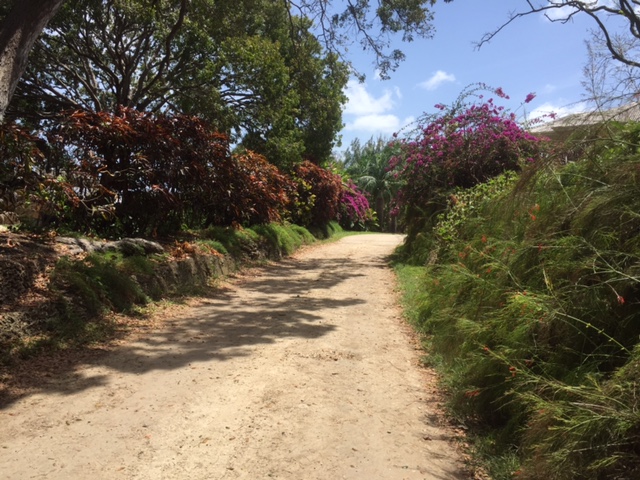
Not far from where they spend much of their days, stands what Annalee referred to in the aforementioned essay as vestiges of an insidious complex. The remains of a sugar mill and its outposts. Though missing its top and outstretching windmill, it still stands its ground, with baritone breath, holding secrets and long memory. The former mill and nearby trees whisper tales longer than the young vines that hang from their tops, down to hallowed ground, but yet to dig for bones, tobacco pipes and fragmented wares. Evidence of the hand is all over the limestone, wood and metal structure that was the mill. New life springs from the death of her. I touched and listened. The arched orifices are like deep gasps as if to revive. Parts and pieces of her lay strewn about and kept alive still, by the same air that filled lungs there centuries ago.

I thought about the bodies that laboured here, on this site, and how they might have moved, how many were they over time – like if all of their souls were present at once – just standing there to be counted, to be called by name. They produced. They were of value. They were currency.

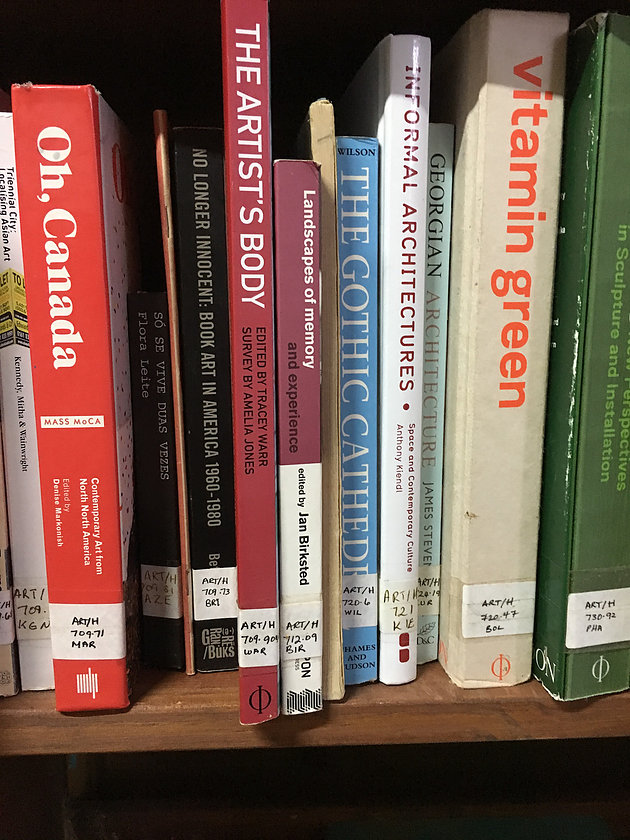
This was not a moment of gloom for me, but a joyous one – like, YES! You are here, Nyugen. In the mix with all of this history. To make full use of this time and opportunity to engage, share, learn and build. As I walked the grounds in reflection, I began to recall the email introductions made by the FM staff, connecting me with historians, scholars, artists and writers here in Barbados. There was an anxiousness, a ready to burst feeling that ran through me from crown to sole. I then went to the Colleen Lewis Reading Room adjacent to the studio and browsed a portion of the over 3468 items in the collection and pulled a few titles to sit with for a while. 

(from the collection)

In the preface to The Artist’s Body, edited by Tracy Warr, Warr writes, “Artists have investigated the temporality, contingency and instability of the body, and have explored the notion that identity is ‘acted out’ within and beyond cultural boundaries, rather than being an inherent quality. They have explored the notion of risk, fear, death, danger and sexuality, at times when the body has been most threatened by these things.” This caused me to reflect on notes I took during my walk around the acres. I thought about the complex notion of identity in the Caribbean and how one’s role or position within the social structure is inextricably linked to the body that ‘act(s) out’ the role(s). Then the questions arise: does the ability to effectively execute a role depend on one inherently possessing the qualities of said role? and if so, how does the threat of fear, death, risk, and sexual violence deepen the commitment to the role. Then one can ask further questions applicable to the plantation model about inherent qualities formed by what Carl Jung referred to as collective unconsciousness.

Warr goes on to write about Dadaist of the 1910s and 1920s making “art in places more real and relevant.” This site, is perhaps more “real and relevant” to my work than any gallery or institution in which I have exhibited or made performances. It is my hope that the work that happens here continues in the trajectory of my time spent in Martinique – (Working form a non-Western cultural perspective), not (so) focus(ing) on a notion of the individual as a central, cumulative point, but rather on an understanding of self as part of a continuum in time, a community, an environment, a cosmos. – Warr 

Read this post on Nyugen’s website here.

___________________

This residency is supported by the Leonore Annenberg Fellowship Fund for the Performing and Visual Arts
Fresh Milk welcomes Nyugen Smith and Letitia Pratt to the platform

Fresh Milk is excited to welcome US-based interdisciplinary artist Nyugen Smith and Bahamian writer Letitia Pratt to the platform for the month of June, 2017.

While in Barbados, Nyugen will be working on a project which  contributes to a multi-part installation titled Lavway. (“Lavway” is Trinidadian patois for “le vrai,”or “the truth” in French, and is the name of a form of calypso that reports the truth as seen by the singer or composer.) Lavway will examine the education system in the Caribbean from late nineteenth century to present day with a focus on systematic omission of histories and contributions of people from the African diaspora. His Fresh Milk residency will be spent in part on research and collecting relevant objects, recordings, and texts in relation to this.

Letitia intends to use the residency to work on an individual poetic project, Melody of a Lost Woman. This series of twelve narrative poems will focus specifically on Bahamian womanhood and the effects of the patriarchy on the feminine existence within the Bahamas. The piece draws strongly on Moya Bailey’s concept of misogynoir, which refers to the violence that black women endure by the hands of black men. Her work and research in Barbados will question the ways Bahamian misogynoir differs from other patriarchal incarnations, and explore commonalities through Caribbean history and folklore to consider these experiences across the African diaspora.

__________________

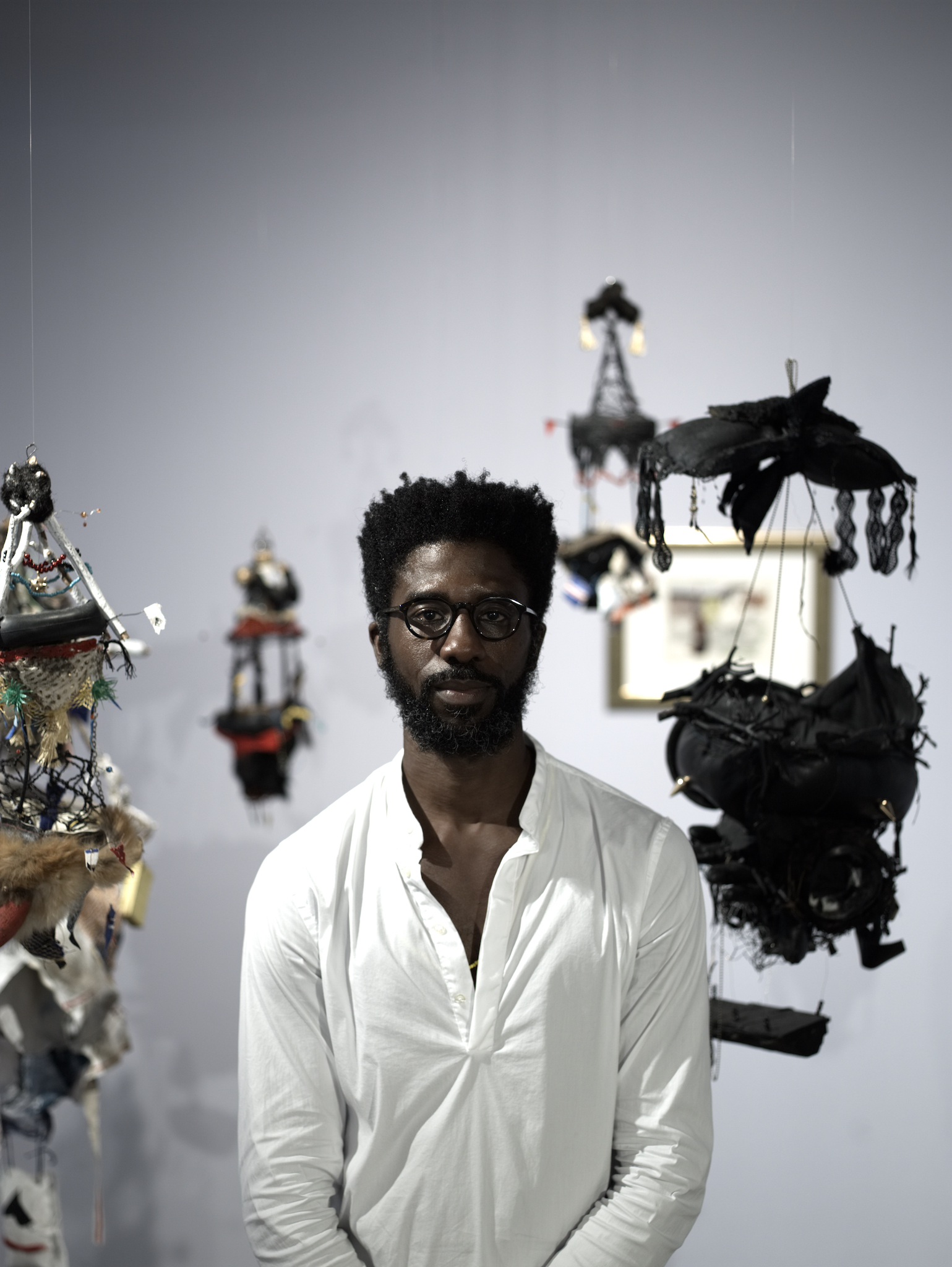
Nyugen Smith (Photo credit: Janice Marin)

Drawing heavily on his West Indian heritage, Nyugen Smith is committed to raising the consciousness of past and present political struggles through his practice which consists of sculpture, installation, video and performance. He is influenced by the conflation of African cultural practices and the residue of European colonial rule in the region. Responding to the legacy of this particular environment, Nyugen’s work considers imperialist practices of oppression, violence and ideological misnomers. While exposing audiences to concealed narratives that distort reality, he destabilizes constructed frameworks from which this conversation is often held.

______________________

About Letitia Pratt:

Letitia Pratt recently obtained her Bachelor of Arts in English Language and Literature from the College of the Bahamas. An avid reader of fantastic fiction, most of her writing navigates the existence of black (feminine) bodies within that genre and draws heavily on stories within Bahamian folklore. Her themes often explore the function of art and literature within the Bahamas, and her most recent published work, ‘A Scene (of Two Lovers Contemplating Suicide)‘ discusses the concept of liminality within artwork, and how it’s the ability to occupy multiple spaces creates an active exchange of ideologies.

drea brown’s Residency – Week 2 Blog Post

US-based poet drea brown shares her second blog post about her Fresh Milk residency, which is part of a new partnership between  Fresh Milk  and the John L. Warfield Center for African and African American Studies at the University of Texas in Austin. This week, despite coming with a plan for her residency, she has found herself responding in unexpected ways to the space, and has been compelled to continue writing about Phillis Wheatley – responding to the gaps in history and giving way to the ‘ghosts’ that haunt her poems. Read more below:

The walk to the studio

I came here with a plan. But, the poems that have come since my arrival are not the poems I intended. Each morning I make my way to the studio listening to leaves murmuring in the early breeze, I sit at a blue desk facing windows wide open to a winding hillside, and the poems come. Sometimes they are unwelcome visitors knocking for entry, sometimes to write them is comfort, but at all times they feel necessary, like work I am continually called to do. They are long—pages and pages of unfurling stanzas, raw and full of secrets, ragged line breaks; they are not the poems I imagined. But poems, like the ghosts that live in this ink, want what they want, and who am I not to oblige.

Phillis Wheatley

Dear reader, Phillis Wheatley will not let me be. I have made peace with this, and realize in some ways to write these poems is to work toward my own healing. The blues of the studio, its tables and doors and corner rocking chair, the blues of Bathsheba in the east, of Accra in the south, they remind me of this. And so I write and read incessantly, at the studio, in my flat, with my feet in the sand near lapping water, as if it is the only way to breathe. Perhaps in this second week, that is what it has been—a way to let go and take in again and again.

What Audre Lorde said remains true: poetry is not a luxury. It is a tool of survival, a means to find some kind of freedom.

__________________

This residency is supported by the John L. Warfield Center for African and African American Studies

drea brown’s Residency – Week 1 Blog Post

US-based poet drea brown shares her first blog post about her Fresh Milk residency, which is part of a new partnership between  Fresh Milk  and the John L. Warfield Center for African and African American Studies at the University of Texas in Austin. drea’s first week has been a chance for her to exhale, coming directly from the rigours of academia, and allowing her to reconnect with her creative self while delving into Caribbean literature, ancestry and spirituality. Read more below:

When I was awarded this residency at Fresh Milk, there was a thrill that ran through me that there are not yet words to fully describe. But I can tell you about the rush of colours that came with it. There was gold in my chest, flecks of it covering my hands, a red in my palm that was too brilliant to look away from; for days I dreamt of blues I had never seen. And then, a whirlwind of days, an early morning flight, and somehow I walked right out of the halls of academia and back into my poet self, off the plane and into a welcomed rainstorm. Ready or not. It is still all settling in.

This is the end of my first week at Fresh Milk and already it is moving too fast. Each day I have been writing and working to devour a stack of carefully selected books: Caribbean short stories and poems, books about tracing ancestry, about leaning into the spirit, about shadows and ghosts, and making space to hold it all. At night when the sky is black and the cat has crept in and the fireflies are the only outside light, I listen to the deep sigh of horses and give thanks for this opportunity to breathe salt air and spread out in stanzas.

I am grateful. An immense thank you to the John L. Warfield Center for African and African American Studies at the University of Texas in Austin, for the continued push, uplift and support in my scholarship and in my art. Thank you Fresh Milk Team, Katherine and Annalee who quietly add to my corner stack of books, who continue to help me open and relax and let go of worry. I am grateful for the Orisha and my Egun, who each day helps me survive and shine.

__________________

This residency is supported by the John L. Warfield Center for African and African American Studies