Nadijah Robinson’s Residency – Week 4 Blog Post

Nadijah Robinson shares her final blog post about her residency with Fresh Milk, concluding with her thoughts on how history is written, told and understood, and the value held in the land and our own bodies  in remembering/passing on these stories. She also shares the impact of her presentation to the final year students in the BFA programme at Barbados Community College (BCC) in considering her goals as a socially engaged artist. Read more below:

wk4_1

My last week at Fresh Milk. I have been wrapping up my work in the studio, making connections, having conversations, getting souvenirs, seeing my Bajan family and seeing some last sights.

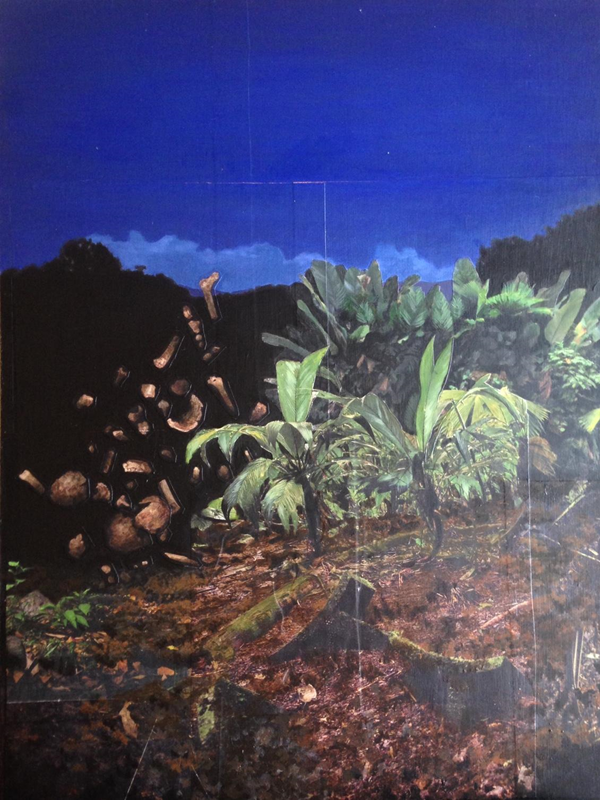
On my last morning in the studio, I finished the piece I’ve been working on, although it doesn’t have a title yet. I know now that it is about how the history that I want to recognize is not written in books, it is written in the earth, in the land and in our bodies and blood. It is most accessible in oral stories, by observing ourselves and the culture we create, and by intuitively knowing what we do.

I did my presentation to a 3rd year art class at BCC this week. I gave a talk and slideshow presentation on my history of community-engaged work. This is a collection of my work that sometimes approaches and is within the realm of ‘social practice art’, but is also peppered by work that is more appropriately called arts-based youth work. In preparing this presentation I realized how much my practice has been formed from a desire to do something with my artwork.

I remembered a moment of crisis in high school when I felt like I had to make the choice that would change the rest of my life and set me on a particular path – the middle and high school years in Canada felt full of these deciding moments. I felt I had to choose between being a professional artist and a teacher, more specifically whether to take grade 11 Art, or something more ‘academic’. These were two career paths I’d known for a long time that I’d wanted to pursue. At the time, becoming a teacher was a promising career in Toronto – there was a teacher shortage that would soon after become an incredible teacher surplus. The pay was decent, and it was basically the definition of job security. I had watched all of the terrible, misguided teacher-saviour films, and they had created in my mind a sensational image of what being a teacher could be –  a way to effect change in the world, locally. I wanted that, to be a vehicle of social change. But mostly I just wanted to make art, though this was not the wise career choice. There’s no money in art, and I didn’t want to be poor and struggling forever. Not only that, but I didn’t want to be preoccupied with the self-involved, decorative, wishy-washy activities that having an art career seemed to be all about. I wanted a way to make artwork that meant more than that one-dimensional caricature-like story I was presented. My younger self wanted to make art that was all about edgy stuff and politics and was ground-breaking and would one day make it into an Adbusters magazine. I wanted to make artwork that would infect people’s minds with possibilities of better things to come, and place a how-to handbook in their hands. I chose in the end to take grade 11 Art, because I had the genius realization that I could be an art teacher, and have an art career in my off time. I’m glad I did.

wk4_2

In doing this presentation more than 10 years later, I realized how I came to reconcile wanting to make art that does stuff for people. I’m still working on it, but I have been listing for myself a set of guiding principles as I go, the first of which was that I must know what I am trying to do with my work, who I’m doing it with (as opposed to for), and in what language (medium and vernacular) I would do it. Along the way I added things like prioritizing integrity, and supporting community-led projects and speaking with my own voice.

I feel very grateful to have had this experience at Fresh Milk, and it is significant that I did my residency here, in Barbados. Being able to reconnect with my family, with Bajan culture and with the history of this place, and having had the conversations that I have had this month has shifted how I see my own particular cultural makeup. The diaspora upon diaspora, the historical memory and living in North America, Toronto in particular. Some ideas have shifted and some have solidified, but they are complex things to reconcile and I feel as if I’ve just begun again.

wk4_3

_______________________________________

2014 OAC logo RGB JPG

This residency is supported by the Ontario Arts Council.

Transoceanic Visual Exchange and the Fresh Milk Team featured in Barbados Today

In her arts column ‘About Town, Across Country’ for the Barbados Today e-newspaper, Katrina Marshall recently shared two articles: one on the Transoceanic Visual Exchange (TVE) programme, and one focusing on what it means to be an artist-in-residence, speaking with Fresh Milk’s Katherine Kennedy about her work and residency experiences to explore the topic.

Thanks very much, Katrina, for taking an interest in the arts!

Barbados today TVE

To read the article on TVE, which appeared on pages 12-13 of the October 22 edition of Barbados Today, click here.

Barbados today Katherine article

To read the article about Katherine Kennedy and her thoughts on artist residencies, which appeared on pages 12-13 of the October 30 edition of Barbados Today, click here.

Nadijah Robinson’s Residency – Week 3 Blog Post

In the third week of her Fresh Milk residency, Toronto-based artist Nadijah Robinson writes about her progress so far, shifting her focus from necessarily being on production to absorbing as much as she can from the experience, gathering information from a number of sources and letting things unfold in an organic way. Read more below:

nad_wk3_1

This week was spent doing the most. Looking back on it, I have no reason to feel like I haven’t been doing enough.

This week I made some progress on the piece I am working on, the background is coming together slowly but surely. I know this piece is somehow about the land’s memory, but I am still unsure of the specifics.

I’ve decided to focus my energy on gathering as many resources and impressions as possible before I leave, rather than trying to know what I want to do specifically with them. It doesn’t seem like the most intentional way to go about this, but it seems like the best way to make the most of my remaining time here.

Early in the week, I attended Rayanne’s presentation to 3rd year art students at BCC. Meeting the students and participating in their discussion around different ways they felt under-represented in the Barbados narrative, society, or their early school years was eye-opening. That this experience is as common amongst these students as it is amongst my own peers in Toronto speaks to the ever present power dynamic that dictates who writes our histories, who frames the narrative, who has set up the norms we resist. These days I am preoccupied with the question of what story I end up living in/living out, and how much control I have over that story. Much of my education work, community and art work are born out of a reaction to a traumatic and white-supremacist teaching of history (at all levels of my schooling) and the daily experience of racism. These frame my understanding of everything. If I wasn’t preoccupied with trying to heal from this, then what else might I be doing? It often feels like a trap, to be consistently resisting a belief system so large and entrenched, to be trying to create small alternative visions and truths here and there. I know, in my more optimistic moments, that it is necessary work, and it is my generation’s work to be doing.

I went to the museum on Thursday, and was disappointed with the narrative that was presented to me. I shouldn’t have been, but the level of gloss applied over a violent history was glaring to me. Emancipation in many historical narratives is continually presented as a time where white people suddenly came to the realization that slavery was morally reprehensible and decided to give black people their freedom (in exchange for compensation, and after a period of “apprenticeship”).

nad_wk3_2

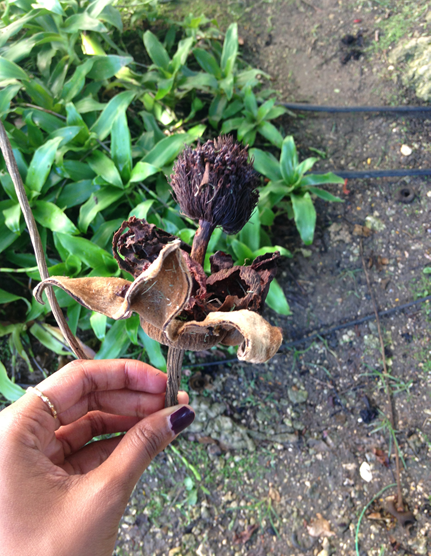
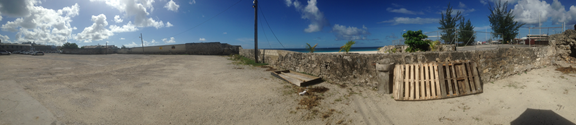
Friday morning made up for my disappointment as I got an amazing tour of plants around Barbados with Anthony Richards. I learned so much of Barbados/Caribbean history through plants and much about of the magic and symbolism of certain plants for different peoples. I made friends with a giant baobab tree of approximately 1000 years, a calabash tree, a black willow tree, and a giant silk-cotton tree. We spoke of mourning and burial beliefs and traditions, which because I live within the spectre of black death in North America, holds particular interest and urgency to me now. We also visited a number of historical sites, like the site of a mass grave that was found at the ports where slave ships used to come in, but which is now a parking lot, with no signs or markings to commemorate those lives or deaths. This tour is something I will most likely mull over for a long time.

nad_wk3_3

Later that day and over the next couple days I visited the national archives, got lost and cranky, went on a driving tour with my cousins and saw the Animal Flower Cave and Little Bay on the north east coast, and went on a challenging (for me) 3 hour hike with my cousin and the Barbados Hiking Association starting at Long Beach.

nad_wk3_4

What I’m reading these days is a mix of Octavia Butler’s Wild Seed to relax, Stuart Hall’s text Thinking the Diaspora: Home-Thoughts from Abroad and Ta-Nehisi Coates’  Between the World and Me. All of these are brilliant.

_______________________________________

2014 OAC logo RGB JPG

This residency is supported by the Ontario Arts Council.

Nadijah Robinson’s Residency – Week 2 Blog Post

Toronto-based artist Nadijah Robinson shares her second blog post about her Fresh Milk residency. She shares some of the struggles she has been having this past week, including beginning to reconcile feelings of longing for the Caribbean and displacement she has felt living in Canada with the reality of being in Barbados, and how this will manifest in her work. Read more below:

wk2_1

Unsettled. This week I got the flu. The week flew by, being on a few different cold and flu medicines and an antihistamine, much of it is a blur of trying to maintain a normal schedule, rest, stay hydrated and hope that it wasn’t dengue fever or chikungunya that I caught.

I’m starting to get homesick, which is an interesting feeling to get here. Homesickness is such a familiar feeling to get in Toronto, to long for a place that feels more affirming of your culture and identities, and feels safe and nourishing. As a second generation immigrant, sometimes that feeling is a cosmic joke. Plane tickets cannot take you to such a mythical destination. This longing is what much of my art centers on, along with the ever-present anti-black racism that is a part of my every day. More on that later.

I started making work. In a bit of a frustrated state at losing momentum due to being a human being vulnerable to viruses and attractive to mosquitoes, I decided to just start on something. I’m not sure what it is yet, but it is a collage/painting mixed media work.

I’m becoming aware of how much time there is left, that I am half way through my residency at Fresh Milk, and that I am two weeks closer to having to return to the beginning of winter in Toronto. This realization has me putting the pressure on in terms of making work, and doing research, but also getting down to the business of going to the beach. Not to mention that I was recommended the remedy of taking a sea bath by more than a few people. Rayanne and I spent this Saturday at the very calm Brandon’s Beach, which proved to me that Barbados is a blessed place. The water’s so warm; until now I had assumed that my distant memories of warm natural waters were something I’d invented, as every river and lake I’ve dipped my feet into in Ontario has left my feet numb.

wk2_2

This week, I’ve been struggling with how the stark difference of my surroundings here is producing ideas and themes for me that don’t directly relate to my context in Toronto. I worry (a bit) about producing work that will be an exception in my wider art practice. But at the core of this is the guilt that I’m not feeling the same level of urgency around my own and my people’s survival. I am still constantly receiving updates and new news about murders and police killings via social media, but no one around me is reacting. As Toronto heads into the coldest/hardest season, and as Canada heads into an extremely scary federal election on Monday, I’m at the beach and in the studio. It feels unfair. But this is something I’m currently trying to reconcile, allowing myself the space and time to focus on making work that is genuine, un-rushed, and about whatever it needs to be about.

wk2_3

_______________________________________

2014 OAC logo RGB JPG

This residency is supported by the Ontario Arts Council.

Ronald Williams shares a statement about ‘Alpha’

There has been some recent media coverage in the Nation Newspaper in Barbados surrounding a public art piece by local artist Ronald Williams, which was commissioned by Fresh Milk and Adopt A Stop as part of their collaborative Fresh Stops project.

Fresh Milk is very pleased to be able to share a comprehensive statement by Ronald about his artwork entitled Alpha, which can be seen on a bench in Independence Square, Bridgetown. Alpha combines imagery and references from contemporary black culture, based on the artist’s own observations from everyday life, with classic figures from Greek mythology to challenge Western standards of beauty.

We are proud to be supporting Ronald’s thought provoking work, and hope that the attention it is receiving will lead to further dialogue and understanding about contemporary art, its role in society and its value for our culture and environment.

Ronald Williams with his bench entitled 'Alpha'

Ronald Williams with his bench entitled ‘Alpha’

Alpha attempts to question traditionally dominant Western beauty standards. It injects a black consciousness alongside, and at times instead of, the established images found in Classical Greek, Renaissance and Baroque eras.

In appropriating the revered iconography from these eras, I sought to challenge the Western ideals which are so dominant in our culture and mind-sets. The characters are based on five of the Olympians from Greek Mythology (tales which were dominant in my own psyche as those were the first stories I remember really liking as a child).

While I removed the mythical Greek icons from their pedestals, the aim was to also critically investigate black culture and present a Barbadian/Caribbean existence in a new light. Therefore, I used ordinary people and mundane personalities as my inspiration. As a result the five characters take the form of the pretty boy, the party animal, the conscious one, the bad boy and the trickster.

The work, viewed as a collective, reflects African, European and East Asian influences, highlighting that even though we are a predominantly black county/region, it is the intermingling of these various cultures which has caused the Caribbean to be a unique space.

Apollo - Detail of 'Alpha' by Ronald Williams

Apollo – Detail of ‘Alpha’ by Ronald Williams

Apollo, described as the most beautiful Olympian and a ‘God’ of the arts, becomes the pretty boy. He is the personification of modern male fashion, which often goes beyond metrosexual and into effeminate/homosexual realms. The character sports a white face on a black body, highlighting the skin bleaching phenomenon (seen as a beautification process), which is prevalent in the black population in the Caribbean.

Dionysus - Detail of 'Alpha' by Ronald Williams

Dionysus – Detail of ‘Alpha’ by Ronald Williams

Dionysus, the ‘God’ of alcohol, drunken revelry and ecstasy is the party animal. Dressed as a Kadooment/Carnival masquerader holding a bottle of brandy and set against a smoky marijuana background, the character appears intoxicated and moody. The piece as a whole aims to underline the use of controlled substances when we ‘play mas’ or celebrate, while it simultaneously hints at the darker mood swings which can be a side effect of drug abuse.

Zeus - Detail of 'Alpha' by Ronald Williams

Zeus – Detail of ‘Alpha’ by Ronald Williams

Zeus, the supreme Olympian, takes the role of the conscious/spiritual one. He represents a state of serenity and oneness (an ideal level of consciousness many religious/spiritual teachings uphold that one should strive for). His modest natural wood frame (in comparison to the other metallic embellished frames) symbolizes a sense of purity and an immaterial view of the world.

Ares - Detail of 'Alpha' by Ronald Williams

Ares – Detail of ‘Alpha’ by Ronald Williams

‘God’ of war Ares naturally becomes the ‘bad’ boy. The aim of this piece is to exude an aggressive, violent vibe. The character’s ‘tattoos’, made from graffiti, his skull scarf and his horned mask all help to paint the picture of a sinister ‘gangsta’, while the red scarf background and the frame made from bullets sell the idea of a dangerous yet strangely glamorous lifestyle many from poor ‘ghettos’ seem to aspire to.

Hermes - Detail of 'Alpha' by Ronald Williams

Hermes – Detail of ‘Alpha’ by Ronald Williams

Hermes, the mischievous ‘God’ of trade, thieves and wanderers is the trickster. He has a clownish appearance, but the background of optical illusions and card suits indicate that there is some level of deception and gamesmanship involved. While Apollo haughtily wears his white mask, Hermes insincerely revels in his. He is the personification of a role many in the black population (Caribbean and worldwide) feel is necessary to play; a conformity to a dominant white culture.

Ronald Williams, Alpha, 2015

Ronald Williams, Alpha, 2015

Thank you to Ronald for sharing his work, to Adopt A Stop for entering into this partnership with us, and to all of the artists participating in the Fresh Stops project. You can learn more about their pieces here.