Article featured in the Cyprus Dossier: Notions of common/wealth versus single/wealth

The 7th edition of the Cyprus Dossier, launched this summer during the International Artist Initiated project hosted by the David Dale Gallery in Glasgow, Scotland, featured an article titled ‘Notions of common/wealth versus single/wealth‘ written by Fresh Milk‘s founding director Annalee Davis. Read the piece below:
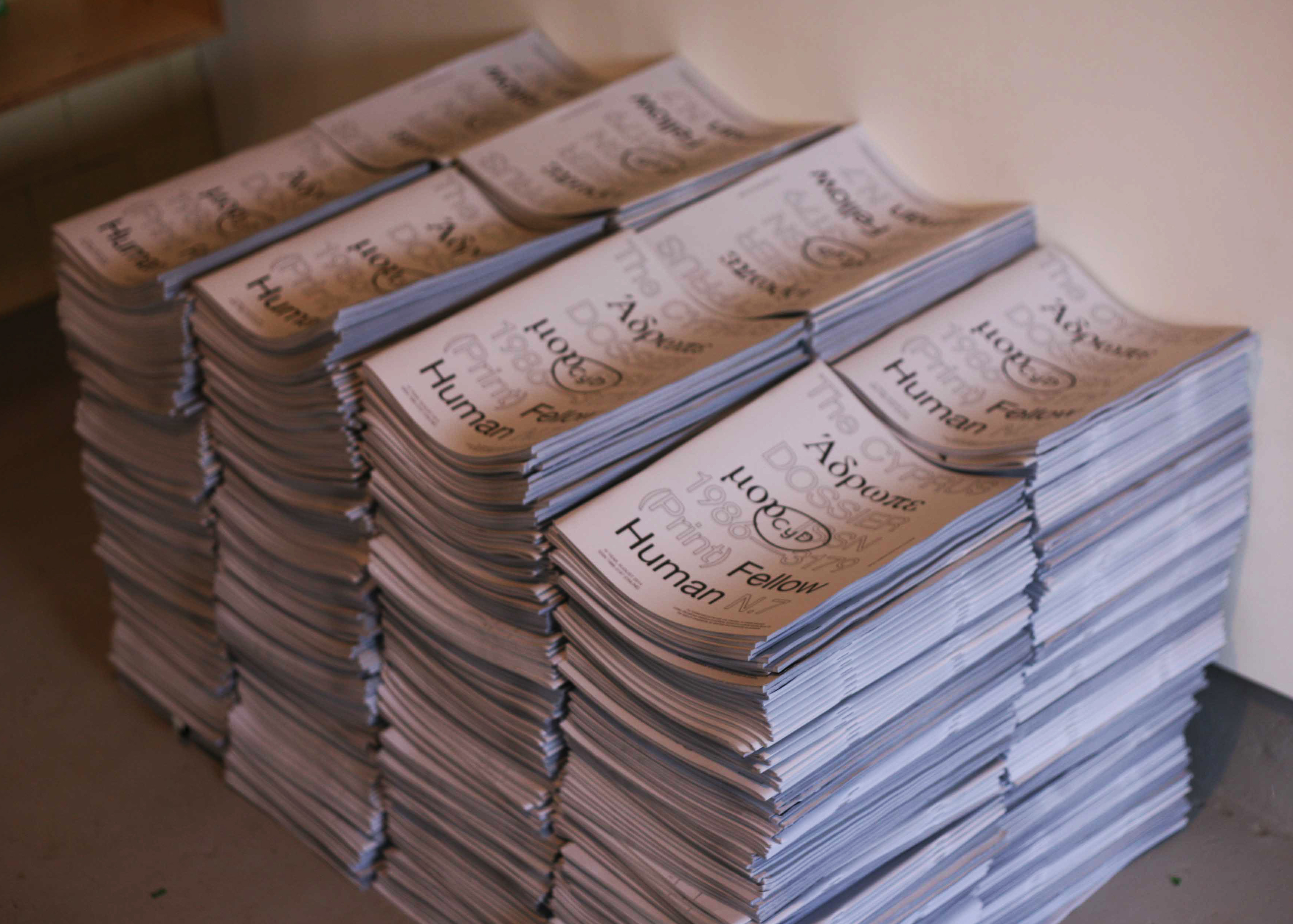
CD crop

“Global art is not only polycentric as a practice, but also demands a polyphonic discourse. Art history has divided the world, whereas the global age tends to restore unity on another level. Not only is the game different: it is also open to new participants who speak in many tongues and who differ in how they conceive of art in a local perspective. We are watching a new mapping of art worlds in the plural which claim geographic and cultural difference.”[1]

The Fresh Milk Art Platform Inc., founded in 2011, is located on a dairy farm on the island of Barbados in the Southern Caribbean. We are one of several artist-led initiatives continually emerging across the archipelago supporting contemporary art production and the shaping of critical communities in the region. The local contexts these Caribbean artist networks respond to is the lack of formal institutions to meet artists’ needs, such as a national art gallery or a museum of contemporary art with a mandate to support the production, discussion and visibility of contemporary practice.

Artists in the region are functioning in an arena with relatively small local audiences, underdeveloped primary art markets and, in most cases, non-existent secondary markets for contemporary art works with very few spaces to exhibit. A challenge this poses is that much of the artwork produced in the region is exhibited, appreciated and valued outside of the region where more developed creative environments function, creating a gap between artists and their domestic audiences. Artist-led initiatives have been working to bridge this gap by creating opportunities for creatives to engage with local audiences.

Fresh Milk responds by (i) offering residencies for local artists to produce work and nurture critical thinking, (ii) expanding the reading room to acquire material focusing on contemporary practice from within the region and around the world, not available anywhere else on the island, (iii) activating the reading material through establishing mentoring opportunities for young people who write critical reviews of the book collection shared through the Tumblr page – Fresh Milk Books – The books that make us scream!, and (iv) staging public events providing local audiences and artists moments to engage with each other, along with other activities.

CD1

While recognizing the importance of nurturing the local environment, Fresh Milk is equally committed to participating in larger and more diverse conversations regionally. Common obstacles rippling throughout the region’s creative sectors act as unifiers, giving rise to geographical connections among artists across the Caribbean who share in these frustrations and resulting in the formation of many of these artist-led initiatives and collaborations.

Fresh Milk’s online interactive mapping project reconfirms our regional identity and functions as a transnational exercise demonstrating the presence of a myriad of arts entities across the Caribbean from the nineteenth century till now – refuting the fact that we are a divided space as determined by former colonizers who used dominant languages to separate the region linguistically. Consolidating regional art spaces into one, the readily accessible online map also acts as a crucial educational and research tool for locating historical and current data about Caribbean art, broadening both local and international knowledge, awareness and collaboration. Mapping becomes an act of resistance as we become our own cartographers, insisting on connection rather than division and relationship as opposed to discord. The map also resists the notion that there is a central and singular art world of which we are peripheral.

While it maybe true that, as Amanda Coulson wrote in the Frieze April issue, ‘The idea that anything intellectual happens here is anathema to the brand we have projected to the outside world’,[2] this map opposes the reductive way in which the Caribbean has been branded repeatedly as an exotic playground for people from elsewhere.

Fresh Milk has worked with partners in the region to establish a regional residency project called Caribbean Linked.[3] This project brings artists throughout the region to make and exhibit art, engage in critical dialogue and build relationships, while using the arts to foster a more unified Caribbean.

As our relationships spread beyond the insular Caribbean, our programming expands to reflect the shifting dynamics of our engagements. Nurturing our core foundation in the Caribbean equips us to build robust, meaningful connections internationally – not seeking validation, but rather mutually enriching cultural exchanges. Fresh Milk is continually fostering critical conversations with entities throughout the Caribbean, in the Global South and traversing the North/South axis of the world to holistically realize a healthy cultural ecosystem.
Continue reading
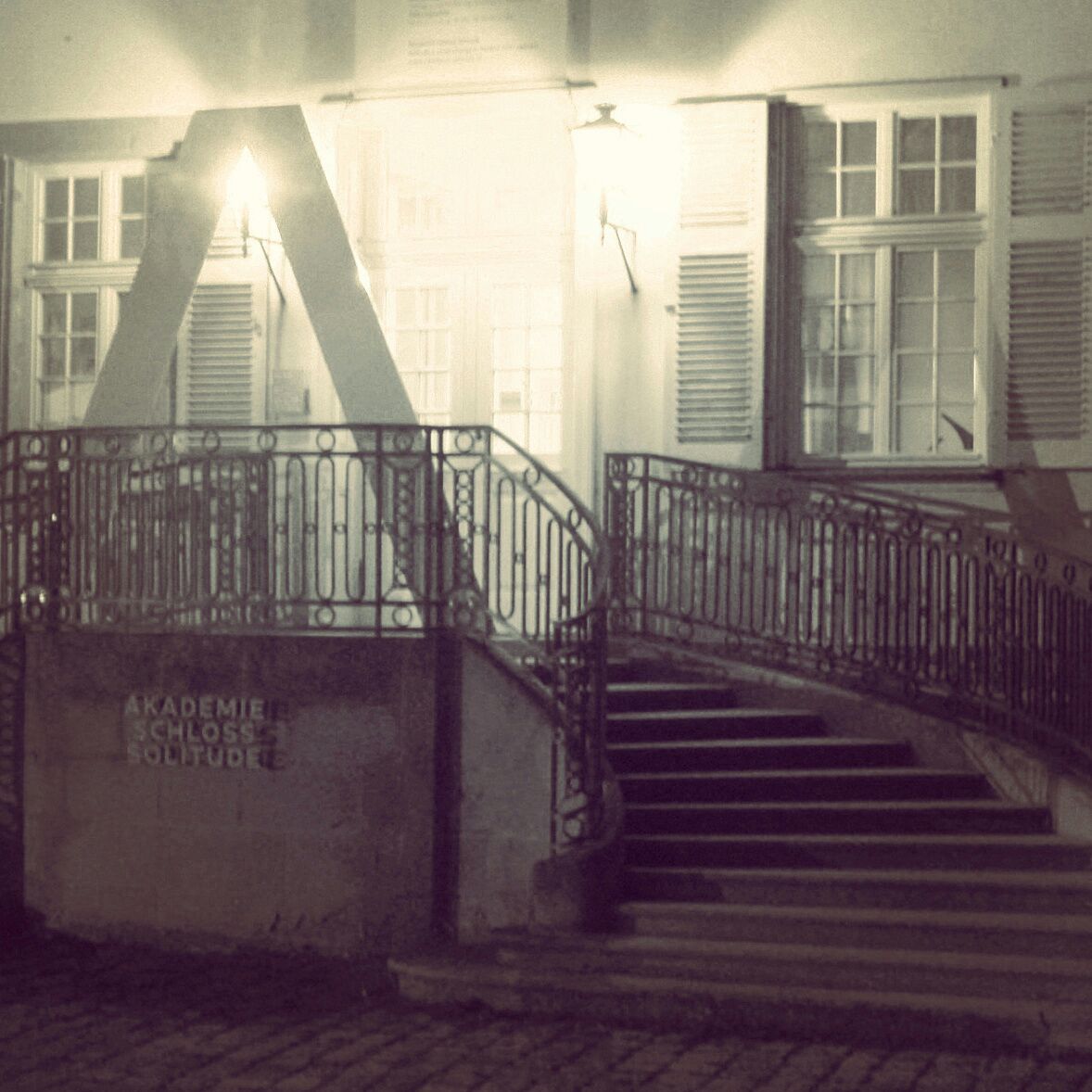
ARC Magazine announces Katherine Kennedy’s Fellowship at Akademie Schloss Solitude

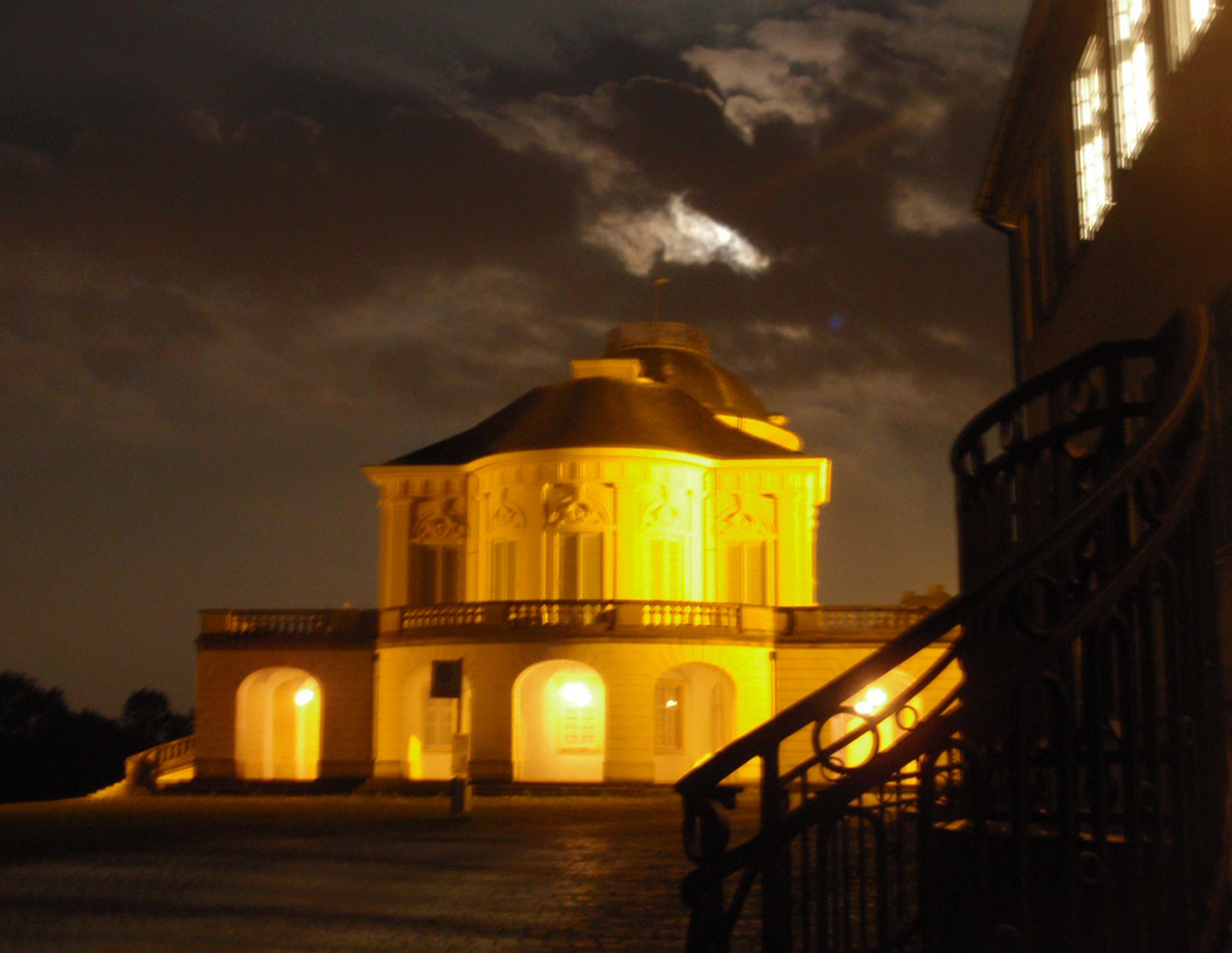
ARC Magazine shares Katherine Kennedy‘s first report from Akademie Schloss Solitude, Stuttgart. Katherine was selected on behalf of Fresh Milk to participate in the ResSupport Fellowship programme offered by Res Artis. During her 3 month tenure, she will be a resident correspondent, interacting with the personnel and fellows, conducting interviews, and extending the wealth of the Akademie’s programming to our community. Read more below:

OLYMPUS DIGITAL CAMERA

The best way I can describe both the past few and upcoming months would be transitionary. Working in the arts is flexible by nature, but at times it feels even more crucial to be receptive to change when operating in the context of the Caribbean and contributing to platforms such as ARC Magazine and Fresh Milk. The missions of both initiatives overlap and synergize in their commitment to maintaining critical, creative spaces of encounter, acting as ‘cultural labs‘ whose agendas surpass nationalistic thinking with the larger, holistic good of the region in mind. These are ambitious goals that both ARC and Fresh Milk rise and adapt to in a number of ways on an ongoing basis, and goals that can only be achieved through open mindedness to new ideas, new people and new environments.

I applied in the capacity of Assistant to Director at Fresh Milk to the ResSupport Fellowship programme offered by Res Artis, a worldwide network of over 400 residencies of which Fresh Milk is a member. The fellowship is described as an “exchange program of cultural workers at residency centres…[providing] the occasion to increase organisational consciousness, strengthen the bonds, and also generate knowledge and cultural sharing among the members of the Res Artis network.”

These ideas of exchange and knowledge transfer immediately resonated, having always been at the heart of our work, and I was honoured to have been selected to travel to Stuttgart, Germany to be hosted for three months (September 1 – December 1, 2014)  by Akademie Schloss Solitude. In addition to gaining insight into how this prestigious residency centre is run and fostering relationships with the staff and resident artists, I will be acting as a correspondent on behalf of Fresh Milk and ARC, sharing information on the Caribbean contemporary art scene and in turn extending my experiences and information gained at the Akademie with our networks throughout the region. I’m aiming to ensure that this journey is not a drop in a pond, but can lead to future collaboration and be mutually enriching for all involved – large goals seem to come with the territory, but the very existence of opportunities such as this is proof that there is a real desire on both sides for meaningful engagement.

The transition from Barbados to Germany is taking place, and even as I take the time to orient myself here I am eager to absorb as much as I can, having hit the ground running. But while this shift in my location and commitments will be more than a drop in a pond in the greater scheme of things, it has still produced ripples in the daily functioning of both initiatives I am representing.

OLYMPUS DIGITAL CAMERA

While I am abroad, Barbadian artist and regular volunteer at Fresh Milk, Versia Harris, will be stepping in and interning as Assistant to Director in training, exemplifying the importance of investing in the development of emerging artists and equipping them with the necessary skills to confidently enter professional environments. Similarly, ARC has recently inducted three interns into its fold – Katherine Agard, Varala Maraj and Natalie Willis – who have each been applying their talents and doing a fantastic job at working cohesively with ARC’s core team. Witnessing the domino effect of knowledge transfer that is already branching out from all sides feels very special to me, and can only stretch further and further as time passes and each new experience gets added to the mix.

Transition is also a form of evolution. New ideas, new people, new environments; all of these continue to come together to spell progress, growth and fresh prospects in ways that we envision reaching far beyond my tenure in Germany, with the input of so many incredible individuals and institutions working in tandem to create and circulate new possibilities. In this spirit, I’ll finish by sharing Akademie Schloss Solitude’s current call for applications to their next residency cycle below – perhaps it will be the first point of departure from this fellowship for new discoveries and opportunities for others:

IMG-20140908-WA0009

Call for Applications: Akademie Schloss Solitude

For the fifteenth time, Akademie Schloss Solitude is granting approx. 70 residency fellowships of three to twelve months in duration. More than 1.200 artists from more than 100 countries have developed and advanced projects at the Akademie since its opening in 1990, creating a close-knit, global network of Solitude alumni that expands from year to year. The Akademie pursues an intense exchange between artistic and scientific disciplines. With the art, science & business program the transfer of knowledge and experience between these fields can be deepened to create new synergies of creativity, inventiveness and management.

International artists are invited to apply from the following disciplines: Architecture (design, landscape architecture, urban planning), Visual Arts (including performance art), Performing Arts (stage design, dramatic texts, dramaturgy, musical theater, performance, direction, drama, dance), Design (fashion, costume, product and furniture design, visual communication), Literature (essay, criticism, poetry, prose, translation), Music/Sound (interpretation, sound installation, sound performance, composition) and Video/Film/New Media (including video installation, fiction and documentary).

Furthermore, scholars, scientists and professionals from the disciplines of the Humanities, Social Sciences (with a focus on culture and the politics of space), Economy/Economics (with a focus on urban policy), and Culture & Law (with a focus on authorship) are invited to apply.

Persons up to 35 or if older who have completed a university or college degree within the past five years are welcome to apply. Currently enrolled university or college students (at the time of application) will not be considered for selection. Each fellowship recipient is granted Euro 1,100 per month, in addition to free lodging.

For additional information on the residency programme, application process and selection jury members, see the Akademie Schloss Solitude website here, or visit our Opportunities page.

Application deadline is Friday, October 31, 2014 (Postmark/End of Online Application).

​As of July 1, applicants will find all information, be able to register and download the application form or apply online on the Application website.

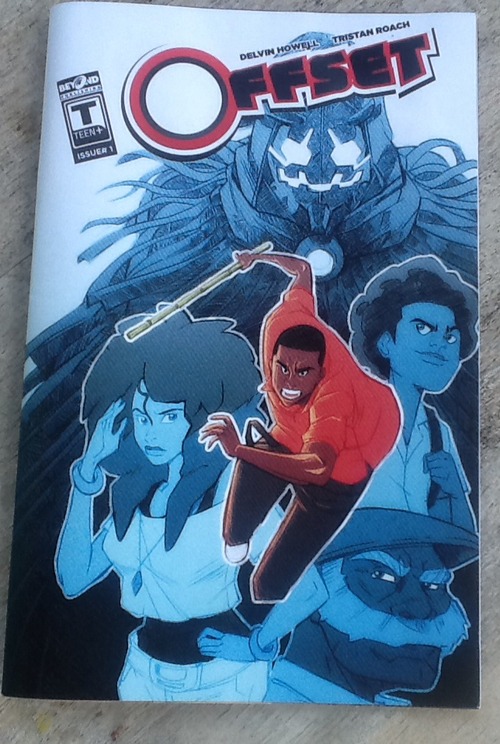
Offset Issue #1: The Man Who Travels With a Piece of Sugarcane – #CCF

Offset Issue #1

In late 17th century and early 18th century Japan, there was a famous Ronin swordsman by the name of Miyamoto Musashi. The term Ronin was normally applied to samurai who didn’t have a master, either because the master died or the warrior was in disgrace. In Offset Issue #1: The Man Who Travels with a Piece of Sugarcane (2014), the main character Kyle Harding is a little like a stick/sugar cane fighting Musashi—who happens to attend University in contemporary Barbados.

The above excerpt is from Kwame Slusher’s review of Offset Issue #1 by Tristan Roach and Delvin Howellthis week’s addition to the Fresh Milk Books Tumblr – the online space inviting interaction with our collection in the Colleen Lewis Reading Room.

For new Critical. Creative. Fresh reviews every week, look out for our #CCF Weekly posts and see the great material we have available at Fresh Milk!

Mapping the Commonwealth with “Glasgow’s Finest”

Alberta Whittle shares her thoughts on the recent International Artist Initiated (IAI) project in Glasgow, presented by the David Dale Gallery & Studios as part of The Glasgow 2014 Cultural Programme which took place alongside this year’s Commonwealth Games. Read more below:

Photograph by Rayanne Bushell

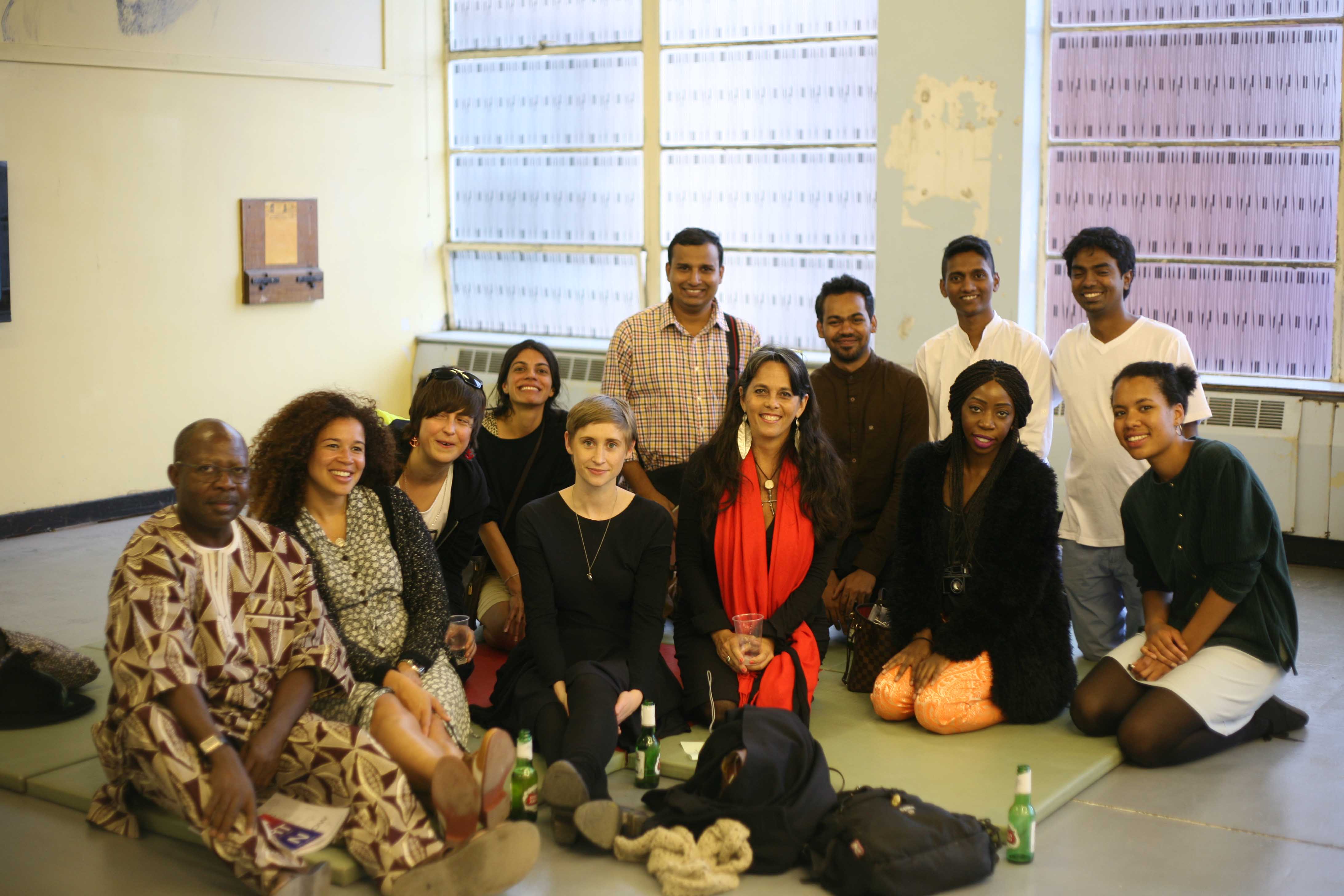
Representatives of Clark House Initiative, RM, Video Network Lagos, Fresh Milk; Alberta Whittle and Rayanne Bushell

 “In 1884 the Earl of Rosebery visits Australia and asks, ”Does the fact of your being a nation… imply separation from the Empire? God forbid! There is no need for any new nation, however great, leaving the Empire, because the Empire is a Commonwealth of Nations“.”[1]

In the summer of 2014, the Commonwealth Games arrived in Glasgow. Much like any travelling circus, the Games brought believers, performers, participants and an audience. Like any participant, I came to Glasgow with my own expectations. Having lived in the city for many years, but failing to assimilate completely, I still feigned the confidence that comes so easily for those who know the area. Sharing a taxi ride, with the self-proclaimed “Glasgow’s Finest”, the driver quizzed me on my knowledge of the city’s geography, asking me where roads connected, easily highlighting my failure to truly belong to Glasgow. The driver insisted on informing me that Glasgow’s taxi drivers were always known as “Glasgow’s Finest”, and I was not allowed to forget it.

During this trip, over many conversations with “Glasgow’s Finest”, a discourse of belonging and not belonging readily emerged. The drivers often assumed Barbadian artist, Annalee Davis and I were Americans, our accents blurring into a vague sense of foreign-ness. They asked why we were here, and when we explained about our project as part of the Commonwealth Games, they in turn spoke of how the Games were not for Glaswegians. The Games’ faux presentation of multiculturalism and the promotion of the idea that we are all in this together confronts the reality that, for many Glaswegians, there is a disconnect between their participation on home soil and the participation of the athletes and visitors flown in to contribute to the spectacle of imagined unity. The notion of unity between us, members of a former British colony, and Glaswegians, a nation grappling with securing their own independence, came from an unlikely direction. Driving through the Merchant City we passed roads such as St. Vincent Street and Jamaica Street; easy reminders of Glasgow’s active role within the slave trade as members of the plantocracy and as indentured servants. However, “Glasgow’s Finest” posited the belief that Caribbean and Scottish nations must be united against the English, advocating the belief that Scots also faced “oppression” from England. This supposition did not entirely surprise me, given the political climate surrounding the upcoming Scottish Referendum.

From the banners, traffic diversions and the odd, green mascot called Clyde dotted across the city, the aura of the Commonwealth seeped into Glasgow’s public spaces. As part of the celebrations, the David Dale Gallery in Glasgow’s East End invited artist-run spaces from across the Commonwealth:  Fillip (Canada),  RM (New Zealand), Cyprus Dossier (Cyprus), Fresh Milk (Barbados), Video Art Network Lagos (Nigeria) and Clark House Initiative (India) to participate in their International Artist Initiated programme.

As part of the Fresh Milk platform, Mark King, Ronald Williams and myself presented a series of interventions. Responding to the commercial nature of the area, we crafted three individual presentations. The location of the David Dale Gallery within the heart of the East End of Glasgow – once a thriving industrial boomtown – seems peculiarly apt, mirroring the substantial role of production Britain’s former colonies assumed, laying the foundation for the industrial revolution. These same former colonies are now re-positioned as independent nations, members of the Commonwealth, exhibiting artwork in their own image. The recent deterioration of Glasgow’s prominence in manufacturing, where production is now outsourced to these former colonies, lends symmetry to the proceedings.

 “Internet ultimately offers both the seductions and subductions of a postmodern “world.”’ [2]

Continue reading

The Art Of Loving Google #CCF

Recently, some friends and I kept joking about how the answer to everything can be found by Google. Typing: ‘How to code a website’, ‘How to make alfredo sauce’, ‘I fell and now my tail bone hurts’ and, with this review in mind, I Googled ‘how to love’.  A 30 step guide—with pictures—was one of the first solutions the search engine provided. Resisting the urge to roll my eyes too much, I browsed the guide. Step by step, I increasingly noticed similarities between this ‘how to love’ and The Art of Loving.

The Art of Loving is a small book about love written by Erich Fromm in the 1950s. A social philosopher and psychoanalyst, he discusses types and effects of love and goes so far as to identify ‘real love’ and even how to put it into action.

The above excerpt is from Versia Harris’ review of Erich Fromm’s The Art of Loving, this week’s addition to the Fresh Milk Books Tumblr – the online space inviting interaction with our collection in the Colleen Lewis Reading Room.

For new Critical. Creative. Fresh reviews every week, look out for our #CCF Weekly posts and see the great material we have available at Fresh Milk!