
Announcing the release of Talamak: Dessa Darling’s Memoir

Frist draft cover page

We are very pleased to announce the launch of Talamak: Dessa Darling’s Memoir, the e-publication written and directed by Fresh Milk Books Team Leader Amanda Domalene Haynes. The story offers a glimpse at the underbelly of many mood disorders, mental illnesses and mysterious health issues: emotional/psychological trauma.

Talamak: Dessa Darling’s Memoir features illustrations by Fresh Milk Books Member Versia Abeda Harris and book design by Kimberley St. Hill. The book is divided into four narratives: Purple Flower, Talamak, Sunsets with Gran-gran and Blood Sisters. Here’s the back cover description:

“DESSA DARLING is a young woman from Barbados, the Caribbean. When a painful memory wakes her from a stoned slumber, she must confront emotions she has been repressing for a very long time.  A mix of words and images, Dessa Darling’s Memoir shares her journey through these surreal and subtly hopeful reflections.”

Read/Download the book here.

__________________

me 1

About Amanda:

Amanda Domalene Haynes is the Project Leader of Fresh Milk Books at the Fresh Milk Art Platform Inc. An editor and emerging YA publisher, her postgraduate research interests include media literacy, popular culture and publishing in relation to the socioeconomic development of the Caribbean region. She currently manages the recently launched blog The Odyssey of Carib Lit, which will document her research about contemporary Caribbean book publishing and its sociological implications. Amanda graduated from the University of the West Indies with a BA Literatures in English (First Class Hons.) in 2013.

Pink Collars – #CCF

589447

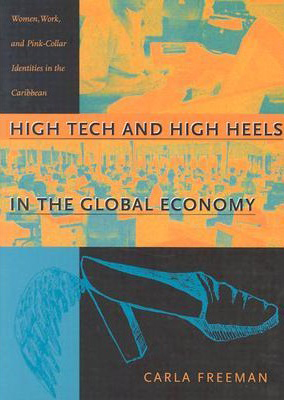
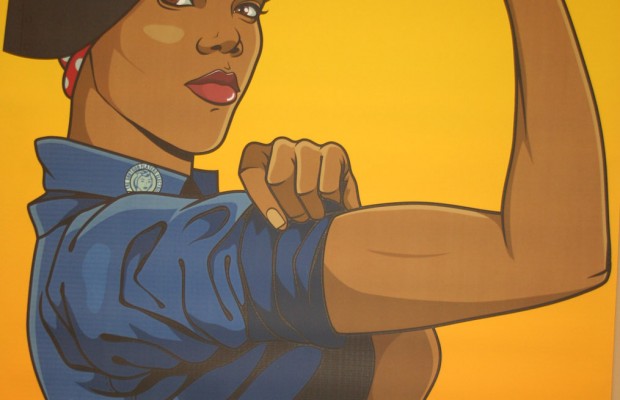
Carla Freeman’s High Tech and High Heels in the Global Economy (2000) is described as an “ethnography of globalisation positioned at the intersection between political economy and cultural studies”.  Don’t be scared off by this heavy description—chapter one opens in the Barbados Harbour Industrial Park, where ‘minivans with open doors are parked tightly’ and women are ‘proudly dressed in suits and fashions that identify them as “office” workers’.  With the symbolism of high tech and high heels firmly in place, Freeman’s text introduces the jargon.

The above excerpt is from Amanda Domalene Haynes’ review of Carla Freeman’s High Tech and High Heels in the Global Economy: Women, Work and Pink Collar Identities in the Caribbeanthis week’s addition to the Fresh Milk Books Tumblr – the online space inviting interaction with our collection in the Colleen Lewis Reading Room.

For new Critical. Creative. Fresh reviews every week, look out for our #CCF Weekly posts and see the great material we have available at Fresh Milk!

black-rosie-cropped-620x400

Márquez’s Bolivar – #CCF

kwame ccf

The front cover of The General in His Labyrinth is a blueprint. Its red tiled corridor could be a path in the labyrinthine mental and physical journey of the novel’s main character—the 19th century figure who is known as ‘The Liberator’ of Latin America from Spanish colonialism—General Simon Bolivar.

This path runs through a series of arches that are decorated with tropical trees; two naked women sit in the curves of each arch. Multiple Bolivars in full military regalia can be seen pacing with their hands clasped behind their backs from one side of an arch to another, probably reflecting on his past accomplishments and failures. The Bolivar at the farthest end—at the vanishing point—seems to be attempting to walk backwards, towards the reader/viewer, as if considering a return to his former glory. I say ‘attempting’, because the shrinking of the protagonist seems to reflect Bolivar’s inevitable death. His return happens only through  his labyrinthine recollections of past victories and failures, of great friendships and betrayals, and his thirty-five passionate love affairs.

The above excerpt is from newest member of the FMB Team Kwame Slusher’s review of Gabriel García Márquez’s The General in His Labyrinththis week’s addition to the Fresh Milk Books Tumblr – the online space inviting interaction with our collection in the Colleen Lewis Reading Room.

For new Critical. Creative. Fresh reviews every week, look out for our #CCF Weekly posts and see the good reads we have available at Fresh Milk!

A View from the Mangrove – #CCF Guest Review

mangrove

A View from the Mangrove is the final part of the late Cuban writer Antonio Benitez-Rojo’s Caribbean trilogy.  Like most of his work, this short story collection deals with the making of the “New World” both historically and in the formation of Creole identity. 

The eleven stories span several centuries.  The first ones bring to life historical chapters of the Caribbean as the “cockpit of Europe”, with European powers battling each other for a greater share of the loot. The first of these stories is a tale of the notorious slave-trader John Hawkins’s pursuit of Spanish gold.  Others involve French buccaneers, a Spanish governor sent to suppress autonomy in the colonies and of a reluctant priest trapped in this struggle.  A few centuries later, there is a human drama told by multiple narrators against the backdrop of the final stages of the Haitian Revolution, and later, an infirm and burnt-out soldier wasting away in a mangrove during the Cuban War of Independence.  The penultimate story is about Haitians fighting against Batista in the Cuban Revolution and against racism and exploitation at the hands of their comrades.  My favourite story of the collection though is “The Broken Flute,” on the last Tezcatlipoca; a tragic tale of an “old god” being swallowed up by the chasm that opens up when worlds crash.

The above excerpt is from an anonymous review by ‘The Book Guy’ of Antonio Benitez-Rojo’s A View from the Mangrovethis week’s addition to the Fresh Milk Books Tumblr – the online space inviting interaction with our collection in the Colleen Lewis Reading Room.

For new Critical. Creative. Fresh reviews every week, look out for our #CCF Weekly posts and see the good reads we have available at Fresh Milk!

The Origin of Species – Super Human #CCF

origin of species

Nino Ricci’s the Origin of Species reminds me of how sloppy human feelings are. We make decisions then change our minds. We make mistakes and run from those mistakes. We do good, we do bad. Alex, the book’s main character, is not a bad person. But is he a good one? The phrase that comes to mind is ‘…things are never black and white.’

I once dreamt that I had died; I was killed in an explosion. Just before I died, I remember being excited about my death. I was ready for it. I felt like all the answers to the ‘big questions’ would become clear to me. I’d finally know the purpose of life and I would be awesome like Hugh Jackman’s character when he became enlightened in the movie ‘The Fountain’. And even though I was dreaming I felt that when I woke up, whatever insight I had found in my dream death, I would have in my waking life. I wanted death because I believed I was on the brink of some great knowledge that had eluded me all of my 22 years. But of course I passed and nothing happened. No zap or jolt of power or knowledge. I didn’t shine, my eyes didn’t become bright with wisdom and all that hoopla. I did float though, but that’s beside the point. What I want to zone in on is that feeling of being on the brink of something important; of acquiring the state of mind that will change you for the better. That is the feeling that plagues Alex.

The above excerpt is from Versia Harris’ review of Nino Ricci’s The Origin of Speciesthis week’s addition to the Fresh Milk Books Tumblr – the online space inviting interaction with our collection in the Colleen Lewis Reading Room.

For new Critical. Creative. Fresh reviews every week, look out for our #CCF Weekly posts and see the good reads we have available at Fresh Milk!