All Photographs copyright Mark King 2012


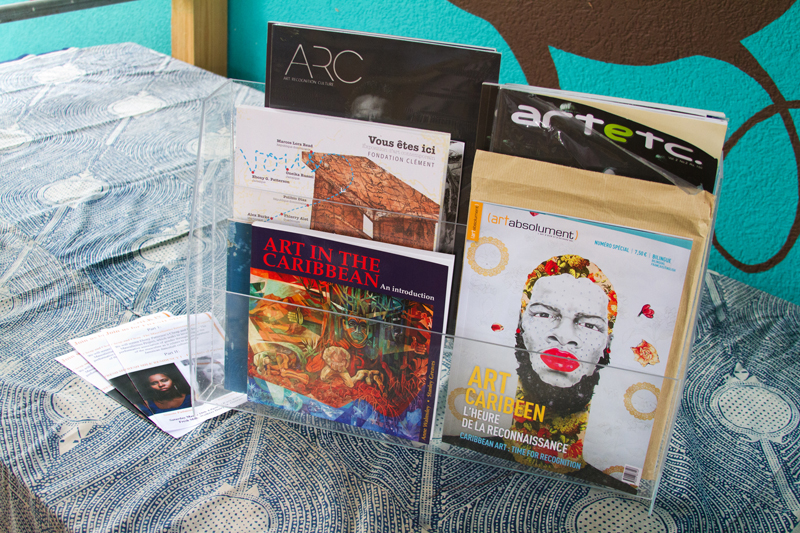


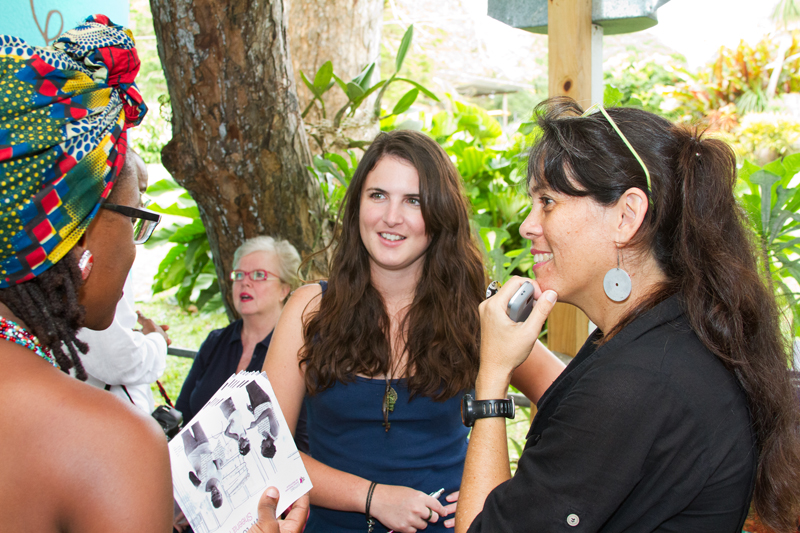
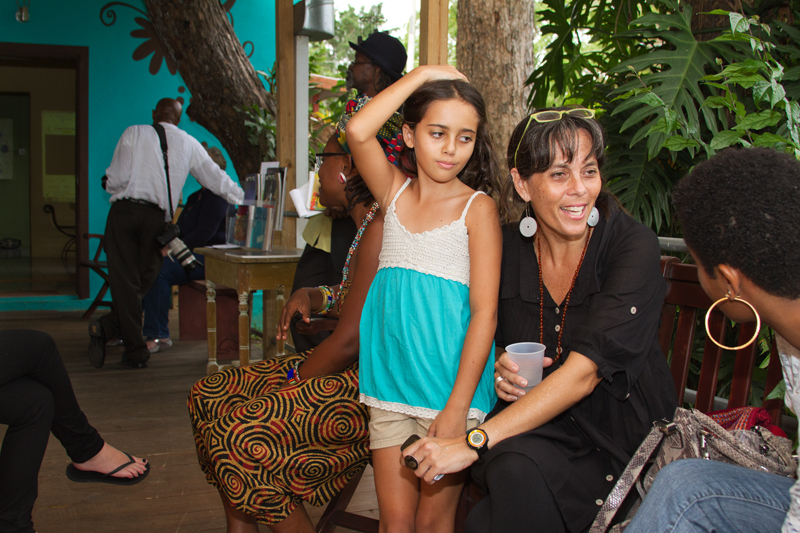
All Photographs copyright Mark King 2012
– Natalie McGuire
“The history of modernism is intimately framed by [the gallery] space; or rather the history of modern art can be correlated with changes in that space and in the way we see it. We have now reached a point where we see not the art but the space first.”
– Brian O’Doherty[1]
Though subversive, the environment in which art is exhibited has been used in contemporary art to display implications of contextualizing outside of the typical. The use of space is no longer neutral, it adds another dimension of what the exhibition wishes to communicate, whether it is being engaged with or not. Theorist Walter Benjamin in 1939 described ‘Cult value’ as the worth of art due to its inaccessibility to the public, only readily available to people in authority[2]. The more valued pieces of art were the ones that only got revealed on special occasions, such medieval sculptures that are not visible on ground level. Then when art was being created in different ways, such as easel painting, art obtained a new type of value – ‘Exhibition value’, where works of art were being hung in public galleries. Art became even more accessible through the technology of photography, which Benjamin believes obliterated the authorities hold on art value. It now became that the more an artwork was exposed to the public, the more valued it was as art, for example, Leonardo Da Vinci’s Mona Lisa, which since 1913 has been reproduced in over 300 paintings and 2,000 advertisements[3]. However, ‘Cult value’ in art still seems to exist, it has just been blanketed over by art galleries. For example, no matter how many times the Mona Lisa has been reproduced and exposed to the public, the Louvre museum in Paris, where the original is housed, recorded approximately 8,300,000 visitors in the year 2007[4].
Even though internationally, art movements such as Conceptual Art and Street Art have highlighted the elitism implied in the white cube aesthetic, it still seems as a Caribbean people some generally feel uncomfortable engaging with contemporary art in an unconventional setting. They don’t like to think critically about art, but rather keep it at a level of aesthetic pleasure: if the colours go with your décor, then it is a good piece of art to own. Thinking about art as part of our culture, involves heavy interrogation of the creolization from colonization, something which Caribbean people like to ignore. The notion of ‘Cult Value’ is very much existent as well, it is not important how or why a piece of art is hanging in a gallery, if it is in there then it must be good art. It is undeniable that our contemporary culture still holds facets from our colonial past. The very nature of what art is seen in our galleries exemplifies this: glorified landscapes and faceless people are the main icons in identifying Caribbean Art. The picturesque and primitive are popular, and exhibiting them on clean white walls directs the viewer to visualize how the images would look on their own walls. Also in Barbados for example, there currently is no national institution to direct a sense of Art History on the island and insinuate taste, taste is completely controlled by commercial galleries which in turn are controlled by the source of profits: tourism. The white cubes here are not so much an elitist space for patronization and dictation as they are flattened shelves for displaying produce.
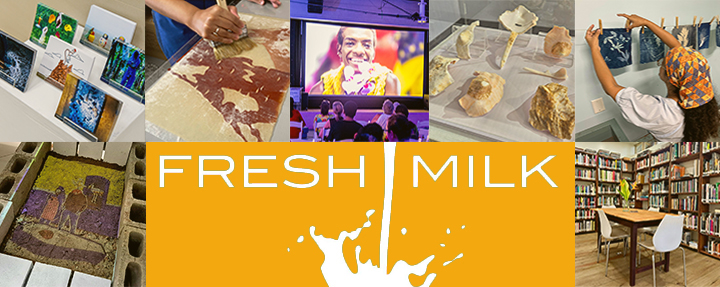
As a result of the monotonous purge of imagery that comprises galleries, informally the present trend is for art networks in the Caribbean to convene outside of one type of space and into another. That is mainly to separate from the mainstream commercial galleries and establish non-conventional platforms as well as an expansive presence in the digital ‘space’. Art spaces like these are seen in Alice Yard (Trinidad), Fresh Milk (Barbados), Projects and Space (Barbados) Tembe studio (Suriname), as well as territorially abstract resources such as ARC Magazine (www.arcthemagazine.com), ARTZPUB (www.artzpub.com), Small Axe (www.smallaxe.com) and Caribbean Review of Books (www.caribbeanreviewofbooks.com) to name a few. These digital spaces represent the reality that the Caribbean itself is a diaspora, that is, not confined to where it is geographically but also how it has traveled culturally. On an international level, digital media and its impact on the arts has also had strong implications on the gallery / museum model, questioning it’s relevancy in an age of instant accessibility.
So are they more suited to exhibiting artwork in a setting outside from the white cube aesthetic and is there enough critical thinking through the Caribbean for it to be significant where art is displayed? Or is it more of a ‘whatever is available’ type model? Arguably, despite perhaps superficially it seeming to be the latter, it is the former, even in its latency. Look at the plastic action movement in Cuba, where they literally took art out to the streets and presented it to the public. Or the Carnival costumes by Peter Minshall, which will never be as comfortably communicated displayed on museum mannequins as they are on revelers. Ebony G. Patterson’s 9 of 219 (2011) would not have had the same impact exhibited down the halls of a gallery, the same for Charles Campbell’s sphere which he rolled through Port Of Spain in 2011. And not only that, how Caribbean artists engage with the white cube space displays the potential of critical thought. For example the recent exhibition by Sheena Rose in Barbados, ‘Town to Town’ (2011). She presented two of her animation features simultaneously projected against parallel walls. The combination of the constant visual of being in a town with it being exhibited in a confined space created a pleasant juxtaposition, something which a thousand images of palm trees in a thousand galleries could never achieve. Another Barbadian Joscelyn Gardner achieved a similar effect during the Black Diaspora Symposium in 2009. Her piece words…just words…. comprised of extracts from M. NourbeSe Philip’s poem Zong! colliding with the 1657 text by Ligon The True and Exact History of the Island of Barbadoes projected onto the wall of the Public Library[5]. This deconstructed the subjective nature of documenting history, and how that perception translates into a national sense of heritage.

Charles Campbell (2011)
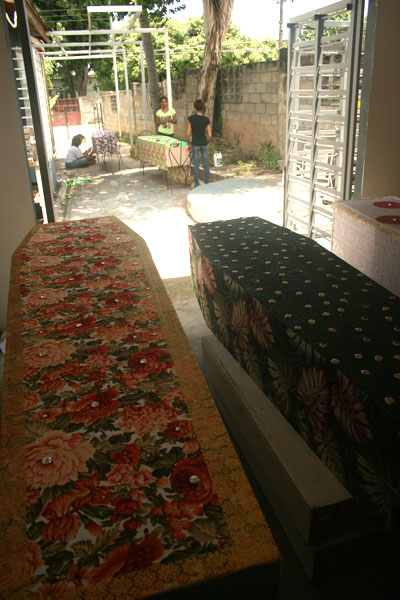
Ebony G. Patterson (2011)

Sheena Rose (2012)
To conclude, there is a lot of room for exploration into Caribbean artists’ relationships with space when it comes to exhibiting work. It would seem the white cube aesthetic is still necessary to generate a perception of value on works exhibited, but at the same time the dialogue between the non-white cube spaces in the region is the significant driving force for the evolution of art reception.
[1] Brian O’Doherty, Inside the White Cube: The Ideology of the Gallery Space, (1976), Berkeley and Los Angeles: University of California Press, 1999, pp. 14-15
[2] Walter Benjamin ‘The Work of Art in the Age of Mechanical Reproduction’, Illumination (1936) p.218
[3] Donald Sassoon ‘Mona Lisa: The Best Known Girl in the Whole Wide World’ History Workshop Journal (2001) p.1
[4] Viktoria Nagy, ‘Museum Curator’ http://www.hetivalasz.com/article/0805/museum_curator (2008)
FRESH MILK IV
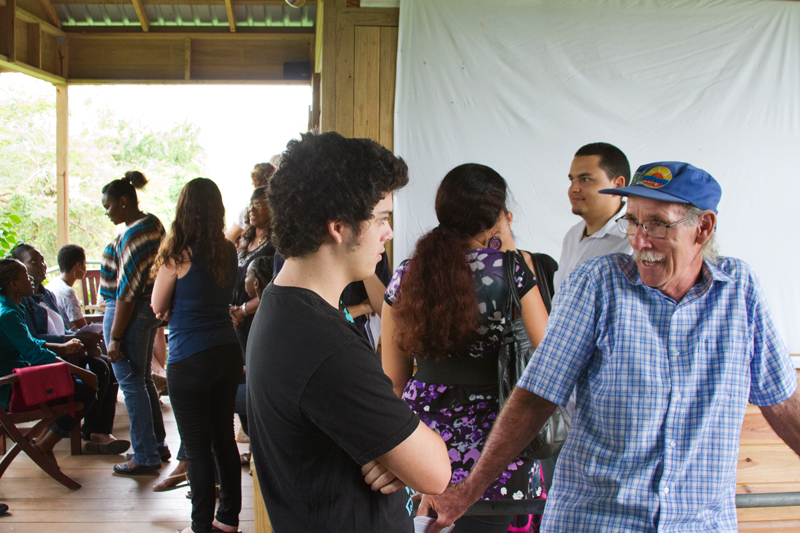
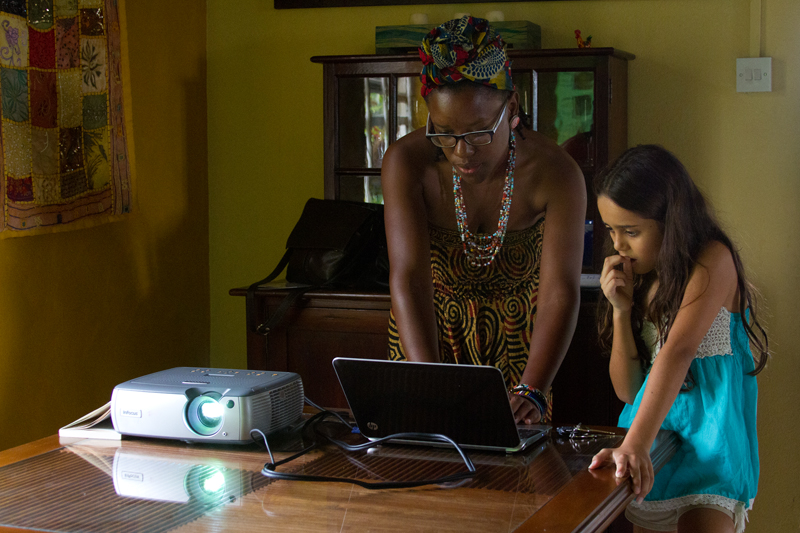
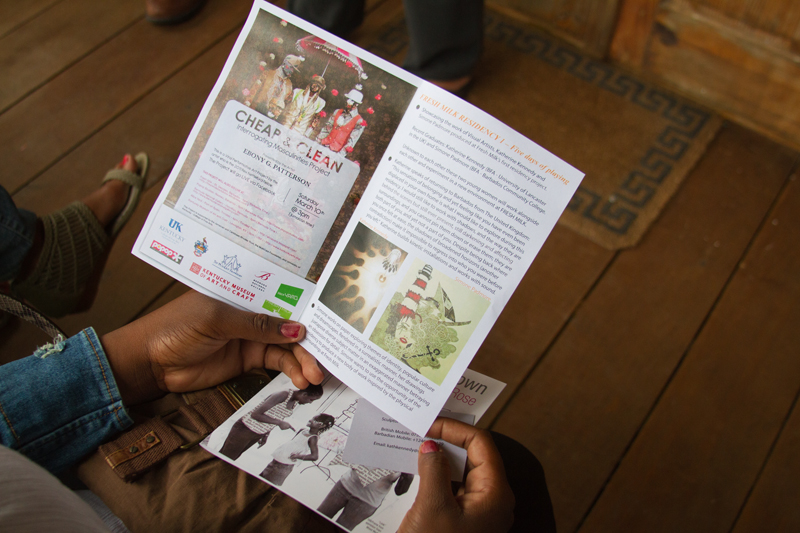
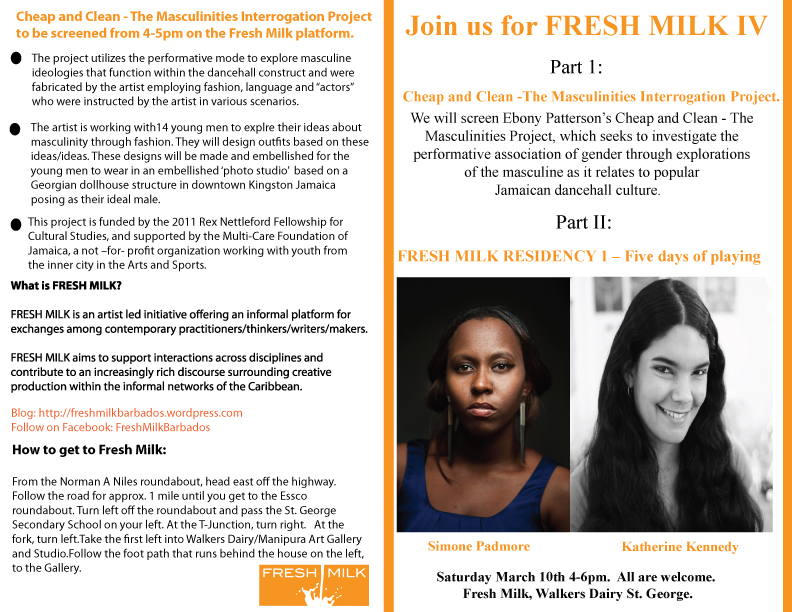
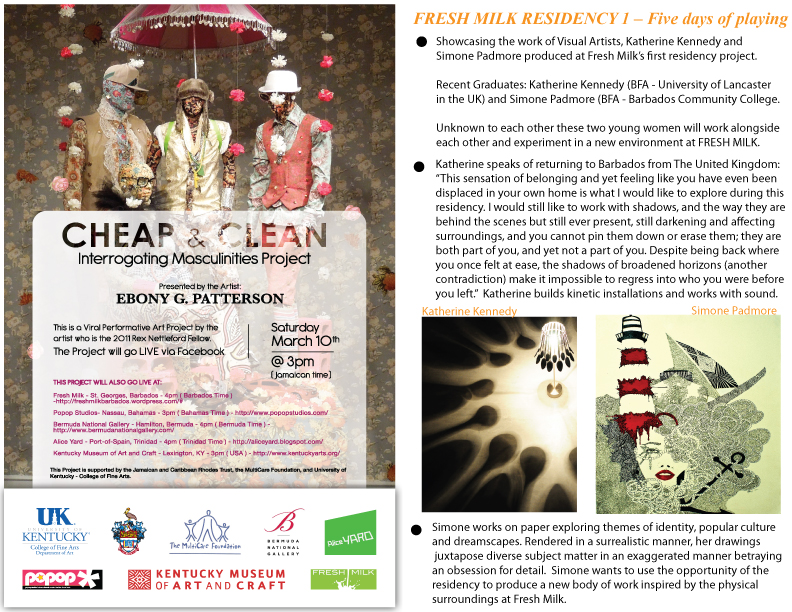
Join us on March 10th for the fourth Fresh Milk platform! This event is split into two parts: It is the host space in Barbados for the screening of Ebony G. Patterson’s ‘Cheap and Clean’ project looking at masculinity in Jamaica and how it relates to Dancehall culture. The second part is a platform showcasing the work of the two local residency participants Simone Padmore and Katherine Kennedy. See you all there!
By Natalie McGuire
Fresh Milk III: A Broad View
January 15th 2012 saw the third Fresh Milk event and first one for the year with inspiring discussions of two parts: the MFA experience and the theme of ‘Abroad’, topics both separate but connected at the same time. With the ‘Abroad’ section, speakers had ten minutes to talk about twenty images and how they express their interpretation of the chosen theme. The panel consisted of Alberta Whittle, Harriet Rollitt, Dorothea Smartt, Linda Deane and Adrian Greene, a healthy mix of visual contemporary artists and writers.
Alberta Whittle (via skype) commented on the benefits of her experience completing a MFA in Glasgow. One of the main points she highlighted was that it added a new dimension to who she created for, the concept of an audience interacting with her work became much more relevant. This actually reflects a current complex amongst some artists practicing here in the Caribbean. Creating anything outside of the conservative is usually not easily received by the general population here, so for Alberta as an installation artist, it is understandable how she withdrew into creating for herself.
Alberta’s installations look a lot at the themes of mysticism, and she spoke about the use of the traditional ‘Shaggy Bear’ character with the ‘Harlequin’ character as a way of integrating Caribbean mythology in a European context.
“I decided to use the Shaggy Bear character with the Harlequin character and look at basically bringing the Shaggy Bear into a European context. Playing with I guess the ideas that we have of masculinity and mythology, ideas which we can’t construct, history has such bias in one direction, it’s nice to find a way to actually play with mythology. It makes it more vibrant, and I guess more personal to me, the idea of displacement has become very apparent to me living in Scotland for so long and finding a way of resolving you know my feelings of difficulty with being in the UK, and looking at British mythology as a way of comforting myself. Also I think my feelings about being a woman have been so much informed by my feelings of not being a man, how all my ideas about femininity have been informed by the absence of masculinity. And the Shaggy Bear character is very much this kind of aggressive character in the video, someone who almost embodies the darker side of masculinity, which we don’t really like to talk about, you know in Barbados it seems very much that masculinity is a specific idea, whereas femininity is something you can play with more easily. So the Shaggy Bear, he is kind of dancing between these two ideas of masculinity and the purer, softer, I don’t know maybe more sensual side and the sort of vibrant, aggressive, sexual side of Harlequin. In a way then it is Shaggy Bear but it’s also Harlequin, the costume you see on Shaggy Bear you see all over the world, he’s built up so much in mythology in Europe, in Africa, in the Caribbean, he’s not just our Shaggy Bear.”
This fresh perspective on a part of culture that is so ingrained in the Caribbean mentality is a vital illustration of how relevant artists like Alberta are to the contemporary Caribbean condition. It suggests that our culture is not necessarily definite within the boundaries of our own festivals and myths, but is integrated in cultures that tie with our colonial past and the present Diaspora.
Harriet Rollitt was the next to speak about her experience doing a MFA at Newcastle University. She stated that what motivated her to pursue a Masters was her frustration at the consumer driven concept of art seen here in Barbados, where she found herself producing works which were solely aesthetically pleasing for the ‘potential buyer’. “The best thing about doing the Master’s degree was that there were people there with so much knowledge, they would constantly give me references for other artists, so I was just learning and learning so much.”
Harriet’s work for her Master’s degree was a reflection of her displacement of identity felt, something that she reiterated powerfully in her interpretation of ‘Abroad’. Her experience of the term abroad is the most unique and under discussed. Linda, Dorothea and Adrian during their interpretations all talked about the complexities of maintaining the Afro-Caribbean identity, Dorothea and Linda in their melodic prose, and Adrian in his strong lecture. For example Dorothea looked at the notion of hair associated with identity in Afro-Caribbean women, where Adrian looked at the imbalance of Barbadian culture as produced by tourism and the expectations attached to that industry. Such as when he discussed the expectation of ‘cultural unity’ in his humorous delivering, showing a slide of the Mother Sally figure dancing on a tourist whilst saying “..when it comes to Barbadian art form and Barbadian culture and Barbadian performers, this is more akin to what they where expecting.” Linda talked about the comfort of nostalgia for the Diaspora through the familial preservation of West Indian folk songs. And although what Linda, Dorothea and Adrian discussed in their presentations was interesting and engaging and definitely expanded the meaning of the term ‘Abroad’ in expressive ways, these topics have been looked at and emphasized many times before, in fact they symbolize the absolute when it comes to thinking about Caribbean identity.
Harriet’s version of ‘Abroad’, however, was contemporary and addressed a different and somewhat ignored type of struggle with identity, the Euro-Caribbean complex, you might say. What she outlined was that being born in England but growing up in Barbados she felt like she was both and neither at the same time, mainly due to stereotypical perceptions of what it means to be British and to be Barbadian that she could not relate to through her personal experience. And its true, to be Euro-Caribbean is to be displaced. White people are always questioned as a person from the Caribbean due to the colour of their skin, even if they were born here and can trace their ancestry back to colonization. There is no ‘Euro-Caribbean’ ethnicity box to tick like there is an ‘Afro-Caribbean.’ Why is that, when logistically we all contributed to the forming and development of the region at the same time? There is no ‘indigenous’ ethnicity currently in the Caribbean. I suppose it could be that white people are assumed to have ethnic loyalty to Europe, but that seems to slightly oppress their right to identify as a Caribbean people too. At one point in her presentation, Harriet stated “I began to envy the trees as they had roots, and I wanted roots.” This illustrates perfectly the complex, and the metaphor has been used by other Barbadian artists in the past such as Annalee Davis in her ‘uprooted’ series. The majority of what is ‘Caribbean culture’ has been derived from the African side of our heritage: Carnival, Calypso music, the Creole language. It seems the ultimate backlash to the horrors of slavery was to strongly emphasize and ingrain these traditions as ‘ True Caribbean’ rather than more European traditions. So how do Euro-Caribbeans find a sense of their personal heritage through these aspects of culture?
Ultimately, what makes Fresh Milk platforms like these so important is the questioning of our own cultural circumstances, taking what is deemed as ‘truth’ and exploring its flexibility. Each speaker’s presentation illustrated this, and Harriet’s final quote encompasses the zeitgeist of the event:
“Truth is the sand on the beach of beliefs, constantly shifting in the tides of temporality.”
Those persons involved in cultural industries will soon have another forum to express their views on Government’s draft Cultural Industries Development Bill.
The Division of Culture and Sports has plans to host a consultation on the draft document, and members of the public are being encouraged to collect copies of the Bill for their perusal. The document is available at the Division of Culture and Sports in the Warrens Office Complex, St. Michael; the National Cultural Foundation, West Terrace, St. James; all branches of the National Library Service, and all post offices. The Bill may also be viewed online at www.gisbarbados.gov.bb/.
A venue and time for the upcoming discussion will be announced shortly.
The Cultural Industries Development Bill is aimed at providing incentives for stakeholders to facilitate and encourage sustainable growth in the cultural sector in Barbados.
Cultural industries include those activities which provide the public with commercially viable, cultural goods and services, which are developed for re-production and distribution to mass audiences. These include products and services like films, videos, television programmes, musical instruments, sound recordings, commercial theatre, dance, books, magazines, newspapers, journals, popular music performances, software, CD-ROMS and other related products.
 fresh milk barbados