»Redefining Practice« Reflections with Maj Hasager

During her ongoing residency at Akademie Schloss Solitude, Katherine Kennedy – current fellow in the ResSupport programme supported by Res Artis, representing the Fresh Milk Art Platform at the Akademie – had a conversation with Danish artist and Solitude fellow Maj Hasager reflecting on integrated & socially aware ways of looking at artistic practice. Read the article, originally published on the Akademie Schloss Solitude Blog, below:

Maj's studio at Akademie Schloss Solitude.

Maj’s studio at Akademie Schloss Solitude.

When we speak about art, we often use the word »practice« as a multipurpose term to cover the thinking, the making, the product…all the processes that build towards something such as an exhibition or a clearly defined project. But what about the moments that occur in between, not necessarily linked to a finished piece? Where do ‘non artistic’ tasks fall in the realm of this all encompassing »practice«, and how do our actions influence or become part of our artistic work? These questions led to a discussion between Katherine Kennedy and Maj Hasager, both fellows at Akademie Schloss Solitude. Read more about their talk below:

I began my exchange with Maj by introducing the Fresh Milk Art Platform, a Barbadian cultural arts centre and residency programme, and ARC Magazine of contemporary Caribbean art, the two spaces I work for; speaking about these organizations has become almost second nature to me.

It was when Maj asked about my own art »practice« that I suddenly felt unsure…I wondered, as I showed her my artist website, is this reaction backwards? The balance between making work and my other roles is something I continue to struggle with, and there are a number of doubts that arise when I confront it; am I still an artist? Will I produce work again? Have I given up my »practice«? I’m not unique in these crises…these are common questions faced by many artists whose lives teeter between other jobs and responsibilities.

Maj's studio at Akademie Schloss Solitude.

Maj’s studio at Akademie Schloss Solitude.

Maj and I spoke about these anxieties, which had interesting associations to the MA programme she leads at Malmö Art Academy, Sweden, called Critical & Pedagogical Studies. This degree crosses the supposed boundaries between art, theory and pedagogy, framing relationships between production, teaching, administration and curatorship as »integrated practice« rather than distinct disciplines. While the stretch between one actual creation to the next may be long, that doesn’t negate the importance of what happens in those gaps, or the larger impact of knowledge transfer to personal and public creative growth.

I could already see how the importance of circulating information and operating in intermediary ways was applicable to the work of Fresh Milk and ARC; the foundations we are trying to lay for contemporary art in the Caribbean can very much be read as »social practice«, and affect the wider context I work within, along with my individual outlook. We spoke about whether there was a chance to marry this social »practice« with my visual one; the interconnectivity of art and life means that things are rarely as separate or stagnant as they may seem, and dormant seeds of production may just need the opportunity to flourish. We were both in agreement that Solitude can be considered fertile soil, with the freedom afforded to map out and nourish these connections.
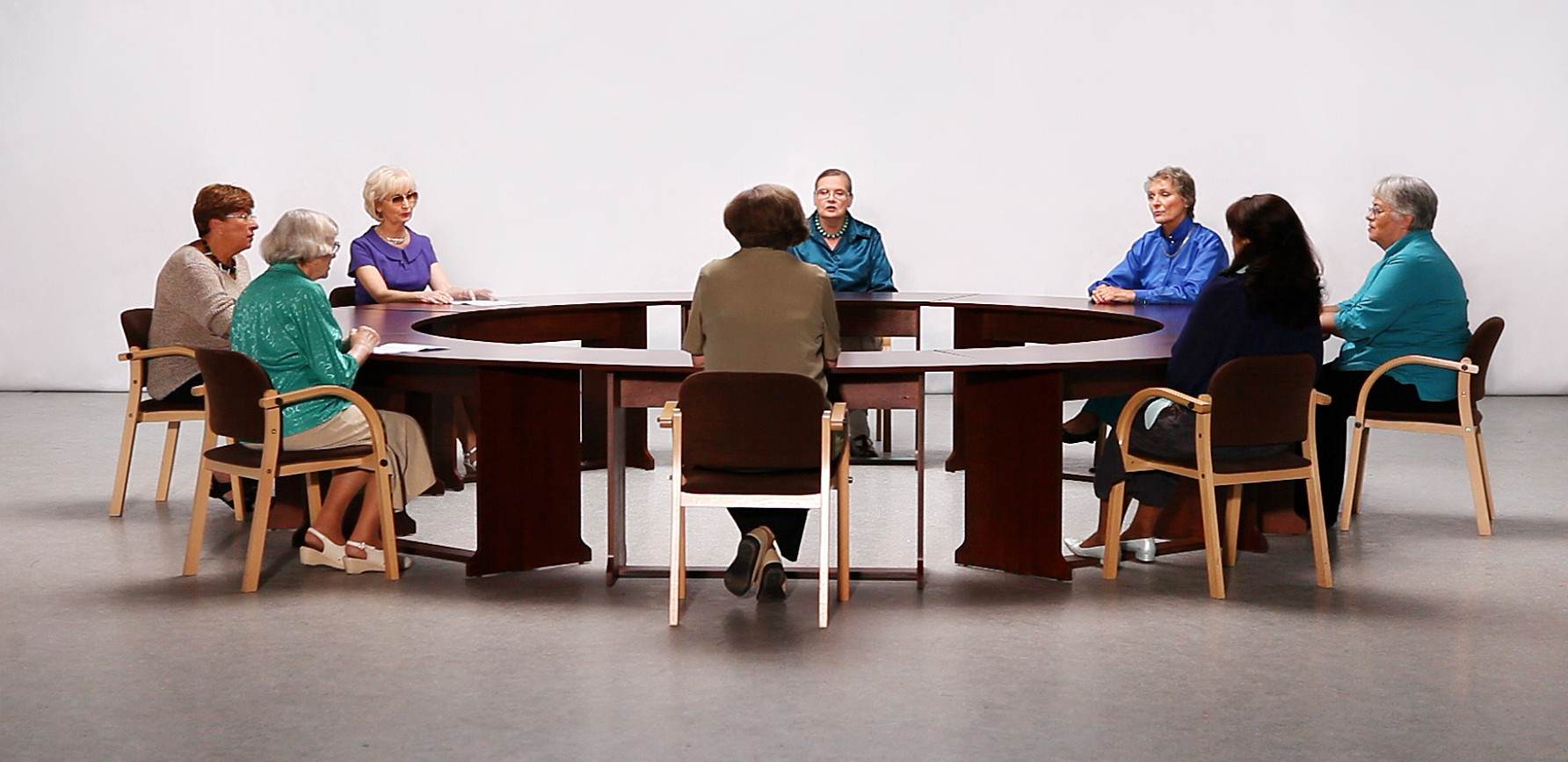
Maj Hasager, Decembers – performing a past, 2013. Courtesy of the artist.

Maj Hasager, Decembers – performing a past, 2013. Courtesy of the artist.

Maj’s personal »practice« also exemplifies hybridity. In addition to her academic pursuits, she negotiates delineations between history/lived reality; archive/interpretation; geopolitical North/South; utopia/dystopia. She took me through some of her multimedia work, which is heavily driven by communities and their geographical and socio-political positions in the environments they inhabit. Displacement is a common theme in her »practice«; she has conducted socially charged projects where she speaks and works with immigrant or underrepresented populations, such as the Filipino community in Italy, or documenting the perspective of Polish women during the solidarity movements of the 70s and 80s. The space she explores is a limbo of sorts; neither dwelling explicitly on the past nor idolizing the future, but the somehow honing in on the forgotten present, and how these communities function – or »practice« – in daily life, which inherently retains the weight of history and the possibility of tomorrow.

Relational »practice« is the core of her work, taking into account and being organically informed the multiple cultures she encounters. The drastically different points of view between herself and the societies she engages are not lost on her; she acknowledges that she is coming from a position of privilege, and does not try to overshadow the voice of the community. As a citizen of an island that is often defined from the outside rather than within, I appreciated this concession, and the genuine interest Maj takes in authenticity when treading this fine, complex line. For example, in her work Decembers – performing a past, 2013 there is no translation from Polish of the exchange between women of a certain generation sharing their stories – this is not done to exclude viewers, but to allow them to enter the moment and feel the dynamic without being distracted by divisive constructs such as language:

Spilled in the language’s veins
A militant regards
When will words be
A tool for something other

– Thom Donovan

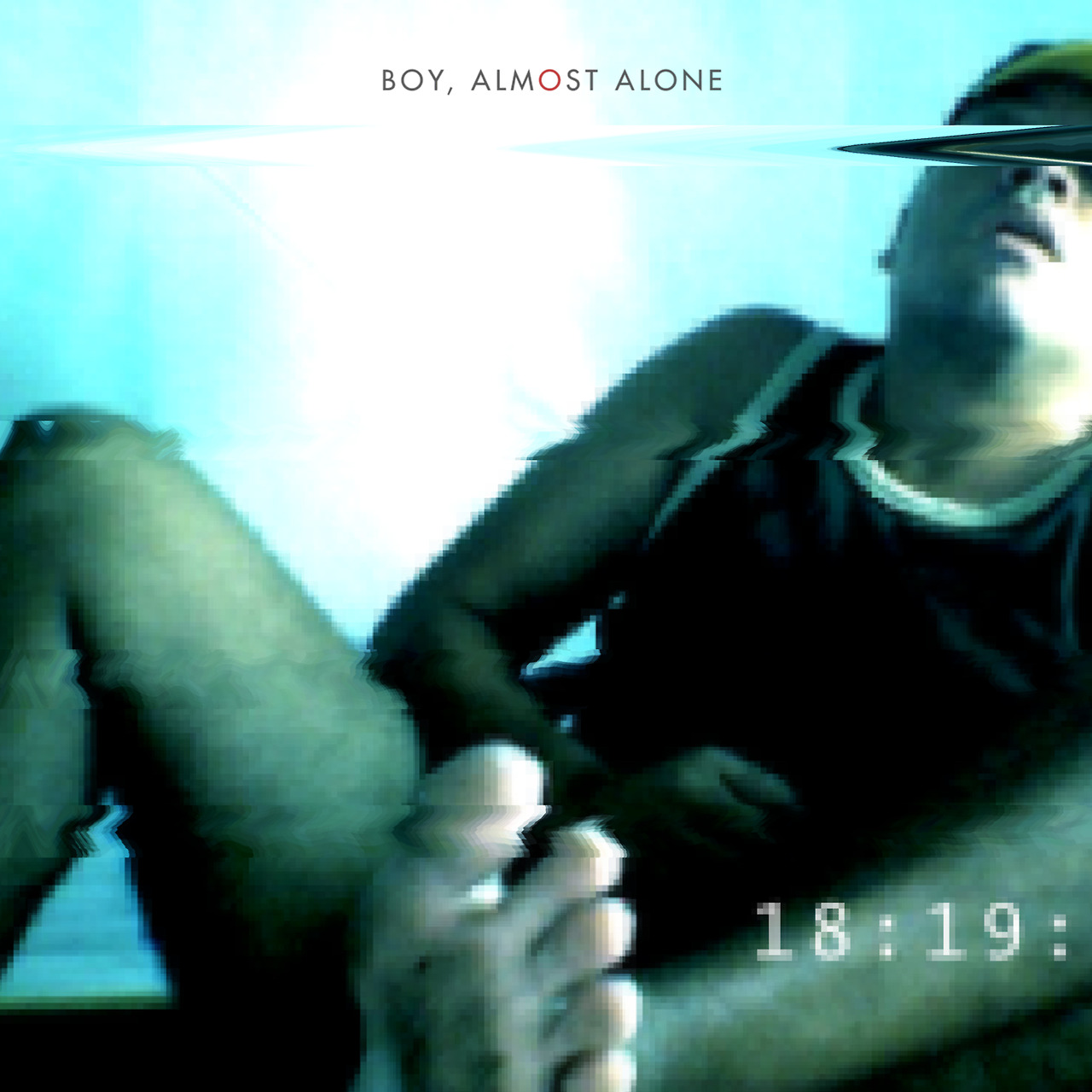
Film still: Contemporary dancer Maria Concetta Borgese in ‘Bifurcating Futures’, directed by Maj Hasager.

Film still: Contemporary dancer Maria Concetta Borgese in ‘Bifurcating Futures’, directed by Maj Hasager.

This excerpt is taken from a poem by American poet Thom Donovan, whose work Maj used in a recent project that she directed and was editing while at Solitude. A departure from the usual way in which she works, the piece titled Bifurcating Futures is more abstract; it features a performance by a contemporary dancer interspersed with moving shots of an empty city and stanzas from Donovan’s poem, all overlaid with a haunting track of urban sounds, warped into a futuristic, ominous refrain that echoes the dystopic landscape. The dancer, deliberately chosen for the experience and maturity her body brought to the role, performs a series of gestures in the space, always inaudible but never truly silent. The piece straddles new media and documentary filmmaking, challenging Maj’s usual »practice«, but still referencing themes such as feminism, futurism and creating a platform for the unheard.

What remained with me after our meeting is that we have the artistic license to define »practice« as we see fit; we can use residencies as creative incubators for our work, but »practice« comes from lived experience. Even if not specifically deemed »social practice«, it still absorbs our thoughts, actions and interactions with others, and in the end, cannot be predicted, relegated or compartmentalized – only manifested, one way or another, in the direction we channel it.

Read the original article on the Akademie Schloss Solitude Blog here.
ARC Magazine shares Akademie Schloss Solitude’s Call for Applications and Q&A with the Director

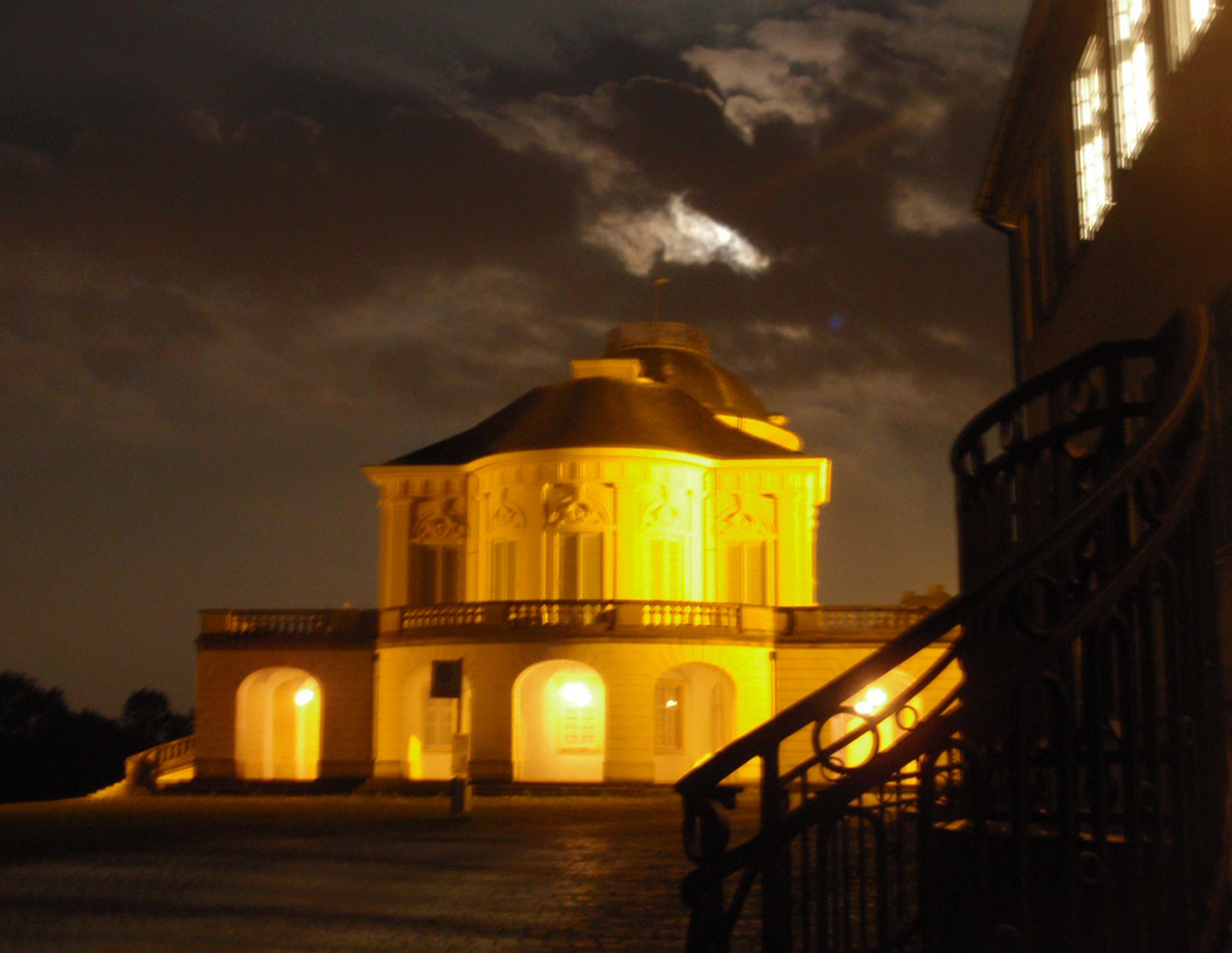
The call for applications to undertake a residency at Akademie Schloss Solitude in Stuttgart, Germany is open until October 31, 2014. Read an interview here between Katherine Kennedy – current fellow in the ResSupport programme supported by Res Artis, representing the Fresh Milk Art Platform at the Akademie – and the programme’s founding and artistic director, Jean-Baptiste Joly. The conversation reveals more about the Akademie’s mandate, the relationships built between the institution and the residents, and interest in cultivating ties with the Caribbean arts community. 

Read the interview originally conducted for ARC Magazine below:

OLYMPUS DIGITAL CAMERA

Katherine Kennedy: Founded in 1990, Akademie Schloss Solitude will celebrate its 25th anniversary next year. Can you share with us the original mission of the Akademie, and in what ways it has been realized, grown and adapted over this time?

Jean-Baptiste Joly: The Akademie was established, so say our statutes “in order to promote art and culture…in particular by awarding residence fellowships to emerging artists and organizing artistic encounters, seminars and conferences, performances, readings, concerts and exhibitions by fellows and guests…” When it was opened to artists in July 1990, the former prime minister of Baden-Württemberg that initiated the project said he wanted a black box for artistic research, hidden in a Baroque castle. This is still what Akademie Schloss Solitude is doing, but many things have changed in our practice since: In 1996, we created the new fellowship program for art coordination; young people working in the field of culture as managers, being brought on as both staff members and regular fellows in the house. This totally transformed the dynamic between staff and fellows, making them more fluent, less frontal. With their daily contribution, these fellows cover the grey zone that is always growing between the everyday life of artists and the administration.

In 2002, we founded the new program art, science & business, promoting dialogue between these three not necessarily connected domains of human activities. Since that time, the Akademie can really affirm its interdisciplinary thoughts and practices. I couldn’t put a precise date to another major change, but in the last couples of years we had to react more flexibly to the planning of Solitude’s studios, accepting that artists split the time of their residencies, coming twice or three times for shorter periods. People, especially artists, want to be simultaneously in different places, constantly having to move – they become nervous when they stay at the same place too long. This is a sign of our times, and has its downside. The best thing we can offer to our guests is a time that belongs to them, not to the institution, a time at your disposal, not stolen by urgent and often not so important necessities. In general, artists finally understand this, sometimes just too late…

KK: Residencies exist as critical cultural institutions, set apart from museums or galleries mainly due to instances of encounter and possibility taking precedence over preservation or output. Tell us about the space provided by the Akademie, and how it is conducive to these flexible journeys of discovery, reflection and creation.

JBJ: Museums and Libraries have the task of conserving cultural goods; schools ensure the transmission of knowledge through teaching; theatres make public (or should make public) the crucial problems of our civilisation. These are, since the time of the ancient Greeks, the different modes of transmitting culture. Residencies take over parts of what theatres, schools and museums do, but they have another task that is publicly less immediate: selecting artists (yes, residencies decide who is an artist and who is not!) and supporting them, giving them time, space, material, facilities and contacts. By doing so, they contribute largely to the individual life of artists. They also make the art scene they are located in more international, more permeable to otherness and difference.

Residencies also have an open way of re-thinking the contract between artists and institutions. Besides the necessity of staying at the Schloss two thirds of the time of the fellowship (and accepting an invitation for dinner every month), Solitude-fellows have no other obligation. This generous approach gives the Akademie the possibility of permanently re-inventing the relations between artist and institution, redefining it to accommodate a flexible exchange between the two sides, alternatively giving and taking.

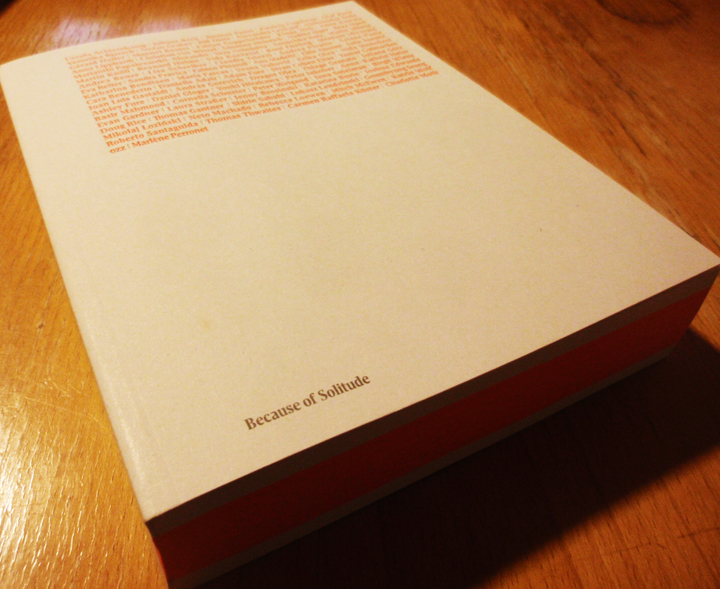
The Akademie Schloss Solitude Yearbook 12 – Because of Solitude

The Akademie Schloss Solitude Yearbook 12 – Because of Solitude

KK: The Akademie’s residency programme is open to applicants worldwide – not only to visual artists, performers and writers but also to scholars, scientists, economists etc.; anyone who is thinking laterally about their practice and wishes to engage with other like (or unlike) minded individuals, programmes or environments. How important is diversity, both culturally and disciplinary, in shaping the residency experience at Solitude? Are these connections maintained after the fellowship period is over?

JBJ: At the end of the nineties, I observed how new artist fellows arriving at Solitude could localize or even classify another artist in a matter of minutes: where did you study, where did you exhibit or perform, which biennale etc? Too fast, too easy… This was one of the reasons why we founded the art, science & business program. When artists, scientists, engineers or managers are speaking together, they have to integrate the differences that oblige them to explain from the very basics how they work and think. In such an exchange, nothing is taken for granted. The notion of diversity is also related to the presence of fellows from all over the world having very different conditions of life and artistic production. In that manner, Solitude is really international and aware of cultural diversity.

The question of the connections between the fellows is another one, and for us a crucial point: the best way to evaluate the quality of the work done by an artist residency is to check what happened afterwards. Are the former Solitude-fellows successful? Are they in contact with each other? Are they in contact with the institution? In the internal newsletters addressed to our board members or to the local government, this part of the report is one of the most important because its legitimizes our work from an external, objective perspective. Indeed, we receive many mails of former fellows mentioning that Solitude not only provided good material support, but also offered new possibilities of cooperation and friendship.

KK: Have there been many fellows or applicants to the Akademie hailing from the Caribbean? In recent years, many creative platforms have emerged in the region, prioritizing the cultivation of relationships and networks that comprise forward thinkers and progressive institutions. Is there interest on the part of the Akademie to deepen engagement with the Caribbean, and perhaps take part in these exchanges and collaborations?

JBJ: Not so many fellows, I remember four from Cuba and from Jamaica, living at the time in Mexico, in New York and in Europe. Few artists apply from the Caribbean, probably because we are not yet well known over there. But remember this too: We are not a big machine like a ministry or like Goethe Institute with a worldwide network of employees and organizations. We just try to embrace the world with a staff of 11 people, working on 3,500 square meters in a castle nearby Stuttgart! But in short: yes, we are always interested in forming new connections and contacts, including in the Caribbean! Sometimes, not always, these contacts will grow to a real exchange and partnership. Isn’t it the very reason we invited you, Katherine Kennedy, as a fellow of Akademie Schloss Solitude?

Read the original interview on ARC Magazine here, and see more information about Akademie Schloss Solitude’s open call for applications below:

IMG-20140908-WA0008

Call for Applications: Akademie Schloss Solitude

For the fifteenth time, Akademie Schloss Solitude is granting approx. 70 residency fellowships of three to twelve months in duration. More than 1,200 artists from more than 100 countries have developed and advanced projects at the Akademie since its opening in 1990, creating a close-knit, global network of Solitude alumni that expands from year to year. The Akademie persues an intense exchange between artistic and scientific disciplines. With the art, science & business program the transfer of knowledge and experience between these fields can be deepened to create new synergies of creativity, inventiveness and management.

International artists are invited to apply from the following disciplines: Architecture (design, landscape architecture, urban planning), Visual Arts (including performance art), Performing Arts (stage design, dramatic texts, dramaturgy, musical theater, performance, direction, drama, dance), Design (fashion, costume, product and furniture design, visual communication), Literature (essay, criticism, poetry, prose, translation), Music/Sound (interpretation, sound installation, sound performance, composition) and Video/Film/New Media (including video installation, fiction and documentary).

Furthermore, scholars, scientists and professionals from the disciplines of the HumanitiesSocial Sciences (with a focus on culture and the politics of space), Economy/Economics (with a focus on urban policy), and Culture & Law (with a focus on authorship) are invited to apply.

At the beginning of a new application round, the Akademie stipulates a new central topic within the context of its art, science & business program which is designed to include not only fellows from all disciplines, but external specialists too. The Akademie views art, science and business as complementary rather than separate activities, which interact dynamically and encourage mutual productivity. To this end, fellows are selected in the fields of art, science & business, internal and public events are organized and publications are released. All fellows – artists, scientists and economists – are free to participate in projects related to the central topic.

Following a suggestion by the current jury chairman, Kaiwan Mehta, the Akademie will be organizing its art, science & business program around the central topic Biography and the Production of Space. With this central topic, the Akademie would like to initiate a comprehensive interdisciplinary discussion about the production of spaces – which can be physical, virtual or imaginary– as an individual as well as social phenomena with implications in economy, art, literature, and sciences.

Persons up to 35 or if older who have completed a university or college degree within the past five years are welcome to apply. Currently enrolled university or college students (at the time of application) will not be considered for selection. Each fellowship recipient is granted Euro 1,100 per month, in addition to free lodging.

For additional information on the residency programme, application process and selection jury members, see the Akademie Schloss Solitude website here. Application deadline is Friday, October 31, 2014 (Postmark/End of Online Application).

​As of July 1, applicants will find all information, be able to register and download the application form or apply online on the application website.

ARC Magazine announces Katherine Kennedy’s Fellowship at Akademie Schloss Solitude

ARC Magazine shares Katherine Kennedy‘s first report from Akademie Schloss Solitude, Stuttgart. Katherine was selected on behalf of Fresh Milk to participate in the ResSupport Fellowship programme offered by Res Artis. During her 3 month tenure, she will be a resident correspondent, interacting with the personnel and fellows, conducting interviews, and extending the wealth of the Akademie’s programming to our community. Read more below:

OLYMPUS DIGITAL CAMERA

The best way I can describe both the past few and upcoming months would be transitionary. Working in the arts is flexible by nature, but at times it feels even more crucial to be receptive to change when operating in the context of the Caribbean and contributing to platforms such as ARC Magazine and Fresh Milk. The missions of both initiatives overlap and synergize in their commitment to maintaining critical, creative spaces of encounter, acting as ‘cultural labs‘ whose agendas surpass nationalistic thinking with the larger, holistic good of the region in mind. These are ambitious goals that both ARC and Fresh Milk rise and adapt to in a number of ways on an ongoing basis, and goals that can only be achieved through open mindedness to new ideas, new people and new environments.

I applied in the capacity of Assistant to Director at Fresh Milk to the ResSupport Fellowship programme offered by Res Artis, a worldwide network of over 400 residencies of which Fresh Milk is a member. The fellowship is described as an “exchange program of cultural workers at residency centres…[providing] the occasion to increase organisational consciousness, strengthen the bonds, and also generate knowledge and cultural sharing among the members of the Res Artis network.”

These ideas of exchange and knowledge transfer immediately resonated, having always been at the heart of our work, and I was honoured to have been selected to travel to Stuttgart, Germany to be hosted for three months (September 1 – December 1, 2014)  by Akademie Schloss Solitude. In addition to gaining insight into how this prestigious residency centre is run and fostering relationships with the staff and resident artists, I will be acting as a correspondent on behalf of Fresh Milk and ARC, sharing information on the Caribbean contemporary art scene and in turn extending my experiences and information gained at the Akademie with our networks throughout the region. I’m aiming to ensure that this journey is not a drop in a pond, but can lead to future collaboration and be mutually enriching for all involved – large goals seem to come with the territory, but the very existence of opportunities such as this is proof that there is a real desire on both sides for meaningful engagement.

The transition from Barbados to Germany is taking place, and even as I take the time to orient myself here I am eager to absorb as much as I can, having hit the ground running. But while this shift in my location and commitments will be more than a drop in a pond in the greater scheme of things, it has still produced ripples in the daily functioning of both initiatives I am representing.

OLYMPUS DIGITAL CAMERA

While I am abroad, Barbadian artist and regular volunteer at Fresh Milk, Versia Harris, will be stepping in and interning as Assistant to Director in training, exemplifying the importance of investing in the development of emerging artists and equipping them with the necessary skills to confidently enter professional environments. Similarly, ARC has recently inducted three interns into its fold – Katherine Agard, Varala Maraj and Natalie Willis – who have each been applying their talents and doing a fantastic job at working cohesively with ARC’s core team. Witnessing the domino effect of knowledge transfer that is already branching out from all sides feels very special to me, and can only stretch further and further as time passes and each new experience gets added to the mix.

Transition is also a form of evolution. New ideas, new people, new environments; all of these continue to come together to spell progress, growth and fresh prospects in ways that we envision reaching far beyond my tenure in Germany, with the input of so many incredible individuals and institutions working in tandem to create and circulate new possibilities. In this spirit, I’ll finish by sharing Akademie Schloss Solitude’s current call for applications to their next residency cycle below – perhaps it will be the first point of departure from this fellowship for new discoveries and opportunities for others:

IMG-20140908-WA0009

Call for Applications: Akademie Schloss Solitude

For the fifteenth time, Akademie Schloss Solitude is granting approx. 70 residency fellowships of three to twelve months in duration. More than 1.200 artists from more than 100 countries have developed and advanced projects at the Akademie since its opening in 1990, creating a close-knit, global network of Solitude alumni that expands from year to year. The Akademie pursues an intense exchange between artistic and scientific disciplines. With the art, science & business program the transfer of knowledge and experience between these fields can be deepened to create new synergies of creativity, inventiveness and management.

International artists are invited to apply from the following disciplines: Architecture (design, landscape architecture, urban planning), Visual Arts (including performance art), Performing Arts (stage design, dramatic texts, dramaturgy, musical theater, performance, direction, drama, dance), Design (fashion, costume, product and furniture design, visual communication), Literature (essay, criticism, poetry, prose, translation), Music/Sound (interpretation, sound installation, sound performance, composition) and Video/Film/New Media (including video installation, fiction and documentary).

Furthermore, scholars, scientists and professionals from the disciplines of the Humanities, Social Sciences (with a focus on culture and the politics of space), Economy/Economics (with a focus on urban policy), and Culture & Law (with a focus on authorship) are invited to apply.

Persons up to 35 or if older who have completed a university or college degree within the past five years are welcome to apply. Currently enrolled university or college students (at the time of application) will not be considered for selection. Each fellowship recipient is granted Euro 1,100 per month, in addition to free lodging.

For additional information on the residency programme, application process and selection jury members, see the Akademie Schloss Solitude website here, or visit our Opportunities page.

Application deadline is Friday, October 31, 2014 (Postmark/End of Online Application).

​As of July 1, applicants will find all information, be able to register and download the application form or apply online on the Application website.

ARC Feature Portfolio: Ewan Atkinson’s ‘The Neighbourhood Report’

ewan portfolio

The online presence of Barbadian artist Ewan Atkinson’s latest body of work, ‘The Neighbourhood Report’, has been growing steadily, furthering the cryptic narrative of the group of characters he created.

Assistant to director at Fresh Milk and ARC Magazine Katherine Kennedy interviews the artist to shed some light on the background of the project, and about what to expect – or not expect – from the intimate and seemingly incriminating glimpses the audience is granted with every new update. Read more below:

tumblr_mla1c1kTc81snwv9so1_1280
‘The Neighbourhood Report: A compendium of Neighbourhood esoterica presented in ordered disorder by various denizens.’ This is the verbose introduction the visitor is met with on the virtual home of Barbadian visual artist Ewan Atkinson’s latest body of work. The Neighbourhood Project has been a long-term investigation of Atkinson’s into the lives and surroundings of an assortment of fictional characters he has created, stemming enough from the artist’s life and influences to be relatable, while being shrouded in enough mystery to weave a fantastic tale of intrigue. Each online update to the series feels like it renders the viewer privy to the secrets of the Neighbourhood, almost putting the audience in a position of power when we learn about or catch the characters in incriminating moments of seeming indiscretion – but we cannot take that at face value, much like many of the updates fed through social media each day.

I ask Ewan if he can shed some light on the fascinating series – but not too much, of course. Just like the reader must decipher the introduction, the ‘ordered disorder’ is also left to the viewer to translate. The more you follow the scenes offered in the report, the more invested you become in its community; and the more acclimatized you become, the further you are thrown when appearances are not what they seem.

tumblr_mlfbs3mTI21snwv9so1_1280

Katherine Kennedy: Can you give us some background to the Neighbourhood Project, which has been an ongoing series of yours for a number of years?

Ewan Atkinson: The Neighbourhood started with a rather cartographic exploration of a fictional, ever-changing geographical space. It transformed quickly because my interest in narrative made a series of characters a mandatory addition.  I explored these characters in drawings and photographs. It was, and still is, a performative task. I ‘play’ each character with costume or image manipulation, my features are the building blocks for each character. I was interested in certain factors that influence the development of an individual persona: nationality, education, circumstance, concepts of self and of community. The deeds of this motley crew are culled from my own experiences, family anecdotes and a diverse range of cultural influences. This started as a way to reconcile whatever I had experienced with whatever I had read, watched or been told. It was about connection, about belonging somewhere, I wanted to see if anyone else was on the same page (or station). While these themes and influences are still present, lately I have become obsessed with additional elements: the production of meaning itself (why we impart significance and why we long to share it) and narrative as a device for deception or escapism, intentionally or otherwise.

com·pen·di·um:

a brief treatment or account of a subject, especially an extensive subject.

tumblr_mmbyq8VZw21snwv9so1_1280

KK: Please tell us how the previous manifestations of the project evolved into your current growing body of work, ‘The Neighbourhood Report’.

EA: There was a lot of time in-between one group of work and the next. If I wanted an audience to be able to understand the scope of the project, that what I had produced up to that point and whatever might come in the future was part of an intersecting web of narratives, I had to find a way to bind them. The Neighbourhood Report aims to do that. It supports the physical work.  Yes, it’s a sketchbook of sorts, but as far as narrative is concerned it’s prologue, newsflash, interlude, flashback, and appendix all at once. The report was also conceived as a personal exercise. I hadn’t been making anything on a regular basis. I had been tossing ideas around in my head for too long, thinking too much. I needed to release some pressure and force myself to let it out.

tumblr_mn3pgeRGfl1snwv9so2_r1_1280

KK: ‘The Neighbourhood Report’ is housed online, and utilizes sites like Tumblr, Facebook and Twitter. Do you see social media as an important part of this work? Would you consider the pieces leaving the virtual space and functioning in, for example, a gallery setting?

EA: Online dissemination was an obvious choice. I wanted to utilize the way in which images function on social media, they can appear and disappear with relative ease, but there is also an archival element, and of course with virtual networks the broadcast radius is indeterminable.  These observations are nothing new, it was just my turn to play with it. I love the idea that they are only digital, that the images don’t physically exist even though they appear as though they might. Their construction relies on illusion, an illusion that toys with the desire to covet an object, no one can hold them or own them. When people ask if they can buy one, I tell them they already have it.  Yet, I have not ruled out physical manifestations. My love of books makes a collection of beautifully bound volumes more than appealing, but for now, it’s up in the air.

es·o·ter·i·ca:

things understood by or meant for a select few; recondite matters or items.

tumblr_mufpu6lNro1snwv9so1_1280

KK: A theme which seems to be present in many of these pieces is one of transgression, and how these transgressions are perceived by both the viewers and the characters themselves within the series. How significant is capturing these moments of indiscretion to the work?

EA: When a state of belonging is in question, transgression is always a crucial modifier. But what I’m really digging at are the factors that build impressions and suggest purpose, this lies somewhere between the personal and the communal. I try to present moments or pieces of information that are seemingly “pregnant”, informed by dubious context and ripe for picking (apart). There’s shame and shamelessness all over this place. Has a transgression indeed occurred?  What signifiers construct this impression?  Where does meaning lie (or lie)?  It is not clear whether there is significance or not; in fact, it is the very possibility of inherent significance that I attempt to obscure. In a broad sense, it’s a shameless exercise in absurdism. I allude to complex webs of meaning, and the references are diverse, but I’m also a big fan of red herrings. Who you gonna trust? ;)

Read the original review on ARC Magazine.

tumblr_mo4urmK7Uo1snwv9so1_1280

tumblr_mtkc7yVhTA1snwv9so1_1280

tumblr_mxcrsnLlgL1snwv9so1_1280

Unrecognised Affinities: Reflections from Videobrasil

The founding director of The Fresh Milk Art Platform Inc., Annalee Davis, was invited to participate in the 18th International Contemporary Art Festival Sesc_Videobrasil – 30 Years + Southern Panoramas in Sao Paulo, Brazil.

Videobrasil has established itself as one of the most important organizations for video and contemporary art practices in the geopolitical South and included a cross section of curators and critics from arts institutions worldwide, and artists largely from the global South. Davis presented in the 3rd Focus group of the festival’s public programming, which centered on artist residencies. The following is an edited version of her presentation ‘Unrecognised Affinities’ delivered at the panel titled ‘Hospitality and the Politics of Mobility’, originally published on ARC Magazine’s website.

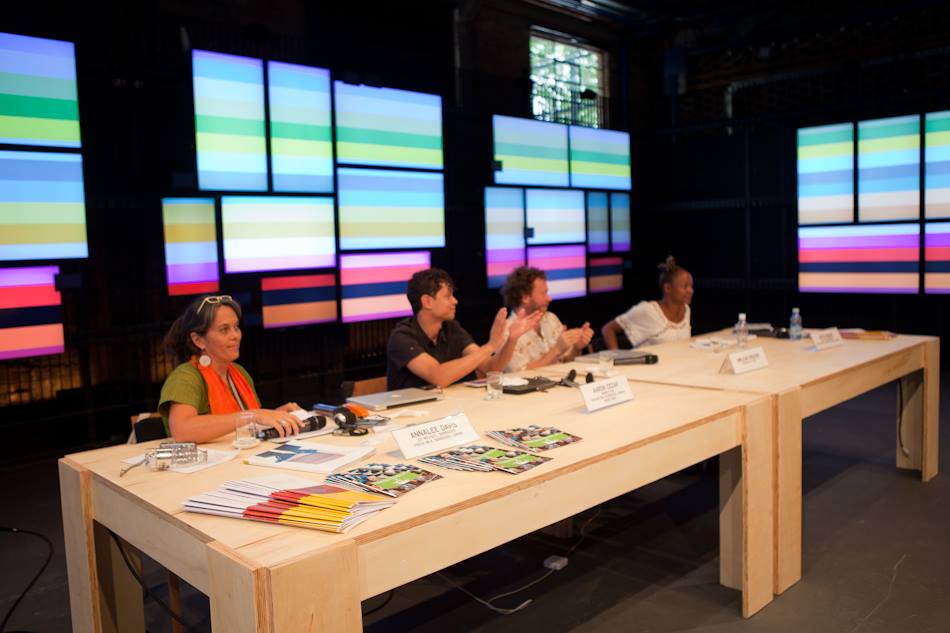
Panel on Hospitality and the Politics of Mobility. Participants from L-R: Annalee Davis, Aaron Cezar, Amilcar Packer and Koyo Kouoh. Image courtesy of Sabrina Moura.

Panel on Hospitality and the Politics of Mobility. Participants from L-R: Annalee Davis, Aaron Cezar, Amilcar Packer and Koyo Kouoh. Image courtesy of Sabrina Moura.

I was asked to speak about my work as a creative activist in Barbados and the formation of the artist led initiative called The Fresh Milk Art Platform Inc., of which I am the founding director. As a tutor at the Barbados Community College in the BFA programme, I decided some years ago to respond to the fact that none of our graduates continued making work after graduation. This is, in part, because there is not a developed creative economy that can provide a supportive space for emerging practitioners. Fresh Milk was born in 2011 to foster young talent and is named such because it is located on a dairy farm, as well as relating to the act of women turning their blood into milk to nurture their young.

The network responded to a specific local need to harness the talent of our young creatives – to be a safety net to catch artists as they fall into the real world after art school. Now, two and a half years later, graduates are continuing to make work because Fresh Milk is opening up opportunities and doors of exchange.

Fresh Milk is located on the premises of a former plantation built in the mid-1600s. It has been functioning as a dairy farm for several decades. My home and studio are located on the farm, and I have turned my studio into Fresh Milk’s headquarters. Due to the island’s brutal history rooted in indentureship and the slave trade, the physical location of Fresh Milk has raised concerns as to whether it is a legitimate or appropriate setting to carry out its work. Traditionally, the plantation was an exclusive venue, hospitable only to a white elite planter class who oversaw the inhumane treatment of an enslaved and indentured population.

The Fresh Milk Studio. Photograph by Mark King.

The Fresh Milk Studio. Photograph by Mark King.

I am interested in this debate about the plantation as a fixed space, defined perpetually by conflict and division. I see this location as a site for investigation; an environment which I am unpacking from the ground up. By literally digging into the soil to find ceramic remains, reading through documents related to the former plantation, including conveyances, wills and deeds from the early nineteenth century, I am thinking about the potential for transformation and reconciliation. Through creative intervention via my own practice as well as the development of critical programming at Fresh Milk, the historical divisions within the plantation are reconsidered.

The idea of transformation is linked to hospitality, which originates from the Latin word ‘hospes’ meaning “guest” or “stranger’.  I am concerned about the stranger or enemy among us and within our national boundaries, the region and the wider world. Certainly, there has been much debate within the insular Caribbean about belonging and ownership, which plays itself out most disturbingly at many of our national borders. There is a precedent of xenophobia which has come to define how Caribbean people think about citizenship and the landscape. The failure of CARICOM to provide a conduit for real integration after forty years of operation attests to this. For real change to occur, we need to be hospitable to ourselves first, work to ‘to open ourselves up, share ourselves out’ with the stranger in our midst, which we can do through the arts, creating safe, critical settings for exploration, innovation, connection, excellence and production.

Fresh Milk reacts to our needs at the moment in Barbados and the wider Caribbean by building  a robust creative community within the local context. Our geographic consideration of the Caribbean is always shifting. The normative definition is the archipelago that stretches from The Bahamas in the North, to Trinidad in the South, moving on to Suriname and the Guianas. Its extension into the coastal rim of Central and South America and out to the diasporic outposts including Amsterdam, London, Toronto, Vancouver, NYC etc is evidence of the Caribbean as a broad and dynamic area.

Annalee Davis introducing the Fresh Milk Map of Caribbean Art Spaces. Image courtesy of Sabrina Moura.

Annalee Davis introducing the Fresh Milk Map of Caribbean Art Spaces. Image courtesy of Sabrina Moura.

What is radical about this notion of hospitality in our Caribbean context, is the relationship to the history of plantations. By transforming this territory once grounded in hostility and prejudice into a welcoming, creative, critical arena, Fresh Milk is indeed a defiant undertaking. Our programming works in opposition to the traumatic history of abandonment and points to new possibilities by offering harmonious acts rather than ones of obstruction. Instead of reading Fresh Milk’s presence on this site as problematic, we propose an alternative reading, and suggest that an adjustment is both necessary and possible.

I see the work I am doing as an artist, unpacking and redefining the plantation, as work which is altering the very chemistry of our own soil. This practice is rooted in scientific ideas around phytoremediation. Phytoremediation is the removal of toxins from the earth by cultivating plants whose roots have the capacity to extract toxins from the soil, thereby allowing the soil to be replenished and to grow something again.

I believe that we have the ability and the responsibility to alter the course history, contributing to a healthy cultural ecosystem by nurturing creative production and producers. By establishing the Fresh Milk platform and executing its programming, functioning locally, regionally and internationally with inclusive and open projects, we are building relationships with other human beings and offering a real connection to a known locale of isolation and privilege that has been timed out of opportunity and significance.

Being hospitable in the historical context of the Caribbean is a radical gesture. To nurture one another, to consciously reject what we were taught by the colonial past and a consumer oriented present, to choose to convert these historical sites of abuse, torture and neglect into sanctuaries that revel in the creative imagination, to take care of and look after the emerging talent; these are all revolutionary actions. I have faith in the capacity we all have as human beings to envision and manifest alternate possibilities through the forging of relationships with others which may offer something beyond perpetual conflict.

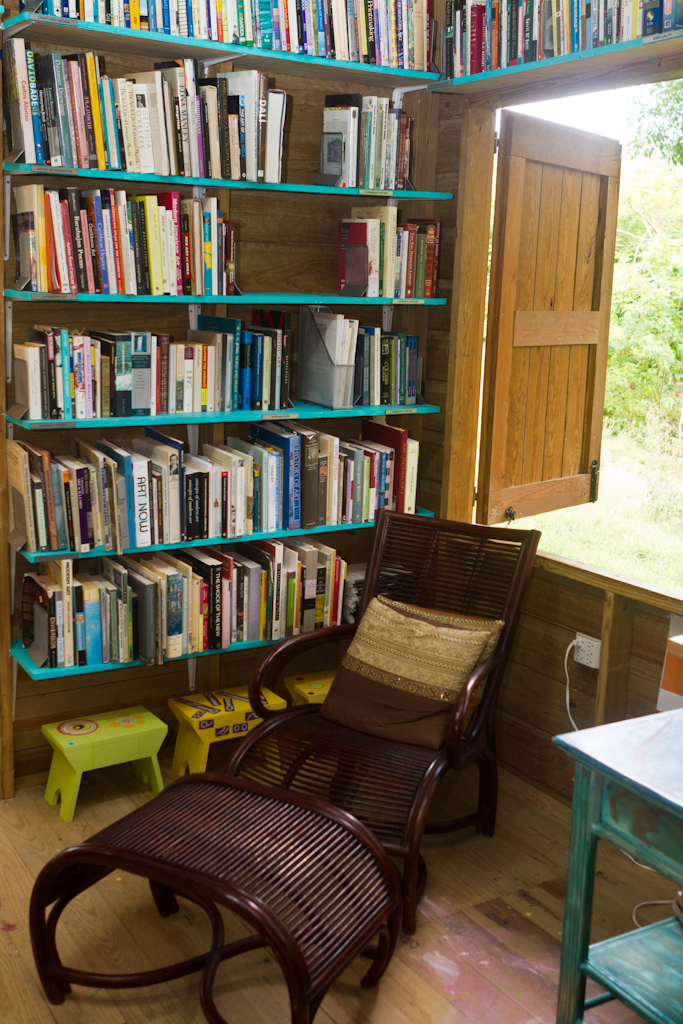
The building of the Colleen Lewis Reading Room, which provides free and accessible research material to the Barbadian public, is a critical statement in a region where reading is not always a popular activity. This is a testament to the powers of the colonial system where bars for the consumption of rum were more common on the plantation than libraries. The availability of the reading room allows a way for us to think about using knowledge and scholarship to open and challenge minds, inspiring intellect while developing new modes of thinking.

The Colleen Lewis Reading Room. Photograph by Dondré Trotman.

The Colleen Lewis Reading Room. Photograph by Dondré Trotman.

The interactive Fresh Milk Map of Caribbean Art Spaces contests the ways in which the hegemonic powers historically segmented the region linguistically and created artificial boundaries to separate us from fully understanding our similarities. This is a myth and one that should be denounced categorically from a cultural and political perspective. The construction of this virtual map reinforces linkages across linguistic and geographic divides in the region, insisting that we are indeed interconnected.

Fresh Milk is building connections with other human beings through residencies, the Colleen Lewis Reading Room, the Map of Caribbean Art Spaces and its activities, contributing to our goal of transformation – all the while believing that we can alter the chemistry of our own soil, creating new paradigms of thinking and behaving, engaging in hospitable acts, or the most radical gesture of all – loving each other.

I close with a quote from the author Theodore Zeldin which inspires what we do at Fresh Milk – “The meeting of ideas which have never come together before…the art of making life meaningful and beautiful, which involves finding connections between what seems to have no connection, linking people and place, desires and memories…discovering unrecognized affinities between humans holds out the prospect of reconciliations and adventures which have so far seemed impossible.”

See the original article on ARC Magazine.