Open Call: TENDER 2025 – A Caribbean Arts Regranting Initiative

OPEN CALL 2025 – IMPORTANT DATES:

  • May 5th – June 6th, 2025 – Open call submission window
  • June 16th – July 25th, 2025 – Review of applications by jury
  • July 31st, 2025 – Contacting of successful applicants 
  • August 9th, 2025 – Announcement of results 
  • August 18th, 2025 – Commence disbursal of funds
[ ten-der ] definition: 
1. gentle, loving, or kind;
2. something offered especially money, as in payment.

The Fresh Milk Art Platform, partnering once again with the National Cultural Foundation (NCF) and the additional support of the Panta Rhea Foundation and the Clara Lionel Foundation, is excited to launch the second edition of TENDER: A Caribbean Arts Regranting Initiative.

The ethos of this programme is centred on generosity, faith, and care; Fresh Milk has always had an unwavering belief in the talent and potential of artists from this region, and as an artist-led space, we are intimately familiar with the range of challenges involved in maintaining a practice. These nineteen (19) unrestricted grants will be awarded to eligible creatives, who can use the funds as they see fit. Whether it is towards creating new work, acquiring materials, research and development, designing new or continuing existing programmes, pursuing further studies, exhibition preparation or production, participating in artist residencies, or any general living expenses; this tender gesture signifies an appreciation for the recipients’ commitment to the arts and culture in the Caribbean.

Along with financial support, the work of each successful grantee will be promoted widely through Fresh Milk and the NCF’s local and regional networks in the form of a featured page on our website, extensive social media coverage, and an interview with the recipient discussing their practice. In this way, we also hope to strengthen artists’ networks, further contributing to a sense of community and the public archiving of Caribbean creativity.

Fresh Milk is interested in supporting experimental contemporary visual art, and curatorial and research-based practices that explore structure, content, and expanded exhibition approaches in new ways. The grants will fall into the following categories:
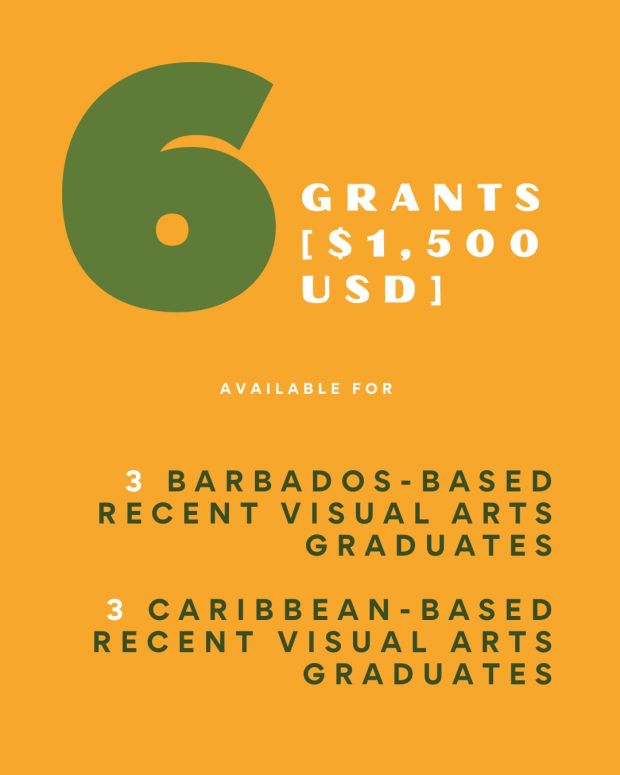
SIX (6) grants valued at USD $1,500.00 each, which will be awarded to:
  • THREE (3) Barbados-based recent visual arts graduates;
  • THREE (3) Caribbean-based recent visual arts graduates.
ELIGIBILITY REQUIREMENTS:
  • Artists must have completed a BFA or equivalent degree within the last 6 years (2020-2025);
  • Artists must be currently living and practising in the Caribbean
  • Artists’ work can span any discipline/media of contemporary visual arts practice (painting, drawing, printmaking, photography, mixed media, sculpture, installation, video, new media, experimental audiovisual art, performance art, interdisciplinary/multidisciplinary);
  • Artists must demonstrate a high standard of work in keeping with their level of experience, and a commitment to the continued development of their practice;
  • Artists must not be previous recipients of a TENDER Grant.

FIVE (5) grants valued at USD $2,500.00 each, which will be awarded to:
  • TWO (2) Barbados-based emerging visual artists;
  • THREE (3) Caribbean-based emerging visual artists.
ELIGIBILITY REQUIREMENTS:
  • Artists must have been living and practising in the Caribbean between 7 – 12 years;
  • Artists’ work can span any discipline/media of contemporary visual arts practice (painting, drawing, printmaking, photography, mixed media, sculpture, installation, video, new media, experimental audiovisual art, performance art, interdisciplinary/multidisciplinary);
  • Artists must demonstrate a high standard of work and professional endeavours (participation in exhibitions, residencies, workshops, programming etc.) in keeping with their level of experience;
  • Artists must not be previous recipients of a TENDER Grant.
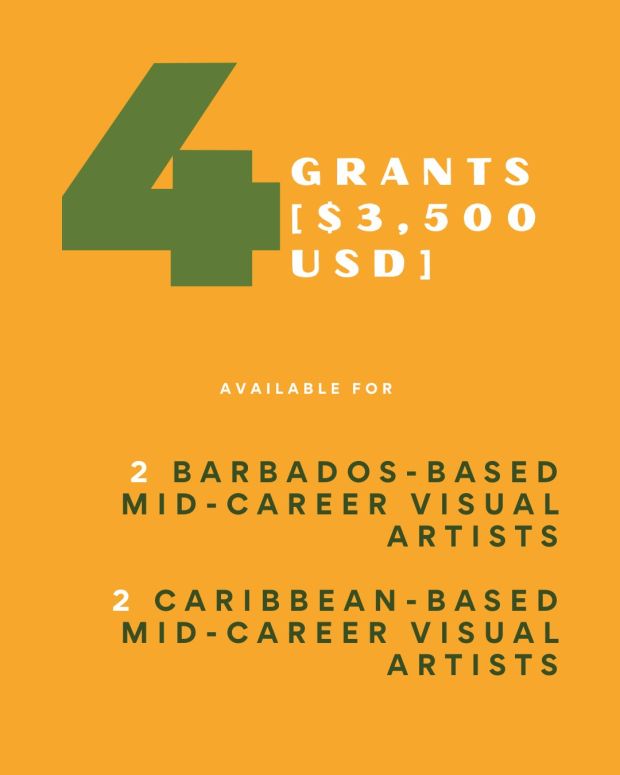
FOUR (4) grants valued at USD $3,500.00 each, which will be awarded to:
  • TWO (2) Barbados-based mid-career visual artists;
  • TWO (2) Caribbean-based mid-career visual artists.
ELIGIBILITY REQUIREMENTS:
  • Artists must have been living and practising in the Caribbean between 13 – 19 years;
  • Artists’ work can span any discipline/media of contemporary visual arts practice (painting, drawing, printmaking, photography, mixed media, sculpture, installation, video, new media, experimental audiovisual art, performance art, interdisciplinary/multidisciplinary);
  • Artists must demonstrate a high standard of work and professional endeavours (participation in exhibitions, residencies, workshops, programming etc.) in keeping with their level of experience;
  • Artists must not be previous recipients of a TENDER Grant.
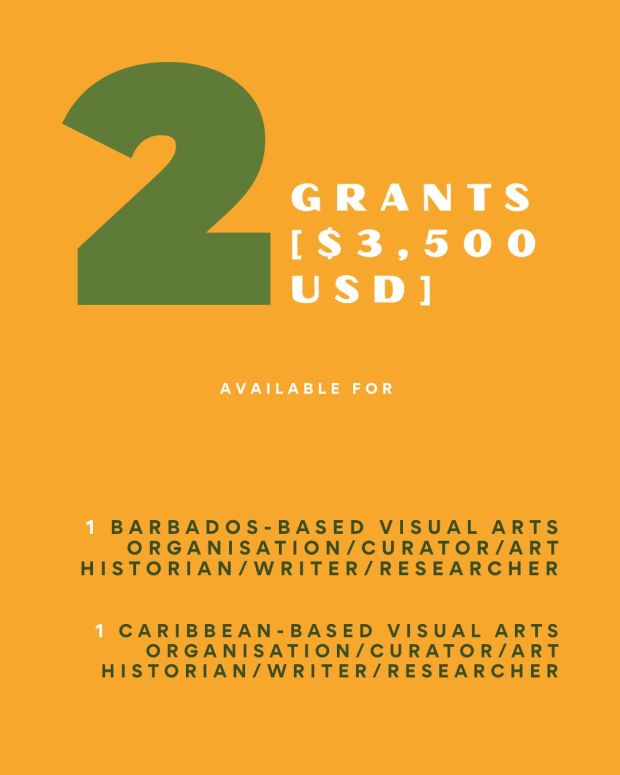
TWO (2) grants valued at USD $3,500.00 each, which will be awarded to:
  • ONE (1) Barbados-based visual arts organisation/curator/art historian/writer/researcher;
  • ONE (1) Caribbean-based visual arts organisation/curator/art historian/writer/researcher.
ELIGIBILITY REQUIREMENTS:
ARTS ORGANISATIONS
  • Organisations must have been operating within the Caribbean for a minimum of 3 years;
  • Organisations must be independent/non-governmental;
  • Organisations need not be registered charities/non-profits but must be able to demonstrate best practices in terms of governance and operations management;
  • Organisations must demonstrate a clear commitment to their mission and vision as it relates to contemporary Caribbean art and give examples of their work in alignment with this;
  • Organisation must not have previously received a TENDER Grant.
CURATORS & ART HISTORIANS/WRITERS/RESEARCHERS
  • Practitioners must have been living and working in the Caribbean for a minimum of 7 years;
  • Practitioners must give examples of their work (whether through exhibitions, published written work, or research) demonstrating their commitment to exploring and showcasing contemporary Caribbean art practices;
  • Practitioners must not be previous recipients of a TENDER Grant.
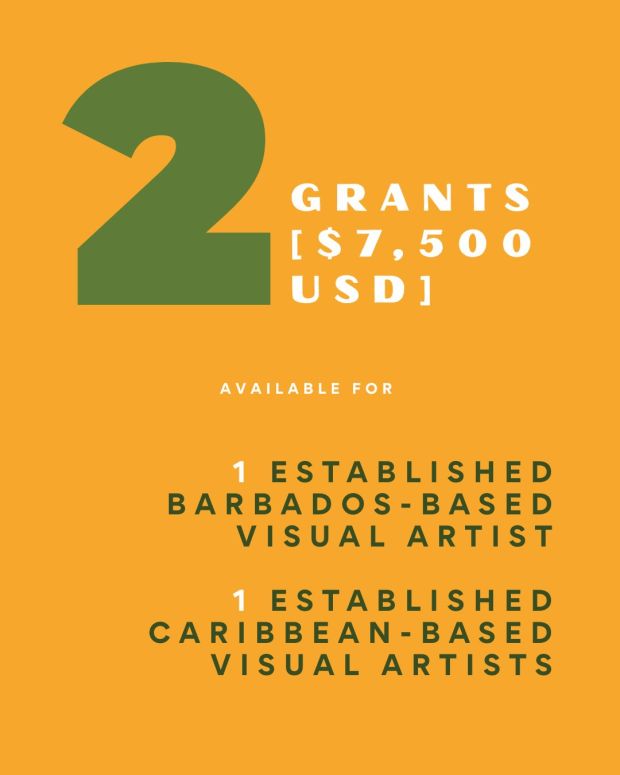
TWO (2) grants valued at USD $7,500.00 each, which will be awarded to:
  • ONE (1) established Barbados-based visual artist;
  • ONE (1) established Caribbean-based visual artists.
ELIGIBILITY REQUIREMENTS:
  • Artists must have been living and practising in the Caribbean for a minimum of 20 years;
  • Artists’ work can span any discipline/media of contemporary visual arts practice (painting, drawing, printmaking, photography, mixed media, sculpture, installation, video, new media, experimental audiovisual art, performance art, interdisciplinary/multidisciplinary);
  • Artists must demonstrate a high standard of work and professional endeavours (participation in exhibitions, residencies, workshops, programming etc.) in keeping with their long and influential careers;
  • Artists must not be previous recipients of a TENDER Grant.
SUBMISSION REQUIREMENTS:

ALL applications must be submitted through the official Google Form provided (any submissions sent by email or in hard copy will not be eligible for review).

The APPLICATION FORM includes the following:

FOR VISUAL ARTISTS:
  • Submission of a brief bio (250 words maximum); 
  • Submission of an artist statement, providing an overview of your practice to help contextualise the artworks shared for review (250 words maximum);
  • Submission of an up-to-date CV (2 pages maximum);
  • 5-8 clearly labelled samples of work that best showcase your practice (accepted file formats include JPEG, PNG, GIF, MP4, MP3, DOC, DOCX and PDF. In the case of video works, YouTube or Vimeo links may be provided, along with passwords if applicable). Document files should not exceed 10 MB. Image/audio/video files should not exceed 100MB.
FOR ARTS ORGANISATIONS:
  • Submission of an overview of the organisation, including its mission, vision, key personnel, and a brief history of the work it has done in the Caribbean (500 words maximum); 
  • Submission of a list of the organisation’s projects/programming and any notable accolades achieved (2 pages maximum);
  • 5-8 clearly labelled samples of work that best showcase the organisation’s output (accepted file formats include JPEG, PNG, GIF, MP4, MP3, DOC, DOCX, and PDF. In the case of video works, YouTube or Vimeo links may be provided, along with passwords if applicable). Document files should not exceed 10 MB. Image/audio/video files should not exceed 100MB.
FOR CURATORS:
  • Submission of a brief bio (250 words maximum); 
  • Submission of a statement outlining main curatorial interests and concerns (250 words maximum);
  • Submission of an up-to-date CV (2 pages maximum);
  • 5-8 clearly labelled samples of work that best showcase your curatorial output (accepted file formats include JPEG, PNG, GIF, MP4, MP3, DOC, DOCX, and PDF. In the case of video works, YouTube or Vimeo links may be provided, along with passwords if applicable). Document files should not exceed 10 MB. Image/audio/video files should not exceed 100MB.
FOR ART HISTORIANS/WRITERS/RESEARCHERS:
  • Submission of a brief bio (250 words maximum); 
  • Submission of a statement outlining main areas of writing/research (250 words maximum);
  • Submission of an up-to-date CV (2 pages maximum);
  • 3-5 clearly labelled samples of written work, no more than 2500 words each (accepted file formats include DOC, DOCX, and PDF). Document files should not exceed 10 MB.

All applicants will also be asked for a brief statement on why the receipt of this grant would be timely for their practice. Those fitting the above criteria and based in the following countries may apply:

Anguilla, Antigua & Barbuda, Aruba, The Bahamas, Barbados, Belize, Bermuda, Bonaire, British Virgin Islands, Cayman Islands, Cuba, Curaçao, Dominica, Dominican Republic, French Guiana, Grenada, Guadeloupe, Guyana, Haiti, Jamaica, Martinique, Montserrat, Puerto Rico, Saba, St. Barthelemy, St. Eustatius, St. Kitts & Nevis, St. Lucia, St. Vincent & the Grenadines, Saint Martin, Sint Maarten, Suriname, Trinidad & Tobago, Turks & Caicos Islands, US Virgin Islands. 

Have another question about TENDER 2025?
Check out our FAQ Guide to see if it gives you clarity, and email us at freshmilkbarbados@gmail.com for any additional queries.

SELECTION PROCESS:

Applications will be independently reviewed by a 3-member jury comprising one Barbadian, one Caribbean, and one international jury member, each of whom will be an expert in their field and familiar with contemporary art practice in the Caribbean. Only applications that meet all eligibility requirements will go forward to the jury. The jurors will assign scores to each segment of the applicants’ submissions, and a jury meeting will be held once scores have been collated. The jury’s decision will be final, and a jury report will be released publicly when successful applicants are announced. Neither the jury members nor the Fresh Milk Team will be able to offer feedback on individual applications.

JURY MEMBERS:
  • Versia Harris, Visual artist and Tutor in the BFA Studio Art programme at Barbados Community College;
  • Monique Nouh-Chaia Sookdewsing, Managing Director of Readytex Art Gallery, Suriname;
  • Tatiana Flores, Curator and Professor in Art History at the University of Virginia’s College of Arts and Sciences, USA.

About Fresh Milk:

Fresh Milk is an artist-led, non-profit organisation founded in 2011 and based in Barbados. It is a platform which supports excellence in the visual arts through residencies and programmes that provide Caribbean artists with opportunities for development, fostering a thriving art community. Fresh Milk offers professional support to artists from the Caribbean and further afield and seeks to stimulate critical thinking in contemporary visual art. Its goal is to nurture artists, raise regional awareness about contemporary arts and provide Caribbean artists with opportunities for growth, excellence and success.


About the NCF:

The National Cultural Foundation (NCF) is a statutory body established by an Act of Parliament in 1983. Its mandate is to oversee the cultural landscape of Barbados. The NCF’s role revolves around the preservation of our cultural heritage and promotion of all forms of art and culture, both tangible and intangible through developmental and commercial programmes and products. The functional spectrum ranges from, generating cultural awareness at the grassroots level to promoting cultural exchanges at an international level. In its developmental role, the Foundation uses culture as a tool for national development, fostering and supporting the various art forms and new cultural products. In its commercial role, the Foundation is responsible for the promotion, production and hosting of cultural festivals and associated events.


About the Panta Rhea Foundation:

Mission: To catalyze a just and sustainable world through food sovereignty, community power building, and grassroots liberation around the globe.

The Panta Rhea Foundation (PRF) was established in 2001 as a private foundation devoted to researching issues and analyzing the operations, goals and potential of organizations committed to building a more just and sustainable world. The Foundation advises individual donors and other charitable entities on grantmaking strategies and specific grants.

We believe that lasting, authentic change must come from the grassroots; from the organized efforts of people and organizations to enliven the social imagination and envision a better future, to experiment with new ideas, and to hold elected leaders and corporations accountable to the communities they serve.

Our foundation name, Panta Rhea, is inspired by Ancient Greek philosopher Heraclitus. It roughly translates to “You never step into the same river twice” or “All things change, all things flow”—suggesting both inherent constancy and change as a fundamental of life itself.


About the Clara Lionel Foundation:

The Clara Lionel Foundation (CLF) was founded in 2012 by Robyn “Rihanna” Fenty in honor of her grandparents, Clara and Lionel Braithwaite. CLF supports and funds climate resilience and climate justice projects in the U.S. and Caribbean. The foundation’s five key pillars are: Climate Solutions; Women’s Entrepreneurship; Health Access and Equity; Future Generations; and Arts and Culture.

The CLF actively supports arts initiatives that preserve cultural heritage and foster community engagement in the regions we fund. We invest in community-led organizations that promote asset creation, long-term sustainability, and innovative climate solutions through arts practices.
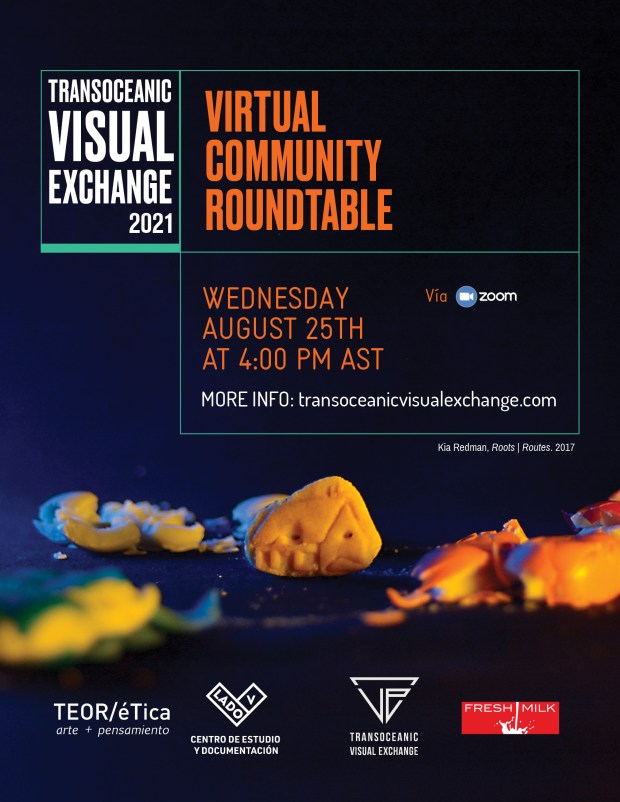
TVE 2021 – Virtual Community Roundtable!

The Fresh Milk Art Platform (Barbados) and TEOR/ética (Costa Rica) are partnering to screen a selection of film and video works – video art, new media and expanded cinema – made within the last 5 years by contemporary artists practicing in the Caribbean and Central America for the fourth edition of Transoceanic Visual Exchange (TVE), a series of programmes taking place online this year, with accompanying screenings in Barbados and Costa Rica.

While the foundation of TVE is the collection of recent artists’ film and video works submitted from each region, the final shape and content of the programme will be informed by an open conversation process, which aims to involve and promote discussion within the wider creative communities of each arts initiative.

We would like to invite those based in the Caribbean with an interest in regional video-based works to an online roundtable facilitated by Fresh Milk via Zoom, to discuss contemporary film and new media art in the Caribbean and share your thoughts about recent developments in the genres. This forum will be open to the public.

Join the discussion on Zoom next Wednesday, August 25th at 4:00 PM (AST) here!

Ahead of the roundtable, we are sharing a public survey about film and video art in the region, which will add to the discourse in our community session.

Click here to fill out the form and add your thoughts and voice to the conversation!

More on the programme and the first three editions can be found on the TVE website here.

Aliyah Hasinah’s Fresh Milk Residency – Week 1 Blog Post

UK-based writer and curator of Bajan and Jamaican heritage, Aliyah Hasinah, shares her first blog post about her Fresh Milk international residency. Using this time primarily for research into the art scene and cultural policy in a Barbadian context, Aliyah kicks off her blogs by reflecting on some of the texts she has immersed herself in to ground her knowledge and understanding of the space, and looks forward to having more in-person discussions with artists, creatives and cultural practitioners as the weeks progress. Read more below:


It’s been a week since I started my residency at Fresh Milk with the intention of immersing myself in study to learn more about the art world and cultural policy in Barbados. Having not had the means to attend university, I’m always profoundly grateful for moments to study away from the day-to-day grind of trying to pay your rent in London, so hearing monkeys (my favourite animals) on the library roof has been a well welcomed change. I’d also like to thank Arts Council England for funding this residency because I’ve been LEARNING, I’ve been learning *Beyonce voice*. 

Prior to this, I met with Annalee Davis last year when starting my research into ‘Decolonising the Curatorial’, as funded by Arts Council England. My research was looking at the role of Crop Over as a space for exhibition outside the white walls of the gallery, a topic Claire Tancons discusses well in her essay ‘Curating Carnival’, and how galleries can never do justice to the embodied experience of carnival. 

Through my research, I sought to further understand the colonial history and how rebellions birthed art practices – or continued them – as we’ve always found ways to make art. Having only scratched the surface last year, I was keen to take more time to understand the layers and nuance of Bajan Art and cultural expression, outside of what was familial and familiar to me.

Just to prefix, I’m a loud mouth when it comes to explaining or calling out the manifestations of coloniality in the modern day in England. However, I’m very aware of my positionality as a curator from Britain researching in Barbados. My gaze does not come from one of authority but is an opinion formed from the research and conversations had with some of the island’s artists, art producers, essays as well as what I observe. 

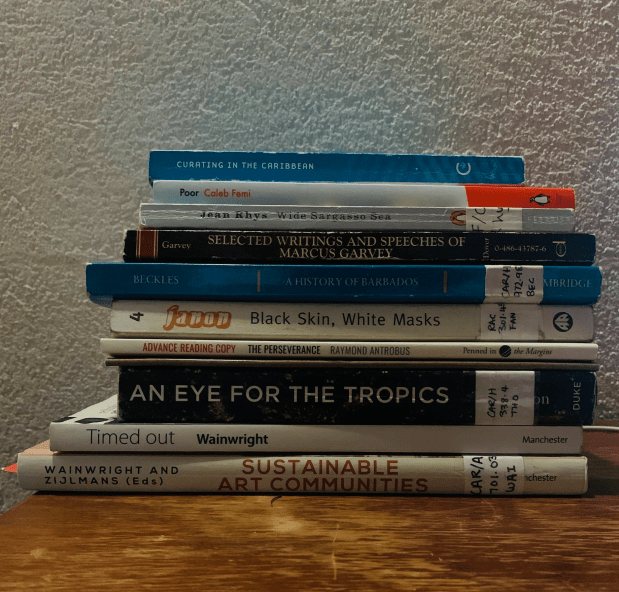
One of the writings I’ve been reading this week that deeply resonated with me was Winston Kellman’s Between A Rock And A Hard Place’ published in Sustainable Art Communities, as edited by Leon Wainwright and Kitty Zijlmans. Kellman explores several historical threads to bring us to the modern day, including the relationships with the UK and US following Barbados’ independence in 1966.

Kellman’s particular highlighting of how western modernity has shunned Caribbean art practice of landscape painting and sculpture, alluding to it being devoid of conceptual fervour is, in my mind, linked to a colonial mindset that deems ‘conceptual art’ in a particular way. 

This perspective ignores the context of the space and time that these artworks were created in, and instead attributes an archetypal aesthetic to the notion of contemporary art as opposed to understanding that sculpture and painting of the island has a deeper rooted contextualisation in the resources i.e. clay, and historical craftsmanship of the land – and is therefore contemporary if it is being made in the present. This disregard for painting and sculpture subconsciously alludes to artworks, often by Black artists, specifically in the Caribbean, being inferiorized because of a lack of contextual understanding of how the work came into being, and is additionally sidelined in national and international discourses surrounding contemporary conceptual art. All due to a lack of understanding of the context of the work. 

Anywho, I could go on for days about the learnings of the last week, all to say I’m very excited to deepen my study and continue learning about policy, sustainability and the hopes/dreams of emerging artists on the Island. The culture is very much being pushed forward by multiple artists. It is with thanks to those who have laid the foundations that younger artists today are scoping out what is possible in the process of building visual arts communities and infrastructures across Barbados that do not solely privilege the tourist economy (more on that real soon, hold tight tourism as neo-colonialism and insert Mo the Comedian saying ‘Barbados’).

I’m excited to start my new week, meeting more artists, collectors and academics. I may also post some of my readings and thoughts on my instagram (@aliyahhasinah) as I jump into my second week at Fresh Milk.

To end lightly here are 5 songs I’ve had on loop this week:

Until next week.

Lots of love and take care

Aliyah xx

P.s. Here’s some of what I’m reading / have been the last week and will continue to delve into this week, and hold tight Caleb Femi on the release of his new poetry book ‘Poor’ which everyone should cop if they can. (Feel free to send me reading and art recommendations on twitter @aliyahhasinah)

Open Call: Artist Residency at Fresh Milk for a Haitian Artist

Fresh Milk is pleased to share the second stage of our partnership with fellow arts organization Le Centre d’Art, Haiti, as part of a residency exchange programme betwteen Haiti and the wider Caribbean to create opportunities for women arts practitioners, supported by UNESCO’s International Fund for Cultural Diversity (IFDC).

This segment of the programme invites women artists from Haiti or its diaspora to apply for a fully funded, one month residency at The Fresh Milk Art Platform in Barbados from February 3rd – 28th, 2020. The deadline for submissions is November 1st, 2019.

See the current, full open call below, or download the PDF guidelines and application form here.

About Le Centre d’Art

Le Centre d’Art in Port-au-Prince is an institution that works towards promoting artistic creations by Haitian practitioners on the basis of preserved heritage values. Since its creation in 1944, this atypical space with multiple missions has been at the heart of societal and artistic evolutions. As the major protagonist in the reconfiguration of the fine arts realm in Haiti, Le  Centre d’Art has been paving the way for several schools and artistic movements.

Over the years, well-known Haitian artists have been revealed internationally, including Philomé Obin, Hector Hyppolite, George Liautaud, Antonio Joseph, Rigaud Benoit, Robert St Brice, Jasmin Joseph, and Préfète Duffaut.

Le Centre d’Art was the starting point for a wealth of visual creativity–upholding a considerable legacy that is today part of private and public collections, in Haiti and abroad. The establishment is apolitical, non-profit, and has gained public recognition since 1947. The governance is composed of a board of directors, an international scientific council and an executive team

Despite the destruction of the infrastructure during the earthquake of 2010, Le Centre d’Art managed to save more than 5000 works and 3000 archive files, which are today preserved and valued. Since the reopening in 2014, Le Centre d’Art has once again become an essential part of Haitian culture.

Its mission is to support artists and their creations, and to conserve and disseminate Haitian visual arts. It is a resource space for artists, art students, art lovers, collectors and researchers alike.

Residencies Scope

Le Centre d’Art is setting up a synergy project for artistic creation and artistic analysis in the Caribbean, thanks in particular to UNESCO’s International Fund for Cultural Diversity (IFDC). Titled Implementation of a Network for the Creation and Dissemination of Caribbean Art, the project aims to create a link between Haiti and Caribbean places of creation, and to promote the practices of Caribbean artists, especially women, to strengthen the Haitian cultural sector. For two years, artistic residencies will be set up, and will end with an exhibition and a widely distributed publication.

Theme

“The ability of humans to participate intelligently in the evolution of their own system is dependent on their ability to perceive the whole” – Immanuel Wallerstein

Toussaint L’Ouverture, Jean Price Mars, Aimé Césaire, Marcus Garvey, Frantz Fanon, Derek Walcott – long is the list of illustrious men who have shaped the Caribbean as we know it today. What about Caribbean women? University theses on the role of women are rising but they are not written for the general public. Art has the power to make accessible fundamental values and principles, which are too often convoluted. This project aims at highlighting the role of women in the construction of the Caribbean.

About the Residency

For this segment of the residency programme, The Fresh Milk Art Platform will host one Haitian artist for one month in Barbados from February 3rd–28th, 2020.

Fresh Milk supports excellence in the visual arts through residencies and programmes that provide Caribbean artists with opportunities for development and foster a thriving art community. Fresh Milk is located on a working dairy farm in a rural area of St. George, Barbados. The studio is situated under a grove of mahogany  trees, and is linked to the home of Fresh Milk’s director.

The artist will be housed in the Fresh Milk residency flat, a 5-10 minute walk from the studio, and will have the chance to interface with contemporary practitioners living and working in Barbados through cultural activities, community outreach programmes facilitated by the Fresh Milk Team and studio visits with local artists.

Le Centre d’Art will fully bear the costs of residencies in Barbados. The artist will be provided with a workspace, tools and supplies and housing. In addition, the artist will receive per diem to cover all food and transportation expenses throughout the residency. The ticket and the visa will also be covered by Le Centre d’Art.

This slideshow requires JavaScript.

Terms of Application

Residency in Barbados, February 3rd-28th, 2020

This call for applications to attend a residency at Fresh Milk in Barbados is now opened to any woman artist from Haiti or its diaspora.

The call concerns exclusively the field of visual arts (any medium). The artist may practice multiple forms of artistic production.

The submitted file must include the following documents in a single PDF document:

• The completed application form (download the document here);
• The Artist’s Curriculum Vitae, including elements describing the artist’s training, her professional career, her experiences, the history of her public exhibitions and shows in galleries (2 pages maximum);
•The artistic statement (presentation of the artist’s practice – 2 pages maximum)
• The residency project related to the theme (2 pages maximum)
• A selection of visuals of the artist’s works (10 works visuals maximum). The visuals must be in color and captioned to legibly specify the dimensions, materials and technique used. For videographers, a page with links to videos accompanied by a brief summary for each one.

Electronic files and any other request should be sent by email to contact@lecentredart.org and Cc judithmichel@lecentredart.org before November 1st, 2019 midnight (GMT).

Selection Committee

The decision is to be made by a selection committee composed of a member of the Board of Le Centre d’Art, a member of the executive team and a representative of Fresh Milk.

Criteria

Special attention to be paid to:

• mastery of the techniques used and the quality of execution
• the aesthetic and technical interest of the artist’s practice
• the coherence of the artist’s proposal with the theme as well as the depth of the readings and interpretations of concepts
• the originality of the works

Mini TVE presentation with Third Horizon Media at the Miami Book Fair

On Monday, November 12th, 2018 Third Horizon Media, Miami, collaborated with the Fresh Milk led initiative Transoceanic Visual Exchange (TVE) to curate a small screening of a selection of video/film work by Caribbean artists as part of their contribution to the 2018 Miami Book Fair.

This mini edition of TVE featured work by Ada M. Patterson (Barbados), Rhea Storr (The Bahamas/UK), Sandra Vivas (Venezuela), Alberta Whittle (Barbados/UK), Nick Whittle (Barbados/UK) and Anisah Wood (Barbados).

Transoceanic Visual Exchange is a selection of video art by artists practicing in the Caribbean, the Pacific Islands and their diasporas. This edition of TVE was coordinated by The Fresh Milk Art Platform (Barbados) in partnership with Footscray Community Arts Centre (Melbourne, Australia) in 2017, with additional screenings taking place in collaboration with Deakin University (Melbourne, Australia) and Third Horizon Media (Miami, USA) in 2018.

Click here to see the PDF of the event program:

____________

About Third Horizon Media:

Third Horizon is a Miami-based Caribbean filmmaking collective and media company dedicated to capturing the sights and sounds of the Caribbean and the so-called “third world.” The collective’s projects have screened at festivals around the world, including Sundance, Toronto International (TIFF), International Film Festival Rotterdam and Sheffield Documentary Festival, among others.

The collective also stages the annual Third Horizon Film Festival, which aims to empower and celebrate fellow filmmakers and projects focused on the Caribbean, the Diasporas that formed it, and the Diasporas formed by it.

_____________

About The Miami Book Fair:

The Miami Book Fair is an annual literary festival event realized in Miami by Miami Dade College.

The fair, which has become a model for other fairs across the country, brings over 300 renowned national and international authors exhibitors to a weeklong celebration of all things literary and includes pavilions for translation, comics, children, and young adults.The mission of Miami Book Fair International is to promote reading, encourage writing, and heighten an awareness of literacy and the literary arts in the city’s multi-ethnic community.The eight-day book festival has draws hundreds of thousands of book lovers to downtown Miami each November for a festival of all things read and written.