‘A thought on Mediating Matter(s) in Arab and Caribbean Contemporary Art’ by Natalie McGuire

Fresh Milk board member and contributor Natalie McGuire shares a review of the recent exhibition The Place of Silence at the Stal Gallery, Oman. While this show featured work by Middle Eastern artists, McGuire parallels their work with that coming out of the Caribbean, particularly between Iraqi-British artist Estabrak Al-Ansari and regional artists Nadia Huggins and James Cooper, all of whom deal with the materiality and implications of water as a medium. Read more below: 

Stal Gallery, Muscat, Oman. Photo credit: Natalie McGuire.

Stal Gallery, Muscat, Oman. Photo credit: Natalie McGuire.

Not work, taut, deaf, monotonous as a sea, endlessly sculpted—but
eruptions yielding to earth’s effervescence—that expose the heart, beyond
worry anguishes, to a stridency of beaches—always dislocated, always
recovered, and beyond completion—not works but matter itself through
which the work navigates—attached to and quickly discarded by some
plan—first cries, innocent rumors, tired forms—untimely witnesses to this
endeavor—perfectly fusing as their imperfections meet—persuading one to
stop at the uncertain—that which trembles, wavers, and ceaselessly
becomes—like a devastated land—scattered.

– Edouard Glissant, Poem for the World

Standing in the Stal Gallery, Muscat, in March 2015, the exhibition The Place of Silence exhumed an atmosphere so familiar to that of Caribbean art spaces. The works of six Middle Eastern artists commanded attention in the three enclave-spaced gallery, saturated in context and concepts that brought to mind Glissant’s phrase: “Not works, but matter itself through which the work navigates.” From Dada-inspired installations reviewing existence and death (Raiya Al Rawahi’s Life, Being and Death) to an unearthing of self-reflection, a photographic self-portrait mirrored and repeated almost to geometric abstraction (Ahmed Al Mullahi’s Gazing Through the Divine), there were challenging thoughts and narratives seeping through every pore of the walls. The exhibition was physically navigating through the matter of an upscale avenue in the heart of the city, sitting on Al Inshirah Street, a British Council Service Road.

Raiya Al Rawahi,  Life, Being and Death (detail). Installation: photographs, IV bags/stands, headphones, charts. Stal Gallery, 2015.

Raiya Al Rawahi, Life, Being and Death (detail). Installation: photographs, IV bags/stands, headphones, charts. Stal Gallery, 2015.

One in particular was the piece Sayed, a component of the series ‘Omani’s Under Water’, by Estabrak Al-Ansari, an Iraqi-British new media artist and filmmaker, who is currently at the centre of a surging movement in Omani contemporary art. The photograph depicts an underwater view of half the figure of an Omani man in his dishdasha, submerged and poised on the reef. The white gown plays with being transparent in the sunlight that penetrates the water, and clings to the backs of his legs and lower torso. In the accompanying wall text, Al-Ansari emphasized her exploration of “taboo concepts such as sexuality, privilege, oppression, power and understanding.” By having the body of her subject submerged in water, in this realm of nature that becomes somewhat abstracted from the landscape of society, she can unpack the restraints around its presentation and movement. Implementing her concepts ‘under the surface’, the discourse she wishes to raise is mediated by this matter. For Sayed, no conservative Omani could accuse Al-Ansari of presenting him in an immodest manner; it was a natural reflection of the current of the ocean she photographed him in. She later stated, “I might direct a person, an image with my camera, but natural elements like water take over, and the element of the water plays with what I want to convey.”
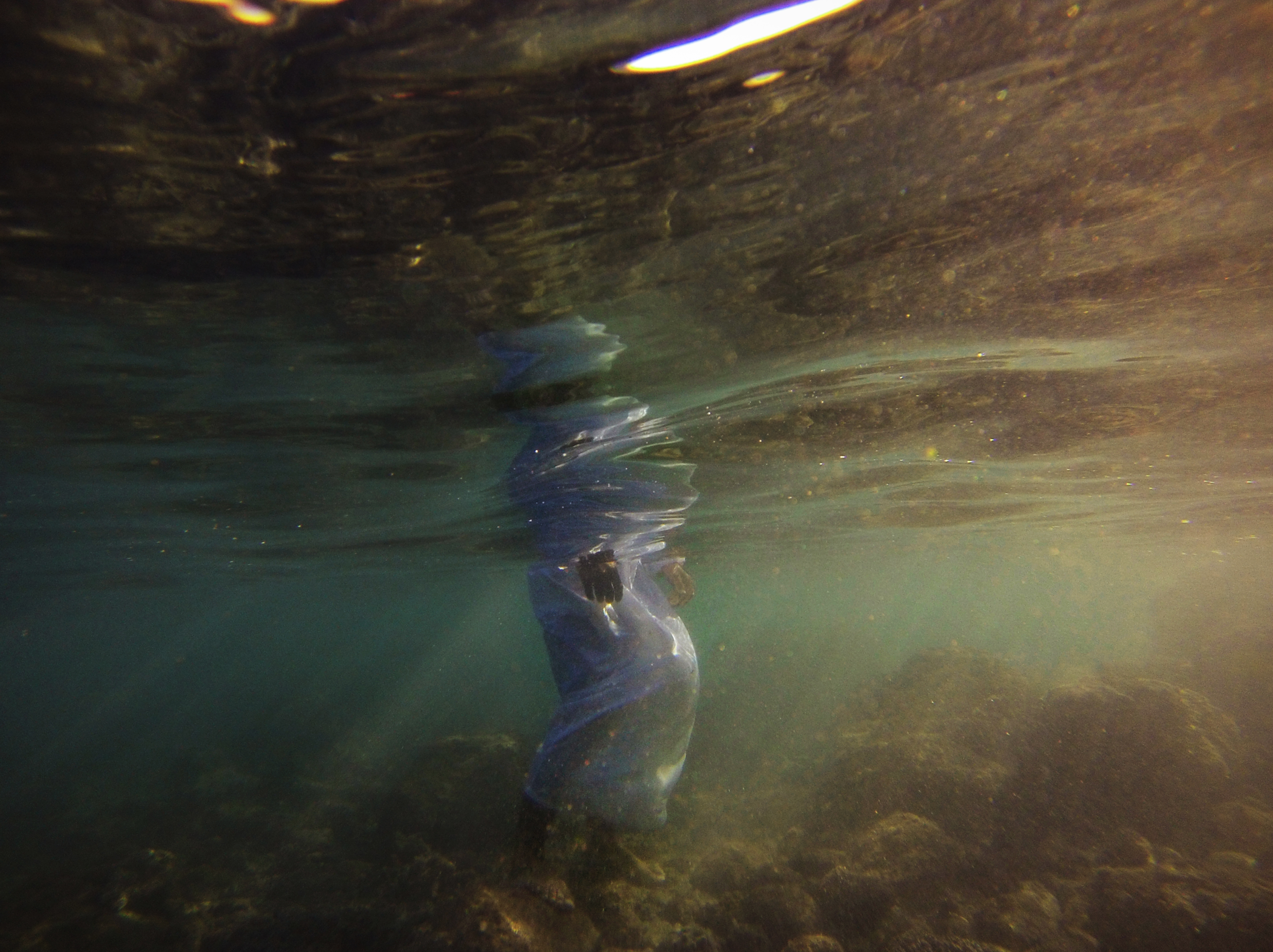
Estabrak Al-Ansari, ‘Sayed’, Omani’s Under Water. Limited Edition Photographic Prints, Stal Gallery, 2015.

Estabrak Al-Ansari, ‘Sayed’, Omani’s Under Water. Limited Edition Photographic Prints, Stal Gallery, 2015.

I had a chance to visit Al-Ansari at her sea-front studio in Al Bustan, and as she shared with me her thoughts about functioning in a Middle Eastern creative space, the familiarity of her new found artistic community with that of my own Caribbean one was undeniable.

Being her first exhibition in Oman, Al-Ansari believed some movements of the body encompassing a relationship with the sea would be acceptable for display outside of the water. At the opening of The Place of Silence, she presented her live projection painting piece Djinn and Motion. She explained:

Djinn is huge here. It’s in the Qur’an and states that Djinn do exist, it is like the ‘other’, a spiritual world. In countries there can be voodoo, and in Oman there is a big history of that. One reason why the title Djinn and Motion came to me is because I live by the sea within the mountains…and I have friends who refuse to visit me, because the belief is that the Djinn prefer to chill out by the sea, especially at night. Whether or not you believe in it is irrelevant, to me this is all myth and story, and this is the part I enjoy, that has been translated in all of my work.

Live projection painting originated in Al-Ansari’s London work with the group Thre3 Strokes, and stemmed from a desire to connect oneself and one’s viewers with an alternate space of reality. And although response to the medium was positive, the Muscat-based audience had difficulty accepting the title Djinn and Motion. Al-Ansari elaborates, “I had an interview with a guy from one of the newspapers here who was fine with discussing Omani’s Under Water, but as soon as I talked about Djinn and Motion he refused to talk to me, he walked away. He didn’t want anything to do with it. It was weird because for me, I was just normalizing what is here and what people talk about.”

Continue reading

Wide Sargasso Sea: Can you be insane if you are alone? – #CCF

wss

…Antoinette’s childhood directly informed her troubles later in life, whether it was the rejection by her cold-hearted mother who was only attached to her brother, the constant abandonment by her close friends and family (most of whom used her for personal gain) or the anger of the local people and her status as a pariah. This exclusion only led to further isolation in her mind.

In many ways, Rhys has shaped loneliness within these characters as a ‘getaway’ from reality, so much so that Antoinette would ignore the surrounding world and became intolerant towards people. This alienation, compounded by acts of betrayal, causes Antoinette’s personality to twist. Her issues followed her to her stay at the convent, continuing to chip away at her sanity…

The above excerpt is from Tristan Alleyne’s review of Wide Sargasso Sea by Jean Rhysthis week’s addition to the Fresh Milk Books Tumblr – the online space inviting interaction with our collection in the Colleen Lewis Reading Room.

Fresh Milk is also currently hosting Australian resident artists of Caribbean extraction Willoh S. Weiland and Halcyon Macleod. They will be with us between April 20 – May 23, 2015 working on their collaborative project ‘Crawl Me Blood’, a sound installation inspired by Wide Sargasso Sea. For more information about their project, click here.

For new Critical. Creative. Fresh reviews, look out for our #CCF responses and see the great material we have available at Fresh Milk!

Simone Asia’s Residency – Week 1 Blog Post

Simone Asia, current artist in Fresh Milk’s 2015 ‘My Time’ Local Residency programme, shares her first blog post about her time on the platform. Simone speaks about re-acclimatizing to a familiar space, exploring the environment more thoroughly and how unexpected obstacles can push you to act on ideas that have been lying under the surface. Read more below: 

IMG_20150417_124556 (1024x576)

My first week here at Fresh Milk was bittersweet. The space itself is a familiar one, but I had not explored it as thoroughly as I have in the last few days.

I was sharing the space with international resident artist, Jordan Clarke, whom I found to be delightful. She was very quiet – in contrast to me – but that helped to balance of the energy within the space. Jordan was on the final week of her residency, and I found that she and her work was an inspiration for me. She did very beautiful self portraiture drawings and paintings. I would offer my feedback on her drawings whenever I could. She also sketched a lot – something I wish I did more. Additionally, there was great material in the Colleen Lewis Reading Room to source inspiration from.

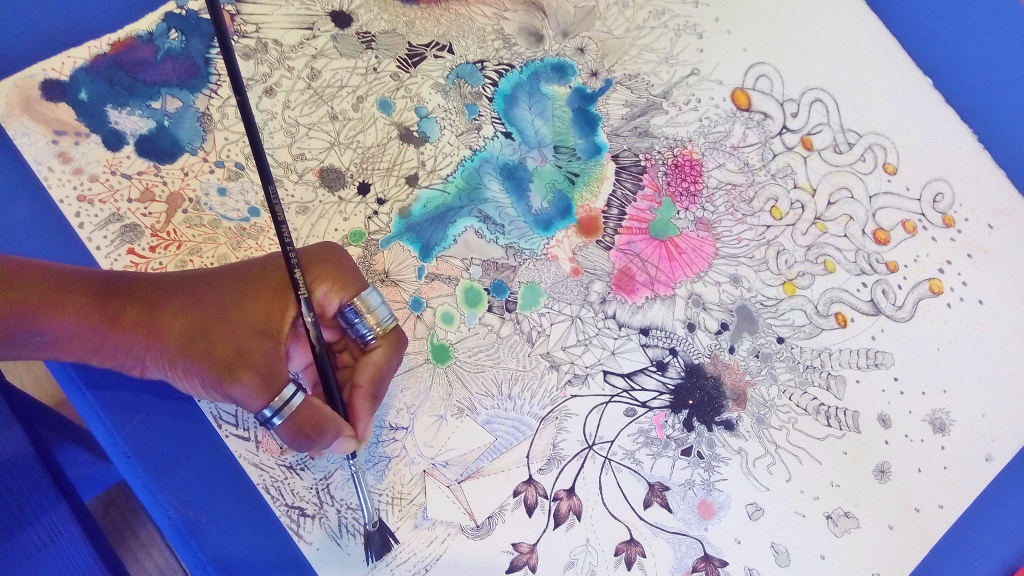
I did not have a solid plan for my work on the farm, but I knew I wanted to do some experimental drawings. I usually do portraiture as well, but I wanted to put my energy toward creating strictly abstract drawings. I surveyed the land, observing patterns, textures, colour and layering. The various types of plants, animals and sounds made me feel more connected to my nature-loving side. I was particularly drawn to the layering on vines upon tree trunks and fallen leaves and twigs piled on the grass, as well as the patterns and vibrant colours that certain plants possessed. From these observations I was compelled to work with colour.

Working with colour is not totally foreign to me, but it is something I am insecure about. I am accustomed to creating monochromatic abstract drawings so I knew that using colour would be out of my comfort zone. Spilling the first two colours of ink and trying to manipulate them made my anxiety and self-doubt kick in. I even tried drawing on top of red paper with black ink, but it still felt weird. I remembered what I had learnt from my last two residencies and open studio at Projects and Space, Alice Yard and Punch Creative Arena, respectively – I need to trust the process, let the concept come afterwards and play.

My first day went well until close to the end of that evening, when all of my devices were submerged in water. It was a tragic start to my week, causing only stress and anxiety. Despite all the drama, the rest of the week went along smoothly – exchanging stories with Jordan and members from the Fresh Milk Books team and visitors – Aieron, Jordan’s husband, and Australian resident artists Willoh, James and baby Equa, who I found to be a very musical child.

I have claimed a cow on the farm as my own; she does not know it yet. Her ear tag is number 503. I call her ‘Bambee’. She got that name because Jordan and I were discussing how beautiful and deer-like she was so I named her to suit.

I got to reflect while being there. I found it ironic how much I loved nature, yet I was very dependent on electronic devices to record my findings. I totally neglected the process of sketching. For months I had been telling myself I would like to sketch more. I got my wish. Sadly, I still used Jordan’s camera and did minimal sketching, but I found myself storing images in my memory. I think for me it takes a while to get into the groove of sketching.

On Friday I spent a couple hours with Jordan and her husband. It was Jordan’s last day in residence at Fresh Milk and Annalee was very busy that day. I found myself alone in the afternoon. The rain poured as if to complement my mood. I will miss Jordan’s presence in the space. While sitting alone looking in the mirror, reflecting on the week as the rain poured in St. George, something came to me. I think I am going to do a portrait even though I wanted to avoid doing one. An idea is brewing.

Jordan Clarke’s Residency – Week 4 Blog Post

Barbadian-Canadian painter Jordan Clarke shares her fourth blog post about her Fresh Milk residency. In her final week, Jordan confronts some of the underlying reasons for her disconnect with the Barbadian side of her identity, and sees her experience in the island as a starting point to build on as she investigates this part of her culture and herself. Read more below:

IMG_0977-1

“As is common to most transnational communities, the extended family – as network and site of memory – is the critical conduit between the two locations.” (Stuart Hall, ‘Thinking the Diaspora: Home – Thoughts from Abroad’, Caribbean Political Thought)

It is typically through family that Caribbean migrants are able to maintain a sense of connection to their Caribbean culture. What happens, however, when there isn’t a sense of cultural sharing through family? How does this affect one’s sense of cultural identity?

IMG_0978

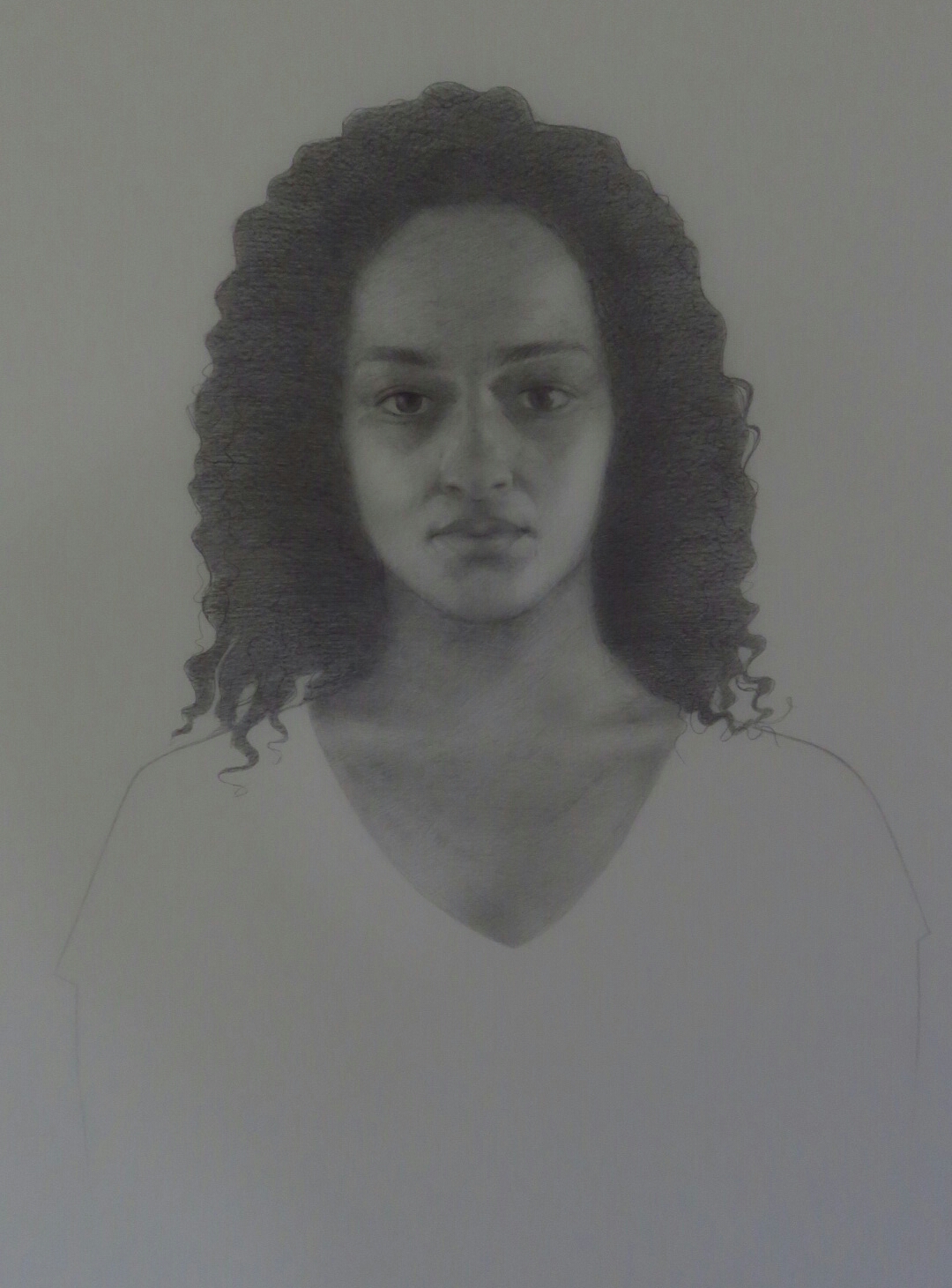
In my fourth week at Fresh Milk, I confronted the fact that my father has never been solidly present to share his cultural identity and family with me. I drew a self-portrait in response, with the intention of representing a conversation I would have with my father. A more confident me stares out, confronting.

I realize that the work I have created here during my residency represents a starting point for further investigation of the theme of self-perception, as well as self-discovery. It will act as a guide for future work once I’m home.

In thinking about the four weeks I’ve been here, I couldn’t be more grateful for this rewarding experience. Having such a wonderful studio to work in, without the usual daily distractions, has been refreshing and inspirational. Fresh Milk’s extensive library, full of contemporary Caribbean literature and art publications, has been an invaluable tool for informing my work here. I can’t thank both Annalee Davis and Katherine Kennedy enough for all their help and support. Annalee is full of knowledge and has been able to point me in directions I showed interest in, while leaving me space to navigate my art practice. I would also like to thank Aaron Kamugisha for his help and good company.

It has been so stimulating to connect with all the artists who have visited Fresh Milk during my residency. I see my time here as a starting point, a spark that will encourage further exploration and dialogue in my art practice.

_______________________________________

2014 OAC logo RGB JPG

This residency is supported by the Ontario Arts Council.

Mother Tongue selected as winners in the apexart Franchise Program 2015-16

apexart has announced the four winning proposals for its Franchise Program 2015-16, which accepts ideas for group exhibitions to be presented anywhere in the world. Among this year’s winners is Mother Tongue, the curatorial duo of Tiffany Boyle & Jessica Carden, who undertook a residency at Fresh Milk in January-February 2015. The four winning proposals receive a budget and administrative support to bring their projects to life in locations outside of New York City. 

fp2015-winners

Mother Tongue’s Submitted Proposal:

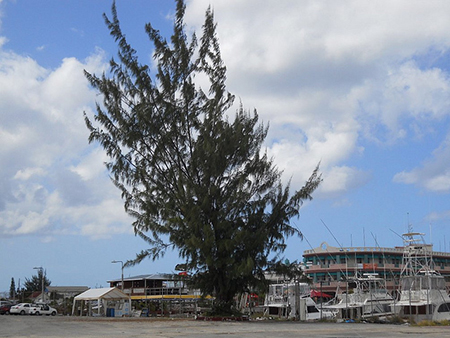
In July 1996, an archaeological team were called to a construction site at Pierhead docks, in Bridgetown, Barbados. Clearing the ground for the planned expansion of a shopping mall, a mass grave of human remains were uncovered. Tests concluded that the site was a burial ground for African slaves; those who had either died in the final stages of the Middle Passage, too close to shore to be thrown overboard, or those brought to Barbados for ‘seasoning’ – to be broken into the life of the plantocracy, before being moved onto other Caribbean islands. Following a deliberately short period of time for the archaeological dig, the site was covered in concrete, to be used as a car park, with no commemorations or signage to mark the importance of the area.

The hurry to cover over and conceal the site speaks of the continued dominance of the ruling classes’ economic interests over the island’s black population. As locals gathered around the archaeological dig, demands were made for libations of rum to be poured to the ghosts of the deceased and to ‘duppies,’ bad and malicious spirits. That rum was to be poured is laced with irony; since the slaves were brought across in the ships to farm the sugar from which such rum is distilled, but also because the car park is bordered by two empty customs warehouses, where rum would have previously been stored before global export.

This is not the only site of significance for the island’s slave history to be unidentified. This amnesia or selective memory is in many ways mirrored by the local art history and community; unmarked by the absence of a national art gallery and state support. Past activity, developments and successes are lost between generations, with most major Caribbean surveys taking place in the West and links between each generation broken as artists move abroad for opportunities not available on home territory. There are currently only four small and ill-equipped exhibition spaces on the island: two housed within the art college and university, the remainder commercial spaces.

pierhead

The Pierhead site and old customs warehouses are today disused. This proposal is made for an exhibition and performance, to be held on the Pierhead site in 2016, the year of the fiftieth anniversary of Barbados’ independence and host nation for the second time to the Caribbean-wide annual festival, Carifesta. ‘Rum Retort’ will purposefully run parallel to these official, state-sponsored events. A large group exhibition will be housed inside one of the customs warehouses, concerned with making visible the history of Pierhead within its locality, with works from artists including Nick Whittle; Annalee Davis; Ewan Atkinson; Sheena Rose and Holly Bynoe. A patterned installation print will be commissioned from artist Mark King to be produced directly onto the concrete car park, temporarily acknowledging what lies below. For the opening and closing of the exhibition, a dance performance will be commissioned from dancer and choreographer Yanique Hume, to take place outside the warehouse, on the concrete car park surface.

Read more about the other selected projects here

Please note: Proposals are ideas for exhibitions. No details, including artist participation, have been confirmed. The apexart Franchise Program is supported in part by The Andy Warhol Foundation for the Visual Arts and The Foundation for Contemporary Arts.

——————————————————————

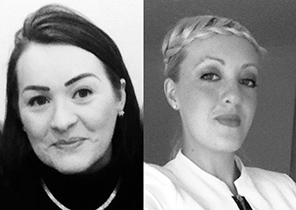
Tiffany Boyle and Jessica Carden.

Tiffany Boyle and Jessica Carden.

About Mother Tongue:

Mother Tongue is a research-led curatorial project formed by Tiffany Boyle and Jessica Carden, in response to individual periods of investigation in northern Scandinavia and West Africa. Our practice in exhibition-making intersects with research interests – including, but not limited to – (post)colonialism, language, heritage, ethnicity, whiteness, indigenousness, migration, movement, sexuality, and technology.

Since 2009, we have produced exhibitions, film programmes, discursive events, essays and publications in partnership with organisations such as the CCA: Centre for Contemporary Art Glasgow; Stills: Scotland’s Centre for Photography; Transmission Gallery; Africa-in-Motion Film Festival; Malmö Konsthall; and Konsthall C Stockholm, and undertaken residencies with HIAP in Helsinki, the Nordic Africa Institute in Uppsala, and CreativeLab at CCA Glasgow. ­Mother Tongue participated on the 2011/12 CuratorLab programme at Konstfack, and we are currently both undertaking individual PhD’s – Tiffany at Birkbeck and Jessica at TrAIN: Research Centre for Transnational Art, Identity and Nation, University of the Arts London. In 2015, Mother Tongue will continue to collaborate with Variant magazine, Framework Scotland and the Creative Futures Institute at UWS on the ongoing discussion series, ‘Curating Europes’ Futures.’