Katherine Kennedy begins her Fellowship at Akademie Schloss Solitude

schloss solitdue insta logos

Earlier this year, Assistant to Director at The Fresh Milk Art Platform, Katherine Kennedy, was selected to travel to Stuttgart, Germany as part of the ResSupport Fellowship programme offered by ResArtis. We are excited to announce that Katherine has just begun her fellowship at Akademie Schloss Solitude, which runs for three months from September 1 – December 1, 2014.

Katherine began her relationship with Fresh Milk as one of the first resident artists on the platform. Since working here, Katherine has represented the organisation at the Instituto Buena Bista (IBB) in Curaçao, received a scholarship for the Vermont Studio Center, and taken part in a collaborative project with Casa Tomada in Brazil. While Katherine is having this amazing new experience abroad, Barbadian artist and member of our Fresh Milk Books Team, Versia Harris, will be interning here at Fresh Milk as Assistant to Director in training. Versia graduated from the Barbados Community College with a BFA in the Studio Art programme in 2012, with an award from The Leslie’s Legacy Foundation. She has since participated in four residencies, regionally and internationally. In 2014, she was one of 83 artists selected to show in the IV Moscow International Young Art Biennial.

This internship exemplifies Fresh Milk’s commitment to investing in the development of emerging artists, demonstrating the importance of knowledge transfer and equipping them with the necessary skills to confidently enter professional environments while encouraging them to maintain artistic production.

During Katherine’s time in Germany, she will be introduced to the different working areas of Akademie Schloss Solitude and gain insight into how this prestigious residency programme is run, as well as fostering relationships with the resident artists and sharing information about Fresh Milk and the Caribbean contemporary art scene. In the spirit of this exchange, we would also like to share that Akademie Schloss Solitude is currently inviting applications from artists worldwide for their next residency cycle. See more below:

Image courtesy Akademie Schloss Solitude.

Image courtesy Akademie Schloss Solitude.

Call for Applications:

For the fifteenth time, Akademie Schloss Solitude is granting approx. 70 residency fellowships of three to twelve months in duration. More than 1.200 artists from more than 100 countries have developed and advanced projects at the Akademie since its opening in 1990, creating a close-knit, global network of Solitude alumni that expands from year to year. The Akademie pursues an intense exchange between artistic and scientific disciplines. With the art, science & business program the transfer of knowledge and experience between these fields can be deepened to create new synergies of creativity, inventiveness and management.

International artists are invited to apply from the following disciplines: Architecture (design, landscape architecture, urban planning), Visual Arts (including performance art), Performing Arts (stage design, dramatic texts, dramaturgy, musical theater, performance, direction, drama, dance), Design (fashion, costume, product and furniture design, visual communication), Literature (essay, criticism, poetry, prose, translation), Music/Sound (interpretation, sound installation, sound performance, composition) andVideo/Film/New Media (including video installation, fiction and documentary).

Furthermore, scholars, scientists and professionals from the disciplines of the Humanities, Social Sciences (with a focus on culture and the politics of space), Economy/Economics (with a focus on urban policy), and Culture & Law (with a focus on authorship) are invited to apply.

Persons up to 35 or if older who have completed a university or college degree within the past five years are welcome to apply. Currently enrolled university or college students (at the time of application) will not be considered for selection. Each fellowship recipient is granted Euro 1,100 per month, in addition to free lodging.

For additional information on the residency programme, application process and selection jury members, see the Akademie Schloss Solitude website here, or visit our Opportunities page.

Application deadline is Friday, October 31, 2014 (Postmark/End of Online Application).

​As of July 1, applicants will find all information, be able to register and download the application form or apply online on the Application website.

FRESH MILK XVI Review

Fresh Milk Books‘ Team Leader Amanda Haynes reviews our last public event FRESH MILK XVI. Read more below:

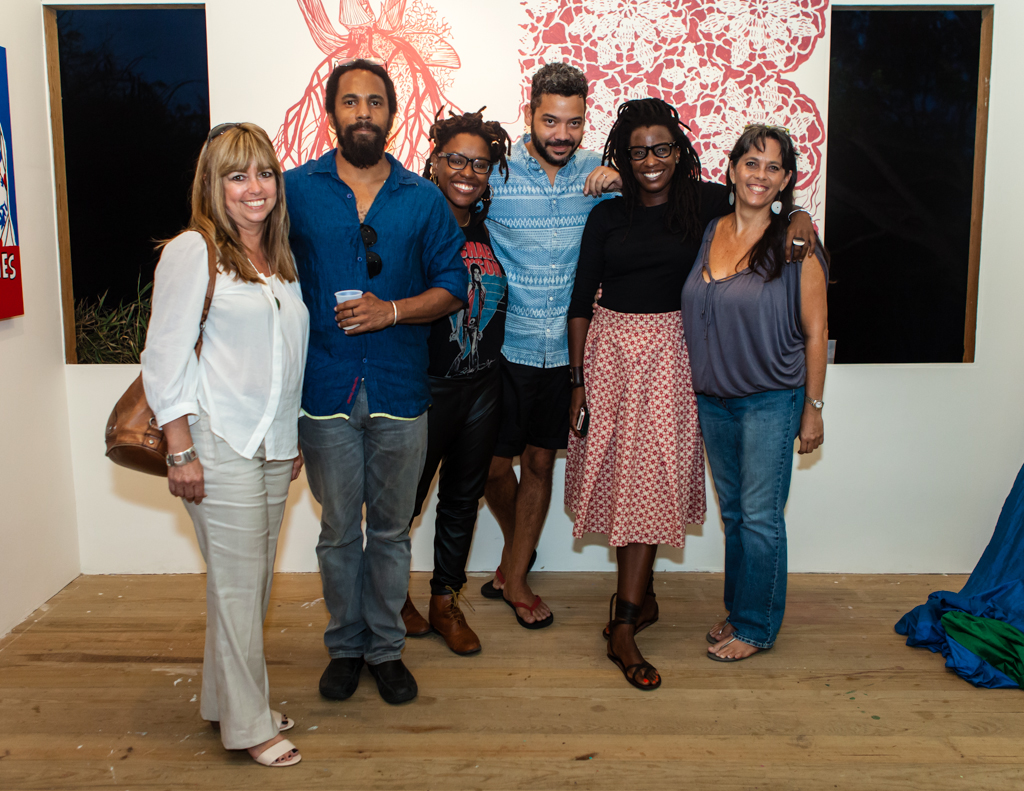
Photograph by Dondre Trotman

Photograph by Dondre Trotman

On Thursday June 26th, the Fresh Milk Art Platform hosted FRESH MILK XVI, the Barbados Launch of See Me Here: A Survey of Self Portraits from the Caribbean, edited by Melanie Archer and Mariel Brown of Robert and Christopher Publishers. Organised into a moderated panel discussion and an open Q & A, it was one of those rare times the second segment outran the first.

The event opened with a succinct presentation by visual artist Ronald Williams and my brief chat about Fresh Milk Books, before launching into the feature of the night: a conversation with See Me Here editor Melanie Archer and contributing Barbadian artists Ewan Atkinson, Annalee Davis, Joscelyn Gardner and Sheena Rose.

Skilfully moderated by Barbadian artist Russell Watson, dialogue revolved around the motivation and content of each artist’s unique self-portraiture, as well as the editors’ decision to compile an anthology with self-portraiture as its point of departure.

Annalee, Joscelyn, Ewan and Sheena’s responses were nuanced, embodying their personal expression of self and a distinct awareness of social identity as a political circumstance. In each case, their creative process reveals an understanding of this tension. For example, Joscelyn’s reflection on her work highlighted its ‘naïve’ perspective as she grappled to comprehend the complex racial and social climate of the Caribbean and being ‘white creole’. Similarly, Annalee shared her experience as being a white creole artist from Barbados, and the way in which Fresh Milk can be read as a self-portrait of this journey.

The more unapologetic, ‘socially vague’ visual art of Ewan and Sheena provoked especially provocative questions. As the discussion was opened to the audience, the question of self-portraiture as a zeitgeist of current Caribbean contemporary artists whirled into thoughtful questions and critically introspective answers. Major concerns expressed included the implications of this preoccupation with ‘self’ in today’s art practice, including the lack of a collective social agenda of current contemporary Caribbean art when compared to the socially oriented work of previous generations. Is this phenomenon indicative of an abandoning of ‘the national project’, or is it reflective of contemporary deconstructions of place as the root of one’s identity? How does this trend fit into the phenomenon of self-portraiture in general art history; is there a common social climate of these times?

In the context of contemporary mediated social media, the question of the performativity of art practice also raised poignant questions about the commodification of art, the role of the marketplace in the creative process, and criteria of authenticity: Who is the audience of this performance? How does this influence how, where and what we create? More importantly, what is the point of what we do? Should there be a point, anyway?

The mic was passed from artists, curators, scholars, students, men, women, the young, the older and the old. In a safe space for our perspectives to clash, clang and mingle, the night confirmed how much place does matter. In particular, the exchanges implied the radical potential of contemporary Caribbean art; more than ever before in the history of our region, we have the opportunity to create, control, consume and distribute perceptions of our visual and cultural identities. See Me Here signifies this moment—what comes next, we are not entirely sure.

Just after 9:30, Russell brought the lively conversation to a coherent close. Most of us stayed to mingle, purchase See Me Here, view the intimate exhibition and browse the CLRR. You wouldn’t guess that three hours before, FRESH MILK XVI was weary of the rain. Thankfully, Annalee and Katherine’s decision to host the night’s proceedings in the open space of the porch and lawn was magical. The atmosphere was relaxed and open, and the rain decided not to drench the projector or those of us sitting under the stars.

All photographs by Dondre Trotman 

International Artist Initiated

IMG_8546

Fresh Milk was very excited to travel to Glasgow this July to participate in the International Artist Initiated (IAI) project, presented by the David Dale Gallery & Studios as part of The Glasgow 2014 Cultural Programme which took place alongside this year’s Commonwealth Games. See below for more information and images from the project.

All photos taken by Rayanne Bushell.

About IAI:

International Artist Initiated is a programme of exhibitions and events devised by David Dale Gallery to coincide with the Glasgow 2014 Commonwealth Games. Developed over the past year, the project acted as a catalyst for discussion and collaboration between artist initiated projects internationally. The structure of the project was designed to be malleable and open source, in that it can be taken and applied elsewhere with different organisations.

Working with artist initiated, or focussed, organisations from across the six Commonwealth territories, the programme consisted of a series of exhibitions and events by the invited organisations that responded to either the context of the Commonwealth Games within Glasgow, or was representative of contemporary culture within their nation through the lens of an artist-led organisation.

The contributors to the programme were:

Fresh Milk, Barbados
Fillip, Canada
Cyprus Dossier, Cyprus
Clark House Initiative, India
RM, New Zealand
Video Art Network Lagos, Nigeria

Take a look at some picture from the opening night of IAI here:

Fresh Milk’s contribution to IAI was in two parts. The first saw the installation of works by three emerging artists on billboards, on railings and on the surface of the sidewalk. The artists include a recent graduate from the Barbados Community College, Ronald Williams, whose crisp digital montages critique the stereotype of the black athlete and were installed on an extended billboard, while Mark King’s temporal, geometric, site specific work was installed on a pavement. Alberta Whittle’s fête (party) posters show the artist masquerading as both man and woman in her critique of gender stereotypes through her engagement with the local fête posters often seen posted throughout Bridgetown, Barbados’ capital city. The posters were reproduced and displayed throughout the streets of Glasgow.

Ronald Williams

Ronald Williams’ Artist Statements:

My collages investigate the role that sports and the black athlete play in society. I manipulate popular based imagery to compose computer-generated images that explore sports, perceptions, stereotypes and fantasies about the black athlete or figure, conceptually becoming deliberately self-contradictory as the stereotype is simultaneously celebrated and criticized. The work is designed as a large-scale poster to be installed on a billboard as an adhesive decal similar to how the image of the modern sportsman is represented. The titles of the three images being exhibited are Swagga, The Phenomenon and Wild Thing.

Swagga

Sprinter Usain Bolt provides the inspiration for Swagga, a piece meant to capture the frivolous and boastful nature of celebration. The boa, hat, glasses and shoes combine to promote this ‘showy’ spectacle but are also linked to the Jamaican bling culture. While the animal skins on the legs hint at the relationship to fashion, it also indicates an inherent animalistic/ physically superior nature. The shirt, deliberately muted and understated, bears a statement from Marcus Garvey about knowledge of oneself and identity. As the African mask is obscured by the bright glasses and hat, the true significance of important sporting events—such as those of the Olympic Games which were of supreme importance in ancient Greece to a sporting hero as well as his city—is often lost amongst the glamorous festivity which accompanies it.

The Phenomenon

Jessie Owens’ performances at the 1936 Berlin Olympic Games were the catalyst for this piece. Owens defied Hitler’s claims about Aryan supremacy and the attitudes towards blacks in his own country by winning four gold medals. In America, the infirm and mortality rates of black children were high due to their lack of proper health care and social structure, but the common notion was that the blacks were just diseased and weaker in general. With Owens’ victory the narrative soon changed, and the now widely accepted stereotype of blacks being more athletically and physically gifted emerged. The idea of blacks being super or sub-human alternated between those two points and Owens was subjected to various tests to find what the secret was. To reflect this change, the head of the character and its arms indicate a non human entity with the study of eugenics paramount to the discussion. To highlight the use of the ‘sub-human’ black body for scientific and medical use, the Tuskegee experiments are included. Attached to the leg of the sprinter is the anti-slavery coin ‘Am I Not A Man And A Brother’ which serves as an anchor ball and chain. It symbolises the apparently never ending struggle for the black person to bee seen as equal, not super nor sub-human.

Wild Thing

Serena Williams’ bold fashion choices and trailblazing attitude helped inspire Wild Thing. Her 2002 attire, dubbed ‘the catsuit’, was such a huge talking point that it overshadowed the tennis being played. Comments about her ample curves, bulging muscles and inhuman speed and agility placed her in a highly sexualized yet animalsitic category. The character wears an exaggerated version of a catsuit, referencing the stereotypical association between African women and felines, while images of the Hottentot Venus place the fascination with her body to the fore. The black power racket and raised middle finger is a testament to her uncompromising and at times aggressive attitude, which is occasionally adverse to the demure nature of the sport.

_____________________________________________________________________________

Mark King

Mark King’s Artist Statement:

My contribution to the Glasgow 2014 Culture Programme is a site-specific work made possible by the access provided by technology. Through virtual and interactive maps I embarked upon an exercise in way-finding from a computer thousands of miles away in Barbados. Through mechanisms such as Google Maps I selected forms present in the architecture and manipulated them to create artworks that draw upon the location where my work will be presented.

I have chosen chalk as my medium due to its ephemeral qualities. The resulting artwork is temporary much like the Commonwealth Games in Glasgow. My hope is that spectators from across the globe will come into direct contact with the piece with chalk from the artwork sticking to their shoes and hitching a ride to the neighboring sports venues. The combination of the elements and foot traffic will slowly eat away at the pigment and ultimately return the site to a state prior to my temporary intervention.

It is unknown whether the work will last for an hour, a day or the duration of the Commonwealth Games.

 _____________________________________________________________________________
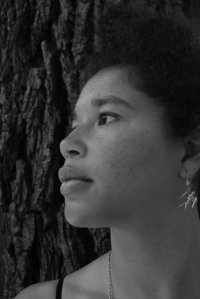
Alberta Whittle

Alberta Whittle’s Artist Statement

I am interested in the conflict between historical images of the Other and the African Diaspora’s notions of the Self. The spectacle of racial differences relies on a language of bleak oppositions to confirm stereotypes. In Black Skin / White Masks, Frantz Fanon, observed that in colonial discourse “native” peoples are not positioned within the psychoanalytic structure of the Self and Other, but are relegated to the universe of objects, where they remain beyond the limits of cultural intelligibility.Focusing on the concept of subjective portraiture, both as art historical genre and public identity, my research has prompted me to interrogate the potential of Barbadian fete posters as a means of regaining subjectivity.

Whilst undertaking a residency at Fresh Milk in 2012, I began a series of digital collages, exploring the production and distribution of fete posters in Barbados. Fete posters are a platform for social commentary, highlighting the acute disparity between gender roles in Barbados, where these representations appear frozen. The posters advertising these “fetes” set the tone and introduce the hosts / hostesses.  Each poster must present a selection of portraits of the hosts / hostesses, who enact a series of set poses, often sexually provocative or stereotypically hypermasculine. There are exceptions to this trope, where we are presented with more family-oriented fetes or fetes, which present a more Afro-centric or Rastafarian ideology. However, despite attempts to present themselves as rigidly heterosexual, there are elements of homoeroticism, identified through pose, adornment and dress. Designed to reflect certain ideals, these posters have evolved to reflect a specific format, which typically utilises certain poses, typography, set design and phrases, presenting a fantastical landscape punctuated with exotic animals, signifiers of wealth, including mansions, enormous bundles of cash money, expensive liquor, cars and motorbikes. They are papered on walls throughout the urban and pastoral landscape and also use Facebook as a stage. Drawing from Dancehall and Hip Hop culture, they have become sites to define identity and project capitalist ideals.

_____________________________________________________________________________

Fresh Milk’s second contribution was a discursive project called “Notions of common/wealth versus single/wealth”. This dialogical component provided a platform for representatives of the seven specially invited networks to participate in conversations with each other and the Glaswegian audience. The aim of the conversations was, in part, to unpack ideas related to the Commonwealth of Nations – the association under which countries gather every four years to celebrate sport in Glasgow in the summer of 2014. The intention was to explore the context of the IAI, as a gathering of Commonwealth Nations, and delve into how that relates to the work we all do as artist led initiatives. The concern was to investigate the Commonwealth as a macro, historical entity and understand our relationship to it, if any, and all that entails. Interrelated are ideas about the definition of wealth and value, both single and common, in our local contexts.

View the panel discussion archived online here.
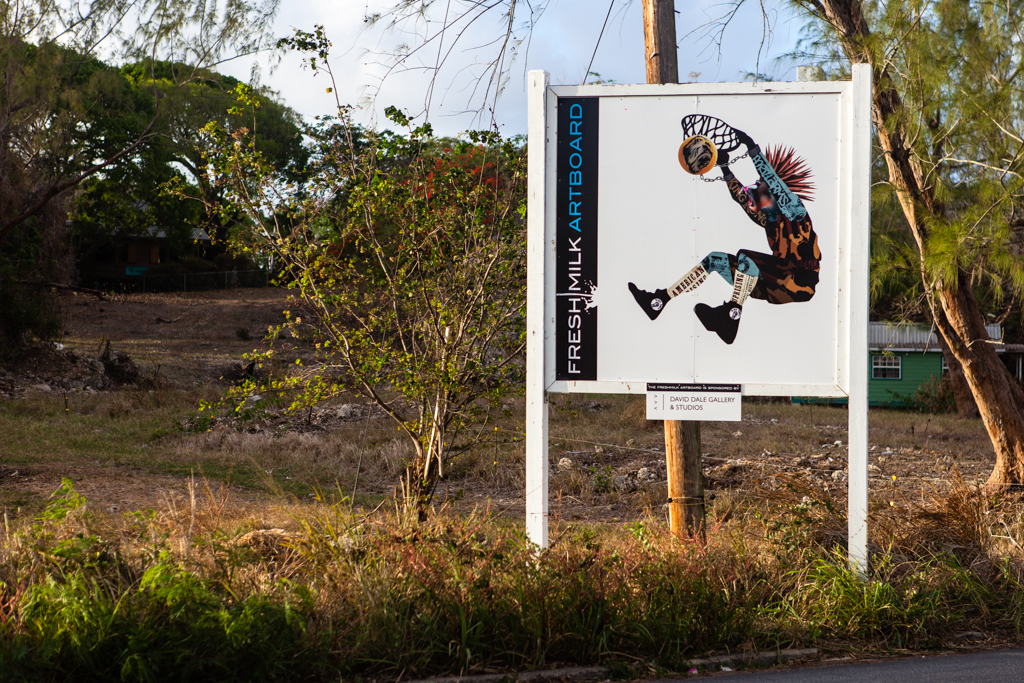
The Fresh Milk ArtBoard features Ronald Williams

IMG_7746

We are thrilled to have received the support to have a new image installed on our public gallery space, the Fresh Milk ArtBoard. Sponsored by the David Dale Gallery & Studios, Glasgow, we are now featuring the work of Barbadian artist and member of the Fresh Milk Books team Ronald Williams. Ronald’s work will also be on display in Glasgow this July-August as part of Fresh Milk’s component of the International Artist Initiated project.

As part of The Glasgow 2014 Cultural Programme, the David Dale Gallery will present International Artist Initiated, an ambitious collection of events and exhibitions to coincide with the Commonwealth Games. Working with artist initiated organisations from across the six Commonwealth territories, including Fresh Milk, the programme will consist of a series of projects by the invited organisations which respond to the context of the Commonwealth Games within Glasgow, and is representative or indicative of contemporary culture within their nation through the lens of artist-led organisation.

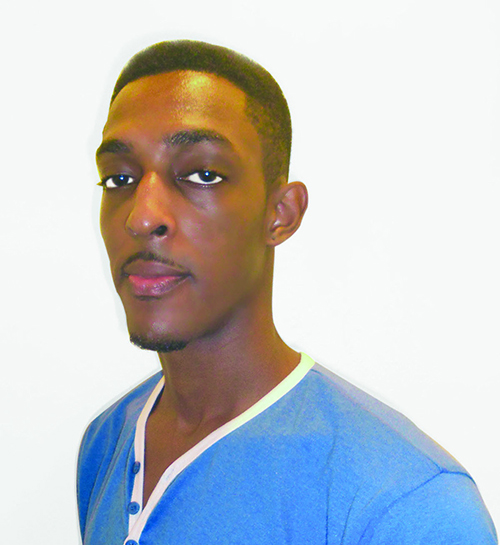
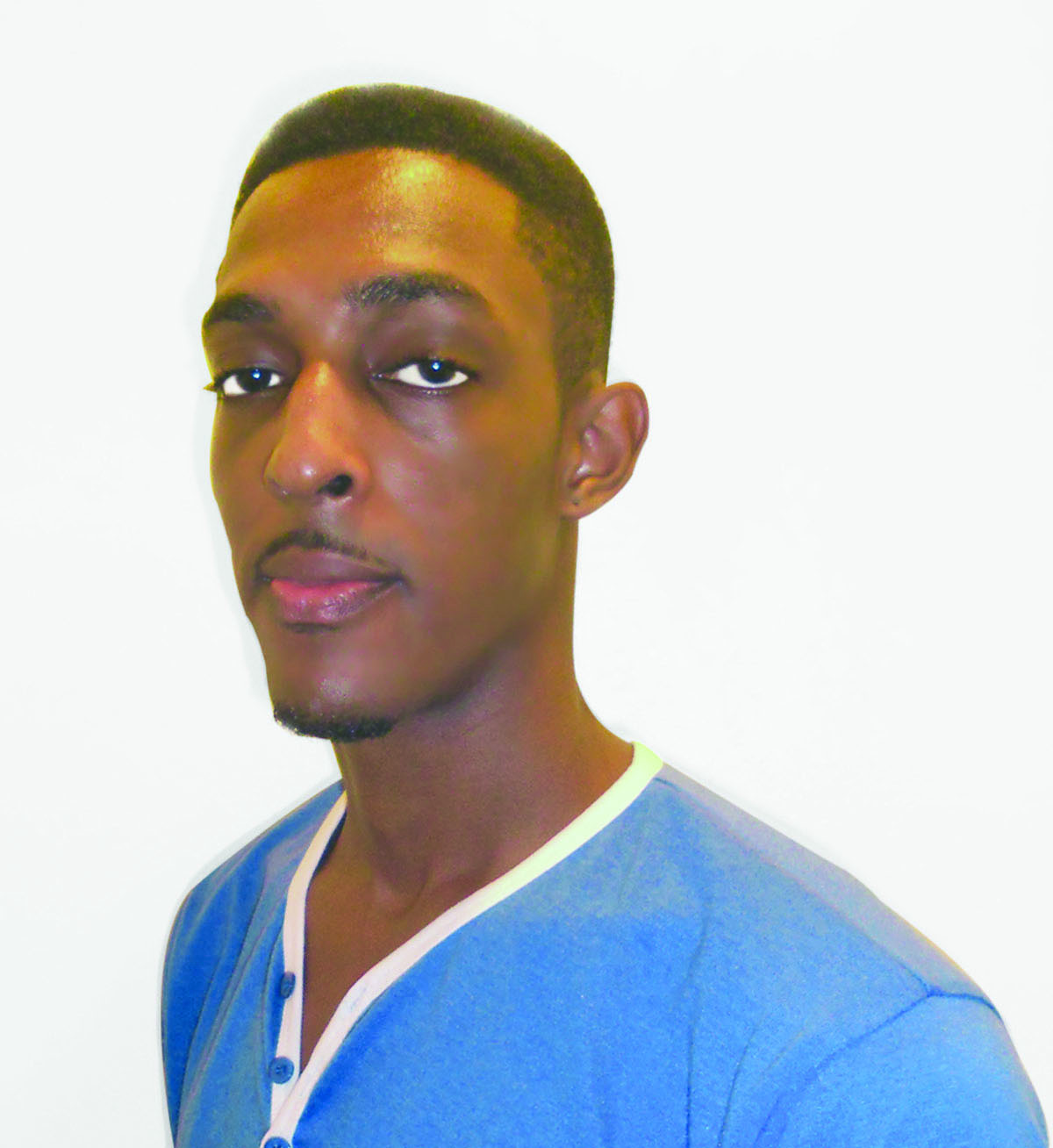
portrait

Ronald’s Artist Statement

Inspired by the dynamism and power of Shaquille O’Neal’s Dunkman logo; as well as his legacy of being one of the most aggressive, combative and dominant players in the NBA’s history, ‘The Beast’ is my expression of the “black male-brute” stereotype.

Using the original logo as a template, I collaged photographs, various images found in popular media and historical texts via Photoshop to form the final piece. While it was not necessary for the viewer to know which athlete a piece is inspired by, that knowledge of the athlete was critical in my selection of the images to use. For ‘The Beast’, intuitive decisions were made based on my perception of O’Neal and his presence as a cultural icon.

shaq_dunkman_logo

Conceptually, ‘The Beast’, like many other collages, is deliberately self-contradictory. Slave revolt texts and upraised fists are counterbalanced by shackles still intact, while the iconic black power symbol when placed on the shoes becomes an ironic brand worn by the primate character.

Through these symbols I acknowledge the important role basketball, and by extension sports, has played in bridging social and economic gaps while also criticizing how the system is set up. The image of the black male being less than human—a big, powerful animal—is one we have struggled to erase, yet the narrative of the NBA has constantly reaffirmed this. Blacks are generally praised for their athleticism, strength and physical qualities while the most lucrative deals and sponsorships usually go to the black basketballers who best exhibit these traits.

As the character in ‘The Beast’ is shackled to what is effectively his own image, I fear some part of the “black male-brute” stereotype is ingrained in our psyche. Many black basketballers voluntarily embrace being a beast on the court while the sports and media industries eagerly promote these images. It’s a catch-22 situation; as we have bridged many racial gaps, we have also unintentionally reaffirmed misguided stereotypes.

IMG_7745

FRESH MILK XVI Video

Check out our video from FRESH MILK XVI, the Barbados book launch for Robert & Christopher Publishers‘ (R&C) latest title, See Mere Here: A Survey of Contemporary Self-Portraits from the Caribbean, edited by Melanie Archer and Mariel Brown.

The event presented a small exhibition and panel discussion with the Barbadian artists featured in the publication – Ewan Atkinson, Annalee Davis, Joscelyn Gardner and Sheena Rose – and editor Melanie Archer, moderated by Barbadian artist Russell Watson.

Thanks to Sammy Davis for shooting and editing this video!