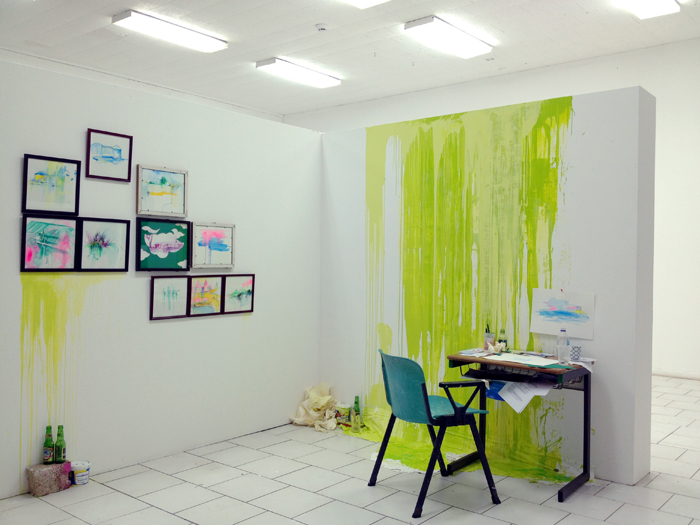
Fresh Milk and Groundation Grenada welcome Damali Abrams

Damali Announcement flyer

FRESH MILK and Groundation Grenada are pleased to have NYC-based, Guyanese performance artist Damali Abrams visit our platforms as artist in residence for the month of October, 2013.

Damali, who has been working with FRESH MILK on The Fresh Performance Project which features interviews with Caribbean-based and NYC-based performance artists, will spend three weeks in Barbados and one week in Grenada. In addition to editing a full length documentary around Fresh Performance and producing her own work, Damali will also be conducting workshops and community outreach projects in both islands.

This exciting residency not only marks the first official collaboration between FRESH MILK and Groundation, but will also expand the cultural arena for both NY based and Caribbean based creatives, contributing to critical discourse around performance art.

Fresh Milk and Groundation Grenada wish to engage with the Caribbean diasporic art community in the New York area as well as a wider U.S. audience, and projects of this nature are unique in that they reverse the trend of Caribbean based artists wanting to find relevance for their work in a North American context. In this instance, it is a U.S. based artist who is keen to see how her work resonates within the Caribbean environment.

Given that performance art in the Caribbean is practiced by a small number of artists, this project will contribute to expanding a critical and creative community by offering support to performance artists who often work in isolation. Finally, the project will build cultural bridges between the U.S. and the Caribbean and generate understanding and community through the arts.

Damali will share the outcome of her residency at a public event to be held at FRESH MILK on October 24th. More information on this to follow!

Special thanks to the US Embassy in Barbados for supporting this project.

Caribbean Linked II Artist Blogs: Robin de Vogel

Dutch/Aruban artist Robin de Vogel shares her experience during Caribbean Linked II, a residency programme at Ateliers ’89, Aruba.  She describes her need to appropriate and settle into a studio space, accumulating ‘objets trouvés’ as a part of her creative process. As she carved out this space for herself, she also discovered where she  fit in the environments constructed by her fellow resident artists. Through their time together she noticed the closing of a gap between the Caribbean islands, building “a bridge where only creative-exchange is accepted as toll fare.”

1238765_233837890099579_990945683_n

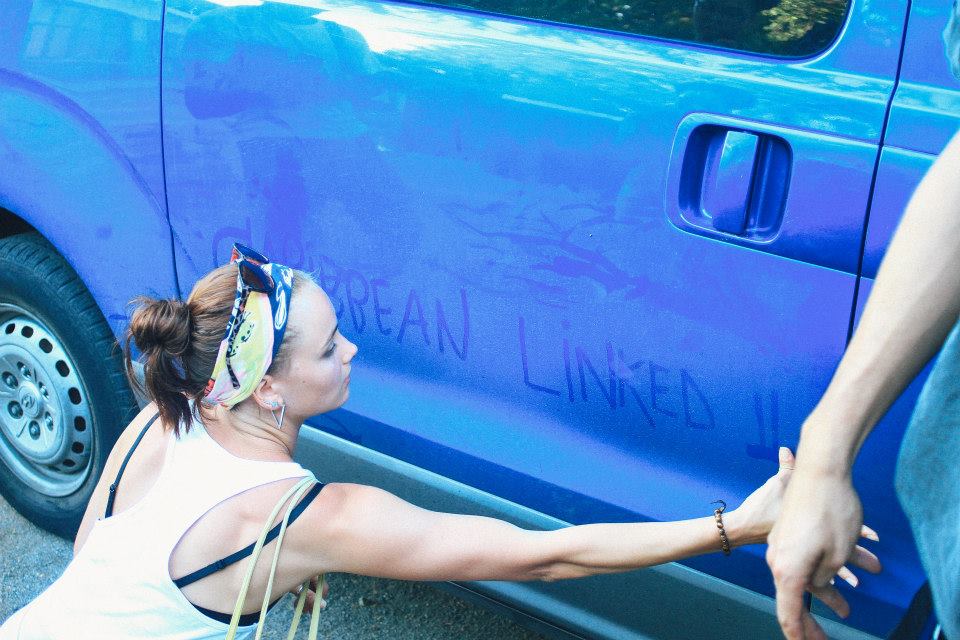
Robin de Vogel marking the Ateliers ’89 van

Planting Long-distance Seeds

After the first breakfast with all of us at the table, eating while debating politics and manners of campaigning in the Caribbean, I walked through the blue and yellow halls of the Ateliers in pursuit of a good spot to start working. Sofia had set up shop in the far left corner of the first room, one of the larger and lighter spaces in the building. With some of the space already being semi occupied, I moved some tables around to figure out where I’d want to put down roots for the coming two weeks of our residency. I strategically placed myself facing away from the doorway, as I know myself to be continuously curious and therefore easily distracted by everything around me.

About two months ago, two weeks prior to my graduation show, the time had come to clean up the studio space I had inhabited for the past year. I felt like a snail without its shell after everything was moved around, cleaned up, thrown out or saved by taking it home. All the different materials I’d managed to accumulate during the semester to “one day” be of use and my ever-growing collage on the wall. Pictures, postcards, newspaper clippings, objets trouvés, souvenirs and film stills.

Studio space snapshot 2012

Studio space snapshot 2012

They function as tangible trains of thought being slowed down and captured on the walls around me, as though the content of my brain is lightly hugging me.

Appropriating a studio space as my own is crucial for my sanity. During the first few days of the residency I started a small investigation into the studio spaces of the other resident artists. It was exciting to see each individual formulate their workspace in their own style. My own ideal ‘two-week-working-space’ needed a mascot of some sort, sooner rather than later. I promised myself to make, find, steal or collect one object a day, for a week. It led to a small altar.

A mascot a day keeps the doctor away, Robin de Vogel, 2013

A mascot a day keeps the doctor away, Robin de Vogel, 2013

As the days progressed I began to realise the vast significance a project like Caribbean Linked II carries within the development of Caribbean art today. The project is not only about establishing a direct link between ten young Caribbean artists during their time in Aruba, but it forms a direct bridge between the islands, a bridge where only creative-exchange is accepted as toll fare. Upon asking curator Holly Bynoe why she believes in this project so very much she answered: “We are planting seeds”.

Image by Shirley Rufin

Image by Shirley Rufin

The work I made during the residency spoke about our ‘reach’ as a human being. Our reach can be categorized as something tangible and measurable like a radius or a circumference, but at the same time our reach can be something elusive and invisible. An opinion exchanged about a work in progress can lead to a complete overhaul in someone’s point of view. Hence the reach of that particular dialogue is immeasurable and untold, as is the importance of the seeds planted during Caribbean Linked II. The elements I take home with me from the continuous exchange that took place during those two weeks are undeniable. I have become aware of a much broader range of artistic possibilities within the Caribbean, various residency programs, projects and creative institutes that I am extremely excited about. Getting to know these beautiful human beings from all over the Caribbean and sharing my island with them makes the oceanic barrier feel so much smaller. Ultimately it leads to an amplified sense of connectivity amongst the different islands as well as an increased feeling of personal responsibility to promote and unite in our diversity.

Image by Shirley Rufin

Image by Shirley Rufin

Image by the artist

Image by the artist

About Robin de Vogel:

Robin de Vogel is a Dutch artist raised on the island of Aruba. She participated in photography, drawing, painting and installation art workshops provided by Ateliers ’89. In 2008, she moved back to The Netherlands to pursue a Bachelor of Fine Arts Degree from the Ceramics Department at the Gerrit Rietveld Academy in Amsterdam. She also engages in various collaborative projects and exhibitions in Europe and the Caribbean. Robin’s work often takes the form of installations that revolve around the sensibility of the viewer. Her pieces aim to serve as a subtle disruption of the daily routine. Currently, Robin is completing her exam year and is preparing to pursue a Master of Fine Arts Degree after the summer.

CARIBBEAN LINKED II is a residency programme and exhibition organized by Ateliers ’89 Foundation in collaboration with ARC Inc. and The Fresh Milk Art Platform Inc. and funded by the Mondriaan Foundation. The programme took place from August 25th through September 6th, 2013 in Oranjestad, Aruba.

Adrian Green and Sky LARC’s Residency: Week 2

Spoken word artist and Adrian Green and filmmaker LARC are collaborating at Fresh Milk for the month of September and working on the production of a video short. See LARC’s photographs of the performing artists they are working with, and read Adrian’s blog entry about the challenges of filmmaking, and innovation necessary to adapt to the process.

Review Performance

Reviewing the performance

I instinctively understood it before.  But I can appreciate more now.  Film making in Barbados is H(art)D.  I’ll come back to that.

This process of film making is entirely new and fascinating to me.  This is my first time working in the medium and thus far it is very different.

This is my perception of the process thus far.  We are in the pre-production stage and at this point there is not a lot of “art” going on.  The “art” goes into the conceptualisation and production of a script and/or treatment, and the production of visuals in filming and editing.  Aside from that it is planning and administrative work to be done, to ensure that the small window we have for shooting does not close on us prematurely.

The planning involves scheduling, corresponding with actors, securing props, equipment and finalising locations.  In other words, looking around making calls and waiting.  This is hard work for me who is not the most organised and usually depends on no one and nothing but himself  to get his art done. This is definitely not a 9 to 5 type gig.  Long periods of seeming inactivity are set to be followed by marathon sessions of filming and editing.

Now on the difficulty of island film making…

Time and budgetary constraints make it so the local film maker must be extra creative.  I think I’ll call it “Jazz style film making” or “Mcgyver film making.”  This is because the of the level of improvisation, ingenuity and innovation required.  You may start with a vision but can expect that the flexibility of your creative muscle will be tested when lack of resources, responses, time and so on, require you to find new ways, approaches and ideas.

But then again, I guess this is not unique to film making.  That is just art.  Somehow though, it seems amplified when applied to screen.  Movie Magic?

– Adrian Green

Megghan and friends

Megghan and friends

Caribbean Linked II review: Sofia Maldonado

Puerto Rican/US based artist Sofia Maldonado writes about her experience during Caribbean Linked II, a residency programme at Ateliers ’89, Aruba. Maldonado cites the importance of projects like this in transcending boundaries – geographical, political, cultural and language limitations – and instead revealing the commonalities of the region. The relationships and dialogue that emerged out of the diverse work each artist produced for the final exhibition was testimony to the fact that in the Caribbean “there is far more that unites, than separates.”
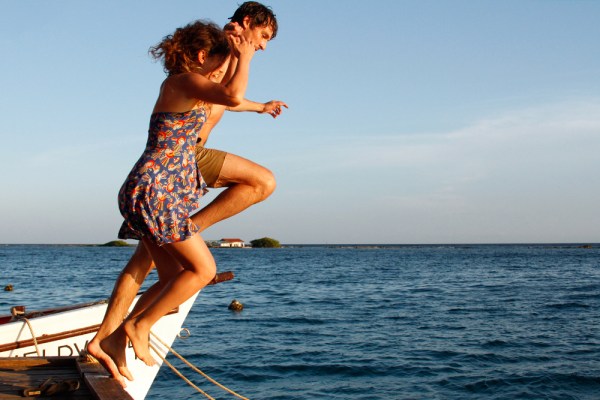
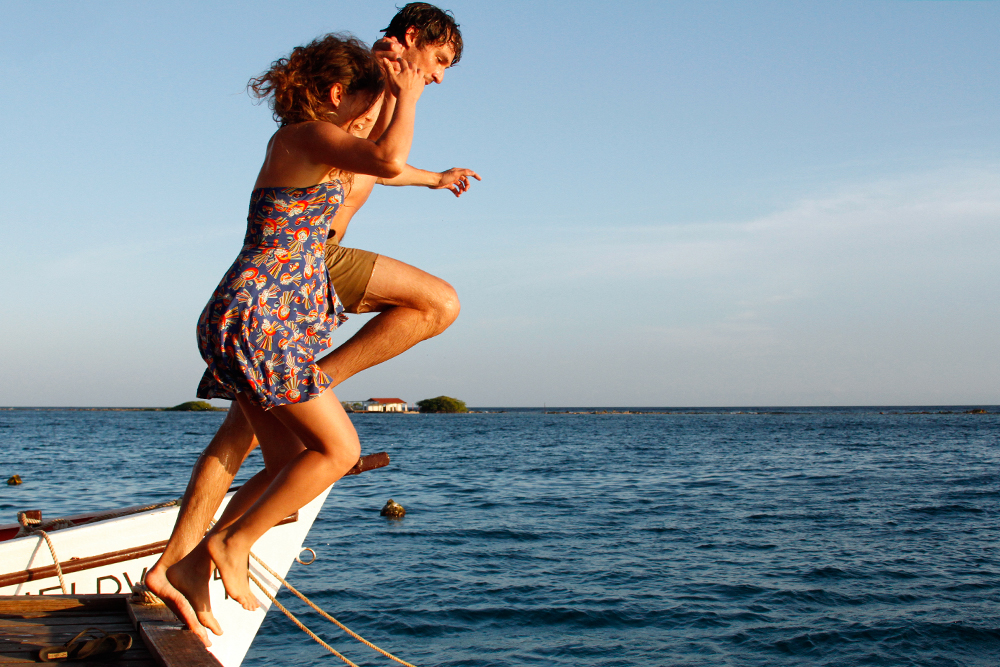
Sofia Maldonado and Kevin Schuit jump off pier. Image by Mark King

Sofia Maldonado and Kevin Schuit jump off pier. Image by Mark King

A Jump into the Sea

Aruba was home to ten Caribbean artists for two weeks from August 25 to September 6. This 19-mile long island of the Lesser Antilles happens to be one of the great tourist stops in the Dutch-Caribbean, but for these contemporary artists it became an artistic workshop. For two weeks, Aruba was transformed into a studio of endless possibilities, conceptual research, and multicultural exchange. Between long walks on the white sand of this intriguing “desert island” and sporadic swims in the pristine Caribbean Sea, ten artists from the Spanish, French, English and Dutch Antilles were able to meet face to face and share an incredible moment of creative exchange.

This cultural exchange was made possible, thanks to the three daring directors that organized Caribbean Linked II at Ateliers ‘89. Annalee Davis, director of the Fresh Milk Art Platform Inc., Holly Bynoe, curator and Editor-in-Chief of ARC Magazine and Elvis Lopez, director of the Ateliers ’89, challenged the great geographical barrier of the Caribbean, its sea, and brought together artists from “afar”, representatives of the cultural diversity inherent to the Caribbean. Artists whose origins, languages and artistic media are very diverse were invited to converse about the importance of creating alternative spaces, establishing links between the artists of the different islands, exchanging ideas and sharing their creative process.

Caribbean Linked II artists- top to bottom, left to right: Germille Geerman, Robin de Vogel, Mark King, Sofia Maldonado, Omar Kuwas, Rodell Warner, Shirley Rufin, Kevin Schuit, Veronica Dorsett and Dhiradj Ramsamoedj. Image by Mark King.

Caribbean Linked II artists- top to bottom, left to right: Germille Geerman, Robin de Vogel, Mark King, Sofia Maldonado, Omar Kuwas, Rodell Warner, Shirley Rufin, Kevin Schuit, Veronica Dorsett and Dhiradj Ramsamoedj. Image by Mark King.

Economic and artistic limitations in many Caribbean islands often compel young contemporary artists to turn their heads towards the booming capitals in the US or Europe that have larger art budgets and art markets; leaving behind – much to their regret – the Caribbean as a possible creative arena. Caribbean Linked II at Ateliers ’89 offered a journey into the artistic complexities of a postcolonial society. All Caribbean artists have at least two things in common: their colonial past and their postcolonial present. Aruba provided the perfect setting for a natural and spontaneous dialogue between the artists who found themselves “at home in the Caribbean”. The trips to the arid landscapes, the interactions with the Aruban people provided the opportunity to discuss a shared history and culture. It was a voyage of cultural, historic and political awareness. The artists were given the space to puzzle out their own experiences, experiment and create. Some collaborated in a physical way, others on a philosophical level.

Ateliers ’89 is not alone in this endeavor. Important creative networks have been on the rise in the Caribbean. A growing need for global and intra-island connections has encouraged the creation of spaces such as: The Fresh Milk Art Platform in Barbados, NLS (New Local Space) in Jamaica, Ateliers ’89 in Aruba, Instituto Buena Bista in Curacao, Alice Yard in Trinidad, Beta Local in Puerto Rico and many others. These programs have inspired contemporary art practices in their own countries and have projected them outside of their natural boundary, the sea. Although the Caribbean islands are pretty close together, the natural barrier hampers cultural exchange and communication. There are also other obstacles, besides the sea, that impede the flow of ideas between islands, most of which have their origins in the colonial period. Whatever political discrepancies, cultural and language differences exist are the remnants of colonial times. Creative spaces, like Ateliers ’89, hope to break through these complexities and obstacles in order to bring together artists, artistic manifestations and people. Experiences like Caribbean Linked II bring forth the pivotal truth: there is far more that unites, than separates.
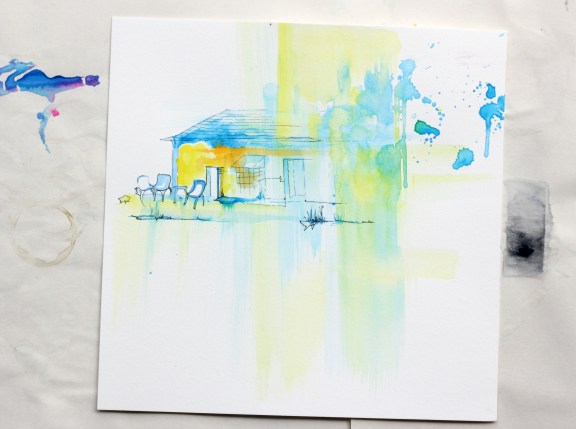
Work from Sofia Maldonado ‘Tropical Studio’. Image courtesy of Rodell Warner.

Work from Sofia Maldonado ‘Tropical Studio’. Image courtesy of Rodell Warner.

Elvis Lopez, director of Ateliers ’89, recognizes the communication barriers within the diverse islands of the region. He has been able to provide a crucial exchange by inviting the selected artists to CARIBBEAN LINKED II: Omar Kuwas (Curaçao), Veronica Dorsett (The Bahamas), Mark King (Barbados), Shirley Rufin (Martinique), Sofia Maldonado (Puerto Rico/US), Dhiradj Ramsamoedj (Suriname), Rodell Warner (Trinidad and Tobago), Robin de VogelKevin Schuit and Germille Geerman (Aruba). A group exhibition concluded the two week long residency. ARC Magazine and Fresh Milk will publish each artist’s written contribution and recollection about his/her experience on their online platforms.

As Mark King wrote, “CARIBBEAN LINKED II was an experiment gone right. Throw ten artists into a beaker, step back, and see what happens. Having Aruba as the setting was a great call. The island is such a cultural melting pot, an ideal space to navigate our processes and promote collaboration.”

During two long weeks, winds of creative and conceptual freedom blew in Aruba, the desert-island. Caribbean artists explored outside the boundaries of the art studio. Some artists worked with what they found: construction materials, all sorts of objects, fabric, rocks and money. Others developed an evident curiosity for the arid landscapes of Aruba, patterns found in floor tiles and political propaganda. The use of photography as final medium or part of the creative process was a constant in the group.
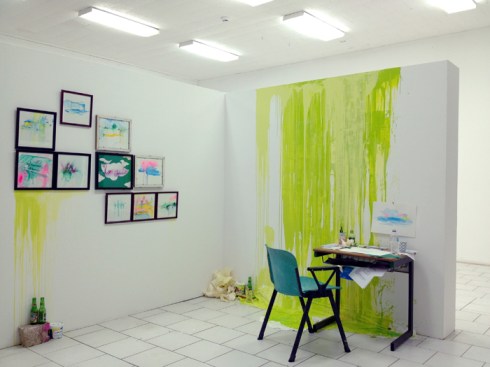
Work from Sofia Maldonado ‘Tropical Studio’. Image courtesy of the artist.

Work from Sofia Maldonado ‘Tropical Studio’. Image courtesy of the artist.

There was an intriguing correlation between all the projects. Surprisingly all of the pieces synced. Ten artists speak one language. It is Caribbean. It is Contemporary. It is World-art. It is the voice of an emerging generation of artists that speak a universal language independently of our Caribbean heritage.

About Sofia Maldonado:

Sofia Maldonado is a muralist mixing interdisciplinary art practice with street culture. Born in Puerto Rico, from a Cuban mother, 1984. In 2002 she participated in a Sculpture and Installation Seminar at the School of Visual Arts, in New York. Between 2002 & 2006, she pursued undergraduate work in art and design at the La Escuela de Artes Plasticas. In 2006 she achieved a Painting MFA from Pratt Institute, New York. In 2009 she received a scholarship by the Cuban Artist Fund to be part of Vermont Studios Residency.

CARIBBEAN LINKED II is a residency programme and exhibition organized by Ateliers ’89 Foundation in collaboration with ARC Inc. and The Fresh Milk Art Platform Inc. and funded by the Mondriaan Foundation. The programme took place from August 25th through September 6th, 2013 in Oranjestad, Aruba.
Adrian Green and Sky LARC’s Residency: Week 1

Adrian Green and LARC are collaborating at Fresh Milk for the month of September and working on the production of a video short. See LARC’s shots from ‘working out the working out scene’ and moving through the bush on the location scout. Read Adrian’s blog entry which is in the form of poetry this week.

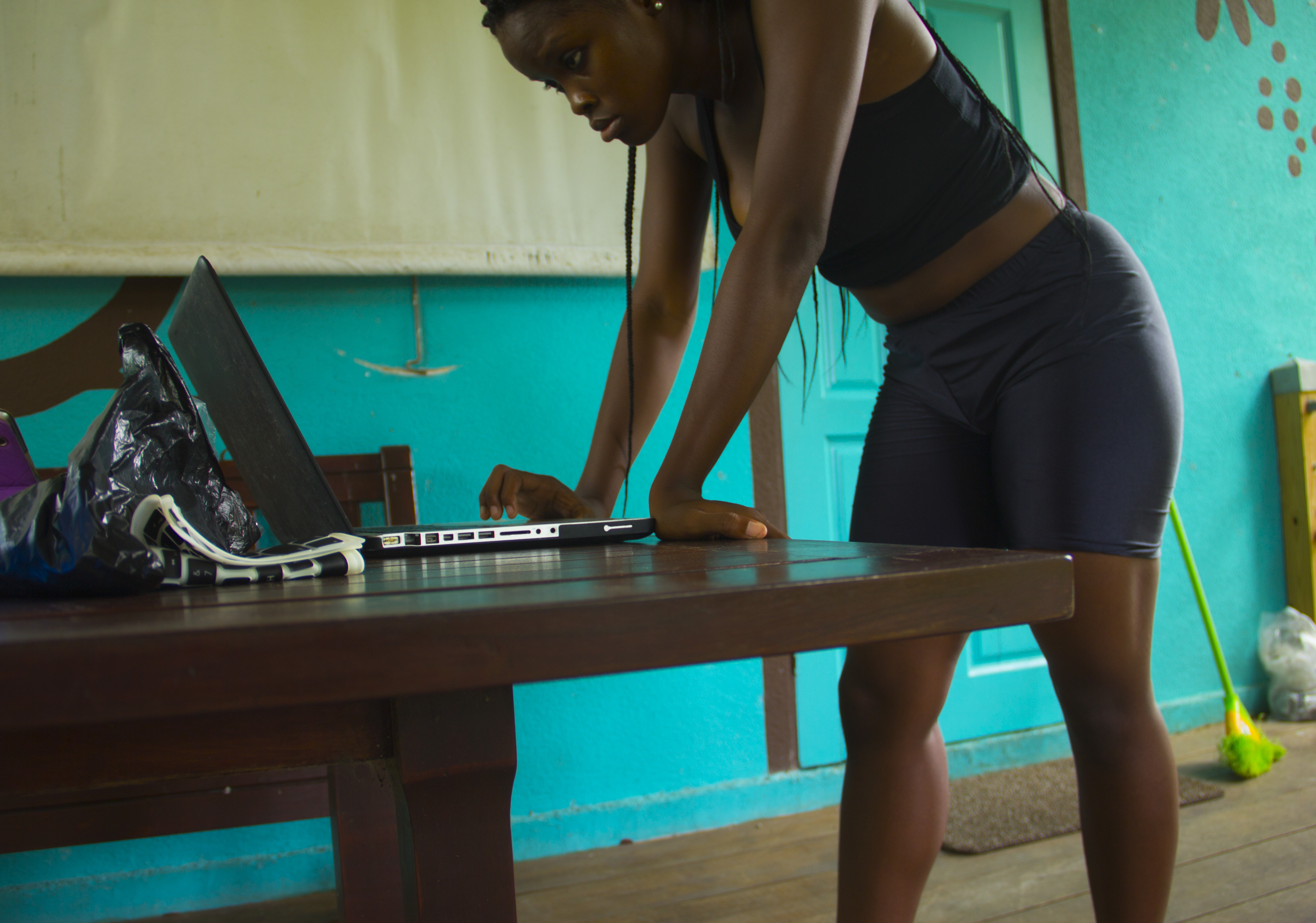
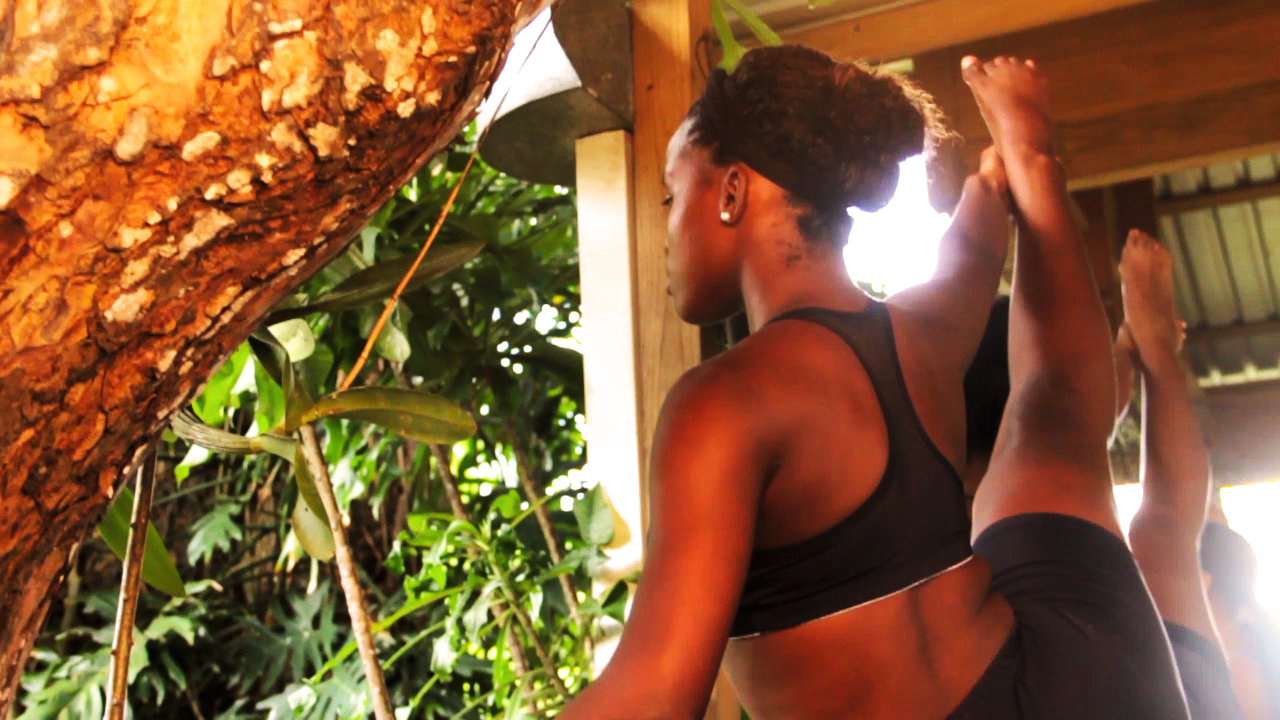
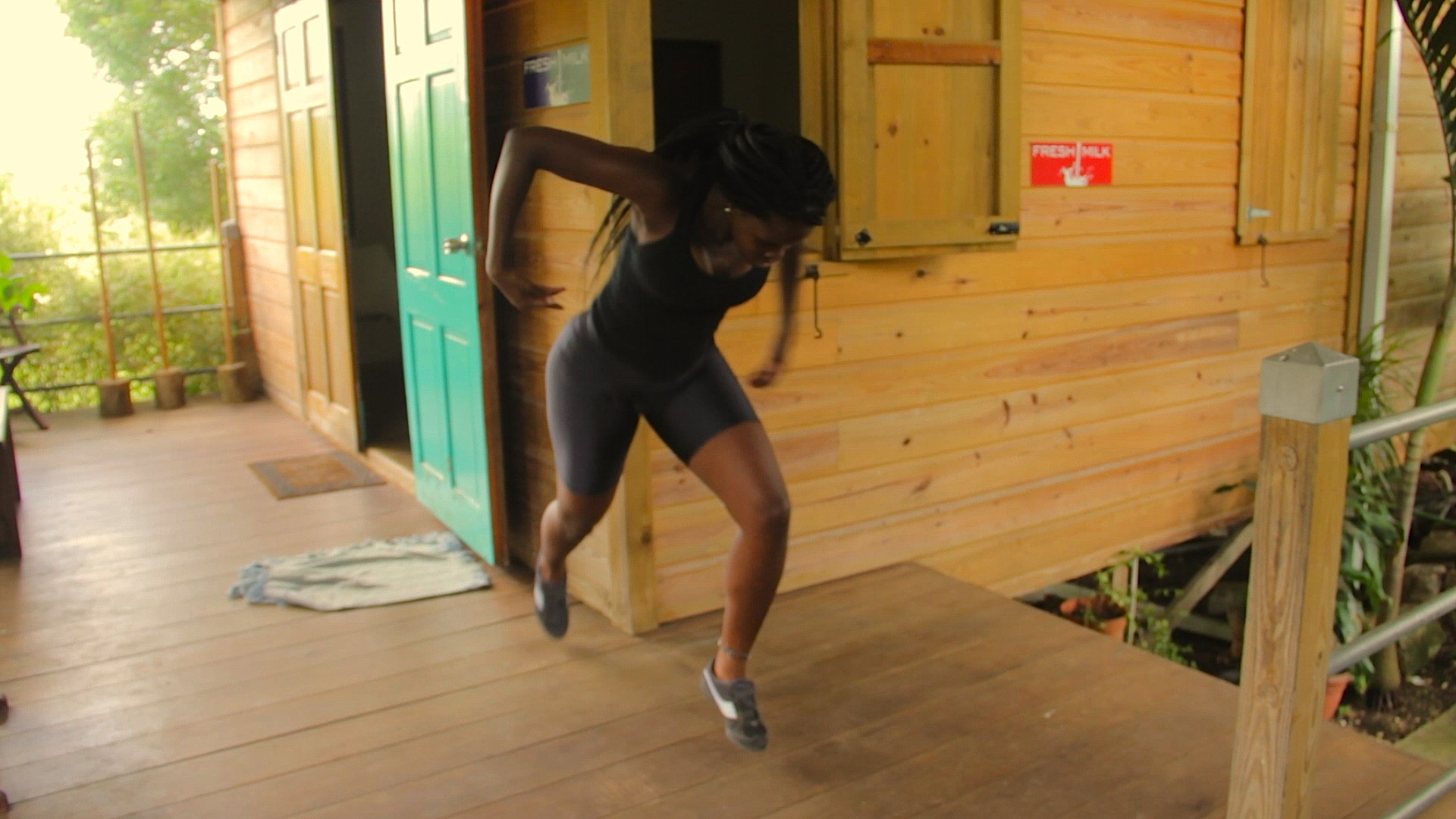
Dancer: Megghan Michael

Image

working out the working out scene

We are starting to hear our own footsteps
In our heads
The sound of four soles slapping ground echos from the gut
Where anticipation builds
Percussive steps subtly synchronise
Evidence that we are moving
The motion
ever
so
Slight
Is perceived in rememberance
We look forward
Gaze pulled by the strings of reSolving image
Evolving image
Of what one is being built through many
Heads… Hearts… Hands…
Not necessarily in that order

– Adrian Green

Image

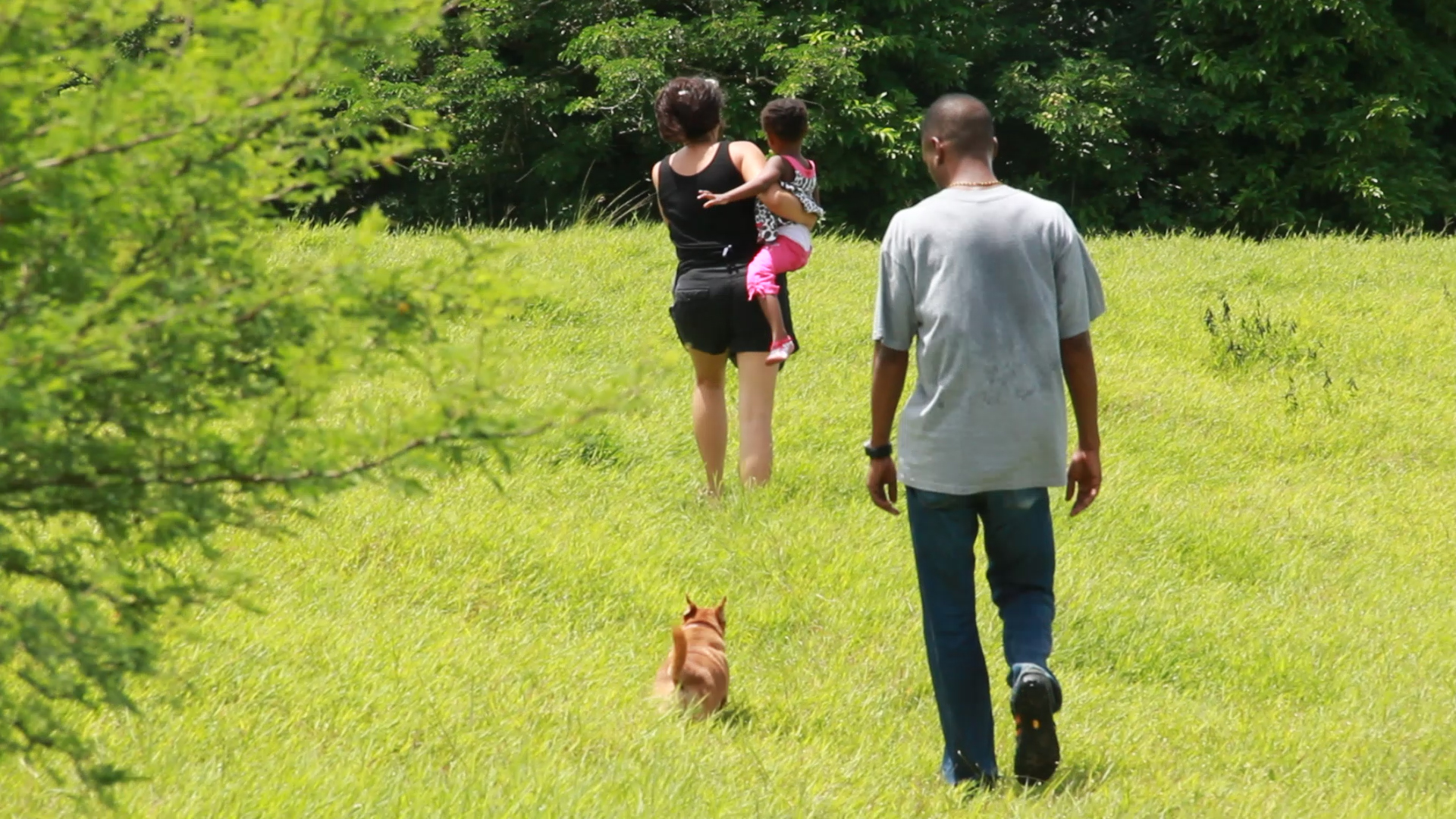
our guide through the bush on our location scout

Image

the face of H(art)d Work

Image

looking for the right spot