Versia Harris travels to Casa Tomada, Sao Paulo

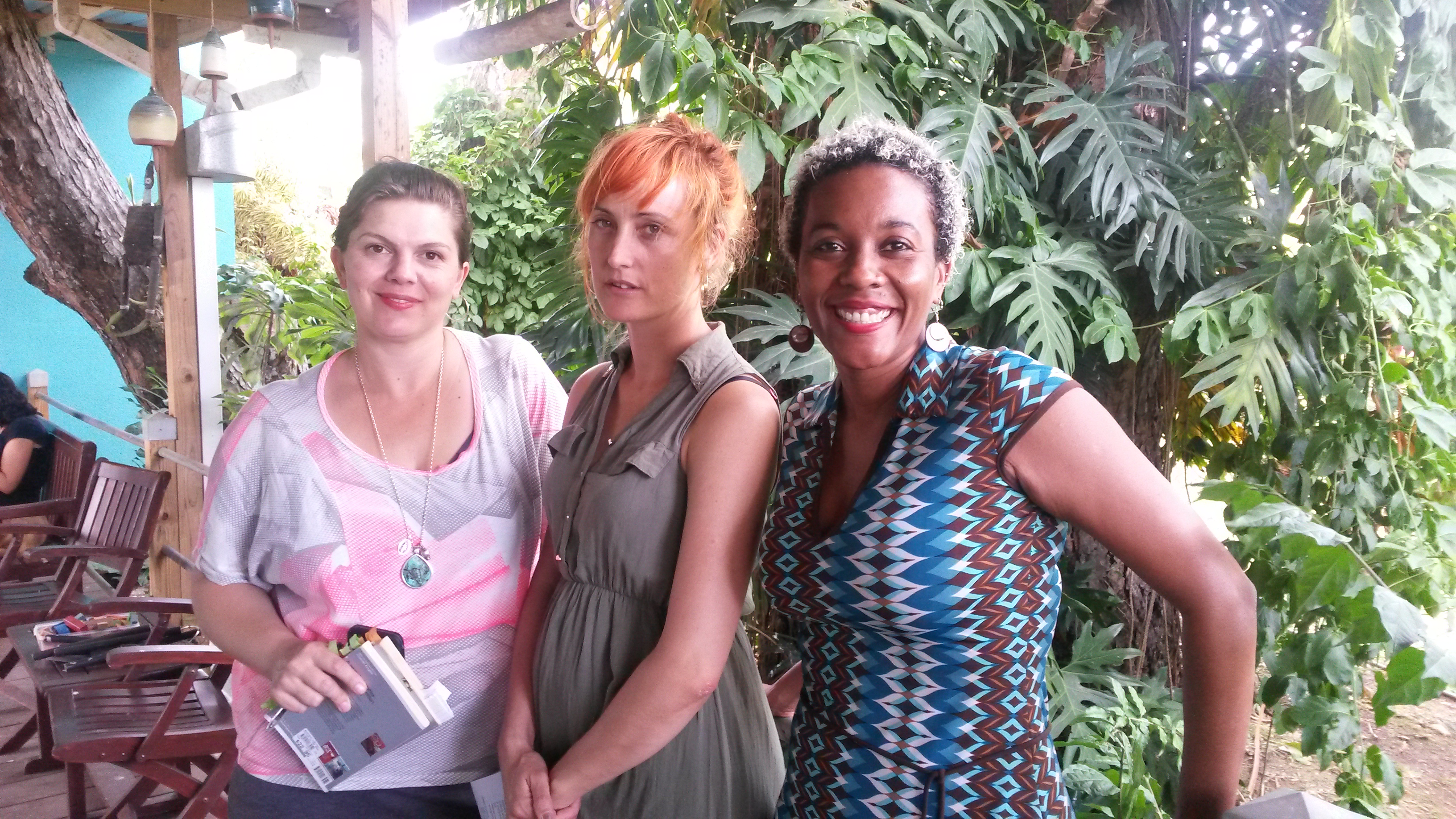
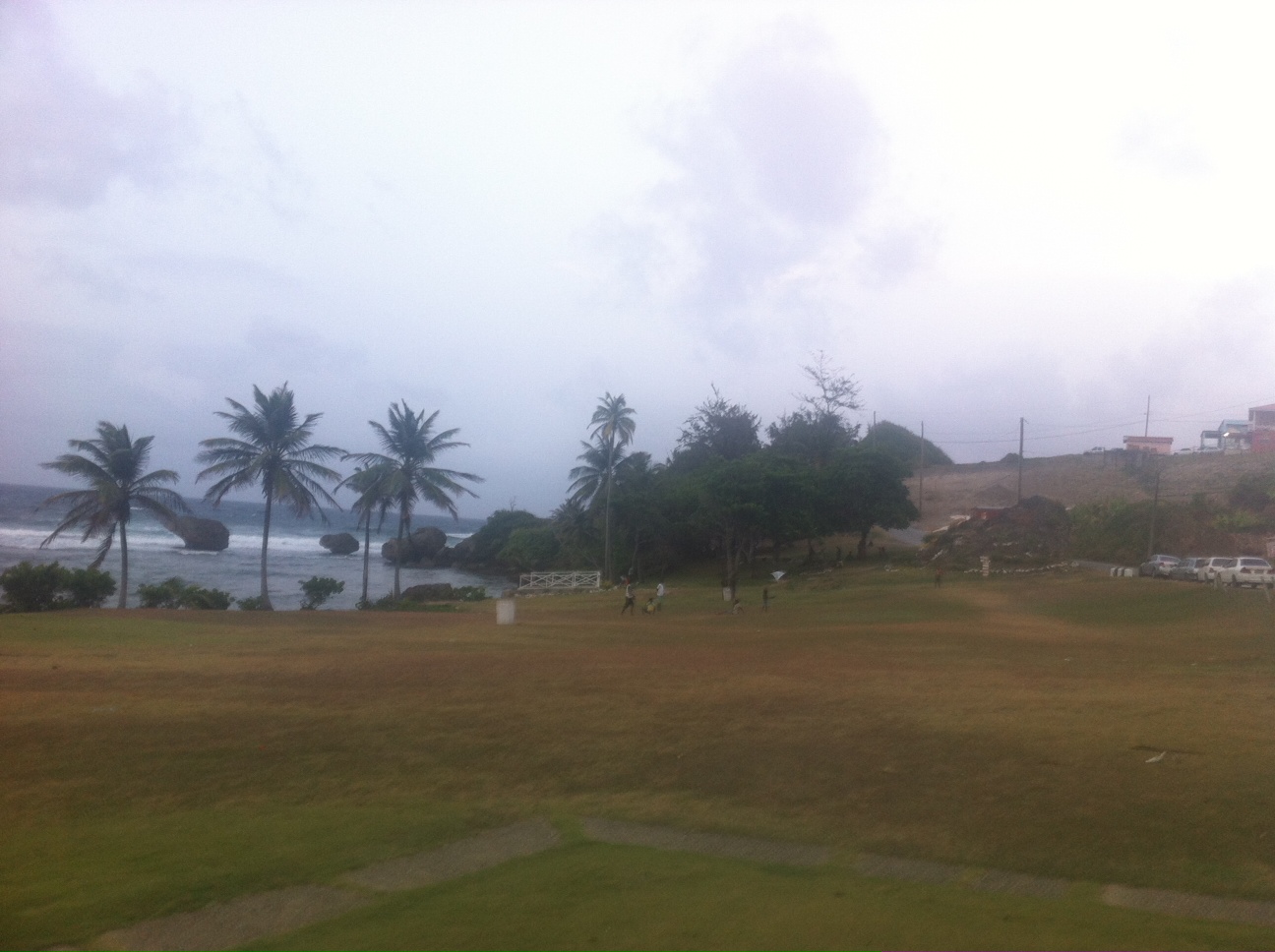
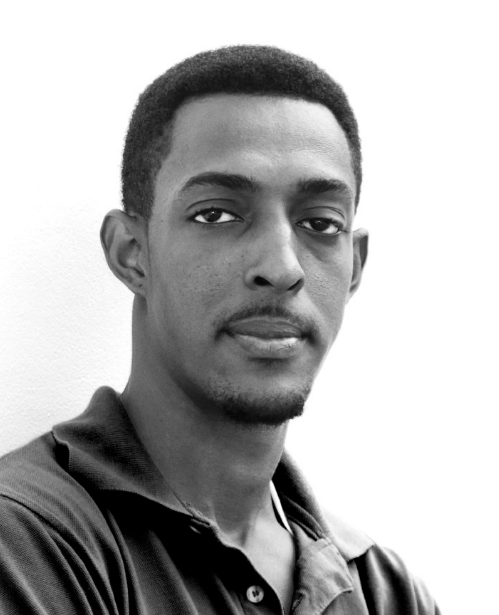
We are excited to announce that Barbadian artist Versia Harris will be going to Sao Paulo, Brazil for seven weeks on Sunday, May 24, 2015 for a residency with Casa Tomada.

This collaborative programme organized between Fresh Milk and Casa Tomada will see Versia working alongside Brazilian artist Janaina Wagner, interacting with arts professionals, producing and showcasing her work, exploring the Brazilian art scene and looking into the possibility of furthering her studies in Sao Paulo.

Congratulations, Versia! We look forward to keeping up with your residency as it progresses!

About Versia Harris:

 Versia Harris is a Barbadian artist living and working in Weston, St, James, Barbados. She received her BFA in Studio Art in 2012 and was awarded The Lesley’s Legacy Foundation Award, an annual prize given to the top graduate. She participated in her first residency with Projects and Space in 2011 and has since completed a residency with another  local organization called Fresh Milk, followed by a residency at the Vermont Studio Center, and residencies at the Instituto Buena Bista, Curacao and Alice Yard, Trinidad in late 2013. In 2014, Versia’s work was featured in the IV Moscow International Biennial for Young Art themed ‘A Time for Dreams’. She was also apart of the follow up exhibition ‘MOMENTUM_InsideOut screening of ‘A Time For Dreams’, Berlin. Her animation ‘They Say You Can Dream a Thing More Than Once’ was awarded ‘Best New Media Film’ at the Trinidad and Tobago Film Festival, 2014. Versia tackles perceptions of fantasy in contrast to the reality of her invented characters.

About Casa Tomada:

Founded in 2009, Casa Tomada is an independent space for practice, research and reflections of artistic nature. Concerned with the entire process, instead of focusing exclusively on the final work of art, Casa Tomada encourages discussion about emerging contemporary art, not only stimulating the development of artistic and theoretical practices motivated by shared experience, but acting as a catalyst for experiences and connections between artists, researchers, and other independent artistic initiatives. During these years, Casa Tomada organized 8 residences, 2 in partnership with Videobrasil, and one international exchange between São Paulo and London with the Delfina Foundation. Casa Tomada has also run other kinds of programs, all based on young artistic production, connections between different spaces and interdisciplinarity.

Simone Asia’s Residency – Week 4 Blog Post

Simone Asia, current artist in Fresh Milk’s 2015 ‘My Time’ Local Residency programme, shares her fourth and final blog post. This week Simone drew on experiences she has garnered throughout the residency, giving them an ethereal perspective based on the elements and their symbolism. Continuing to experiment with colour, materials and techniques has been critical to her time here, and led to artistic discovery and growth. Read more below:

IMG_20150506_110635

This was the final week of the residency, and overall I think I have benefited from this experience.

I did not go ahead with a wall drawing this time around. However, I experimented with shapes that I cut out to use as minimal collages. I wanted to explore the theme of elements that affected me either positively or negatively while I was here on site. These elements were water, earth and wind.

My thought process was initiated by the element of water. It affected my life by damaging most of my devices, while the rain affected my mood and joints. On a positive note, my experience at Fresh Milk led me to be more connected to nature (the element of earth) which is my elemental sign. I appreciated my natural environment more which made me feel calm and collected. The third was the element of air. The wind played games with me. Some days I would feel its lack of presence while other days its presence was overwhelming, knocking down all of my work on the wall which became very frustrating when I wanted to focus.

In order to express these elements, I referenced the platonic solids: the icosahedron, the cube and the octahedron, which represent the elements water, earth and wind respectively. I wondered if I should have used the element of fire – the tetrahedron – because I was affected a bit by fire later in the week. It is the dry season now and many fires happen. The presence of smoke affects my sinuses a lot and I was having issues all week. The pyromaniacs come out around this year, they use the sun as an excuse to burn the cane trash and bushy areas, but ironically most fires happen at night. Maybe I should have introduced the element of fire in my drawings… I feel perplexed. I always stress over small things.

I tried creating on vellum for the first time and found out it is a very tricky surface to use. Pigment liners, ink and vellum do not have a solid and stable marriage. The vellum does not allow any type of ink to dry onto its surface, so many times my hand would smudge the lines I made. I tried to avoid touching the parts I drew and I went as far as leaving it overnight so it would dry. The next day the marks and lines I made literally melted on the vellum – it was bizarre. I did not like it at first because I like to control the things I create, but afterwards I grew fond of the melted marks and smudges. It worked well with the drawing, giving a nice contrast where the water sign lay. It suited it more than what I had originally done. I did other abstract drawings utilizing the symbols, and I liked them a lot. I grew very fond of this work I made here in the studio. I think I am becoming more comfortable with using colour.

To my surprise, I saw Bambee this week. We stared at each other for a while as she lay in the dirt. I stood beyond the electric line, not getting too close. I had not seen her in a while. I think I saw some sadness in her eyes; maybe she will miss me. Maybe I am just delusional. This is a cow who does not share these thoughts. Oh well…

Overall I think my four weeks at the farm were productive. I enjoyed meeting all the international resident artists and other local visitors. I enjoyed the conversations with the Fresh Milk members and volunteers. My experimentation with colour and collage is a start to a new segment of my artistic journey.

I am happy with my progress. I want to thank Annalee Davis and the entire Fresh Milk team for the opportunity.

Willoh S. Weiland and Halcyon Macleod’s Residency – Week 3 Blog Post

Australian resident artists Willoh S. Weiland and Halcyon Macleod share their third blog post about their Fresh Milk residency. This week, Willoh explored different sides of Barbados, as she made field recordings around the island including along the rugged East coast. She not only reflects on the island’s multifaceted geography, but on the diversity of the women they have interviewed, and what constitutes the ‘right’ for someone to claim Bajan or Caribbean heritage. Read more below:

20150506_153241

Why do white people like to hunt ghosts?

This Buzzfeed article made me laugh out loud. I think many of us are guilty of at least a few of these, including loving attics and hunting ghosts. Halcyon is right now in Dominica looking for the traces/evidence of Jean Rhys while I have been driving around the island collecting field recordings, including the windmill turning slowly in the dark gardens of St. Nicholas Abbey, village dogs barking at night and the St Matthias Sunday church service. I’ve been listening to Bajan radio all the while, particularly the religious stations, which are clear about how you can get cast out of paradise and for what.

The Bathsheba area is on the East coast. You drive over the high hills in the centre of the island and then you start coming down steep, steep hills towards the Atlantic Ocean. There is nothing between this coast and the West coast of Africa. Named after a biblical adulteress, it is nestled on the wild coast, boulders strewn as if flung out by a giant having a tantrum long ago. It feels like an entirely different country. The challenge of evoking mystery and complex narratives through sound becomes evident. What is Bathsheba if I turn off my eyes?

The Bajan dialect is a pleasure to listen to. The accent is syrupy. You can hear West African, sometimes hints of the Scottish Isles and the humour coming thick and fast. It is so close and yet so completely different to Belizean Kriol. In Belize you ‘suk u teeth’, in Bajan you ‘steupse’.

In both places, the action of making that sucking sound of disdain, anger, indifference, of sexy banter – given there are many ways to ‘suk u teeth’ – relays a whole glorious sense of attitude.

In Belize, I remember my best-friend saying to me when I was talking to my Australian Mum, “why does it take you so long to say anything?” and it’s true. English seems laborious, as though it were made for stiff upper lips and long cloistered afternoons.

I have no Belizean blood and so being Belizean is a negotiation, determined not by me, but by the person I am speaking to. Were you born there? How long did you stay? Do you speak Kriol? All of these questions probe the unspoken right to a place.

photo 2

This week we spoke to women born here in Barbados, but not raised here, who have returned from abroad, with different accents after some time living other lives. In the reverse situation where all your blood is from here, how is it to be treated as if you are foreign. They spoke of the peculiar ‘outsiderness’, of being considered American and sharing the delight of being able to whip back a response in dialect, and of the peculiar and mercurial sadness of leaving and coming home, over and over again.

“I would never be part of anything. I would never really belong anywhere, and I knew it, and all my life would be the same, trying to belong, and failing. Always something would go wrong. I am a stranger and I always will be, and after all I didn’t really care.” – Jean Rhys

One interview this week with a high-ranking member of the cultural sector (cue spy music) was particularly inspirational. She gave an impromptu monologue about the future she saw for islands like Barbados and all small economies that have become utterly dependent on tourism. A bleak scenario, where the supply chains are cut off, the meat from New Zealand is no longer coming, where we are hungry and can’t remember how to plant our own food. The picture she painted was not to instill fear but instead to illuminate what is unique to where we are, the stories we need to keep telling and ways in which we can give back to the places we inhabit. Everyone, quick! Go do something meaningful with your life! Cue dramatic ending.

This residency is supported in part by the Australian Broadcasting CorporationThe Alcorso Foundation and Arts Tasmania.

Halcyon Macleod and Willoh S. Weiland’s Residency – Week 2 Blog Post

Australian resident artists Willoh S. Weiland and Halcyon Macleod share the second blog post about their experiences on the Fresh Milk platform. Their interviews continued this week, speaking with a number of women based in Barbados to gather material for their collaborative project ‘Crawl Me Blood’, inspired by the Jean Rhys novel Wide Sargasso Sea. One of the sensitive topics touched on was the way race is talked about – or not talked about – in society, and the parallels that can be drawn between Barbados and Australia in that way. Read more below:

unnamed

Our second week at Fresh Milk has been another full week of interviews, writing and research.

Memories of hot mangoes in Grandmother’s kitchen – the taste of summer; or the quiet power of Mahogany trees; or the unrepeatable magic of fire-roasted bread-fruit offered by a stranger on the beach and dipped in the salty sea. Thank you to the inspiring women we have spoken with this week who have shared their perspectives and captivating our senses with their stories (I went directly to the vegetable market and bought a bread fruit). It has been a privilege and a pleasure to meet with you and to talk.

We have had some great conversations with a range of Bajan women now and one of the discussions we are trying to have is about race. It seems agreed that nobody likes to talk about it, even though, in the words of one of the participants “It’s sitting right there, it’s just under the surface.” It seems it’s like trying to talk about both race and class in Australia – you don’t.

One of the women we spoke with this week, who moved to Barbados from Jamaica 30 something years ago, talked about a phone call she received from a friend, after she announced she was moving. Her friend playfully asked “So have you decided? Are you going to be Black or are you going to be white?” Because in a population that is 97% black and 3% white, though no one is talking about it, the women we have interviewed over the last fortnight all agree that mostly, black and white don’t mix. Though of course there are always exceptions.

In Wide Sargasso Sea Jean Rhys locates the in-between of the white creole woman’s experience. This week, Annalee handed me a copy of White Skin, Black Kin: Speaking the Unspeakable, a publication which holds a series of essays by and about Joscelyn Gardner’s work. A Caribbean-Canadian artist, her work explores her white creole identity from a postcolonial feminist perspective. Not black, but not totally white either.

“She is not beke like you, but she is beke, and not like us either”
Christophine talking about Antoinette in Wide Sargasso Sea

It is this liminal and uncomfortable zone that will provide rich material for the artwork we are creating, and also the parallels between the Australian and Caribbean experience.

This week I could feel the blood pressing up into the soles of my feet. I couldn’t go anywhere without thinking about the brutalities of the past and wondering what happened here, in this particular spot where I am standing now. Like visiting Hunte’s Garden (an absolutely stunning tropical garden) and having a rum in the 150 year old house, a former plantation (nobody mentions slavery but I am sure the group of tourists gathered on the verandah are all thinking about it). The garden is so beautiful, planted inside a collapsed cave on the former plantation, every available space has been planted and replanted with an impressive array of tropical plants, palms, heliconias, orchids – an ever evolving work of art, every centimetre thoughtfully cared for and maintained. The plantation on this site is over 300 years old and I marvel how the horrors of the past can sit so quietly, so politely and neatly inside the present moment.

It might just be my gothic temperament, but when I heard myself say to one of the Bajan women I met this week “Everything is covered with blood” I immediately apologised for being dramatic. She replied “Yes it is. And that’s about the least dramatic thing you could possibly say.”

It’s old news I know. I feel like I’m meant to be reconciled with the horrors of the past and its seething. And of course I needn’t have come to the Caribbean to think on that, it’s a very Australian feeling, our dark colonial past alive and well in the present government’s attitude towards Aboriginal communities. Though, not to be too glum, it was energising and amazing to see in the news this week the strong protest responses from Australians to the forced closures.

It was both incredibly grounding and inspiring to hear Annalee talk about Phytoremediation and the foundations of Fresh Milk. Phytoremediation consists of mitigating pollutant concentrations in contaminated soils, water, or air, with plants able to contain, degrade, or eliminate toxins and contaminants. Like the human body turns blood into milk to nourish a new life, the Fresh Milk Art Platform creates a nurturing space for young artists on the site of the Walkers Plantation, turning blood into milk. Annalee Davis and her team have a response to the question of how are we to hold the bloody past in the present. This is how.

This residency is supported in part by the Australian Broadcasting CorporationThe Alcorso Foundation and Arts Tasmania.
‘Alpha’ in Independence Square

OLYMPUS DIGITAL CAMERA

Fresh Milk  and Adopt A Stop continue the Fresh Stops collaborative project this month with Ronald Williams’ piece titled ‘Alpha’. In an attempt to bring art into the public space, six artists were commissioned to produce original artwork for benches that will appear at varied locations around the island. ‘Alpha’ by Ronald Williams has been installed in Independence Square, Bridgetown, St. Michael*. Thank you to Adopt A Stop for partnering with us to produce yet another fantastic bench!

The other participating artists include Evan AveryMatthew Clarke, Versia HarrisMark King and  Simone Padmore. This project creates visibility for the work of emerging creatives, allowing the public to encounter and interact with their pieces in everyday life, generating interest and inviting dialogue  about their practices.

*This bench was formerly located in Jubilee Gardens, Bridgetown.

Alpha:

Alpha attempts to question traditionally dominant Western beauty standards. It injects a black consciousness alongside, and at times instead of, the established images found in Classical Greek, Renaissance and Baroque eras.

About Ronald Williams:

Photograph by Rachelle Gray

Photograph by Rachelle Gray

Ronald Williams is a multimedia artist and graduate of the Barbados Community College Fine Arts program. His work currently focuses on race and sociology, most recently investigating the role that sports and the black athlete play in society. He manipulates popular based imagery to compose computer-generated images that explore sports, perceptions, stereotypes and fantasies about the black athlete or figure. This collage series was shown in Scotland at the International Artist Initiated (IAI) project, presented by the David Dale Gallery & Studios as part of The Glasgow 2014 Cultural Programme which took place alongside this year’s Commonwealth Games.

About Adopt A Stop:

The Adopt A Stop project provides socially beneficial advertising in the form of bus shelters, benches and outdoor fitness stations at prime sites around Barbados. They embrace solar lighting, local materials and tropical design in keeping with their goal of environmental sustainability.