Alberta Whittle shares her thoughts on the recent International Artist Initiated (IAI) project in Glasgow, presented by the David Dale Gallery & Studios as part of The Glasgow 2014 Cultural Programme which took place alongside this year’s Commonwealth Games. Read more below:
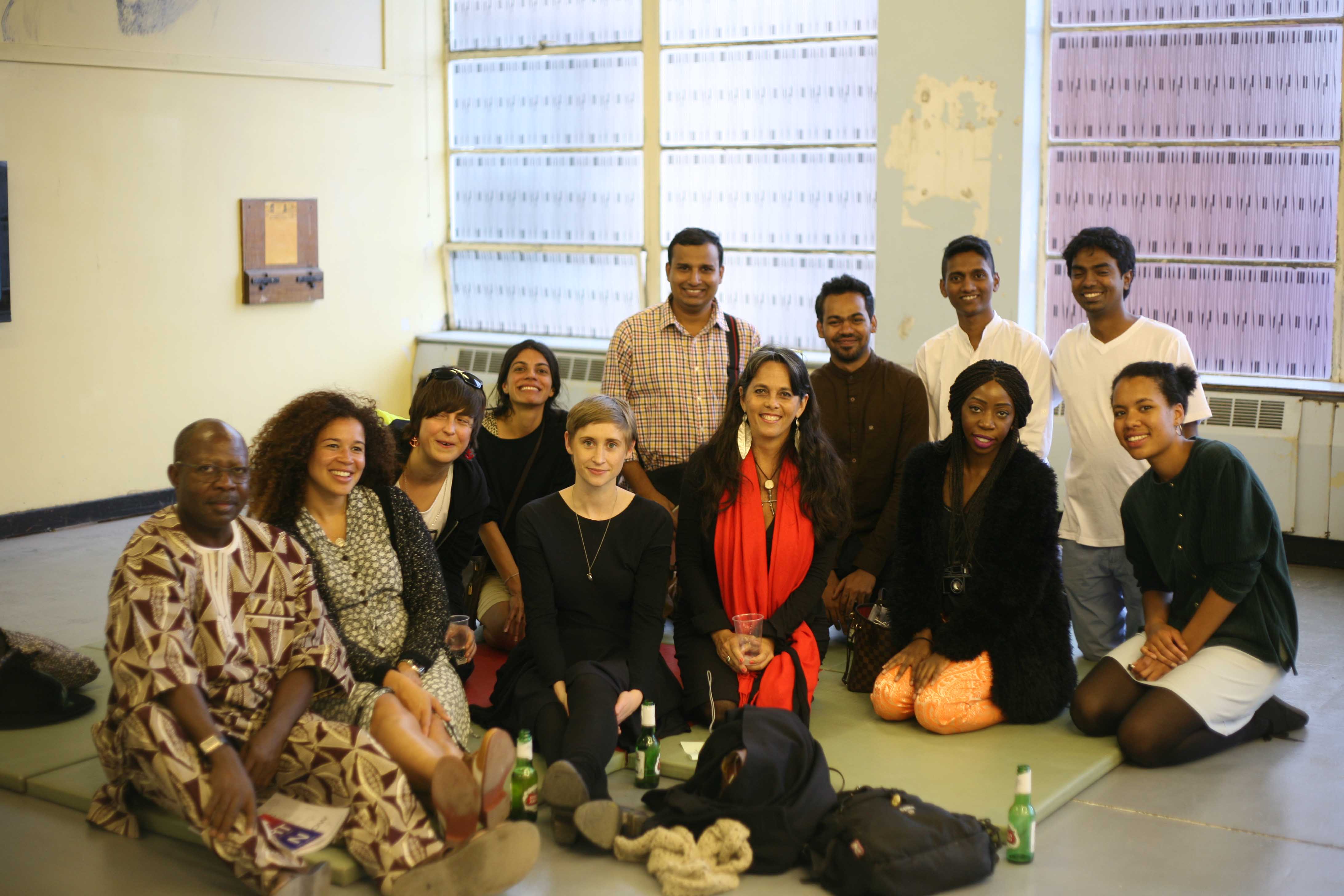
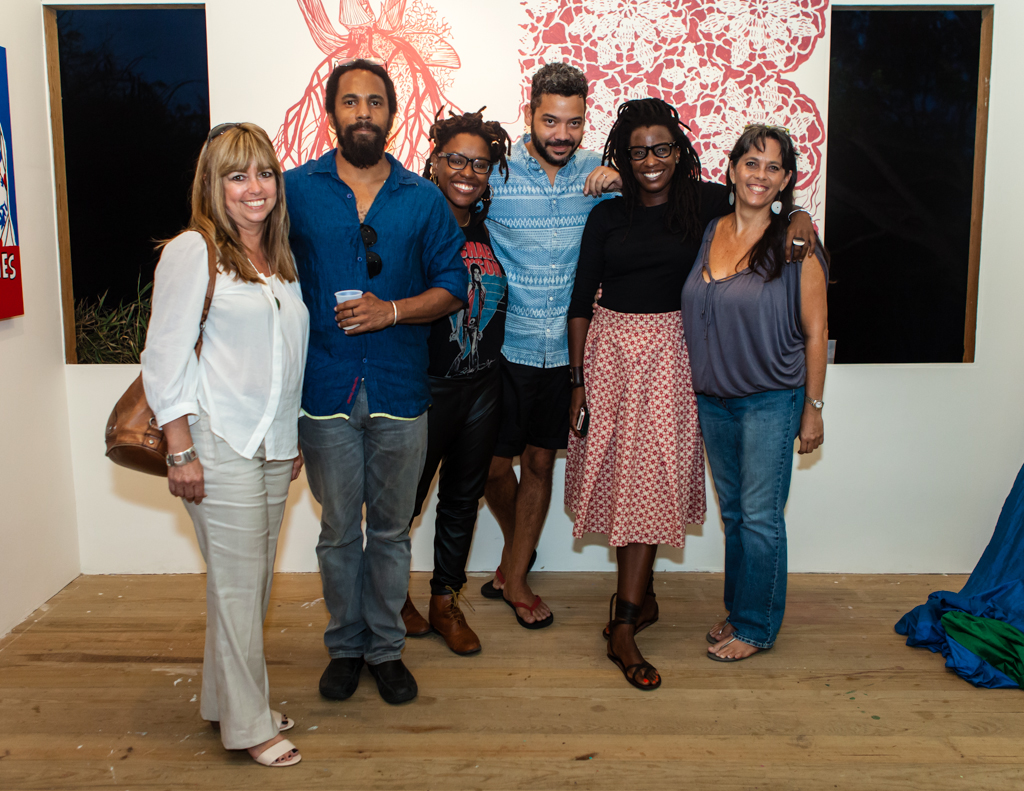
Representatives of Clark House Initiative, RM, Video Network Lagos, Fresh Milk; Alberta Whittle and Rayanne Bushell
“In 1884 the Earl of Rosebery visits Australia and asks, ”Does the fact of your being a nation… imply separation from the Empire? God forbid! There is no need for any new nation, however great, leaving the Empire, because the Empire is a Commonwealth of Nations“.”[1]
In the summer of 2014, the Commonwealth Games arrived in Glasgow. Much like any travelling circus, the Games brought believers, performers, participants and an audience. Like any participant, I came to Glasgow with my own expectations. Having lived in the city for many years, but failing to assimilate completely, I still feigned the confidence that comes so easily for those who know the area. Sharing a taxi ride, with the self-proclaimed “Glasgow’s Finest”, the driver quizzed me on my knowledge of the city’s geography, asking me where roads connected, easily highlighting my failure to truly belong to Glasgow. The driver insisted on informing me that Glasgow’s taxi drivers were always known as “Glasgow’s Finest”, and I was not allowed to forget it.
During this trip, over many conversations with “Glasgow’s Finest”, a discourse of belonging and not belonging readily emerged. The drivers often assumed Barbadian artist, Annalee Davis and I were Americans, our accents blurring into a vague sense of foreign-ness. They asked why we were here, and when we explained about our project as part of the Commonwealth Games, they in turn spoke of how the Games were not for Glaswegians. The Games’ faux presentation of multiculturalism and the promotion of the idea that we are all in this together confronts the reality that, for many Glaswegians, there is a disconnect between their participation on home soil and the participation of the athletes and visitors flown in to contribute to the spectacle of imagined unity. The notion of unity between us, members of a former British colony, and Glaswegians, a nation grappling with securing their own independence, came from an unlikely direction. Driving through the Merchant City we passed roads such as St. Vincent Street and Jamaica Street; easy reminders of Glasgow’s active role within the slave trade as members of the plantocracy and as indentured servants. However, “Glasgow’s Finest” posited the belief that Caribbean and Scottish nations must be united against the English, advocating the belief that Scots also faced “oppression” from England. This supposition did not entirely surprise me, given the political climate surrounding the upcoming Scottish Referendum.
From the banners, traffic diversions and the odd, green mascot called Clyde dotted across the city, the aura of the Commonwealth seeped into Glasgow’s public spaces. As part of the celebrations, the David Dale Gallery in Glasgow’s East End invited artist-run spaces from across the Commonwealth: Fillip (Canada), RM (New Zealand), Cyprus Dossier (Cyprus), Fresh Milk (Barbados), Video Art Network Lagos (Nigeria) and Clark House Initiative (India) to participate in their International Artist Initiated programme.


As part of the Fresh Milk platform, Mark King, Ronald Williams and myself presented a series of interventions. Responding to the commercial nature of the area, we crafted three individual presentations. The location of the David Dale Gallery within the heart of the East End of Glasgow – once a thriving industrial boomtown – seems peculiarly apt, mirroring the substantial role of production Britain’s former colonies assumed, laying the foundation for the industrial revolution. These same former colonies are now re-positioned as independent nations, members of the Commonwealth, exhibiting artwork in their own image. The recent deterioration of Glasgow’s prominence in manufacturing, where production is now outsourced to these former colonies, lends symmetry to the proceedings.
“Internet ultimately offers both the seductions and subductions of a postmodern “world.”’ [2]




 fresh milk barbados