Torika Bolatagici’s Residency – Week 2 Blog Post

Pacific artist Torika Bolatagici shares her second blog post reflecting on her Fresh Milk residency. Highlights of the week included attending a lecture by Dr. Matthew C. Reilly at the Barbados Museum and Historical Society and discovering more about both the arts ecology and environmental ecology of the island through fruitful conversations, and by exploring the island armed with her new understanding of the space. Read more below:

One of the highlights of my 2nd week was attending Dr. Matthew C. Reilly’s lecture at the Barbados Museum and Historical Society titled “Contesting the ‘White Slavery’ Narrative:  Repositioning the “Redlegs” in Barbadian History and Society.” While I was aware of the history of African slavery in Barbados, I was not aware of the simultaneous history of white indentured servants, and the legacy that this has left for their descendants. I get the impression that the evidence-based research that Matthew presents is not convenient for those who cling to the Barbadian ‘white slave’ mythology that has become a reference point for many right-wing movements outside of Barbados.

Matthew’s subjectivity as an Irish-American is important and I found his work to be incredibly complex and nuanced, but presented in a clear and fascinating format. His lecture really opened my eyes to seeing the Barbadian landscape in a different way, and is helping me to understand this idea of ‘territoriality’ that Anisah Wood addresses in her work. I was particularly intrigued by the research he has been conducting in the area referred to as “Below Cliff” in the parish of St John on the rugged east coast of the island and I was humbled by the way Matthew’s work has reconnected communities that had been estranged for many years. I look forward to reading Matthew’s forthcoming publication and following his research as it unfolds.

The other highlight of Week 2 was sitting down with the Founder and Director of Fresh Milk, Annalee Davis and finding out more about the origins of the arts ecology here in Barbados, from tertiary arts education, to artist spaces, the positioning of contemporary Barbadian art within the Caribbean, to the reason she set up Fresh Milk and the Colleen Lewis Reading Room. Most importantly we were able to chat about her practice, which with all her competing responsibilities, I’m amazed she has time to nurture.

Unlike Jamaica, the Bahamas and Bermuda – Barbados does not have a National Gallery. So it’s clear that spaces like Fresh Milk are crucial for providing the physical space and intellectual context for critical thinking about contemporary art and building the capacity for local art writers. Fresh Milk is a space where socially engaged practice and connection to the community is welcomed and the role of art in society is valued. But it’s also very outward looking, and a lot of work has gone in to connecting with institutions like Videobrasil and the Pérez Art Museum Miami for their Tilting Axis conference. I look at a space like Fresh Milk and I wish that someone would be able to set up a space like this in Fiji (I’m looking at you Ema Tavola).

During my weekend downtime, I continue to explore the island, and after a week of thinking about race, plantations, slavery and identity – the politics of space, visibility and invisibility are becoming more evident. The contrast between the chattels and fenced resorts remind me of the village/resort dichotomy of the Pacific. And as I look at the imported flora of the island, I’m thinking about what it means to explant botanical matter and what it means for a space to ex-plantation.

As I sat on the boardwalk in Bridgetown one evening and watched planes pass overhead, I was reminded of the proximity of Barbados to the other Islands in the Caribbean, South America, Europe and the United States – and I really felt the geographic isolation of Australia. Next week I’m looking forward to meeting with some local artist and curators!

_______________________

AusCo

This project has been assisted by the Australian Government through the Australia Council, its arts funding and advisory body.

Fresh Talk: Unsettled Landscapes

Fresh Milk and Fresh Art International are collaborating to present Fresh Talk: Caribbean, a series of podcasts about creativity in the 21st century with a Caribbean focus.

This week’s episode takes place at SITE Santa Fe, New Mexico, just before the opening of the 2014 international biennial Unsettled Landscapes. The five artists featured in this conversation from across the Americas are Glenda León, Jason Middlebrook, Melanie Smith, Jamison Chas Banks, and Gianfranco Foschino.

Click here to listen to the full podcast.

foschino-e1404268775226

_________________

About Fresh Art International & Fresh Talk:

Mission: To inform and inspire a world of followers, Fresh Art International’s team shares conversations, commentary, news, and views about contemporary art.

Launched in October 2011, Fresh Art International is an evolving independent media outlet with a global point of view. Our website is the virtual platform for Fresh Talk: Conversations About Creativity in the 21st Century, our signature audio podcast. The site welcomes up to 3,000 monthly visitors. Averaging more than 9,000 feed hits monthly, we welcome new friends and followers every day: Facebook (3,000+ Likes and Friends) and Twitter (5,000+ Followers).

For Fresh Talk, independent curator Cathy Byrd meets with contemporary artists, curators, designers, architects, composers, writers, filmmakers and other cultural producers. Listen to conversations directly on this website, download episodes, or subscribe to the series on iTunes and Stitcher. Fresh Talk is also accessible through Public Radio Exchange at prx.org.

Torika Bolatagici’s Residency – Week 1 Blog Post

Melbourne-based Pacific artist Torika Bolatagici shares her first blog post about her Fresh Milk residency. Coming to Barbados with three main goals in mind – to understand the local arts ecology, meet contemporary Barbadian artists and make new work – Torika has spent the first week acclimatizing to both the physical and intangible environment of the country, drawing connections between the region and the Pacific islands and delving into the Colleen Lewis Reading Room to continue her research on contemporary Caribbean art. Read more below:

I am still processing my first week in Barbados. The past 7 days have been a chaotic and exciting mix of books, sweat, introductions, discoveries and breastfeeds in air-conditioned hire cars. Like previous resident Halcyon Macleod, the journey from Australia was a long series of delays and missed connections, and we also lost our portacot. But 7-days in and we’re starting to find our flow here. This week I swam in the Caribbean Sea and dipped my toes in the Atlantic Ocean. I have explored the east coast to Bath Beach and the west coast as far as St. Peter, and I learned a new word – plantocracy.

So, I arrived at Fresh Milk with three main goals; to understand the arts ecology here; meet contemporary Barbadian artists and make new work.

On my first day in the Colleen Lewis Reading Room, Annalee gave me a tour of the collection. It was so wonderful to finally be able to read publications I have only seen from afar including the early issues of ARC Magazine, Pictures from Paradise and See Me Here. ARC magazine was the main influence when I initiated the publication Mana Motu for the Contemporary Pacific Arts Festival in Australia. I have admired the work of Fresh Milk from a distance for some time and am eager to know more about how the space has developed and to find out more about arts education here.

I have a thing for Reading Rooms and art libraries. In 2011 I spent a couple of weeks at the Stuart Hall library at the Institute of International Visual Arts. As a result of that experience, I created the pop-up Community Reading Room in Melbourne, using my own collection. When I found out (via ARC) about the Colleen Lewis Reading Room Residency, I knew immediately that it was a space I wanted to engage with.

I have spent my first week getting acquainted with the collection in the Colleen Lewis Reading Room, in an effort to understand the development of the local arts ecology. The collection is incredible, and during my 4 week residency, I will just be able to scratch the surface.

Some of the main texts I have been looking at this week are:

  • Art in Barbados: What Kind of Mirror Image?
  • Caribbean Distpatches: Beyond the Tourist Dream
  • Caribbean: Crossroads of the World
  • Curating in the Caribbean
  • Developing Blackness: Studio Photographs of “Over the Hill”: Nassau in the Independence Era
  • How to See a Work of Art in Total Darkness
  • Paulo Nazareth
  • Pictures from Paradise
  • See Me Here

I came to Barbados with a desire to identify points of connection, overlap and departure between the island cultures of Barbados and Fiji. There was an instant feeling of familiarity stepping into the thick humidity of Grantley Adams International airport last Saturday, and although I travel frequently to Fiji, I think it has taken me a week to acclimatize to Barbadian heat. Annalee and Katherine, have made me (and my family) feel so welcome at Fresh Milk and I look forward to chatting with them about their respective practices.  Another highlight has been meeting local artist Anisah Wood, whose work I find compelling.

Anisah and I spent Day 2 getting to know each other and our conversation covered matters of indigeneity and belonging; deculturation, transculturation  and assimilation; migration; climate change; national identity; local politics; Indonesia and West Papua ; The Dominican Republic and Haiti; foreign investment and student loans. I’m learning so much from Anisah, including how to play the game warri as a part of her Quid Pro Quo residency outreach and I’m looking forward to seeing how the next 3 sessions unfold. I’ll be leading a session in the final week of my residency.

And so I am discovering that there are some obvious similarities between Fiji and Barbados. Colonial history. Indentured labour. A sugar industry. Tourism. Rum. Protex. Mahogany. Coconut water. Expats. Poverty. At the moment I am reading more about the military history of Barbados. One thing that frames my experience of Fiji, is the overt presence of militarism. My practice-based PhD explored the spaces in which the dialectics of race, embodiment, masculinity, globalisation, militarism, colonialism and agency meet, diverge and collide in a Fijian context. So I am intrigued by the size and invisibility of the Barbados Defence Force… this is an area I want to explore further in the coming weeks…

_______________________

AusCo

This project has been assisted by the Australian Government through the Australia Council, its arts funding and advisory body.

Fresh Talk: Remy Jungerman

Fresh Milk and Fresh Art International are collaborating to present Fresh Talk: Caribbean, a series of podcasts about creativity in the 21st century with a Caribbean focus.

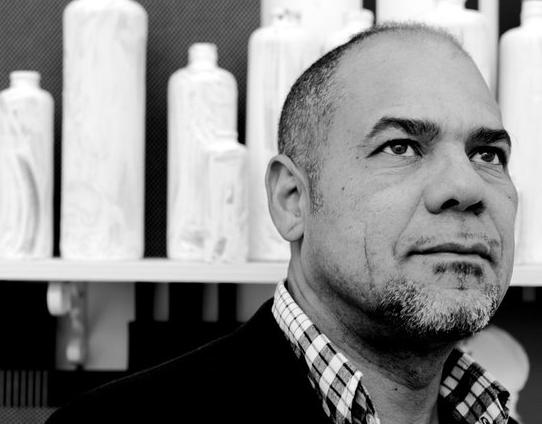
This week, we highlight a conversation with Surinamese-Dutch artist Remy Jungerman about the European modernism and Afro-religious aesthetics that influence his art, and the public art project he created back in Moengo, his home town in Suriname.

Click here to listen to the full podcast.

Remy_Jungerman (1)

_________________

About Fresh Art International & Fresh Talk:

Mission: To inform and inspire a world of followers, Fresh Art International’s team shares conversations, commentary, news, and views about contemporary art.

Launched in October 2011, Fresh Art International is an evolving independent media outlet with a global point of view. Our website is the virtual platform for Fresh Talk: Conversations About Creativity in the 21st Century, our signature audio podcast. The site welcomes up to 3,000 monthly visitors. Averaging more than 9,000 feed hits monthly, we welcome new friends and followers every day: Facebook (3,000+ Likes and Friends) and Twitter (5,000+ Followers).

For Fresh Talk, independent curator Cathy Byrd meets with contemporary artists, curators, designers, architects, composers, writers, filmmakers and other cultural producers. Listen to conversations directly on this website, download episodes, or subscribe to the series on iTunes and Stitcher. Fresh Talk is also accessible through Public Radio Exchange at prx.org.

Open Call: Tilting Axis Curatorial Fellowship Programme 2016

As a direct outcome of the Tilting Axis meetings in 2015 at Fresh Milk in Barbados and in 2016 at the Pérez Art Museum Miami, Scotland based cultural partners CCA Glasgow, David Dale Gallery, Hospitalfield and curatorial collective Mother Tongue have come together to offer structural long-term support to an emerging contemporary art practitioner living and working in the Caribbean. This is a new fellowship opportunity that focuses on the development of pragmatic and critical curatorial development hailing from the Caribbean region, and is research and practice-led, and mentor-based. The fellow will receive a maximum of £5,000 towards travel, accommodation, and living costs. The fellowship is co-developed in partnership with British Council.

Tilting Axis logo

Designed as a year-long programme between the Caribbean region and Scotland, the fellowship will have an open-ended outcome. It offers support for critical development of curatorial practice and gives a practical base in the partner institutions, connected with the successful candidate’s proposal.

We seek proposals that engage with the unique visual culture available in the Caribbean and what might be learned from its unexpected and innovative approaches. The successful candidate will be encouraged to travel throughout the Caribbean in search of such approaches and research. As part of this fellowship a trip to Scotland is essential, offering an opportunity to use the experience with the Scottish based partners as a form of mentorship. In collaboration with the partners, a realistic budget will be proposed, maximising the opportunities.

Within the Tilting Axis meetings, complexities of mobility, decolonisation, institutionalism, curatorial knowledge, pragmatics, and social realities have been surfacing as keywords of urgency within Caribbean cultural life. The mentorship element in the fellowship allows for a stable basis from which to draw and use spaces, libraries, individual knowledge, and other infrastructure, both in the Caribbean and Scotland) depending on the nature of the needs in the application.

For whom?

Curators, researchers, artists, or cultural producers based in the Caribbean region who want to make new links within the region as well as in Scotland and have a keen interest in developing their curatorial practice.

Goals

• Develop, stimulate, support, and visualise curatorial and artistic realities coming from the Caribbean region
• Facilitate face-to-face communication in Scotland as well as in the Caribbean region
• Offer a free and open access to knowledge
• Provide a stable platform for professional experiences
• Produce critical knowledge on educational tools as well as visual culture
• Focus on emerging practices
• Cross existing language barriers
• Utilise the existing Tilting Axis network
• Offer practical support and a trip to Scotland

Geography

The Caribbean is an active region. The definition of what is the Caribbean is not uniformed; Wikipedia provides a useful list that includes the islands and the continental countries.

Drawing on the specifics of the region through processes of decolonisation, language barriers, race, mobility, and digitalisation, your proposal might approach actively how people live and work and especially how contemporary art takes a responsibility to reflect and act on it. What are fears as well as potentials in these current times? Within such a complex geography, what are the challenges?

Mentorship and support

The fellowship offers a strong supportive framework and takes the model of a mentorship programme. Depending on the candidate’s interests and skills, several personal mentors are available for support throughout the programme. There is open access to infrastructure, curatorial and artistic ideas, exhibition spaces, archives, and libraries as well as personal stories and experiences within these institutions and individuals. Also online, Skype, and email support will be available from the mentors throughout the fellowship. A contribution to the public blogs of British Council and CCA Glasgow will be required along with a final report on the Fellowship and a presentation at Tilting Axis in April 2017 at the National Gallery of the Cayman Islands.

Application

Applicants for the fellowship are invited to develop an independent proposal outlining a clear interest in the issues highlighted. The proposal should include a realistic travel itinerary, carefully selected within budget restrictions, and content driven. The application can be based on already existing research or offer new projects. No outcome is expected from the outset, but a proposal that shows organisation of collateral events that allow for public access to the issues is appreciated.

Departing from a curatorial ambition, we expect to see strong proposals of maximum 1000 words. Please include a budget proposal (maximum of £5000), a CV and two references. The application should be submitted via e-mail to: jennifer@cca-glasgow.com.

Submission deadline: Monday 11 July 2016.

Emerging art practitioners are particularly encouraged to apply. The successful candidate will be living and working in the Caribbean region.

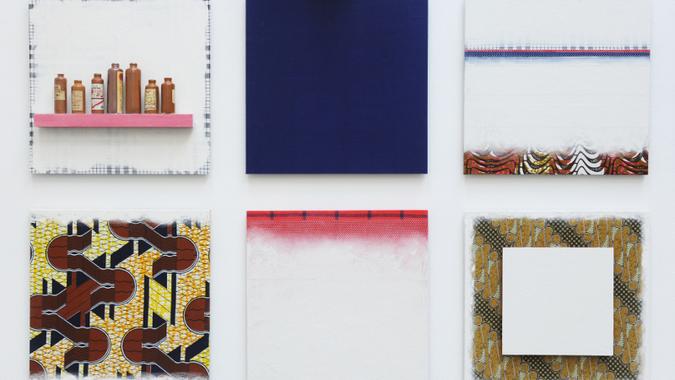
Remy Jungerman, Spirit Levels, CCA Glasgow 2014, Photography by Alan Dimmick.

Remy Jungerman, Spirit Levels, CCA Glasgow 2014, Photography by Alan Dimmick.

Summary

Aimed at curators, researchers, artists, or cultural producers focused on, or with a clear interest in, curatorial practice from the Caribbean region.

Fellowship period: mid 2016 – mid 2017, to be negotiated depending on proposal and personal/professional situations.

The Fellow will be assigned a mentor from the core partners depending on their needs and wishes. Throughout the year these mentors are accessible online or on location.

A total project budget of £5000 will be allotted for the duration of fellowship. The award shall be used exclusively to cover only the costs of travel, per diems, and other fees and living costs identified in the final budget approved by the selection committee.

The Fellow will be selected on the basis of a project proposal and a succinct motivation elaborating the candidate’s interest in developing a Caribbean curatorial practice. The deadline for submission will be Monday 11 July 2016.

The proposals will be judged by an international jury consisting of curators, academics, and museum professionals, after which shortlisted candidates will be invited for an interview via Skype.

The Curatorial Fellow will be appointed at the end of July 2016. Jurors will be:

Tiffany Boyle and Jessica Carden, Mother Tongue, UK
Holly Bynoe, ARC Magazine, The National Art Gallery of the Bahamas and Tilting Axis co-founder
Mario Caro, board member of Res Artis, Tilting Axis partner
Annalee Davis, British Council Caribbean, Fresh Milk Barbados, Tilting Axis co-founder
Francis McKee, CCA Glasgow, UK
Max Slaven, David Dale Gallery, UK
Laura Simpson, Hospitalfield, Arbroath, UK

Possible partners within the network include:

Alice Yard, Trinidad + Tobago
ARC Magazine
Fresh Milk Art Platform Inc., Barbados
Ateliers ‘89, Aruba
Bermuda National Gallery
Beta-Local, Puerto Rico
British Council Caribbean
espace d’art contemporain 14°N 61°W, Martinique
Ghetto Biennale, Haiti
Johanna Auguaic, Director, BIAC, Martinique
Instituto Buena Bista, Curacao
L’Artocarpe, Guadeloupe
National Art Gallery of The Bahamas
National Gallery of Jamaica
National Gallery of the Cayman Islands
NLS, Jamaica
Tembe Art Studio, Suriname

In partnership with CCA Glasgow, David Dale Gallery and Studios, Hospitalfield, Mother Tongue and Tilting Axis. Supported by British Council Scotland.

BC logo_720