Tilting Axis: Game-Changing Regional Art Conference on Sustainability in Caribbean Visual Arts held in Barbados

Participants of the Tilting Axis 2015 conference. All photographs by Sammy Davis.

Participants of the Tilting Axis 2015 conference. All photographs by Sammy Davis.

The visual arts conference, ‘Tilting Axis: Within and Beyond the Caribbean – Shifting Models of Sustainability and Connectivity‘, was held in Barbados on February 27-28, 2015 and was dedicated to forging infrastructure between several independent art organisations and museums operating across the Caribbean, U.S., E.U., and China. The conference is a game-changing development for sustainable economic development in regional visual art.

The two-day conference brought together the diverse leaders of these visual art development organisations to negotiate strategic regional and international alliances for the formalisation and further development of infrastructure, production and markets for Caribbean art.

The conference was organized by The Fresh Milk Art Platform, Inc., where the event was held, in collaboration with ARC Magazine, Res Artis and the Pérez Art Museum Miami. Tilting Axis was supported by the Arts and Sport Promotion Fund Committee (Barbados), the Davidoff Art Initiative, the British Council and the Prince Claus Fund.

Among the more than thirty invited participants were Annalee Davis, Founding Director of The Fresh Milk Art Platform (Barbados); Holly Bynoe, Co-founder and Editor-in-chief of ARC Magazine (St. Vincent & the Grenadines); Tobias Ostrander, Chief Curator, and Maria Elena Ortiz, Assistant Curator, of the Pérez Art Museum Miami (USA); Mario A. Caro, President of Res Artis (Amsterdam); David Codling, Director Arts, Americas, British Council (Colombia); Natalie Urquhart, Director of the National Gallery of the Cayman Islands; Amanda Coulson, Director of art fair VOLTA NY and Director of the National Art Gallery of the Bahamas; Deborah Anzinger, Artist and Director of Kingston-based visual art initiative NLS (Jamaica); Nicholas Laughlin, Co-founder of Trinidad and Tobago-based backyard space, Alice Yard; David Bade and Tirzo Martha, Co-directors of Instituto Buena Bista (Curaçao); Elvis López, Director of Ateliers ‘89 (Aruba); Remco De Blaaij, Curator at the Centre for Contemporary Art (Glasgow); Max Slaven and Ellie Royle, Co-Directors of the David Dale Gallery & Studios (Glasgow); Jessica Carden, Co-founder of Mother Tongue (Glasgow); Solange Farkas, Director of Videobrasil (Brazil); N’Goné Fall, Independent Curator and Co-Founder of GawLab (Senegal); Raquel Paiewonsky, Co-founder of the artist collective Quintapata (Dominican Republic); Kira Simon-Kennedy, Co-founder China Residencies (USA/China); Malaika Brooks-Smith Lowe, Co-founder and Director of Groundation Grenada, Marsha Pearce, Senior Editor of ARC Magazine (Trinidad); Caryl* Ivrisse Crochemar, Director of 14°N 61°W (Martinique). And from Barbados participants included Janice Whittle, curator of Queens Park Gallery and representative of the National Cultural Foundation; Therese Hadchity, Art Historian; Joscelyn Gardner, Artist; Llanor Alleyne, Artist and Writer; Katherine Kennedy, Artist and Directors’ Assistant at ARC and Fresh Milk; Versia Harris, Artist and Fresh Milk volunteer; Sammy Davis, Fresh Milk volunteer and Tonika Sealy, Independent Cultural Producer.

L-R: Mario A. Caro (President of Res Artis), Annalee Davis (Founding Director of Fresh Milk), Tobias Ostrander (Chief Curator at the Pérez Art Museum Miami) and Holly Bynoe (Co-founder & Editor-in-chief of ARC Magazine).

L-R: Mario A. Caro (President of Res Artis), Annalee Davis (Founding Director of Fresh Milk), Tobias Ostrander (Chief Curator at the Pérez Art Museum Miami) and Holly Bynoe (Co-founder & Editor-in-chief of ARC Magazine).

According to co-organisers Holly Bynoe and Annalee Davis, the conference seeks to create opportunities for visual artists living in the Caribbean and provide professional and economic development in the region through formal collaborations between key art organisations and foundations across the Caribbean and beyond. The conference also aims to build and redefine relationships around cultural exchange between the Global North and the Global South.

“It is not just about contemporary art. One of the tasks we have undertaken at the Pérez Art Museum Miami is the building of Caribbean art histories in the consciousness of the American public. We see the Pérez Art Museum as strategically placed to undertake this,” stated Tobias Ostrander.

From the conference, a strategic action plan for continued collaboration was developed after a reflection on the two-day discussion.

“In creating markets for contemporary art in the Caribbean, we are developing the ecosystem and all the underlying components that drive that market: The environment for artists to make great work; art writers, researchers and funders to help make that work accessible to the public; international museums and galleries to show the work; advisors and dealers to get the work placed in collections. Shared programming, exchanges, and educational initiatives developed between the institutions present addressed these key components,” stated Deborah Anzinger.
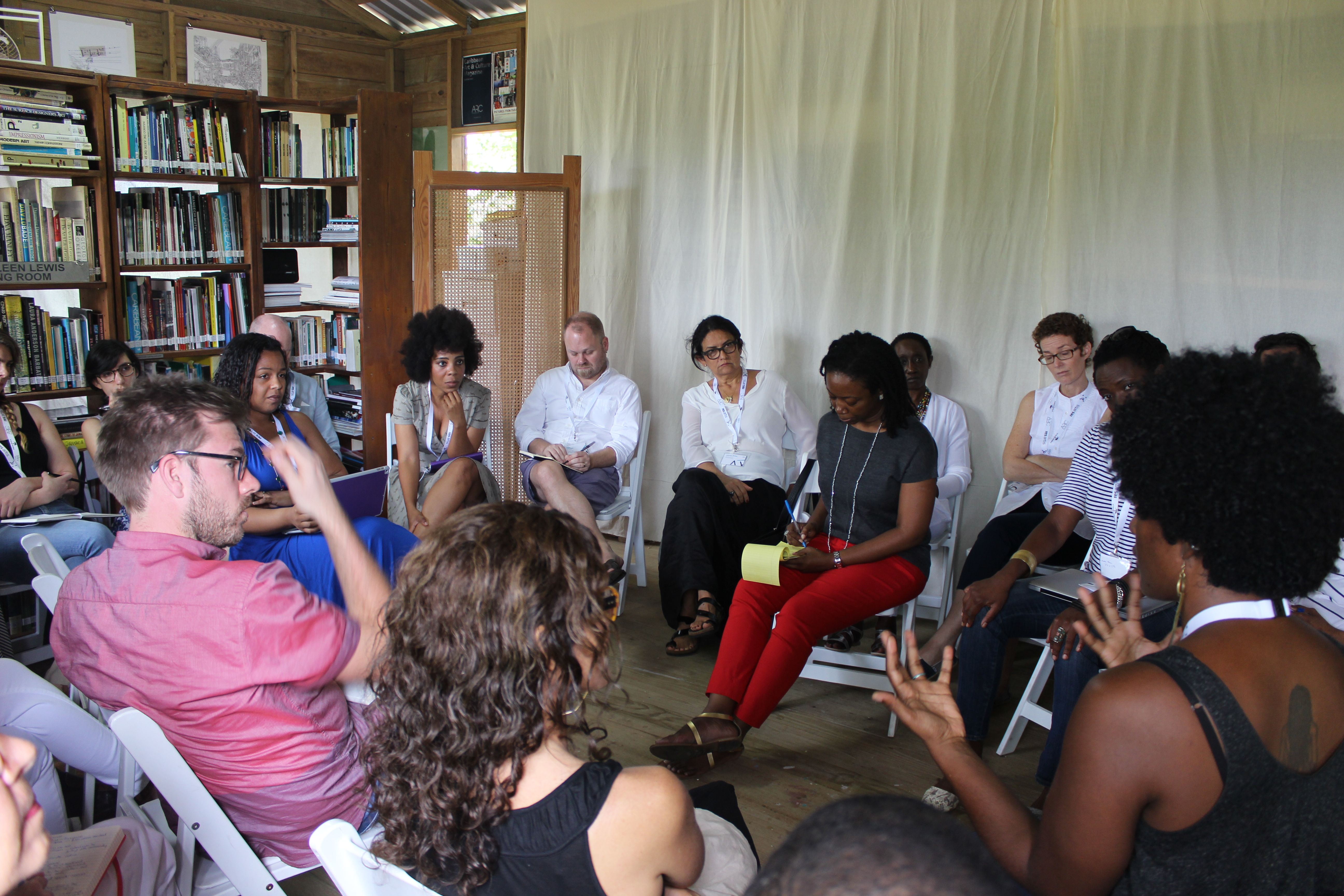
Tilting Axis 2015

Tilting Axis 2015

One of the mandates issued to the participants of the Tilting Axis conference is to tighten strategic networks in their home countries. The organisers of the conference also expect to expand the invited participant list for the next meeting which will take place in 2016.

Annalee Davis stated in her welcome address that “Many of us working in the region have been speaking with one another, in some cases for many years, but today is the first time that artist-led initiatives have come together from the Dutch, Spanish, French and English territories to meet physically in the Caribbean. It is critical that this gathering is taking place on Caribbean soil, and that we consider the visual arts sector from within the archipelago as a counterpoint to the many decisions that have been and are often made about the region externally.”

Mario A. Caro expressed his enthusiasm for the collaborations to be developed between members of Res Artis, a worldwide network of art residencies, and organizations in the Caribbean. “It is clear that the cultural sector in the Caribbean is undergoing exciting and, at times, dynamic changes, and many of these have to do with relationships being established with new partners around the globe. The increase in the mobility of artists through art residencies, both into and out of the region, is one critical factor.”

Holly Bynoe echoed positivism: “The meeting of professionals who are actively engaging and challenging collaborative strategies acknowledges the changes rippling across the Caribbean, and reaffirms the critical value of innovative emerging networks. As more eyes are turning to look at this space, we need to be cognisant of what they are seeing, and consider how and what we want them to experience. Tilting Axis aspires to become a conduit; supporting the professionalisation of artists and formalising engagements, leading to greater visibility and accessibility of contemporary Caribbean art.”
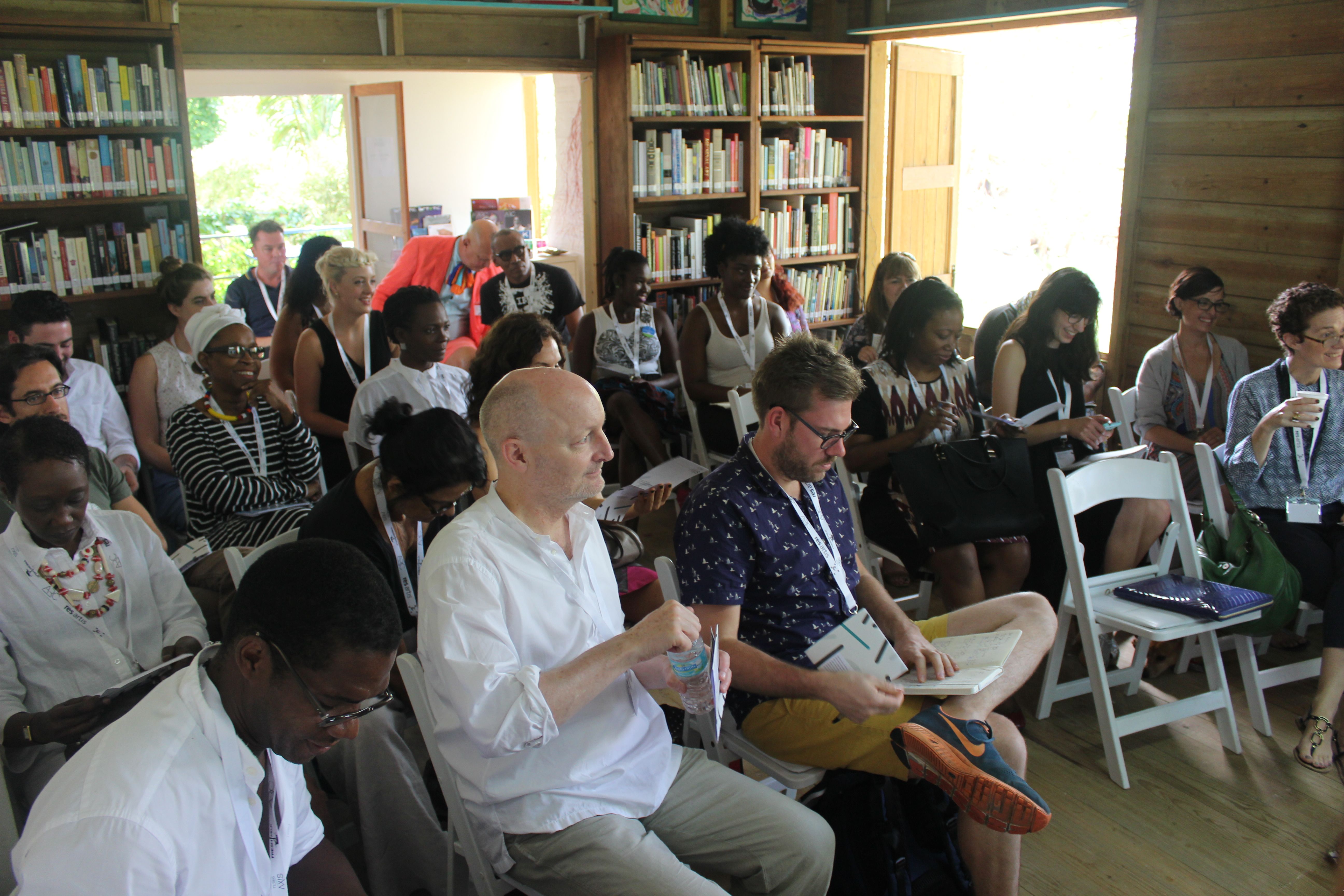
Tilting Axis 2015

Tilting Axis 2015

Tilting Axis: Within and Beyond the Caribbean – Shifting Models of Sustainability and Connectivity

The two-day conference ‘Tilting Axis: Within and Beyond the Caribbean – Shifting Models of Sustainability and Connectivity’ will be held at The Fresh Milk Art Platform, Barbados on February 27-28, 2015. This meeting aims to promote greater conversations and engagement between artists and professionals working within artist-led initiatives across the wider Caribbean region, build and redefine historical relationships with those in the North, and establish open dialogue with active networks emerging in the Global South.

Organized by Fresh Milk, ARC Inc., Res Artis and Pérez Art Museum Miami, Tilting Axis sees the founders/directors of several of the region’s artist-led initiatives coming together to engage in face to face conversations, along with a number of professionals from outside the region interested in working with Caribbean based initiatives.

The objectives of the two-day engagement are to:

● Create opportunities for more integration, awareness, and collaborations to take place across the Caribbean and between international foundations, cultural organizations, and practitioners;
● Enable local, regional, and international artist networks to reflect on lessons learned and share best practices, methodologies, and ideas;
● Develop an action plan for continued collaboration and for moving the Caribbean out of a peripheral position in the global art conversation.

Directing Organizations: ARC Inc., and Fresh Milk Art Platform Inc.
Associate Partners: Res Artis and Pérez Art Museum Miami
Supporting Partners: Arts and Sport Promotion Fund Committee (Barbados), the Davidoff Art Initiative, the British Council and the Prince Claus Fund.

Participants:

Annalee Davis – Founder/Director, The Fresh Milk Art Platform Inc. (Barbados)
Holly Bynoe – Co-founder/Director, ARC Inc. (St. Vincent & the Grenadines)
Mario Caro – President, Res Artis (The Netherlands)
Tobias Ostrander – Chief Curator, Pérez Art Museum Miami (USA)
Solange Farkas – Director, Videobrasil (Brazil)
N’Goné Fall – Co-founder/Director, GawLab (Senegal)
Katherine Kennedy – Assistant to Directors, The Fresh Milk Art Platform Inc. & ARC Inc. (Barbados)
Versia Harris – Visual Artist/Volunteer, The Fresh Milk Art Platform Inc. (Barbados)
Sammy Davis – Videographer/Volunteer, The Fresh Milk Art Platform Inc. (Barbados)
Deborah Anzinger – Executive Director, New Local Space -NLS (Jamaica)
Malaika Brooks-Smith-Lowe – Co-founder/Director, Groundation Grenada (Grenada)
Caryl Ivrisse-Crochemar – Director, 14Nº61ºW (Martinique)
Nicholas Laughlin – Co-founder, Alice Yard (Trinidad & Tobago)
Marsha Pearce – Senior Editor, ARC Inc. (Trinidad & Tobago)
Amanda Coulson – Director, The National Art Gallery of the Bahamas (The Bahamas)
David Bade – Co-founder, Instituto Buena Bista – IBB (Curaçao)
Tirzo Martha – Co-founder, Instituto Buena Bista – IBB (Curaçao)
Elvis Lopez – Director, Ateliers ‘89 (Aruba)
Natalie Urquhart – Director, The National Gallery of the Cayman Islands (Cayman Islands)
Raquel Paiewonsky – Artist and Co-Founder, Quintapata (Dominican Republic)
Kira Simon-Kennedy – Program Manager/Co-founder, China Residencies (New York City)
Maria Elena Ortiz – Associate Curator, Pérez Art Museum Miami (USA)
David Codling – Director Arts, Americas, British Council (Colombia)
Remco de Blaaij – Curator, Centre for Contemporary Arts (Scotland)
Jessica Carden – Curator, Mother Tongue (United Kingdom)
Max Slaven – Co-Director, David Dale Gallery, Glasgow (Scotland)
Ellie Royle – Co-Director, David Dale Gallery, Glasgow (Scotland)
Janice Whittle – Curator, The National Cultural Foundation (Barbados)
Joscelyn Gardner – Visual Artist (Barbados)
Therese Hadchity – Art Historian (Barbados)
Llanor Alleyne – Visual artist (Barbados)
Tonika Sealy – Independent Cultural Producer (Barbados)

Image credit: Mark King, Untitled Grid Fields, paint on concrete, 2015. Photo by Llanor Alleyne

Mother Tongue’s Residency – Week 3 Blog Post

Mother Tongue, the curatorial duo of Jessica Carden and Tiffany Boyle, share their third blog post about their ongoing Fresh Milk residency. As well as continuing to meet with artists, collectors and academics based in Barbados, they also made two presentations to the students in the BFA degree programme at the Barbados Community College, screening their 2012 programme ‘Afrofuturism: Revisions Towards a Place in Modernity’ and expanding on their work as curators. Read the full post below: 

photo(12)

As the third week of our residency here with Fresh Milk draws to a close – and with only a little over a week left to go – we are continuing  to make the most of our time here in Barbados, whilst also beginning to formulate ideas for the return UK project. As with last week, we have primarily been focusing on meeting with artists, writers, curators and academics, in order to further understand the arts infrastructure on the island and how this is affecting practitioners across the board. We have had many productive and engaging conversations about the shape our modest return project may take – both internally and externally – and we’re very focused on producing something that can be meaningful for Barbados and the UK.

photo 1

Our third week began with the first of two presentations made by us to the BFA Degree programme students at Barbados Community College. Our afternoon session for the first, second and third year students was a talk and re-screening of our 2012 programme, ‘Afrofuturism: Revisions Towards a Place in Modernity,’ which was originally developed for the Africa In Motion Film Festival 2012. The programme included five works in total by Neïl Beloufa, Philip Mallory Jones, The Otolith Group, Rico Gatson and the Glasgow-based artist Michelle Hannah. Then on Thursday morning, we made a presentation to the third year students speaking with them on the history of curating and exhibition-making, and an introduction to our practice. The students do not have a curating module here, but the dialogue following our presentation was really impressive. We have found the various discussions with students at the college really helpful for our outlook on contemporary art here in Barbados, especially for understanding the conditions under which emergent artists are producing. Whilst at BCC, we took the opportunity to sit in on art historian and curator Therese Hadchity’s seminar on ‘Caribbean Art,’ which explored modern and contemporary Caribbean art with a focus on post-independence practitioners in Trinidad, Jamaica and Barbados. After the lecture we had the opportunity to briefly discuss Therese’s role as the founder and director of the former Zemicon gallery, which formed a central role in supporting the work of Barbadian artists throughout the 90’s.

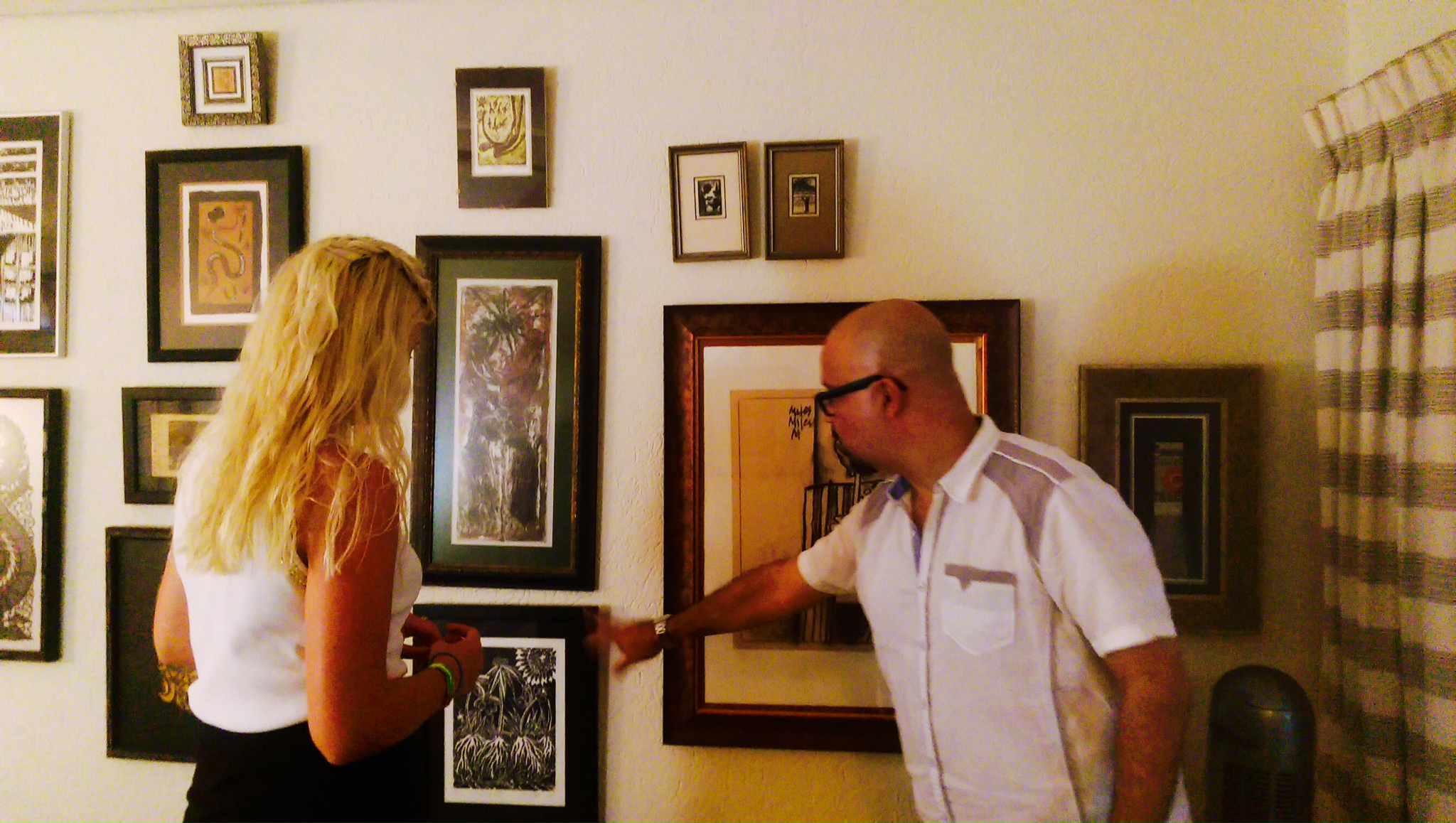
Continuing to gather information about the arts in Barbados, particularly during the 90’s and early 2000’s we met with art historian Alison Thompson who talked us through her regional and international work and upcoming projects. We were also fortunate enough to meet with the established artist Alison Chapman Andrews, who allowed us full access to her wonderfully active studio and large archive of sketchbooks and prints dating back to the 1970’s. Alison wrote a long-running column on art for local press, and flicking through her – very well arranged – collection of these, gives a real sense of a vibrancy in the local art scene during the 80s and 90s. Alison’s house is also something of a gallery in itself: with paintings, drawings and sculptures adorning every wall from the various artists she has known and admired over her long a career as an artist. We also took a visit to meet Clyde Cave, a renowned art collector, whose house is also arranged around, and in tribute to, his fascinating collection of Caribbean contemporary art.

Touring Clyde Cave's collection

After a discussion with Fresh Milk’s Director Annalee Davis surrounding our interest in the art networks between the Caribbean islands, she made an informal presentation to us on Fresh Milk’s ‘Caribbean Art Spaces’ online mapping project, which maps-out the variety of art spaces and artist-led initiatives across the Caribbean from Jamaica to Trinidad to Guyana, the Dominican Republic, to Martinique. It’s a fantastic resource and really important in crossing the many language barriers between the islands and mainland. Over these past three weeks, our many conversations with Annalee have been some of the most insightful and constructive dialogues, as we attempt to come to an understanding of the arts infrastructure here.

photo 5

Finally, we met for a second time with Professor Sean Carrington, this time at the University of the West Indies Biology department where he lectures, to be given a tour of the herbarium. Sean opened up their vast archives, talking us through the many specimens that have been collected from all over the Caribbean for hundreds of years. The visit helped push along our thinking around the colonial elements of horticulture, flora and fauna, and its significance in the work of Caribbean artists. We’re working hard to fit in as much in our fourth week as possible – we look forward to reporting back!

TVE Open Call – Deadline Extended

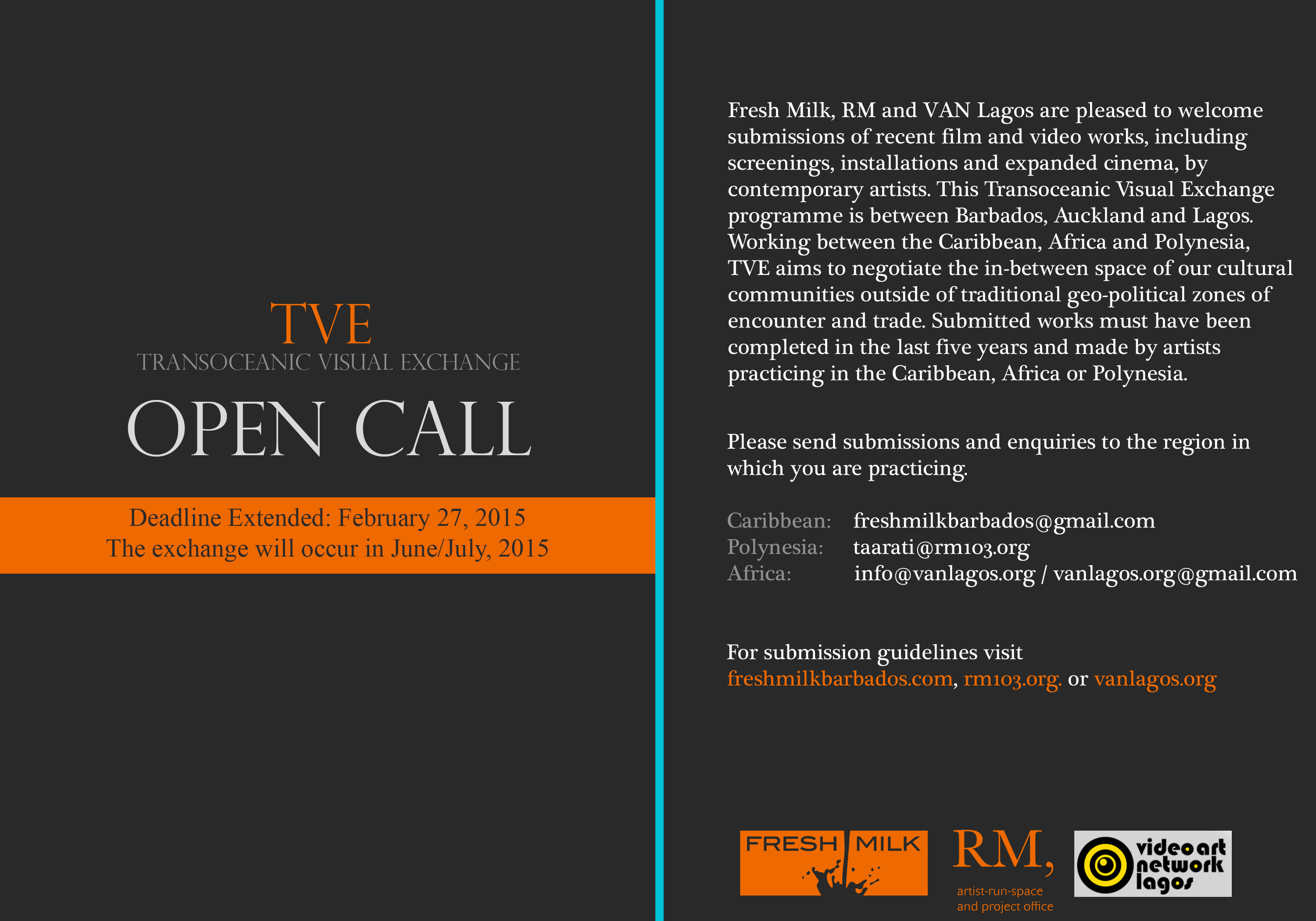
TVE (transoceanic visual exchange) is making an open call in search of recent artists’ films and videos to be included in an exchange between Fresh Milk (Barbados), RM, (Auckland) and VAN Lagos (Nigeria). The deadline for submissions has been extended until February 27, 2015.

TVE flyer Extension

Fresh Milk, RM and VAN Lagos, are pleased to welcome submissions of recent film and video works – screenings, installations and expanded cinema – by contemporary artists, to be included in programmes for exchange between Barbados, Auckland and Lagos. Submitted works must have been completed in the last five years and must be made by artists practicing in the Caribbean, Africa or Polynesia.

The foundation of this transoceanic visual exchange (TVE) will be a collection of recent artist’s film and video from each region. However, the final shape and content of the programme will be informed by an open workshop process, which aims to involve and promote discussion within the wider arts communities of each arts initiative.

Working between the Caribbean, Africa and Polynesia, TVE aims to negotiate the in-between space of our cultural communities outside of traditional geo-political zones of encounter and trade. Fresh Milk, VAN Lagos and RM first met as participants of International Artists Initiated, a programme organized and facilitated by David Dale Gallery, Glasgow, in July 2014. TVE intends to build upon relations established during this initial encounter and open up greater pathways of visibility, discourse and knowledge production between the artist run initiatives and their communities.

Submissions:  

  • Must be work from artists practicing in the Caribbean, Africa or Polynesia.
  • Must be work that has been completed/made in the last five years.
  • Can be films of any length (shorts, experimental, features and video artworks)
  • Can be in any language (films originally produced in regional languages are welcome) with English subtitles.
  • Multiple submissions are welcome
  • Must be accompanied by a description of the work (500 words max), a bio (200 words max) and detail of any technical requirements i.e. audio, installation, equipment required, preferred setting etc.
  • Works must be in the form of mp4 files no larger than 10MB, or private Vimeo / Youtube links

The new deadline for submission is February 27, 2015 for all regions.

The exchange will occur in June/July 2015

Please send submissions and enquiries to the region in which you are practicing:

Caribbean: freshmilkbarbados@gmail.com
Polynesia: taarati@rm103.org
Africa: info@vanlagos.org / vanlagos.org@gmail.com

About the Spaces

Fresh milk colours

The Fresh Milk Art Platform Inc. is a Caribbean non-profit, artist-led, inter-disciplinary organization that supports creatives and promotes wise social, economic, and environmental stewardship through creative engagement with society and by cultivating excellence in the arts. Fresh Milk bridges the divides between creative disciplines, generations of creatives, and all linguistic territories in the region. It functions as a cultural lab, fostering critical, creative practices through local, regional and international programming. The platform transforms into a gathering space for contemporary creatives who are thirsty to debate ideas and share works through residencies, lectures, screenings, workshops, exhibitions, projects etc.

van lagos logo

The Video Art Network, Lagos (VAN, Lagos) is a Lagos based New Media art organization, established by the collaborative efforts of artists Emeka Ogboh, Jude Anogwih and cultural producer Oyindamola Fakeye. The organizations objectives are to develop educational and public programmes that promote and create new media art awareness in Nigeria. This is realized through curated screenings and exhibitions of both established and emerging New Media artists.

RM

RM is an artist-run space, project office and (gradually developing) archive. Based in Auckland, New Zealand, RM is a gallery that places the work of local emerging artists alongside more seasoned practitioners. RM seeks to engage with the practices, discourses and modes of presentation that aren’t well-supported or easily accessible in Auckland. Though we might look like a white cube, we are more interested in the potentials of an empty room – a space to gather, to think, to talk, to make, to share… Established in 1997, RM is the country’s longest running artist-run-space. The co-directors are Eleanor Cooper, Melanie Kung, Ziggy Lever, Fleur Sandbrook, Taarati Taiaroa, and co-founder Nick Spratt. Previous incarnations of the rm project have included rm3, rm212, rm401 and rm103.

Mother Tongue’s Residency – Week 2 Blog Post

Mother Tongue, the curatorial duo of Jessica Carden and Tiffany Boyle, share a blog post about their second week at Fresh Milk, which kept them busy with a number of meetings and visits. These sessions were not only with artists, but also focused on the island’s history, geography and social environment; topics that feed into a number of the art practices they have encountered so far, and contribute to Mother Tongue’s overall understanding of the space. Read their report below: 

photo(7)

Whilst our first week in Barbados took the form of an introduction to Fresh Milk, the reading room collection and the studio space, our second week has been a flurry of meetings, studio visits and trips around the island to meet with various individuals, museums and organisations. It has been a week of connecting with a whole host of people who are instrumental to the arts scene here on the island – both in the past and in the present – with established and emergent practitioners. We have also consciously widened our scope to look at the rich histories outside of the arts, but which have been preoccupying local artists, such as the sugar industry, tourism and the colonial role in the horticulture of the island.

photo(5)

On Monday we met with the Barbadian artist Alberta Whittle, who we were originally introduced to in Glasgow whilst she was studying at Glasgow School of Art. Alberta gave us a tour of the National Museum of Barbados, and provided a brilliant insight into her position as a Barbadian artist who has become established outside of the island but returns regularly to make work here as an invested member of the arts community. Alberta also introduced us to our very first Caribbean snow cone, which consists of crushed ice, sugar syrup and condensed milk; perfect for a Scottish sweet tooth! We attended a lecture at the museum which was focused on the evolution of the tourist industry here in Barbados from the early 19th century onwards, and how it has become central for the islands’ economy, which was for such a long time monopolised by sugar cane.

Having become aware of their work through various Caribbean art publications in the Fresh Milk reading room, Director Annalee set-up studio visits with the artists Ewan Atkinson and Mark King. We were really lucky to have caught a sneak preview of Ewan’s exciting new work for the Havana Biennial which he will be taking over later this year. He also gave us some really interesting background information to his recent series ‘The Neighbourhood Report’, which comprises of several fictional characters exploring notions of identity, sexuality and gender representations. In our conversation with artist Mark King, he charted his journey from the US and Holland, and why he has chosen to return to Barbados to make it his base, while he continues to exhibit internationally.

This week we have also been really fortunate to spend some time with the artist Holly Bynoe, who is also the Co-Founder and Director of Caribbean Arts and culture magazine ARC. Throughout her career as an artist, researcher, curator and writer in the Caribbean, Holly has been an invaluable source in providing references and links to artists and projects across the region. We were able to discuss the role ARC magazine has been taking as a platform for many projects – written and beyond – over dinner with Holly and Assistant to the Director Katherine Kennedy, who is also an artist and an integral member of the Fresh Milk team.

On Friday we were introduced to the artist Denyse Menard Greenidge, who founded Dayrells Art Gallery in Barbados in the 70s, and continues to curate the work of Barbadian artists locally and internationally. Talking us through documentation from the 70’s and 80’s, Denyse was able to provide us with an overview of how governmental support for the arts has changed over the years and how this has impacted the current activity on the island. We visited her husband Newlands Greenidge‘s self-founded Springvale Indigenous Folk Museum, which is located in the Scottish district on the east of the island. The museum hosts a collection of artefacts which describe what life would have been like on the island in the early 19th century. Created through a labour of love by Newlands and Denyse, their passion for the island’s history is clear through the wealth of information they provided about the collection and its significance for Barbados.

In our second week, we were also visited in the Fresh Milk studio by Sean Carrington, Professor of Plant Biology at the University of the West Indies, Cave Hill Campus. We had a really stimulating conversation about the importation of species into the island, indigenousness and plant life, and the problems language causes between islands in the region, in terms of classification and keeping track of plant populations. Following our meeting with Sean, we went to meet Dr. Anthony Kennedy, Director of the West Indies Central Sugar Cane Breeding Station. The station is one of the most successful breeding centres in the world, whose work and research helps to develop sugar industries across the Southern Hemisphere. During our visit we were talked through the history of sugar on the island, and how it formed and influenced the way we see not just the agricultural formations but the human geography and architecture of the island too. This history is so significant for any attempt to understand the island, and it’s something that we’re trying to grasp as best as we can during our visit.

We look forward to a busy third week that will include two presentations at Barbados Community College on curating, and a re-screening of our ‘Afrofuturism’ programme, originally developed for the Africa in Motion Film Festival 2012.