Kara Springer’s Residency – First Blog Post

One of Fresh Milk’s current resident artists, Toronto based industrial designer and visual artist Kara Springer, shares her first blog post about her time working in Barbados:

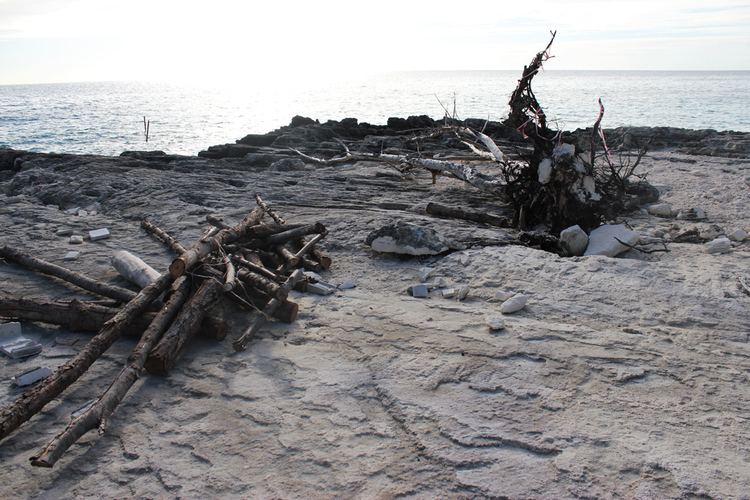
Repositioned Objects - 6x6 -2 One week into our residency at Fresh Milk, and I’m already longing for more time here.  It’s such a gift to have access to the beautiful Fresh Milk studio and library.  Christian and I are exploring the island in my uncle’s car, scouting locations for my installation series, tentatively titled Repositioned Objects.  Lately I’ve been thinking about my preoccupation with decay and erosion, which is in some way or another present in all of my work.  It’s this very particular thing in the Caribbean – the way that structures can come apart, and literally crumble; the elements are always intimately and intensely present. I built the 6’x6′ cube below in a burned-out shop in Bridgetown this week.  The shop is in the midst of being rebuilt so I had this brief window of time (24 hours) to build, photograph, and ultimately disassemble the piece.  I was immediately drawn to the industrial quality of the space – carrying the traces of what it used to be and the questions of how it fell into disrepair, even in its current state of being prepped for re-construction.

In contrast, two weeks ago, just as the temperature dropped below freezing in Toronto, I installed the form below, which was originally inspired by a roti hut, in an industrial parking lot at Keele & St Clair.  I had to trek into the store nearby every 10 minutes or so to thaw my hands as I put it together.  This residency is affording me a really valuable space to think through what it means to be of and from many different places, and the translations that are negotiated in the in-between.

FRESH MILK XVII

Fresh Milk XVII

Join us on December 19th, 2014, from 6:30 to 8pm for FRESH MILK XVII. Visual artist Kara Springer and poet / critical writer Christian Campbell will speak about their residency experiences; Katherine Kennedy will share news about her recently completed three month Fellowship at Akadamie Schloss Solitude in Stuttgart, Germany while Natalie McGuire will join us by Skype to speak about TVE – a Transoceanic Visual Exchange between Barbados, Nigeria and New Zealand.

It’s the last Fresh Milk event for 2014. We’ll close out the year with a Pot Luck. Bring food, drink and good cheer!

This event is free and open to the public.

Visit https://freshmilkbarbados.com/about/ for directions to Fresh Milk

Kara Springer

Kara Springer

Kara Springer is an industrial designer and visual artist.  Born in Bridgetown, Barbados, she currently lives and works between Toronto and Detroit.  Her interdisciplinary practice explores the intersections of the body and industrial modes of production through sculpture, photography and designed objects. Kara completed an Hon.B.Sc. in Life Sciences from the University of Toronto concurrent to a B.Des. in Industrial Design from the Ontario College of Art & Design.  She received her M.A. in New Media and Contemporary Technology from ENSCI Les Ateliers in Paris in 2007. Her work has been exhibited at the Frankfurt Museum of Applied Arts in Germany, the Politecnico di Torino in Italy, the Cultural Center of Belem in Portugal, and is currently included in the 2014 Jamaica Biennial.

Christian Campbell

Christian Campbell

Christian Campbell is a Trinidadian-Bahamian poet and cultural critic. His widely acclaimed first book, Running the Dusk (Peepal Tree Press, 2010), won the Aldeburgh First Collection Prize and was a finalist for the Forward Prize for the Best First Collection, among many other awards. Running the Dusk was also named one of the best books of 2010 by the Caribbean Review of Books,Horizon Review and Poetry International. In 2015 Running the Dusk will be translated into Spanish and published as Correr el Crepúsculo by Ediciones Santiago in Cuba. His poetry and essays have been published widely in journals and newspapers such as Callaloo, The Financial Times, The Guardian, Small Axe and Wasafiri.  He studied at Oxford as a Rhodes Scholar and currently teaches at the University of Toronto.

Katherine Kennedy

Katherine Kennedy

Katherine Kennedy (Born April 4, 1990, Barbados) graduated from Lancaster University, UK with a degree in Creative Arts (2008-2011) after winning a Barbados Government Scholarship for tertiary education. Her combined major of Fine Art and Creative Writing developed her interests in visual and literary pursuits. She has won awards for her artwork and writing in her home Barbados, and exhibited locally and internationally. She currently works as the Assistant to Director with both The Fresh Milk Art Platform, an artist-led initiative and residency programme, and ARC Magazine for contemporary Caribbean art. Her visual practice is heavily tied to a sense of place, and uses interplay between found organic and inorganic objects to assert cultural identity in different environments.

Katherine travelled to the Instituto Buena Bista (IBB), Curaçao in November 2012 to conduct ‘Creatives in Conversation’, a collaboration between the IBB and Fresh Milk. She received a full fellowship from the Reed Foundation for a residency at The Vermont Studio Center in May 2013. In September 2013, she took part in ‘fresh casa’, a short, intensive mentorship programme at Casa Tomada, São Paulo, Brazil.

Natalie McGuire

Photograph by Dondre Trotman

Photograph by Dondre Trotman

Natalie McGuire is a Barbadian Art Writer who has recently completed her MA at The University of Auckland, NZ, with a thesis deconstructing Caribbean diasporic representation in museums. She is on the board of the Fresh Milk Arts Platform in Barbados, the committee of the West Indian Society in Auckland, and has contributed to publications such as ARC Magazine and AICA Southern Caribbean. Recently she has given papers on Caribbean visual language in digital art mediums at the Small Axe Caribbean Digital Conference and Otago University’s Space Race and Bodies conference.

Fresh Milk welcomes International Resident Creatives from Toronto – Christian Campbell and Kara Springer

Past work by Kara Springer

FRESH MILK is happy to welcome Toronto based poet and cultural critic Christian Campbell and industrial designer and visual artist Kara Springer to our International Residency Programme between December 1st – 19th, 2014. While in residence, Christian, a Trinidadian-Bahamian, will be working on poems for a new manuscript and on essays. In addition he will be offering two “creative critical writing” workshops to Barbadian writers as a way to open up exciting and rigorous new ways of talking about writing and expressive cultures. Christian’s “Critical creative writing” workshops will be held on Saturday December 6th and 13th at Fresh Milk.

Of Bajan and Jamaican heritage, Kara was born in Barbados, and raised in Southern Ontario, Canada. This residency will provide her with a first opportunity to develop her art practice in her native island, Barbados. Kara will work on a series of temporal sculptural installations in the natural landscape – a continuation of a series begun in Nassau earlier this year. Her minimalist structural installations exist in the natural landscape and establish a dialogue that challenges standard ideas of minimalism as an aesthetic and a practice.

Stay tuned for more information including more on Fresh Milk’s final public event for the year which will take place on Friday December 19th from 6.30-8.30pm where Christian will read from his writing, Kara  will share work produced on the residency and we’ll kick off the season with cheer!

Read more about the residents and their practices below.

About Christian Campbell

Christian Campbell is a Trinidadian-Bahamian poet and cultural critic. His widely acclaimed first book, Running the Dusk (Peepal Tree Press, 2010), won the Aldeburgh First Collection Prize and was a finalist for the Forward Prize for the Best First Collection, among many other awards. Running the Dusk was also named one of the best books of 2010 by the Caribbean Review of Books,Horizon Review and Poetry International. In 2015 Running the Dusk will be translated into Spanish and published as Correr el Crepúsculo by Ediciones Santiago in Cuba. His poetry and essays have been published widely in journals and newspapers such as Callaloo, The Financial Times, The Guardian, Small Axe and Wasafiri.  He studied at Oxford as a Rhodes Scholar and currently teaches at the University of Toronto.

About Kara Springer

Kara Springer is an industrial designer and visual artist.  Born in Bridgetown, Barbados, she currently lives and works between Toronto and Detroit.  Her interdisciplinary practice explores the intersections of the body and industrial modes of production through sculpture, photography and designed objects. Kara completed an Hon.B.Sc. in Life Sciences from the University of Toronto concurrent to a B.Des. in Industrial Design from the Ontario College of Art & Design.  She received her M.A. in New Media and Contemporary Technology from ENSCI Les Ateliers in Paris in 2007. Her work has been exhibited at the Frankfurt Museum of Applied Arts in Germany, the Politecnico di Torino in Italy, the Cultural Center of Belem in Portugal, and is currently included in the 2014 Jamaica Biennial.

»Redefining Practice« Reflections with Maj Hasager

During her ongoing residency at Akademie Schloss Solitude, Katherine Kennedy – current fellow in the ResSupport programme supported by Res Artis, representing the Fresh Milk Art Platform at the Akademie – had a conversation with Danish artist and Solitude fellow Maj Hasager reflecting on integrated & socially aware ways of looking at artistic practice. Read the article, originally published on the Akademie Schloss Solitude Blog, below:
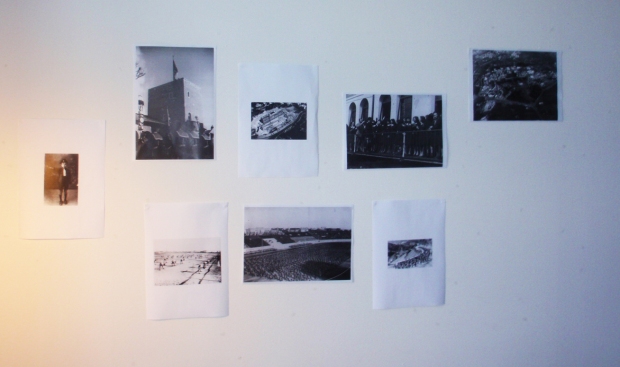
Maj's studio at Akademie Schloss Solitude.

Maj’s studio at Akademie Schloss Solitude.

When we speak about art, we often use the word »practice« as a multipurpose term to cover the thinking, the making, the product…all the processes that build towards something such as an exhibition or a clearly defined project. But what about the moments that occur in between, not necessarily linked to a finished piece? Where do ‘non artistic’ tasks fall in the realm of this all encompassing »practice«, and how do our actions influence or become part of our artistic work? These questions led to a discussion between Katherine Kennedy and Maj Hasager, both fellows at Akademie Schloss Solitude. Read more about their talk below:

I began my exchange with Maj by introducing the Fresh Milk Art Platform, a Barbadian cultural arts centre and residency programme, and ARC Magazine of contemporary Caribbean art, the two spaces I work for; speaking about these organizations has become almost second nature to me.

It was when Maj asked about my own art »practice« that I suddenly felt unsure…I wondered, as I showed her my artist website, is this reaction backwards? The balance between making work and my other roles is something I continue to struggle with, and there are a number of doubts that arise when I confront it; am I still an artist? Will I produce work again? Have I given up my »practice«? I’m not unique in these crises…these are common questions faced by many artists whose lives teeter between other jobs and responsibilities.
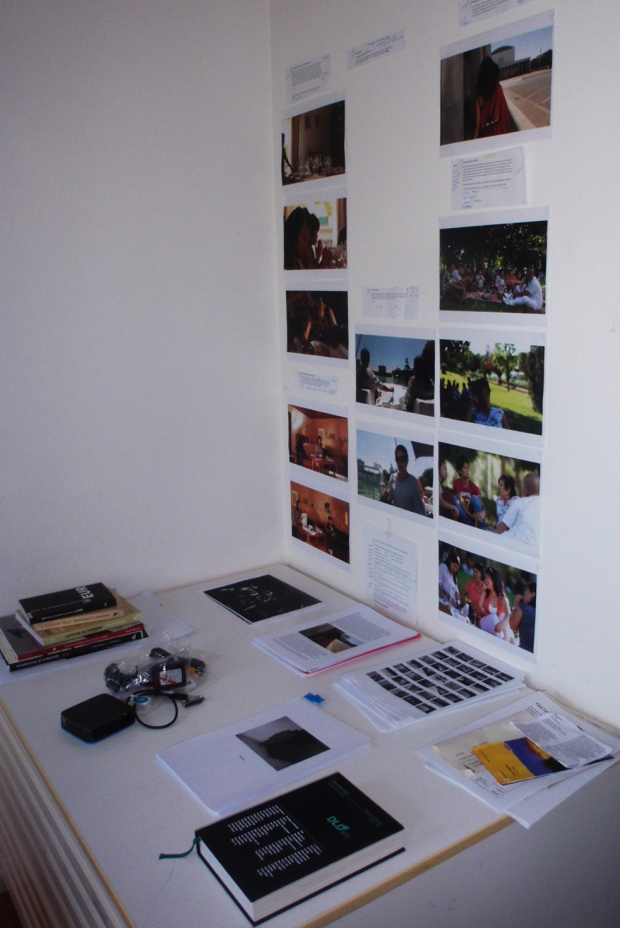
Maj's studio at Akademie Schloss Solitude.

Maj’s studio at Akademie Schloss Solitude.

Maj and I spoke about these anxieties, which had interesting associations to the MA programme she leads at Malmö Art Academy, Sweden, called Critical & Pedagogical Studies. This degree crosses the supposed boundaries between art, theory and pedagogy, framing relationships between production, teaching, administration and curatorship as »integrated practice« rather than distinct disciplines. While the stretch between one actual creation to the next may be long, that doesn’t negate the importance of what happens in those gaps, or the larger impact of knowledge transfer to personal and public creative growth.

I could already see how the importance of circulating information and operating in intermediary ways was applicable to the work of Fresh Milk and ARC; the foundations we are trying to lay for contemporary art in the Caribbean can very much be read as »social practice«, and affect the wider context I work within, along with my individual outlook. We spoke about whether there was a chance to marry this social »practice« with my visual one; the interconnectivity of art and life means that things are rarely as separate or stagnant as they may seem, and dormant seeds of production may just need the opportunity to flourish. We were both in agreement that Solitude can be considered fertile soil, with the freedom afforded to map out and nourish these connections.
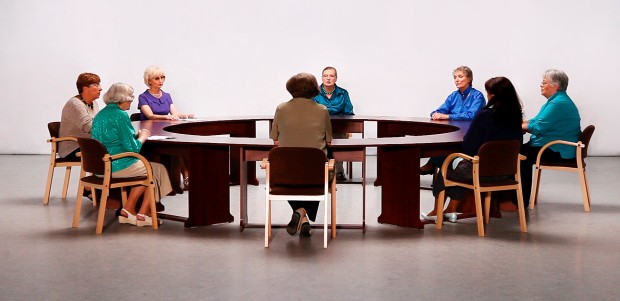
Maj Hasager, Decembers – performing a past, 2013. Courtesy of the artist.

Maj Hasager, Decembers – performing a past, 2013. Courtesy of the artist.

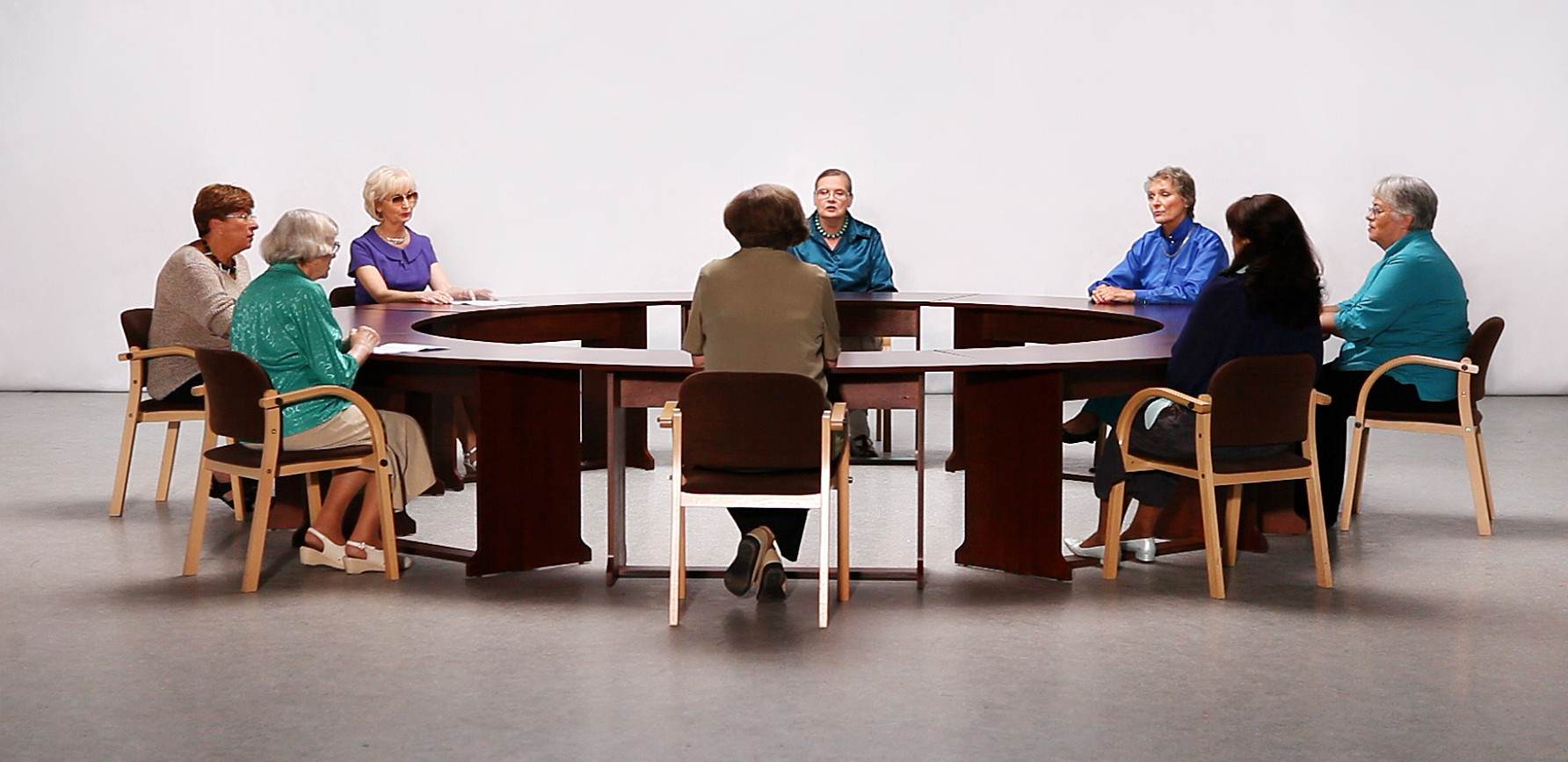
Maj’s personal »practice« also exemplifies hybridity. In addition to her academic pursuits, she negotiates delineations between history/lived reality; archive/interpretation; geopolitical North/South; utopia/dystopia. She took me through some of her multimedia work, which is heavily driven by communities and their geographical and socio-political positions in the environments they inhabit. Displacement is a common theme in her »practice«; she has conducted socially charged projects where she speaks and works with immigrant or underrepresented populations, such as the Filipino community in Italy, or documenting the perspective of Polish women during the solidarity movements of the 70s and 80s. The space she explores is a limbo of sorts; neither dwelling explicitly on the past nor idolizing the future, but the somehow honing in on the forgotten present, and how these communities function – or »practice« – in daily life, which inherently retains the weight of history and the possibility of tomorrow.

Relational »practice« is the core of her work, taking into account and being organically informed the multiple cultures she encounters. The drastically different points of view between herself and the societies she engages are not lost on her; she acknowledges that she is coming from a position of privilege, and does not try to overshadow the voice of the community. As a citizen of an island that is often defined from the outside rather than within, I appreciated this concession, and the genuine interest Maj takes in authenticity when treading this fine, complex line. For example, in her work Decembers – performing a past, 2013 there is no translation from Polish of the exchange between women of a certain generation sharing their stories – this is not done to exclude viewers, but to allow them to enter the moment and feel the dynamic without being distracted by divisive constructs such as language:

Spilled in the language’s veins
A militant regards
When will words be
A tool for something other

– Thom Donovan
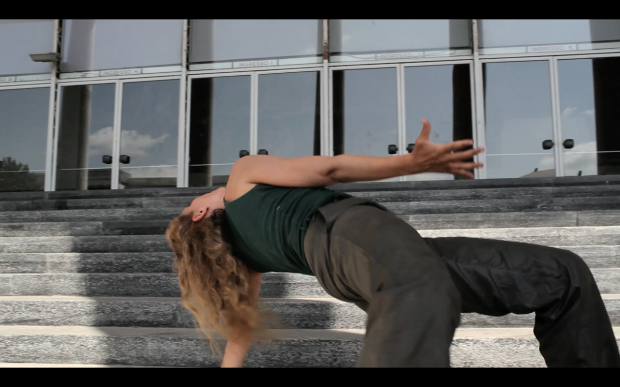
Film still: Contemporary dancer Maria Concetta Borgese in ‘Bifurcating Futures’, directed by Maj Hasager.

Film still: Contemporary dancer Maria Concetta Borgese in ‘Bifurcating Futures’, directed by Maj Hasager.

This excerpt is taken from a poem by American poet Thom Donovan, whose work Maj used in a recent project that she directed and was editing while at Solitude. A departure from the usual way in which she works, the piece titled Bifurcating Futures is more abstract; it features a performance by a contemporary dancer interspersed with moving shots of an empty city and stanzas from Donovan’s poem, all overlaid with a haunting track of urban sounds, warped into a futuristic, ominous refrain that echoes the dystopic landscape. The dancer, deliberately chosen for the experience and maturity her body brought to the role, performs a series of gestures in the space, always inaudible but never truly silent. The piece straddles new media and documentary filmmaking, challenging Maj’s usual »practice«, but still referencing themes such as feminism, futurism and creating a platform for the unheard.

What remained with me after our meeting is that we have the artistic license to define »practice« as we see fit; we can use residencies as creative incubators for our work, but »practice« comes from lived experience. Even if not specifically deemed »social practice«, it still absorbs our thoughts, actions and interactions with others, and in the end, cannot be predicted, relegated or compartmentalized – only manifested, one way or another, in the direction we channel it.

Read the original article on the Akademie Schloss Solitude Blog here.
Lauren Craig and Annalee Davis in Conversation

Photograph by Rachelle Gray

Lauren Craig (left), Annalee Davis (right) – Photograph by Rachelle Gray

Fresh Milk‘s Founding Director, Annalee Davis sits down for a chat with recent Fresh Milk resident artist, Lauren Craig. Lauren is  a London based multimedia visual artist who developed ‘floral installation” to describe her creative practice.  During their conversation, Lauren spoke about some of the projects she has been working on in the UK including her work for the British museum and the Petrie Museum of Egyptian Archaeology. In addition, Lauren shares her collaborative work with British women of colour as they develop the Women of Colour Index and X Marks the Spot,  in contribution to an archive at the library at Goldsmiths University in London. Below are  photographs that Lauren produced while on her residency at Fresh Milk.

Lauren Craig and Annalee Davis In Conversation Part 1

Lauren Craig and Annalee Davis In Conversation Part 2


For more on Lauren’s residency and the continuation of her ‘Cleanse’ project, read Lauren’s exchange with Llanor Alleyne here: http://bit.ly/1EvPQdF

Lauren Craig’s Biography

Lauren Craig is a social entrepreneur and artist researcher based in London. She has designed systems and living business models that have challenged large corporations in areas of racism, minority and women’s rights. Her art and entrepreneurial activity tackle big questions around ethics, equality, sustainability and community engagement in the cut flower industry whilst delivering practical floral alternatives locally, through her organization ‘Thinking Flowers?’

As an entrepreneur, Lauren is involved with social issues such as environmental destruction, London street crime and equality, aiming to promote positive change through ethics, sustainability and engagement. She has developed therapeutic methods using photography to document and tackle street crime and runs a pioneering ethical florist. Additionally, she has founded ‘Field’ – an innovative pop-up community retail space in Brixton Village, pioneered urban green waste schemes and floral donations services whilst campaigning for human, working and women’s rights further afield. She is currently setting up the Field Foundation, which will work to reconnect people with the creative cultural industries.

Her recent work includes ‘Petal Tank’, an experimental film featuring collage of autoethnographic darkroom photography, poetry and sculpture. (Tate Modern Tanks, 2012) ; An artist residency at the Women’s Art Library at Goldsmiths College, University of London (2013-2014) ; Sculptural Garden, collaboration with Paul Jones, Royal Collage of Art for Space Station 65, London (2014) ; ‘Sense and Sensibilities’ at Victoria and Albert Museum, London (2014) ‘Modern Measures – Holding, Pouring, Stirring’ at The Petrie Museum of Egyptian Archaeology in London as part of University College London Museums & Collections (2014). Collaboration with visual arts and research collective X Marks the Spot, initiated at Studio Voltaire 2011, engages with the archive of photographer Jo Spence to explore concepts of class, race, gender and wellbeing.