Simone Asia’s Residency: Week 2 Blog Post

Simone Asia, current artist in Fresh Milk’s 2015 ‘My Time’ Local Residency programme, shares her second blog post. Continuing her exploration of nature, Simone has managed to begin some of her new ideas – despite a few surprises along the way – and in addition to colour, she is also playing with materials and processes during her residency. Read more below: 

3

Another week of the residency has passed and this one was very hectic. Yes, I started the portrait, but I did not get as much done as I would have liked due to a very busy schedule. Most days I got on site in the afternoons which only allowed me four or five hours to work as opposed to the seven or nine I did most days last week.

Nonetheless this week was interesting. My two phones have been restored and I sourced an old iPod nano to occupy my ears with music and thus quieten my thoughts. Yes, I’m back with the technology, but I will say I paid little attention to them and focused more on the natural elements around me. I did a couple more experimental drawings and reflected on what happened last week to gather inspiration for the portrait. I also explored the land for textures and patterns in nature and observed the happenings on the farm with my two furry pals Rico and Mica. On my breaks they would accompany me while I relaxed and gathered my thoughts.

I had a couple of frights this week – I was attacked by bats when I was leaving Fresh Milk on Wednesday.  I think they were trying to intimidate me by flying at my face. On Friday, I nearly sliced opened my face with a retractable box cutter trying to renew the blade. They never mention these hazards in the instructions for awkward people like me.

04242015706

This week, my attention was shifted to the animals like the bats, a lizard who I named Komodo because of his large size, the local visitors – the troop of green monkeys who would pass through on afternoons looking for food and swinging on trees (I am afraid of monkeys so these visits were usually uncomfortable), the birds – especially the dove who always tries to build a nest inside the Colleen Lewis Reading Room, and the cows.

I got to see the cows being brought out from the milking stations to the fields. It may not sound like much but I thought it was a spectacular sight. I watched as the herd with their heavy udders huddled and strolled down the path. A flock of egrets flew out of nowhere, seeming to accompany them. I watched this majestic sight in awe because I have never seen anything like it. I have not seen Bambee this week. I wonder if she is avoiding me, or has she noticed me yet?

Over the weekend I bought some more art materials. Since I have started the portrait, I am now eager to try out collages; not full blown collages, just minimal ones for now. This week, even though I did not spend as much time as I would like, I still managed to write down a few ideas there.
Jordan Clarke’s Residency – Week 4 Blog Post

Barbadian-Canadian painter Jordan Clarke shares her fourth blog post about her Fresh Milk residency. In her final week, Jordan confronts some of the underlying reasons for her disconnect with the Barbadian side of her identity, and sees her experience in the island as a starting point to build on as she investigates this part of her culture and herself. Read more below:

IMG_0977-1

“As is common to most transnational communities, the extended family – as network and site of memory – is the critical conduit between the two locations.” (Stuart Hall, ‘Thinking the Diaspora: Home – Thoughts from Abroad’, Caribbean Political Thought)

It is typically through family that Caribbean migrants are able to maintain a sense of connection to their Caribbean culture. What happens, however, when there isn’t a sense of cultural sharing through family? How does this affect one’s sense of cultural identity?

IMG_0978

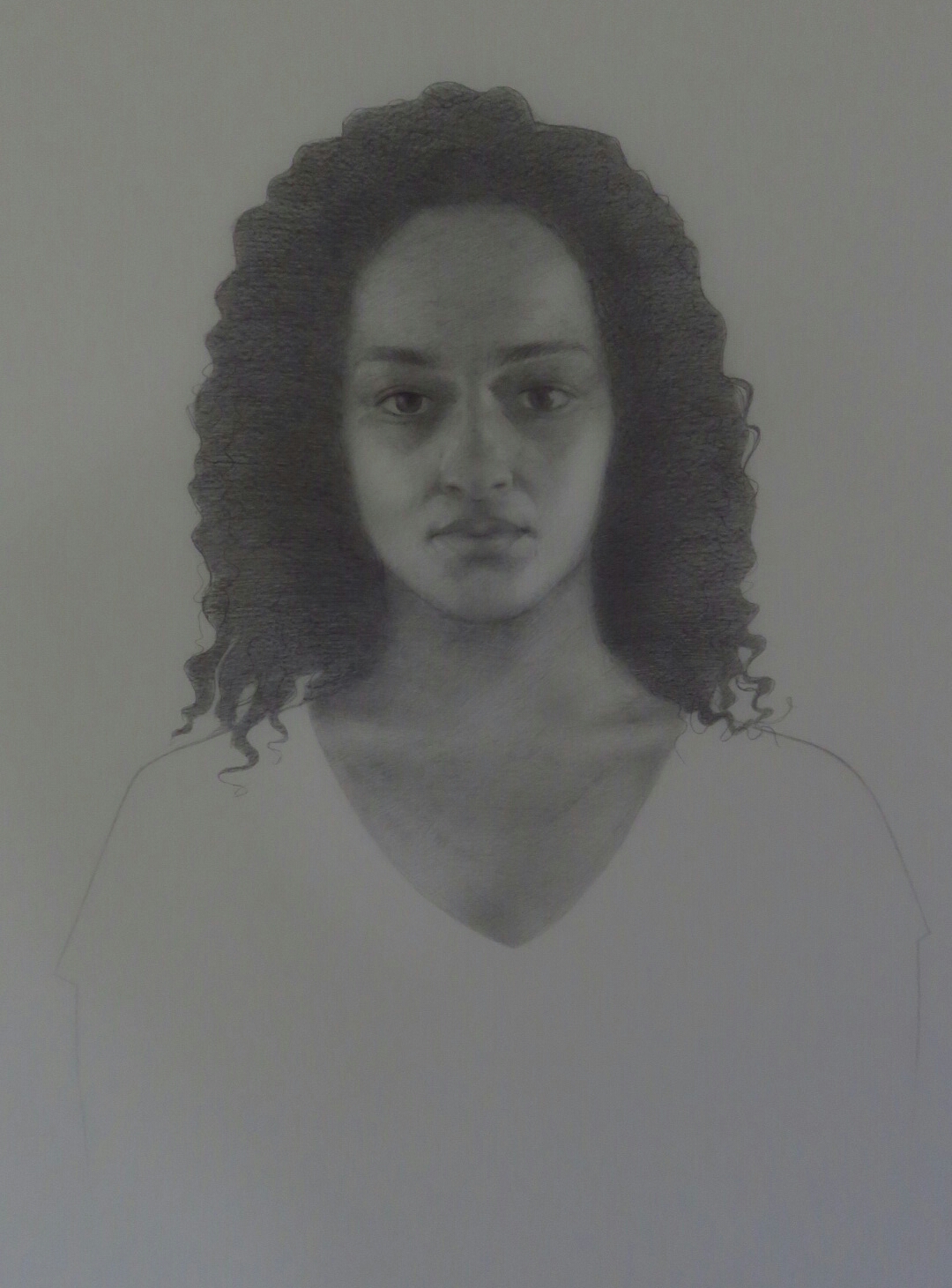
In my fourth week at Fresh Milk, I confronted the fact that my father has never been solidly present to share his cultural identity and family with me. I drew a self-portrait in response, with the intention of representing a conversation I would have with my father. A more confident me stares out, confronting.

I realize that the work I have created here during my residency represents a starting point for further investigation of the theme of self-perception, as well as self-discovery. It will act as a guide for future work once I’m home.

In thinking about the four weeks I’ve been here, I couldn’t be more grateful for this rewarding experience. Having such a wonderful studio to work in, without the usual daily distractions, has been refreshing and inspirational. Fresh Milk’s extensive library, full of contemporary Caribbean literature and art publications, has been an invaluable tool for informing my work here. I can’t thank both Annalee Davis and Katherine Kennedy enough for all their help and support. Annalee is full of knowledge and has been able to point me in directions I showed interest in, while leaving me space to navigate my art practice. I would also like to thank Aaron Kamugisha for his help and good company.

It has been so stimulating to connect with all the artists who have visited Fresh Milk during my residency. I see my time here as a starting point, a spark that will encourage further exploration and dialogue in my art practice.

_______________________________________

2014 OAC logo RGB JPG

This residency is supported by the Ontario Arts Council.

Cooking Sections’ Residency Blog Post

Cooking Sections, the London-based duo of Daniel Fernández Pascual and Alon Schwabe, share their blog post about their short-term residency at Fresh Milk, where they conducted a number of interviews and meetings with both artists and professionals working across the agricultural sector to inform their research based practice and their ongoing project The Empire Remains. Read more below:

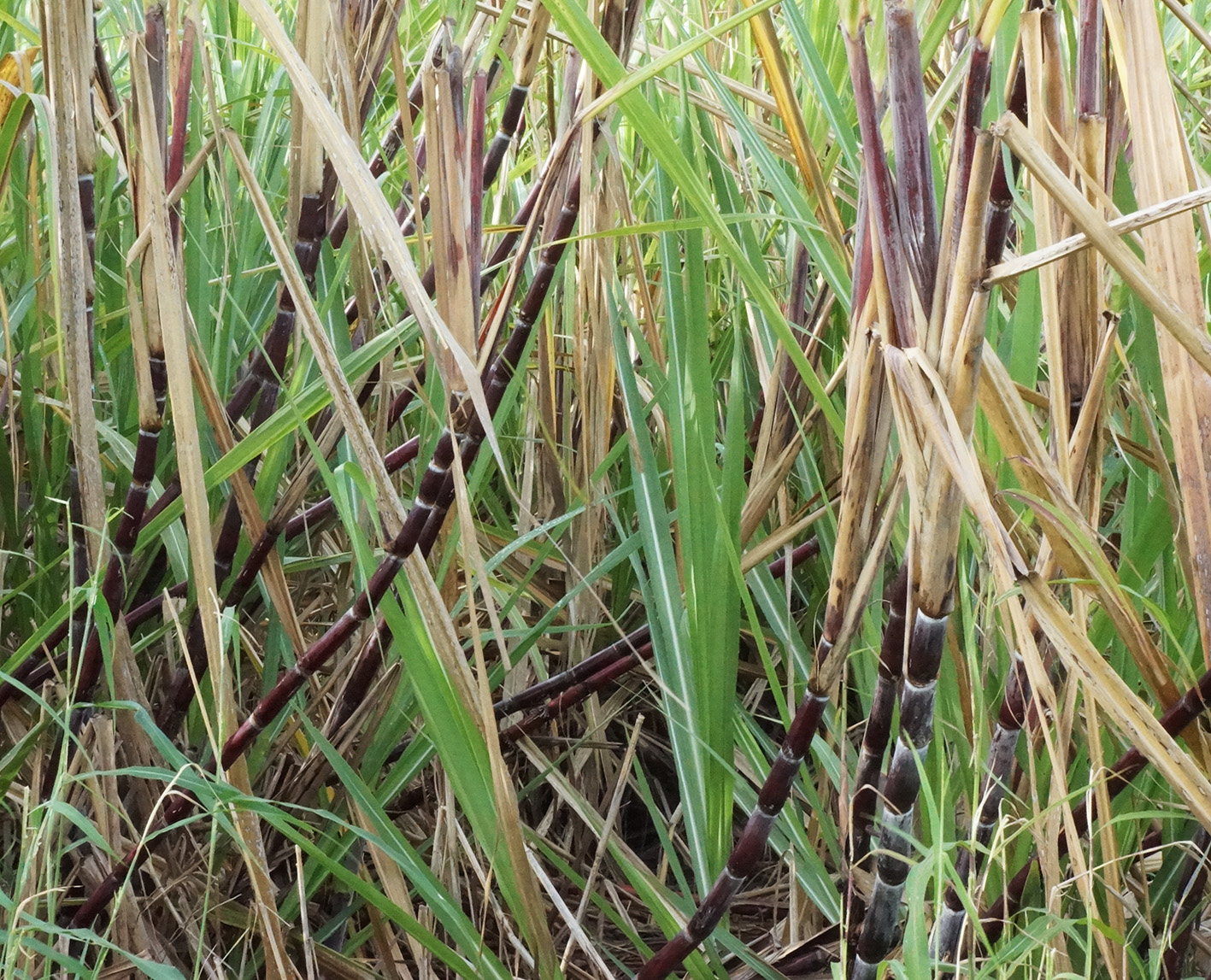
Cooking Sections_cane harvest4

Is this the end of a sugar era? In past years the sugar crop harvest has been delayed further and further into spring. Refusing to start the crop before the government paid farmers for last year’s yields, harvest was postponed this time for about three months, starting during our visit to Barbados on April 7th. Never before had sugar cane harvest started so late, a sign of the great challenges the industry is undergoing. The possibility of a 400 year-history of cane disappearing seems to float around people’s minds, given that there is only one sugar factory remaining operative on the island (Portvale). At the local Massy Supermarket, we encountered on the shelf a box of sugar cubes from an array of sugars all made in the USA, as well as from UK-based Tate&Lyle, a sugar empire that later constituted Tate Britain. More than ever, sugars travel along and back and forth from one side of the Atlantic to the other, changing colour, shape, texture, volume and physical states with every journey: raw, bulk, brown, white, brownish, whitish, golden, bagged, dyed, molassified, syrupised, caramelised, brownified

We learned that Barbados has an average of merely 12 inch deep soil. That extremely thin layer of agricultural ground is not only made out of sediments that the sea once eroded from surrounding volcanic islands and washed forward onto the Barbadian plateau. The soil is made of the remnants of the sugar cane that, unlike the majority of sugar plantations worldwide, are not burnt but accumulated on-site as layers that enhance the quality of the soil through their rotting, while protecting it from heavy rains. The reduction in tonnage of sugar extracted (not produced) from cane also opens new challenges, not only for the sustainable geology of the island, but for tightly related industries such as tourism and Barbadian rum. For the former, visitors need to keep being attracted by the image of undulating Caribbean landscapes covered in cane. For the latter, rum is running out of the local molasses that absorbs all the specific nutrients and minerals from the Barbadian subsoil, raising the question of Barbadianness in a rum more and more made out of foreign sugars. However, is it the molasses that really affects the finished rum product when it is distilled and cleaned from its biological and chemical components in the process of becoming alcohol? Or is it rather the diverse mechanisms of adding value that Barbados, like many other island nation states, tries to establish in order to shift from a historic role of commodity providers to become product owners?

At stake is also a controversial construction of an additional sugar factory. The new $42,000,000 project, promoted by the Barbados Government, aims to transform the no longer operational Andrews Sugar Cane Factory into a multipurpose processing plant. It is not to revive the island’s history but rather to envision a different future. If sugar once replaced the alcohol ration for soldiers in order to extend their operation hours, sugar cane has slowly become a biofuel to provide renewable sources of energy. Time will tell whether the new plant will truly help the national economy or be another example of mismanaging international development aid through needless pharaonic infrastructures that only benefit a few.

Cooking Sections_cane harvest3

Over 10 days of interviews, meetings, conversations and field visits with farmers, researchers, visual arts practitioners, factory managers, and policy-makers, we learnt about the difficulties of post-plantation Caribbeanness and the relationship of a region of island states, more or less disconnected from each other, that are facing similar challenges at planetary scales. That Barbados has only 2 endemic species out of its 650 different plants and that the island is suffering from seaweed invasion cycles coming from the Equator are just two facts that made us reflect on the economy of extraction and the value of nature from a global perspective. Almost 200 years after the abolition of slavery in all territories of British rule, conflicts about race, speculative flows and food sovereignty seem not to be yet fully reconciled with their past.

Jordan Clarke’s Residency – Week 3 Blog Post

Barbadian-Canadian painter Jordan Clarke shares her third blog post about her Fresh Milk residency, continuing to use self-portraiture and exploration of her surroundings for self-discovery and both personal and artistic growth, reckoning with the multiple facets and cultures that comprise her identity. Read more below:

IMG_0488

While at Fresh Milk, I have been working through self-portraiture, landscapes, photography and journaling as a means to document my first visit to Barbados. Born in Canada, I am the daughter of a Canadian mother with Scottish and English roots and a Barbadian father who has now spent 75% of his life in Canada. As a result, I possess multiple identities. I see myself as mixed-race, Black and Canadian.

In Barbados, where I have no family members, I feel disconnected and exposed. I am an outsider in my father’s homeland where I had hoped to feel a sense of homecoming and belonging. Not surprisingly, the work I have been producing here is introspective, exploring the theme of self-perception. My double self-portrait in graphite really expresses the sense of vulnerability and sadness I felt soon after my arrival in Barbados.

I have also been looking outwards, exploring landscapes in my work, specifically sky and cloudscapes. I’m attracted to clouds because they are always in movement and constantly changing, creating new formations that never repeat. I also find them to be majestic and beautiful. For me, clouds represent a universal space rather than a specific place, a space that is similar in both Toronto and Barbados.

At the moment, I see landscapes and portraits as two different practices. I had originally intended to insert myself into the landscape to create a connection with the land and Barbados. Interestingly enough, this joining of my body and a still unfamiliar landscape isn’t happening.

This residency is a special opportunity for self-discovery and evolution. I am realizing that change is not always comfortable, but is an essential part of my growth as a woman and as an artist. What is most painful is the feeling that I am missing a large part of my cultural roots and identity.

_______________________________________

2014 OAC logo RGB JPG

This residency is supported by the Ontario Arts Council.

Jordan Clarke’s Residency – Week 2 Blog Post

Barbadian-Canadian painter Jordan Clarke shares her second blog post about her Fresh Milk residency. She addresses the direction her work is taking, focusing on self-portraiture and developing the background of her pieces to suggest a sense of space, and has continued to explore the island alongside fellow resident artists Daniel Fernández Pascual and Alon Schwabe of Cooking Sections. Read more below:

Self portait

Two weeks into the residency and it feels like I just arrived.

I’ve been spending the majority of my time in the studio creating, reflecting and taking everything in. I’m sensing this as a time for gathering images, ideas and information that will find expression in my future creations.

It seems that I have gravitated towards self-portraiture as a way to access how I am feeling and thinking about myself in relation to this new place, Barbados. In addition to working from images, I have taken on the challenge of drawing myself from life each day. To assist me, Annalee set up a large mirror in the studio space. What I’ve found interesting is that none of the portraits drawn from life look completely like me.

Over the past week, I have been thinking about identity and how it is shaped. I realize now that my sense of identity is not linked directly to Barbados, despite my father’s Bajan roots.  This is the perfect opportunity for me to think about how I would like to identify, how I see myself, as well as how my life experiences have shaped me.

Mid week I met Barbadian artist Simone Padmore who addresses themes of identity in her work.  Some of her illustrations can be found in ARC magazine issue #5.

Towards the end of the week I began to think about the landscape, and how I could paint myself into one. The figure and landscape have always been separate for me. In my work the background suggests a sense of space rather than a specific place or location. I’m not sure where this will go, but it is something I am working on.

It was Easter weekend, and on Good Friday Annalee made a delicious gluten free quiche for our lunch. I am definitely being spoiled here!

An exciting event for me was finding out that early Saturday morning a horse was born on the family farm.

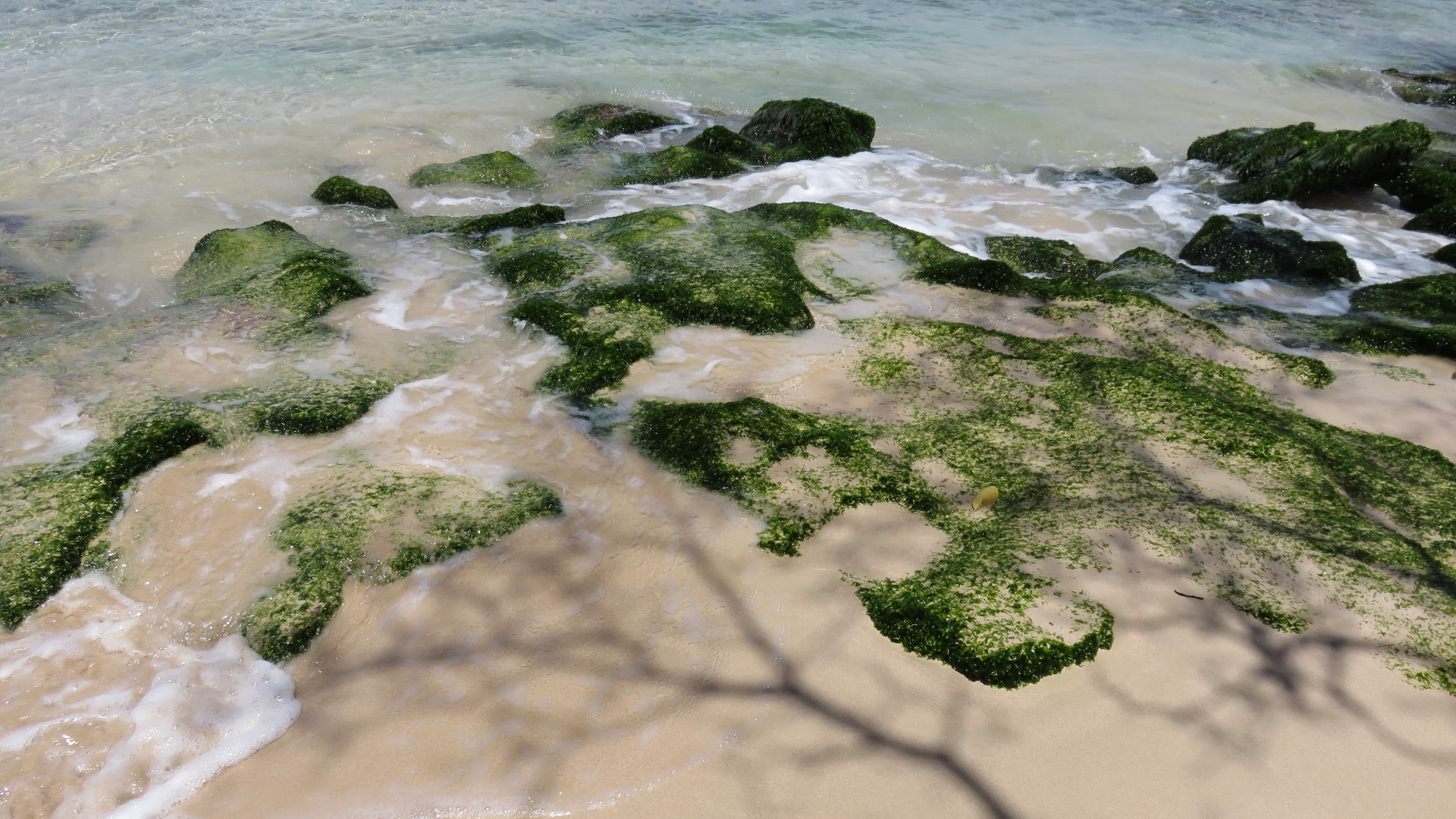
West coast beach

I ended the week traveling part of the West Coast with Alon and Daniel of Cooking Sections, who are also doing a residency here at Fresh Milk. We started at a lively market in Bridgetown. It was a completely different experience from the quiet and serene studio in St. George. I enjoyed the liveliness and dancehall music on the mini buses. We also took some time to enjoy ourselves on the beach. The West Coast is ideal for swimming, in contrast to the rugged picturesque East Coast. Our day ended with food and music at the Oistins Fish Fry on the South Coast.

Looking forward to the week ahead.

_______________________________________

2014 OAC logo RGB JPG

This residency is supported by the Ontario Arts Council.