Validity and Visibility – See Me Here #CCF

cover img

There is an undeniable relationship between validity and visibility. As quietly confident, assured or competent as one can be, there is something about gaining recognition that feeds the feeling of being appreciated and understood – of being seen. I already feel slightly uneasy and egotistical trying to articulate this in a way that doesn’t trigger little accusatory voices in the back of my mind hissing ‘vain!’ or ‘insecure!’…concepts that by all logic should be mutually exclusive, but the idea of needing validation from external sources manages to connote both. Maybe a less self-destructive approach is to delve into something relevant to, yet larger than myself, through the honest and brave work of the artists featured in See Me Here: A Survey of Contemporary Self-Portraits from the Caribbean.

The above excerpt is from Katherine Kennedy’s review of See Me Here: A Survey of Contemporary Self-Portraits from the Caribbeanthis week’s addition to the Fresh Milk Books Tumblr – the online space inviting interaction with our collection in the Colleen Lewis Reading Room.

For new Critical. Creative. Fresh reviews every week, look out for our #CCF Weekly posts and see the good reads we have available at Fresh Milk!

Nadia Img

A Lyrical Response to She Who Tells a Story – #CCF Guest Review

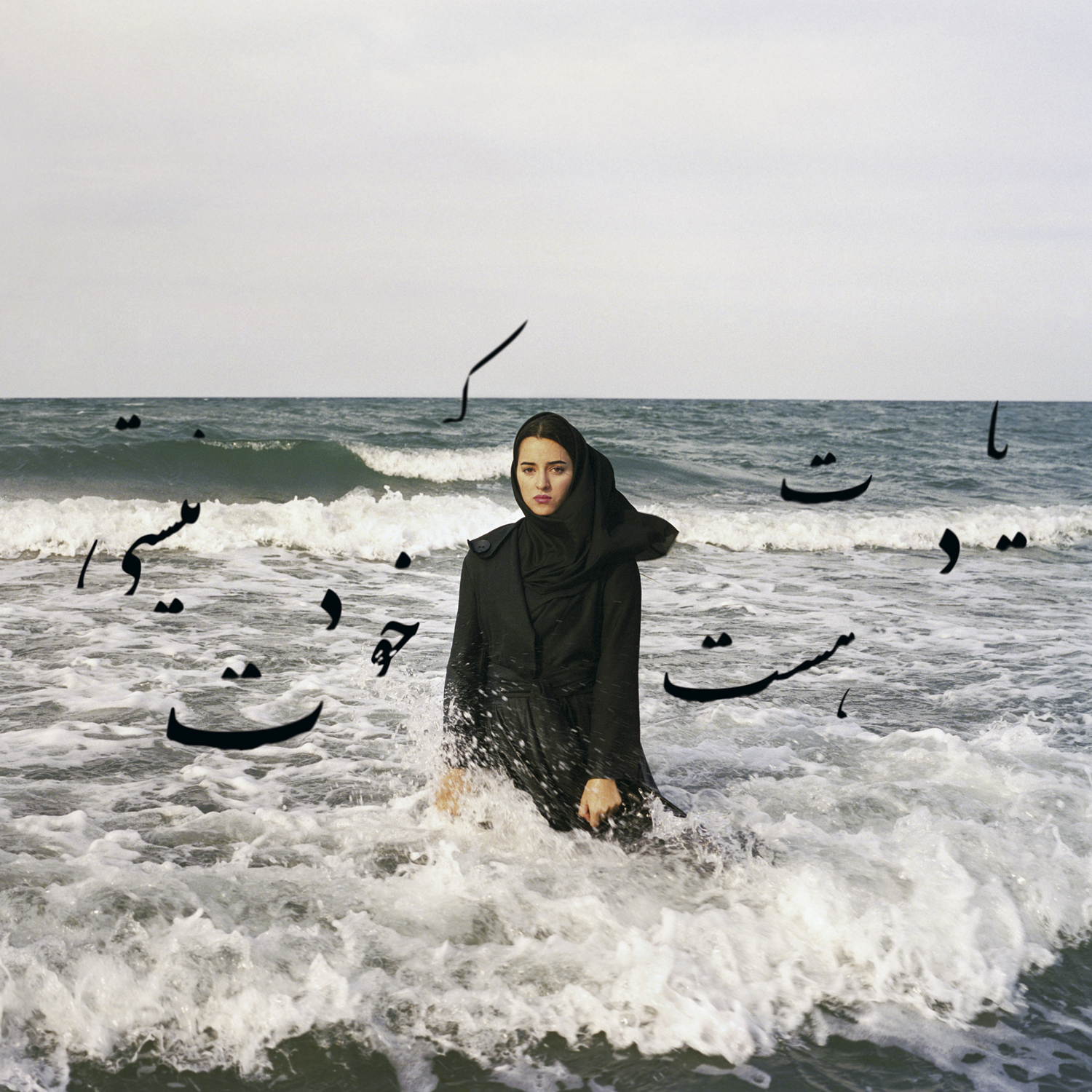
ewsha Tavakolian, Don’t Forget This Is Not You (for Sahar Lotfi), Chromogenic print mounted on aluminum, 2010.

Newsha Tavakolian, Don’t Forget This Is Not You (for Sahar Lotfi), Chromogenic print mounted on aluminum, 2010.

Like mornings when dew drops hang on the tips of tree leaves, the stories of women hang in the air. They are the precipitation of the spirit; the evidence of its metamorphosis through the pressures of love and hate, peace and war and joy and sorrow. They are the condensation of spirit smashing against spirit under the power of patriarchy.  

The above excerpt is from Ria Scott’s lyrical guest review of Kristen Gresh’s She Who Tells a Story: Women Photographers from Iran and the Arab World, this week’s addition to the Fresh Milk Books Tumblr – the online space inviting interaction with our collection in the Colleen Lewis Reading Room.

For new Critical. Creative. Fresh reviews every week, look out for our #CCF Weekly  and see the good reads we have available at Fresh Milk!
About Ria:

Ria Scott is a former student of the University of the West Indies and the University of Leeds. An avid reader, her writing experience has spanned creative, journalistic and academic spheres. She is passionate about travelling the world and experiencing different cultures. To find out more about Ria, check out her blog riathereal.tumblr.com

Academic Digest: Intangible Economies – #CCF

tumblr_inline_n6gs5qGydI1sdx8um

Fillip Magazine’s Intangible Economies (2012) tackles the abstract nature of economy in relation to cultural production. Set in the world of cultural/artistic production, the works in this anthology build on the provocative premise of its introduction, providing specialised analyses of the concept of economy as an institutionalised value system.  My response offers a brief look at “Intangible Economies”, the introductory chapter of the anthology. It took me three reads to grasp the salient ideas being expressed in the introductory chapter of the journal (the Footnotes were a saviour !). Making reference to Mauss’ theory of ‘the gift’, Derrida’s theory of representation and the ‘symbolic order’ and Marx’s theory of alienation, Hirsch’s articulation of the relationship between affect and economy raises challenging questions about the value of cultural production in a capitalist economic system.

The above excerpt is from Amanda Haynes’ review of Fillip Magazine’s edition Intangible Economies (2012) this week’s addition to the Fresh Milk Books Tumblr – the online space inviting interaction with our collection in the Colleen Lewis Reading Room.

For new Critical. Creative. Fresh reviews every week, look out for our #CCF Tuesdays  and see the good reads we have available at Fresh Milk!

Wangechi Mutu’s Family Tree – #CCF

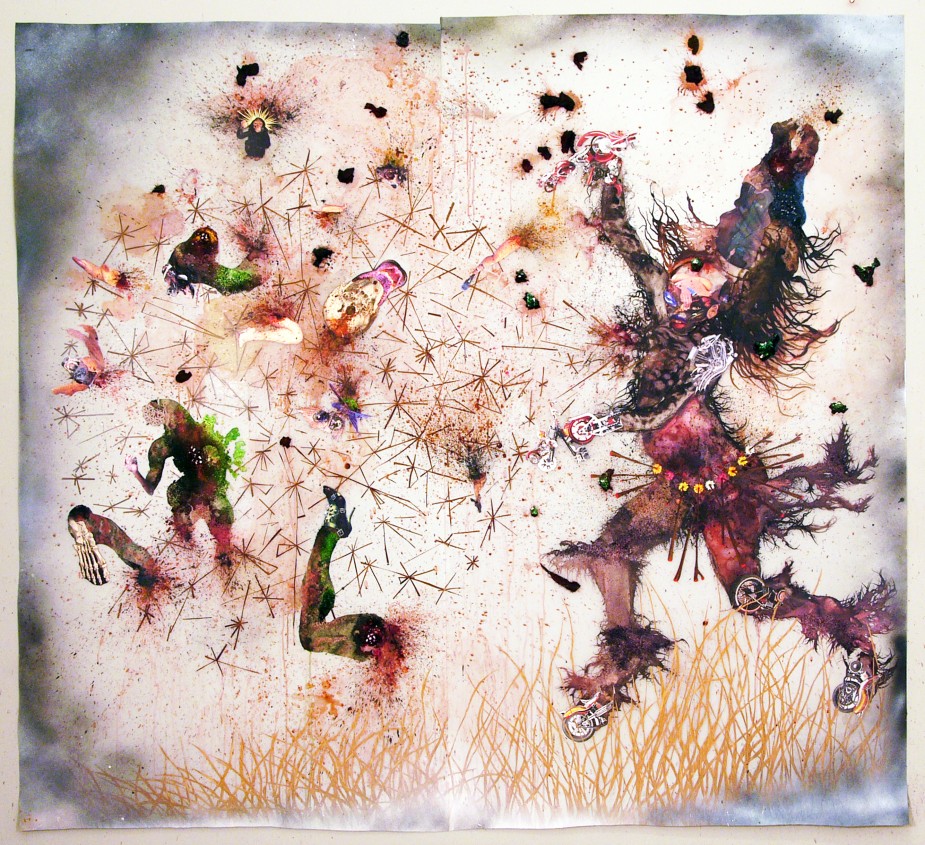
Wangechi Mutu, Try Dismantling the Little Empire Inside You, Ink, Mylar, pigment, photocollage with mixed media on Mylar and wall, 95 1/2 x 104”, 2007

Wangechi Mutu, Try Dismantling the Little Empire Inside You, Ink, Mylar, pigment, photocollage with mixed media on Mylar and wall, 95 1/2 x 104”, 2007

Definitions have always been my go-to method for gathering my thoughts; when you define something, it becomes clear and finite, manageable and straightforward. It creates a singular approach to a topic. After reading Kristine Stiles’ essay Wangechi Mutu’s Family Tree in the stunning exhibition catalogue for ‘Wangechi Mutu: A Fantastic Journey’, I felt saturated by the full sensory experience- from Stiles’ words, to Mutu’s salient images, to the gorgeous, smooth matte cover of the book. So, I retreated to my comfort zone of definitions to decompress. The corner I managed to back myself into with this, is that seeking a tidy, singular trajectory for something which in itself embodies plurality felt inadequate, especially with the much wiser and nuanced voices in the essay colouring my interpretations.

The above excerpt is from Katherine Kennedy’s review of the essay ‘Wangechi Mutu’s Family Tree’ by Kristine Stiles in the exhibition catalogue Wangechi Mutu: A Fantastic Journey, this week’s addition to the Fresh Milk Books Tumblr – the online space inviting interaction with our collection in the Colleen Lewis Reading Room.

For new Critical. Creative. Fresh reviews every week, look out for our #CCF Tuesdays  and see the good reads we have available at Fresh Milk!
mutu book 1200

Look Beyond What you See – #CCF

mmx24x

Look at the nearest clock. With a lazy glance you see numbers, perhaps hands, a circle or maybe a square-shaped face. Pay closer attention and you may determine the time. Be even more attentive and you begin to appreciate the design of your clock face. Imagine the technology that enables the hands to move, the numbers to change. Everything that happens behind what you see gives you a better understanding of how that clock portrays time. Now, take this principle and apply it to your perception of life. This is the message of Sufi Master Pir Vilayat Inayat Khan.

The above excerpt is from Versia Harris’ review of That which Transpires Behind that which Appears: The Experience of Sufism by Pir Vilayat Inayat Khan, this week’s addition to the Fresh Milk Books Tumblr, the online space inviting interaction with our collection in the Colleen Lewis Reading Room.

For new Critical. Creative. Fresh reviews every week, look out for our #CCF Tuesdays and see the good reads we have available at Fresh Milk!