
Márquez’s Bolivar – #CCF

kwame ccf

The front cover of The General in His Labyrinth is a blueprint. Its red tiled corridor could be a path in the labyrinthine mental and physical journey of the novel’s main character—the 19th century figure who is known as ‘The Liberator’ of Latin America from Spanish colonialism—General Simon Bolivar.

This path runs through a series of arches that are decorated with tropical trees; two naked women sit in the curves of each arch. Multiple Bolivars in full military regalia can be seen pacing with their hands clasped behind their backs from one side of an arch to another, probably reflecting on his past accomplishments and failures. The Bolivar at the farthest end—at the vanishing point—seems to be attempting to walk backwards, towards the reader/viewer, as if considering a return to his former glory. I say ‘attempting’, because the shrinking of the protagonist seems to reflect Bolivar’s inevitable death. His return happens only through  his labyrinthine recollections of past victories and failures, of great friendships and betrayals, and his thirty-five passionate love affairs.

The above excerpt is from newest member of the FMB Team Kwame Slusher’s review of Gabriel García Márquez’s The General in His Labyrinththis week’s addition to the Fresh Milk Books Tumblr – the online space inviting interaction with our collection in the Colleen Lewis Reading Room.

For new Critical. Creative. Fresh reviews every week, look out for our #CCF Weekly posts and see the good reads we have available at Fresh Milk!

Beyond a Boundary – #CCF

tumblr_n8ejnrf9QS1ty1ruyo1_1280

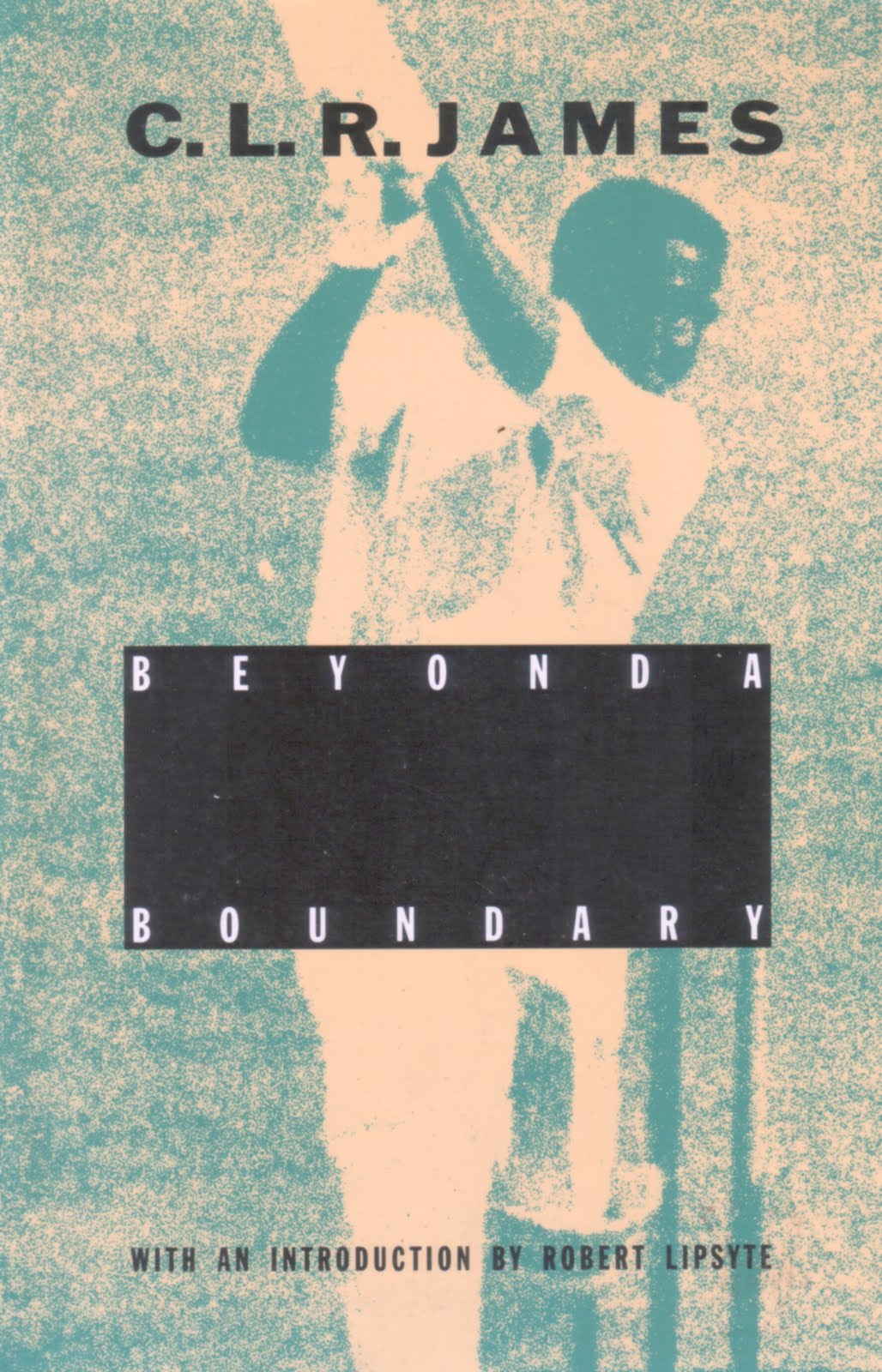
…This heartfelt public interest in cricket led the sport into a political battle, of which James was the spearhead. The regime which supported class and race distinctions, which had prevented the West Indies from ever having a black captain, came under constant attack from James’ paper and a volatile open letter which seemed to threaten war. I found it stirring that this came from a man like James, a man so immersed in the game that he held the code of ‘keeping a stiff upper lip’ (James 24) to the highest standard,  that he was willing to put the decency and decorum behind him. Cricket was changing, so it was apt that a man so passionate about the game was changing as well. I spoke of my nostalgia earlier, for that is what it was. While James’ love for the game drove him to momentarily disregard his values—for the good of the game—my own feelings have dissolved to indifference…

The above excerpt is from Ronald Williams’ review of C.L.R. James’ Beyond a Boundarythis week’s addition to the Fresh Milk Books Tumblr – the online space inviting interaction with our collection in the Colleen Lewis Reading Room.

For new Critical. Creative. Fresh reviews every week, look out for our #CCF Weekly posts and see the good reads we have available at Fresh Milk!

Validity and Visibility – See Me Here #CCF

cover img

There is an undeniable relationship between validity and visibility. As quietly confident, assured or competent as one can be, there is something about gaining recognition that feeds the feeling of being appreciated and understood – of being seen. I already feel slightly uneasy and egotistical trying to articulate this in a way that doesn’t trigger little accusatory voices in the back of my mind hissing ‘vain!’ or ‘insecure!’…concepts that by all logic should be mutually exclusive, but the idea of needing validation from external sources manages to connote both. Maybe a less self-destructive approach is to delve into something relevant to, yet larger than myself, through the honest and brave work of the artists featured in See Me Here: A Survey of Contemporary Self-Portraits from the Caribbean.

The above excerpt is from Katherine Kennedy’s review of See Me Here: A Survey of Contemporary Self-Portraits from the Caribbeanthis week’s addition to the Fresh Milk Books Tumblr – the online space inviting interaction with our collection in the Colleen Lewis Reading Room.

For new Critical. Creative. Fresh reviews every week, look out for our #CCF Weekly posts and see the good reads we have available at Fresh Milk!

Nadia Img

A Lyrical Response to She Who Tells a Story – #CCF Guest Review

ewsha Tavakolian, Don’t Forget This Is Not You (for Sahar Lotfi), Chromogenic print mounted on aluminum, 2010.

Newsha Tavakolian, Don’t Forget This Is Not You (for Sahar Lotfi), Chromogenic print mounted on aluminum, 2010.

Like mornings when dew drops hang on the tips of tree leaves, the stories of women hang in the air. They are the precipitation of the spirit; the evidence of its metamorphosis through the pressures of love and hate, peace and war and joy and sorrow. They are the condensation of spirit smashing against spirit under the power of patriarchy.  

The above excerpt is from Ria Scott’s lyrical guest review of Kristen Gresh’s She Who Tells a Story: Women Photographers from Iran and the Arab World, this week’s addition to the Fresh Milk Books Tumblr – the online space inviting interaction with our collection in the Colleen Lewis Reading Room.

For new Critical. Creative. Fresh reviews every week, look out for our #CCF Weekly  and see the good reads we have available at Fresh Milk!

About Ria:

Ria Scott is a former student of the University of the West Indies and the University of Leeds. An avid reader, her writing experience has spanned creative, journalistic and academic spheres. She is passionate about travelling the world and experiencing different cultures. To find out more about Ria, check out her blog riathereal.tumblr.com

Academic Digest: Intangible Economies – #CCF

tumblr_inline_n6gs5qGydI1sdx8um

Fillip Magazine’s Intangible Economies (2012) tackles the abstract nature of economy in relation to cultural production. Set in the world of cultural/artistic production, the works in this anthology build on the provocative premise of its introduction, providing specialised analyses of the concept of economy as an institutionalised value system.  My response offers a brief look at “Intangible Economies”, the introductory chapter of the anthology. It took me three reads to grasp the salient ideas being expressed in the introductory chapter of the journal (the Footnotes were a saviour !). Making reference to Mauss’ theory of ‘the gift’, Derrida’s theory of representation and the ‘symbolic order’ and Marx’s theory of alienation, Hirsch’s articulation of the relationship between affect and economy raises challenging questions about the value of cultural production in a capitalist economic system.

The above excerpt is from Amanda Haynes’ review of Fillip Magazine’s edition Intangible Economies (2012) this week’s addition to the Fresh Milk Books Tumblr – the online space inviting interaction with our collection in the Colleen Lewis Reading Room.

For new Critical. Creative. Fresh reviews every week, look out for our #CCF Tuesdays  and see the good reads we have available at Fresh Milk!